Get in Touch with Tongren Tang Gulf
Fertility Acupuncture | Tong Ren Tang — 350 Years of TCM Heritage
CLINICAL RESEARCH INFUSES CENTURIES OF TCM. Our fertility acupuncture protocols are evidence-based and culturally enriched, originating in peer-reviewed literature and refined in a tradition that dates back to 1669.
- Over 350 years of TCM tradition- established 1669, physician for the imperial court for 188 years
- IVF adjunct support with structured pre-transfer and post-transfer protocols
- Hormone balance considering PCOS, declining ovarian function, irregular cycles,
- Individualized treatment protocol based on TCM pulse and tongue diagnosis
- Whole-body approach: fertility, stress reduction, and reproductive health together
Struggling to Conceive? How Acupuncture Restores Fertility Naturally
Getting pregnant does not always happen easily or quickly. The weeks of negative pregnancy test results, the sensation of waiting, the sense that your body is not quite cooperating can all be quite real. If you are trying to conceive either lacking an explanation or knowing the diagnosis, you are certainly not alone. About one in six couples worldwide experience reproductive challenges.
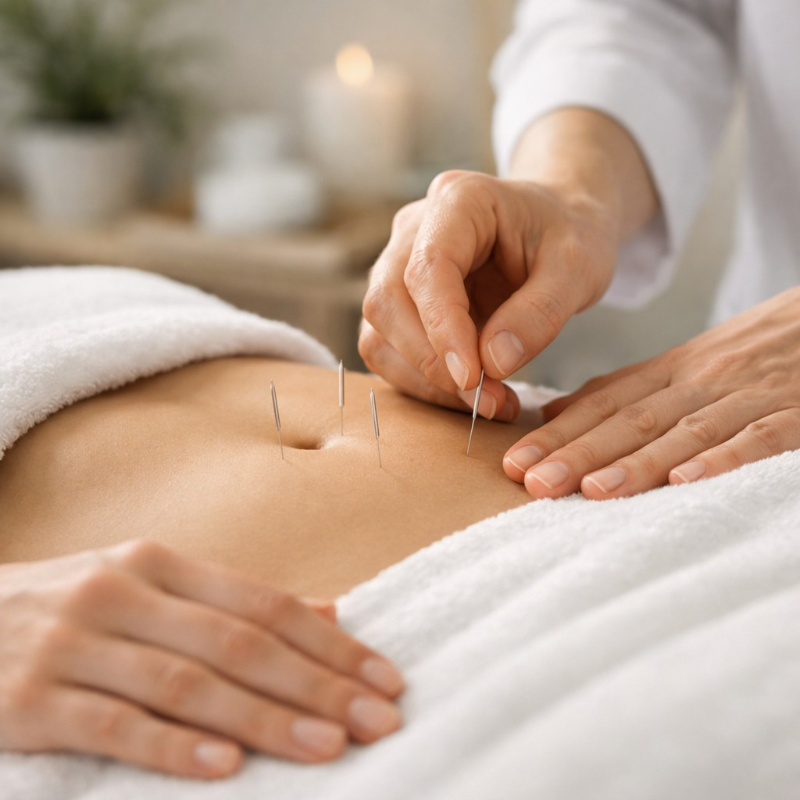
Fertility acupuncture functions on three well-documented biophysiological levels. First, because of its effects on the sympathetic nervous system, it stimulates blood flow to the ovaries and uterus which results in a healthier follicular development as well as a well-softened, receptive endometrial lining. Second, it can initiate neurotransmitter cascades that influence gonadotropin-releasing hormone, thus resulting in regulation of cycle length and ovulation. Indeed research has shown increases in both estradiol and progesterone with use of acupuncture- testosterone precursors of many reproductive hormones. Last, the release of endorphins neutralizes the effects of cortisol on the hypothalamic-pituitary-adrenal axis which can negatively impact the entire reproductive hormonal pathway.
These three mechanisms are relevant to polycystic ovarian syndrome (PCOS), diminished ovarian reserve, endometriosis, luteal phase defect, and other causes of infertility. Our practitioners at Tong Ren Tang draw on a TCM tradition begun in 1669 to guide each individual treatment plan to identify and treat the pattern underlying the condition. If the treatment is targeted to the pattern, be it kidney yin deficiency, kidney yang deficiency, liver qi stagnation, blood stasis or otherwise, the infertility condition can be resolved instead of temporarily “addressed”.
Our Fertility Acupuncture Treatment Protocols
Ovulation occurs after a follicle spends about 90 days developing and being recruited. Sperm must develop on a similar span of time. While we do not have individual control over fertilization, which occurs within 24 hours of ovulation, we do have control over the environment that surrounds the event, the egg quality, and the sperm quality. For this reason, acupuncture treatments are scheduled at least three months before an IVF, IUI, or conception target date.
Natural Conception Support
- Weekly sessions for 12+ weeks
- Cycle-phase-specific point selection
- Follicular phase: promote egg growth
- Luteal phase: support implantation
- Combined with herbal formulas as needed
In Vitro Fertilization (IVF) & Intrauterine Insemination (IUI) Adjunct Support
- Weekly sessions during preparation
- Twice weekly during ovarian stimulation
- Pre- and post-embryo transfer sessions
- Coordinated with your RE’s timeline
- Evidence: RR 1.33 CPR during COH phase
Hormonal Balance & Cycle Regulation
- Address PCOS, irregular cycles, amenorrhea
- Weekly sessions, 8-16 week programs
- FSH, AMH, and estradiol optimization
- Stress and cortisol management
- Dietary and lifestyle guidance
What to Expect at Your First Visit
Your first session involves a detailed reproductive history, a physical exam, traditional Chinese medicine pulse reading from three positions on each wrist, and a tongue analysis of the color, shape, and coating. With this knowledge and input, the acupuncturist chooses a pattern of origins such as blood stasis, kidney yin deficiency, or excess between the 13 possible organs in classical Chinese medicine, and determines the acupuncture points, the frequency, and potential tactile milestones. Many women report feeling some form of positive response- a reduction in menstrual cramps, a better sleep pattern, more balanced cycles- within one month.
Acupuncture for IVF — Clinical Evidence & Outcomes
Women regularly ask whether acupuncture is actually effective. The up-to-date answer is not what you want to hear- that research is improving but not yet consistant in its conclusions- but it is hopeful. So here is the current best evidence:
Clinical Evidence Summary — Key Meta-Analyses
| Study | Scope | Key Finding |
|---|---|---|
| 2025 Meta-Analysis | 42 RCTs, 7,400 participants | Biochemical pregnancy RR=1.28 (CI: 1.04-1.57); Clinical pregnancy RR=1.19 (CI: 1.06-1.34) |
| Wang et al. 2024 | Timing sub-analysis | Acupuncture during COH: CPR RR=1.33 (CI: 1.07-1.65); ET-day only: no significant benefit |
| Cochrane-Adjacent 2023 | 12 trials, 2,230 women | Increased pregnancies RR=1.32; Live births RR=1.30 (9 trials, 1,980 women) |
| UH Hospitals 2025 | Stress impact study | Single session: −2.2 anxiety, −2.1 stress, −1.4 pain (10-point scale) |
Clinical data tell a story about timing. Acupuncture administered throughout the COH phase – not just on ET day – had the most consistently positive impact. This correlates with traditional Chinese thinking: the whole body benefits from designed rest in the follicular window – not just a single therapeutic session.
For IVF, the strategy we deploy follows the research: sessions on a weekly basis during the preparation phase, twice-weekly through stimulation medications, and added specific sessions immediately before and after ET. This treats the entire cycle and not a single moment.
Stress reduction through acupuncture goes beyond “making people feel calmer.” Stress naturally raises cortisol; in in-it-to-win-it IVF cycles, cortisol directly kills off reproductive hormone production. A 2.2 point, and statistically significant, reduction in anxiety and 2.1 point drop in stress score after a single acupuncture reduces cortisol, and maximally supports IVF.
We disclose our complete research returns. Though no guaranteed results may be inferred, the relative risk improvements are not trivial, are statistically significant, and follow a definite positive trend which inspires us and our patients in the direction of cautious optimism.
TCM & Western Medicine — A Complementary Approach to Fertility
Traditional Chinese Medicine does not compete with Reproductive Endocrinology. It complements it by addressing the issues weren’t designed to. Your RE reads off numbers: follicle counts, E2 levels, cardiac output, and endometrial development. We observe “the nature” and the stressors impacting it: How’s the blood supply to the area? How relaxed is the nervous system? How most efficiently does the hormone diagram run?
In Chinese medicinal terms, femininity alone cannot conceive: it depends on the kidney essence (jing), smooth qi movement throughout the liver and through the channels around the womb, sufficient blood flowing through the chong and ren vessels to nurture the uterine tissue, and the cooling and warming forces (yin and yang) being exactly right.
Scientific concepts:
| TCM Framework | Western Correlation | Clinical Mechanism |
|---|---|---|
| Kidney essence (jing) | Ovarian reserve, egg quality | FSH/AMH optimization via acupuncture point stimulation |
| Liver qi stagnation | Stress-related hormonal disruption | Sympathetic nervous system modulation, cortisol reduction |
| Blood stasis in uterus | Poor endometrial blood flow | Uterine artery blood flow increase via nerve inhibition |
| Yin/yang imbalance | Estrogen/progesterone ratio | GnRH regulation through neurotransmitter cascades |
This is where Coix and Bupleurum’s proven efficacy becomes a clinical advantage. Our herbal pharmacopeia – built through centuries of empirical development and once kept for use within the imperial court – works with the acupuncture needles. A patient with poor ovarian reserve, less than great hormone levels, may receive kidney-meridian balancing electrostimulation, and a tailored herbal formula which boosts the fertility hormone feedback loop. Your Western clinician handles the retrievals; we prepare the womb for them to work within.
Patient Outcomes & Success Indicators
Though individual responses will vary, through the work we do together, we see emerging trends consistent in our IVF patients: patients who have completed 12 weeks or more of treatment prior to et find increased regularity in their cycles, improved response to their IVF stimulation medications and less stress during IVF. For partners that receive concurrent treatments, we also find increased overall vitality, decreased stress and (if indicated) healthy improved semen qualities.
Initial signs that treatment is effective generally can be seen from four-to-six weeks: easier decision making with regard to timing of menstrual cycle, less cramping/pms/psychological symptoms, better sleep/serenity, more harmony with body/lower body temperature. These are by no means “feel good” indications—rather, they are appreciable changes in circulating hormone levels—and sets of factors, that promote conception.
Investment Perspective — Acupuncture as IVF Adjunct
| Factor | Acupuncture Course | Single IVF Cycle |
|---|---|---|
| Typical investment range | 8-24 sessions over 3+ months | Full medication + procedure cycle |
| Evidence-based improvement | 19-33% relative increase in pregnancy rates (meta-analyses) | Baseline success rate varies by age and diagnosis |
| Additional benefits | Stress reduction, hormonal balance, cycle regulation | Direct assisted reproduction |
| Insurance | Some plans cover; HSA/FSA eligible | Coverage varies widely |
That your therapy that can cost less than an IVF cycle, has been shown in published meta-analyses by a 19-33% chance of improving IVF outcomes, the Cost To Benefit calculation supports adding acupuncture to your reproductive health strategy—not as a substitution for medical fertility therapy—but as a protocol extension that is clinically supported.
350 Years of Healing — The Tong Ren Tang Heritage
Established in 1669 which the Qing Dynasty, Tiong Ren Tang was appointed by Royal court as the drugstore in 1723. The position had been maintained until the last Qing Dynasty in 1911 for 188 years through 8 generations of postgraduates. And this is not a sLogan for promotional effect but the fact in history.
Our foundation—”no compromise on quality and standard”—dictates everything from how herbs are selected to how practitioners are educated. Each of our acupuncturists is qualified in Standard TCM as well as contemporary anatomy, and continues his/her clinical learning. We complement this in-institution dominance with contemporary clinical standards: evidence-based procedures, teamwork with Western medicine, and this education of the patient as to what acupuncture is and isn’t able to do.
Est. 1669
350+ Years TCM Heritage
Licensed Acupuncturists
Evidence-Based Protocols
Royal Court Heritage (1723-1911)
Fertility Acupuncture — Pricing, Process & What to Expect
We are upfront and honest about our pricing, so no surprises at the register. Pricing for fertility acupuncture depends on your state of health, how often you’re being treated, if herbal formulas are included, and how long your session is.
Pricing Factors
Any further investment is contingent on your recommended protocol following your first TCM fertility assessment. Factors that will affect your overall costs are:
Pre-conception TCM fertility consultation — detailed one hour consultation including overall examination, pulse diagnosis, tongue diagnosis, reproductive health history
Single acupuncture treatments — 0.5-2x/week depending on phase of cycle
Packages de traitement — 12 semaines de supporter de la conception naturelle et de l’enfant-foetus Disponible programmes au rythme du paquet
Traditional herbal formulas — herbs prescribed according to the material medica ofTong Ren Tang, used in medical situations
Insurance and payment: many insurance plans today offer acupuncture coverage. Fertility acupuncture is HSA and FSA reimbursable. Your first appointment, we can check insurance benefits with you ahead of time.
Your First Visit
Your initial consultation is 60-90 minutes-long- longer than a standard acupuncture treatment, as fertility cases often need this length of time to be able to take into account your full history. Your TCM diagnosis will mean that your practitioner will be able to plan a course of treatment and set certain milestones along the way. Follow-up treatments will last 45-60 minutes. Your progress will be measured every 6 weeks and protocols adapted in accordance with how you are responding to treatment and any Western fertility drugs you may be using.
Interactive Fertility Planning Tools
Empower your reproductive health journey with our specialized assessment and planning resources. Understand your body’s readiness and transparently plan your treatment investments.
Fertility Readiness Assessment
Answer a few targeted questions to evaluate where you are on your fertility journey and discover how Traditional Chinese Medicine protocols can support your specific needs.
Fertility Acupuncture Investment Planner
Calculate and plan your fertility acupuncture treatment costs efficiently. Align your TCM sessions seamlessly with your upcoming IVF, IUI, or natural conception timeline.
Begin Your Fertility Journey with Tong Ren Tang
800 years of guidance. 350 years of knowledge. A practitioner who understands the latest science.
Book Your Fertility ConsultationFrequently Asked Questions About Fertility Acupuncture
Published evidence is real and accumulating. A meta-analysis published in 2025 of 42 RCTs with 7,400 women demonstrated a 28% increase in biochemical pregnancy (RR=1.28) and 19% clinical pregnancy increase (RR=1.19) with acupuncture. As an adjunct to IVF, meta-analyses reveal a 30-32% relative increase in pregnancies and live births. This is not pitching woo. This is numerous independent teams publishing statistically significant improvements in well-designed clinical trials.
Three months prior to implantation or your IVF cycle is the prescription given in excellent quality science – for most – even earlier if time allows. Here we are addressing the natural cycle of eggs and sperm, the process by which your treatment influences the outcome 3 months into the future. The earlier the better, but even starting in the middle of the cycle will provide a lot of circulatory and stress reduction benefits.
Your standard course of fertility acupuncture is between 8 and 24 treatments. Experience has demonstrated that 8 treatments is optimal for traditional, natural planning methods. Otherwise, you will typically come in weekly during the initial stages of creation. During ovarian stimulation, increased frequency is indicated. Then, we conduct progress reviews at six-week intervals.
Yes, scientific evidence supports this use. The strongest clinical evidence indicates benefits of acupuncture modulation over the entire IVF cycle, not just on the day of transfer. Naturally, this means weekly protocols during IVF preparation, increased frequency with ovarian stimulation, then an added session before and after transfer. The data on the COH-phase stimulation shows the greatest difference with clinical pregnancy rate (RR=1.33).
Acupuncture is quite safe for most conditions and practitioners as long as it is administered by a licensed and experienced provider. Typical potential side effects include mild discomfort, minor bruising and slight fatigue. We are, however, being upfront about a finding where a few meta-analyses identified an increased early miscarriage rate (RR=1.51) in some of the acupuncture arms. Researchers are still trying to determine the causality of this conclusion. Importantly, this is the reason we use evidence-based timing and any potentially referring point prescriptions.
Pricing varies based on frequency of treatment, length of treatment and the inclusion of herbal medication. Individual treatments are available, but multi-week packages are the best value. The short answer is that many working couples budget 2-6 thousand dollars per cycle of a medicated IVF regimen. Investing in acupuncture sessions at that same price range appears to be wise financially, and others choose to view it as an enhancement of the overall experience. Please call us for pricing, after your initial consultation. We also accept all HSA and FSA accounts and will assist with your insurance acupuncture consultation.
Research in addition to clinical success include the use of acupuncture for: clomiphene-resistant polycystic ovarian syndrome, diminished ovarian reserve, unexplained IVF, unexplained infertility, endometriosis and subfertility, luteal phase defects, as well as male factor subfertility. For patients with PCOS, there is documented benefit for ovulation in those receiving sham control and pharmaceutical therapy as well.
A few key points. Firstly, 350+ years of consistent TCM practice—our herbal formulas and diagnostic paradigms have been trained and perfected over eight generations since 1669. Secondly, we help translate clinical research into our protocol; use traditional wisdom and modern sexology data together, not separately. Third, all practitioners are trained in classical TCM syndromic differentiation and contemporary reproductive medicine, so they work with your fertility specialist as a true partner, not separately.