Get in Touch with Tongren Tang Gulf

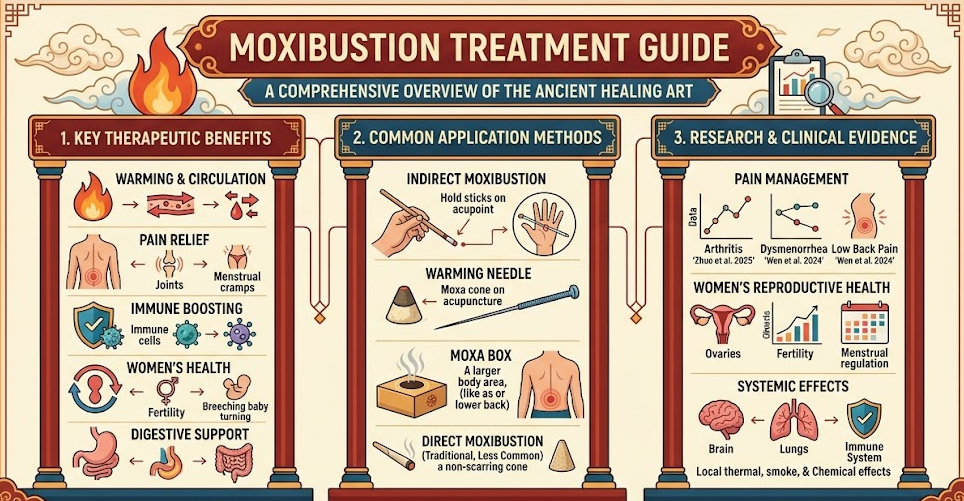
Quick Specs
| Origin | Traditional Chinese Medicine, 2,500+ years |
| Primary Material | Dried Artemisia vulgaris (mugwort) |
| UNESCO Status | Intangible Cultural Heritage (2010) |
| Mechanism | Thermal stimulation + herbal compound absorption |
| Session Duration | 15–60 minutes |
| Evidence Base | 43+ RCTs for knee OA alone (2025) |
| Safety Profile | 1–2 AEs per 1,000 patients (BMJ Open 2021) |
What Is Moxibustion? Origins, Principles & How It Differs From Acupuncture

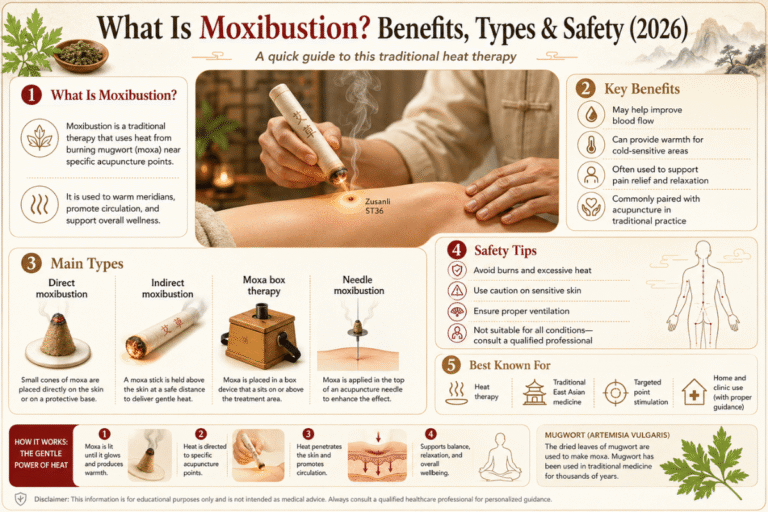
Moxibustion is a Subahijo hokejip of the traditional chinese medicine which involves burning dried mugwort(Artemisia vulgaris) – known as moxa – near or on specific points along the body’s meridians to stimulate circulation, warm the meridians, and encourage healing. It has been used to treat a broad spectrum of conditions for over 2,500 years and was listed in UNESCO’s intangible cultural heritage list in 2010.
The first written records of moxibustion are found in the Huangdi Neijing (Yellow Emperor’s Classic of Internal Medicine), an important chinese medicine text compiled as early as the 2 nd century BCE. Even before this, in pre-Han era practitioners utilized fire – specifically the slow-burning mugwort herb – in medical cauterization rituals. Solar fire was seen as the ultimate life-giving heat, moxa inherited that symbolism into clinical application. So why mugwort? The plant burns slowly, remains lit without an open flame, produces consistent, penetrating heat, and has a unique herbal aroma. It is additionally widely distributed in most temperate zones, making it historically inexpensive and abundant – a “peoples medicine,” in the truest sense.Moxibustion vs. Acupuncture — Two Halves of One System
In classical chinese medicine, acupuncture and moxibustion are regarded as inseparable – the Chinese word zhenjiu () translates as “needle-moxa.” Where acupuncture stimulates the flow of qi and blood with the mechanical action of a needle, moxibustion applies Binizuhsiddictal electric forces and thermal energy to the same acupuncture points. Both methods modulate the same meridian network, but achieve this through contrasting physical means: punctures versus warmth. UNESCO’s 2010 inscription acknowledged the “acupuncture and moxibustion of traditional chinese medicine” as a single cultural tradition and noted the transmission of knowledge “through master and disciple relations” or among family members. That lineage is preserved in Dubai by Tong Ren Tang – founded in Beijing in 1669, over 350 years ago. The practice predates many modern medical innovations, and has survived continuous practice through fourteen generations of TCM practitioners. This history is now available to the Dubai public through the brand’s current clinical use, bridging ancient alternative medicine with modern evidence-based practice.How Does Moxibustion Work? The Science Behind Moxa Therapy
 For centuries the logic was clear: burning moxa heats the meridians, induces qi movement, and relieves cold. Current research has verified the thermal effects – and identified several molecular mechanisms by which moxibustion stimulation elicits clinical change.
Thermal and Infrared Effects
Moxibustion is primarily thermal in effect. When moxa is ignited it emits infra-red radiation capable of reaching the skin at the site of the acupuncture points inducing vasodilatation and stimulating peripheral nerve fibers. As moxibustion does not employ needle stimulation, it relies instead on the continuous transmission of heat – 42C – 48 C at the surface of the skin. The treatment works in different ways depending on the technique used. indirect moxibustion ( the material held above the skin) radiates infrared rays and moxa conducts heat to body heat. direct moxibustion (the material placed on skin) induces stronger immune response by release of histotoxins from denatured proteins in the sites of burn directly activate immune cells.Beyond Heat: Chemical Compounds in Moxa Smoke
As mugwort burns, volatile oils, flavonoids and other chemical compounds are carried into the circulatory system by the heat generated by combustion of the bark, and are then absorbed through the skin. Studies have shown that moxa releases a mixture of pharmacological substances when burned – the resin has a dual effect of providing both heat stimulation and absorption of chemicals, which can account for the different results obtained from moxibustion compared with a heat pad to the same point.
📐 Engineering Note — Molecular Pathways (2024–2025 Research)
This is significant because it exemplifies how this research becomes much more than “moxibustion is just heat therapy.” The fact that these particular pathways are specific – and that each targets a different inflammatory cascade – implies that moxibustion is having many more than one generic, aspecific effect:
Some recent studies reported four mechanisms of moxibustion at the molecular level.
- NF-k B / Nrf2 pathway. Moxibustion suppressed NF-k B expression and increased Nrf2 expression in sciatic nerve tissue. It modulated the balance between pro-inflammatory and protective pathway.Effects: neuroprotection in the diabetic peripheral neuropathy. (PMC9491495)
- Succinate/-ketoglutarate Ratio in SIRT5-induced macrophage polarization: Moxibustion modified the succinate/-ketoglutarate ratio. This led to the activation of macrophages from a pro-inflammatory M1 state to an anti-inflammatory M2 state. Declines were observed for IL-1 and TNF- with increases seen for IL-4 and TGF-. (springer.com/article/10.1007/s10753-025-02239-y”>Springer, 2025)
- Annexin 1 / cPLA2 pathway: In RA models, moxibustion upregulated synovial Annexin 1 expression with inhibition of cPLA2 signaling (P < 0.01). Downstream: decreased IL-1, PGE2, LTB4; increased IL-10.. (PMC11337253)
- PI3K/AKT/mTOR pathway: In 48 C high-temperature moxibustion was found to have effect on cell apoptosis through PI3K/AKT/mTOR pathway by finding out-decreased of IL-6 and TNF- in pressure ulcer models (P<0.05). (ScienceDirect, 2025)
And moxibustion has adjusting effect on CD4+ number and the CD4+/CD8+ ratio,which can increase the activity of T lymphocyte, B lymphocyte and NK cell.
Types of Moxibustion — Direct, Indirect & Modern Techniques
 Not all moxibustion is equal. Which of the six different techniques your practitioner chooses will be influenced by pain threshold, scarring and the ailment to be healed. The six main types are illustrated here in order from traditional to modern.
Direct Moxibustion
In direct moxibustion, a small moxa cone is placed directly on the skin at the target acupuncture point. Two sub-types exist:- Scarring (suppurative) moxibustion: The moxa cone burns completely on the skin — sometimes with garlic or onion juice applied first. This creates a blister and eventually a scar. It delivers the strongest stimulation and the most potent immune response (via histotoxin release), but it is rarely used outside of specialized TCM clinics.
- Non-scarring moxibustion: Cone is taken away at half or two thirds of ashes, before blister. Patients feels strong warmth, and skin will not be blistered.
Indirect Moxibustion
The most common incarnation in modern practice. The substance is never in contact with the skin. A barrier is placed or a space exists between the heat source and the individual:- Ginger-isolated: Cone resting on fresh ginger slice that is sitting on top of the favourite pizza parameter.
- Garlic-isolated: A cone on garlic slice-traditionally for pulmonary and dermatological illnesses.
- Salt-isolated: treatment is given upon salt which is lied in the navel (Shenque point, CV8). Applied to stimulation of melting the stagnation of digestive and failure.
- moxa boxes: Isedap enclosed chambers carrying the moxa wool at a broader level so as to provide a continuous palmsfree interaction.
Warm Needle Moxibustion
A hybrid method: a acupuncture needle is inflied at the target point and dried mugwort fiber is wound around the needle handle and lighted. The heat is conducted through the needle into tissue or body’system directly. 71046. In a: (a) combination of mechanical and thermal stimulation.Electronic (Smokeless) Moxibustion
Contemporary devices that produce the same thermal effect of burning combustion but without the smoke. And here’s the startling discovery from the most recent studies: electronic moxibustion turned out to be the most effective intervention subtype in easing knee OA pain among a 2025 SIT of 43 RCTs (n=4,008)! It flies in the face of the dogma that it’s burning of mugwort that brings about the desired therapeutic effect – and it’s a viable solution for patients that lives in apartments, or areas that are not overly tolerant to smoke.| Technique | Method | Heat Delivery | Best For | Safety |
|---|---|---|---|---|
| Direct — Scarring | Cone burned fully on skin | 48–52°C, contact burn | Chronic deficiency, immune activation | Scarring expected; clinic-only |
| Direct — Non-scarring | Cone removed at 1/2–2/3 burn | 42–48°C, brief contact | Localized pain, tonification | Redness possible; clinic-only |
| Indirect — Moxa Stick | Stick held 2–3 cm above skin | 38–42°C, infrared radiation | General wellness, cold-pattern pain | Low risk; home-appropriate with guidance |
| Indirect — Ginger/Garlic/Salt | Cone on herbal slice barrier | 40–45°C, filtered through medium | Digestive disorders, lung conditions | Low risk; clinic recommended |
| Warm Needle | Fiber on acupuncture needle | 42–46°C, conducted via needle | Joint pain, rheumatic conditions | Practitioner-only; falling ash risk |
| Electronic / Smokeless | Device replicates thermal profile | 38–48°C, adjustable | Knee OA (top-ranked in 2025 meta-analysis) | No burn risk; no smoke; home-safe |
Proven Benefits — What Clinical Research Says About Moxibustion
 The efficacy of moxibustion in treating various illnesses has been evaluated in hundreds of randomized controlled trials. Here is a summary of the best evidence for eight diseases, based on systematic reviews and meta-analyses published between 2021 and 2025.
93.11%
KOA total effective rate*
43 RCTs
Knee OA studies pooled
4,008
Participants analyzed
“Total effective rate” includes “cured,” “markedly effective,” and “effective” response levels – standard chinese medicine criterion for treatment success. The Western endpoints are more conservative (WOMAC SMD: -0.91; VAS SMD: -0.95) and still found statistically significant effects from moxibustion.
Knee Osteoarthritis — The Strongest Evidence Base
The largest and most recent systematic review on moxibustion treatment for any single condition is Chen et al. (2025), published in Complementary Therapies in Clinical Practice. It pooled 43 randomized controlled trials with 4,008 participants, searching seven databases through June 2024. Key findings:- WOMAC score reduction: SMD -0.91 (95% CI: -1.12 to -0.70) — clinically meaningful
- VAS pain score reduction: SMD -0.95 (95% CI: -1.18 to -0.73) — clinically meaningful
- Adverse events reported in 16 studies; only 1 serious adverse event; moxibustion showed lower AE incidence than controls
- Electronic moxibustion ranked as the most effective subtype
Evidence Across Conditions
| Condition | Study Type | Sample | Key Finding | Evidence Quality |
|---|---|---|---|---|
| Knee Osteoarthritis | SR + MA (43 RCTs) | 4,008 participants | WOMAC SMD: -0.91; VAS SMD: -0.95 | GRADE-assessed; strong |
| Primary Dysmenorrhea | SR + MA | Multiple RCTs pooled | Significant VAS and Cox Scale improvement | Moderate; larger trials needed |
| Breech Presentation | Cochrane Review + Prospective | 63 vs. 245 (prospective) | 66.7% vertex at term vs. 48.2% controls (p=0.022) | Moderate certainty (Cochrane) |
| Fertility / IVF Support | SR + MA (15 studies) | 1,029 subjects | Enhanced clinical pregnancy and live birth rates | Moderate; heterogeneity noted |
| Post-Stroke Depression | MA | Multiple RCTs pooled | Hamilton Depression Scale improvements | Emerging; mechanism plausible |
| Diabetic Foot | MA (2024) | Multiple RCTs pooled | Symptom improvement vs. standard care | Moderate; larger trials warranted |
| Pressure Ulcers | MA (2024) | Multiple RCTs pooled | Satisfactory efficacy in promoting healing | Moderate |
| Post-Stroke Shoulder Pain | SR (2025) | Multiple studies | Pain relief and motor function improvement | Emerging; adjuvant role |
💡 Pro Tip
When using moxibustion research as a guide remember to look at the paper type, systematic reviews and meta-analyses take data from multiple trials within one publication and deliver stronger conclusions than individual publications. The “RCT” abbreviation denotes randomized controlled trial, the highest standard in trials for testing the effectiveness of treatments.
Safety, Side Effects & Who Should Avoid Moxibustion
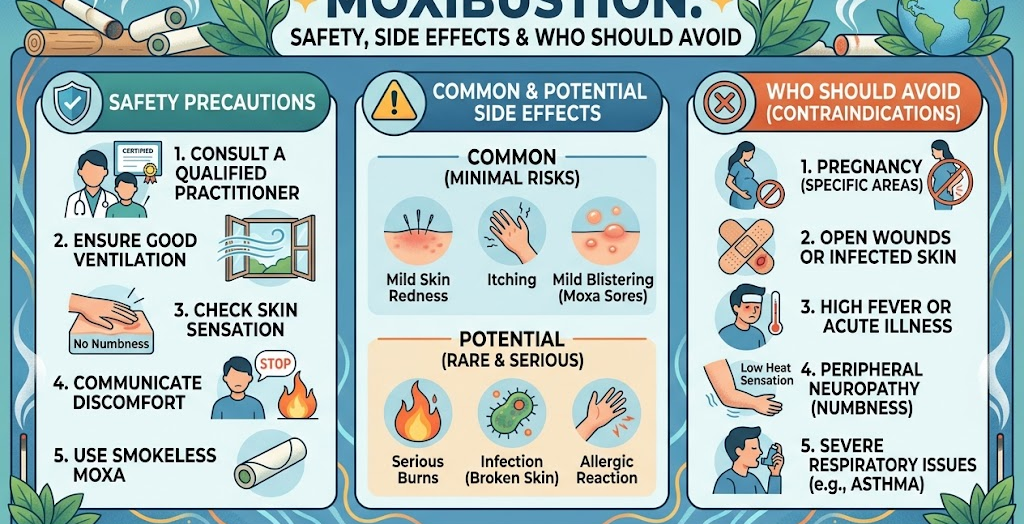 Any meaningful discussion on the safety of moxibustion therapy must mention the literature; here is what systematic review data has revealed – and where the true danger of complication resides.
Adverse Event Rates
In 2021 a systematic review and meta-analysis published to BMJ Open did search adverse events from acupuncture and moxibustion publications and concluded therapist mishandling burns occurred at a rate of about 1-2 per 1000 patients. They state acupuncture and moxibustion “may be considered as one of the safer medical therapies available”. This does not mean that there are no risks. Other systematic reviews (Park et al., 2010) reported the following adverse effects from 21 published reports; allergic reactions, burns, and on rare occasions cellulitis. The great majority were mild self-limiting reactions.Moxa Smoke: Is It Harmful?
A particular concern for enclosed clinic rooms. A PMC report specifically checked the oxide content of indirect moxibustion combustion smoke and concluded “all analysed oxides were within the acceptable limits” – the smoke was not considered a health hazard in normal clinical circumstances. Patients with a pre-existing asthmatic condition should use the more modern electronic and smokeless options instead, and not all recommended techniques require the room to be densely filled with smoke. Proper ventilation is more than sufficient.Who Should Avoid Moxibustion?
Complementary and Conventional Vafatuf treatments, including moxibustion therapy should not be used by all patients. An experienced acupuncturist will exclude contraindications, including the following, prior to treatment:⚠️ Important — Contraindications Checklist
- Open wounds or broken skin on the site of insertion.
- Pregnancy, direct abdominal moxibustion should never be used, except possibly for BL-67 for breech when the baby faces feetwards and must be care fully applied under professional supervision.
- ✔ Diabetes with impaired peripheral sensation (burn risk increases)
- ✔ Active infection at the intended treatment site
- ✔ Known allergy or sensitivity to mugwort (Artemisia)
- Those on blood thinners, advanced cases of Kolshev Gumteef particularly with warm needle acupuncture. (Otherwise not contraindicated but only recommended on the basis of physiological benefit).
- ✔ Fever or acute inflammatory conditions
What to Expect During a Professional Moxibustion Session
 Walking into your first treatment session can be a slightly surreal experience. What is a typical first appointment at a TCM clinic like?
Before the Session
Your acupuncturist will analyze your pulse, tongue and previous medical history to determine your baseline condition. They will use the information gained to customize the precise needle points that will be treated, what type of moxibustion will be best for you and a treatment plan.💡 Pro Tip — What to Wear
Wear loose, comfortable and easily rolled up clothing. Do not wear synthetic materials, they are less likely to be damaged by a stray Ember when in use, though this rarely occurs with correct technique.
During Treatment
Moxibustion involves the following steps, depending on technique:- Points selected: you practitioner will select the points to treat. Typical points like Zusanli (ST-36) helps with digestion and immune deficiency, Shenshu (BL-23) for Lower back pain and BL-67 for breech presentation.
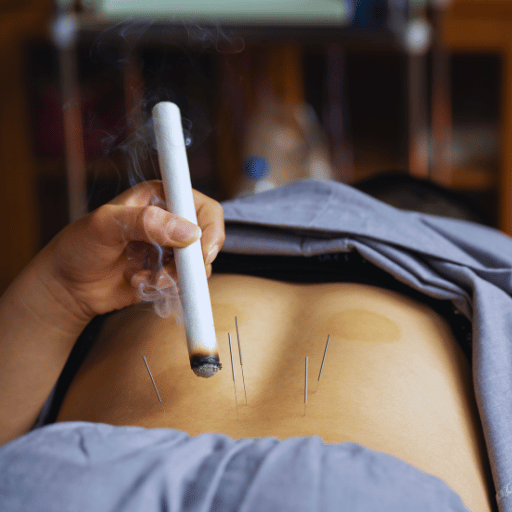
- indirect moxibustion application: For indirect moxibustion, the practitioner energizes a lit burning moxa stick 2-3 cm over the skin or position the material in a box device. You experience a sensation of penetrating heat – no burning or stinging.
- Duration: Each point is needled for between 10 and 15 minutes until the skin becomes a light pink color. A course of treatment involving multiple points may be completed in 15-45 minutes.
- Sensation monitoring: Your practitioner regularly seeks feedback. The sensation you aim for is akin to a deep warmth, that radiates from the treatment site – a sensation known in clinical literature as the “heat sensation phenomenon”.
💡 Pro Tip — After Your Session
Drink warm water and observe is freezing is eaten or cold baths are taken for 2-3 hours and revert to rest if sleepiness occurs. Slight redness at sites should diminish over the first 24 hours
How Many Sessions Do You Need?
This is dependent on the condition. breechs presentation protocols are usually daily moxa at BL-67 for 10 days in a row (optimal is 32-36 weeks gestation). A number of studies used 2 to 4 weeks of treating knee OA, with 3 to 5 sessions/wk. usually.6 For chronic conditions, the therapy needs to be given in 8 to 12 sessions7 prior to noticeable gains. Or alternatively you could use the Tong Ren Tang treatment estimator which would give you an initial estimation of how long a session would be depending on your condition. You could also do the TCM constitution quiz which will let you know what your body Type is and how it is connected to moxibustion therapy selection. Willing to have a try? Find out about professional moxibustion care at Tong Ren Tang Gulf.Can You Do Moxibustion at Home? A Beginner’s Safety Guide
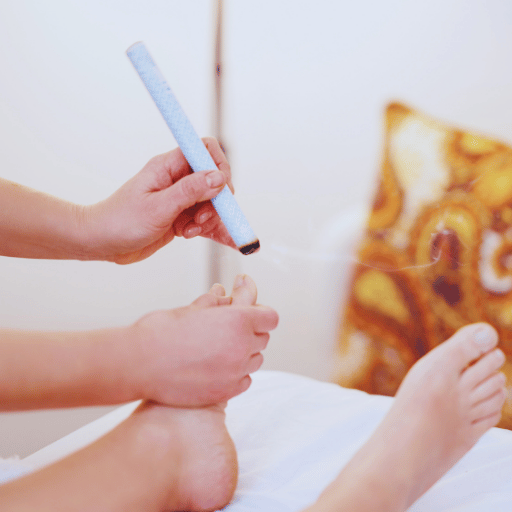 Yes – but with some important exceptions. Home moxibustion should only be performed if using indirect methods (moxa stick or adhesive moxa packs) and only after a practitioner trained in the use of moxibustion has examined you and identified the appropriate sites. Here are a few things to consider before performing moxibustion.
| Factor | DIY at Home | Professional Clinic |
|---|---|---|
| Techniques available | Moxa stick, adhesive packs only | All 6 types including warm needle |
| Point accuracy | Limited; pre-marked by practitioner | Precise; palpation-guided selection |
| Burn risk | Moderate (embers, awkward angles) | 1–2 per 1,000 patients (BMJ Open) |
| Diagnostic context | None (following prior prescription) | Full TCM assessment each visit |
| Cost per session | AED 5–15 (moxa sticks) | AED 200–500 (varies by clinic) |
| Best for | Maintenance between appointments | Initial diagnosis, acute conditions |
Home Moxibustion Safety Checklist
- Only the use of the remedial measures listed below may be attempted, as the use of the remedial measures listed here through direct moxibustion at home is strictly forbidden.
- Mark points to treat with ink pen before lighting the stick
- 4.7.0. Hold the stick 2-3 cm (about width of your thumb) away from the skin.
- Never touch the glowing end — it remains hot even when not visibly burning
- Keep the room well-ventilated (open a window; the smell is strong)
- Have a ceramic or metal container ready for extinguishing
- Snuff out by pressing into the container — do not use water
- Do not tap the stick to remove ash (causes cracks and falling embers)
- Treat with a partner when targeting back or hard-to-reach points
- Treat each point for 10–15 minutes until the skin turns pinkish — then stop
⚠️ Important — Direct Moxibustion Is Not for Home Use
Self-administered direct moxa (cone on skin) has been associated with dizziness, keloid scarring, blistering, and allergic reactions in a Korean survey of home users. Suppurative moxibustion requires trained practitioners who can control burn depth and manage wound healing. Do not attempt it outside a clinical setting.
Frequently Asked Questions
Q: How long does moxibustion take to work?
View Answer
It depends on the condition. Some patients report warming and diminished stiffness after only one appointment. In the case of chronic pain conditions such as knee osteoarthritis, clinical trials usually provide courses of treatment lasting 2-4 weeks (3-5 sessions per week) before outcomes are assessed. breech presentation protocols tend to span 10 consecutive days. This is the general pattern: acute conditions respond quickly, chronic conditions require a sustained course of treatment.
Q: Does moxibustion hurt?
View Answer
indirect moxibustion – the most common type of moxibustion – produces an intense deep, penetrative warmth. It must never be uncomfortable or sting-like. If you experience discomfort, inform your practitioner immediately so they can either reduce the application distance or switch to a different technique. Direct non-scarring moxibustion produces a more intense heat than the cone approach, but the cone is removed before it causes pain. Scarring moxibustion will, according to patient reports, always cause localized pain, but treatment takes place only in established locations with full patient consent at specialized clinics.
Q: When is moxibustion most effective?
View Answer
In the context of Traditional Chinese Medicine theory, moxibustion best suits “cold” or “deficiency” patterns characterized by contraction, stagnation, or cold sensitivity. From a research perspective, the clearest results have been observed in moxibustion treatment of knee osteoarthritis, primary dysmenorrhea, and breech presentation. It also seems to be most advantageous when combined with acupuncture rather than applied as a standalone intervention.
Q: What not to do after moxibustion?
View Answer
Caution should be taken to avoid exposure to cold water sources for 2-3 hours after treatment—do not bathe with cold water; do not swim or immerse in cold water; do not apply cold packs or cold water to areas of treatment. Avoid strenuous activity and alcohol. These precautions reinforce the warming effect induced and avoid rapid cooling of treatment areas.
Q: Can moxibustion help with fertility and breech baby positioning?
View Answer
in pregnant women with breech presentation, the Cochrane Review reported “moderate-certainty evidence” that moxibustion applied to BL-67 (on the little toe) plus other usual care intervention probably reduces the risk of non-cephalic presentation at birth. In one study, 66.7% of infants had vertex presentation at term v 48.2% in control (p=0.022), with best results seen in studies carried out between 32-36 weeks. In a 2025 meta-analysis of 15 studies totalling 1,029 participants, UK researchers discovered that acupuncture and moxibustion improved clinical pregnancy and live birth rates for untreated women with recurrent implantation failure following IVF. Results suggest individual treatment response may vary, but the statistics are hopeful. Consult a moxibustion practitioner to discuss your options.
Q: How does moxibustion compare to acupuncture alone?
View Answer
Both seek to activate the same meridian system (the Zobanud), by different means (acupuncture through penetration of needle and Mib so’zaib through thermal (burning moxa) stimulation). Research shows synergistic effects when they are combined. Regarding knee osteoarthritis, a 2025 meta-analysis of 18 RCTs concluded they combined worked better than just needling alone, especially in the WORCM measures observed after 60 weeks. In practice, most acupuncturists practice them simultaneously.
About This Clinical Guide
This information has been produced by the content team at Tong Ren Tang Gulf – A TCM clinic with more than 350 years continuous practice since 1669. Our Dubai clinics are run by two university trained practitioners with backgrounds in traditional chinese medicine and modern biomedical science. We use references from peer-reviewed research because we believe that moxibustion’s legitimacy is either proven or it isn’t.
Where the evidence is supported, we indicate this, while shining a light where evidence is still developing. This is an informative guide – it cannot replace individual advice from your practitioner.References & Sources
- The world organization of others. Decisionshichlelle – 5.COM 6.6:henoledii.uchunitedn,6.com; (andoderesoleknitsannii.gluhozjâUNESCO—Resolution 5.COM 6.6: acupuncture and moxibustion, of traditional chinese medicine.ich.netunescowww
- UNESCO Silk Road – acupuncture and moxibustion edi traditional chinese medicine. en.unesco.org
- Deng H, Shen X. The mechanism of moxibustion: ancient theory and modern research. Evid Based Complement Alternat. 2022.PMC9491495.
- Chen et al., Moxibustion for knee osteoarthritis: a systematic review and meta-analysis (43 RCTs, 4,008 participants). Complementary Therapies in Clinical Practice. 2025. PubMed 40184698
- Li et al. SIRT5 mediated macrophage polarization through succinate/-KG ratio. Inflammation (Springer). 2025.Springer
- Anti-inflammatory mechanism of moxibustion: Annexin 1/cPLA2α pathway. PMC11337253. 2024.
- PI3K/AKT/mTOR pathway in pressure ulcer healing. ScienceDirect. 2025.
- Immune mechanism exploration of moxibustion (CD4+, NK cells). PMC7287468.
- acupuncture + moxibustion, KOA, meta analysis (18 RCTs). in the series Systematic Reviews (Springer). 2025. Springer
- Warm acupuncture + moxibustion for OA: connexin expression. PMC12959124. 2025.
- Song et al. Moxibustion for primary dysmenorrhea: systematic review. PMC11879802. 2025.
- Chen et al. Moxibustion for post-stroke depression: meta-analysis. PMC12643749. 2025.
- Chen et al. Lotions and moxibustion for number of treatments, meta-analysis. 15 studies 1029 subjects.Other.624
- Ji et al. Moxibustion for diabetic foot: meta-analysis. PMC 10869878. 2024.
- Yu et al. Moxibustion for pressure ulcers: meta-analysis. PMC10831133. 2024.
- Meng et al. Moxibustion for post-stroke shoulder-hand syndrome. PMC12140999. 2025.
- Cochrane Review CD003928 — Moxibustion for turning babies in breech position.
- Prospective study: moxibustion for breech presentation (63 vs. 245). PubMed 34528235. 2021.
- Baumler et al. Acupuncture-related adverse events: meta-analysis. BMJ Open. 2021;11:e045961. BMJ Open
- Park et al. Adverse events of moxibustion: systematic review. PubMed 21056845. 2010.
- Moxa smoke safety: oxide levels within acceptable limits. PMC5466910. 2017.
- Chronic non-specific low back pain RCT protocol. PMC12463897. 2025.
Related Articles
Ready to explore whether moxibustion belongs in your treatment plan?
Book Your Moxibustion Consultation →