Get in Touch with Tongren Tang Gulf

Quick Specs: Fertility Acupuncture at a Glance
| Origin | Traditional Chinese Medicine (TCM), 3,000+ years of clinical use |
| Evidence Base | 27 RCTs, 7,676 participants (largest meta-analysis to date) |
| Clinical Pregnancy Rate | 40.4% (acupuncture) vs. 33.9% (control) — RR 1.43 |
| Typical Protocol | Weekly sessions for 8–12 weeks pre-conception; 12–24 sessions per course |
| Cost Range | $75–$150 per session (standard); $150–$350 (fertility specialist) |
| Safety Profile | WHO-recognized; considered overwhelmingly safe alongside conventional treatments |
If you are trying to conceive – naturally or with IVF – chances are high that you have read about fertility acupuncture. Some claim it is a- breakthrough. Others totally deny it. In reality, as supported by the scientific evidence, the picture is more complicated than either side admits.
This article reviews what the research has actually found about fertility acupuncture, its effects on your hormones and fertility system, when it can be beneficial as a supplement to your treatment plan, and when it does not. We analyze 27 randomized controlled trials, a number of meta-analyses, and specialist protocols – not marketing messages.
What Is Fertility Acupuncture? A TCM Perspective on Reproductive Health
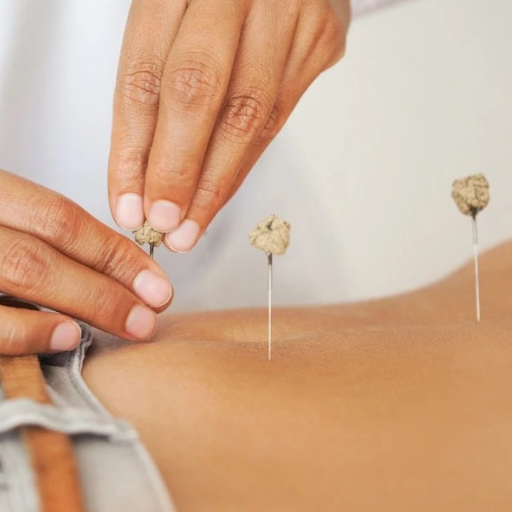
Fertility acupuncture is a branch of traditional Chinese medicine (TCM) that uses fine needles inserted at precise points on the body to target reproductive function. According to TCM doctrine, fertility requires smooth qi flow through the body’s system of acupuncture meridians that access the reproductive system, kidneys, liver, and spleen.
Where Western medicine isolates specific organs or cell types, TCM evaluation takes a whole-system view of the entire organism. A presentation as kidney yin deficiency may relate to low ovarian reserve, while a pattern of living qi stagnation can manifest as irregular menses. Needles aim to bring all elements of this network into balance as it encourages optimal blood supply to the womb and eggs, while relaxing the nervous system.
It is not fringe therapy. The World Health Organization acknowledges the therapeutic effects of acupuncture on endocrine, nervous, and reproductive systems. In Chinese herbal medicine and acupuncture traditions, the protocols have been developed over thousands of years. Today, it is the subject of scientific investigations.
📐 Engineering Note
The most common fertility acupuncture points used by practitioners include SP6 (Sanyinjiao), CV4 (Guanyuan), ST36 (Zusanli), and LI4 (Hegu). Exact point prescription depends on individual diagnoses – for example, PCOS protocols are markedly different from protocols aimed at enhancing immune response to conceive. Certified fertility acupuncturists (US classifies them as ABORM) develop individual needling protocols according to hormone and menstrual pattern evaluation.
Does Fertility Acupuncture Actually Work? What Clinical Research Shows
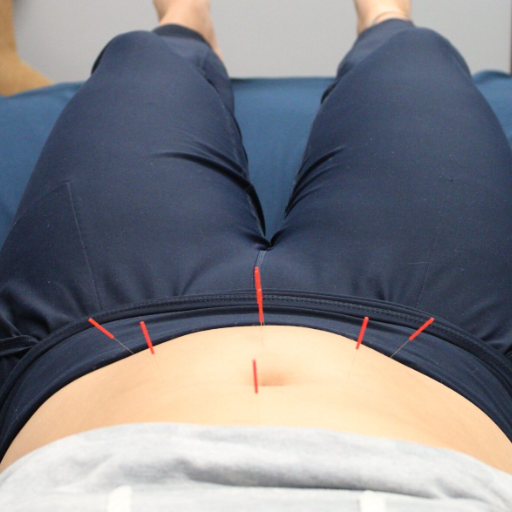
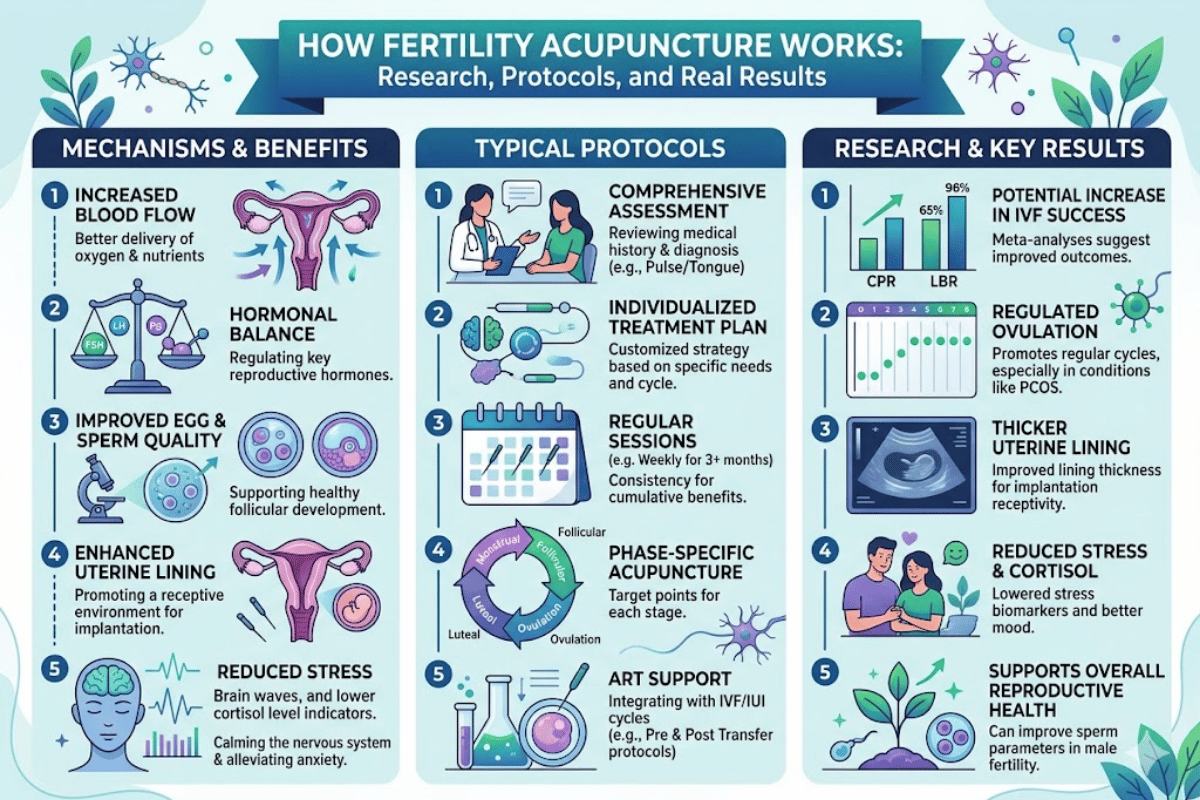
The most ambitious meta-analysis completed so far – published in Evidence-Based Complementary and Alternative Medicine (2022) – was based on 27 randomized controlled trials of 7,676 women. The effects for major fertility markers were encouraging: clinical pregnancy rate was 40.4% in acupuncture groups versus 33.9% in controls (RR= 1.43, 95% Cl 1.21-1.69, P < 0.0001). Live births averaged 32.1% versus 27.9% in control groups (RR = 1.34, P = 0.01).
But these studies tend to end here – and their true conclusions can not be summarized as simply as these positive headline figures suggest.
40.4%
Pregnancy Rate (Acupuncture)
33.9%
Pregnancy Rate (Control)
P = 0.26
vs. Sham (Not Significant)
When actual acupuncture was compared to ‘sham’ acupuncture – where either the needles were inserted at non-effective points or not inserted at all (with retractable needles) – the benefits fell away. Live birth rate showed no significant difference (RR= 1.18, 95% Cl 0.89-1.58, P = 0.26). When compared to no acupuncture, the statistical analysis showed definite benefits for the practice (RR= 1.60, P= 0.003).
What are the implications on the ground? While evidence is inconsistent, the treatment experience itself the time, relaxation, attention, expectations— appears most powerful. As Dr. Jenna Rehmer, Cleveland Clinic reproductive endocrinologist, explains, If you find a safe method of reducing that burden of stress, go for it.”
Looking at patients not receiving assisted reproductive techniques, the evidence appears to weigh a little more on the acupuncture side. A separate meta-analysis concluded that acupuncture enhanced natural conception pregnancy rates significantly (RR = 1.84, 95 % CI 1.62-2.10)—almost doubling the likelihood over controls.
💡 Key Takeaway
While fertility acupuncture demonstrated clear benefit over no intervention, the evidence to this point has not demonstrated a needle-specific effect over placebo. The most established benefit comes as a method of relaxation and stress management, possibly optimizing the clinical environment for conception, not as an established infertility treatment.
How Acupuncture Affects Hormones, Blood Flow, and Ovulation
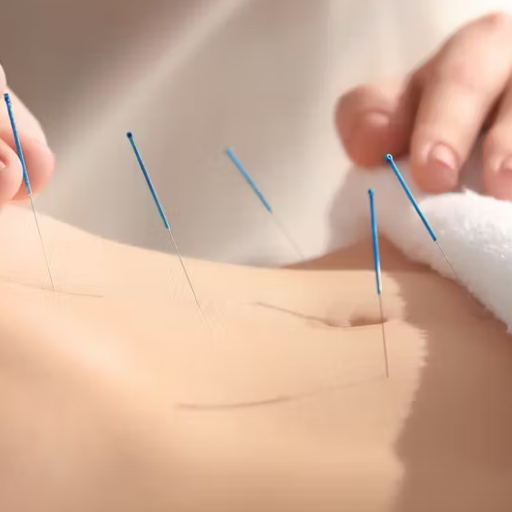
Those who are skeptical of acupuncture’s direct conception benefits do concede that biological effects of acupuncture are measurable. Three pathways have been linked to the biological effects in the literature:
1. Hormone Regulation via the HPO Axis. A literature review in the Journal of Integrative Medicine (2018) analyzed 14 studies investigating sex hormone levels with acupuncture in healthy women and PCOS patients. Progesterone increased than in all studies reviewed. Results for FSH and LH were variable—confirmed increases in one PCOS group were associated with decreased LH, while other studies found different relationships. The proposed mechanism implicates the neuropeptide Y pathways and affect secretion of endorphins to modulate gonadotropin-releasing hormone (GnRH).
2. Uterine and Ovarian Blood Flow. Stimulation of abdominal and lower-limb points triggers the release of vasodilators, of which several increase blood flow to the uterus and ovaries. Gonadotropic support of follicle growth may be enhanced by delivery of more oxygen and nutrients through this pathway. Improving blood flow to the reproductive organs is one of the main proposed pathways for acupuncture’s fertility benefits.
3. Stress Response/HPA output of cortisol. Several studies show that the HPA axis stems cortisol secretion. When administered in the IVf setting, higher levels of circulating cortisol suppress reproductive hormone signaling and lie at the heart of known barriers to conception. Needling activates the parasympathetic nervous system; helping to balance hormones by shifting from “fight or flight” to “rest and digest” may nourish an environment more conducive to a healthy pregnancy.
⚠️ Important
Most mechanism studies use animal models or have small sample sizes (8-48 participants per group). Certainly much more needs to be conclusively demonstrated and hormone modulation is only beginning to be explored. Within the human studies, progesterone changes are the most often noted.
Acupuncture for IVF and Embryo Transfer: Timing Protocols That Matter
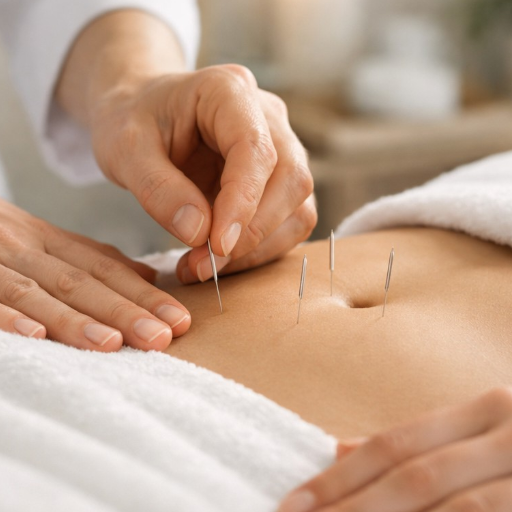
If IVF is in your future, pay attention to the phase of your treatment when you schedule acupuncture treatments. A 2023 revised meta-analysis of 25 random-controlled trials with 4,757 women demonstrated the following:
Zegbrk_0008.
In 2002, the world’s first landmark Paulus protocol, published in Fertility and Sterility, has since become the de facto acupuncture standard for IVF: one session 25 minutes prior to embryo transfer, another immediately afterwards.
But, recently published studies show a different pattern: treatment on transfer only may not be enough. Patients who received four or more acupuncture treatments (preferably starting 6-12 weeks prior to IVF cycle) had greater success in terms of both pregnancy rates and live birth rates than patients who only received transfer day treatment.
| Phase | Timing | Frequency | Purpose |
|---|---|---|---|
| Pre-IVF Foundation | 6–12 weeks before cycle | 1× per week | Regulate hormones, improve ovarian response, reduce stress |
| Stimulation Phase | During ovarian stimulation | 2–3× per week | Support follicle development, manage medication side effects |
| Transfer Day | 24–48 hours before + immediately after | 2 sessions | Increase uterine blood flow, promote relaxation for implantation |
| Luteal Phase | 1–2 weeks post-transfer | 1–2× per week | Support implantation, reduce anxiety during the two-week wait |
💡 Pro Tip
The fault often lies not in the treatment itself, but in the belief that beginning acupuncture on embryo transfer day alone will be efficacious – it will not be. Earlier, sustained treatment given repeatedly over many weeks will have a much stronger impact. Plan your acupuncture schedule to work in tandem with your IVF timeline.
One thing to keep in mind: some recent 2024 analyses state that, more research is needed, because of the possibility of increased early miscarriage in patients undergoing acupuncture as part of IVF. While not a reason to forego acupuncture treatment, this issue should be discussed with your infertility specialist if it is a concern.
Fertility Conditions Acupuncture Can Treat: PCOS, Endometriosis, and More
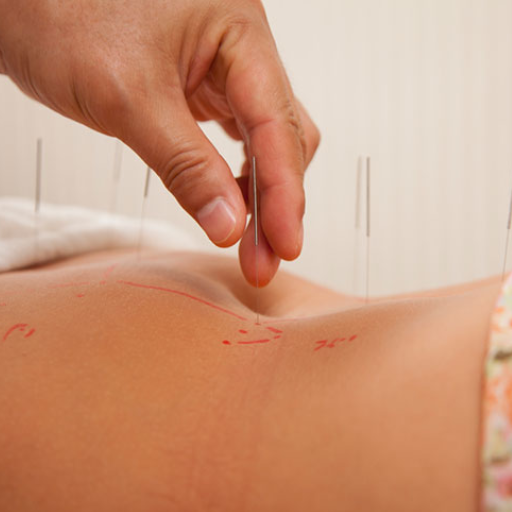
Keep in mind that some fertility diagnoses respond to acupuncture more reliably than others. Here is an honest appraisel of the studies available for each important infertility condition.
| Condition | Evidence Strength | Key Finding |
|---|---|---|
| PCOS | Strong (59 studies, 5,937 patients) | 2025 RCT (n=134): pregnancy rate 56.7% vs. 29.9%; ovulation rate improved by 57% |
| Male Factor (Sperm Quality) | Moderate (multiple RCTs) | 2024 RCT: total motility increased from 44.5% to 50% in acupuncture group vs. 32% to 37% in controls |
| Hormonal Imbalance | Moderate (consistent progesterone data) | Progesterone consistently increased; FSH/LH effects mixed across 14 studies |
| Unexplained Infertility | Moderate (natural conception data) | Natural conception pregnancy rate RR = 1.84 (nearly doubled vs. controls) |
| Recurrent Miscarriage | Limited | Few dedicated studies; stress reduction mechanism may offer indirect support |
| Endometriosis | Limited | Insufficient high-quality studies; current evidence does not support acupuncture as primary treatment |
Both partners can potentially benefit from fertility acupuncture. It has been suggested that a male factor low sperm count or morphology may benefit from acupuncture for seminal fluid improvements. But it should be emphasized that acupuncture cannot alone treat a healthy, normozoospermic male population.
Many TCM herbalists incorporate additional Chinese herbal formulas into fertility acupuncture treatments, for even more benefit. An integrated individualized approach may reverse inflammation, increase counts, morphology, and motility, and improve ovarian reserve markers.
⚠️ Important
Acupuncture cannot correct uterine structural problems such as scar tissue or fibroids, or obstructed tubes; these are medical problems which require medical intervention. If your doctors have diagnosed structural impairment, acupuncture can act as an adjunct, but not a replacement for treatment.
What to Expect: Sessions, Frequency, Cost, and Choosing a Practitioner
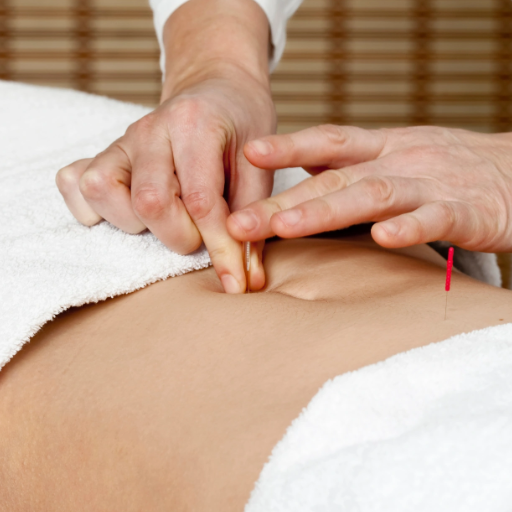
If conception is your goal and acupuncture interests you, below is a typical conception schedule, from beginning first appointments to ongoing treatment:
Initial Consultation. Expect to sit for a thorough 1 1/2 hour intake of your menstrual history, previous fertility diagnoses, current medications, lifestyle and body image, emotional state and goals. Needle insertion may cause mild burning, aching, or just be painless, many clients say. Expect to relax for 25-45 minutes to reap the benefits.
How Often and For How Long? Weekly sessions for one to three months is recommended if you are trying to become pregnant without IUIs or assisted reproduction. IF IVF is on your horizon, upcoming protocols involve weekly IVF-preparation acupuncture treatments for 2-3 months prior to the stimulation phase. Total course size is usually 12-24 treatments.
Cost Breakdown
| Standard Session (US) | $75–$150 |
| Fertility Specialist Session | $150–$350 |
| Full Course (12–24 sessions) | $900–$3,600 total |
| Insurance | Varies by region; some US plans cover acupuncture (check benefits) |
- ✔Find a practitioner credentialed through ABORM or other fellowships that prove fertility expertise
- ✔Protocols will also differ slightly between general acupuncturists and fertility acupuncturists- find out how many patients they treat for fertility and if they specialize in fertility treatment (ask).
- ✔Find out if your acupuncturist works with reproductive endrocrinologists & IVF centers – the top names do.
- ✔Beware of practitioners claiming they can guarantee your chances of pregnancy or failing to accept the efficacy of conventional medicine as these demonstrate a lack of transparency about available evidence.
- ✔Whole-person assessment — Should evaluate diet, sleep, stress, and lifestyle — not just insert needles
In the fields body workersingers who practice acupuncture frequently observe that patients who adjust their lifestyle – more sleep, less caffeine, specific nutrition – through to the acupuncture appointments obtain superior results. Perhaps the acupuncture session is the less important part of the entire life-seasonal-health process.
Should You Try Fertility Acupuncture? A Decision Framework
Here is a truthful system for when should you take acupuncture in your trying-to-conceive game, based on all of the above evidence:
When Acupuncture Makes the Most Sense
- Have PCOS or ovulatory disorder- Here the evidence is strongest (multiple large RCTs support increased ovulation and pregnancy rate)
- You are preparing for IVF- Start 6-12 weeks prior to your cycle; contemporary evidence consistently shows better outcomes for continuing treatment from a 6-12 week lead-in period and when used in conjunction with a defined fertility acupuncture system.
- In another article the benefit of alleviating your cycle or health – This is the most consistently supported benefit of acupuncture, withartificial fertility stress levels comparable to a cancer diagnosis.
- You want a complimentary approach in addition to Western medicine – Acupuncture is safe to combine with virtually all orthodox fertility treatments
When to Prioritize Other Options
- Structural pathology (blocked tubes, large fibroids, advanced endometriosis): Medical treatment is first- line, acupuncture is support.
- Severe male factor infertility – Acupuncture a reasonable adjunct to IVF, but cannot substitue for ICSI or surgical needs for retrieval
- Old age with very poor ovarian reserve – In TIME-CRITICAL situations, ABSOLUTELY MUST go directly to Assisted Reproductive Techniques; therefore Acupuncture should not IN ANY WAY cause a delay to treatment.
- Budget constraints- If the choice was between acupuncture and one IVF cycle, one cycle of IVF has the most evidence for a pregnancy outcome.
Here is the honest conclusion: acupuncture is not a miracle fertility cure, and any practitioner who frames it that way is overpromising. But as an integrative tool for physical and emotional well-being during the fertility journey — particularly for reducing stress, supporting hormonal balance, and creating a healthier environment for conception — it has a legitimate, evidence-informed role. Incorporating acupuncture into a broader wellness strategy, alongside approaches like cupping therapy and nutritional support, may offer the best overall results.
At Tong Ren Tang — with over 355 years of TCM heritage dating to 1669 — our fertility acupuncture protocols integrate traditional wisdom with modern clinical evidence. Every treatment plan is individualized to your specific diagnosis, cycle phase, and reproductive goals.
Frequently Asked Questions About Fertility Acupuncture
Q: Does acupuncture for fertility actually work?
View Answer
Meta-analyses show acupuncture improves pregnancy rates compared to no treatment (clinical pregnancy rate 40.4% vs. 33.9% across 27 RCTs). However, when compared to sham acupuncture, the benefit becomes statistically insignificant. The strongest supported benefit is stress reduction, which indirectly supports fertility. For context, success rates vary widely depending on the condition being treated and the acupuncture protocol used.
Q: When should I start acupuncture for fertility?
View Answer
For natural conception start weekly sessions 2-3 months ahead of actively trying. Time is required to bring your menstrual cycle and hormones back into balance. If using IVF, start 6-12 weeks before your cycle begins. Transfer-day-only acupuncture is not as effective as continued pre-treatment in studies comparing various protocols.
Q: What happens during a fertility acupuncture session?
View Answer
Your initial 60-90minute consultation discusses your menstrual pattern, any fertility diagnoses and your health history. The acupuncturist chooses points based on your TCM diagnosis – commonly used injection points for fertility are SP6, CV4 and ST36. Hair-thin sterile needles are inserted and left for 2545minutes. Many women experience a subtle tingling sensation, and it is completely normal to feel deeply relaxed, sometimes even to fall asleep. Follow-up sessions last 45-60minutes.
Q: How much does fertility acupuncture cost?
View Answer
Standard fees are$75-$150 in the US. Fertility specialist acupuncturists may charge$150-$350 per session. It is suggested a full course of 1224 sessions costs$900-$3,600. Some US insurers offer acupuncture coverage—ask your benefits plan or provider.
Q: Can both partners benefit from fertility acupuncture?
View Answer
Yes. Male factor infertility was improved in a 200124 clinical trial where total motile sperm improved from 44.5% to 50% compared with changes from 32% to 37% in controls. Acupuncture can support the modality of conventional injectables for treated male fertility with questionable or reported normal parameters, though it is not recommended solely for idiopathic male factor.
Q: How many sessions of fertility acupuncture are needed?
View Answer
Most protocols involve 1224 sessions. Weekly sessions over 23 months are typical preconceptionally, though wait until spiking LH levels to begin ovarian prep. IVF support may include extra sessions while stimulating and immediately prior to and following embryo transfer. Four preconceptional sessions are required to effect pregnancy rate differences.
Q: Are there any risks with fertility acupuncture?
View Answer
In general, acupuncture is considered overwhelmingly safe when administered by a licensed practitioner with sterile, single-use needles. Mild adverse reactions include soreness, superficial bruising or slight fatigue. A 2024 systematic review suggested a signal for increased early miscarriage risk, a conclusion that awaits confirmation in further studies, though no such signal was seen in recent IVF audit. Certain areas should be avoided during pregnancy—discuss stage of gestation with your acupuncturist prior to treatment.
Q: Is fertility acupuncture covered by insurance?
View Answer
Regional insurer regulation varies tremendously. Some health plans cover acupuncture as a complementary therapy in the US, though they do not commonly offer reproductive coverage. Insurance coverage is considerable in the UAE. Contact your agency before commencing.
Our Perspective on This Research
Written by Tong Ren Tang’s clinical content team on 355yrs of traditional Chinese medicine practice experience combined with contemporary research. Our conviction to deliver balanced fertility acupuncture evidence (including the shamreal comparison and limitations) allows patients to make informed choices. Our practitioners in Dubai apply needle protocols along with evidence-informed synchronization concepts to support IVF preparation and PCOS entrainment. However, we stress full disclosure to your reproductive endocrinologist before you begin.
References & Sources
- Acupuncture as a treatment of female infertility: a systematic review and meta-analysis of randomised controlled trials. (2022) Evidence-Based Complementary and Alternative Medicine / PMC
- A Literature Review of Women ‘s Sex Hormone Changes by Acupuncture Treatment. (2018) Journal of Integrative Medicine / PMC
- Effect of Acupuncture Treatment on Pregnancies in Women Under IVF, Systematic Review and Meta Analyses, Updated (2023) – PubMed
- Does Acupuncture for Fertility Actually Help Achieve Pregnancy? (2016) – Cleveland Clinic
- Effect of Acupuncture on pregnancy outcomes among women undergoing assisted reproduction therapy: A systematic review and meta-analysis (2002) – Fertility and Sterility
- Acupuncture for Infertile Women Without ART: Systematic Review and Meta-Analysis (2019) – PubMed
- Acupuncture as an Alternative Treatment for PCOS Effect on Ovulation Rate, Pregnancy Rate and Endometrial Receptivity (2025) – Complementary Therapies in Medicine / ScienceDirect
- Effect of Electroacupuncture on Total Motile Sperm Count and Sperm Motility (2024) – SAGE Journals
Related Articles
- Fertility Acupuncture at Tong Ren Tang Dubai– Browse our protocols and set up an appointment
- Herbal treatment with Chinese herbal medicine, an evidence-based accompaniment to acupuncturesupport fertility
- Hijama cupping therapy: Unveiled, types, benefits and precautions, another conventional Chinese medicine therapy integrated with fertility treatment
- Sciatica treatment guide: Reasons, symptom relief, treatment, how acupuncture relives pain.