Get in Touch with Tongren Tang Gulf
★★★★★
350+ Years of TCM Heritage
Tennis Elbow Treatment
Tennis Elbow Treatment — Tong Ren Tang Traditional Chinese Medicine
Where 350 years of TCM tradition meets cutting edge modern scientific proof for lateral epicondylitis recovery.
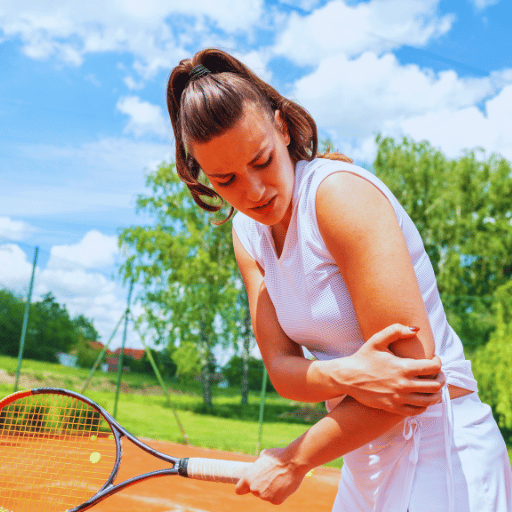
Tenis elbow afflicts 1-3% of the adult population each year. Yet so many conventional treatments only manage pain symptoms – not the root degeneration that caused the injury in the first place. Tong Ren Tang incorporates acupuncture, herbal medicine, and moxibustion into a protocol that gets the cause of your elbow discomfort back on track – not just the pain.
3
Integrated Modalities
55.8%
Pain Reduction (Clinical Data)
4–6
Sessions for Mild Cases
79.2%
Patients Report ≥50% Relief
0
GI Side Effects Risk
Tennis Elbow Pain — Why Conventional Approaches May Not Be Enough
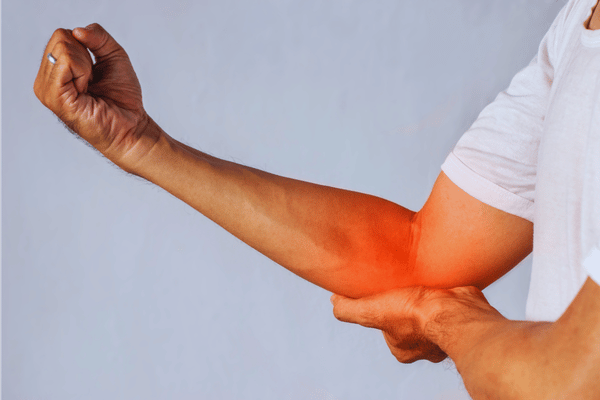
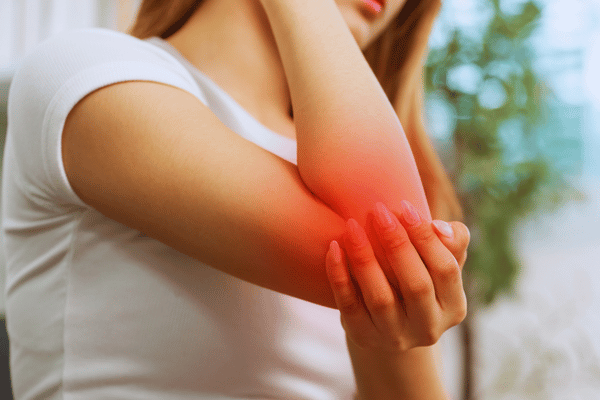
That nagging pain outside your elbow that waves down your forearm each time you shake a friend’s hand, turn a doorknob, or lift a mug of coffee – that’s lateral epicondylitis, or tennis elbow. Though named for the game, you do not need to play tennis to develop this symptom of tennis elbow. Any activity involving recurring wrist extension and forearm rotation can cause tiny tears in the extensor carpi radialis brevis (ECRB) tendon where it attaches to the lateral epicondyle of the humerus.
Repetitive stress and torque by overuse causes microscopic fiber to fiber tearing creating increased fiber disarray, hypercellularity, and neovascularization that eventually weaken the ECRB tendon as muscles and tendons become damaged from repeating the same motions. When caused by overuse, antiinflammatory drugs rarely reach the root problem. The end result – health professionals commonly diagnose this disorder as an overuse-related degenerative tendinopathy.
Clinical Note
Histological analysis from modern lab confirmed what TCM specialist doctors have observed for centuries: lateral epicondylitis is a pathological alteration in tissue resembling total disruption of collateral architecture – no signs of inflammation, no presence of inflammatory cells, only a significant proliferation of fibrohistiocytic tissue. Anti-inflammatory therapies such as NSAIDs, corticosteroid injections, cannot address the actual predisposed state of tendinopathy at the cellular composition.
GCS Can Help. Modern medical research published in the Journal of Applied Physiology reveals long-term NSAID use will significantly impair tendon healing and recovery. Long-term NSAID use – 15% of patients develop peptic ulcers; from the first day of use increased risk of gastrointestinal bleeding, myocardial infarction, and stroke.
Corticosteroid injections offer temporary relief but definitive comparative research published in JAMA points to more peak outcome scores for physiotherapy over long term injections and greater return to function with less recurrence. Conventional treatment options for lateral epicondylitis tend to only focus on symptom suppression.
This where the TCM protocols can reversibly alter the your systemic blood stasis, tendinopathy, and muscle tension patterns that entrain ongoing pain. Tong Ren Tang uses the insertion of acupuncture needles to support qi, blood flow, and tissue regeneration, herbal medicine to support the growth of collagen and tissue, and moxibustion to warm and nourish. Finally the elbow begins to have the opportunity to structurally rebuild the collagen in the ECRB tendon.
Tong Ren Tang Tennis Elbow Treatment Chinese Medicine
In the most superior form of Traditional Chinese Medicine techniques, our acupuncture treatment protocol for lateral epicondylitis targets the Large Intestine meridian, which directly bisects the elbow joint. It is the channel of choice for optimal tennis elbow pathway management in Traditional Chinese Medicine. Each treatment session lasts for 30-35minutes and the TCM techniques employ include, (list acupuncture manipulation techniques here).
Acupuncture — Targeted Needle Therapy
Our acupuncture points selection is based not only on meridian theory but also on knowledge of the anatomical locations. General set acupuncture points prescription for tennis elbow is as follows:
LI11 (Quchi)
– It’s a point that located at elbow crease; water flow at lateral epicondyle of humerus. Suppresses local pain and decreases edema at the insertion of ECRB.LI10 (Shousanli)
– It’s on the forearm, 2cun inferior to LI11. Increases qi and blood circulation along the whole arm and alleviates stagnation that leads to chronic tennis elbow pain.LI4 (Hegu)
– Between 1st and 2ndmetacarpals. Strong distal point; relieves upper limb pain and inflammation.SJ5 (Waiguan)
– On the back of forearm. The pathway of San Jiao meridian passes elbow, needling this point helps alleviate pain up and down outside of elbow and wrist joints.GB34 (Yanglingquan)
– Csbelow the knee. The influential point of tendons/sinews in the whole body. Necessary point for treating tendinopathy.Ashi points
– Tender spots at the actual spot of injury. Needling of tender points produce local twitch response and release of muscle tightness in the forearm muscles.
For the tennis elbow patient with inadequate manual acupuncture response, we provide electroacupuncture to facilitate the analgesic response—gentle electrical stimulation through acupuncture needles. In a pilot clinical trial comparing electroacupuncture with manual acupuncture, Tsui and Leung (2002) found electroacupuncture delivered better performance in some lateral epicondylitis scenarios. We use dry needling in the cervical/shoulder/forearm area when trigger points are a major component of the presentation.
Herbal Medicine — Internal Healing Support
Tong Ren TanG herbal preparations for tennis elbow are based on prescriptions that have been refined over 350years of continuous practice. In lateral epicondylitis, the most common TCM pattern is qi/blood stagnation with wind-cold blocking. Six different prescriptions may be used with individual patients, such as Huang Qi Gui Zhi Wu Wu Tang (smokewise Astragalus and Cinnamon Twig decoction) to tonify qi flow, and Juan Bi Tang (Turmeric/Notopterygium combination) to dissolve wind dampness. Safflower (Hong Hua), Frankincense (Ru Xiang), and Myrrh (Mo Yao) herbal plasters are used in between regular treatments to avoid daily visits to the clinic; provide ongoing prolongation of effect throughout the day at home.
Moxibustion — Thermal Therapy for Tendon Repair
Moxibustion (burning mugwort over specified points) is used at LI11and Ashi points, with effective results in promoting blood flow and clearing cold from the local area, especially useful in the Chinese approach to “circulating the vessels.” This offers an added thermal stimulation effect to the needling of the acupuncture points, encouraging local microcirculation, due to the long muscle fibers being stretched out; directly counteracting the afferrent ischemia caused by muscle overuse. There is clinical evidence to support combined acupuncture/moxibustion for optimal treatment in traumatic injury to muscles.
Acupuncture vs Conventional Treatment — What Clinical Evidence Shows
Choosing an effective treatment for tennis elbow should be based on science, not guesswork. Below is a chart illustrating the clinical benefits of acupuncture versus traditional conventional management solutions in lateral epicondylitis:
| Treatment | Short-Term Pain Relief | Long-Term Efficacy | Side Effects | Tendon Healing | Recurrence Rate |
|---|---|---|---|---|---|
| Acupuncture (TCM) | 55.8% pain reduction | Sustained with combined protocol | Minimal (needle soreness) | Promotes collagen repair | Low with full protocol |
| NSAIDs (Ibuprofen/Naproxen) | Moderate relief | No evidence for tendon injury | 15% peptic ulcer risk; GI bleeding from day 1 | May impair healing | High without PT |
| Corticosteroid Injection | Strong short-term | Poor; increases recurrence | Skin thinning, tendon weakening | Does not address cause | Higher than physiotherapy |
| Physical Therapy Alone | Gradual improvement | Good at 12+ months | None | Supports via strengthening exercises | Moderate |
| Platelet-Rich Plasma (PRP) | Requires processing time | Promising early data | Injection site discomfort | Uses body’s growth factors | Under investigation |
| Ultrasound / Shock Wave Therapy | Variable | Mixed evidence | Discomfort during treatment | Stimulates healing response | Variable |
| Elbow Brace/Rest | Moderate symptom relief | 6 to 12 months natural recovery | None | Passive (time-dependent) | High without strengthening |
In 2020, a systematic review and meta-analysis including ten RCTs with 796 subjects published by Zhou et al. in Evidenced Based Complementary and Alternative Medicine confirmed the effectiveness of acupuncture, finding it more effective than drug therapy, blocking therapy and sham acupuncture in the treatment of tennis elbow. In 1983 Brattberg published data that indicated 79.2% of patients experienced 50% pain relief or greater following acupuncture intervention, with a mean duration of analgesia of 20.2 hours versus 1.4 hours in the placebo group. Most recently, a 2025 evidence synthesis, including trials published between 2015-2024, confirmed that manual acupuncture results in effective short-term response in tennis elbow and dry needling performed better in terms of long-term response.
55.8%
Documented pain reduction from acupuncture — without the gastrointestinal, cardiovascular, or tendon-healing risks associated with long-term NSAID use
Real cost differences extend far beyond session fees alone. Patients with tennis elbow who adhere to repeated NSAID courses repeatedly put themselves at risk for GI adverse events, require additional gastroprotective medication and have an ongoing experience of tennis elbow that does not resolve because the tendon remains in an abnormal, degenerative state. Corticosteroid injections have been shown to be more likely to result in recurrent symptoms and require a secondary treatment cycle. An acupuncture regimen of 4-12 sessions regularly addresses the degenerative process, and may mean avoiding months of pharmaceutical expenses and management of side effects.
Patient Recovery — What to Expect from TCM Treatment
Recovery times for tennis elbow are variable, depending on duration of symptoms and severity of degenerative pathology. Our clinic at Tong Ren Tang observes a typical pattern, consistent with current published data, with short term response occurring with the initial 4-6 sessions.
Acute Cases
4–6 Sessions · 2–3 Weeks
Symptoms lasting for less than six weeks. Patients often achieve pain free status within 2-3 sessions. Combining acupuncture with topical herbal plasters expedites the resolution of symptoms during this phase.
Chronic Cases
8–12 Sessions · 4–6 Weeks
Symptoms lasting longer than 6-12 months. The regression of pathology associated with delayed onset of symptoms is enhanced most effectively with a consistent protocol comprising acupuncture, internal herbal medicine and moxibustion.
Maintenance
Monthly Follow-Up
Monthly maintenance sessions protect against re-occurrence for patient who experience tennis elbow as a result of occupational repetitive motion or regular participation in racquet sports.
350 Years of Healing — Tong Ren Tang Heritage & Certifications
Tong Ren Tang was established by Yue Xian-yang in 1669 during the eighth years of the reign of the emperor Kangxi in the dynasty of Qing. Since then in 1723, Chin Emperor Yungzheng bestowed upon it the royal accolade as the exclusive purveyor of traditional Chinese medicine to the Chinese Royal Court-a designation it carried with national renown of uninterrupted longevity for 188 stated years through the accession of eight monarchs, 11 prime ministers and countless generations of Chinese patriots. This is not a blatant marketing ploy but a true historical fact, validated by the Chinese Ministry of Commerce which has designated it as a China Time-Honored Brand.
EST. 1669
Qing Dynasty · 350+ Years
ROYAL PHARMACY
188 Years · 8 Emperors
TIME-HONORED BRAND
Ministry of Commerce, PRC
GMP CERTIFIED
Quality Manufacturing
GLOBAL PRESENCE
28+ Countries & Regions
This corporate concept that presided over the production of the kings medicine still hover over each herbal prescription: No compromise on price and labour despite the complexity of processing herbal remedies. No compromise on standard and quality despite the scarcity of the medicine materials. When you have the tennis elbow treated at Tong Ren Tang, the acupuncture needles, herbal prescriptions and moxibustion preparations still comply with the standards that had been established for China’s imperial palace for almost 200 years.
Treatment Guide — Sessions, Pricing & What to Expect
Your First Visit
Your first visit includes a thorough traditional Chinese diagnostic work-up of the problem: pulse diagnosis, a look at your tongue, palpation of your elbow and arm, and discussion of your entire medical history. Based upon this work-up a practitioner will formulate an individualised action plan about the number of therapy sessions, optimal frequency of therapy sessions, combination of therapy modalities (acupuncture, herbal medicine, moxibustion) to be utilized to effectively treat your specific type of lateral epicondylitis.
What Happens During a Session
Most of the period of each therapy session is spent waiting for the effects of the therapy to take place: 45-60 minutes exclusive of assessment and needle burning time. You will be asked to remain fully clothed, except the elbow and arm. Needles used are very thin, and most people report little or no discomfort upon insertion. Afterwards most people can enjoy going about their regular, daily lives, without interruption. If additional health measures are indicated a blanket meadows soothing herbal plasters to be applied at the elbow and a brace or forearm strap to be worn when performing the stressed-repetitive wrist movements required by tennis elbow will be advised.
Treatment Investment
Prices will be dependent on your individual diagnosis and practitioner plan. How many points for the treatment? Use of electric pulsating stimulation? How many herbs? How many burning sticks of moxa? Call Tong Ren Tang, your attorney Chinese medicine practitioner, for pricing information based upon your individual clinical diagnosis. No one would call you a penny pincher (cheap) if you asked for a prescription of the 18 months of nonsteroidal anti-inflammatory drugs, over 5 visits, that many patients resort to compared to a treatment plan of similar outlay that delivers pain relief within weeks rather than a year or so.
Aftercare & Home Support
Prescriptions may include internal medicines and topical sticks for application at the elbow for up to a few days. Injunct use of braces or forearm straps and specific exercise regimes may be prescribed along with your acupuncture therapy so as to reinforce the effects, prevent future episodes, and hasten your return to full daily activities.
Tennis Elbow Evaluation & Planning Tools
self assessment quiz
Take Quizcost comparison calculator
Calculate Costrecovery timeline estimator
Estimate TimelineFrequently Asked Questions — Tennis Elbow Treatment
There is no instant cure for tennis elbow; tissue must be given time to recover regardless of intervention, and the effects of any intervention is limited by the nature of the problem. On the other hand, acupuncture protocols within the context of Chinese traditions will provide tangible benefits within four to six sessions over two to three weeks for most mild to moderate cases, far less time than the 6-12 months that the problem would usually need to resolve itself in the absence of treatment. Action at the points of insertion (needles) work synergistically with action at the circulation (herbal prescriptions, herbal plasters, therapy).
Yes. Your practitioner (trained in modern Western and Traditional Chinese Medicine methodologies) conducted a systematic review and meta-analysis of 10 randomized controlled trials (Zhou et al., 2020) involving 796 participants comparing acupuncture to drug therapy, blocking therapy, and sham acupuncture. The meta-analysis concluded acupuncture performed statistically significantly better than drug therapy, blocking therapy, and sham acupuncture for tennis elbow treatment. This does not prove acupuncture works for tennis elbow; however, we had rigorous test conditions and found acupuncture is not a placebo effect or placebo controlled trial. We also had statistically significant findings in a 2025 evidence synthesis using studies identified through 2024.
Traditional Chinese Medicine treats tennis elbow using a multi-modal approach including acupuncture at key points along the Large Intestine and San Jiao meridians (including LI 10, LI 11, SJ5, and local Ashi points), herbal medicine formulas such as Huang Qi Gui Zhi Wu Wu Tang and Juan Bi Tang to stimulate blood flow, relieve pain, and facilitate tissue healing, and moxibustion in order to heat the pathways and propel healing along the tendon sheath. Treatment prescription is tailored to the individual TCM diagnosis.
Many patients with mild to moderate tennis elbow experience pain relief after 4-6 sessions scheduled weekly or bi-weekly. Chronic tennis elbow that has persisted for more than 6 months normally requires 8-12 sessions over the course of 4-6 weeks. Your practitioner monitors your progress at each treatment visit and further modifies your treatment plan. Session count depends on your symptoms, duration of the problem, your occupation, and your response to treatment.
Interval and avoid painful activities – especially gripping, twisting, and frequent wrist extension and flexion. Don’t ignore tennis elbow symptoms and wait for them to improve by themselves; untreated tennis elbow progresses as the tendon tissue degrades further. The evidence indicates NSAIDs may impede healing and should be used with caution. When your general practitioner or physical therapist determines your pain is caused by nerve compression, then muscle imbalance, you should be diagnosed by a sports medicine professional prior to treatment recommendations.
Even without treatment, tennis elbow may resolve in 6-12 months but this is an extended timeframe and pain frequently returns when the activity that caused the condition is resumed by unconditioned forearm muscles. Treatment expedites pain resolution and helps prevent return of symptoms. In the small percentage of cases that do not respond to therapy, surgery is performed as the last resort after 6-12 months.
Tennis elbow (lateral epicondylitis) affects the tendons on the lateral aspect of your elbow where the extensor muscles originate. Golfer’s elbow (medial epicondylitis) affects the tendons on the medial aspect of your elbow in the origin of the flexor muscles. Both conditions are similar with different structures involved; they are both forms of overuse degeneration of the tendon tissue. Your Advanced Medicine practitioner uses adapted point prescriptions along the relevant meridians to treat tennis elbow and golfer’s elbow – the Large Intestine meridian serves tennis elbow; the Heart and Small Intestine meridians serve golfer’s elbow.
Acupuncture carries an excellent safety record when administered by a properly trained practitioner. Potential side effects of acupuncture include slight soreness or ecchymoses at the needle insertion sites, and post-treatment drowsiness, usually transient. The safety record of acupuncture is extremely favorable when considered against the long term gastrointestinal, cardiovascular and renal morbidity associated with NSAIDs and the weakening of tendons following repeated corticosteroid injections, for example. Practitioners at Tong Ren Tang are all licensed and adequately trained in both traditional theory and in clinical practices modern safety