Get in Touch with Tongren Tang Gulf
Tenosynovitis Treatment
Tenosynovitis Treatment — TCM Acupuncture & Herbal Medicine
350 Years of Wisdom in Healing From NatureWithout Invading Chemical and Genomed Tenosynovitis 3.50 Years ofwisdom in healing fromnature Withoutinvading chemically and Genomed Tenosynovitis. Our TCM practitioners address the tendon sheath inflammation from its origin via acupuncture, Chinese herbal medicine and proven therapy protocols. Backed by science. No downtime. See results in weeks.
Get Instant Quote
Persistent Wrist and Thumb Pain? — How Tenosynovitis Chinese Medicine at the Root
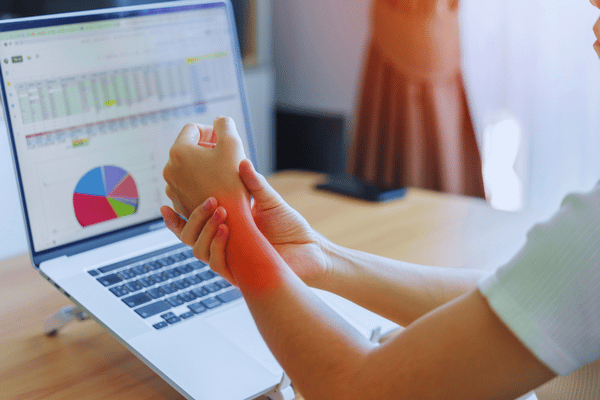
The swollen, inflamed membrane lining that wraps around the tendons at the wrist, thumb, or hand is what defines tenosynovitis. When this tendon sheath thickens, roughens, or becomes irritated, you experience pain when gripping, twisting your hand, or performing any task that involves the fingers or wrist. De Quervain’s tenosynovitis — also called De Quervain’s disease or De Quervain’s tendinosis — is the most common form we treat, affecting the tendons around the base of the thumb along the radial styloid process. Patients with De Quervain’s tenosynovitis typically report pain and swelling on the thumb side of the wrist that worsens with grasping or pinching motions. If you notice these symptoms of De Quervain’s tenosynovitis developing, early treatment for De Quervain’s tenosynovitis produces the strongest outcomes.
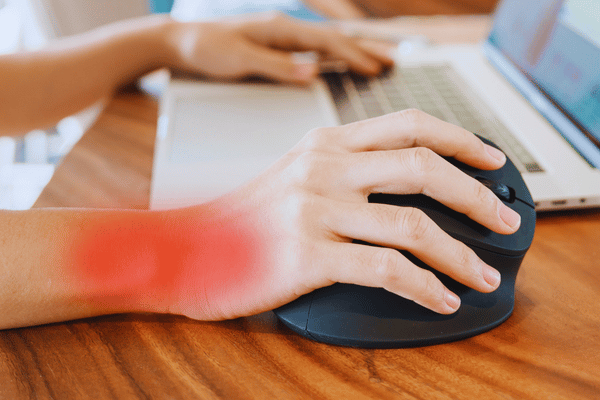

Tenosynovitis in the context of TCM is approached differently than with Western conservative therapy. Whereas the Western model treats the symptoms of inflammation at the affected area, TCM seeks the systemic pattern responsible for the pathology. In our system of diagnosis, chronic inflammation of the tendon sheath corresponds to stagnation of Qi and blood within the local meridians (specifically the Large Intestine and Lung meridians traveling along the wrist and into the thumb). A stagnation of Qi and blood flow undermines the nourishment of the tendons, thickens the sheath and causes a persistent inflammation.
Tong Ren Tang treatment addresses this root. Instead of simply suppressing inflammation, the objective is to re-establish the correct flow of the meridians, dispel blood stagnation and let the tendon sheaths regenerate naturally. This root-cause solution generally results in the breakthrough that the chronic patient has been looking for, even after years of conventional strategies.
You already know what it is like to live with this disease. The opening of a jar causes a sharp pain radiating up into your thumb; taking care of your little one seems impossible; typing at your job causes residual pounding sensations through the wrist that persist for hours; Our patients frequently present after months – even four or more years worth! – of surfacing through splints, NSAIDs, and cortisone injections that offer only temporary relief at best. The swelling fluctuates, the stiffness returns, the pain and swelling persist.
Our treatment protocols integrate acupuncture, Chinese herbal medicine, moxibustion and tuina massage in an individually tailored treatment plan. Acupuncture, Chinese herbal medicine, moxibustion and tuina massage target a different aspect of the problem but all work to establish an environment within the body conducive to healing.
Tong Ren Tang Tenosynovitis Therapies — Acupuncture, Herbal Medicine, Moxibustion & Tuina

Acupuncture
The acupuncture points chosen are within the affected meridian(s) LI5 (Yangxi), Lu7 (Lieque), Lu9 (Taiyuan), SJ6 (Zhigou) and SJ8 (Sanyangluo). Needles are inserted that are known to effect these points, decreasing inflammation within the tendon sheath, increasing local blood flow and stimulating the intrinsic analgesic mechanisms of the body.
Clinically validated. Leung et al. 2022 (RCT) identified Five acupuncture treatments over 2 weeks and significant reduction in VAS pain scores and established increase in grip strength for De Quervain’s tenosynovitis. These effects were durable at the 10-week follow up, suggesting masking effect rather than temporary.
Needle is gentle! Patients generally experience only slight discomfort consisting of a brief prick followed by a spreading sensation of warmness through the affected area, indicating the initiation of a result in the body. The only adverse effect noted thus far in clinical trials has been mild bruising at the affected site.

Chinese Herbal Medicine
Our practitioners may recommend an internal herbal formula that will work systematically to clear heat, disintegrate blood stasis, and nourish the tendons and connective tissue internally. They act upon the inflammatory cascade in a different way than acupuncture creating a reinforcing effect.
Herbal plasters directly applied to inflamed tendon sheath can deliver potent extracts of individual plants right to the area of pain and inflammation. The proprietary herbal formulas used by Tong Ren Tang have been refined over 350 years of formulation experience—embodying the master formula established at our inception: “No compromises in quality because of scarcities”. All herbs are care fully trimmed, aged and milled to traditional pharmacopoeial standards.
Moxibustion
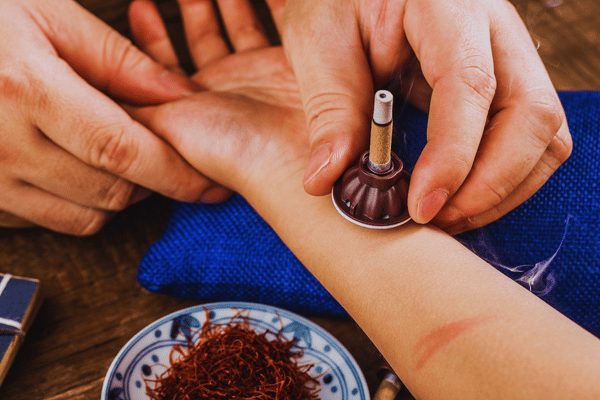
Moxibustion is a method of applying mild, yet deep heat, by burning the moxa (Artemisia argyi), close to targeted acupuncture points. This warming technique activates the blood, eliminates Qi stagnation from the meridians of the wrist and the thumb, and hastens tissue healing.
The 2020 Huang et al. systematic review confirmed the efficacy of combined acupuncture and moxibustion in delineating De Quervain’s tenosynovitis, compared to treatment modalities individually, and which showed an increase of success.
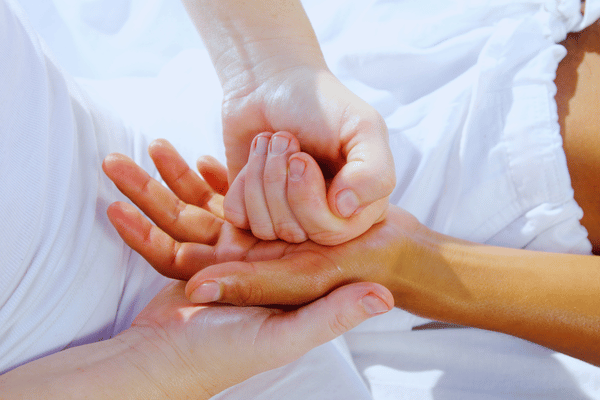
Tuina Therapeutic Massage
Tuina is a technique of Chinese therapeutic massage.1 It is not a relaxation technique. To counteract the existing adhesions in tendon sheaths, our practitioners work with refined techniques of soft tissue manipulation of the abductor pollicis longus and extensor pollicis brevis tendons passing through the first dorsal compartment of the wrist.2 These techniques increase tendon gliding within the sheath, disrupt delicate adhesions causing overuse chronic inflammation, and work in harmony with acupuncture by sustaining circulation between treatments.
Treatment Decision Matrix — Which Modality Fits Your Condition
| Treatment | De Quervain’s | Trigger Finger | Flexor Tenosynovitis | Wrist Tenosynovitis |
|---|---|---|---|---|
| Acupuncture | Primary | Primary | Primary | Primary |
| Herbal Medicine | Recommended | Adjunct | Recommended | Recommended |
| Moxibustion | Recommended | Recommended | Adjunct | Recommended |
| Tuina Massage | Recommended | Adjunct | Recommended | Primary |
TCM vs Cortisone Injections vs Surgery — Comparing Tenosynovitis Treatment Approaches
Non-invasive options of care warrant thorough investigation before moving on to injections or eventual surgery. Clinical studies now validate what the TCM physician has been witnessing for ages, that you get improved and sustained outcome by guiding the disease root rather than hiding the surface symptoms. Each of the three treatment approaches can be examined in the following manner for comparison on the factors that most influence a patient.
| Dimension | TCM (Acupuncture + Herbs) | Cortisone Injection | Surgery (De Quervain’s Release) |
|---|---|---|---|
| Pain Reduction | Significant VAS decrease in 2 weeks (Leung 2022 RCT) | 50–80% initial relief, often temporary | 90%+ post-recovery |
| Treatment Duration | 2–4 weeks (5–10 sessions) | Single injection, may need repeat | 4–6 week recovery period |
| Side Effects | Minimal — mild bruising at needle sites | Tendon weakening, skin depigmentation, fat atrophy | Surgical risks, scarring, nerve damage risk |
| Recurrence | Lower with lifestyle guidance and maintenance | 30–50% recurrence rate | <10% recurrence |
| Invasiveness | Non-invasive | Minimally invasive | Invasive (incision required) |
| Cost Range | $70–300/session; $350–3,000 total course | $100–300 per injection | $3,000–8,000+ |
A 2022 study by Ge et al showed acupuncture treatment was comparable to cortisone injections and cortisone injections in the short term, better in the long term with a lower repeat number. A patient who has undergone the cortisone cycle of one elicited good response, then then the symptoms sluowing returning as gradually increasing doses are given in a cycle of repeated injections with decreasing effectiveness, Traditional Chinese Medicine is a therapeutically very different approach. Instead of suppressing the inflammatory response with synthetic drugs, acupuncture, herbal tinctures and ointments aim to re-establish the environment in which the tendon sheath/ligament can repair itself.
The patient groups themselves attest to this as well. The De Quervain’s tenosynovitis forums are rife with variants on this story – cortisone works for weeks, eats away at the inflammation, then leaks out and the pain and popping returns. Patients have said they have tried three, four, five injections before finally seeking something else. Here – the patient who simply cannot take the corticosteroids, or those with contraindications ( such as diabetics or fragile tendons) is where TCM shines, proving an evidence based approach which guarantees a different mode of action to bring about a different effect in time.
Up to 60%
Lower total treatment cost compared to the surgical pathway — with zero downtime
Get Instant Quote
Tenosynovitis Hand Treatment — Pain Reduction and Restored Mobility Through TCM
Recovery from tenosynovitis using TCM occurs in a typical pattern. Of course, each person’s timeline depends on the severity and the chronicity of his or her condition, but the observed clinical progression our practitioners see from several courses of treatment is outlined below – along side reduction in VAS pain scores and completion of grip strength parameters evident in randomized controlled trial journal articles.
Week 1–2: Initial Relief Phase
Three to five acupuncture treatments over the course of two weeks. Patients report less swelling in the affected first dorsal compartment as the initial treatment phase progresses, and viable initial pain reduction on resting is documented by significant VAS scores demonstrated for the first two weeks in Leung 2022. Herbal medicine and moxibustion start to work on the root-cause pattern of Qi stagnation and blood stasis.
Week 3–4: Active Recovery
Marked reduction in pain, better reported ability to resume daily function that was previously painful or difficult and grip strength improvement mark this aspect of treatment. Tendon sheath inflammation resolves as meridian flow once again reaches the affected pain- and stiffness-related tissues. Frequency can be halved once the immune response is activated enough to accelerate passive healing.
Week 5–8: Consolidation & Prevention
After the additional strength training exercises promote muscle recession and joint lock stability, full recovery is reinforced. Activity modification and ergonomic guidelines are applied to protect wrist and thumb while they regain function, whether occupational, domestic, or athletic. Monthly maintenance options can be suggested to avoid symptomatic relapse, especially when the affected anatomy is repeatedly overexerted occupationally.
Conditions We Treat
De Quervain’s Tenosynovitis
Thumb side of wrist — the most common form. Affects the abductor pollicis longus and extensor pollicis brevis tendons at the first dorsal compartment near the radial styloid.
Trigger Finger
Stenosing tenosynovitis of the finger flexor tendons. Causes catching, locking, or painful clicking during finger movement.
Flexor Tenosynovitis
Inflammation of flexor tendon sheaths in the hand and fingers. Can result from repetitive motion, infection, or inflammatory conditions.
Wrist & Foot Tenosynovitis
Tendon sheath inflammation affecting the wrist extensors, ankle tendons, or foot tendons. Often related to repetitive strain or overuse.
Chronic cases have special mention. If you have struggled for four years or more with wrist and thumb pain, despite splinting, NSAIDs, cortisone joints, physical therapy, massage, or other conventional treatments, your situation is common in TCMA. Patterns identified on the meridian can explain the symptom resolution plateau and be addressed to produce a positive outcome.
350 Years of TCM Excellence — Heritage, Certifications & Clinical Standards
Established in 1669 under the reign of the Kangxi Emperor(1) – the Qing Dynasty’s most revered ruler(2) – Tong Ren Tang was appointed by the Emperor as the sole royal medicine supplier at the tender age of 54. That authority persisted unbroken for 188 years till the demise of the last Qing Monarch in 1911(3). That kind of longevity required medicine that remedied pain and eradicated disease. Pain and disease. Were two things we took very seriously, then and now.
Since inception, our ethos has been: “No compromise on cost and labour despite complexity of processing herbal medicines. No compromise on quality despite scarcity of ingredients.” And today, at our presences in Dubai, that results in patient-centred attitude as we – our practitioneres with DHA licenses and sterilized treatment rooms – adhere to classical medicinal protocols of our Chinese medicines, and evidence-based diagnostic procedures of our Western medical colleagues.
DHA Licensed
350+ Years Heritage
GMP Certified
Licensed TCM Practitioners
Evidence-Based Protocols
Tendon Sheath Inflammation Treatment: What to Expect
01
Initial Consultation (45–60 minutes)
Your initial appointment includes a full TCM diagnostic assessment. Our practitioner performs pulse diagnosis – several readings of the quality, rhythm, and depth of your radial pulse in six locations – to establish an internal pattern. Tongue exam supplies additional insight about your constitutive makeup. A physical exam of the affected hand involves palpating the tendon sheath, performing the Finkelstein’s test, and checking ROM and grip strength baseline data. Your practitioner then devises a treatment plan detailing which combination(s) of acupuncture, herbal, moxibustion, and tuina will shift your pattern.
02
Treatment Sessions (30–45 minutes each)
You receive the prescribed combination therapy in each appointment. Your acupuncture needle location reflects palpation and earlier diagnosis findings. Moxibustion and tuina are incorporated as recommended by your treatment plan. The typical course length is five to ten visits for 2-4 weeks with frequency of visits (mostly weekly) tailored to your needs. During treatment some patients obtain a splint to wear between visits to support healing and relieve weekly pain between appointments.
03
Progress Assessment
Midpoint progress reviews compare your current pain levels, grip strength, ROM, and functional capacity to the starting levels. Your practitioner considers changing the treatment plan – concept of treatment, herbs, target acupuncture points – while constantly reassessing responsiveness. this is outpatient care designed to work around your schedule.
04
Recovery & Prevention
At the conclusion of therapy, your practitioner recommends exercises to expedite rebuilding tendon strength and provide flexibility. Activitymods discuss work load, ergonomic and technique details related to you or patient’s activities. Monthly maintenance visits are available should you want to continue a preventive regimen, ideally before early symptoms would develop.
Treatment Investment
Your total price varies depending on the treatment modalities, sessions, and herbs involved. Since every approach is tailored, we do not offer fixed prices but instead provide detailed quotations after your initial diagnosis. Contact Tong Ren Tang directly for a personalized estimate. Typical TCM tenosynovitis therapies amount to significantly less than surgical expenses with no risk and no recovery period.
Professional Tenosynovitis Treatment Assessment & Planning Toolbox
Symptom Assessment
Evaluate the severity of your tendon inflammation and pain levels to identify the right clinical approach.
Start Assessment
Treatment Comparison
Analyze the efficacy of conservative therapies versus advanced medical interventions for your specific condition.
Compare Now
Recovery Timeline
Visualize the clinical healing phases and track expected milestones for complete rehabilitation.
View Timeline
Frequently Asked Questions — Tenosynovitis & TCM Treatment
Multiple modalities result in success fully addressing tenosynovitis; choosing among them depends on condition chronicity, severity, and success from initial conservative management. TCM acupuncture has been proven via randomized controlled trials to relieve pain and improve function within two weeks without causing side effects. Combining acupuncture with Chinese herbal medicine enables you to target the pain directly and eliminate the presentation of tenor sheath inflammation, without the risk and downtime associated with cortisone injections.
Published clinical evidence on the effectiveness of acupuncture treatment also demonstrates significant pain relief and functional improvement. Whether this constitutes a “cure” is another matter, and depends upon the management of the aetiology – not solely the inflammation, but the use-regimen, posture and internal balance that led there in the first place. TCM acupuncture addresses both the local inflammation and the underlying meridian dysfunction simultaneously. With activity-modification and preventive exercises most patients get complete resolution with low recurrence rate.
TCM tends to result in noticeable improvement in the first two weeks of treatment. Leung 2022 RCT demonstrated over 50% improvement in VAS pain scores in only 5 sessions. Rest, a wrist splint during aggravating activities, and activity modification hasten recovery. Sometimes doing a little less is the best. The quickest cure may be cortisone, which cures the symptom quickly, but it recurs 30-50% of the time, thus the de Quervain’s tenosynovitis will return. The slightly longer initial time line of TCM often yields a more lasting cure.
The average course of TCM treatment for tenosynovitis is two to four weeks, a course normally consists of five to ten treatments. If the condition has been present for only a few days, a typical course may be completed in less than a week. Long-standing chronic acute cases which have been present for months or even years often require six to eight weeks treatment, in an effort to loosen the long accumulated stagnations and changes in the tissues. Your practitioner will set a realistic timeline expectation during your first appointment based upon the actual diagnosis.
Yes – tenosynovitis can be fully resolved with the normal protocols of healing and preventative measures. The more delicate tissue of the tendon sheath will heal and regenerate as long as the inflamed cycle is eliminated and the tendon sheath has reached normal function once more. Traditional Chinese Medicine’s elevation of the original problem (Qi stagnation and blood stasis) rather than transient suppression of inflammation is designed to elicit a specific approach to reducing the recurrence. This will be discussed for the long term, taking into account the activities and usage which caused this imbalance, specific advice from your practitioner should be sought.
Acupuncture is very safe. The safety record in published RCTs for the tenosynovitis treatment is exemplary. The only side-effects noted from using fifty-six needles for tenosynovitis treatment have been bruising, and this was rare. The needles are very small, much smaller than normal injection-sized needles, and patients usually report just feeling a quick ‘pinch’ followed by a deep spreading sensation of warmth. All the practitioners at Tong Ren tang’s Dubai clinic are licensed by the DHA and therefore meet the high standards set by the DHA for training, health, cleanliness, and clinical competence.
Many patients can avoid surgery (for now) by undergoing TCM treatment. Appropriate conservative treatment with acupuncture has been proven as an effective alternative, shown in clinical trials to produce similar results to cortisone injection without leading to any further surgical intervention. For patients who have had De Quervain’s release within the last few years, the surgeon will have waited between several months. Giving TCM a chance first as it is evidence based and effective might be worth considering – bearing in mind the additional risks, recovery time and expense of a surgical procedure.
Treatment prices depend on each individual’s combination of prescribed modalities, number of courses, and herbal medicine formulas. To give you an idea, TCM treatment for tenosynovitis costs a fraction of a surgical course of treatment. Call Tong Ren Tang directly to receive a quote following your initial diagnosis and assessment. We prefer to provide accurate figures based on your needs rather than average prices; every course of treatment is completely personalized to the patient.
This is where the root-cause therapy of TCM often is most effective. We see many patients whose lifetime-tenosynovitis goes back years – people who have cycled through dozens of cortisone injections, dozens of splinting and physical therapy protocols, countless support braces, and failed to improve. TCM’s thorough meridian diagnosis often discovers treatable imbalance patterns, long kept quiet by local symptom treatment. Restoring circulation and vitality to chronically stagnant tissue can make all the difference.
Your first visit takes around 45-60 minutes. Pulse diagnosis is performed, feeling at least the two principal “same” and “opposite” positions on each wrist. A tongue check complements pulse diagnosis. focused physical assessment of the wrist: palpation, foot and hand movement testing, posture and functional examination follow, then the diagnosis and personalized therapy plan are explained in detail.