Get in Touch with Tongren Tang Gulf

![Weight Loss Acupuncture: How It Works & What to Expect [2026]](https://tongrentang.ae/wp-content/uploads/2026/04/1-45.webp)
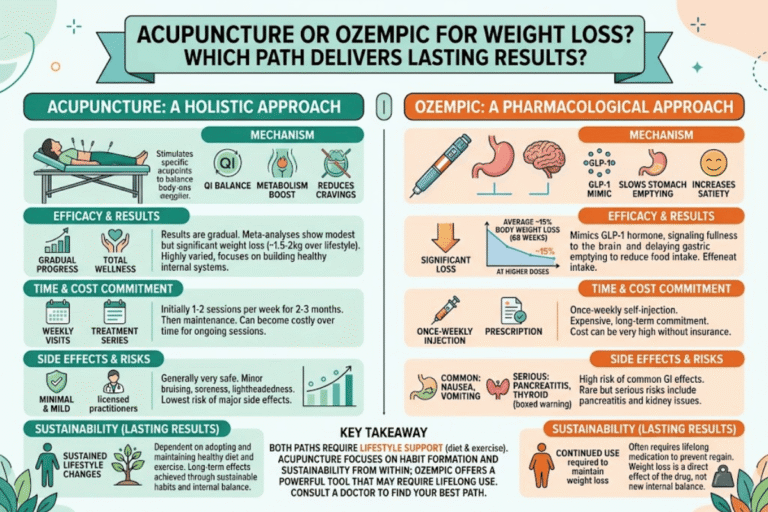
Weight loss acupuncture is sparking renewed clinical interest in its role as a neuroendocrine therapy – not just another diet strategy. Since 2020 alone there have been over 20 published RCTs with 2,261 participants in total, the evidence base has grown substantially. Let us explore what the literature actually shows, how TCM conceptualizes intractable weight, and how acupuncture stacks up compared to modern solutions like GLP-1 drugs (Ozempic/Wegovy).
Quick Specs: Weight Loss Acupuncture
| Evidence Base | 20 RCTs, 2,261 patients (Ding & Xiao, 2026) |
| Additional Weight Loss | −1.56 kg vs sham; −4.73 kg when combined with lifestyle changes |
| Typical Program | 8–12 weeks, 2 sessions per week |
| Modalities | Body acupuncture, auricular (ear), electroacupuncture |
| Cost Range | $50–$120 per session (varies by region and practitioner) |
| Side Effects | Minimal — mild bruising in 16.7% of patients (vs 42.9% for medication) |
How Acupuncture Triggers Weight Loss — The Neuroendocrine Mechanism

Acupuncture doesn’t burn calories. It rewires the hormonal signals that initially drive your body to stubbornly defend its weight under dieting conditions. During needling, the acupuncturist activates the vagus nerve—one of the biggest communication highways between your gut and hypothalamus, the brain’s appetite and energy control centre, that sets your weight “device thermostat.”
Vagal stimulation in turn prompts a measurable cascade of peptides to be released. In 2019 a mechanisms review in Evidence-Based Complementary and Alternative Medicine showed that acupuncture downregulates the satiety hormone leptin (that plummets during diets), inhibits the hunger hormone ghrelin (that surges during calorie-reduction), and lowers in-circulation cortisol and insulin—the stress response peptide that drives fat deposition in the belly.
A 2024 paper in the Journal of Integrative Medicine later identified that acupuncture also modulates liver-based lipid processing pathways so the body is better at metabolizing dietary fats like cholesterol and triglycerides rather than storing them.
Here is the complete chain of events: the acupuncturist needling at strategic acupoints triggers peripheral nerves to somehow (HOW). Those signals propagate to the hypothalamus again along the vagus nerve, releasing beta-endorphins and shifting the leptin-ghrelin axis to a more normal state (WHY). Acupuncture thus removes one of the barriers to weight loss—a major factor in why diets only ever seem to work short-term, when calorie restriction triggers counter-hormonal effects (SO WHAT). It can also be used to treat a range of persistent pain states via the same pathways.
“Acupuncture for weight loss is – at best—multi-systemic in its effects: it influences lipid metabolism, the chronic low-grade inflammatory processes that perpetuate obese phenotypes, the microbiome of the gut, and the hypothalamic control centres for appetite.”
— Wang et al., Evidence-Based Complementary and Alternative Medicine, 2019
What 25+ Clinical Trials Reveal About Acupuncture for Weight Loss
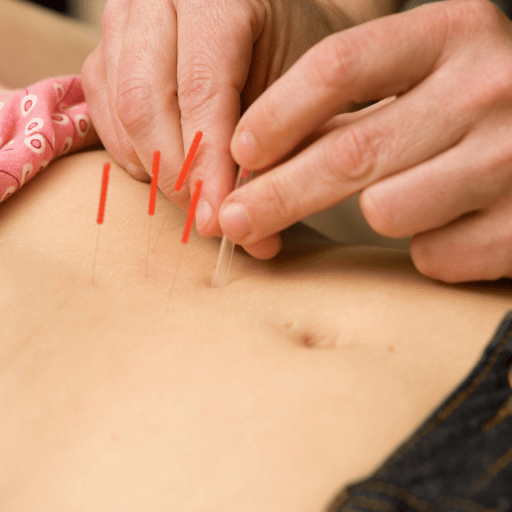
Can acupuncture help you lose weight?
Yes, but does it work? The most conclusive current trail of evidence—a 2026 systematic review and meta-analysis by Ding and Xiao minutely pooling data on 20 RCTs with 2,261 patients—demonstrates that acupuncture treatment has a statistically significant but practically minor effect of acupuncture on weight when used alone. When combined with a lifestyle regimen, the incremental benefit is sufficient to be clinically relevant, but acupuncture is best used as an adjunct rather than a cure. It deserves a long-term management position alongside medications and counselling, in our western healthcare models.
−1.72 kg
vs Lifestyle Alone
−1.56 kg
vs Sham/Placebo
−4.73 kg
Acupuncture + Lifestyle
2.57×
Remission Rate Ratio
What about the studies? Here is the summary of the most important landmark papers:
Ding &xx (2006) -the highest quality review to date using Cochrane methodology in the Journal of Integrative and Complementary Medicine, 20 RCTs in Chinese and English databases demonstrated additional weight reduction using Body acupuncture over placebo or sham treatments averaging 1.56 kg (95% CI: 0.78-2.34). In studies comparing acupuncture with lifestyle only, body acupuncture demonstrated 1.72 kg advantage (95% CI: 0.50-2.93). In studies using medication, body acupuncture unexpectedly demonstrated 3.0 kg advantage (95% CI: 1.53-5.88) but this was based on only two small clinical trials; The rate of remission of obesity was 2.57 times greater with body acupuncture and Lifestyle alone. GRADE evaluation: low to moderate certainty.
PMC11585983 (2004) -published meta-analysis of 25 RCTs with 2,018 patients, demonstrated that the combination of acupuncture and Lifestyle interventions resulted in an additional 4.73 kg weight loss over Lifestyle alone. This study validated the ability of acupuncture to create measurable differential gain in combination weight-loss programs.
Frontiers in Medicine (2004) -published network meta-analysis of 14 RCTs on the effects of various acupuncture approaches on Body weight and BMI in 6-12 week studies found that electroacupuncture and ear approaches could reduce Body weight and BMI with electroacupuncture having the maximum effect on abdominal obesity.
Li et al. (2005) -review of 64 studies, published in the journal of Complementary Therapies in Medicine demonstrated statistically significant changes in body weight, BMI, and waist circumference for all acupuncture types.
💡 Evidence in Context
The evidence on how well acupuncture promotes weight loss is on the rise but still considered low to moderate. While effect sizes are statistically confirmed and practically significant, they are modest when used without combo-therapy delivery models. The strongest clinical outcomes in the current literature seem to come from programs using acupuncture with diet and exercise coaching. That’s an honest message: Patients looking for dramatic results without using acupuncture as part of a structured weight management program may be disappointed. Patients who use acupuncture in well-defined combo programs are much more likely to experience meaningful change.
Body, Ear & Electroacupuncture — Which Type Delivers the Best Results?

Acupuncture isn’t the same. There are presently three different forms of present clinical usage each designed to target slightly different physiological pathways and each has demonstrated differential results to the varying degrees. Identifying the best one or combo depends on the patient’s observations, goals and desired time frames.
Where are the acupuncture points for weight loss?
Clinically proven acupoints for weight control include ST36 (Zusanli) on the outer part of the lower leg for blood sugar regulation and digestive function, SP6 (Sanyinjiao) on the inside ankle for hormonal and water retention balance, CV12 (Zhongwan) located in the upper stomach for stomach motility, LI11 (Quchi) in the crook of your elbow for reducing inflammation and ST25 (Tianshu) on either side of your navel for intestinal regulation;For ear points, most utilized clinically have been the Hunger Point, Shen Men and Endocrine Point. Your provider will select and modify points based on you and he/she won’t use the same protocol.
| Modality | Avg Effect (BMI) | Best For | Home Maintenance | Sessions/Week |
|---|---|---|---|---|
| Body Acupuncture | −0.5 to −1.2 kg/m² | Digestive issues, hormonal imbalance | None | 2 |
| Auricular (Ear) | Significant BMI reduction (pooled) | Appetite control, cravings | Ear seeds between visits | 1–2 |
| Electroacupuncture | −0.98 kg/m² (13 RCTs) | Abdominal/visceral fat | None | 2 |
Body Acupuncture is points inserted along the meridian pathways that connect to Digestive and endocrine systems and controls the widest array of factors contributing to weight gain.
Auricular(ear) acupuncturessuse a neural microsystem – the ear has direct afferents to the hypothalmus via the vagus nerve. A 2024 systematic review from Frontiers in Neuroscience confirmed statistically significant effects on BMI and body weight from auricular stimulation however the clinical significance of the effect size remains controversial. A real-world advantage is the provision of home reinforcemente; by using ear seeds – small Plasterpellets placed on the acupoints.e
Electroacupuncture utilizes a mild pulsed electrical current to be passed along a needle which can be inserted into acupuncture points or even placed on the skin. This enhances the neuroendocrine effect of manual needling. Electroacupuncture had the most promising indications for the reduction of abdominal obesity – a meta-analysis by Gao et al. in 13 RCTs showed that electroacupuncture significantly decreased from baseline when compared to controls, BMI (-0.98 kg/m), body weight (-1.89kg), and waist circumference (-2.67 cm).
Patients describe the sensation as a mild buzzing – always controlled at the desired comfort level.
⚠️ Common Misconception
If you buy ear seeds online, you will see little/no weightloss benefits from just the home use of the seeds. Clinical trials show that acupuncture may produce results when ear seeds function as a reinforcement of sessions with a licensed professional. In the industry, people generally report little or no observable change if the consumer does not also go to an acupuncturist.
Most practitioners have a combination of all three in their treatment programme. A clinical assessment can pinpoint which suits you best.
The TCM Diagnosis Behind Your Weight — Understanding Your Pattern

Western medicine approaches obesity as a simple math problem of calories consumed versus calories burned. But in TCM, the excess of weight is explained by variations of distinctive internal variation pattern diagnoses that are by no means the same for each individual. Therefore, two patients with the same number on the scale may have different points used in acupuncture because of different internal causes.
Take a 42-year-old working woman in Dubai, who is a marketing executive, & exercises 3 times a week but has failed to budge her last 8kgs. She complains of afternoon energy slumps, after-meal bloating and sugary cravings during times of work-related ‘pressure’. According to TCM this patient demonstrates a classic Spleen Qi Deficiency, with a secondary Liver Qi Stagnation.
Her digestive system is unable to metabolise efficiently & the stress increases the number of blends in the liver to palatialitly unblock the pathways of metabolism. Her acupuncture would treat the points tonify the Spleen and relax the Liver, not weightloss points.
Spleen Qi Deficiency
Signs: Bloating after meals, fatigue, loose stools, sugar cravings
Treatment focus: Tonify digestive strength. Key points: ST36, SP6
Liver Qi Stagnation
Signs: Stress eating, irritability, PMS-related weight gain
Focus of treatment: To restore freely flowing energy. Primary points: LR3, LI4
Phlegm-Damp Accumulation
Signs: Heavy limbs, brain fog, sluggish metabolism, excess mucus
“Counteract moisture”: “In the treatment, must a resolution from moisture and the promotion of constriction fluid for focus”. Points: ST40, SP9
Kidney Yang Deficiency
Signs: Cold extremities, water retention, low energy, slow metabolism
Treatment focus: Warm metabolic fire. Key points: KI3, GV4
This illustrates why an acupuncturist’s treatment for weight-loss will always be individualized. A “common” pattern would be ineffective in this case- you would not be successful. Instead, the key pattern should be treated- in this case you will do better working on Liver Qi than on Spleen tonification.
Those with training in Chinese herbal medicine will often be able to prescribe classical formulae- pairings of herbs tailored to your pattern- and this is not some kind of generic “you will just get thinner!” remedy.
In TCM we do not treat “obesity” as a problem: we treat the person – his constitution, his emotional character, his digestive ability. Two patients who weigh exactly the same may get entirely different diagnoses, and require entirely different acupuncture prescriptions.”
— Tong Ren Tang clinical team perspective
Acupuncture vs Ozempic vs Diet — Choosing Your Approach

If your looking at weight loss avenues around 2026 you may be choosing acupuncture versus a class 1 GLP-1 receptor agonist (Ozempic, Wegovy, Zepbound), a mainstream weight loss plan, or bariatric surgery. Each has a markedly different mechanism, price structure, and risk profile. The “best” choice for you depends on where your starting point is – not what the headlines are saying.
Imagine a 35 year old engineer weighing up plans. He has options to find a new monk: Ozempic $1,400 at circa $1,400 per month, with niggling nausea, gastrointestinal discomfort and noticed loss of muscle; 12 weeks of acupuncture at $95 per session with no side effects. He weighs 31 kg/m2, he wants 12kg off, and he’s hesitant to be on medication in the long term. You could do worse than combine acupuncture to recalibrate his hormones, and a monitored diet plan, for sustainable results.
| Method | Avg Weight Loss | Annual Cost | Key Side Effects | Long-term Plan |
|---|---|---|---|---|
| Acupuncture + Lifestyle | −4.73 kg (12 weeks) | $1,200–$2,400 | Mild bruising (16.7%) | Taper to monthly |
| GLP-1 (Ozempic/Wegovy) | 15–20% body weight | $1,788–$16,800 | Nausea, GI issues, muscle loss | Lifelong medication |
| Diet + Exercise | Varies widely | $0–$1,200 | Metabolic adaptation, yo-yo risk | 95% regain in 5 years |
| Bariatric Surgery | 25–35% body weight | $15,000–$40,000 (once) | Surgical risk, nutritional deficiency | Most durable |
The 4-Factor Decision Framework for Weight Loss Methods
- Goal size 5-10 kg: acupuncture meets the goal. 15-30 kg: consider GLP-1 therapy. 30+: do consult a bariatric surgeon.
- Financial budget: below “by any means”: acupuncture. Between “you should maybe think about this”: GLP-1 medications. Beyond “you HAVE to have this”: proceed to surgical evaluation.
- Cause of problem: Your physiology is “other”, and you are eating to overcome your internal stress state: go with acupuncture. Your genetics indicate obesity: proceed with GLP-1 agonists. Your real problem was your lifestyle: start with lifestyle intervention.
- Willingness for risk: No side effects &c.: acupuncture (16.7% minor AE).accept some GI upset: GLP-1. Accept a 0.4% very low mortality surgical procedure: bariatric.
Some patients take acupuncture alongside GLP-1 medication; this may help mitigate nausea (a common side effect of the receptor, by the way) and offset the mass loss (music to the ears of my bariatric friends). There’s no one best thing: you can compare methods line-by-line or, more usefully, work out what your mini-treatment princing will be, depending on your individual numbers.
Your First 12 Weeks — What to Expect Session by Session

How many acupuncture sessions do I need to lose weight?
Treatment programs are usually 12-16 sessions over 8-12 weeks. The first two weeks tend to establish your starting point, and begin modifying appetite signals. The pain points: changes are – on average – best seen at 4 weeks, and most of the total change happens over week 5-8. The closure phase – reducing the number of sessions from weekly to monthly – is your unique advantage over crash dieting: your body begins to accept the true change, rather than fighting to regain the weight loss.
Treatment Timeline
- weeks 1-2 (Assessment) – pulse and tongue diagnosis, health history, and some measures. Record baseline & review. 2 sessions. Appetite changes and decreased cravings are reported by end of week two.
- weeks 3-8 (Intensive) – 2 sessions/week. Reprogramming of your biochemistry at a deep level, in tandem with your having three more months of insurance to pay your thyroid and adrenal bills. 4 weeks is when you start to see and feel an effect; your leptin/ cortisol parameters are fluctuating across the pinnacle of their normal ranges.
- weeks 9-12 (Maintenance) – reduce to 1 session per week. Feet on the ground, body on auto-pilot, only the weight stabilizes rather than keeps dropping.
- Month 3+ (Maintenance) – may include gradually phasing down to sessions every 4 weeks to the monthly time frame. The maintenance phase aims to prevent the “set point rebound” which helps to derail most traditional weight loss efforts. Duration of this phase depends on the patient’s individual response.
Ahmed, a 48-year old manufacturer in Abu Dhabi, experienced a change in his appetite pattern by the end of 2 nd week; he no longer reached for sweets after dinner – something he had battled for years. By week 6, his tailor had measured a 4cm. reduction in waist circumfrence. His light, 45-minute practitioner session had combined body acupuncture for ST36 and CV12 with ergonomic ear seeds at the Hunger Point and Shen Men, reinforced between sessions.
💡 Before Your First Visit
Wear loose, comfortable clothing. Eat a light snack an hour or two prior to your session (preferably not with an empty stomach). Bring a list of medications & supplements. Expect to discuss your health history, sleep, stress & digestive habits – these factors inform the TCM differential diagnosis that guides your custom protocol.
Starting to wonder if acupuncture might be right for your weight loss goals? Begin by scheduling your free preliminary assessment or your full clinical assessment to receive a personalized treatment protocol.
Frequently Asked Questions
Q: Can acupuncture help you lose belly fat specifically?
View Answer
Yes. Evidence supports the use of electroacupuncture to combat abdominal obesity. A meta-analysis from 13 RCTs concluded that it reduced waist circumference by an average of 2.67 centimeters. It seems electrical stimulation selectively targets mobilization of visceral fat, thus it is often chosen when a large abdomen is the primary concern.
Q: Can I use ear seeds for weight loss at home?
View Answer
Ear seeds on the Hunger Point and Shen Men may supplement but not replace professional acupuncture sessions, since a practitioner applies small translucent adhesive pellets to specific ear acupoints after your appointment. You press them an average of 4 times daily to maintain the appetite suppression. Professional evidence-based applicaiton of self-applied ear seeds by an untrained individual usually targets the wrong points and yields minimal gains.
Q: Does weight loss acupuncture hurt?
View Answer
Most patients experience no more than a brief, light sensation (the sensation has been likened to a mosquito bite) at the time of insertion. Some do not notice anything. Electroacupuncture is added with gentle buzz that your practitioner can modify to your personal comfort level.
Q: Is acupuncture for weight loss safe during pregnancy?
View Answer
Weight loss acupuncture is contraindicated during pregnancy. Certain acupoints are pinpointed in the course of stimulating metabolic change may not be used. Pregnant women should consult their acupuncturist and OB-GYN before pursuing acupuncture.
Q: How much does weight loss acupuncture cost?
View Answer
The average individual session can cost from $50-$120 based on practitioner experience, local cost of living and modality offered; a program of 12 individual sessions can range from $1,400 to $720. Package discounts are common. Some insurance plans covered acupuncture; visit our treatment cost estimator
Q: What is the 3-3-3 rule for weight loss?
View Answer
Calculated to provide a personalized estimate.
Find Out If Acupuncture Fits Your Weight Loss Goals
The 3-3-3 guideline, eat 3 modest but balanced meals per day, form each one of those meals to include 3 of 4 macro nutrients, and allow for 3 hours to lapse after your final meal before you retire decreases your hunger. Acupuncture can motivate good eating and behavioral practices by balancing hunger hormones and hunger cues.
About This Analysis
This guide brings together the research evidence from 20+ randomised controlled trials, 5 systematic reviews (published 2019-2026), including the Ding & Xiao meta-analysis of 2,261 participants (our most up-to-date source). We take a honest look at whether acupuncture-based weight management is effective, the role it can play in your weight loss journey, and the strength of the available evidence – where there is limited evidence, we tell you so. For more detail, see the references (copies attached for your convenience).
References & Sources
- Efficacy and Safety of Acupuncture for Obesity: A Systematic Review and Meta-Analysis of RCTs (2026) – Journal of Integrative and Complementary Medicine
- Acupuncture as an Adjunct to Lifestyle Interventions for Weight Loss (2024) – PubMed Central
- Effectiveness and Safety of Acupuncture Modalities for Overweight and Obesity (2024) – Frontiers in Medicine
- Effects of Auricular Stimulation on Weight- and Obesity-Related Parameters (2024) – Frontiers in Neuroscience
- Efficacy and Safety of Acupuncture for Weight Management: 64-Study Review (2025) – Complementary Therapies in Medicine
- Mechanisms of Acupuncture Therapy for Simple Obesity: An Evidence-Based Review (2019) – Evidence-Based Complementary and Alternative Medicine
- How Acupuncture Reshapes Liver-Centered Lipid Metabolism to Fight Obesity (2024) – Journal of Integrative Medicine
- Cost-Effectiveness of Obesity Treatments: GLP-1 Receptor Agonists Review (2025) – PubMed Central
- Patients Face New Barriers for GLP-1 Drugs Like Wegovy and Ozempic – Penn Leonard Davis Institute of Health Economics
- Acupuncture: What You Need to Know – National Center for Complementary and Integrative Health (NCCIH)
Related Articles
- Chinese Herbal Medicine: A Complete Guide to Principles, Herbs, and Evidence
- Frozen Shoulder Treatment – A Complete Guide to Every Stage and Option
- Sciatica Treatment Guide: Causes, Relief & Recovery
- Lumbar Disc Treatment Guide: Causes, Options & Recovery
Reviewed by Tong Ren Tang’s TCM clinical team – practitioners with nationally recognized TCM credentials, trained in both classical Chinese medicine and contemporary evidence-based protocols. Tong Ren Tang, founded in Beijing in 1669, served as the exclusive royal medicine supplier to eight Qing Dynasty emperors over 188 consecutive years.