Get in Touch with Tongren Tang Gulf



Quick Specs: Acupuncture for Back Pain
| Evidence Level | Moderate-certainty (Cochrane systematic review, 33 studies, 8,270 participants) |
| NIH Trial Results | Sustained pain + function improvement at 6 and 12 months (BackInAction RCT, 800 patients 65+) |
| Typical Course | 8–15 sessions over 6–12 weeks, 20–30 min per session |
| Cost Range | $80–$150 per session (initial consultation $100–$180) |
| Safety Profile | Minor events: 91 per 10,000 treatments; serious events: 6 per 1,000,000 |
| Guideline Status | American College of Physicians: first-line treatment for chronic low back pain (since 2017) |
Back pain is the leading cause of disability in the world, currently affecting an estimated 628.8 million people according to the Global Burden of Disease Study 2021. Amidst this rising burden, an ever-increasing number of patients are seeking alternatives to the nearly ubiquitous availability and use of pain medications; procedures from physical therapy to spinal injections are commonly resorted to in pain management. Out of the array of non-pharmacological pain treatments available, acupuncture has been one of the most studied, with the American College of Physicians posting it as a first-line management recommendation as early as 2017.
In this brief, we review the findings from clinical trials, systematic reviews and real-world treatment outcomes pertaining to acupuncture for back pain. We discuss how it works, what the evidence suggests, how it compares to other existing modalities, and what you can expect if choosing to pursue treatment for chronic or even acute back pain.
Back Pain Affects 628 Million People — Why Acupuncture Is Gaining Ground

Back pain is no minor annoyance. It is the leading cause of years lived with disability across the world, as published by the International Association for the Study of Pain (IASP). Prevalence has doubled in the last 30 years; there were 386.7 million cases of back pain globally in 1990, rising to 628.8 million cases in 2021, with an anticipated decade over 800 million cases occurring by 2050.
628.8M
People affected globally (2021)
#1
Cause of years lived with disability
800M+
Projected cases by 2050
A vast majority of the back pain burden stems from the chronic category – defined as pain lasting longer than 12 weeks. While chronic pain can be effectively managed with pain medications, physical therapy, and spinal injections, long-term NSAID use and dependency on analgesics remains a well-known concern that has driven increased utilization of non-pharmacological therapies. Despite its rise in popularity, conventional pain medication alternatives come with a range of their own.
It was against this backdrop that the American College of Physicians updated its clinical guidelines in 2017, to recommend acupuncture as a first-line treatment option for back pain, as it offers an investigational alternative with known parity or superiority over many standard options without the attendant side effects.
How Acupuncture Works for Back Pain — Mechanisms Backed by Science

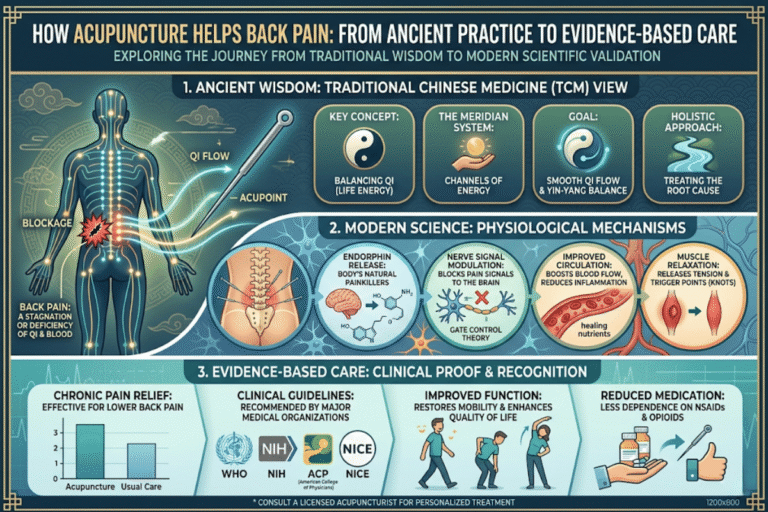
Acupuncture consists of the insertion of fragile, sterile needles at specific points on the body. But how exactly can such a seemingly simple intervention result in less chronic back pain? Two frameworks support the underlying mechanisms that have been advanced: one from traditional Chinese medicine and the other based on more modern neuroscience principles.
Western Neuroscience Explanation
Published research from PMC neural circuit studies demonstrates that needling acupuncture produces quantifiable alterations at several levels of the nervous system:
- Endorphin secretion: Electric needling stimulation leads to the secretion of endogenous beta-endorphins, enkephalins and endomorphins—our body’s own analgesics. While low frequency electroacupuncture at 2Hz speeds neuropeptide release, high frequency treatment at 100Hz favors selective secretion of dynorphins.
- Pain modulation by the Gate theory: The stimulation of sensory A-beta nerve fibers that inhibit pain signals at the spinal cord, via smaller pain transmitting fibers, in effect, “closes the pain gate.”
- Inflammation reduction: Acupuncture has demonstrated efficacy in reducing inflammation via stimulation of the release of endothelial growth factor and immune regulators within the microcirculation, reports PMC acupuncture review studies.
- CNS effects: Acupuncture has been found to alter activity in the limbic system and prefrontal cortex – areas associated with pain experience and behavioral response, when studied through functional imaging techniques.
Traditional Chinese Medicine Framework
According to TCM theory, pain in the back is caused by a blockage or stagnation of the body’s daily flow of Qi (life energy) through the body’s network of channels or meridians. As the Acupuncture points of the Bladder meridian align with the spine, they are used here to unblock and rectify the daily energy flow and balance the ingrained pattern causing the pain. These TCM acupuncture points have been used to guide practice for over 2,000 years, and many of the original points along the Bladder meridian are areas shown by new studies to contain high amounts of nerve endings and connective tissue.
📐 Clinical Note: Key Acupuncture Points for Back Pain
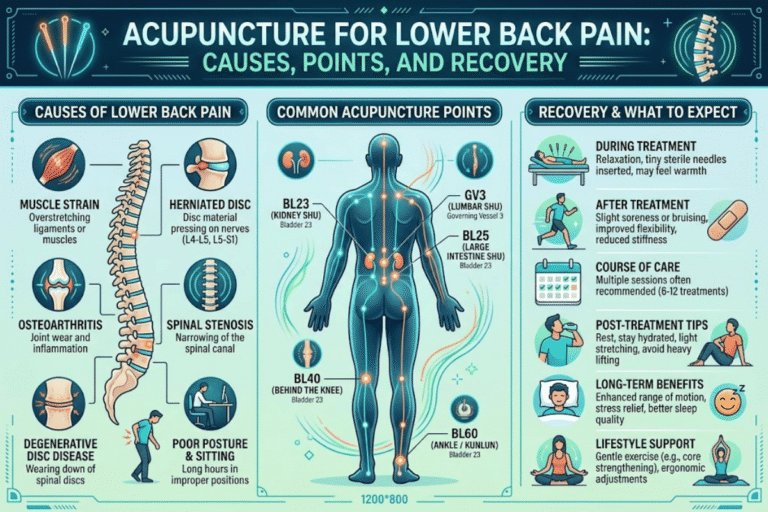
The three most common point combinations seen in low back pain are BL23 (Shenshu 1.5 Cun lateral to the spinous process of L2), BL25 (Dachang Shu located lateral to the L4 setion) and BL40 (Weizhong, ‘center of the popliteal crease’ and also called the ‘Command Point of the Lower Back’). The combination of BL23-BL25 noted above gave the largest Mean Effect Size in systematic review. For back pain associated with sciatica, GB30 (Huantiao) is added to treat piriformis musculature tightening as well as compression of the sciatic nerve.
What Clinical Research Says — NIH Trials, Cochrane Reviews, and Real Outcomes

Can acupuncture benefit back pain?
These 3 landmark studies conducted from 2020-2025 may give us the most definitive answer yet — and the proof is far more convincing than most patients and doctors expect.
NIH BackInAction Trial (2025)
Supported by the National Institutes of Health through the HEAL Initiative, the largest recent clinical trial to date enrolled 800 adults aged 65 and older with chronic lower back pain and was published in JAMA Network Open, the BackInAction trial concluded:
- People who were treated with an average of 15 or fewer acupuncture treatments during a 3 months period experienced greater reductions in pain disability at 6 and 12 months compared with usual medical care only.
- Distal acupuncture groups also showed increased reduction in pain intensity and improvement in physical function at 6 months
- Again, in all of the other studies, the researchers also reported the benefit of using acupuncture which resulted in decreased Anxiety symptoms at 6 and 12 months.
- Minimal adverse effects—”very little in the way of adverse effects” were observed.
“Our clinical results indicate that acupuncture is doing just as well as many things to which people are more accustomed.”
— Lynn L. DeBar, Ph.D., Kaiser Permanente Washington Health Research Institute
Cochrane Systematic Review
The Cochrane systematic review, regarded as the gold standard for evidence synthesis, examined 33 randomized studies which included 8,270 participants with chronic non-specific low back pain and showed moderate-certainty evidence that acupuncture improved pain and functional outcomes compared with no treatment. An even larger 2025 overview of 644 trials with over 97,000 adults deduced that acupuncture could be recommended as a primary treatment modality for chronic low back pain.
Long-Term Effectiveness
An overview of 18,000—21,000 patients, described them as “significantly superior to conventional treatment” and showed that 90% of the pain-relieving benefits persisted for at least 12 months after treatment. Indeed, as published in Advances in Therapy, the results of a 2021 study found that acupuncture treatment for LBP could last up to two years later.
💡 Key Takeaway
All modalities—including acupuncture—that have been proven effective for this use have now been supported by multiple large RCTs and systematic reviews. For chronic low back pain lasting 3 months or more, the trial evidence is strongest.
Acupuncture vs. Chiropractic, Massage, and Medication — How They Compare

Back pain patients often stand at a crossroads making their decision. Instead of concluding that one modern treatment is”best,” the common statistical language suggests each one performs best in a specific condition. Here is how they rank on readily quantifiable measures:
| Factor | Acupuncture | Chiropractic | Massage | Medication |
|---|---|---|---|---|
| Cost per Session | $80–$150 | $65–$175 | $50–$90/hour | $10–$300/month (varies by drug) |
| Typical Course | 8–15 sessions over 6–12 weeks | 6–12 sessions over 4–8 weeks | Ongoing as needed | Continuous (risk of dependency) |
| Cochrane Evidence | Moderate-certainty for chronic LBP | Low-to-moderate certainty | Low-certainty | Varies by drug class |
| Best For | Chronic pain, older adults, opioid alternatives | Acute spinal misalignment, mobility issues | Muscle tension, stress-related pain | Acute flare-ups, short-term relief |
| Opioid Risk | None | None | None | Significant (NSAIDs: GI risk; opioids: addiction) |
| ACP Recommendation | First-line (since 2017) | Recommended option | Recommended option | Second-line for chronic LBP |
✔ Acupuncture Advantages
- Strong evidence for chronic low back pain specifically
- Zero opioid dependency risk — NIH recommends before medications
- Sustained results: 90% of relief maintained at 12 months
- Additional benefits: reduced anxiety symptoms (BackInAction trial)
- Medicare B catastrophic coverage for chronic LBP (20 visits/yr since 2020)
⚠ Limitations to Consider
- Requires multiple sessions — not a single-visit solution
- Results vary: some patients respond strongly, others modestly
- Insurance coverage inconsistent outside Medicare chronic LBP
- Finding a qualified, licensed practitioner is essential for safety
- Controversy persists over whether specific acupuncture points are truly relevant or simply represent poor methodology in RCTs
Industry clinicians – have routinely reported the most efficacious clinical protocol for severe backpain combines acupuncture (acute pain reduction) with physical therapy (restoration of stance and movement). This dual modality mimics existing, real-world practice rather than an either-or dynamic.
What to Expect During Your First Acupuncture Session

Knowing what actually happens during a common acupuncture treatment forback pain can go a long way in alleviating unsubstantiated fears about receiving it. Here is a step-wise guide from standard clinical protocol.
Before Your Session
- ✔Eat a light meal 1-2 hours before. Arrive on an empty stomach. (Avoid hunger, not overeating)
- ✔Don loose clothing, shirt, and pants are preferable
- ✔Make a succinct list of current medications, past pain events, and supplements
- ✔Do not consume caffeinated beverages or alcohol within 2 hours of acupuncture
During the Session
The initial consultation begins with a detailed health history, including tongue and pulse diagnosis when indicated, an integral component of classic TCM diagnostics. Your trained clinician then focuses treatment on balancing the acupuncture points relevant to your chronic back pain. Expect 8-15 needles.
The acupuncture needles are very slim (0.16-0.30 mm) and sterile/single use. When you receive acupuncture for low back pain, the sensation is often a little prick with no wave, warm, or tingling feelings of “De Qi” – defining this specific point/needle combination as explicitly linked in TCM. Needles stay in for 20-30 mins.
💡 Pro Tip
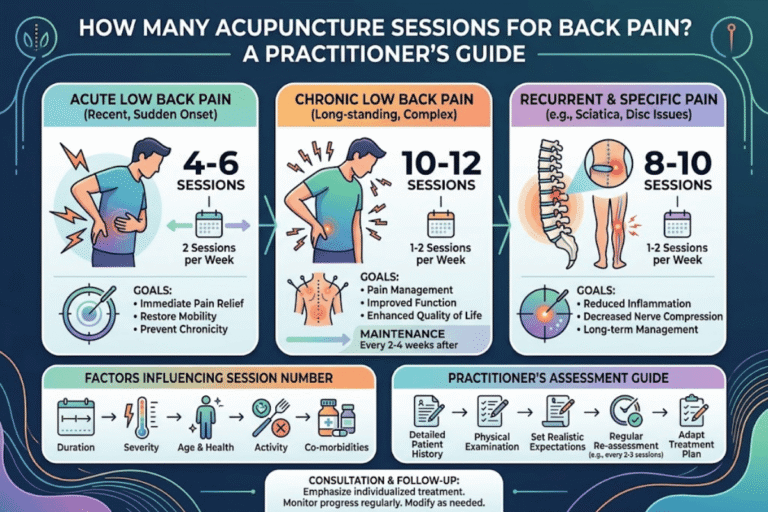
Guidelines from national back pain cost-effectiveness studies and the NIH BackInAction trial suggest 8-15 acupuncture sessions spread over 12 weeks. Most common time tables for utilization include twice a week for 3-4 weeks before therapy comes down to weekly visits. As few as 2-3 treatments occasionally result in noticeable change, but clinics reporting 6 or more treatments often find more long-lasting pain relief.
Ensure that your acupuncture provider has credentials that can be verified by NCCAOM or your local licensing department/board. If in the UAE, look for Chinese medicine clinics with deep heritage, such as Tong Ren Tang’s back pain acupuncture treatment program, which combines classical TCM diagnostics with modern clinical protocols.
Safety, Side Effects, and When to Avoid Acupuncture
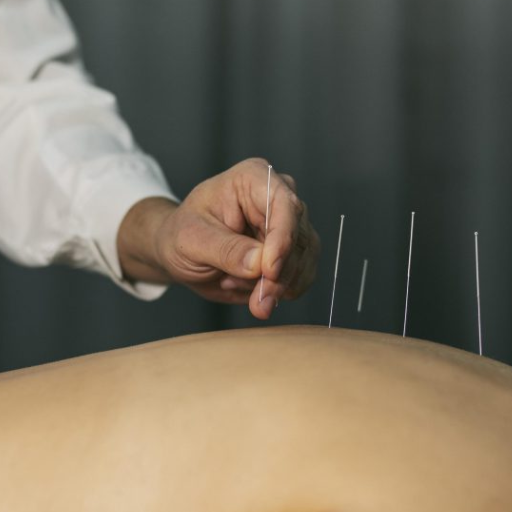
How safe is acupuncture, specifically for back pain? Results from major research studies are encouraging, but the special circumstances must be known in advance.
Adverse Event Rates
Research by Melchart et all reported a rate of 91 unnecessary side effects per 10,000 treatments for minor adverse effects and just 6 per 1,000,000 treatments for severe events. In a second paper, a registry of over 200,000 patients treated in 2 million visits confirmed the rarity of any adverse event in clinical settings within the US. Estimated risks at the population level sit at 0.005%.
Common mild effects include:
- Short term soreness at needle sites (most common, goes away in 24-48 hrs)
- Minor bruising
- Brief lightheadedness during or after a session
- Occasional fatigue on the day of treatment
⚠️ When to Avoid Acupuncture
- Bleeding disorders or anticoagulant medication (increased bruising risk)
- Pacemaker (if electroacupuncture is used — manual needling is generally safe)
- Pregnancy: certain acupuncture points are contraindicated — always inform your practitioner
- Active skin infections at proposed needle sites
- Severe needle phobia (discuss alternatives like acupressure or moxibustion)
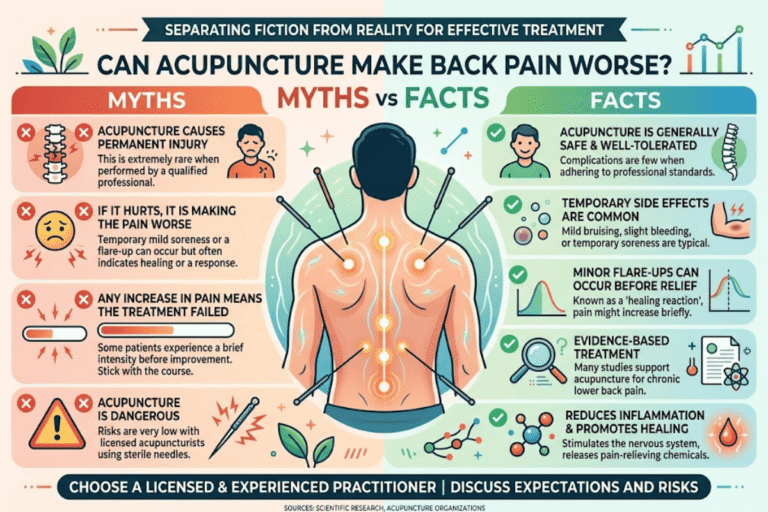
Can acupuncture aggravate my back condition? A short period of soreness after the treatment is a common occurrence and is expected – it is an indication that the tissue in the treatment area is being activated. Specific worsening of a back condition is very uncommon. In the NIH BackInAction trial we found, for example, there was “very little in the way of adverse effects” in 800 patients over a 12 months period. Lead researcher, Andrea J. Cook, Ph.D., commented that, “Acupuncture offers a less invasive option that has a better safety profile than many common treatments.”
Traditional Chinese Medicine and Back Pain — The Whole-Body Approach

While Western medicine usually regards back pain as a localized condition of tissues and surrounding nerves, TCM views it more comprehensively. Practitioners determine the underlying pattern, (not simply the organ affected by the pain) and tailor a pattern-specific treatment plan accordingly.
Three Common TCM Patterns for Back Pain
According to TCM, back pain conditions include the following patterns:
- Kidney Deficiency (Shen Xu) is a chronic, dull, achy pain in the lower back, which worsens with fatigue and alleviates with rest. It occurs more often in the elderly and people with previous, long-term back pain. Treatment usually involves the combination of acupuncture at BL23 (Shenshu) with kidney to tonify remedies.
- Blood Stasis (Xue Yu) manifests as sharp, fixed ligon pain that worsens to pressure. It tends to follow an accident and the blood stagnates in the injured area, aggravating the pain and inflammation. Acupuncture points utilized typically promote blood flow, often supplemented with cupping therapy.
- Cold-Damp Invasion (Han Shi) produces a dull, stiff heaviness in the lower back with worse pain in damp and cold weather. Moxibustion, applied by igniting dried mugwort, usually accompanies acupuncture to dry dampness and expel cold.
In this way, individuals with the same MRI diagnosis may have different acupuncture courses of treatment based on their pattern diagnosis. Pattern differentiation allows for treatment plans that aim at constitutional aspects of back pain rather than simply structural issues.
At Tong Ren Tang, this method is rooted in over 350 years of continuous knowledge handed down through practitioners – a tradition established in 1669 with its founding in the Qing Dynasty. For 188 years Tong Ren Tang was the sole provider of traditional Chinese medicine to China’s imperial court, developing treatment protocols honed by generations in clinical practice. Today, this lineage informs the findings of the Tong Ren Tang clinic, extending treatment from regular and chronic back pain to include the application of acupuncture, herbal medicine, moxibustion, and acupressure based on each individual diagnostic pattern.
💡 Key Takeaway
Western medicine and TCM practitioners have different avenues of understanding back pain. Western medicine does the work of establishing that acupuncture works; TCM shows us how to individualize treatment. Combining both medical worlds usually yields the best results.
Frequently Asked Questions
Q: Does acupuncture really work for back pain?
View Answer
Yes. Moderate-certainty evidence from many large trials supports effectiveness. The 2025 NIH BackInAction trial (published in JAMA Network Open with 800 participants) demonstrated sustained improvements at both 6 and 12 months. A Cochrane systematic review (33 double-blinded trials and 8,270 participants) confirmed these results. The American College of Physicians has issued guidelines recommending acupuncture as a first-line therapy for chronic low back pain since 2017.
Q: How many acupuncture sessions do you need for back pain?
View Answer
Most patients with chronic back pain benefit from 8-15 treatments spread out over 6-12 weeks. 2025 NIH BackInAction used up to 15 sessions over 12 weeks as the standard course. Treatment usually begins at 2 x/week and gradually tapers to 1 x/week as symptoms improve. Some patients feel relief after as few as 2-3 sessions, but state of chronic back pain usually takes 8-15 treatments to show significant, lasting change.
Q: Can acupuncture make back pain worse?
View Answer
Post-treatment soreness is temporary and known to occur within 24-48 hours of treatment. Soreness signifies activation of the targeted tissues rather than true worsening of the back pain symptoms. It is extremely rare for treatment to actually worsen chronic back pain – fewer than 1% of patients experience true deterioration. Notify your provider if pain increases markedly or persists beyond 48 hours after an appointment so adjustments can be made to your plan.
Q: Is acupuncture or chiropractic better for back pain?
View Answer
Chronic back pain has various causes; individual points are chosen on the basis of proper diagnosis. Acupuncture more reliably relieves chronic pain, possibly by modulating the neurochemical signals involved in pain pathways. Chiropractic manipulation is more effective in some situations of mechanical back pain due to its effect on joint mobility. The pain control experts generally recommend treatment of both simultaneously for chronic back pain rather than capitulating to the one or the other.
Q: What acupuncture points are used for back pain?
View Answer
For sciatica, the most commonly treated points are BL23 (Shenshu, lateral to L2 vertebra), BL25 (Dachangshu, lateral to L4), BL40 (Weizhong, center of the back of the knee – the “Command Point of the Lower Back”), and GB30 (Huantiao, buttock). Research shows BL23 and BL25 combinations provide the greatest “mean effect size” for back pain relief. Your practitioner will choose a selection of specific points for your individual condition.
Q: Does insurance cover acupuncture for back pain?
View Answer
In the UAE, your private insurers, if you have any, will determine the coverage for acupuncture. Your United States insurance, Medicare Part B, has offered coverage of up to 12 treatment sessions in 90 days plus 8 more (you may have a total of 20 sessions) if improvement is demonstrated since 2020. In the UAE, contact your health insurer to confirm your coverage from your established benefits plan.
Q: How long do acupuncture results last for back pain?
View Answer
The long-term results are promising. Ninety percent of pain relief from Acupuncture has remained at 12 months follow-up post-treatment. Relief can last even longer – up to 2 years – in some cases after therapy for chronic low back pain. Comfortable monthly practice sessions form a maintenance schedule to prolong results of successful treatments.
Ready to Explore Acupuncture for Your Back Pain?
Tong Ren Tang offers more than 350 years of history in traditional Chinese medicine expertise to help treat back pain in the UAE. Our licensed acupuncturists combine classical TCM diagnosis techniques with evidence-based protocols.
About This Analysis
This is the acupuncture page we created after searching through peer-reviewed clinical trials, systematic reviews, and guidelines from the NIH, Cochrane, and the American College of Physicians. The clinic side that we use at Tong Ren Tang when applying acupuncture to back pain stems from 357 years of continuous practice in Traditional Chinese Medicine (TCM). We present Western clinical evidence and TCM frameworks because we feel that patients should have a choice, with clear understanding of the level of evidence behind each.
References & Sources
- Global Burden of Low Back Pain from 1990 to 2021: GBD Study 2021 — PMC / Global Burden of Disease
- The Global Burden of Low Back Pain Fact Sheet — International Association for the Study of Pain (IASP)
- Acupuncture Treatment Improves Disabling Effects of Chronic Low Back Pain in Older Adults — National Institutes of Health (NIH)
- Acupuncture for Chronic Low Back Pain in Older Adults: A Randomized Clinical Trial — JAMA Network Open
- Acupuncture for Chronic Non-Specific Low-Back Pain — Cochrane Library
- Acupuncture for Low-Back Pain — PMC / National Library of Medicine
- Neural Circuit Mechanisms of Acupuncture Effect — PMC / Frontiers in Neuroscience
- National Certification Commission for Acupuncture and Oriental Medicine — NCCAOM