Get in Touch with Tongren Tang Gulf
356 Years of Chinese Medicine Heritage — Now in Dubai
Male Fertility Acupuncture
Male Fertility Acupuncture in Dubai — TCM Sperm Health Treatment
Science supported TCM for sperm count, motility and quality in a treatment administered by Beijing Tong Ren Tang, the preferred name of the imperial family for 188 years.
Male factor is the proven or suspected reason in about 40-50% of infertile couples, but looks to be the quieter side of the fertility coin. We approach at Beijing Tong Ren Tang Clinic Dubai 356 years of Chinese medicine tradition and a scientific mind to aiding men’s sperm quality—with your workup and your lifestyle decisions in mind.
356+ Years
Heritage
188 Years
Imperial Medicine
2 Dubai
Branches
72-90 Day
Treatment Cycle
Academic
Evidence-Based
Couples
Treatment Approach
Why Male Fertility Is the Unspoken Half of the Journey
Male factor infertility represents around 40-50% of all infertile couples – however the ‘lion’s share’ of investigation and management still seems to rest with the woman. Sitting in many Dubai consulting rooms, the wife may have already had ultrasounds, blood tests, hysterosalpingograms, cycles tracked for the last 6 months before the husband produces his first semen analysis. By this stage, an entire year – or more- may have passed us by.
The delay in diagnosis is to do with a mixture of social and medical factors. In certain (although not all) social traditions, a failing fertility has traditionally been considered a ‘female problem’ and clinics that investigate in diagnostic procedures accept that. Each more common trajectory, the manual diagnostic procedures are directed towards the woman first, whose reproductive system is more accessible for routine investigation. Men are reluctant to seek help for the issue because sperm health seems to be so significant to identity, but their reluctance is compounded by people’s tables of the reasons why fertility possibly failed. The result of both these factors is a psychosocial effect of a delayed diagnosis and treatment that causes nothing but more emotional strain to the couple concerned.
We typically experience four common situations involving men who walk through the open door of our clinic at Beijing Tong Ren Tang Dubai:
1 Scenario 1- prolonged trying & no pregnancies:
Couple attempting to conceive for over 12 months. Recent semen analysis demonstrates oligozoospermia, teratozoospermia and/or asthenospermia. Such husband is willing to seek treatment but is unsure where Western urology stops and supportive therapy is employed.
2 Scenario 2- Pre-IVF (In Vitro Fertilization) optimization-
The couple is planning to start an IVF cycle within 3-6 months. They would like to improve sperm parameters by the time of egg retrieval, as they have read that sperm quality can affect the rate of fertilization and embryo development.
3 Scenario 3 – Post-varicocele repair:
The husband recently had a varicocele repaired. His semen analysis is gradually improving. He desires to assist with an SCD recovery period that will not counteract the repair.
4 Scenario 4 – unexplained infertility:
investigation of wife was normal, the usual semen parameters do not look too bad on paper and yet they have not conceived. They are thinking that it may not be so straightforward maybe there is some more subtle issue (DNA integrity, oxidative stress, functional parameters).
Different situations, different conversations, different protocols, different honest assumptions about what Chinese medicine can and cannot do. Since 1669, Beijing Tong Ren Tang has treated emperors and commoners with the same attention to detail. Today in Dubai, we offer the same standard of care to men who feel ignored within the fertility debate – listening initially, testing our assumptions against the evidence, and creating protocols that compliment modern medicine and honor a 356-year-old tradition.
To understand TCM protocols for male infertility, it is helpful to see what modern research has to say.
TCM Diagnosis: How Acupuncture for Male Infertility Targets the Root Cause
Chinese Medicine sees male infertility as the outward expression of deeper rootpathic imbalances. We are less interested here in isolated sperm count, motility, and morphology parameters, than in identifying the internal circumstance that produces deficient sperm in the first place. Two patients with the same semen analysis in fact can have very different circumstances requiring very different treatments, within the field of Kidney Jing tonification here, thus 15 minute crisis consultations without time for gradations in internal diagnosis have limited utility.
This Kidney Jing Foundation
In Chinese Medicine defined physiology, a person’s Jing is their constitutional energy reserve- a form of inherited bioelectric energy, present in every cell of the body, gathered from the environment, cemented through early life…and spent by every human ceaselessly as a stepping down process as they travel from cradle to grave. Jing is stored in the Kidneys (the physiologic system with that name in TCM covers more than only its based on the Western model) and from this start point, it directly energizes of itself the four columns of male sexual health: volume, motility, shape, and density of sperm- producing a state of male fecundity if abundant, or under strain if not. Decrepitude or constitutional debilitatedness, overwork, physical or emotional stress, carnal excesses, various sheng ji bing pathogens, the effects of aging all deplete Kidney Jing and its stores of sperm producing energy thus preventing the production of enough high quality sperm. The principle therapeutic goal then becomes the replenishing of Jing and all that flows from it, and the key points of KI3 and BL23 are most frequently used towards this goal here- often finding a place alongside herbal formulas in TCM protocols.
Each Six Common TCM Patterns in Male Infertility
Such pattern of basic depletion. Usually congenital or caused by excessive chronic stress or toil and emotional strain, or repeated carnal experience. Such dominant semen analysis finding here is most often low sperm count, sometimes in combination with low semen volume. Patients often complain of low backache, ringing in the ears, early graying of hair and general reduction of vitality and energy. TCM treatment typically consists of replenishing up this renal essence by selecting points such as KI3 and BL23 for tonification purposes.
A cold pattern. Men are sensitive to cold, more so in the low back and lower abdomen. Testicular and low back pain sometimes noted. Low libido, erection difficulty, and watery semen tend to be the main manifestations. Morning erections may be lessening in frequency. Treatment warms Yang, moxibustion is often added to moxibustion, and points include CV4, BL23 with warm stimulation. Herbal strategies often draw on warming Kidney formulas.
A heat pattern. Night sweats, afternoon warmness, dry mouth, and unsettled sleep are major features. Semen volume may be deficient and spermogram reveals a high proportion of seconds dying after ejaculation. Men often smell thin, have a red tongue with little coating. Treatment supports Yin, points include KI3, SP6 usually without moxibustion, and herbs dry Yin to offset internal heat.
Infection/inflammation pattern. Often a history of prostatitis, epididymitis or UTI is found. Semen analysis shows increased WBCs. Men often complain of uncomfortable urination, yellow tongue coating, full feeling in pelvis. Treatment clears Damp-Heat followed by tonification, number of points include SP9, LI11, pelvic area local points. In this pattern, addressing the source of infection clears the path for tonification.
Circulation pattern. Typical of men with varicocele, prior testicular trauma, or pelvic surgery. Tongue shows possible purples or stasis spots. Men report testicular discomfort. Treatment moves Blood and eliminates stasis, needling points include SP10, BL17, and local scrotal points. Soothing outer layer by supporting Kidney Jing is often part of the layered protocol.
Stress pattern. Particularly prevalent in Dubai’s LA-oriented business professional. Men are irritable, frustrated, discover tight chest and sleep disturbances related to workload. Semen analysis tends to show changes in counts over time. Treatment moves Liver Qi and addresses the specific root of the stress pattern; two points are GV24 and ST36, while TM7 targets the specific biofeedback aspect of this pattern.
The Diagnostic Process at TRT Dubai
Fresh first consultation to Beijing Tong Ren Tang Clinic Dubai. At this initial consultation, the practitioner seeks to blend classical Western and TCM assessment tools. One art of pulse diagnosis. Feeling three positions on each wrist, at three depths reveals to the practitioner important information about the working of the organ systems. Tongue examination. The practitioner’s eye can take in the language of colour, shape, coating, and sublingual vessels, all expressing specific aspects of present-and-future biological outlook. Your history includes sleep, stress, digestion, bowel motions, urination, emotional health, virility, previous illnesses, current medication – all relates to patterns. Your semen analysis, blood tests, and any mentioned ultrasounds are brought into the equation. From the synthesis emerges one primary pattern (sometimes one to three secondary) that the practitioner addresses in the protocol, providing patient-specific care that is individualized to your contributing elements of both traditional Chinese diagnostic paradigms and Western medicine work-ups.
Not sure which pattern describes you?
Book Your ConsultationMale Fertility TCM Pattern Quiz
Find Your Likely Pattern — 8 questions, 2 minutes. Based on Traditional Chinese Medicine diagnostic principles.
Question 1 / 8
What is your primary concern?
Question 2 / 8
How are your energy levels?
Question 3 / 8
How does your lower back feel?
Question 4 / 8
Any sexual function concerns?
Question 5 / 8
Night sweats or hot flashes?
Question 6 / 8
Do you feel cold easily (especially hands/feet)?
Question 7 / 8
Your stress level over the past 6 months?
Question 8 / 8
Any history of the following?
Select all that apply.
Your Likely Pattern
—
What this pattern means
—
This pattern at TRT Dubai
—
Ready to take the next step?
Speak with a TCM practitioner who specializes in male fertility.
This quiz offers educational guidance only. A TCM diagnosis requires in-clinic assessment by a licensed practitioner.
Your 5-Phase Protocol for Male Fertility Acupuncture in Dubai
Beginnings of your protocol toward male fertility optimization at Beijing Tong Ren Tang Clinic Dubai. Five-phase process, each targeting the biologically relevant length of the spermatogenesis cycle.
01
Thorough Assessment (Week 1)
Starting out your treatment is a 60-minute initial consultation. Your doctor will examine your entire Western workup including semen analysis, hormone profile (testosterone, FSH, LH, prolactin where applicable), scrotal ultrasound images where available, and genetic or other specialist laboratory reports. Following a detailed personal health history (including information about lifestyle, work stress, sleep architecture, dietary patterns, exercise habits, toxin/chemical exposures, relationship issues, and fertility timeline thus far), the Chinese Medicine diagnostic exam involves pulse finger pressure at three different depths, tongue analysis, facial observation, and other palpation if required. If a partner spouse is present I will give a simple assessment of hers and plan treatment in keeping with her timeline and needs. This visit ends with a written treatment plan: your pattern diagnosis, treatment timeline, number of sessions required, herbal recommendations, and candor about our expectations.
02
Foundational Treatment (Weeks 2-6)
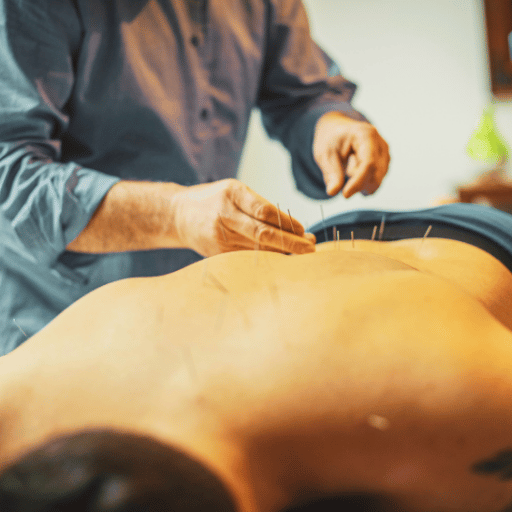
The next stage lays the therapeutic framework. Your treatment involves twice weekly acupuncture sessions using the protocol frequency demonstrated to be efficacious in the published literature. Key acupuncture points include CV4 (Guanyuan 关元) for Jing tonification, BL23 (Shenshu 肾俞) for Kidney support, SP6 (Sanyinjiao 三阴交) for reproductive regulation, KI3 (Taixi 太溪) for deep Yin and Yang balance, and ST36 (Zusanli 足三里) for constitutional support. Moxibustion on the lower back points BL20 and BL23 is added if your Yang deficiency pattern warrants — moxibustion uses smoldering mugwort to deliver gentle warmth that complements needling. Herbal medicine specific to your pattern is available from the Tong Ren Tang formulary: the formula is pattern-specific, discussed during your visit, and questions are encouraged. Lifestyle modifications address sleep (emphasis on hours before 23:00), scrotal environment (loose boxers; avoiding hot baths; keeping laptops off the lap), stress levels, and diet. Such goal of this phase: support baseline endocrine function (HPG axis) and improve testicular function so that the next spermatogenesis cycle produces healthier sperm.
03
Spermatogenesis Support (Weeks 7-12)
This constitutes the majority of the 72-90 day spermatogenic wave – the window when the generation of the sperm cells you see at your follow-up semen analysis were actually being made. Acupuncture continues at a similar intensity: twice weekly or transitioning to weekly based on your response. If Tong Ren herbs are part of the management, the formula often changes along the way: mid-treatment pulse and tongue analysis indicates direction of adjustment in the pattern or dose. Once mid-point patterns have shifted and your cruise in the literature shows significant gains in sperm parameters (pages eight through ten of this handout), we can move onto the next phase.
04
Reassessment (Week 12-13)
Waiting for the freshly generated sperm to arrive in the ejaculate for assessment occurs after completing the spermatogenesis cycle. During this period, diet, lifestyle, and stress counseling persists. You will be examined again with pulse, tongue, and facial observation. If relevant, an interim herbal formula change may occur. The decision: continue the protocol if travel is going well, analyze the new semen results or make modifications if parameters are still suboptimal, or plan to terminate or move to long-term maintenance care. Should you desire conception, your TCM physician and Western specialist will collaborate to time successful in vitro fertilization cycles or intrauterine insemination at the highest chance of success.
05
Maintenance or IVF Preparation (Weeks 14+)
Three respective pathways lead from Phase 4. (A) Maintenance visits: If conception has not yet occured but parameters are improved, a program of more cautious optimization (often weekly or biweekly) ensues, and the couple attempts natural conception. (B) IVF/ICSI prep: if the couple is moving toward assisted reproductive technology, synchronization of flW with reproductive endocrinologists’ cycle planning is coordinated to improve acupuncture timing so that parameters may be most optimal when it matters. (C) Conception support: if conception has been achieved, congratulatory comments and then a discussion of early pregnancy support is hard on your partner – acupuncture protocols for threatened miscarriage prevention are implementable where appropriate. Honest coaching is ongoing – if additional intervention would help, we’ll tell you so; if you are already at the point of TCM maximum benefit, we’ll tell you so.9
Honest timeline note
Most men demonstrate measurable sperm parameter improvement by 12 week reassessment. Some require six months or longer of hand-on treatment, especially where deeper Jing deficiency or post-surgical reconstruction are concerned. Some do not respond meaningfully to TCM alone – we will advise you if your specific circumstances are resistant and less likely to benefit from acupuncture & herbal intervention. onward referral to reproductive medicine not failure.
What we do next depends on the specifics of your wife’s care.
Ready to start Phase 1?
Book Your Thorough AssessmentPatient Outcomes: Real Expectations for Acupuncture for Sperm Count & Quality
Response to treatment depends on the individual, but proven positive outcomes are observed anecdotally and documented scientifically for the majority of men completing an entire course of therapy. Here are three exemplary patient profiles based on our clinical experience – not promises but realistic possibilities for the journey and results.
The Oligospermic Professional
A 38 year-old Dubai resident, married three years, was referred after a semen analysis revealed below-normal sperm count. One demanding schedule included frequent overnights, international travel, over stimulation, and high workload. TCM diagnosis was Kidney Jing depletion with absent focused Qi flow due to chronic mental/emotional sources. The 3-month program included twice-weekly acupuncture, customized herbal formula on Jing, sleep, and stress parameters, and guidance to modulate schedule. This follow-up semen analysis at week 12 demonstrated a significant shift in count and motility. Stress was decreased, sleep was improved, and he felt identified less by his non-conception diagnosis. The couple remained on maintenance protocol and achieved natural conception.
Each Pre-IVF Optimizer
A 35-year-old couple had an IVF cycle planned in 4 months, and came to us specifically for sperm quality preparation. His baseline semen analysis (performed through his local urologist) was borderline on morphology with a few markers of oxidative stress elevated. Chinese medicine assessment revealed in general a Kidney Yin deficiency with mild Blood stasis. The treatment plan concentrated on oxidative stress mitigation through acupuncture, Kidney Jing anchoring with pattern-matched herbal formulas, and lifestyle modification around supplementation and excessive body heat. As measured on the IVF egg retrieval day, the parameters had improved from baseline. Such couple elected to go ahead with ICSI and even blastocyst-stage embryos. Whether TCM affected egg quality is difficult to establish in a single case—certainly the direction of the parameters during the preparatory window was encouraging.
The Post-Varicocele Recovery
A 42-year old male patient presented to our clinic six months following varicocele surgery, frustrated that his sperm count is recovering slowly. Our Chinese medicine assessment still identified Blood stasis combined with Kidney Jing deficiency—a not uncommon pattern following surgery. One treatment framework worked through the phases of Blood stasis resolution (SP10, BL17, local scrotal-region work) counter-balanced by deep preservation of vigor to protect his newly restored blood dynamic, by steady augmentation of blood- and Jing-moving formulas, and finally by spurtedgentle supplementation with virile herbs. Spermatogenesis recovery accelerated per reassessment, with count and motility both improving over a five-month window. He and his wife achieved natural conception shortly after his second assessment.
What We Do Not Claim
Acupuncture is not a magic wand that ensures pregnancy. There are a handful of causative factors for male infertility that simply do not respond to TCM alone: severe genetic deficiencies such as known Y-chromosome deletions and oligospermia that’s charted to a primary case such as complete azoospermia from particular instances, anatomical causes of infertility with added penetrance from other causes, and primary hormonal failures that require Western intervention. We will always point you to the right additional protocols or diagnostician when we are not the right art for your problem, and we will do so honestly instead of supplementing your care with extended ineffective TCM treatments. The above three cases are exemplars (not statistical samples): outcomes span the gamut, and honest interaction at the outset will set your expectations for where your case is statistically likely to fall.
Cost, Sessions & What to Expect
Cost of male reproductive evaluation at Beijing Tong Ren Tang Clinic Dubai varies depending upon several issue-specific points in your case. We provide a no-surprise estimate during or after your first examination based on the following framework:
Pricing Factors Framework
- Initial thorough visit: duration and thoroughness of the first assessment (30-60 minutes) sets the baseline for subsequent treatment.
- Frequency and duration of acupuncture: treatment complexity varies by presentation-type; typically here, acupuncture appointments run 45-60 minutes.
- No. of Chinese herbal prescriptions: material costs are determined by the herbal prescription.
- Single partner versus couples-based treatment plans: couples care coordinates couples throughout the program.
- Duration of treatment cycle: three cycles of 3 months; may differ for complex 6-month programs.
- Additional therapies: cupping, tuina, moxibustion added when indicated.
Session Structure
- Typical initial consultation: 60 minutes (diagnostic + plan building)
- Follow-up acupuncture sessions: 45-60 minutes each
- Dose schedule: Twice weekly in the first 6 weeks, then tailored to response
- Total treatment schedule length: Minimum 72-90 days (corresponds to spermatogenesis)
Payment & Insurance
- Charges are due at each appointment.
- Cash, credit card and bank transfer accepted.
- Insurance: Certain health plans reimburse acupuncture; provide card details for confirmation.
What to Bring
- Recent semen analysis report (within last 3 months preferable)
- Hormone panel if available (testosterone, FSH, LH, prolactin)
- Scrotal ultrasound report if performed
- List of current medications and supplements
- Your wife (optional but team-oriented)-helpful for perspective and equipoise
Consultation Policy
- Package prices apply for ongoing dedicated course, as discussed.
- Dose schedule tailored strictly to individual physiological response.
About Beijing Tong Ren Tang — Heritage, Locations & Authority
A 356-Year Heritage
The rich history of our brand is founded on the following principles. Beijing Tong Ren Tang was founded in 1669 in Beijing, by Le Xianyang during the 8th year of the reign of Qing Dynasty Emperor Kangxi, and was recognized as the royal Chinese medicine supplier to the Qing Dynasty for over 188 years, working through the successful reigns of eight emperors until 1911.
Over the centuries, our reputation has rested on four pillars—advanced herbal formulas perfected through generations of clinical validation; high-quality raw materials sourced from proven origins; superior herbal processing technologies that preserve efficacy; and outstanding patient outcomes.
“No compromise on cost and labour despite the complexity of processing herbal medicines. No compromise on quality and standard despite the scarcity of medicine ingredients.”
This very careful historical approach informs our philosophy in Dubai today.
Founded 1669
Imperial Medicine
1723-1911
8 Emperors Served
356+ Years Heritage
DHA Licensed
Frequently Asked Questions
This science is in, but good framing makes a difference to your belief. The Jerng 2014 meta-analysis (44 citations) combined numerous randomized trials and reached the conclusion that acupuncture improved sperm motility and sperm density. Each Zhang 2024 review showed improvements in sperm concentration, viability and morphology across the literature. The Feng 2022 study in Frontiers in Endocrinology (45 citations) describe plausible HPG-HPG feedback loop effects and oxidative stress pathways. Taken together, the data makes a compelling case that acupuncture is a reasonable treatment for many types of male factor infertility, especially idiopathic cases and IVF prep. It is not a guarantee of pregnancy, and not a on-size fits-all answer. I promise I will tell you the truth about what the evidence supports.
Sperm have a 72-90 day cycle in the testes. That means the cells inspected in a semen analysis today were present three months ago during sperm production in the testes. If you are tested today, and acupuncture begins tonight, the analysis does not fully represent the effect of completing 3 months of treatment on the new cohort of developing sperm, only the older sperm still released. Our standard follow-up assessment is in Week 12-13, timed with the full cycle of development of newly-produced sperm post-treatment. Energy levels, sleep, stress, libido and other subjective self-reports often improve much faster, but objectively, sperm quality takes three months to show statistically significant improvements.
If you’re a couple, treatment with both partners is an option but not essential. I respect that many men prefer to begin alone, especially when the female partner is only seeking a workup ruling out additional factors. For the emphasis and support that acupuncture offers, the power of. Couple’s conjoint care (with near simultaneous appointment slots) takes maximum advantage of the shared experience and shared goal. It enables the doctor to directly guide you both through fertility counseling and partner work-up strategies, speaks to the social/cultural dynamics of shared preference, and can make the process closer to equal. Separate doctor’s visits can be scheduled, if needed. State you preferences when calling to book, and we will tailor your care.
Acupuncture and IVF are partners, and support each other. Acupuncture can precede IVF to prepare optimal sperm quantities on egg retrieval day, with a potential benefit of improving utilization of fertilized eggs and embryo quality. Meta-analyses have shown some positive effects of add-on acupuncture to IVF, but individual trial results are inconsistent. We leave efforts to integrate acupuncture with IVF to improve outcomes up to reproductive endocrinologists – we coordinate with fertility teams here in Dubai, communicating treatment timing, following schedules, and respecting the protocols of the clinic when needed. This is especially true if you require ICSI to bypass a male factor.
Acupuncture administered at a licensed Clinic such as Tong Ren Tang Dubai is perhaps the safest procedure there is. It involves use of sterile, single-use needles that are discarded after each session (no risk of infection spread); our practitioners are licensed by the Dubai Health Authority (DHA) and are well-trained in anatomy and safe needling depth and recognition of adverse reaction signs. Side-effects and adverse reactions are few and transient: only small entry point bruising that resolves, transient soreness or mild fatigue, or perhaps a few patients feeling slightly lightheaded on occassion. Adverse reaction reports in the literature on serious events are extremely sparse. Acupuncture can continue inparallel with most conventional Western medications and treatments – inform your TCM therapist of any medications you are taking so that can be checked with interaction symptom/point selection considerations.
Herb-Drug safety can only be determined on a case-by-case basis: we take a complete tally of your medications, medications and supplements before any herbal formulas are prescribed; many are associated with little or no concern in combination, some require supplementing with certain herbs, others should be avoided entirely. Familiar interactions between concern medications and herbal medicines include anticoagulants, psychiatric medications (especially those affecting the effective metabolizer enzyme system, CYP450), drugs relying on specific pathways in the liver. We require you inform your fertility doctor of herbal formulas being used so that additional evaluation can be made for interactions with current medications. You can help us plan herb formulas: if you get dosage adjustments mid-way through, tell us promptly so that we can decide if the plan should be modified. Tong Ren Tang has a strict policy: no compromise on quality – in sourcing herbs, preparing them, and prescribing formulas.
One may be surprised by how many idiopathic cases we manage to succeed in aiding. Western medicine states the case as idiopathic when normal testing cannot find the cause of a problem: “no cause identified on Western tests” is not the same as “there is no cause.” Underlying imbalances identified by TCM pattern differentiation, which may not show on hormone panels or ultrasounds, may include imbalances such as Kidney Jing deficiency, Qi stagnation, mild Damp-Heat, or blood stasis. Our best success stories occur more frequently in idiopathic cases, because structural causes have already been ruled out. If your Western work-up is clear but conception is still not happening, TCM investigation is a reasonable next step.
Absolutely. Since varicocele operation involves structural repair which can take 3-6 months to recover from, and spermatogenic outgrowth which typically has 3-6 months recovery, we can factor timing in with operation recovery period to improve results. TCM uses a particular combination of Blood moving points and Kidney reinvigoration points for the best outcomes in post-op recovery; the timing of starting TCM treatment is critical: we generally recommend waiting until the surgeon examines the testicles and assures initial post-op healing is OK and direct tampering of the testicles is OK (generally in the 2-4weeks post-surgery range). Consult with your surgeon about timing to start treatment. Once authorized for starting treatment, the combined Blood moving points and Kidney Jing tonifying points can support a speedier recovery in sperm function than waiting passively.
All acupuncture needles are very thin; in fact they are much much thinner than what you might associate with needles, say, for blood sampling or injections. They are 0.18-0.25 mm in diameter. There should not be any significant sensation on insertion. That said, you might sometimes have a short “pinch” sensation followed by a heavy dull feeling at the point (this sensation in Chinese medicine is called “de qi” or arrival of qi and considered therapeutic). Compared to most people’s concepts of needles, acupuncture sessions are very relaxing (many people fall asleep). 30-45 mins of needle retention often passes without most patients noticing. Do let your practitioner know if you experience any sensations of pain that are not “just feelings” at all. Your acu points will then be repositioned and/or removed. Don’t expect this to be anything like your mental image of an acupuncture experience. Such feedback we generally get from first timers is (and surprisingly often) “well you lot made that much easier than I had anticipated”.
Heritage is the key distinguishing factor. Established in 1669 in Beijing, Beijing Tong Ren Tang retains a continuous historical legacy that remains unsurpassed in the Middle East. Serving as the deputy Chinese medicine supplier to the Qing Dynasty imperial family—a position we held for 188 years from 1723 to 1911—our brand boasts over 356 years of distinguished history. This legacy is fundamental in guiding our modern standards, including rigorous practitioner training, careful herbal quality control with sourced authentic ingredients, and a solemn corporate vision that states: “No compromise on cost and labour despite the complexity of processing herbal medicines. No compromise on quality and standard despite the scarcity of medicine ingredients.” Such tradition underpins our clinical practice and service locations in Dubai.