Get in Touch with Tongren Tang Gulf


Updated July 2026
Sciatica treatment in Dubai refers to a cause-aware care pathway, not a promise about one technique. It should start with a safety and cause assessment. Acupuncture may be considered for selected non-emergency cases, Tuina may support comfort and movement, and either option should sit inside a plan that includes medical referral when needed.
Sciatica describes nerve pain and sometimes tingling, numbness or weakness that travels from the lower back or buttock into a leg. Some people describe shooting pain or pain radiating to the leg; these are common symptoms of sciatica, but they do not identify the cause. This sciatic nerve pain is a symptom pattern, not a complete diagnosis. That distinction matters because a disc problem, spinal narrowing and other causes don’t all need the same response. This guide helps you compare Traditional Chinese Medicine options for sciatica pain while keeping the medical safety questions in view. For clinic-specific information, see our sciatica treatment service in Dubai.
Key takeaway
Choose a pathway before choosing a technique: screen urgent signs, clarify the likely cause, then decide whether acupuncture, Tuina, exercise-based care or medical referral fits.
Before comparing treatments, check for urgent warning signs
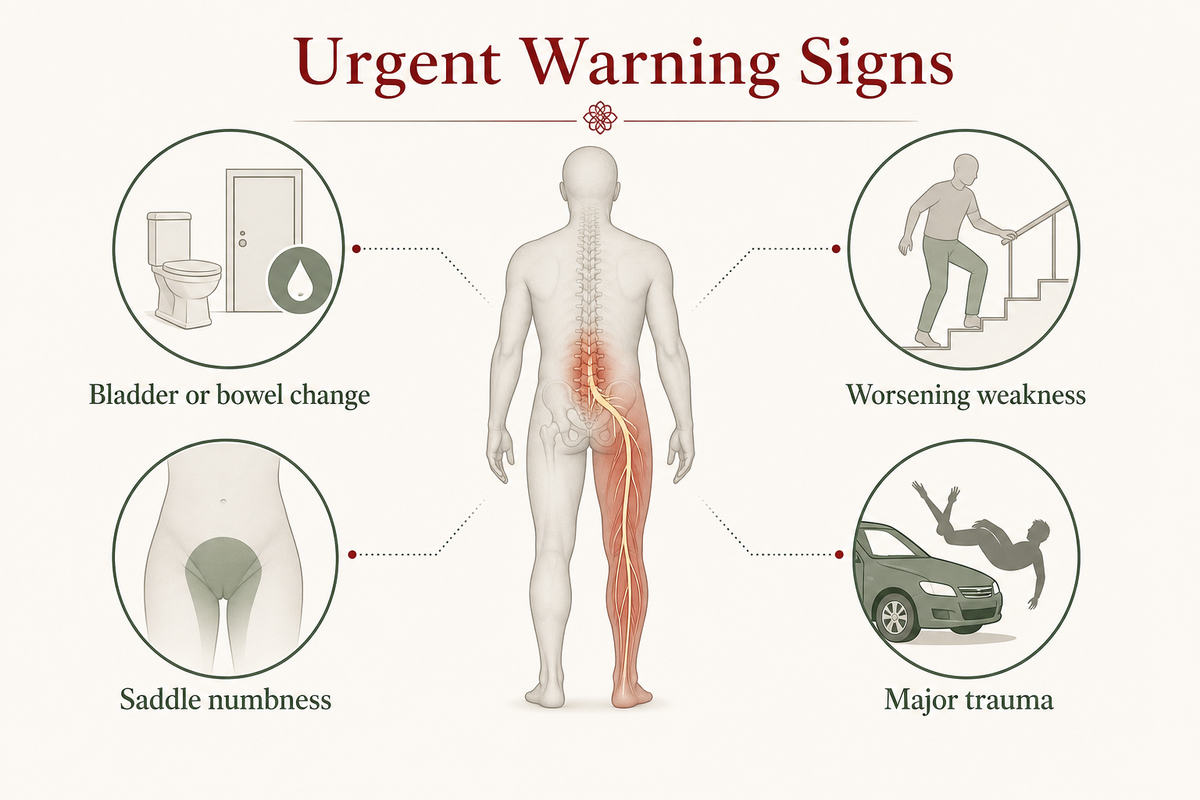
Certain symptoms warrant skipping a routine complementary-medicine appointment. NHS guidance on sciatica recommends emergency assessment if sciatica affects both sides, severe or progressive weakness or numbness affects both legs, numbness appears around the genitals or bottom, or bladder or bowel control changes. There could be serious nerve compression.
Seek urgent medical help
- Report new bladder or bowel changes
- Act on saddle-area numbness
- Escalate worsening weakness in both legs
Do not
- Wait for a routine TCM appointment
- Mask progressive neurological symptoms
- Assume severe symptoms are muscular
Even without emergency signs, consult your doctor for an assessment if symptoms are worsening, have not improved after several weeks or are preventing normal activities. Severe sciatica or persistent pain does not always signal an emergency, but it does justify a timely clinical review. Online descriptions cannot assess your reflexes, strength or the cause of your symptoms.
What sciatica is, and why the cause changes the plan
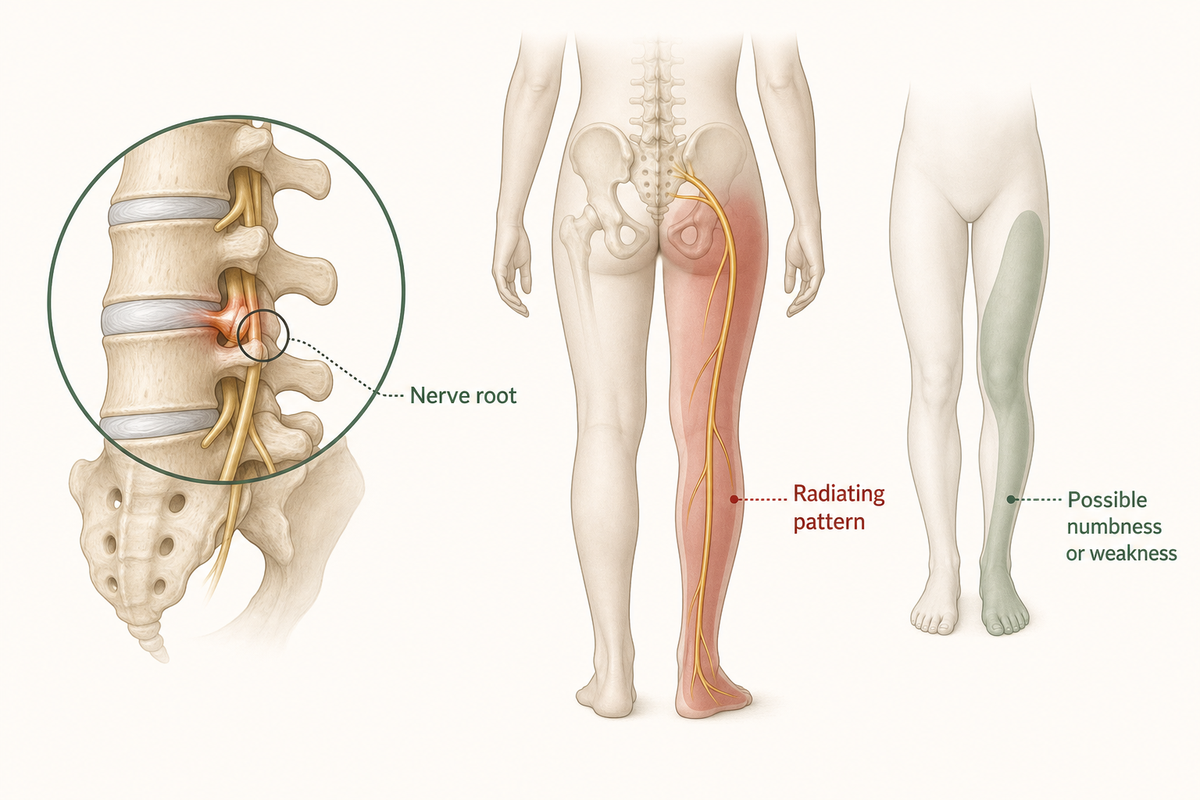
Lumbar nerve roots form the sciatic nerve. Irritation or compression can cause one-leg pain, pins and needles, loss of sensation or weakness. Common examples include a bulging disc or narrowed spinal canal. Other causes need different diagnostic and treatment approaches. Leg symptoms, rather than lower-back pain alone, usually distinguish sciatica from a simple back problem.
Lower back pain without leg symptoms may need a different pathway, while narrowing of the spinal canal or a herniated disc can place pressure on nerve roots in the spine and produce sciatic nerve symptoms below the lower back. Clinicians may call this pattern lumbosacral radicular pain. Causes of sciatica vary, and “pressure on the sciatic nerve” is useful shorthand rather than a complete diagnosis.
One useful initial assessment asks about the route of the pain, aggravating and relieving factors, the effect of posture changes, sensation or strength changes, symptom duration, and treatment already tried. It doesn’t matter whether you go first to a TCM clinic or to physiotherapy or a pain clinic; any first screen should test assumptions rather than confirm what you expect. Testing might include movement, strength, reflexes and sensation.
NICE guidance on low back pain and sciatica advises against routine imaging in non-specialist care and says imaging in a specialist setting should be considered only if the result is likely to change management. In plain English, “find the cause” doesn’t automatically mean “get a scan.”
In medical practice, cause assessment is an application of judgment rather than a scan-first rule. At Tong Ren Tang, that means a TCM discussion shouldn’t replace referral when the symptom pattern falls outside complementary care.
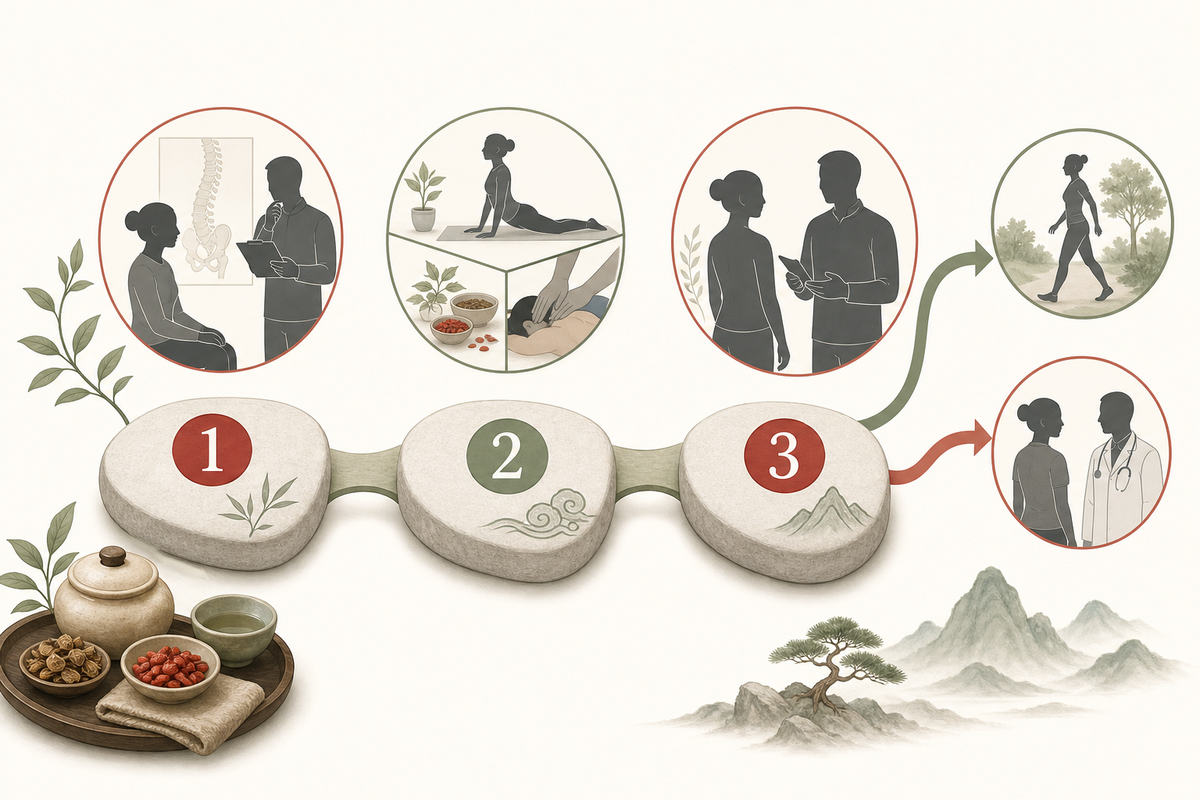
Use the 3-Filter Sciatica Care Framework
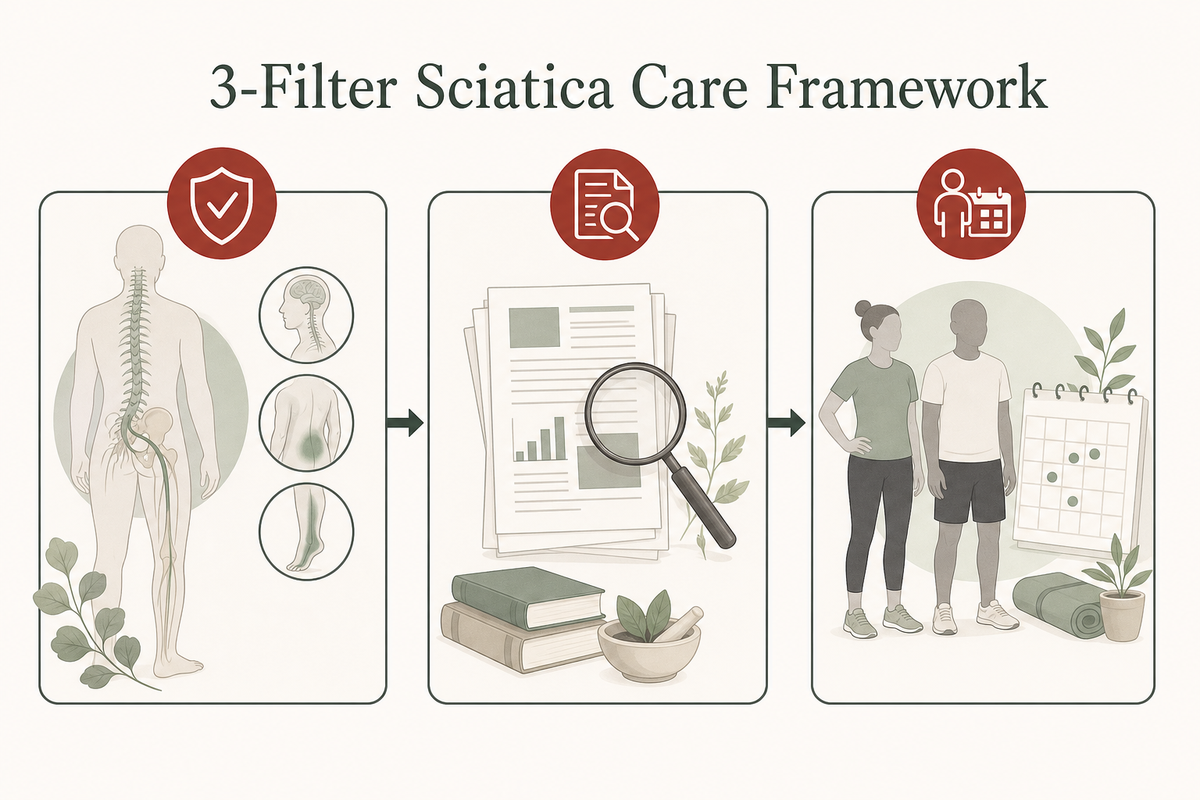
The framework moves a vague search through treatment options into a safer sequence. It is not a diagnostic measure or a promise of a tailored treatment. Instead, it helps identify the next question before deciding what may be an appropriate treatment.
This framework exists because risk comes before modality. Qualified Tong Ren Tang practitioners should use the filters even when a relevant study reports a 1-year benefit, since evidence for one subgroup doesn’t establish suitability for the person in front of them. Research in a 2025 paper on standardising red-flag definitions also shows why safety terms need precise, consistent interpretation.
- Run the safety filter — check for emergency signs, progressive weakness, changing sensation and other reasons to seek medical assessment first.
- Run the cause filter — ask whether the pattern has been clinically assessed and whether a spine, medical or physiotherapy referral may change the plan.
- Run the option-fit filter — define a practical goal, review contraindications and decide whether the proposed treatment complements the wider care pathway.
| Filter | Question | Next step |
|---|---|---|
| Safety | Are urgent or progressive neurological signs present? | Seek urgent or medical assessment before TCM care. |
| Cause | Has the symptom pattern and likely cause been assessed? | Clarify diagnosis and referral needs; do not assume every case is muscular. |
| Option fit | Is the goal pain support, mobility or return to activity, and is the option appropriate? | Agree a measured trial with review points and stop criteria. |
Acupuncture for sciatica: what the evidence says
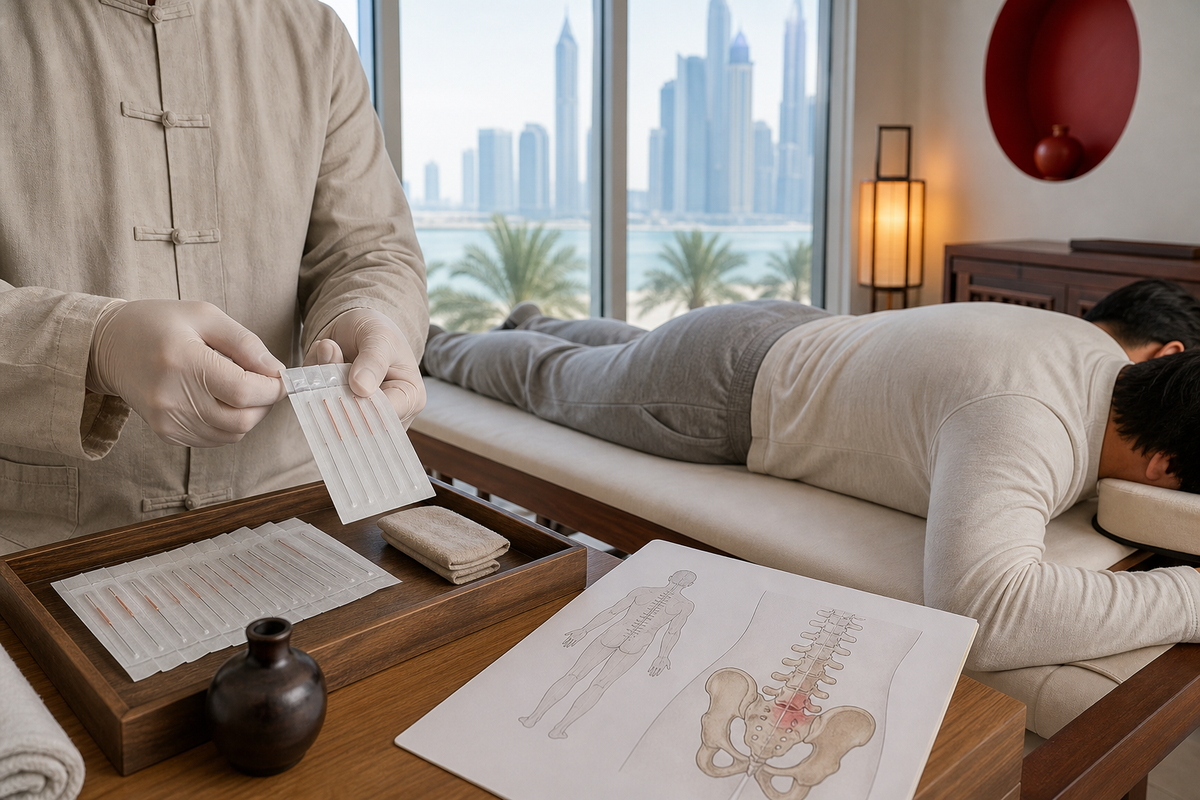
There’s a true evidence-vs-guideline conflict. In 2024, a randomized controlled trial evaluated 216 adults with chronic sciatica from a herniated disc undergoing ten acupuncture or sham sessions during a four-week course. Participants in the acupuncture group showed greater improvement in leg pain and disability at week 4, and that difference in outcomes between the two groups was sustained through week 52.
No serious adverse events were noted.
216participants analyzed
10 sessionsover four weeks
52 weeksfollow-up period
This is meaningful evidence, but not a “general proof” to justify an unlimited prescription. This study concerned a specific subset of people with chronic sciatica and was conducted across six tertiary hospitals in China. We shouldn’t generalize its findings to every cause of leg pain, every treatment regimen, or every Dubai resident.
Beyond this study, the evidence is more complicated. A 2023 systematic review of 30 randomized trials reported positive pooled results but high heterogeneity, study-design limitations and possible publication bias. A 2025 overview of seven reviews found that five—about 71%—were of critically low methodological quality and four—about 57%—had a high risk of bias. Good news and limited confidence can coexist.
Guideline conflict: NICE NG59 says not to offer acupuncture for low back pain with or without sciatica. That recommendation dates from 2016 and remains on the current NICE recommendations page. The 2024 trial is newer and positive for a defined subgroup, but one trial does not automatically rewrite a clinical-practice recommendation. Responsible discussion should disclose both facts instead of presenting acupuncture as a cure.
| Evidence type | Source | Useful finding | Boundary |
|---|---|---|---|
| Randomized trial | JAMA Internal Medicine, 2024 | Acupuncture outperformed sham in a defined chronic disc-herniation subgroup | Does not cover every cause, protocol or patient |
| Systematic review | Frontiers in Neuroscience, 2023 | Positive pooled signals across 30 trials | Heterogeneity, methods and publication bias reduce certainty |
| Review overview | Peer-reviewed overview, 2025 | Promising results across seven reviews | Most reviews had critically low methods or high bias risk |
| Clinical guideline | NICE NG59 | Current recommendation says not to offer acupuncture | A guideline recommendation is not the same evidence type as one new trial |
| Imaging guideline | NICE NG59 | Routine non-specialist imaging is discouraged | Specialist imaging may be appropriate if it changes management |
| Safety guidance | NHS | Lists neurological and bladder or bowel emergency signs | Online guidance does not replace examination |
| Self-care guidance | NHS and NICE | Supports normal activity and gentle movement within tolerance | Not an individual exercise prescription |
| Research protocol | Tuina protocol, 2022 | Shows a review was planned | Protocol is not completed efficacy evidence |
| Local regulation | Dubai Health Authority | Requires referral beyond competence or when diagnosis is uncertain | Regulation confirms scope and safety duties, not treatment effectiveness |
“Acupuncture resulted in less pain and better function compared with sham acupuncture.”
If acupuncture is considered after evaluation, agree on the tracking criteria—walking tolerance, sleep, pain interference or function—and the time for reevaluation. Dubai residents can read about acupuncture services in Dubai.
Where Tuina may fit, and where evidence is thinner
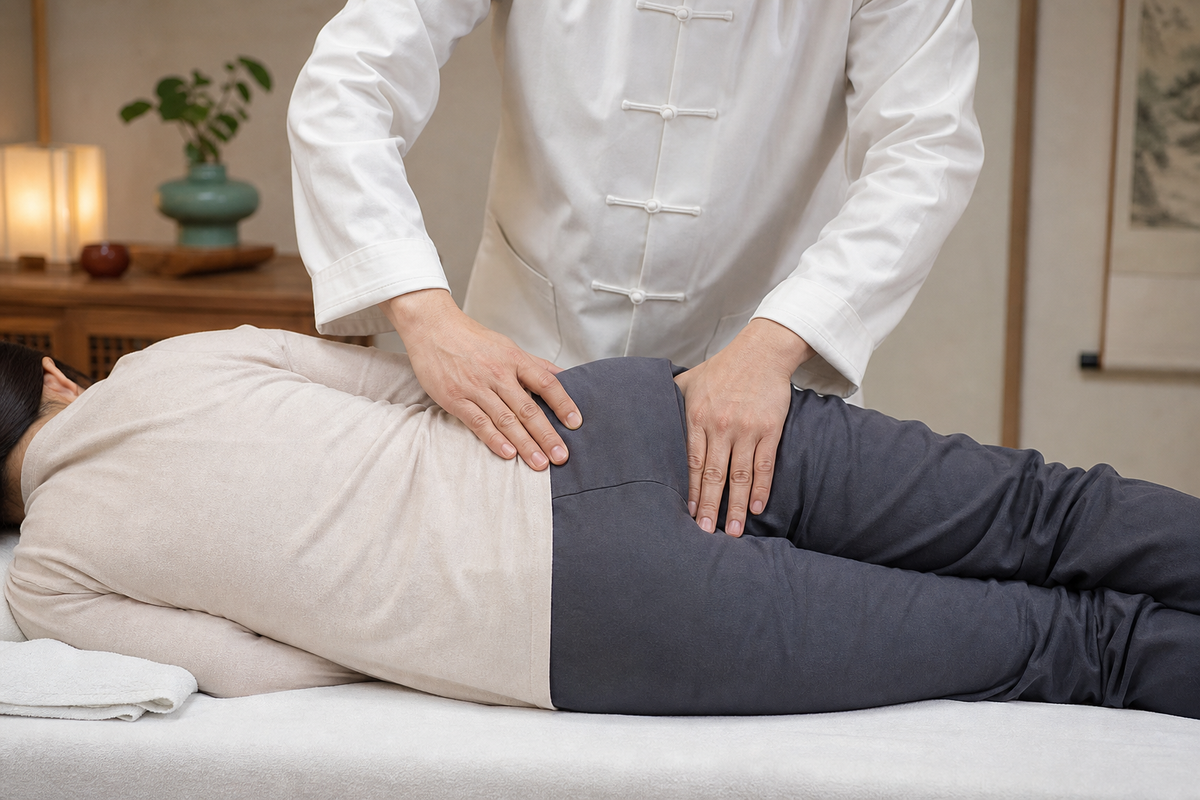
Tuina manual therapy depends on a practitioner’s technique involving acupressure, mobilization and other manual procedures. It is not merely a relaxation massage. As part of a sciatica treatment plan, it can be used lightly and carefully to support comfort, walking tolerance and muscular tension or guarding after the diagnosis and indications have been established.
Direct confidence in Tuina for sciatica is lower than many marketing pages imply. The most directly relevant Tuina paper identified in this research was a protocol for a planned systematic review and meta-analysis, not completed proof that Tuina treats sciatica. That doesn’t show Tuina is ineffective; it shows the evidence found here can’t support a strong efficacy claim.
Forceful manual treatment is out of place if the pain is particularly sharp or worsening, whether accompanied by growing weakness or numbness or if a potentially severe cause can’t be dismissed. Technique and pressures should be tailored to the specific circumstances of the affected patient, with regular reassessment embedded in the process.
In practice, a medical referral may be more important than manual treatment when neurological signs are changing. Tong Ren Tang’s role is to identify that boundary, explain the risk and avoid treating uncertainty as proof of suitability.
What a TCM consultation can add
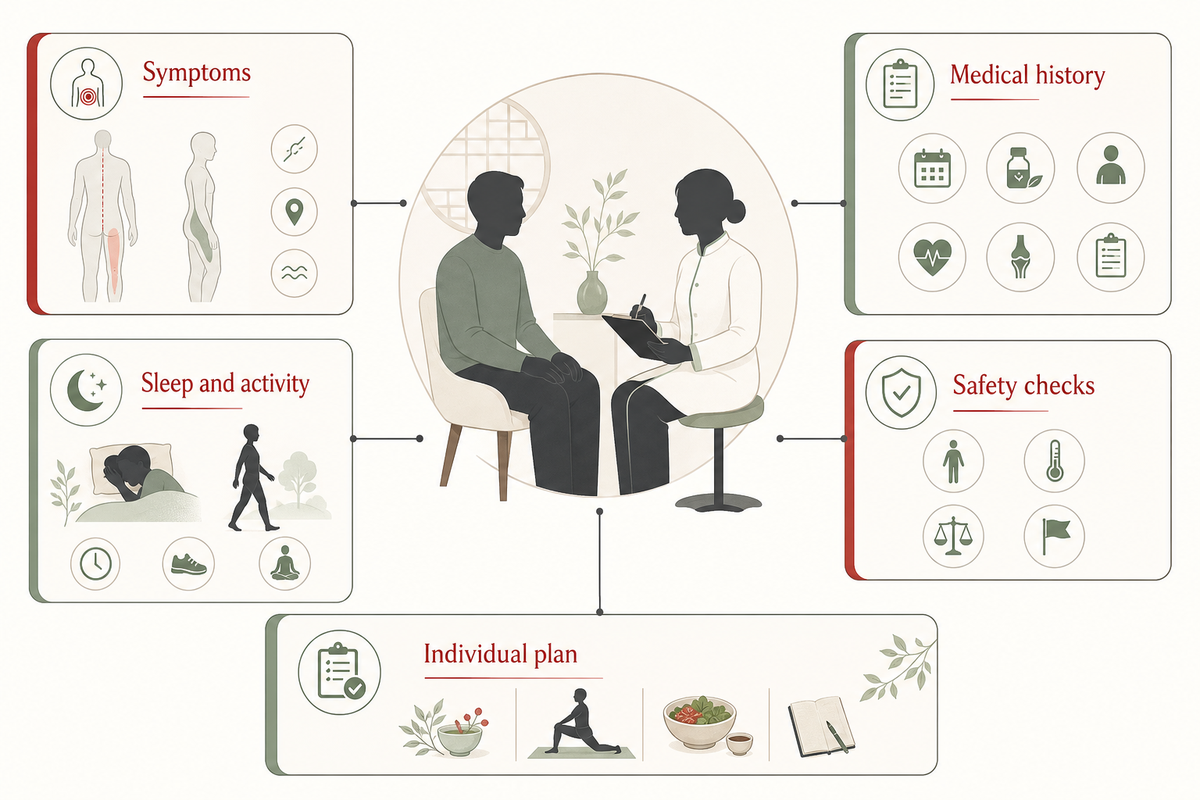
During a TCM visit, the practitioner may ask about the course of pain, triggers, relieving factors, walking ability, sleep, past episodes, current medicines, general health and daily activity limits. A “pattern description” may help select acupuncture points or manual treatment.
Any TCM pattern description should complement, not supplant, a patient’s general medical assessment. Patients should report pregnancy, anticoagulant or antiplatelet medicines, bleeding disorders, infections, recent surgery, osteoporosis and any current diagnosis. They should also ask how the proposed plan fits with ongoing medical treatment, physical therapy or rehabilitation.
Dubai’s formal regulations are explicit about referral. Section 2.5 of the Dubai Health Authority scope for TCAM practitioners requires practitioners to recognize conditions outside their competence and refer to a qualified medical doctor or specialist. Section 16.5 requires licensed TCM professionals to refer when diagnosis or treatment is uncertain. DHA facility guidance also calls for referral pathways between complementary-medicine centres and conventional healthcare facilities.
Acupuncture vs Tuina vs a combined plan
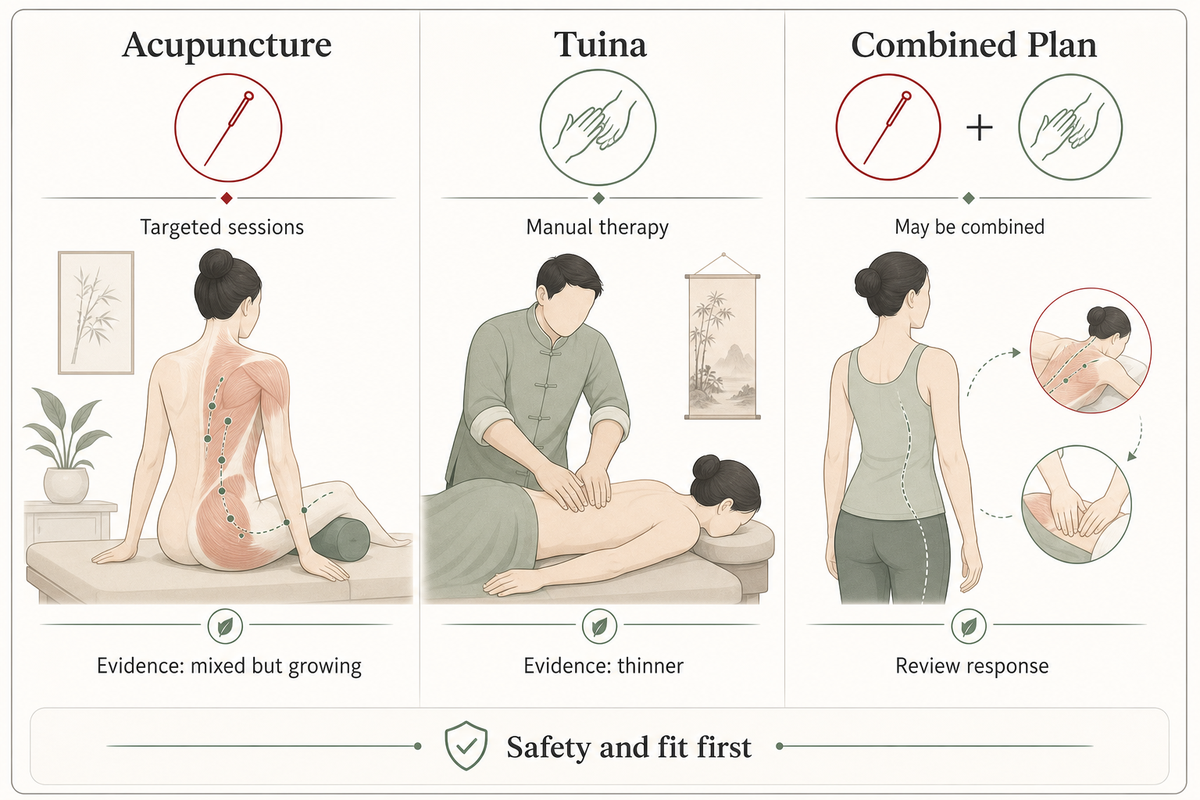
Treatments aren’t interchangeable, and a combined treatment doesn’t guarantee superior outcomes. The comparison below shows what still needs to be assessed.
In practice, the appropriate option depends on the medical scenario, treatment goal and stop criteria—not on choosing the longest menu of services. The available Tuina review protocol is one reason the combined option should not be described as proven superior care.
| Option | Main role | Evidence position | May suit | Pause or refer first |
|---|---|---|---|---|
| Acupuncture | Pain and function support | One relevant positive sham-controlled trial; wider reviews have important limitations; NICE recommends against offering it | Selected non-emergency cases after assessment and informed discussion | Red flags, infection at needle sites, uncontrolled bleeding risk or diagnostic uncertainty |
| Tuina | Manual support for comfort and movement | Direct sciatica efficacy evidence found here is thin; a relevant paper was a protocol | Selected cases where gentle manual work is appropriate | Worsening weakness or numbness, severe acute symptoms, fracture or serious-cause concern |
| Combined TCM plan | Sequenced needling, manual and self-care support | Combination-specific evidence is uncertain | When both components are individually appropriate and goals are measurable | Any presentation requiring urgent, diagnostic or specialist care |
What to expect at a sciatica appointment in Dubai
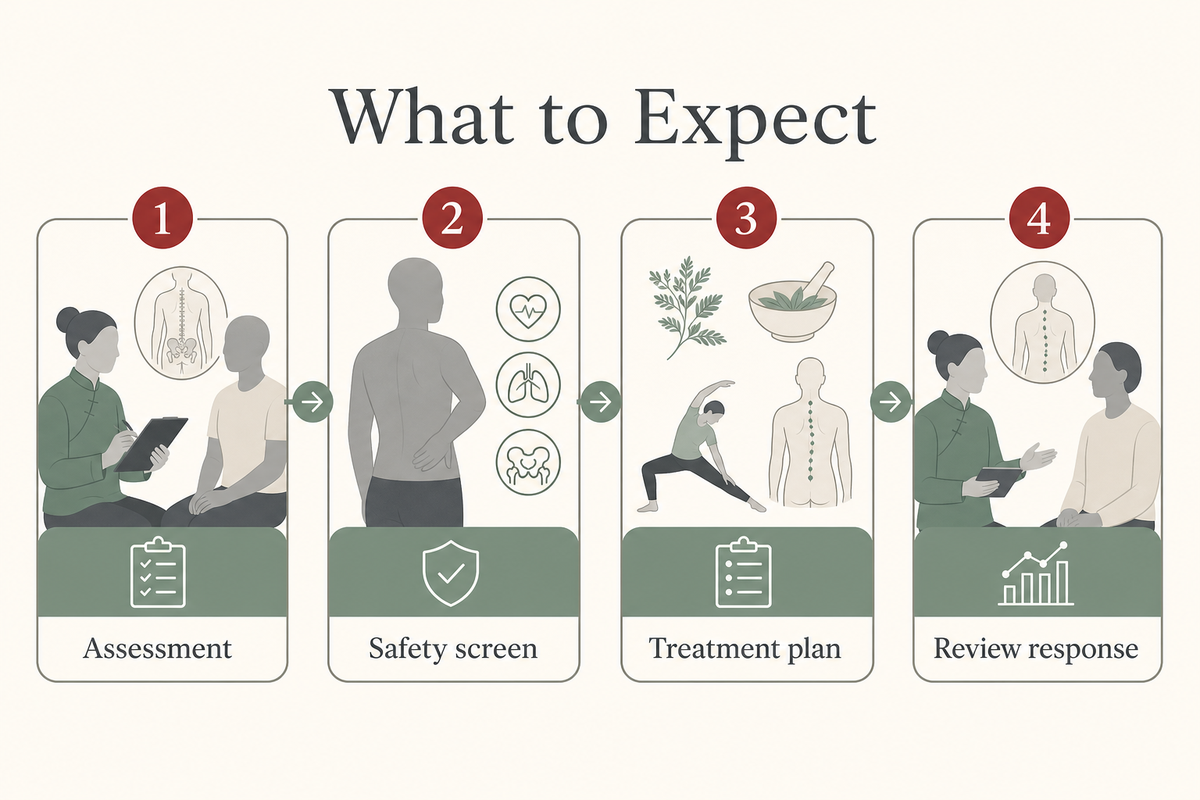
Good care begins with consultation and safety screening, not immediate treatment. Expect questions about symptom duration, pain path, numbness, weakness, medical history and current medicines. Your practitioner should explain the proposed technique, expected sensations, alternatives, material risks, review points and situations that would trigger referral.
Don’t rely on a fixed online session count. Presentation, irritability, goals, response and referral needs differ. Fees should be confirmed with the clinic for the actual plan rather than inferred from an unsupported figure. Before booking, ask whether the practitioner and facility are appropriately licensed, whether acupuncture uses sterile single-use needles, and how the clinic escalates a case that needs medical assessment. See our current pricing and packages or contact the clinic for case-specific questions.
What you can do between appointments
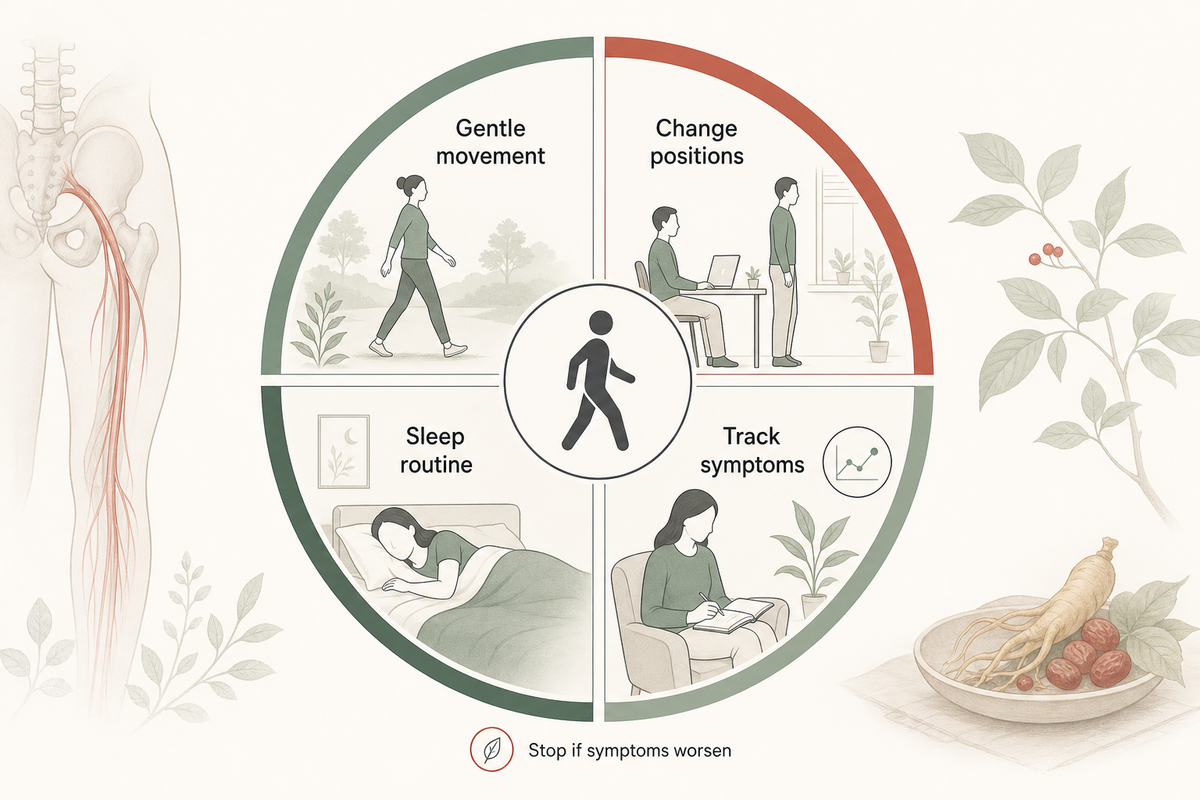
For uncomplicated sciatica, NHS guidance and NICE guidance support self-management and continuing normal activity as much as possible. Gentle movement may be more useful than prolonged bed rest, provided it doesn’t cause progressive neurological symptoms. Physiotherapy for sciatica may also be considered within a cause-aware rehabilitation plan. Heat may help some people feel more comfortable, but it doesn’t identify or remove the cause.
The risk is waiting through a meaningful neurological change because the pain briefly feels more manageable. That is why new weakness, numbness or bladder and bowel symptoms should reset the plan and trigger assessment.
Avoid following generic exercise routines found in online articles without a personal assessment of your symptoms. Keep a log of the changes you observe in your walking ability, sleep patterns, capacity to sit for extended periods, the interference of pain in your life, numbness and muscle strength. Seek immediate medical attention if you experience new bladder or bowel changes, saddle anesthesia, or increased weakness.
Questions to ask before starting treatment
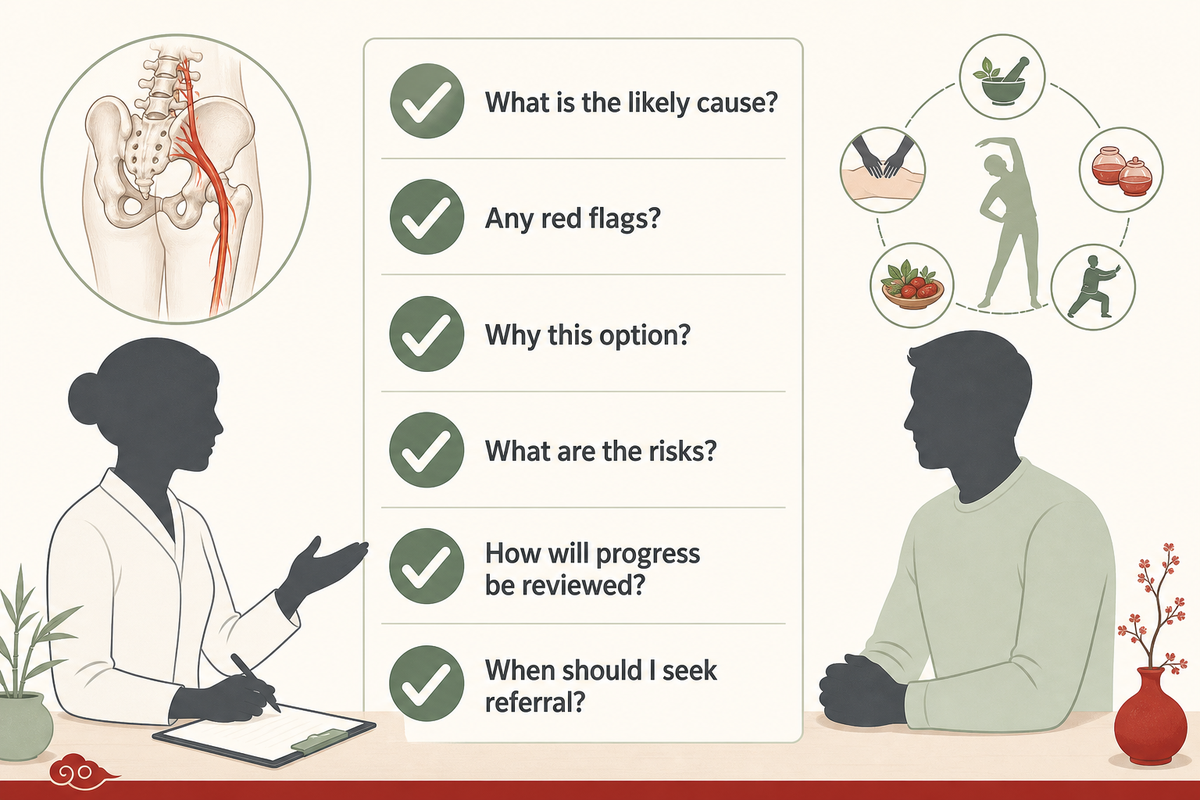
Use these questions with Tong Ren Tang or any other provider. A qualified answer should connect the proposed care to a finding, a review point and a referral threshold, consistent with the Dubai Health Authority facility guidance.
- What aspects of my diagnosis make acupuncture, Tuina, or another therapy technique a good option for me?
- What aspect will we monitor? (e.g., ability to sleep, pain interference, walking, muscle strength or overall function)
- At what point will you reevaluate my care, change the current treatment plan, or make a referral to another practitioner?
- What sensations, risks, alternatives and fees should I understand?
- How can this treatment plan be coordinated with the care I receive from medical practitioners or through exercise-based approaches?
Frequently asked questions
Which treatment is best for sciatica?
Answer
There’s no single best treatment for every case. The decision depends on the likely cause, symptom duration, whether weakness or numbness is progressing and what has already been tried. Acupuncture may be discussed for selected people, while exercise-based rehabilitation, medical assessment or specialist referral may be more important for others. A useful plan also defines a measurable goal, a review date and clear stop criteria. If function is deteriorating or neurological signs are changing, reassessment matters more than adding another technique. Bring any prior diagnosis, scan report and medicine list so the options can be judged against your current care. Safety and cause come before technique.
Can acupuncture cure sciatica permanently?
Answer
No responsible practitioner can promise a permanent cure. One 2024 sham-controlled trial found better pain and function outcomes in a defined group with chronic disc-herniation sciatica, but that doesn’t apply to every cause or patient. A 2025 overview of systematic reviews also found important quality and bias limitations. NICE still recommends not offering acupuncture for low back pain with or without sciatica. It’s a potential option to discuss, not a guaranteed replacement for diagnosis, rehabilitation or urgent care.
Is Tuina safe for sciatica?
Answer
Tuina may be suitable as a gentle manual-therapy component after assessment, but direct high-quality sciatica evidence is limited. It shouldn’t be used aggressively when pain is severe, weakness is worsening, sensation is changing or red-flag symptoms are present. The practitioner should adapt pressure and technique and coordinate medical referral when the presentation is uncertain.
How many sessions will I need?
Answer
Reliable session estimates require assessment. Duration, symptom irritability, functional limits, goals, response and referral needs all matter. Ask for a review point rather than a guaranteed package: what outcome will be measured, when will progress be judged, and what will happen if symptoms don’t improve or neurological signs change?
Should I rest or keep moving?
Answer
For uncomplicated sciatica, long periods of bed rest are generally discouraged. Continue normal activity within tolerance and consider gentle movement, while avoiding anything that clearly worsens the problem. Seek assessment if symptoms are getting worse, haven’t improved after several weeks or are stopping normal activity; seek urgent help for the red flags listed above.
A measured next step
If there are no urgent warning signs and you’re looking to see if a TCM option will complement your existing healthcare plan, please review the sciatica treatment page on the Tong Ren Tang website and book an appointment for assessment. The primary goal of your first visit will be to determine if the treatment is appropriate for your condition, define your objectives, assess potential risks and referral needs – rather than to assure you of a cure before examination.
Discuss your sciatica care options
Bring any diagnosis, scan report, medicine list and notes about weakness, numbness or bladder and bowel symptoms. A licensed practitioner can explain whether acupuncture, Tuina, another pathway or medical referral is the safer next step.
Important Disclaimer: If you experience any recent changes in your bowel or bladder function, saddle numbness, pain or numbness on both sides of your body, or significant worsening weakness, please seek immediate medical attention from emergency services rather than scheduling an online appointment.
References & Sources
- NHS: Sciatica
- NICE NG59: Low back pain and sciatica, recommendations
- Tu JF et al. Acupuncture vs sham acupuncture for chronic sciatica from herniated disk. JAMA Internal Medicine. 2024.
- Systematic review and meta-analysis of acupuncture for sciatica. Frontiers in Neuroscience. 2023.
- Overview of systematic reviews of acupuncture for sciatica. 2025.
- Tuina for sciatica: protocol for a systematic review and meta-analysis. 2022.
- Dubai Health Authority: Scope of Practice for TCAM Practitioners
- Dubai Health Authority: CAM Centre Health Facility Guidelines
![Postpartum TCM Care: Safety Questions for Dubai [Guide]](https://tongrentang.ae/wp-content/uploads/2026/09/postpartum-tcm-care-blog-featured-768x512.png)