Get in Touch with Tongren Tang Gulf

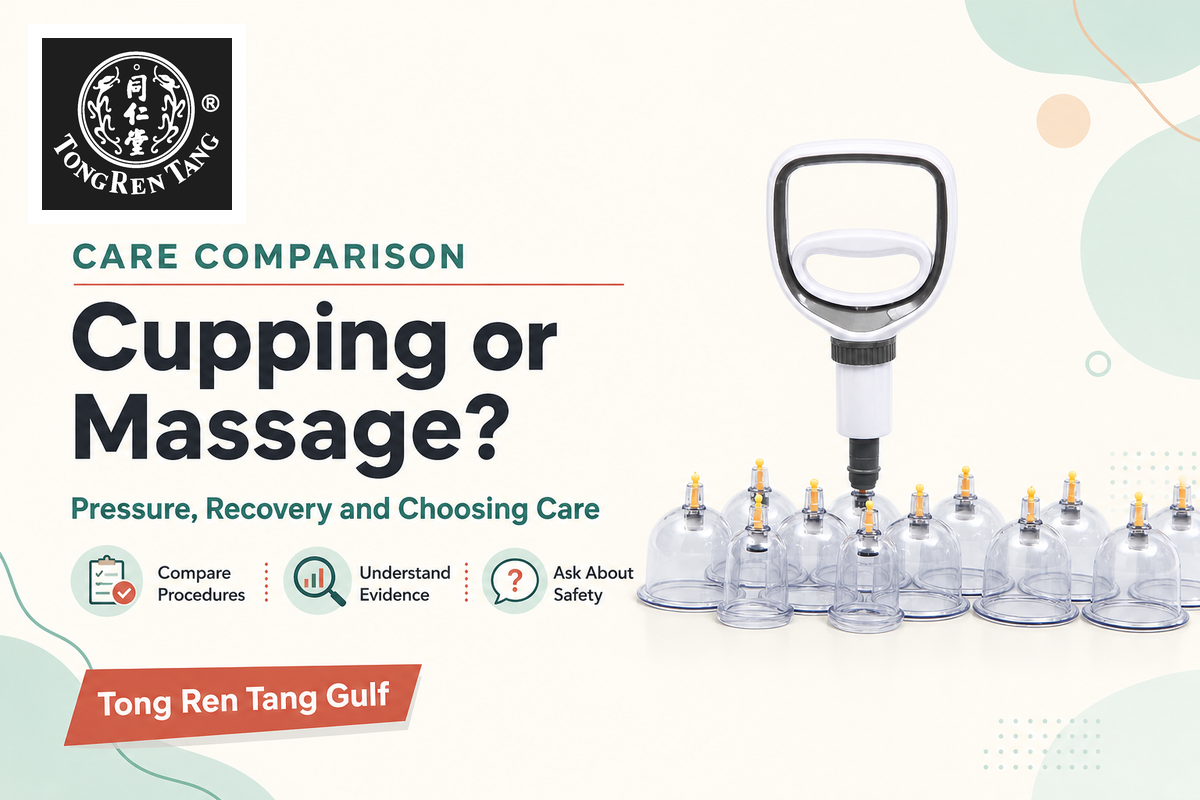
Your symptoms should determine your choice between massage and cupping, not how intense the treatment feels. Deep tissue massage uses manual pressure; cupping uses a vacuum effect. Neither has been shown in the sources reviewed here to be the better choice for everyone. Your symptoms and medical history should be considered, as should the type and level of contact you’re comfortable with.
Updated October 2026. This guide summarises evidence and provides questions to ask your health care provider. It doesn’t diagnose or treat pain.
New weakness, numbness or loss of sensation, or changes to bladder or bowel function with back pain need urgent attention. Read the medical advice section before arranging either treatment for unexplained symptoms.
Cupping or Massage: The Main Differences
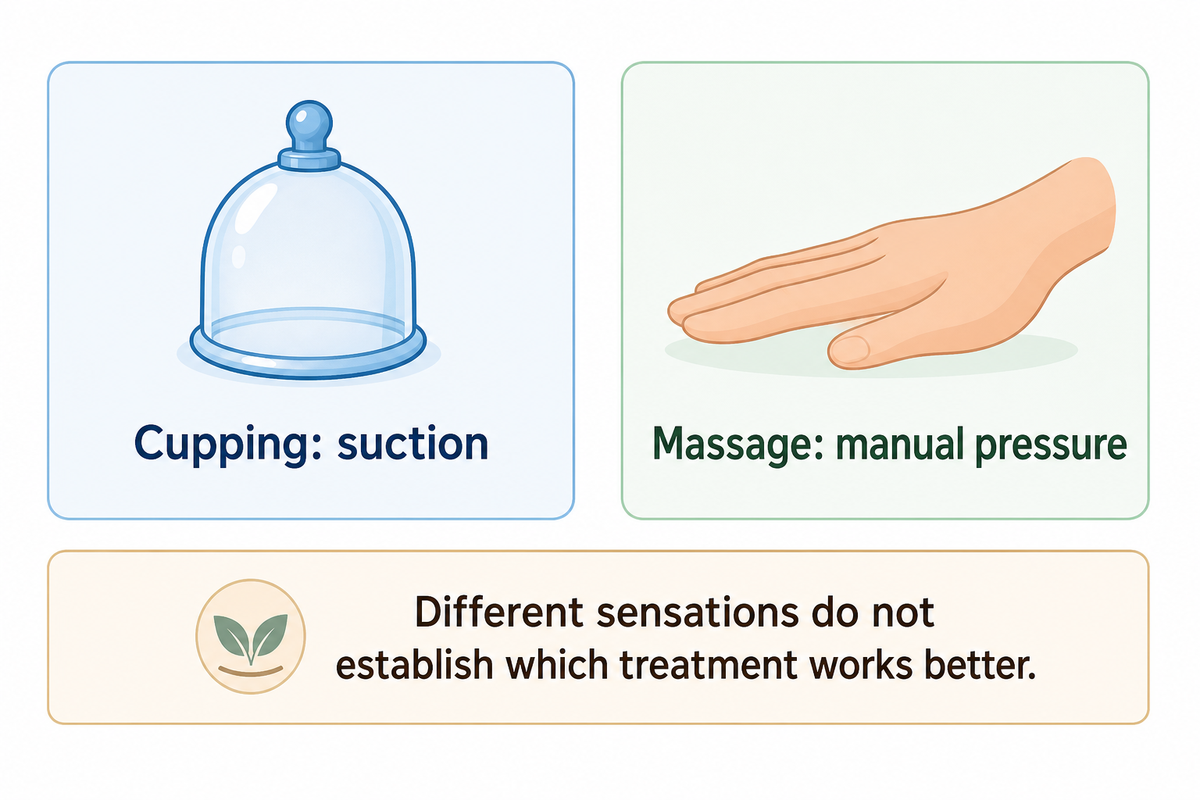
The difference in the way the force of each procedure reaches the body can impact comfort and visible skin effects, but it can’t predict pain relief or muscle recovery.
The 3-Column Care Comparison
Use the middle column of the table to help identify what’s being proposed, and the last column to test your understanding of what’s being promised. The table is meant as a guide for discussion, not to point you toward a specific treatment.
| Question | Cupping / deep tissue massage | Limitations |
|---|---|---|
| How is force applied? | Cups create suction / hands or forearms apply pressure. | Different sensations do not establish which treatment works better. |
| What happens to the skin? | Dry cups leave skin intact / massage does not intentionally pierce it. | Wet cupping adds skin piercing; confirm the booked method. |
| Can the treatment move? | Oiled cups may slide / massage uses hands-on strokes. | Moving cupping is not proof that a separate massage should follow. |
| Are visible marks expected? | Temporary cup marks can occur / deep pressure may cause bruising. | Mark colour cannot grade recovery. |
| Does more intensity help? | Suction can be adjusted / manual pressure can be adjusted. | Painful intensity is not a validated measure of benefit. |
| What is being treated? | Proposed for pain or tension / proposed for pain, tension or relaxation. | Symptoms need assessment; a booking label is not a diagnosis. |
| How strong is the evidence? | Cupping evidence has important limitations / massage findings vary by condition. | General massage studies cannot prove a deep-tissue advantage. |
| What risks need discussion? | Skin injury, burns and infection / rare serious harms with vigorous massage. | Neither method is suitable for everyone. |
| Must I choose one? | Either may be discussed as an optional part of care. | Assessment, exercise or another approach may be more appropriate. |
Sources: NCCIH cupping guidance and NCCIH’s massage therapy overview; the questions are our synthesis of their treatment and evidence boundaries.
In the case of a client who comes in after a rough work week and needs relaxation, the first chat may be about comfortable pressure. Muscle pain that’s persistent or unexplained warrants a different chat: what could be the cause of it, and should an assessment be done prior to any intervention? Neither of these is compulsory. Exercise and physiotherapy may form part of a larger treatment plan for back pain.
What Happens During Cupping Therapy and Deep Tissue Massage
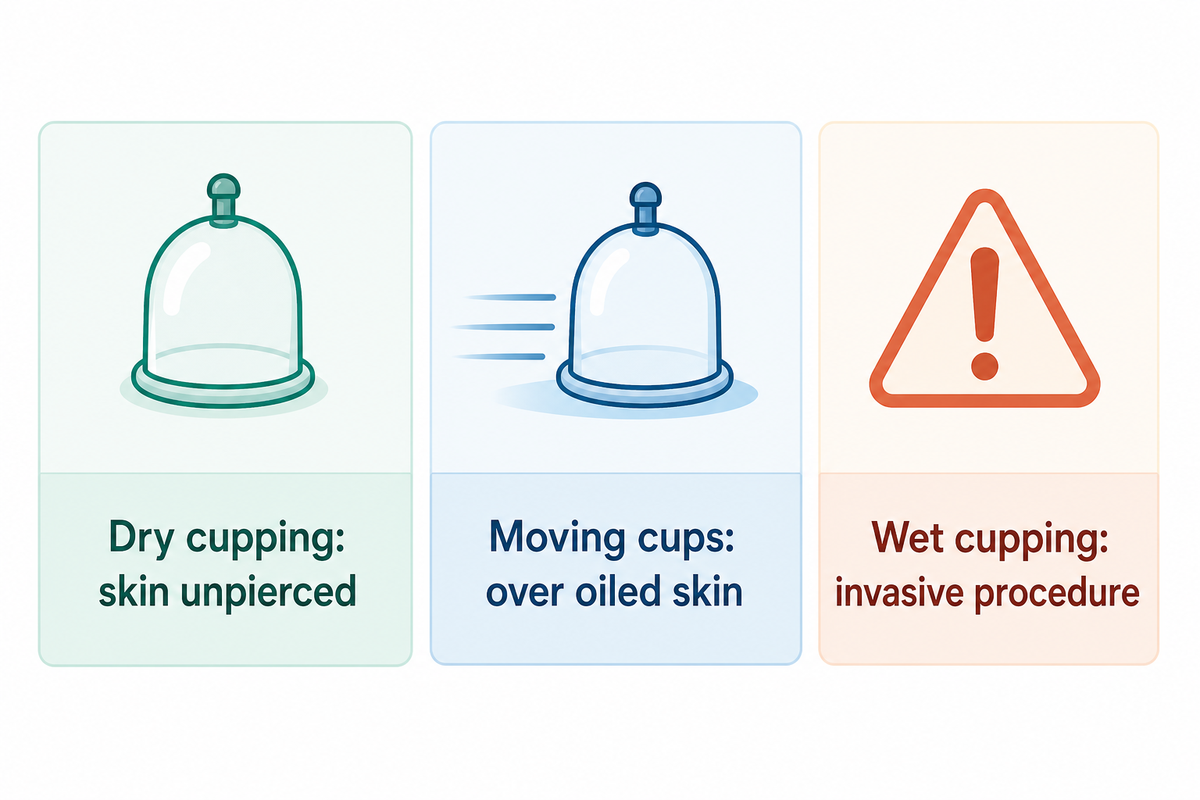
A cupping session may refer to several different procedures. Dry cupping leaves the skin unpierced. Blood is collected during wet cupping. Moving cups add motion over oiled skin. Deep Tissue Massage uses strokes and pressure, but the specific massage techniques and intensity should be explained by the therapist prior to the massage.
- Dry cupping: Dry cupping uses cups to create suction on specific areas. Fire can be used to generate suction in some methods; that describes the method, not an added health benefit.
- Moving cupping: Moving cupping is a procedure in which the practitioner slides the cups over lubricated areas of the body; it may also be referred to as a cupping massage.
- Wet cupping: Wet cupping is an invasive procedure involving small cuts in the skin. A reader wishing to learn about two non-invasive procedures shouldn’t learn about this difference after arriving.
The definition of cupping by NCCIH distinguishes the two methods. Our guide to cupping and Hijama methods elaborates further.
Say you schedule “cupping massage” for help with your shoulder tightness. You learn during the appointment that it includes wet cupping. You expected moving cups. The best thing to do is to confirm the technique, the risks and the available alternatives and then make an informed choice. A familiar name, an ancient Chinese tradition or a claim that a practice has been around for thousands of years doesn’t resolve the consent question. Ask what will penetrate or touch your skin, what area will be addressed and how you can stop it. You can choose not to go through with the procedure and address other available options.
What the Pain Research Can Tell You
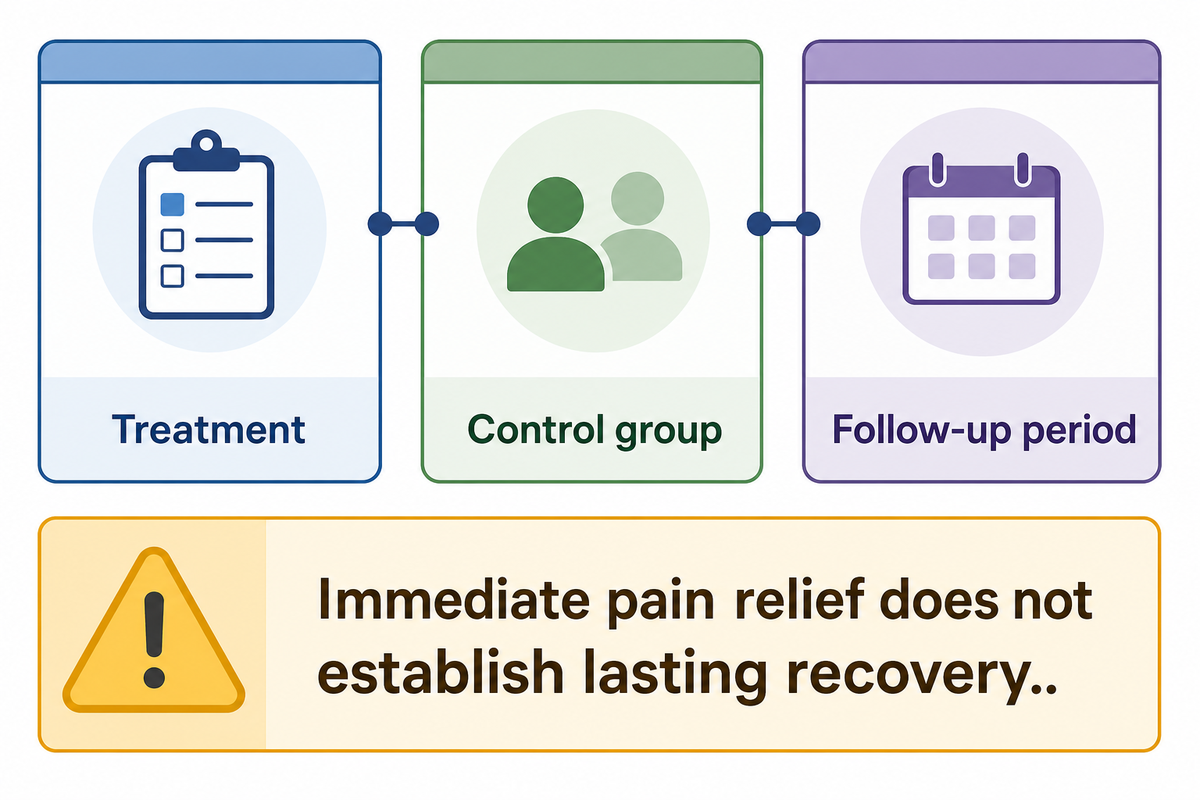
Pain research for this comparison gives a qualified answer. Some studies do report treatment symptom improvement, but differing treatment, control groups and follow-up periods make it difficult to generalize. Pain reduction immediately after treatment doesn’t establish an improvement in function or lasting recovery.
“Cupping may help reduce pain, but the evidence for this isn’t very strong.”
Is cupping better than a massage?
There’s no evidence in the sources reviewed here to establish that cupping is better than a defined deep tissue massage program. Many cupping studies compare it to no treatment, sham treatment or an add-on to treatment. Answering the question “is cupping better than treating with no treatment or a sham treatment or adding cupping to treatment” addresses a different question than “is cupping better than a defined deep tissue massage program?”
| Source | Population and timing | Finding and limit |
|---|---|---|
| Wang review, 2025 | 72 trials; 5,720 participants with pain conditions. | All trials had high risk of bias; mixed methods and comparators. |
| Cochrane review, 2024 | 33 trials; 1,994 people with neck pain; main comparison near 12 weeks. | Low-certainty evidence of little or no pain difference versus sham massage. |
| Cherkin trial, 2011 | 401 adults with chronic nonspecific low back pain; 10 weekly treatments. | Both massage protocols improved outcomes versus usual care at 10 weeks; neither massage protocol was meaningfully better. |
| Lauche trial, 2013 | 61 adults with chronic neck pain; 12 weeks. | Cupping massage did not improve the primary pain outcome more than progressive muscle relaxation. |
The table includes the results from the following sources: Wang and colleagues’ cupping review, the Cochrane neck-pain review, Cherkin’s massage trial and Lauche’s cupping-massage trial. The information is presented for four separate study questions, not four head-to-head tests.
Wang and others included 72 studies with 5,720 participants and evaluated all the included studies as high risk of bias. The Cochrane review included 33 studies with 1,994 participants. Findings near 12 weeks were uncertain and concerned mixed massage approaches, not deep tissue massage alone.
One of the studies by Cherkin compared structural massage, relaxation massage and usual care. After 10 weekly sessions, the two massage groups didn’t differ in a clinically meaningful way. In this study, structural massage shouldn’t be equated with deep tissue massage.
One recent 2025 review of cupping for chronic musculoskeletal pain found an immediate pain reduction signal, but didn’t find a statistically significant overall improvement in functional disability; results across studies varied. The review evaluated immediate outcomes and therefore doesn’t indicate how long any possible benefit would last.
Ask the practitioner to explain what the treatment aims to achieve. Will it change pain, movement in a daily activity, or something else? “It may alleviate discomfort” is less broad than “it will fix the issue.” An appropriate follow-up checks the result against the goal we agreed to.
Knots, Blood Flow and Detoxification Claims
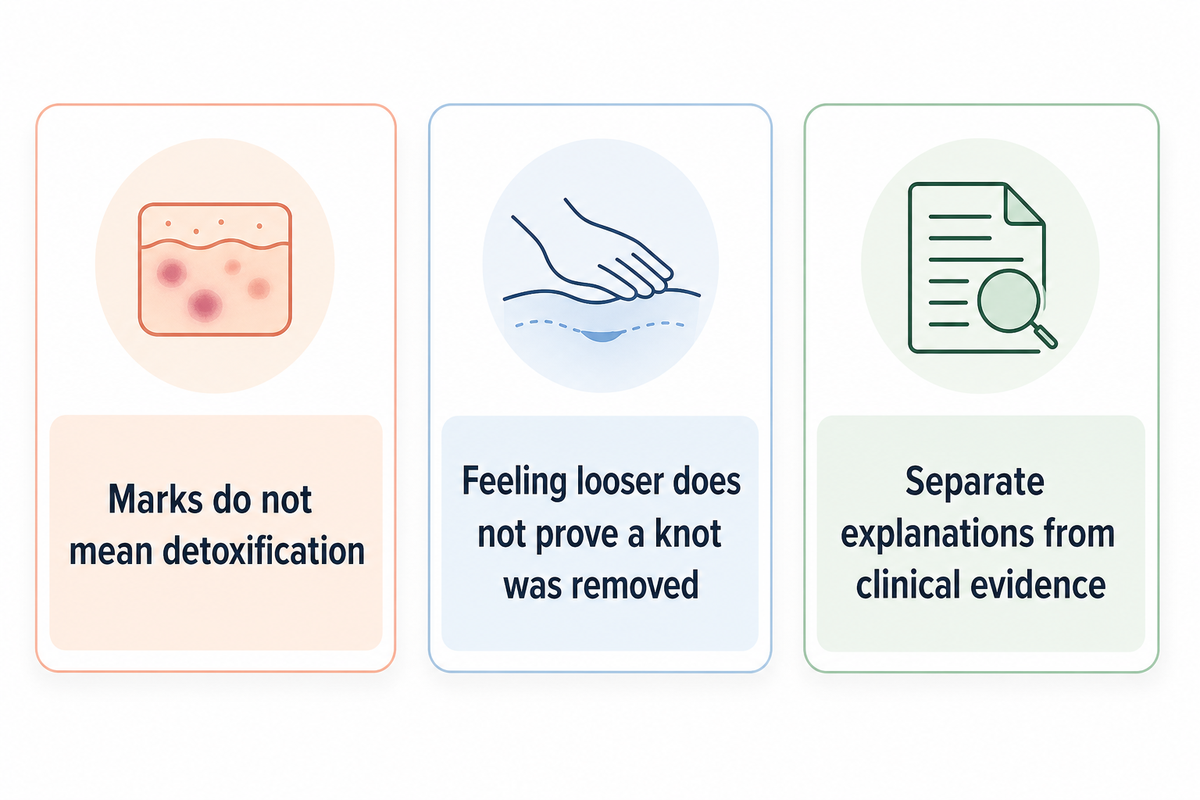
A sensation of looseness after treatment doesn’t necessarily mean that a knot has been removed. Markings on the skin don’t mean detoxification. Explanations about blood flow or movement of tissues need to be separated from evidence of improvement of symptoms or function.
Does cupping actually release knots?
Cupping may change the way a body area feels, but the sources reviewed here don’t demonstrate permanent removal of muscle knots or adhesions. “Knot” is an informal term, not a diagnosis. Muscle tension or stiffness, if they persist, should be evaluated, not addressed with suction chosen to produce an intense sensation.
Statements to improve blood flow describe a proposed effect in a localized region. They don’t, by themselves, demonstrate improvements in muscle recovery. Similarly, a change in blood circulation beneath the skin isn’t evidence that metabolic waste has been removed throughout the body.
Be cautious with statements like “Cups promote detoxification” or “color of mark indicates toxins.” The NCCIH evidence summary doesn’t support those statements. Claims to “promote healing” or help by “reducing inflammation” also require clinical support that is relevant to the condition.
Terms like myofascial treatment describe a practitioner’s approach to soft tissue. They don’t make a visible mark a measure of success. If chronic tension returns, ask if the original explanation still fits your symptoms, as opposed to assuming the last bit of pressure was too light.
Recovery: Marks, Soreness and Daily Activities
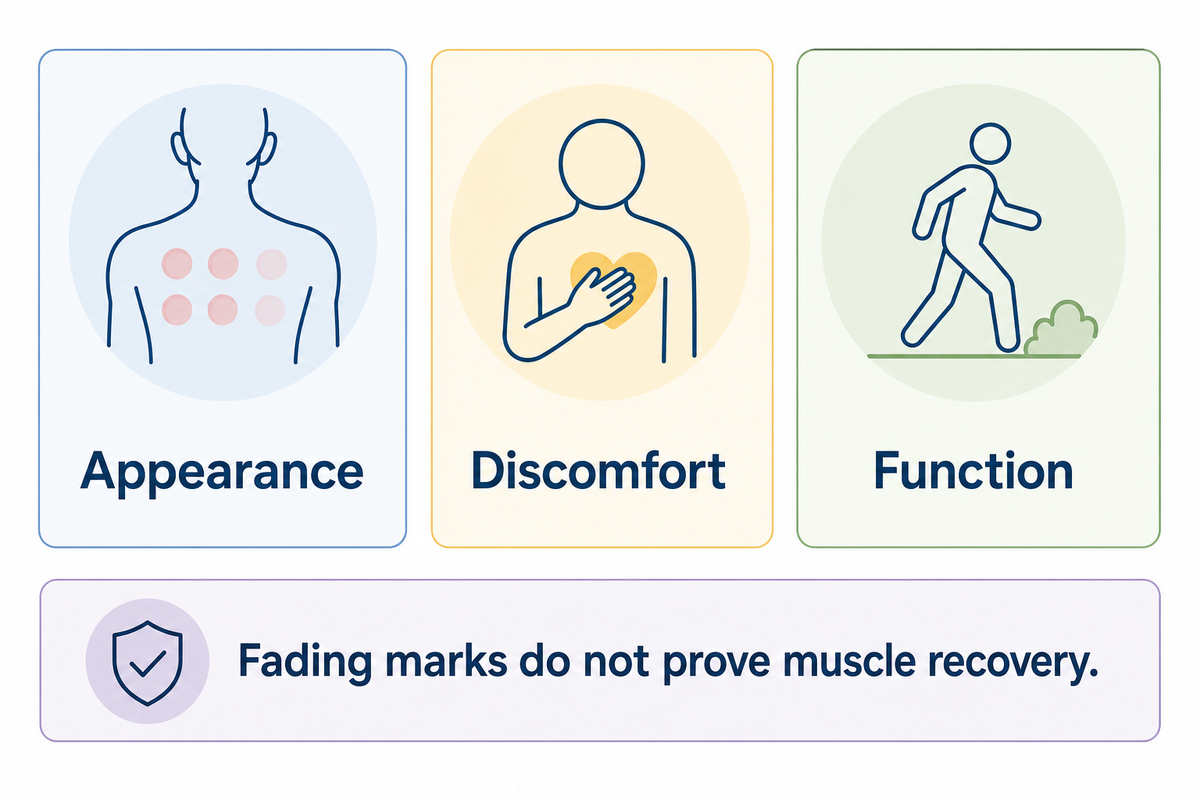
There are multiple meanings to recovery after cupping and massage. Marks may fade, but the underlying pain and discomfort may remain. A person may feel better without being more able to perform a given activity. Discuss both the expected skin effects and what function you’re trying to recover. There is no reliable universal recovery time before returning to work or sport after either of these therapies.
According to the Cleveland Clinic’s cupping guidance, marks should fade within a week or two. That is an estimate for skin appearance, not proof that a muscle has recovered or a rule to wait before seeking help. Likewise, vigorous massage can leave soreness and is not risk-free.
Consider the athlete wishing to treat sore muscles before an event. A reassurance that the marks will disappear by the time of the event isn’t sufficient to know if the training will feel better. A more useful discussion will cover appearance, discomfort, and function. You should tell the practitioner what training you’ll be doing and ask what changes should lead you to reduce training or see the practitioner if discomfort gets worse. If the treatment is aimed at alleviating pain and discomfort, a plan based on symptoms and function will be more helpful than treating lighter marks as proof of recovery.
Burns, severe pain, fever or signs of skin infection require medical attention. Increasing redness and tenderness, or discharge, shouldn’t be dismissed as normal detox. Our cupping marks guide discusses the normal appearance of cupping marks. Concerning signs and symptoms require medical evaluation.
When to Seek Medical Advice Before Treatment
Untested assumptions about the causes of symptoms shouldn’t inform your treatment choice. Cupping and vigorous massage have different potential harms, so “natural” does not mean safe and effective for all. Urgent symptoms are a reason for medical concern and require medical attention rather than routine treatment.
When neither treatment should come first
With back pain, new weakness, numbness or tingling in both legs, or loss of sensation around the genitals or anus requires emergency medical attention. The same is true for back pain with new bladder or bowel problems, chest pain, or pain that started after a serious accident. The NHS back pain guidance provides information on when you should seek medical attention for back pain. Sudden severe or rapidly worsening back pain, or feeling feverish and unwell, calls for urgent medical advice.
For non-urgent conditions, tell the practitioner about any medicines, bleeding disorders, pregnancy, skin conditions and previous adverse events. Don’t stop prescribed treatment to make a procedure possible. The NCCIH mentions cupping-related burns, infection and exacerbation of eczema and psoriasis. It also reports rare serious adverse events with vigorous massage, including deep tissue massage.
A routine consultation may not lead to treatment. The NHS recommends staying active, appropriate exercise and physiotherapy, among other things, for back pain. What’s appropriate will depend on the cause of the pain and your individual situation. Pain that doesn’t let you do normal activities of your daily life is worth evaluation, and passive treatment shouldn’t be used to postpone the evaluation.
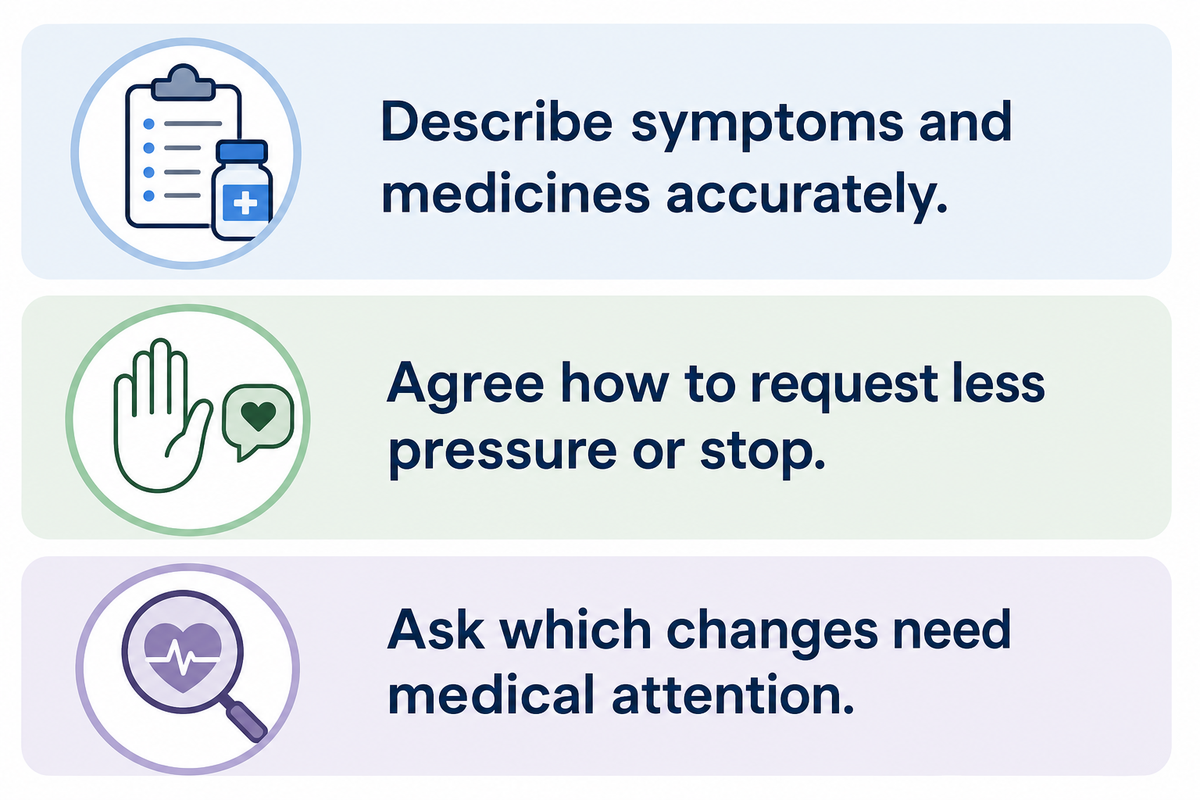
Do
- Describe symptoms and medicines accurately.
- Agree how to request less pressure or stop.
- Ask which changes need medical attention.
Don’t
- Use mark colour to grade treatment success.
- Ignore worsening symptoms to finish a package.
- Replace prescribed care with a wellness claim.
Combining Cupping and Massage
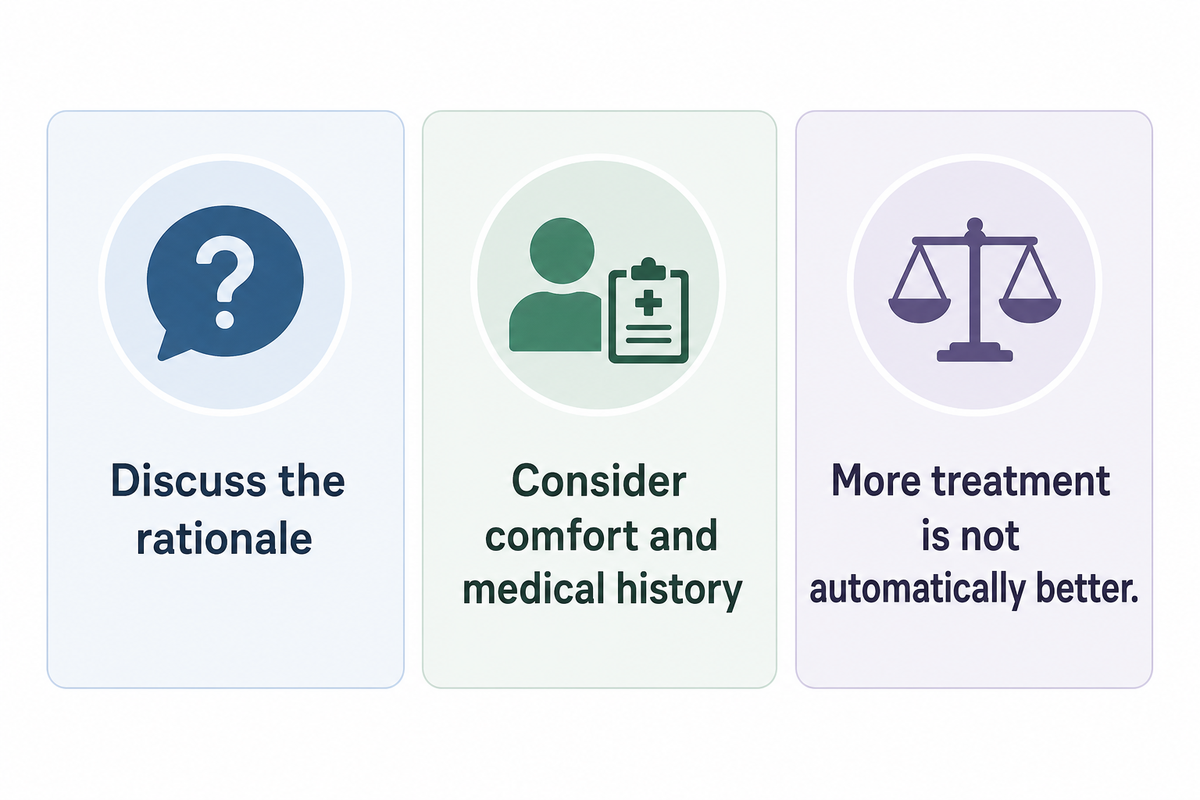
Cupping combined with massage is an option to discuss, not an upgrade to offer to every patient. Adding a second option increases what happens during a visit, but the evidence needs to explain the rationale behind it. Studies of added options don’t establish the best order or the value of both options together in one session.
Is it better to get cupping or a massage first?
The sources reviewed for this guide place no particular order on the steps. Therefore, comparisons made between cupping with massage versus massage only don’t define when cupping should be done. Discuss with the practitioner the rationale for a suggested order of steps and the effect of skin irritation, comfort and your medical history.
The 2025 Wang review identified five trials of cupping added to massage, but didn’t identify them as a defined deep-tissue sequencing test. Statements that a sequence will calm the nervous system or promote relaxation shouldn’t become a promise of superior recovery.
If your goal is stress reduction, state this. Ask if regular massage at an acceptable intensity would fulfill your goal, and if not, would additional procedures be warranted? An additional service requires justification, and stating “more treatment is better” isn’t justification.
Choosing Care in Dubai
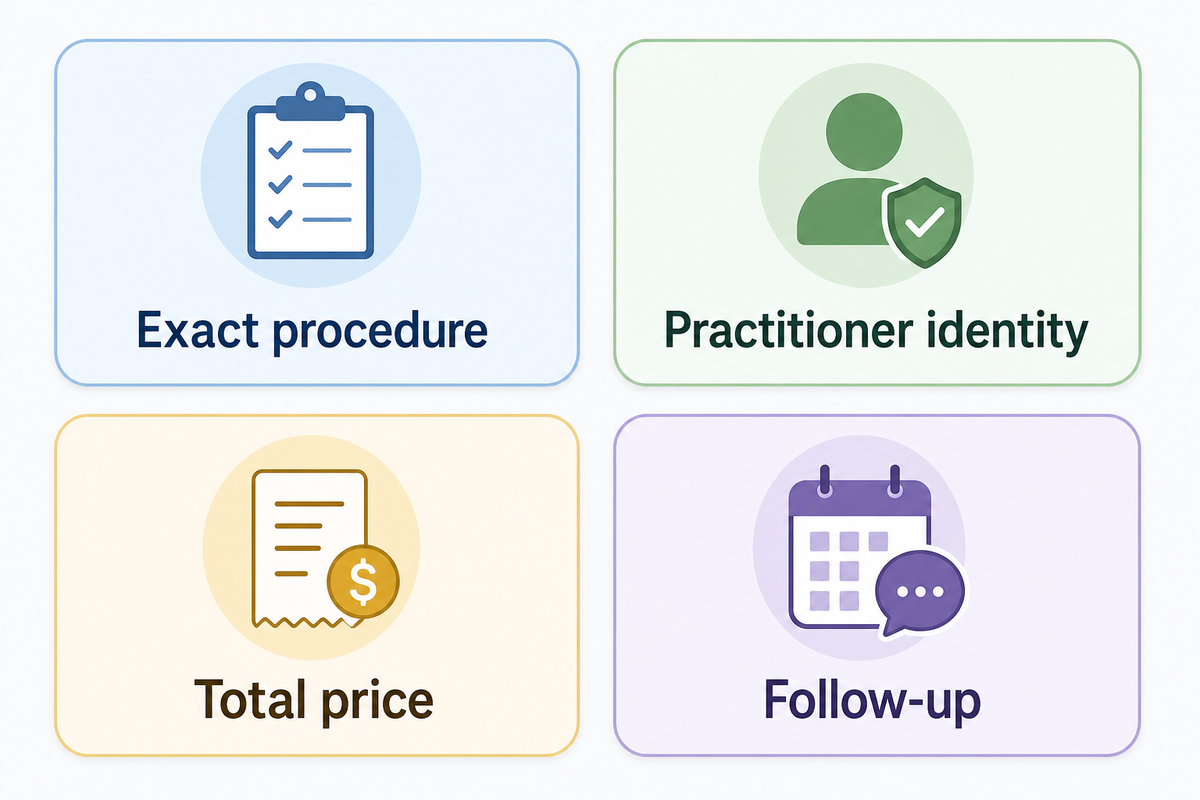
For therapy in Dubai, confirm the exact procedure before making your choice. The practitioner and the facility must be specified. Check the relevant regulator’s records, and then compare the proposed care and total cost. A practice webpage or training certificate doesn’t always answer questions about the authorization of the practice, procedure, and staff.
The Dubai Health Authority licensing page provides members of the public with the Dubai Medical Registry, and details of facilities. This guide hasn’t checked the license of a named practitioner, and doesn’t claim that the clinics described are authorized to perform all the procedures outlined in this guide.
Take the following with you to your discussion. A patient can state the goal; a caregiver can record medicines and follow-up questions; and a practitioner can explain whether the goal is appropriate and what the evidence is. The example given is for illustration only and isn’t a real patient case or clinical protocol.
| Entry | Example question or information to record | Limitations |
|---|---|---|
| Your main goal | I want to turn my neck at work with less discomfort; how will we assess that? | A functional goal does not establish the cause of pain. |
| Exact procedure | Is this dry, moving or wet cupping, or a named massage technique? | An umbrella name can hide a different procedure. |
| Relevant history | Here are my medicines, skin problems and previous treatment reactions. | This sheet does not decide medical suitability. |
| Practitioner identity | What is the practitioner’s name and relevant licensed scope? | A course certificate alone does not verify local authorization. |
| Facility details | Which regulator licenses this facility, and where can I check its record? | Check the relevant authority; do not assume all jurisdictions are identical. |
| Comfort and consent | How can I ask for less pressure or stop the session? | Tolerance is personal; enduring pain is not the goal. |
| Expected outcome | Are we discussing comfort today, easier movement or a longer-term change? | A promise about one outcome does not prove another. |
| Total price | What do consultation, treatment time and any add-on each cost? | No clinic price or package saving is assumed here. |
| Follow-up | Which symptoms need help, and when should we reassess the plan? | Worsening symptoms may need care before a routine follow-up. |
Two providers offering a joint appointment may quote differently. If one includes the consultation in their quote and the other lists it separately, clarify inclusions before comparing quotes. Then assess the treatment you’ll be provided with: a lower quote doesn’t mean better value if you don’t wish to have skin piercing, cannot verify the practitioner or don’t understand the follow-up plan. A caregiver can help document these details, and support your understanding of this plan, but shouldn’t make the decision for you. Before you pay for repeated visits, set a date when you’ll discuss whether the goal is being met, especially if the goal wasn’t fully met on the previous visit. This will make subsequent decisions about the treatment dependent on your response, not the package.
Tong Ren Tang Gulf’s website lists cupping and Hijama services and Tuina Chinese medical massage. Tuina isn’t interchangeable with deep tissue massage; the Tuina versus deep tissue comparison explains that distinction. Confirm the current procedure and practitioner directly before booking.
A clinic that offers cupping therapy should be able to explain what it proposes for you. “Best cupping” advertising isn’t a substitute for that explanation. Your health and well-being matter more than matching a treatment package to a broad promise of overall wellness.
Key takeaway
Choose an assessment and a clear goal before choosing intensity. Cupping or massage may be discussed as part of care, but neither darker marks nor firmer pressure proves a better result.
Contact Tong Ren Tang Gulf for more information about current services, suitability assessment and appointments.
Frequently Asked Questions
Does cupping include massage?
Cupping may be offered alone, as moving cupping, or alongside a separate massage.
A booking for cupping massage does not give all the information about the appointment. Ask if the cups are moved over oiled skin or kept still; ask if treatment is hands on and if skin is pierced. A distinction needs to be made to clarify what you are consenting to. It is also important to distinguish this to not pay for an extra service you think is included.
Does cupping massage hurt?
Cupping can feel like pulling or tightness, but severe pain should prompt the practitioner to stop and assess it.
First-timers should agree on a way to ask to have less suction or stop treatment altogether. Sensitive areas should be communicated prior to treatment starting. Painful pressure or a dark mark doesn’t mean that tight muscles have been treated successfully. Continuing treatment because you are told pain means toxins are leaving can mask a real issue.
Does cupping help with lymphatic drainage?
Cupping should not be treated as a substitute for specialist lymphoedema care.
Manual lymphatic drainage is described by the NHS as part of a program that includes compression and exercises and skin care. A claim to stimulate lymph flow doesn’t show that cupping can reduce swelling for a condition that’s been diagnosed. Persistent or unexplained swelling should be brought to the attention of a clinician, not treated with a wellness package that may have a similar name.
Does cupping massage leave marks?
Temporary circular marks can follow cupping, and their absence or darkness does not measure success.
According to Cleveland Clinic, the marks usually fade within a week or two. Individual experience may vary. Burns, severe pain or signs of infection require medical advice. Do not wait for the expected fading of the marks to call for medical help.
What is the pricing for cupping therapy and massage therapy?
Ask for a current written quote that separates the consultation, named procedure and any extra treatment.
Two appointments with the same advertised duration may include different services. For example, one appointment may include an assessment, while another may charge separately for an assessment. Look at the actual treatment time, the practitioner, follow-up appointments, and cancellation terms. A package may be offered, but ask when the treatment plan will be reviewed before committing to continued visits. Currently, no fixed prices are listed because we do not have a verified, consistent clinic tariff. Cost alone cannot determine the best option for your symptoms.
Is cupping massage worth it?
Value depends on your goal, suitability, cost and response; a combined package is not automatically better.
Before booking more appointments, discuss with your practitioner what would need to happen to deem it useful. Using “deeper marks” to measure treatment success is not sufficient. Persistent or worsening symptoms indicate the treatment plan should also be reassessed.
Can cupping massage make you sick?
Cupping can cause adverse effects, so new or worsening symptoms should not be dismissed as a detox reaction.
NCCIH identifies risks of burns and infection. It states that contaminated equipment can spread bloodborne diseases. Wet cupping creates concerns with bleeding. Seek medical attention for fever, severe pain or skin that becomes increasingly red or tender, or produces discharge. Tell the health care provider what procedure you had and when your symptoms started. A provider’s assurance that cupping is safe for everyone is not a substitute for an assessment. Do not discontinue prescribed medication to make yourself eligible for a session.
About this care comparison
Tong Ren Tang Gulf publishes this cupping and massage comparison to help readers prepare for a consultation. It draws on public research and health guidance, not clinic outcome data or a trial conducted by the clinic. The comparison tables are editorial discussion aids. No named clinician review, guaranteed benefit or specific deep tissue service is claimed.
References & Sources
- NCCIH: Cupping
- NCCIH: Massage Therapy
- Wang et al., 2025: Evidence for cupping in pain treatment
- Cochrane, 2024: Massage for neck pain
- Cherkin et al., 2011: Two massage approaches for chronic low back pain
- Lauche et al., 2013: Cupping massage versus progressive muscle relaxation
- 2025 meta-analysis: Cupping for chronic musculoskeletal pain
- Cleveland Clinic: Cupping
- NHS: Back pain
- NHS: Lymphoedema treatment
- DHA: Dubai Health Licensing System and public registry
![Postpartum TCM Care: Safety Questions for Dubai [Guide]](https://tongrentang.ae/wp-content/uploads/2026/09/postpartum-tcm-care-blog-featured-768x512.png)