Get in Touch with Tongren Tang Gulf

At a Glance
| Clinical pregnancy improvement | RR 1.26 — 2025 meta-analysis, 7,400+ patients |
| Landmark study result | 42.5% vs 26.3% pregnancy rate (Paulus 2002) |
| Optimal preparation window | 3 months before IVF cycle begins |
| Transfer-day protocol | 25 minutes before embryo transfer |
| Safety profile | Mild adverse events in <20% of trials reviewed |
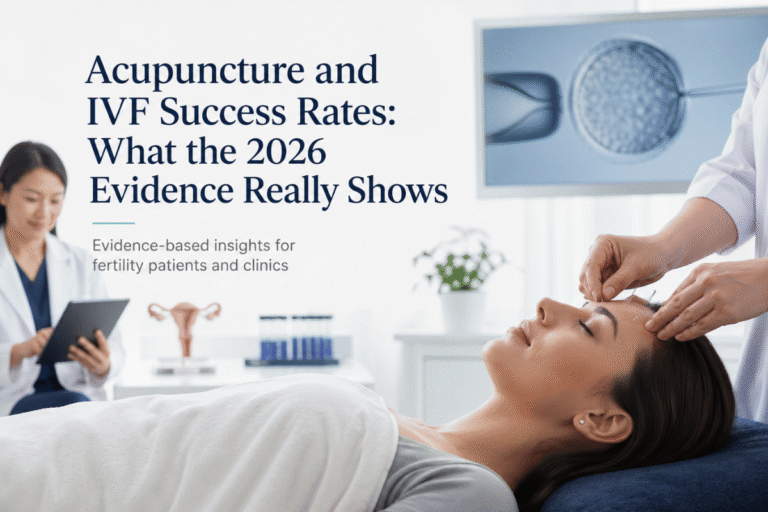
If you are getting ready for IVF–or are in the middle of a cycle–you’ve probably heard in the waiting room to “try acupuncture.” What that advice usually lacks is details: which visits are most important, what the actual clinical data show, and how best to select a practitioner who will work synergistically with your reproductive endocrinologist instead of in competition. This post attempts to address those questions by elaborating on published clinical trials, sharing candid insight regarding points where the research does not agree, and informing you of the optimal timing. Acupuncture support for IVF is definitely not a panacea.
However, the data suggest that many patients undergoing fertility treatment benefit considerably during the peri-embryo transfer period. Acupuncture for fertility has now been studied in controlled trials for over two decades.
How Acupuncture Helps IVF — 4 Biological Mechanisms Explained
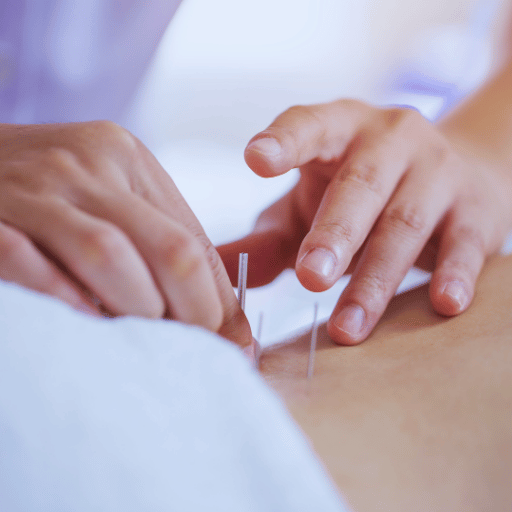
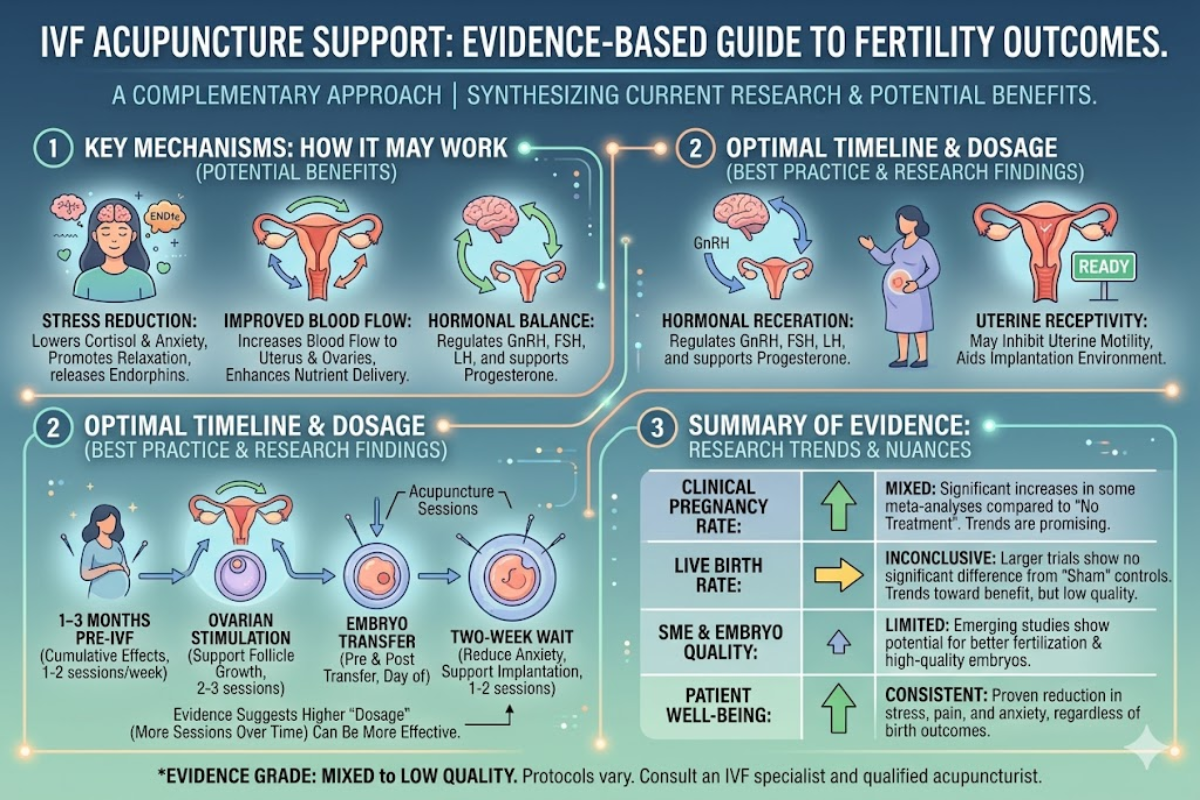
Proposed explanations for how acupuncture can benefit IVF are: 1. that it increases blood flow to the uterus, resulting in a more receptive endometrium; 2. that it reduces serum stress hormones, which can inhibit reproductive function; 3. that it reduces uterine contractions, which can result in embryos being ‘knocked out’ of the uterus due to excessive muscular activity; and 4. that it increases endometrial receptivity. Each of these explanations has research to support their effects on reproductive health, but the quality of that evidence depends on the mechanism.
1. Uterine Blood Flow
A classic and often referenced mechanism was identified by Stener-Victorin et al. (1996) who found that electro-acupuncture can significantly reduce the impedance of uterine artery blood flow, which in simple terms means the movement of blood to the endometrium is facilitated and the uterus itself is provided with increased blood flow. A well-nourished endometrium is thickened and receptive to implantation of an embryo. Acupuncture therapy for increasing uterine blood flow remains one of the best evidenced physiological mechanisms in fertility.
2. Endometrial Receptivity
Acupuncture has been studied in relation to the of expression VEGF (vascular endothelial growth factor), and the integrin proteins that are essential for embryo implantation. These proteins that are required from the endometrium need to be present during the window of implantation in order for the uterine lining to be receptive. This evidence is mostly from animal studies and small observational studies; large RCOTs are yet to confirm evidence.
3. Stress Hormone Modulation
Acupuncture triggers endogenous endorphin release and can be quantified to significantly reduce cortisol, a neuroendocrine factor that relaxes all the related signalling pathways of the hypothalamic-pituitary-adrenal axis known to regulate reproductive hormone signalling and stress (Sniezek & Frey, 2013; PMC3689180). Because up to 75.9% of IVF patients document clinically significant anxiety symptoms, and persistent cortisol elevations can suppress LH and FSH (the hormones of your stimulation cycle), acupuncture’s reduction of cortisol isn’t just a wellness echo.
4. Uterine Contractility Reduction
Kim et al. (2000) has previously reported that acupuncture decreases uterine smooth muscle contractions in the post-transfer period. This is of great importance as an elevated level of uterine contractility in the immediate post-transfer period has been found to be detrimental to implantation (desirable to have a quiet state for a number of hours after placement). Points employed in the Paulus Protocol are chosen partly based on their ability to relax the uterus.
For a detailed discussion on how they are used in the clinical setting, refer to our IVF acupuncture support treatment protocol.
Key Point: The Four Pathways all end up with similar clinical goals, that is to increase the likelihood that an embryo, once transfer red, will implant and grow. Strongest individual evidence is for increasing blood flow to the uterus (1996) and relaxing the uterus (2000), both backed up with direct measurement studies.
Acupuncture IVF Success Rates — What the Clinical Trials Actually Show

While studies show that acupuncture increases clinical pregnancy rates (CPR) in women undergoing IVF, not all research proves this, and understanding where studies conflict is as important as knowing the big headlines. Here is the full picture, including studies that showed no benefit.
| Study | Year | Patients | Design | Acupuncture Group | Control Group | Key Finding |
|---|---|---|---|---|---|---|
| Paulus et al. | 2002 | 160 | RCT | 42.5% clinical pregnancy | 26.3% | +62% improvement |
| Manheimer et al. | 2008 | 1,366 | Meta-analysis | OR 1.65 | — | Significant improvement |
| Smith et al. | 2018 | 848 | Sham-controlled RCT | No significant difference | Sham acupuncture | Sham effect debate |
| Dehghani et al. | 2020 | 186 | RCT (3-arm) | 43.5% (before-only) | 19.3% | Before-only superior |
| 2025 Meta-analysis | 2025 | 7,400+ | Meta-analysis | RR 1.26 CPR | — | Significant improvement |
Why Do Studies Conflict?
Upon closer inspection the data is less contradictory than it first appears. Three definitions of study differences account for most of the apparent discrepancy.
1. The sham acupuncture dilemma. Many researchers use a placebo intervention of sham needling, by inserting retractable needles into a non-acupoint, as a control in RCTs. One of the issues with such a placebo is that it neither appears to produce effects which can be measured, such as cortisol levels and neurological activity, or have un-nerving effects. When Smith et al. compared real with sham acupuncture and discovered no significant difference, a more accurate conclusion may be that both groups responded more than expected – rather than that neither responded at all. Sham acupuncture is not a placebo, but an active intervention.
2. Variability of treatment protocols. Investigations are not consistent with the number of treatments administered, which acupoints are used, relative to IVF cycle, whether electro stims are used or not, and even whether the kind of needles used varied between invasiveness. It is comparable to comparing results from trials that administer different drug doses, and then stating that they are inconsistently effective.
3. Differences in patient populations. In some trials all IVF patients are recruited regardless of presentation – in others, patients who are prior to have failed a previous IVF attempts or are specific diagnoses, such as PCOS, have been selected. An acupuncture effect in those that have failed previously may be different from the effect seen with first time cycles.
What this means for you: all of the evidence, including over 7,400 patients and the 2025 meta-analysis all support a small but statistically significant effect from acupuncture in IVF. Strongest evidence is for ond day of embryo transfer acupuncture. To conclude from trials that used sham acupuncture as their control that there is no effect may not be valid, as sham acupuncture may itself produce effects.
When to Start Acupuncture Before Embryo Transfer — A Timing Guide
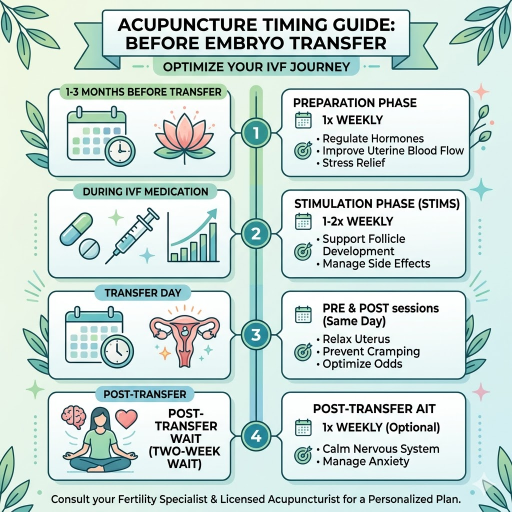
Within your IVF cycle, timing of acupuncture sessions has an impact more than most patients realize. Research implies that early intervention, in the 3 months prior to starting your IVF cycle, has an impact more than intervention on your transfer day, though one session is still reported to have statistical significance.
3 Months Before IVF (Ideal Start)
This is the foundation phase. Improvement in the regularity of periods, investment in ovarian blood flow for optimizing potential, and staying calm through your interactions with fertility professionals using fertility psycho-education as a resource, is helping you prepare for the medications that are about to follow. The 2025 meta-analysis, with 7,400+ patients, supports the idea that longer courses of treatment do improve optimal outcome, and weekly treatments are typical here (over a three month period, 12 sessions).
During Ovarian Stimulation (10–14 Days)
Two treatments per week through stimulatory phase maintains follicular stimulation and ameliorates the typical side effects of this medication-gas, irritability and sleep disruption. During stimulation, acupuncture is not expected to influence the administration of medication, but to reduce stress on the hypothalamic-pituitary axis.
Transfer Day — The Paulus Protocol
This is the point of the single most evidence and data-base supported session in the entire IVF acupuncture literature. The details of the Paulus Protocol are discussed below-it’s an acupuncture session that is should occur 25 minutes before embryo transfer. The 2002 Paulus RCT – which gave us the landmark 42.5% vs 26.3% result- only used this one single session.
Embryo transfer day carries the most direct evidence of any single session, if you are limited to one.
Post-Transfer (Through First Trimester)
One to two gentle daily sessions for the first trimester after transfer target uterine contractility, progesterone symptoms, and early hormonal environment—uniting the physiology and emotional state of early pregnancy. The evidence base for the efficacy of post-transfer acupuncture is thinner than for pre-transfer; the Dehghani 2020 trial (described below) challenged the assumption that post-transfer sessions increase success when pre-transfer sessions have already been administered.
Decision Guide for Late Starters
Already in your stimulation phase?Begin now. The evidence even supports transfer-day-only acupuncture statistically significantly (Paulus 2002). Lengthening the stimulation phase is never wrong, but coming in mid-cycle is not too late (it’s not a zero-sum game.).
Using this timeline in your clinic can be seen on our three-phase IVF acupuncture protocol.
Main point to remember: Start acupuncture at least three months before the IVF cycle, if that is possible. If not, start now. There is evidence for benefits at various times during the IVF cycle, with the highest quality evidence for benefit at a single time point on transfer day.
What Happens Before and After Embryo Transfer Acupuncture
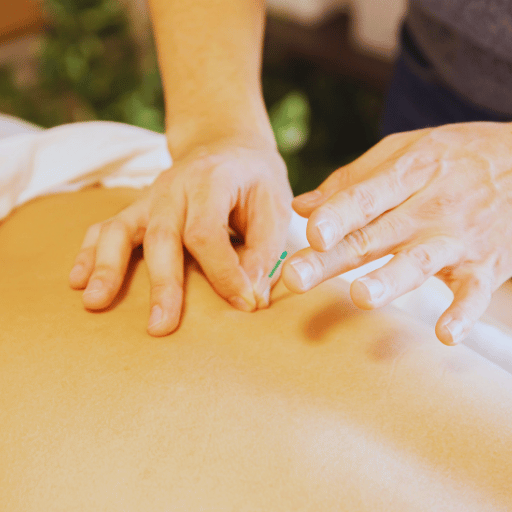
Transfer-day acupuncture involves acupuncture performed on the day of embryo transfer using a specific set of acupuncture points that influence uterine blood flow and uterine relaxation and smooth muscle tone. Knowing what the session actually involves takes a huge amount of the fear of it away.
The Paulus Protocol — The Best-Studied Transfer-Day Approach
In the RCT by Paulus 2002, acupuncture was applied for 25 minutes before embryo transfer by stimulating the following acupoints:
| Acupoint | Location Name | Targeted Effect |
|---|---|---|
| Du.20 (Baihui) | Crown of head | Calming effect on the nervous system; reduces anxiety |
| SP.6 (Sanyinjiao) | Inner lower leg | Uterine blood flow; reproductive hormone regulation |
| PC.6 (Neiguan) | Inner wrist | Anti-nausea; cardiovascular calming |
| Ren.4 (Guanyuan) | Lower abdomen | Uterine relaxation; reproductive vitality in TCM theory |
| Ht.7 (Shenmen) | Inner wrist | Anxiety reduction; emotional calming |
A Surprising Finding About Timing
Dehghani et al. (2020) conducted a 3-arm RCT, involving 186 patients, showing a 43.5 % clinical pregnancy rate for triple-acupuncture before was higher compared to 17.7 % for combined before-and-after, and 19.3 % for control. A fabulous finding that the research fraternity has yet to find a way to truly reconcile. It does not mean post-transfer acupuncture is unsafe, as acupuncture takes place at dedicated acupoints and no unsafe post-transfer mechanism has been proposed.
It simply means this ‘as yet un-optimized protocol has a tremendous variability in clinical outcomes – somehow a before-only protocol may suit certain women. Consult your practitioner to discuss these findings:
Needle vs Laser Acupuncture — Brief Comparison
Among types of acupuncture studied, the evidence base of IVF outcome data for medical acupuncture, whereby thin sterile needles are inserted into specifically designated acupuncture points, is strongest. Laser acupuncture – a low level laser light applied to those same acupoints – has been examined in several rcts and also included as a comparative group in some IVF trials. Both modalities have also been explored; needle acupuncture having a stronger evidence base and laser acupuncture providing an alternative to needle based treatment to those with needle aversion.
What Patients Actually Experience
Some notes about the procedure: the needles are very fine (much finer than a needle to draw blood). Most people report a sensation that is a mild pressure followed in some cases by an occasional brief dull ache. Once comfortable, most people drift into a deep state of relaxation.
Each session lasts for 25 minutes. Whenever I read about transfer-day acupuncture in Internet fertility forums it is not about the physiology but about patient agency: ‘It’s the only thing I could do for myself during a process I felt I had no control over.’ That sense of psychological reassurance that comes with having a particular scheduled appointment near the critical event is another facet to its clinical impact.
The main conclusion: This Paulus protocol targets five acupoints predestined for relaxing the uterus and soothing the nervous system. Transfer-day acupuncture utilizing this protocol is by far the most evidence-supported acupoint intervention in IVF acupuncture treatment. Before-only versus before-and-after timing questions remain under development; explore both with an accomplished fertility acupuncture clinician.
Beyond Needles — How TCM, Diet, and Lifestyle Support IVF Outcomes
Acupuncture can assist in setting up a more fertility-supportive context for IVF when integrated into an integrative model to fertility that includes sleep, nutrition and male factor in the same package of care. TCM utilizes a well-structured conceptual schema for whole-body fertility health, and although many of its concepts cannot be linked with biomedical research, it is focusing on the functioning of the entire body as a whole that has led to many surprising overlaps with modern fertility science.
TCM Fertility Theory — A Brief Educational Overview
Fertility is regarded as a natural extension of whole-body health and wellness in traditional Chinese medicine, rather than a purely reproductive function and solution. When it concerns fertility, TCM emphasises three main notions: Kidney Essence or Jing as the constitutional energy behind capacity to conceive; Blood Stagnation or impaired blood flow to the uterus and ovaries; and Qi Flow or function of the eighteen major meridian pathways. Clinical applications which relate to treatment of fertility involve these methods: Blood Circulation, the modulation of hormonal function and stress and systemic balancing techniques appear to be quite congruent with the four mechanisms discussed thus far.
Treating for fertility involves far more the revolutionary than the abnormal.
Dietary Considerations
An anti-inflammatory eating approach – including oily fish, darker greens, pulses and wholegrains, and minimising refined sugar and processed foods – appears to be very compatible with recommendations in traditional Chinese medicine, and emerging fertility evidence. Omega-3 supplementation has been recorded to improve oocyte quality in some observational studies. CoQ10 (ubiquinol formulation) is particularly attractive to people with certain diagnoses of poor ovarian reserve, while some RCT’s show promise in combination with treatment using some fertility drugs.
Neither is a replacement for the management provided by the reproductive endocrinologist, but they may be promising adjuncts.
⚠️ Herbal Medicine — A Critical Safety Warning
1. Not all TCM herbs are safe with IVF medications. Some may interact with gonadotropins, GnRH analogs or progesterone supplementation: either by disrupting hormonal signalling or through pharmacokinetics. It is not a hypothetical risk, but a clinical reality, so tell your reproductive endocrinologist in detail about all of your herbal supplement use before you start your cycle. A natural=safe mantra is not consistent with this particular area of medicine – however our herbal medicines at Tong Ren Tang Dubai are all manufactured in accordance with GMP standards for manufacturing quality; and our practitioners are trained to minimise herb-drug interactions – but that is some thing your IVF clinician certainly needs to know about.
Lifestyle Factors
Sleep, moderate aerobic exercise and the natural group of ‘structured’ stress reduction interventions (whether acupuncture or mindfulness or indeed both) all show links with reproductive hormone function. For ovarian stimulation per se, however, treadmill running and intense aerobic exercise that elevates core temperature excessively and induces physical stress is a universal NO-NO on fertility programs. Relaxed, lower impact regimes like walking and yoga usually receive approval, running does not.
Male Factor — Acupuncture for Sperm Quality
Male factor is responsible for between 40 and 50% of all infertility. If you are reading this as a part of your research; the world literature on acupuncture and sperm parameters has something clinically relevant to report- improvement statistics: a study found motility increased from 11% to 18.3% and morphology from 16.2% to 21.1% after appropriate treatment in men who had subfertility. While spermatogenesis takes nearly 3 months from initial cell division through to mature sperm, starting a treatment cycle in your partner three months before your IVF cycle will enable full benefit of your fertility acupuncture.
2. The most confirmed evidence based lifestyle additions to fertility acupuncture are anti-inflammatory diet, omega-3 supplementation, sleep optimisation and evaluation of the male partner. The most clinically significant safety step is to report full herbal medicine use to your IVF clinic before you start your cycle.
How to Choose a Fertility Acupuncturist — What to Verify Before You Book
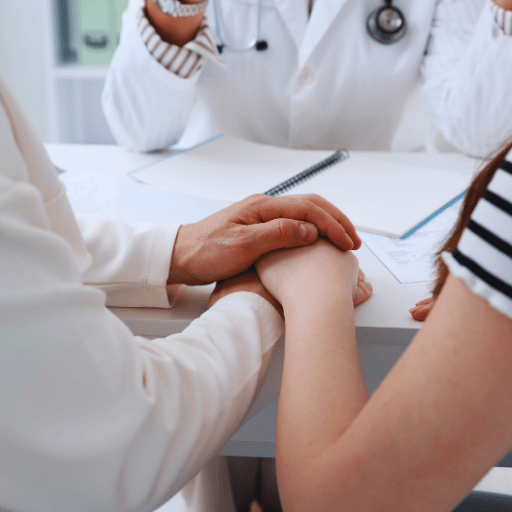
Not all acupuncturists have fertility specific training; not all fertility acupuncturists have a culture of sharing information with IVF clinics. This is most important on transfer day, when timing of insertion and specific acupoints chosen, according to the Paulus Protocol, determine the clinical relevance of your session versus a general wellness appointment.
Checklist — What to Verify Before Booking
Credentials and licencing. Your acupuncturist should be qualified in traditional Chinese medicine or medical acupuncture as a minimum. In Dubai, this involves DHA licencing and TCAM certification on top. Investigate both at your first treatment session.
IVF protocol experience. Your fertility acupuncturist should be able to confidently answer: ‘Are you familiar with the Paulus Protocol? Have you performed transfer-day fertility acupuncture sessions before’. A confident answer will include information on precise timing and acupoints in the correct order.
Collaborating with your IVF team. Your fertility acupuncturist should have an interest in laboratory reporting and a readiness to share notes with your reproductive endocrinologist. Care works better as a streamlined continuum than isolated parallel processes.
Scheduling flexibility. Transfer day timing depends on your clinic’s embryo development, not a set calendar date. Your acupuncturist should be able to be available on short notice and schedule sessions around your monitoring appointments and trigger injection time.
Truthful discussion of evidence. A credible fertility practitioner discusses the research truthfully – including where study findings conflict, what the limitations of existing evidence are, and what outcomes are reasonable to expect. If a practitioner guarantees certain pregnancy rates or ignores study limitations, consider that a warning sign.
Red Flags — When to Look Elsewhere
⚠️ Guaranteeing specific IVF success rates or pregnancy outcomes
⚠️ Discouraging or expressing scepticism about conventional IVF treatment
⚠️ Refusing to communicate with your reproductive endocrinologist
No formal training in reproductive acupuncture or fertility acupuncture visits
At Tong Ren Tang Dubai, our DHA-licensed fertility acupuncturist works directly with your IVF clinic and can schedule transfer-day sessions around your procedure schedule. Learn more about how we will work with you as part of our full treatment approach.
Key Point: The single most important question to ask before booking is if your practitioner can do the Paulus Protocol on transfer day and if they work directly with your IVF clinic. For Dubai residents, check DHA licensing and TCAM certification.
Frequently Asked Questions
Does acupuncture actually work for IVF?
View Answer
Heavy body of evidence shows a slight but statistically significant benefit. Most recently, a 2015 review of over 7,400 patients from 2025 studies revealed an acupuncture clinical pregnancy rate RR 1.26 with control groups. That seminal 2002 Paulus RCT reported 42.5% versus 26.3% clinical pregnancy rates. Not all research agrees, and sham methodology make interpretation difficult. Acupuncture is not a sure thing – no fertility intervention is – but the balance of evidence favors it as a useful addition to IVF treatment.
How many acupuncture sessions do I need before embryo transfer?
View Answer
Evidence indicates that 13 to 15 sessions over a 3-month preparation period provides the best cumulative results – including cycle regulation, stimulation support, and transfer-day acupuncture. That said, it is not a strict requirement, and studies administering only transfer-day acupuncture (the Paulus Protocol) found significant improvements as well. If you are beginning acupuncture mid-cycle, the best next step is to begin as soon as possible and focus on transfer-day timing above all else. See the IVF acupuncture support page for session packages and why treatment regimen varies through out your cycle.
Is acupuncture safe during IVF stimulation and medications?
View Answer
Yes. Clinical trials clearly show that acupuncture presents no risks or contraindications when used with gonadotropins, GnRH agonists and progesterone. Reported adverse effects of the studies were mild bruising, brief discomfort at acupuncture sites and occurred in less than 20% of women. Also, acupuncture is well tolerated during stimulation. One thing to watch for however, are herbal medicines, which are not the focus of this study – some TCAM herbs are known to pose interactions with reproductive medications so always tell your doctor if you are taking herbal medications.
Can my partner benefit from fertility acupuncture?
View Answer
Yes – and this is often forgotten by the time the discussion around IVF comes up. Male factor plays a part in 40-50% of all infertility issues, and male partners are rarely offered anything other than general advice or supplementation to complement a female IVF cycle. Evidence relating to acupuncture in male subfertility reveals significant improvements: in one well documented trial sperm motility increased from 11% to 18.3%, and morphology increased from 16.2% to 21.1%. As sperm takes roughly 72 days to develop with a new would-be father commencing acupuncture three months prior to an IVF cycle, it so happens that this allows a whole new cycle of spermatogenesis to benefit in the same window that the female partner is preparing ideally – in three month blocks. Talk to your fertility acupuncturist about joint consultation opportunities.
What is the difference between needle and laser acupuncture for IVF?
View Answer
Traditional needle acupuncture involves delicate sterile fine acu-points inserted to depths of a few millimetres up to two centimeters, depending on the acu-point. Laser acupuncture employs low level laser light aimed directly at the same acu-points, without breaching the skins surface, and may prove suitable for needle sensitive patients or those not comfortable with the subjective sensation experienced by traditional acupuncture. Both needling and laser treatments have been evaluated within the IVF field, but needling acupuncture has a larger evidence base behind it. Where needle sensitive patients are not available or suitable, laser acupuncture provides a much-needed alternative. If needle acupuncture is available and tolerated, it remains the optimal approach.
How much does IVF acupuncture typically cost?
View Answer
Costings vary for the people offering it – with established clinics based around definitive studies running costs from between USD75-200/ session, with some clinics offering packages based around the IVF experience. When summarised across three months prep + cycle day transfer, the acupuncture can only total between 4-10% of the overall IVF tariff.
Can acupuncture help after repeated IVF failure?
View Answer
Dedicated research relating to women with previous failed cycles indicates that there may be emphasis to consider in this group, which just as appropriate has genuine physiological rationale (many repeat payers present with problems relating to the stress of the learning curve and the cumulative effect of several failed cycles). But beyond the physiological: women with a history of repeated implantation failure consistently state that the benefit of an additional support person rather than clinical operator during a period of turmoil /TTC makes an original contribution to the IVF experience. To consider early commencing; have that detailed conversation with your dedicated IVF acupuncture support specialist.
Ready to Add Acupuncture to Your IVF Journey?
Tong Ren Tang Dubai-DHA licensed fertility acupuncture, working in conjunction with your IVF clinic, established 1669.
Book Your IVF Acupuncture Consultation
Upset the schedule first?WhatsApp your planned session schedule for a consultation-to see exactly when during your cycle sessions would best accrue.
Honesty: This information sheet was compiled by examining published clinical trials, meta-analyses, and patient reports. Although Tong Ren Tang offers IVF acupuncture in Dubai we still think patients should have access to truthful information about what the evidence actually does show, and doesn’t show. Acupuncture is a supportive therapy that is not a substitute for reproductive medicine.
Varied findings from studies highlighted above represent genuine biostatistical controversy in the medical literature; we have not highlighted positive findings only. Never commence a therapy from another complementary medicine practitioner before discussing the full scope of your treatment plan with your reproductive endocrinologist.
References & Sources
- Stener-Victorin E, et al. (1996). “Reduction of blood flow impedance in the uterine arteries of infertile women with electro-acupuncture”. Human Reproduction. PMCID: 8671446
- Paulus WE, et al. (2002). ‘The effect of acupuncture on the pregnancy rate in patients undergoing assisted reproduction therapy.’ Fertil Steril PubMed 11937123.
- Manheimer E, et al. (2008). “Effect of acupuncture on the rates of pregnancy and live birth among women undergoing in vitro fertilisation.” BMJ. PMC2265327
- Smith CA, et al..2018. Effect of Acupuncture vs Sham Acupuncture on Live Births Among Women Undergoing In Vitro Fertilization. JAMA.
- Dehghani AS, et al. (2020). “The impact of acupuncture on the day of embryo transfer on outcomes of in vitro fertilization.” International Journal of Reproductive BioMedicine. PMC7142313.
- (2025).”Diffrenteffectiveness of acupuncture treatment schedule on ART outcome”. Meta analysis.PMC12446238.
- Cochrane Library (2025). “Acupuncture for polycystic ovary syndrome.”
- Effect of acupunctures on the cardiovascular and neuroendocrine systems. Sniezek DP & Frey II. (2013). Medical Acupuncture.PMC3689180.