Get in Touch with Tongren Tang Gulf


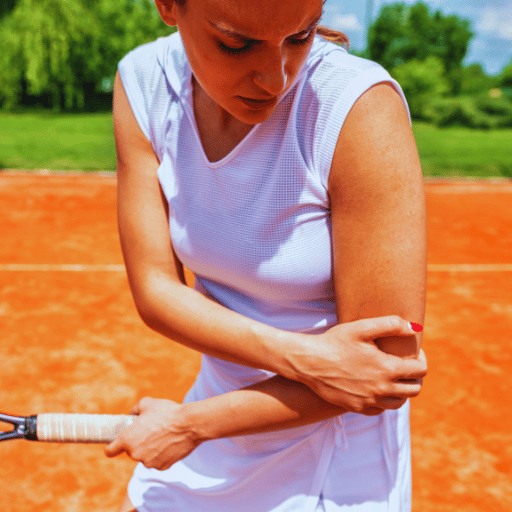
Tennis elbow treatment is a very common search query in an Orthopaedic context and is a very common injury with lateral epicondylitis occuring at a rate of between 1-3% of the adult population annually, with the majority of affected people in their 30s to 50s. The problem however, is that 9out of 10 patients have never even used a tennis racquet. It is this large population of desk bound office-workers, plumbers and cooks, who spend significant parts of their working day gripping or extending their wrist, who are affected.
The issue, however, is not having the condition, but which of over 7 possible treatments to employ, some with weak supporting evidence, or alternative costs and down time scales. This review aims to take the reader through all of the mainstresstions, with their own specific evidence base, against which to treat.
Quick Specs: Tennis Elbow Treatment
| Condition | Lateral Epicondylitis (Tennis Elbow) |
| Affected Structure | Extensor Carpi Radialis Brevis (ECRB) tendon at lateral epicondyle |
| Annual Prevalence | 1–3% of adults |
| Peak Age Range | 30–50 years |
| Treatment Options | 7+ evidence-based approaches |
| Natural Resolution | 6–12 months (up to 18 months) |
| With Active Treatment | 4–12 weeks |
| Surgery Rate | <5% of cases |
What Causes Tennis Elbow — And Why It Keeps Coming Back
Tennis elbow occurs when the extensor carpi radialis brevis (ECRB) tendon, which is attached to the bony prominence on the lateral aspect of your elbow, becomes progressive. This is caused by repetitive micro-trauma and occurs over time. Contrary to the former nomenclature, this is not ‘Tendinitis’ but tendinopathy.
Multiple researchers investigating the histology have consistently identified the presence of collagen disorganization, angiogenesis and hyperplasia as well as proliferation of cells known as fibroblasts. There are no evidence of any inflammatory cells visible within the tissue. Nirschl and Pettrone characterized this previously noted presentation as angiofibroblastic degeneration many years prior, but recent techniques now validate this.
But what difference does this make?
Well, you can see from this that anti-inflammatory medication alone does not usually work because you are treating an inflamed process that is not there. The problem is a tendon that has become disorganized in its collagen and can no longer cope with the loads placed upon it.
The risk factors put forward a clear image of who develops tennis elbow and the reasons for its re-occurrence:
- Repetitive wrist extension or gripping- typing, mouse use, manual trades, cooking
- – 40 yrs of age – tendons’ vascularity and its ability to be repaired decreases
- Loads over 20 kg to large groupings- 2-4 times higher in manual workers.
- Both smoking and being over weight diminish blood supply to tendons and their ability to heal.
- Prior corticosteroid injections — associated with higher recurrence rates
Only about 10% of patients with lateral epicondylitis plays tennis. A typical patient is not a weekend doubles player with a new tennis elbow but a 45-year-old accountant who has to hold down a mouse for eight hours a day. It keeps coming back because people reinforce the same few overs and unders that caused his tennis elbow in the first place—and don’t re-educate the tendon’s load tolerance with aprogressive loading.
Big Message: First off, tennis elbow is a degeneration problem, not an inflammation problem. Treatment strategies that focus on remodeling the tendon structure (eccentric exercises, prp, acupuncture) tackle the problem at the source. Strategies that focus on symptom suppression provide short term relief without fixing the damaged tissue.
Symptoms That Confirm Tennis Elbow — And When to See a Doctor
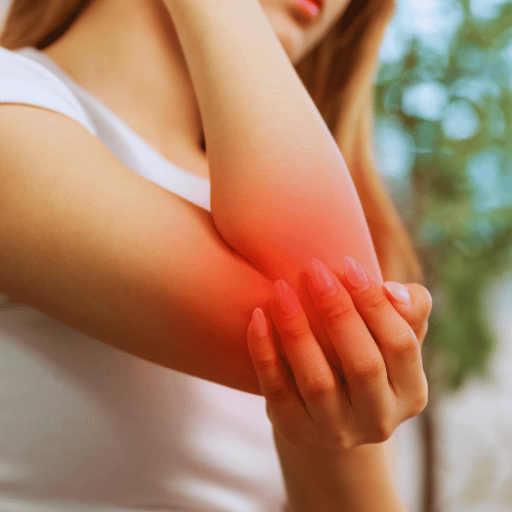
The defining presentation of lateral epicondylitis is pain on the lateral side of the elbow, provoked by gripping, lifting or twisting motions. Over 75% of patients report a gradual onset of symptoms occurring while performing a mundane activity such as opening a door, shaking a hand or lifting a mug. There is usually an accompanying grip weakness.
Quick self-test (Cozen’s test): Fully extend your arm, close your hand to form a fist so that your palm is facing downward, and attempt to bend your wrist backward while someone applies resistance. Sharp pain on the outer elbow strongly indicates lateral epicondylitis.
Red flags that warrant immediate medical attention:
- Elbow locking, catching, or inability to straighten the arm
- Locally visible swelling, redness or warmth: (this may be infection or inflammatory arthritis)
- Pain following a fall or direct trauma (possible fracture)
- Numbness or tingling in the hand (nerve involvement)
Get the distinction right: tendinopathy of the lateral (outer) epicondyle is tennis elbow; whereas medially (on the inside of the arm) is golfer’s elbow. Tendinopathy of the radial tunnel may be present alongside tennis elbow in up to 15% of patients. This presents as aching pain deep within the forearm and is likely to need separate treatment.
If wrist or hand pain is present consider a related condition such as tenosynovitis.
What Should You NOT Do With Tennis Elbow?
Answer
Be careful not to irritate the tendon further by continuing aggravating activities—repetition of micro-trauma through out the continuum of tendinopathy prevents healing of the tissue. Do not use NSAIDs regularly for longer than 1-2 weeks, as long term use can hamper the healing of the tendon. Do not choose to avoid the pain and assume it will go away without intervention.
And be wary of leaving the tendon completely inactive—prolonged rest causes the collagen to weaken and takes longer to return to normal. Controlled movements and progressively demanding activities should be introduced.
7 Evidence-Based Tennis Elbow Treatments Compared
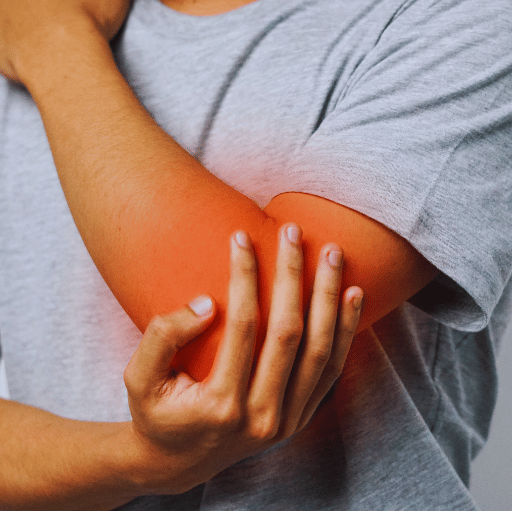
It is important to note that each tennis elbow treatment is unique: what works well in one instance may not be appropriate in another. The ideal solution in any case will depend upon severity of the condition, how long symptoms have persisted, the personal demands of one’s lifestyle, and financial considerations. The following table provides a comparison of the seven most popular tennis elbow tips as studied by the medical literature and reinforced by clinical experience:
| Treatment | How It Works | Evidence | Timeline | Est. Cost | Best For | Key Limitation |
|---|---|---|---|---|---|---|
| Rest + Bracing | Counterforce strap reduces load on ECRB tendon; wrist splint limits aggravating motion | Moderate | 4–8 weeks | $15–50 | Mild, recent-onset cases | Passive — doesn’t rebuild tendon strength |
| Physical Therapy / Eccentric Exercises | Tyler Twist and progressive loading stimulate collagen reorganization | Strong (up to 42% VAS improvement) | 6–12 weeks | $500–2,000 | Moderate cases; long-term prevention | Requires consistency and patience |
| NSAIDs | Short-term pain modulation; does not address tendon degeneration | Low for long-term benefit | Days (pain only) | $10–30/mo | Acute pain management alongside other treatment | May impair tendon healing; 15% peptic ulcer risk with long-term use |
| Corticosteroid Injection | Local anti-inflammatory reduces pain rapidly at 6–8 weeks | Rapid but poor long-term | Days–weeks relief; symptoms return | $100–300 | Severe pain needing rapid temporary relief | Worse outcomes than PT at 12 months; tendon weakening risk |
| PRP (Platelet-Rich Plasma) | Concentrated growth factors from patient’s own blood injected into tendon | Strong and improving; superior to CS long-term (ICER -$9,392/QALY vs triamcinolone) | 4–8 weeks; full benefit 3–6 months | $500–2,000 | Chronic cases unresponsive to PT | Higher upfront cost; insurance rarely covers it |
| Acupuncture & TCM | Needle stimulation at specific points modulates pain pathways, increases local blood flow, triggers endogenous healing; combined with Chinese herbal medicine formulas and moxibustion thermal therapy | Strong — Zhou et al. 2020: 10 RCTs, 796 patients, superior to drug therapy | 4–12 sessions | $75–150/session | Patients wanting non-pharmaceutical approach; chronic cases | Requires multiple sessions; quality varies by practitioner |
| Shockwave Therapy (ESWT) | Acoustic energy pulses stimulate tendon healing and pain relief | Moderate and improving | 3–6 sessions over 3–6 weeks | $200–500/session | Chronic refractory cases | Mixed evidence; can be uncomfortable |
| Surgery (Open or Arthroscopic) | Debridement or release of damaged ECRB tendon tissue | Moderate (last resort) | 3–6 months full recovery | $5,000–15,000 | <5% of cases; after 6–12 months of failed conservative care | Invasive; requires rehab; not guaranteed |
For those who are dedicated to the above acupuncture methods, Tong Ren Tang also provides a full treatment process involving a combination of acupuncture, herbal medicine, and moxibustion for the lateral epicondylitis. Alternatively, you can use an interactive calculator to compare the disease treatment costs of these options.
This systematic review and meta-analysis concluded that acupuncture is more efficacious than drug treatment for lateral epicondylitis. Both the manual acupuncture group and dry needling group experienced statistically and clinically significant effects in the short term, and the dry needling group had statistically significant effect in the long term.
Most common mistake: rush to corticosteroid injection, because it is the fastest. Several studies demonstrated worse 6 and 12 months results for corticosteroid injection patient comparing to physiotherapy or time waiting under a conditioned exercise program.
Six weeks into a decrease in outside elbow pain from a 7/10 has been on ibuprofen for 2 weeks without reductions in pain at stay time. She started a counterforce brace whilst at work and began twice daily eccentric exercises. At week 8 the pain had reduced to 2/10 on VAS.
How would she look?
Home Remedies and Exercises That Actually Help
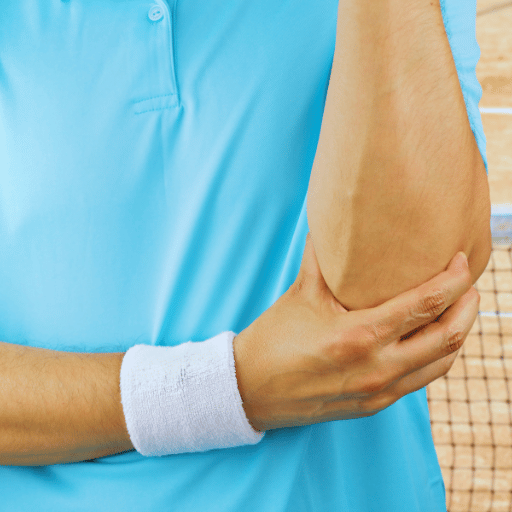
The most effective home treatment for tennis elbow is not resting alone. It is a graded loading program that slowly reconditions the tendon’s capacity. Absolute rest is as you would expect – it deconditions the tendon more.
Controlled loading is where the stress induced by the exercise application causes collagen remodeling but is not more than the tendon’s loading tolerance.
The 6-Week Progressive Loading Plan
Weeks 1–2: Isometric Holds (Pain-Free Loading)
- Grip squeezes w/ a soft ball or rolled towel – hold for 10 seconds
- 5 reps, 3 times per day
- Pain should stay below 3/10 during exercise
- Purpose: wake up tendon healing response without further damage
Weeks 3–4: Eccentric Wrist Extensions
- Tyler Twist w/ a TheraBand FlexBar – the gold-standard home exercise for lateral epicondylitis
- 2 sets of 15 reps, twice daily
- Pain 4-5/10 permissible w/ eccentric loading (normal)
- Discontinue if pain remains worse than 2 hours post-exercise
Weeks 5–6: Functional Loading
- Gradually reintroduce work and sport activities with modifications
- Use ergonomic tools (larger grip handles, lighter equipment)
- Incorporate eccentric exercises as maintenance – at least 3x/wk
Engineering Fact:Why does eccentric loading augment other exercises that don’t? During an eccentric contraction, the muscle lengthens against a load. This specific type of loading activates fibroblasts to produce Type I collagen (organized, strong collagen), instead of Type III collagen (disorganized,weak scar tissue type). Over the ensuing weeks the internal architecture of the tendon actually re-organizes itself – going from angiofibroblastic degeneration back to normal collagen architecture.
Additional home strategies:
- Ice protocol; 15-20min, 4-6x/d during acute phase (first 2wks or after flare ups)
- Ergonomics: raise your monitor so wrists stay midline at the keyboard; alternate mouse hands; employ a vertical mouse
- Activity modification: approach lifting from the palm facing up position rather than palm down position to unload the load from the ECRB tendon
Try a tennis elbow self-assessment to understand your present level of severity prior to beginning any home program.
Anecdotal experience: the largest error patients make is throwing too much at rehab exercises and overdoing early on. A 52-year old carpenter who began his first Tyler Twist w/ max resistance set himself back 3 weeks. Begin w/ a very light resistance flexbar (yellow, 6 lbs) and only increase resistance after success fully completing all sets with pain under 3/10.
Is Squeezing a Ball Good for Tennis Elbow?
Answer
Grip strengthening balls have been shown to exacerbate symptoms when used during the acute phase. Grab ball exercise causes concentric contraction of wrist extensors. This provokes pain, as the damaged ECRB tendon absorbs more load. FlexBar eccentric exercises are the evidence supported alternative – they load the tendon lengthening (eccentric phase). Save grip-ball exercises for weeks 5-6 once pain has gone from baseline.
How Long Does Tennis Elbow Take to Heal? — Realistic Recovery Timelines
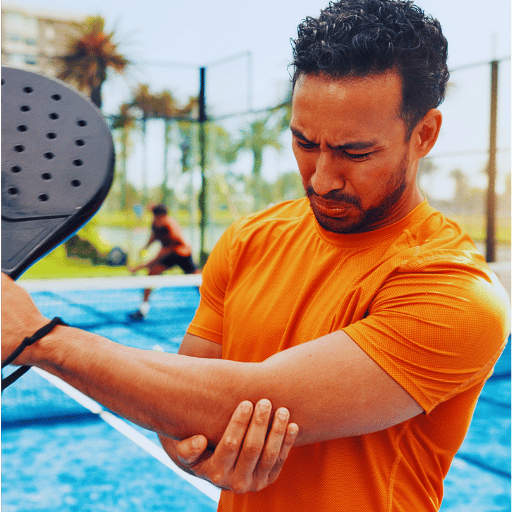
Recovery time depends on severity, treatment modality, and adherence to program. The single largest predictor of recovery speed is wether or not you persist w/ or eliminate the activity that caused your problem to begin with. For a mild case, early detection can mean resolution in 4-6 weeks. For a long-standing chronis cases over 6 months (especially after multiple corticosteroid injections) months of well-structured rehab are necessary.
| Treatment | Mild (1–6 weeks old) | Moderate (6 weeks–3 months) | Severe / Chronic (3+ months) |
|---|---|---|---|
| Natural Resolution | 6–12 months | 12–18 months | 12–24 months |
| Rest + Brace | 4–8 weeks | 8–16 weeks | Insufficient alone |
| PT / Eccentric Exercises | 4–6 weeks | 6–12 weeks | 12–16 weeks |
| PRP Injection | Rarely needed | 4–8 weeks improvement; full benefit 3–6 months | 6–8 weeks; may need 2nd injection |
| Acupuncture / TCM | 4–6 sessions | 6–10 sessions | 8–12 sessions |
| Surgery + Rehab | Not indicated | Not indicated | 3–6 months post-op recovery |
Factors that slow healing:
- Continued overuse of the affected arm without modification
- Smoking – decreases blood supply to the tendon by 30%
- Diabetes — impairs collagen synthesis and wound healing
- History of multiple corticosteroid injections — weakened tendon tissue
- Age over 50 — slower tissue turnover rates
Use the recovery time estimate to receive a custom prediction according to your age, activity duration, and treatment approach.
Does Tennis Elbow Ever Go Away on Its Own?
Answer
Yes – 80-90% settle within 1-2 years without surgery. However, given the recurrence rate is over 40% in those that do not follow a strengthening programme, leaving such a condition to settle will inevitably mean a 6-18 month period of pain and functional compromise that well-directed treatment could minimize to a matter of weeks. Do you really want to spend a year waiting for it to heal when you could do it in 6-12 weeks?
Case: 47-year-old warehouse worker, very symptomatic for nine months. Three cortisone injections with recads. Then PRP@ injection followed by six weeks of progressive eccentric exercises:(VAS from 8/10 to 1/10 at 4 months with return for a year.
How to Choose the Right Treatment — A Step-by-Step Decision Framework
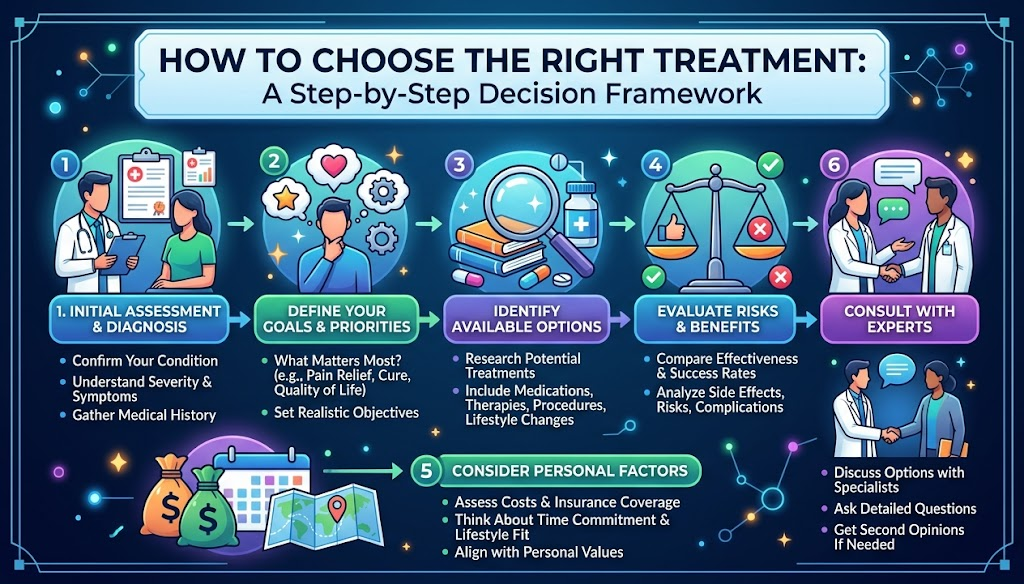
There are now over 7 intervention options. The treatment selection relies on knowing two things: what is the severity stage of the pathology, and where does that intervention fall in the hierarchy of evidence for the pathology severity stage?
This framework shows treatments on a logical escalation ladder.
The Tennis Elbow Treatment Ladder
Rung 1 — Weeks 1–4: Foundation
- Rest from aggravating activities (not total rest)
- Counterforce brace during work or sport
- Ice protocol: 15-20 minutes, 4-6 times daily
- Ergonomic adjustments at workstation
- Cost: $50–150
Rung 2 — Weeks 2–8: Active Rehabilitation
- Structured PT or self-guided eccentric exercise program
- Tyler Twist protocol with progressive resistance
- 90%+ of mild-moderate cases resolve at this rung
- Cost: $500–2,000 (PT) or $20–40 (FlexBar + self-guided)
Rung 3 — Months 2–3: Complementary Therapies
- If Rung 2 plateau — consider acupuncture/TCM or PRP
- Acupuncture: 4-12 sessions depending on severity and response
- PRP: single injection with continued eccentric exercise program
- Cost: $300–1,500 per course
Rung 4 — Months 3–6: Combined Multimodal Approach
- PT + acupuncture + ergonomic overhaul
- Consider shockwave therapy (ESWT)
- Reassess diagnosis :imaging to exclude partial tear or any other pathology
Rung 5 — Months 6–12: Surgical Consultation
- Only after all conservative options have been exhausted
- Open or arthroscopic debridement of damaged ECRB tissue
- Success rate: ~85-90% return to previous activity level
- Cost: $5,000–15,000
Experience Nugget: progressive loading (rather than rest) is the fundamental principle that underpins every step on this ladder. I have seen patients with three months of rest in a brace, with no improvement, go on a graduated eccentric program and be pain free in six weeks. The tendon requires a controlled mechanical stimulus to regulate its remodeling.
Rest relieves the damaging overload, whereas exercise sends the positive message to tissues.
For patients who are considering acupuncture and TCM in their treatment ladder; the historically-validated tennis elbow acupuncture protocol developed by Tong Ren Tang uses the combination of needle protocols, herbal medicine and moxibustion over multiple sessions, based on 350 years of clinical evidence.
Case: chronic tennis elbow, 14 month duration, long term retired nurse. Failed brace, 2 cortisone injections, 6 weeks generalized PT. Rung 3 combination (twice weekly ausio-acupuncture, daily eccentric exercises and ergonomic modifications) alleviated 70% of pain over8 week period and fully recovered within 4 months:
Frequently Asked Questions — Tennis Elbow Treatment
What is the fastest way to cure tennis elbow?
Answer
No quick fix, but the most rapid evidence-based protocol is activity modification along with eccentric exercises, beginning within 2 weeks.Trials show this can result in significant pain reductions in 4–6 weeks for mild cases. Add acupuncture or PRP to speed up road for more severe cases.
Can tennis elbow be cured permanently?
Answer
Yes. more than 90% of cases settle completely with conservative management. To prevent the problem recurring indefinitely, the rehab program must be completed in its entirety — the symptoms settling is not an excuse to stop. Drop out of rehab after symptoms settle; re-occurrence rate exceeds 40%.
Continue a maintenance rehab, and have far less recurrences.
Is acupuncture effective for tennis elbow?
Answer
A 2020 systematic review of 10 RCTs with 796 patients found acupuncture to provide superior benefit to drug therapy in Lateral Epicondylitis. Manual acupuncture and dry needling was also beneficial. A 2025 PMC review supported acupuncture in the treatment of musculoskeletal pain in extremities.
Refer to the full clinical evidence for tennis elbow.
Should I wear a tennis elbow brace all day?
Answer
Use a counterforce brace on activities that increase your symptoms. It should not be worn 24 hours a day. Wearing in excessively may cause muscles to de-condition from lack of use.
Skin irritation may also develop. Position the strap approximately 2-3 finger breadths distal to the lateral epicondyle. Do not wear at night or during your exercise program to allow the tendon to be loaded in a controlled manner.
When should I consider surgery for tennis elbow?
Answer
Surgery is usually considered only in the small percentage of patients (< 5 %) who fail 6-12 months of thorough conservative therapy. Consider referral to a surgeon if you have undergone a full course of physical therapy, undergone (preferably) one course of injection therapy, and still have significant pain and disability. Success rate of procedure is 85-90 %.
What is the difference between tennis elbow and golfer’s elbow?
Answer
Tennis elbow (lateral epicondylitis): affects the outside of the elbow – the wrist extensor tendons. Golfer’s elbow (medial epicondylitis) affects the inside – the wrist flexor tendons. Tennis elbow is estimated to be 4-7 times more prevalent than golfer’s elbow.
Both conditions respond well to the same principals of management: rest from activities that cause pain, eccentric exercises and graduated loading (stretching and strengthening of the affected tendons). However the exercises focus on different tendons groups:
Can I still lift weights with tennis elbow?
Answer
You can work around it. Don’t do activities that excessively tax wrist extension such as barbell curls with a straight bar, pull ups and heavy rows. Alter these activities to neutral-grip (hammer curls, neutral-grip pulldowns), reduce load by 30-50% and employ lifting straps to minimize grip requirements.
Persist with your eccentric rehab program as a specialized warm-up prior to a weight training session.
Does tennis elbow get worse if untreated?
Answer
It can. Although ultimately a majority tend to resolve spontaneously within 1-2 years, continued functional use while ignoring symptoms and precipitating activities can result in the development of a chronic tendinopathy, ongoing grip weakness, and even rupture of the tendon. a proactive program utilizing activity cessation and gradual activity-specific retraining has been shown to have better results, with shorter recovery times compared to an inert waiting period.
Disclamer: This guide is published by Tong Ren Tang for education. The management suggestions and treatment are not specific for everyone. As expert in acupuncture treatment of lateral epicondylitis, we suggest you to investigate what is best for you and please ask your doctor for further information.
The final result of treatment is different in severity, duration, age and rehabilitation compliance.
Ready to Start Your Recovery?
Our clinical team integrates Traditional Chinese Medicine with state of the art evidence-based protocols to create a customized tennis elbow treatment plan.
References & Sources
- Lateral Epicondylitis (Tennis Elbow) — Buchanan BK, Varacallo MA. StatPearls. 2023.
- Effectiveness of Acupuncture for Lateral Epicondylitis: Systematic Review and Meta-Analysis — Zhou K, et al. Evidence-Based CAM. 2020.
- Impact of Lifestyle and Clinical Factors on Tennis Elbow Prognosis — Nature Scientific Reports. 2024.
- Platelet-Rich Plasma vs Corticosteroid Injections for Lateral Epicondylitis — J Shoulder Elbow Surg. 2022.
- Conservative Treatment Success Rates for Tennis Elbow — ScienceDirect. 2025.
- Acupuncture Therapy for Extremity Musculoskeletal Pain — PMC/NIH. 2025.
- Tennis Elbow (Lateral Epicondylitis) — Cleveland Clinic. 2025.
Related Articles
- Frozen Shoulder Treatment Guide — Causes, Exercises, and Recovery
- Shoulder Pain Treatment — When to Worry and What Actually Helps
- Back Pain Acupuncture — What the Research Says About Effectiveness
- Sciatica Treatment Guide — From Diagnosis to Full Recovery
- Knee Pain Treatment — Evidence-Based Options Compared
Reviewed by the Tong Ren Tang clinical team practitioners in both Traditional Chinese Medicine and leading modern evidence-based protocols attending the Chinese Medicine Center of Excellence 350 year practical medicine tradition.