Get in Touch with Tongren Tang Gulf

Updated September 2026 · Educational guide for readers in the UAE
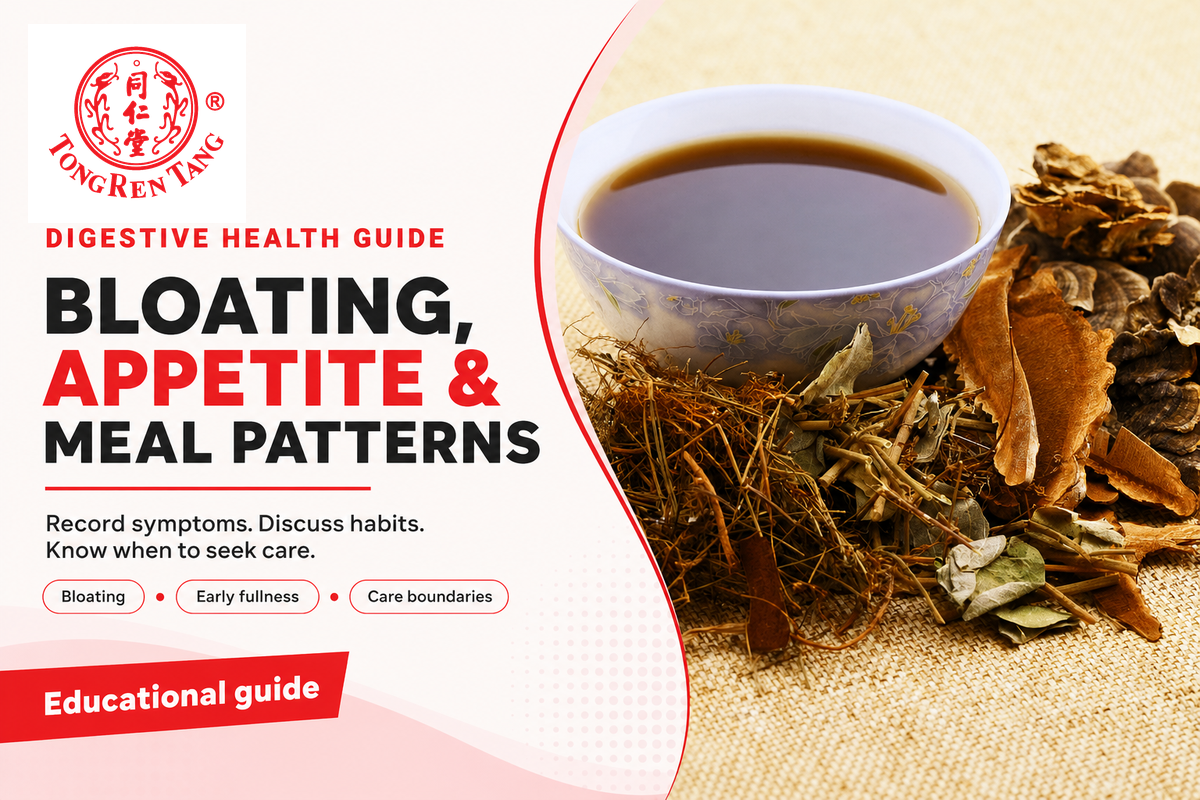
Many people notice discomfort after lunch, but meal-related symptoms can take different forms. TCM for digestive health is a traditional framework for discussing digestive symptoms and daily habits. This guide to TCM for digestive health helps you describe bloating, feeling full after a small meal, and a loss of interest in food. It offers a way to record changes, consider modest eating habits, and recognize when a medical assessment is appropriate. Describing a symptom clearly can make a consultation more useful; it doesn’t identify the cause.
Short answer: TCM for digestive health is a traditional approach that uses pattern language to discuss symptoms and daily habits. Bloating and appetite changes have many possible causes. Record what happens, seek medical care for persistent or concerning symptoms, and discuss herbs only after a safety review.
At a glance
- A symptom diary helps explain a pattern to a clinician; it can’t diagnose a food intolerance or a traditional pattern.
- Early fullness and low appetite deserve separate descriptions, but neither gives a diagnosis on its own.
- Smaller or slower meals can be discussed for gas symptoms; losing weight or eating too little calls for an assessment before more restriction.
- Persistent bloating with pelvic or urinary changes, bleeding, weight loss, or worsening pain shouldn’t wait for the diary to be completed.
What does TCM mean by a digestive pattern?
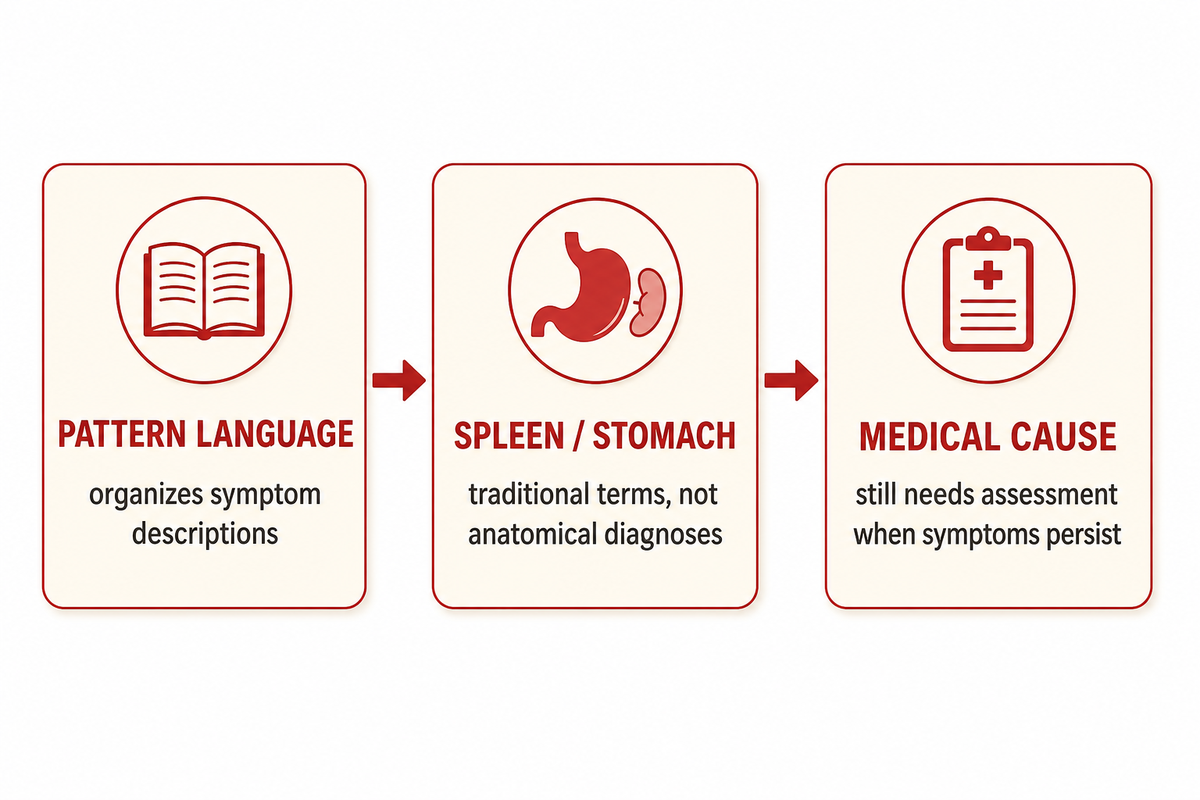
In traditional Chinese medicine (TCM), a digestive pattern is a way of organizing symptoms, appetite, bowel behavior, and sleep. A practitioner may describe this traditional pattern as an “imbalance.” In that framework, words such as “Spleen” and “Stomach” don’t by themselves mean that an anatomical organ of the digestive system is diseased. Pattern language can guide a discussion, but it can’t rule out a medical cause of bloating or early fullness.
These conversations are more useful when you bring specific details. Rather than saying “My digestion is weak,” describe when discomfort began, whether you feel full after a few bites, whether it follows every meal, and whether your bowel habits have changed. The US National Institute of Diabetes and Digestive and Kidney Diseases lists several possible causes of indigestion, including medicines and other conditions. Your description helps a clinician decide what needs assessment.
The US National Center for Complementary and Integrative Health reports mixed findings across studies of Chinese herbal products for different conditions. Acupuncture is another TCM therapy, with its own condition-specific research; it shouldn’t be treated as evidence that herbs alleviate unexplained bloating. Research for a diagnosed condition can’t be stretched into a claim that an unassessed symptom has one TCM cause or a predictable response to treatment.
The clinic has a separate Chinese Herbal Medicine page about this treatment category. This article addresses symptom questions and the limits of the evidence. That product or service page can’t determine what’s appropriate for an individual reader.
How to help digestion in TCM?
Start by describing your symptoms and asking how the practitioner accounts for medicines, allergies, existing diagnoses, and warning signs. Traditional dietary advice may be part of the conversation, but it should be identified as a traditional approach rather than a medical diagnosis. If bloating persists or appetite is declining, arrange a medical assessment alongside any discussion of complementary care.
Bloating after meals: which details are worth recording?
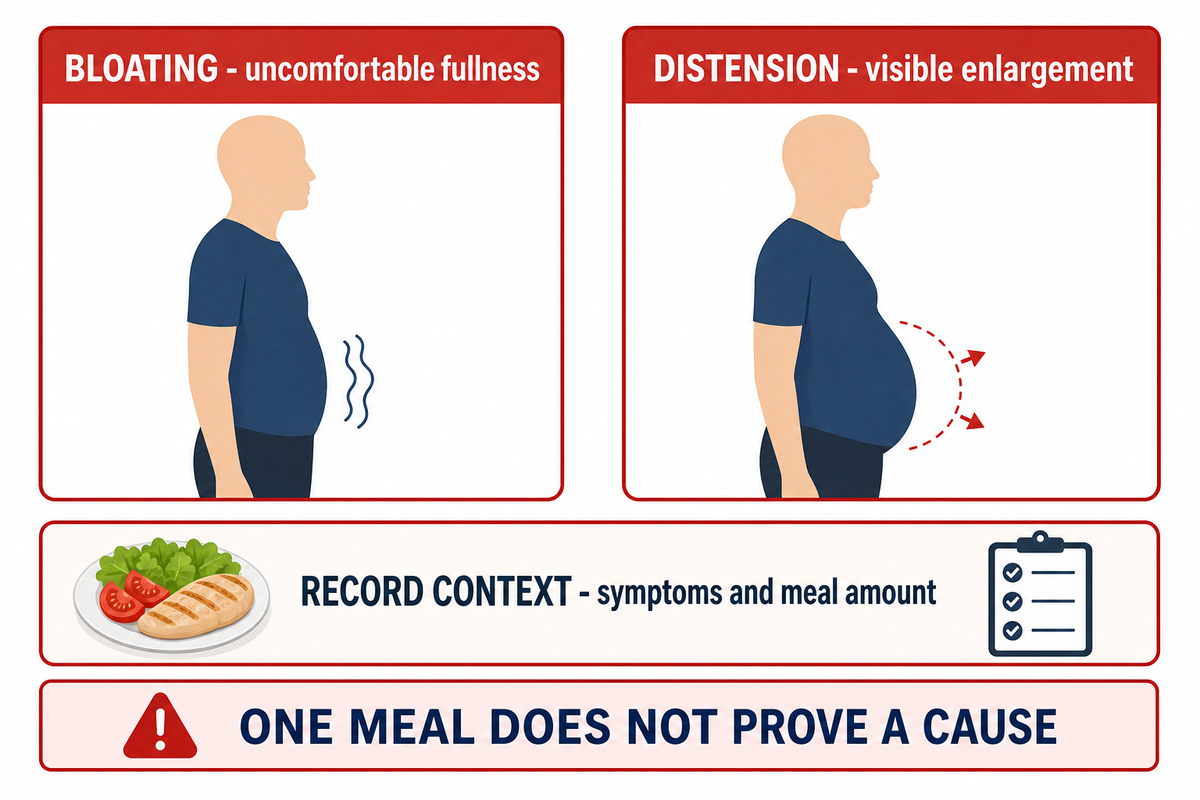
Bloating describes an uncomfortable feeling of abdominal fullness; distension describes visible enlargement of the abdomen. They can occur together, but they aren’t identical. Record any accompanying pain, constipation, nausea, or other changes, as well as what and how much you ate. One episode after a large meal doesn’t prove a food allergy, intolerance, or TCM pattern.
The NIDDK gas guide notes that some gas after meals is normal, while frequent, bothersome, changing symptoms merit attention. Gas can form when bacteria in the large intestine break down some undigested carbohydrates. Johns Hopkins Medicine independently describes that basic process. The NIDDK page was last reviewed in 2021, so this mechanism is used as background physiology, not as a current individual treatment recommendation. That mechanism doesn’t tell you the cause of your own symptom. The useful question is whether an episode is new, recurring, more severe, or joined by symptoms such as pain, diarrhea (diarrhoea), constipation, vomiting, or weight loss.
Useful observations
- When the symptom began, including before this week.
- Whether it follows eating or occurs at other times.
- Fullness, pain, gas, stool change, and appetite.
Conclusions to avoid
- One meal proves a particular food is the cause.
- Bloating confirms a food allergy or intolerance.
- A familiar TCM label excludes another illness.
Notice whether a symptom remains when meal choices change. That recurring pattern is worth describing, but it isn’t enough to establish a cause. A peer-reviewed food allergy review explains why symptoms alone can be difficult to attribute to a specific food. The diary can help you communicate with a clinician; it can’t confirm an allergy, intolerance, or diagnosis.
| Observation type | Useful description | What it cannot prove |
|---|---|---|
| Bloating | A feeling of abdominal fullness | One food caused it |
| Distension | Visible change in abdominal size | The amount of gas present |
| Belching | When and how often you burp | A single digestive diagnosis |
| Early fullness | Full after a small amount | The cause of the change |
| Low appetite | Less desire to begin a meal | Why eating feels difficult |
| Pain | Location, onset, and worsening | That pain is harmless |
| Nausea | Whether it comes with vomiting | A food intolerance |
| Bowel change | Constipation or loose stools | A TCM pattern |
| Weight change | Unintended loss or gain over time | A cause without assessment |
Appetite changes and early fullness: what matters?
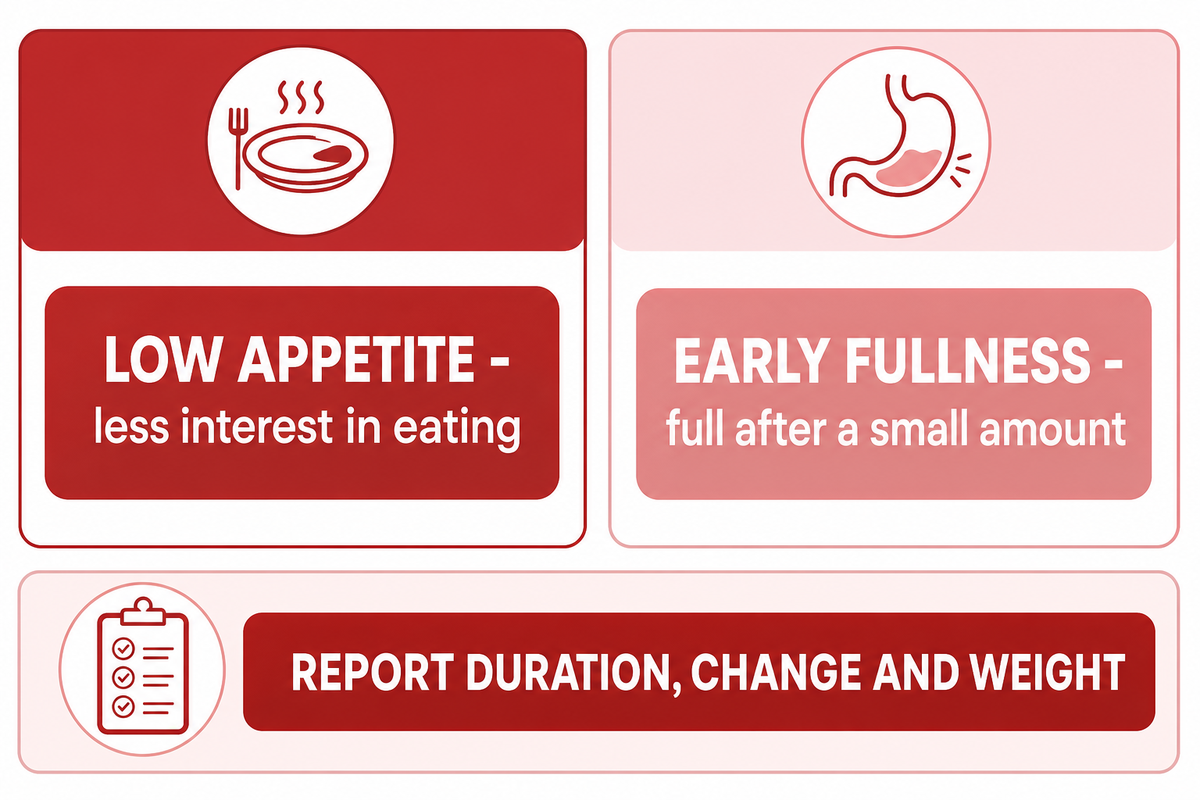
Appetite loss means less interest in eating. Early satiety means feeling full after only a small amount of food. Describing these separately helps a clinician ask the right questions, although the distinction alone doesn’t establish a cause or urgency. Say how long the change has lasted, whether it’s worsening, and whether you’ve lost weight unintentionally.
In its indigestion guidance, the NIDDK lists feeling full too soon or unusually full after a meal among possible symptoms. Loss of appetite or unexplained weight loss may also require medical review. Describe whether the change happens only at breakfast or throughout the day, whether eating brings nausea or pain, and whether any medicines have changed.
Digestive explanations aren’t the only possibilities. Tell a clinician if acid reflux symptoms occur alongside the fullness; don’t assume that one label explains both. The UK National Health Service lists frequent bloating, reduced appetite or early fullness, pelvic pain, and urinary changes among symptoms that warrant assessment in people with ovaries. Those symptoms are common and have many causes. The point is to get persistent or worsening changes checked, not to infer a particular diagnosis from this article.
Key takeaway
Describe appetite loss and early fullness separately, then report how long each has been present and what else has changed. Even a useful symptom description is not a diagnosis or a reason to delay medical care.
Diet patterns: meal size, pace, timing and trigger foods
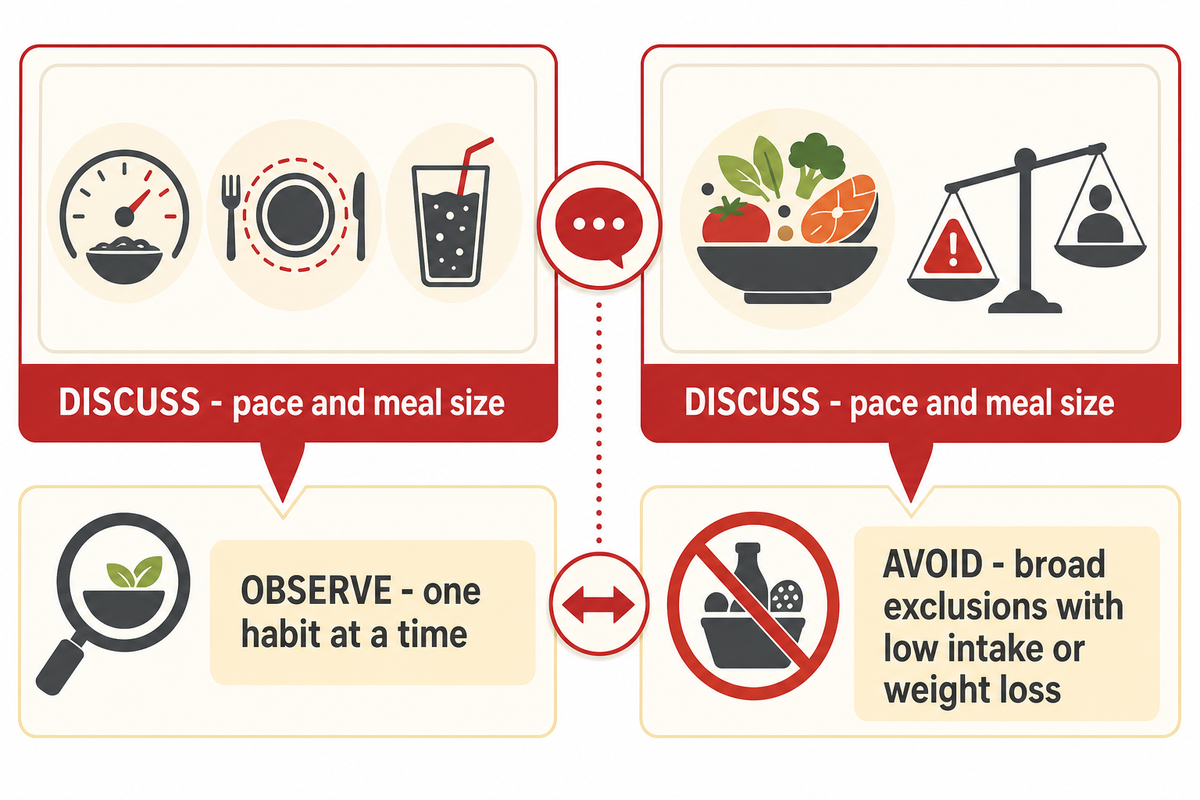
Meal habits are one useful part of the discussion when gas or bloating occurs. The NIDDK notes that a health professional may suggest eating more slowly, sitting down to eat, trying smaller meals, or limiting fizzy drinks or straws. Smaller meals and fizzy drinks also appear in the NHS bloating page, reviewed January 2026. These are discussion points, not a personalized diet prescription.
If symptoms are mild and you’re eating enough, consider observing one habit at a time, such as meal pace. Record what happens over several meals without assuming that improvement proves the food was the cause. Eating quickly and feeling uncomfortable doesn’t show that an ingredient is “bad”; the same symptom can have several explanations.
A practitioner may discuss preferences for warm meals within a traditional framework. The sources reviewed here don’t establish a rule that everyone with bloating must eat warm foods or avoid raw foods. Record what you actually eat and tolerate; unnecessary exclusions can make it harder to nourish yourself adequately.
Do
- Record meal time, portion, pace, and symptoms.
- Ask whether a simple habit change suits your situation.
- Bring recurring symptoms to a qualified clinician.
Don’t
- Remove several food groups after one episode.
- Use a diary to declare an allergy.
- Keep restricting food if intake or weight is falling.
If you’re already eating very little, losing weight unintentionally, or becoming afraid to eat, seek medical or dietetic advice before excluding more foods. Restriction can affect nutrition and may delay attention to the cause of the change. Bring a record of symptoms, meals, and intake to the appointment rather than a list of supposedly “bad” foods.
How can I improve my digestion naturally?
For mild, occasional discomfort, try describing meal size, pace, and timing, then discuss a simple habit change that suits your situation. Avoid broad food exclusions. Tell a healthcare professional about persistent symptoms, unintended weight loss, or reduced appetite; these changes need assessment rather than a promise of “natural healing.”
The Meal-Symptom Decision Grid: a one-week observation method
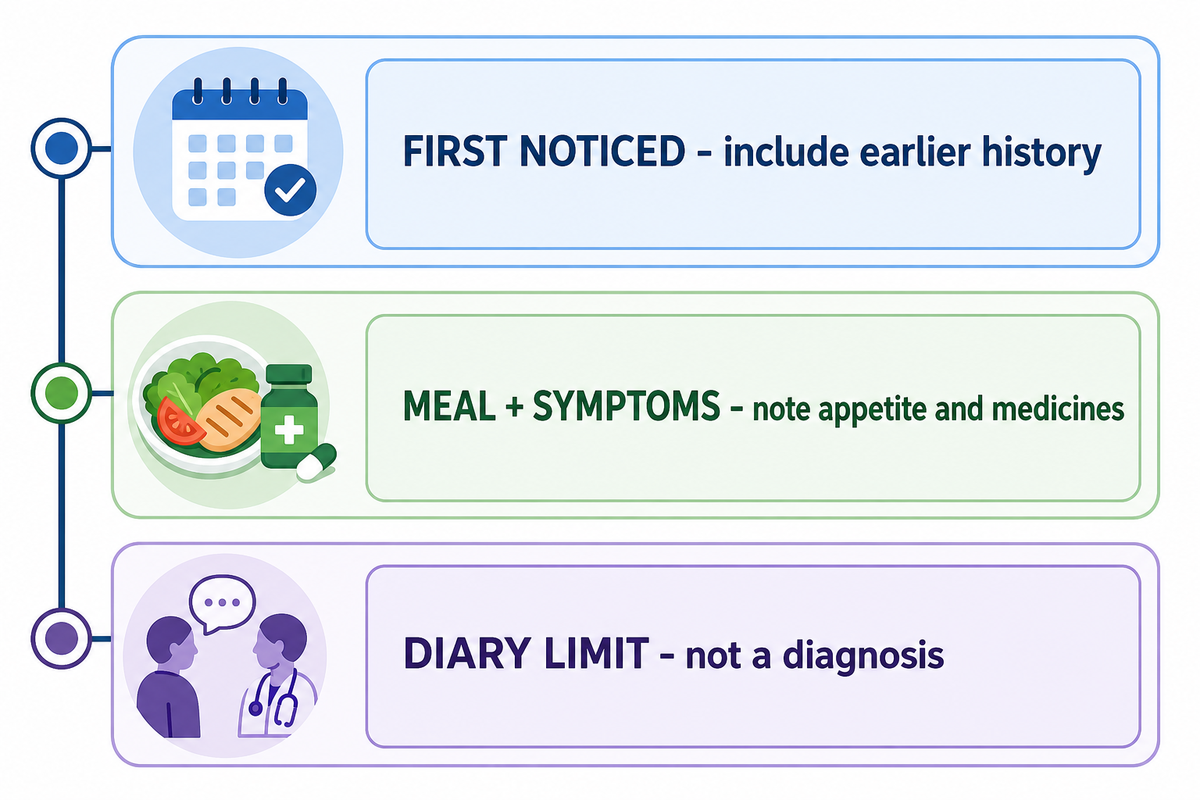
The Meal-Symptom Decision Grid is a one-week way to organize observations for a consultation. It isn’t a diagnostic tool or a reason to wait a week if symptoms are worsening or warning signs appear. Seek medical advice promptly when the situation calls for it, even if the grid is mostly blank.
Start by recording when the symptom was first noticed, even if that was before day one of the grid. Then note each meal, symptoms, appetite, bowel changes, and relevant medicines. The week’s notes can’t erase the earlier symptom history or replace a clinician’s assessment.
| Field | What to write | Why it helps |
|---|---|---|
| 1. First noticed | Date or approximate period before this log | Shows the true symptom duration |
| 2. Meal time | Breakfast, lunch, dinner, or snack time | Places symptoms in context |
| 3. Meal and portion | What and roughly how much you ate | Avoids blaming an ingredient alone |
| 4. Eating pace | Rushed, usual, or unhurried | Captures a changeable habit |
| 5. Symptom onset | Before, during, or after eating | Separates timing from assumptions |
| 6. Symptom description | Bloating, visible swelling, pain, nausea | Distinguishes different experiences |
| 7. Appetite and fullness | Low desire to eat or full after a few bites | Clarifies what changed |
| 8. Other changes | Stool, weight, pelvic or urinary symptoms | Flags context beyond the meal |
| 9. Medicines and action | New medicine, supplement, and any call for advice | Supports a safer review |
Example: “Symptoms began several weeks ago. Monday lunch: a usual portion eaten quickly; fullness started during the meal; no bowel change; I also noticed reduced appetite at dinner.” This is useful to discuss but doesn’t prove lunch caused the symptom. The International Foundation for Gastrointestinal Disorders provides a symptom diary in the specific context of irritable bowel syndrome. Its longer example shows that a short record here is only a starting point, not a clinically validated duration.
“A food diary is highly recommended.”
When should bloating or appetite changes be medically assessed?
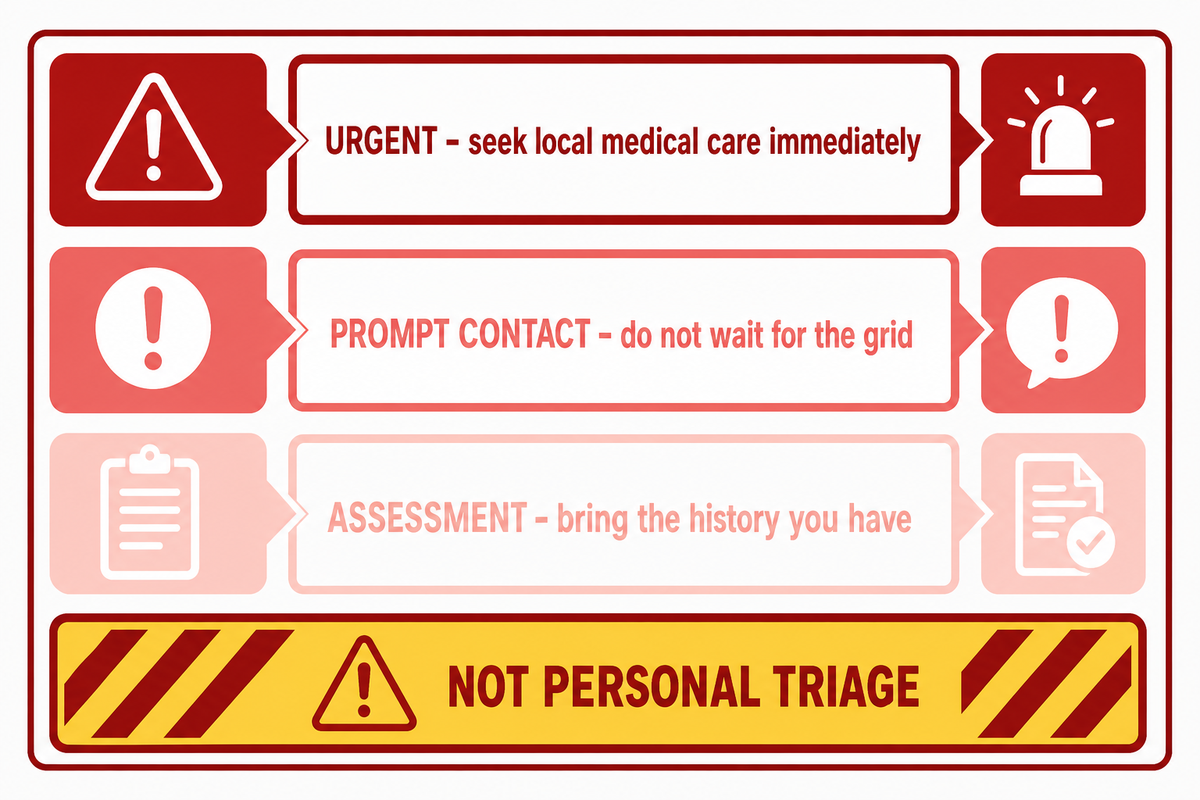
Seek medical evaluation for bloating that is new, worsening, persistent, or recurring frequently. Reduced appetite, early fullness, unintended weight loss, bowel changes, pelvic pain, or urinary changes add reasons to seek assessment. A traditional pattern description and a completed meal log don’t rule out illness. Symptoms occurring after food don’t prove food caused them.
The NHS bloating guide recommends medical review when bloating persists or happens regularly, and flags concerning associated symptoms. For people with ovaries, frequent bloating together with early fullness, pelvic discomfort, or urinary changes is another reason to be assessed. These symptoms have many possible causes and don’t by themselves indicate cancer.
| Situation | Next step |
|---|---|
| Severe, sudden, or constant abdominal pain; serious breathing difficulty; vomiting blood or vomit that looks like coffee grounds; or an acute emergency | Seek urgent local medical care immediately. |
| Black or bloody stools, persistent vomiting, marked swelling, inability to pass urine, stool, or gas, or unexplained weight loss | Contact a medical professional promptly; do not wait to finish the grid. |
| Recurring bloating, declining appetite, early fullness, or pelvic/urinary changes | Book a medical assessment and bring the history you already have. |
| Mild, occasional discomfort without warning signs | Observe it, ask for advice if it recurs, and avoid assuming a single trigger. |
Use these examples to communicate with your healthcare team. This table cannot provide personal medical triage. If you are uncertain which route fits, contact a qualified local medical service. Add any other worrying or long-lasting symptoms to your notes, and seek help when needed without waiting to complete the grid.
Where do Chinese herbs fit, and what should you ask first?
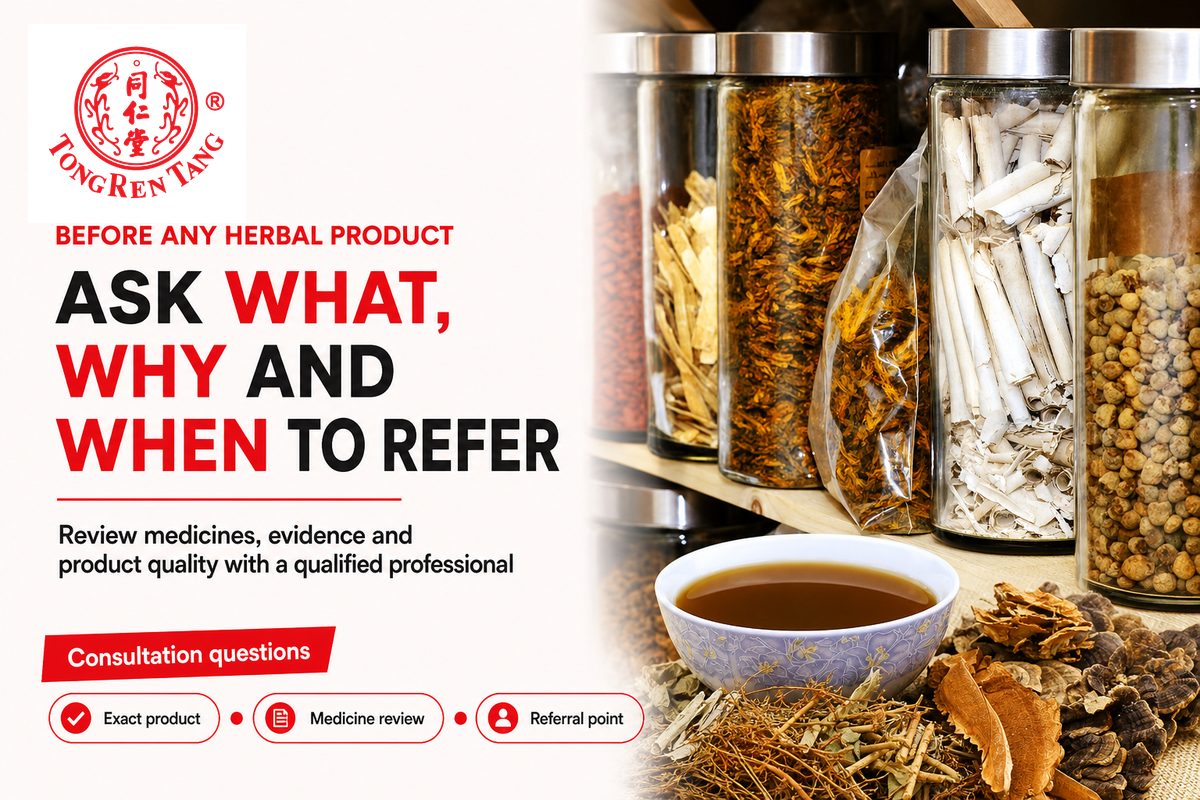
Chinese herbs are one possible subject for a consultation, not a required first step for unexplained bloating. A qualified practitioner should explain why any proposed approach fits the individual situation and when medical referral is appropriate. Discuss the plan and its limits with the professionals involved in your care.
A 2025 international guideline considers traditional Chinese medicine for adults with diagnosed functional dyspepsia. Its scope doesn’t include every cause of early fullness or bloating. A 2026 corrigendum is recorded; this article uses the guideline only to identify its diagnosed-adult scope. The NCCIH describes category-level safety concerns for Chinese herbal products. Neither source establishes that a specific clinic product is safe or effective for an individual reader.
Before taking a product, tell the clinician or practitioner about prescription medicines, other supplements, pregnancy or breastfeeding, and existing conditions. The NCCIH supplement guide notes possible medication interactions and that many products haven’t been studied in pregnancy or children. Ask which exact product is proposed, what evidence applies to your condition, how quality is checked, and when medical referral is needed. For information about the clinic’s product category, see the Chinese herbal medicine overview; that page is a service route, not proof of a result for you.
What should you ask a TCM practitioner in Dubai?
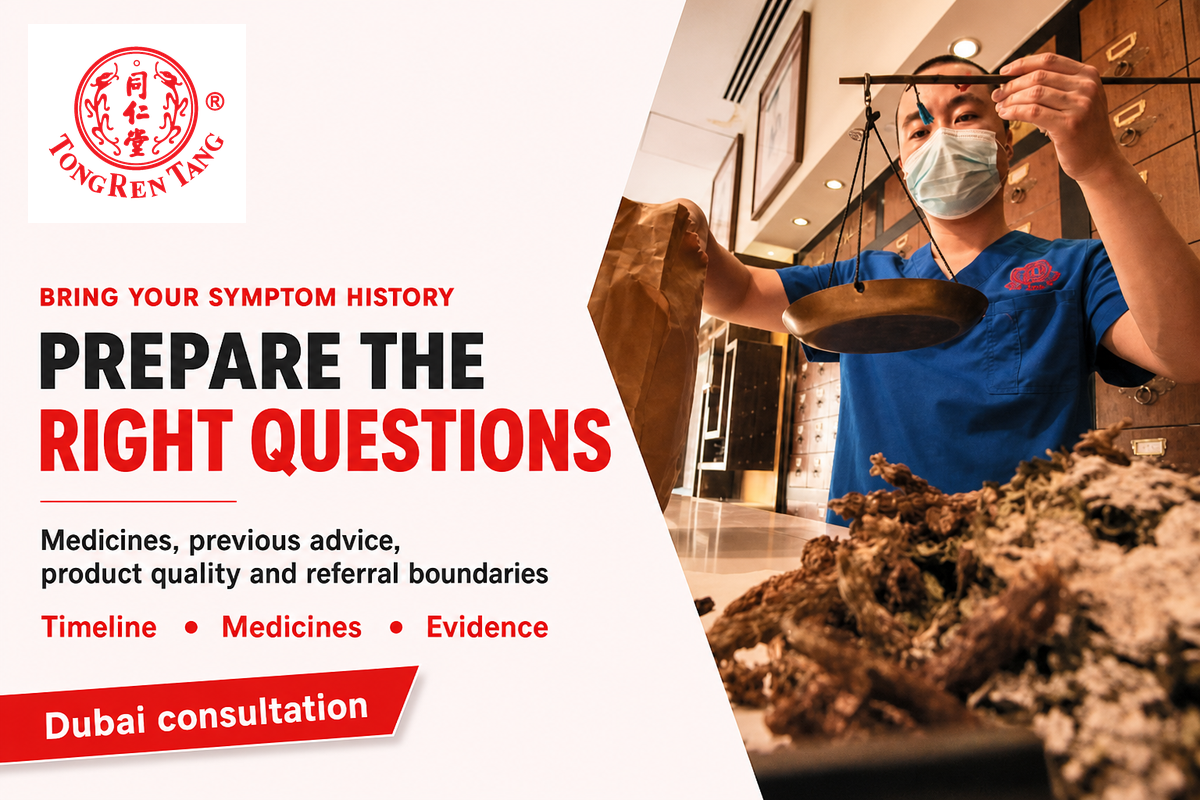
Bring your symptom timeline, prescribed medicines, supplements, diagnoses, and any medical advice you’ve received. Ask how the practitioner interprets traditional patterns, recognizes warning signs, and decides when to refer for medical assessment. Ask what treatment is proposed, how the practitioner’s credentials and product quality can be checked, and what evidence supports the plan. A treatment plan should acknowledge uncertainty rather than promise a fixed result.
See the clinic’s treatment options for service information. If symptoms call for medical assessment, arrange it without waiting for a complementary care visit. Use the Dubai clinic contact page to ask about a consultation and what information to bring. Avoid putting private medical records in an unsecured public form.
Frequently asked questions
What are the signs and symptoms of poor digestion?
Read the answer
People use “poor digestion” to describe different experiences: bloating, uncomfortable fullness, belching, nausea, abdominal discomfort, or a change in bowel movements. The label isn’t a diagnosis. Note the specific symptom, how long it has been present, and whether it occurs before or after meals. Medical review matters when symptoms persist, worsen, or come with warning signs such as unintended weight loss or bleeding.
How to naturally heal digestive issues?
Read the answer
No single natural habit can be promised to heal an undiagnosed digestive issue. For mild symptoms, eating at a comfortable pace and documenting meal context may be reasonable first observations. Avoid restrictive diets if you eat too little or lose weight. A clinician can help determine whether there’s a condition that needs treatment; complementary options can be discussed with full medicine and safety information.
What are the signs that my gut is healing?
Read the answer
Less frequent discomfort or improved appetite may be welcome observations, but they don’t prove that a particular condition has resolved. Track the same symptoms over time and compare them with your clinician’s advice. If symptoms return, worsen, or new warning signs appear, seek another assessment. The diary is useful for describing change, not certifying recovery.
Is bloating after every meal normal?
Read the answer
Some gas after meals is common. Bloating after every meal, especially if it’s new, bothersome, or accompanied by early fullness, weight loss, pain, or bowel changes, deserves medical advice. Don’t rely on a TCM label or one suspected food to explain it.
Should I take Chinese herbs for bloating without speaking to a clinician?
Read the answer
Self-prescribing a herbal formula for unexplained bloating isn’t a sound first step. The cause may be unrelated to the traditional pattern you have in mind, and supplements can interact with medicines or be unsuitable in some circumstances. Share your symptoms, current medicines, pregnancy or breastfeeding status where relevant, and existing diagnoses with a qualified professional. Ask which exact product is being considered, what evidence applies to your situation, and how the product would fit any care you already receive. If symptoms are persistent or concerning, arrange medical evaluation rather than using herbs to postpone it. No formula, dose, or promised treatment timeline can be chosen responsibly from this general article.
A practical next step
If symptoms are ongoing or concerning, arrange a medical assessment. For a complementary-care conversation, take your symptom notes and medicine list to a qualified practitioner, and ask the Dubai clinic about a consultation that fits your existing care.
Editorial scope: This educational article explains traditional terminology and general symptom observations. It doesn’t diagnose a condition, verify any individual practitioner’s credentials, prescribe herbs or a restrictive diet, or report patient outcomes. Seek advice from a qualified healthcare professional for personal medical decisions.
References & Sources
- Symptoms & Causes of Indigestion US National Institute of Diabetes and Digestive and Kidney Diseases.
- Traditional Chinese Medicine: What You Need To Know US National Center for Complementary and Integrative Health.
- Symptoms & Causes of Gas US National Institute of Diabetes and Digestive and Kidney Diseases.
- Gas in the Digestive Tract Johns Hopkins Medicine; basic physiology only.
- Clarifying the Hazy Concepts of Food Allergies and Sensitivities peer-reviewed review in Gastroenterology & Hepatology.
- Symptoms of Ovarian Cancer UK National Health Service; cited only for symptom-assessment context.
- Eating, Diet, & Nutrition for Gas US National Institute of Diabetes and Digestive and Kidney Diseases.
- Symptom Diary International Foundation for Gastrointestinal Disorders; irritable-bowel-syndrome context.
- How To Manage IBS Cleveland Clinic podcast; quotation attributed to registered dietitian Julia Zumpano.
- Bloating UK National Health Service.
- International clinical practice guideline on TCM for functional dyspepsia (2025) Journal of Integrative Medicine; diagnosed adult functional dyspepsia only. See also the 2026 corrigendum.
- Dietary and Herbal Supplements US National Center for Complementary and Integrative Health.
![Postpartum TCM Care: Safety Questions for Dubai [Guide]](https://tongrentang.ae/wp-content/uploads/2026/09/postpartum-tcm-care-blog-featured-768x512.png)