Get in Touch with Tongren Tang Gulf
Moxibustion vs Acupuncture: When Heat Therapy Fits Better

Updated September 2026
Medical evidence reviewed for scope, uncertainty and safety
Moxibustion vs acupuncture is a comparison between controlled heat from burning moxa at selected points and sterile, single-use needles used to stimulate selected points. Heat therapy may be appropriate in certain situations; however, just because a patient is comfortable with the use of moxibustion, choosing to use moxibustion does not prove a better outcome is warranted.
Heat or needles aren’t the only choices. Moxibustion can also be done with needles. Whether the practitioner chooses to use one of the modalities or both depends on the condition of the patient; a practitioner may discuss one modality, both, or neither after assessment. This information, along with the patient’s symptoms and relevant context, helps the practitioner determine the best approach. This information will also assist the patient in making an informed decision regarding their treatment.
The short answer
- Moxibustion: Moxibustion is the control of the placement, duration and distance of burning moxa.
- Acupuncture: Acupuncture is the insertion of fine needles at acupuncture points.
- Overlap: In warm-needle techniques, moxa is placed over an acupuncture needle.
- Fit: Relevant factors include the patient’s condition and symptoms, the patient’s exposure and safety tolerance.
- Boundary: Neither treatment should postpone diagnosis, urgent review or prescribed care.
Moxibustion vs Acupuncture at a Glance
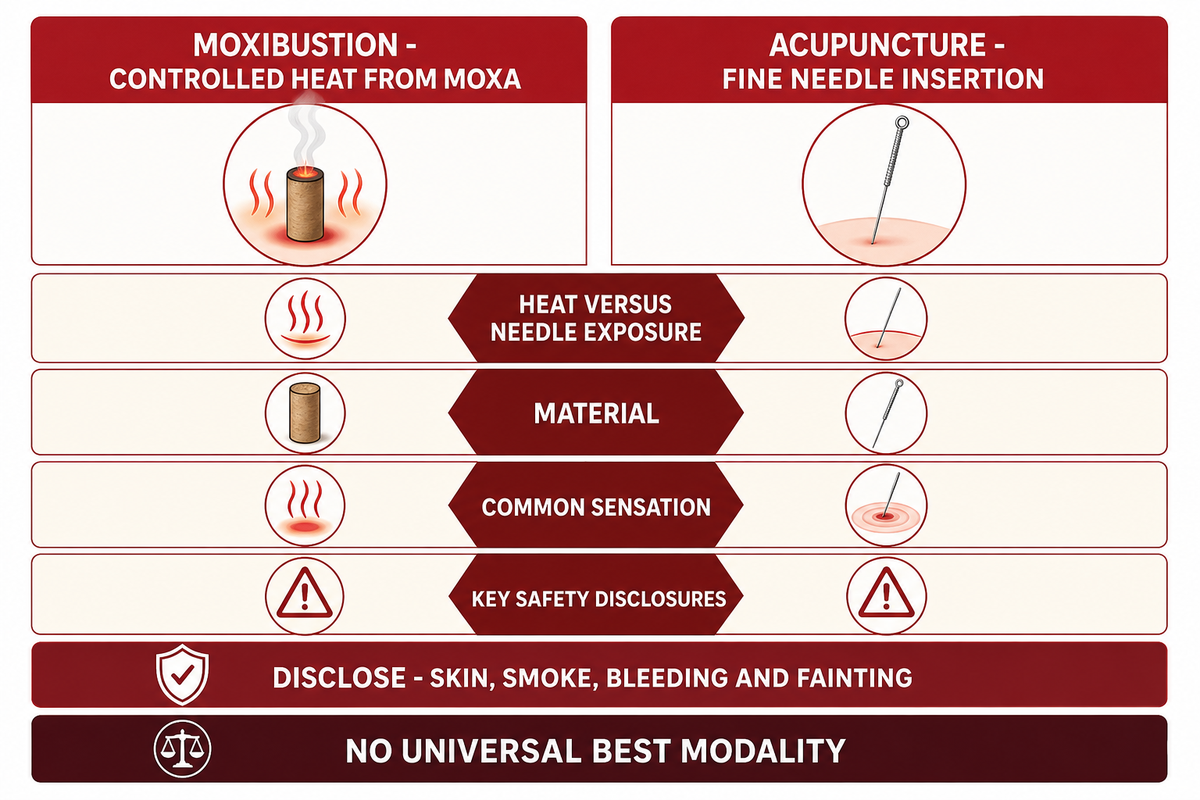
Both practices are founded on the same philosophies as traditional Chinese medicine. Therefore, the same points may be integrated in both practices. From the viewpoint of practice and safety, both modalities differ. In practices of moxibustion and acupuncture, the principal input and control by the practitioner may alter the expectations, sense of safety and precautions taken by the patient.
Moxibustion
- Primary exposure: controlled heat
- Material: moxa, usually made from mugwort
- Common sensation: warmth near a selected area
- Key disclosures: skin sensation, smoke sensitivity and allergy
Acupuncture
- Primary exposure: fine needle insertion
- Material: sterile, single-use acupuncture needles
- Common sensation: pressure, heaviness, tingling or a brief prick
- Key disclosures: bleeding risk, fainting history and skin issues
This is a comparison of risks, not a competition to decide a super-winner. Moxibustion techniques include methods like indirect moxibustion, where the burning material doesn’t come in contact with the user’s skin. Another example is direct moxibustion, where the practitioner has to carefully manage contact and the degree of heat provided by the burning material. Acupuncture methods vary based on the point selected, how deep the point is penetrated, and other techniques which may be employed with the method. Consider the precautions required for each method, as there can be a significant difference between methods under a single broad descriptive term. It’s important to ask the practitioner for the details of the method which is employed as the label may not convey sufficient details.
What Each Treatment Actually Does During a Session
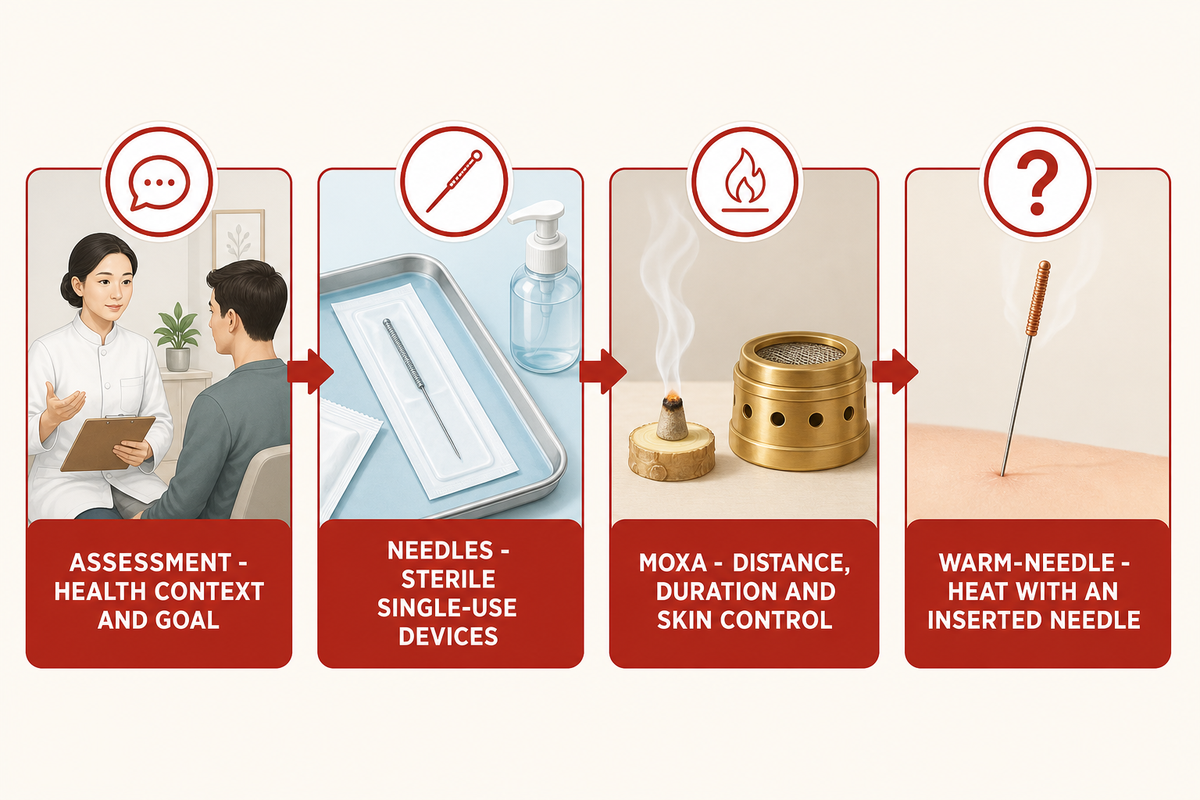
Prior to starting any treatment, a practitioner should examine you and let you know what they’ll be doing. The risk profile changes with the method and the patient’s health context. Acupuncture includes examination and preparation of the skin, insertion of fine needles, and monitoring you for a response. The National Center for Complementary and Integrative Health explains that acupuncture needles are regulated in the United States as sterile, single-use devices.
For indirect moxibustion, a practitioner may hold a burning moxa stick above the skin or use another barrier or holder. Direct methods may involve the placement of moxa on the patient’s skin and require that the practitioner explain the method and reasons for the exposure. There are various products available that are “smokeless” moxa, but these may not address the patient’s sensitivities.
Warm-needle moxibustion demonstrates that a strict binary approach can be deceptive. In this method, moxa is affixed to or around the handle of a needle inserted into the patient. Stimulation of the needle and the application of heat occur during the same treatment. A review of moxibustion methods describes variations of this approach, also known as warm-needle methods. Description of this method doesn’t mean or suggest that integrating different forms of treatment into a single method improves the outcome.
It’s beyond the scope of this comparison to assess traditional explanations of the treatment, which may include concepts of qi, meridians, and/or yin and yang. The description of a pattern of disharmony within the Traditional Chinese Medical diagnosis, as well as the theory of warming, don’t warrant or predict a favorable change in the disease process.
How to read common moxibustion language online
Multiple types of moxibustion are typically combined in a single search result. Moxibustion describes various methods of utilizing heat from mugwort. How moxa is supported, placed, or held makes a difference in exposure. During a moxibustion session, practitioners can use a stick, a barrier, or a holder. The practitioner may also use the warm-needle method. Therefore, the judgment on the assessment of moxibustion shouldn’t be based on the presence of heat, alone. Determine the particular method of moxibustion that will be employed and whether you’ll receive acupuncture, as part of the same session.
Expressions like “moxibustion treatment” and “moxibustion therapy” don’t denote standardized procedures. In some descriptions, moxibustion is commonly used alongside acupuncture; elsewhere it is used in conjunction with acupuncture only for part of a session. Likewise, Moxibustion may be combined with acupuncture and performed in conjunction with warm-needle work. Thermal stimulation of the acupuncture point is achieved in warm-needle work after inserting a needle to the acupuncture point; it is not simply a heated Moxa stick placed over the acupuncture. Ask the practitioner to explain the procedures and which safeguards apply to each part.
Studying moxibustion and acupuncture in China helps us understand traditional medicine systems. The ancient Chinese books on medicine may speak of certain points on the body, of the flow of blood and Qi, and of the pathways of Qi. The concepts of traditional chinese medicine speak of frameworks of the past, and don’t prove or explain the mechanistic action of moxibustion in the modern context. The cultural and the clinical descriptions address different domains.
Clinical search terms require further analysis, also. “Moxibustion for treating knee pain,” “treatment of knee osteoarthritis” and “moxibustion for the treatment of osteoarthritis of the knee” all require condition-specific evidence. Similarly, searches about the management of chronic pain and the comparison of painful conditions require condition-specific clinical evidence. A systematic review and meta-analysis, or a meta-analysis of randomized controlled trials, may estimate potential benefits for one defined population; it cannot prove the effectiveness of moxibustion for every diagnosis. The effects of moxibustion (with or without acupuncture) are to be interpreted within the framework of the studied intervention. The term “moxibustion was used in the trial” needs the condition, population and type of evidence required to be specified. Even the evaluation of the therapeutic efficacy and safety of moxibustion in different formulations requires additional questions: Moxibustion side effects, Moxibustion acupuncture, Moxibustion benefits for female, Why is mugwort used for moxibustion, What is moxibustion used for, and How to use moxa sticks at home do not ask the same clinical question. In case a moxibustion practitioner is to be located, it would be prudent to approach a health care professional who states the limitations of moxibustion and doesn’t speculate beyond the scope of evidence.
Search language is not a treatment claim. Method phrases include mechanism of moxibustion, moxibustion involves, perform moxibustion, specific points, specific points on the body, handle of an acupuncture needle, needle to the acupuncture point, moxa is attached, moxa cone rests, mugwort leaves, moxibustion with acupuncture, often done alongside acupuncture and including acupuncture. Claim or condition phrases include therapeutic effect, effectiveness and safety of moxibustion, breech presentation, moxibustion for breech presentation, reducing pain, pain relief in patients, moxibustion attenuates and moxibustion offers. Context phrases such as history of moxibustion, ancient Chinese medicine, rooted in traditional Chinese medicine, qi and blood, flow of qi, Korean acupuncture, Moxibustion Society, acupuncture treatments and find a moxibustion practitioner still require source, population and method checks.
Heat, Needles, Smoke and Sensation: Which Experience Can You Tolerate?
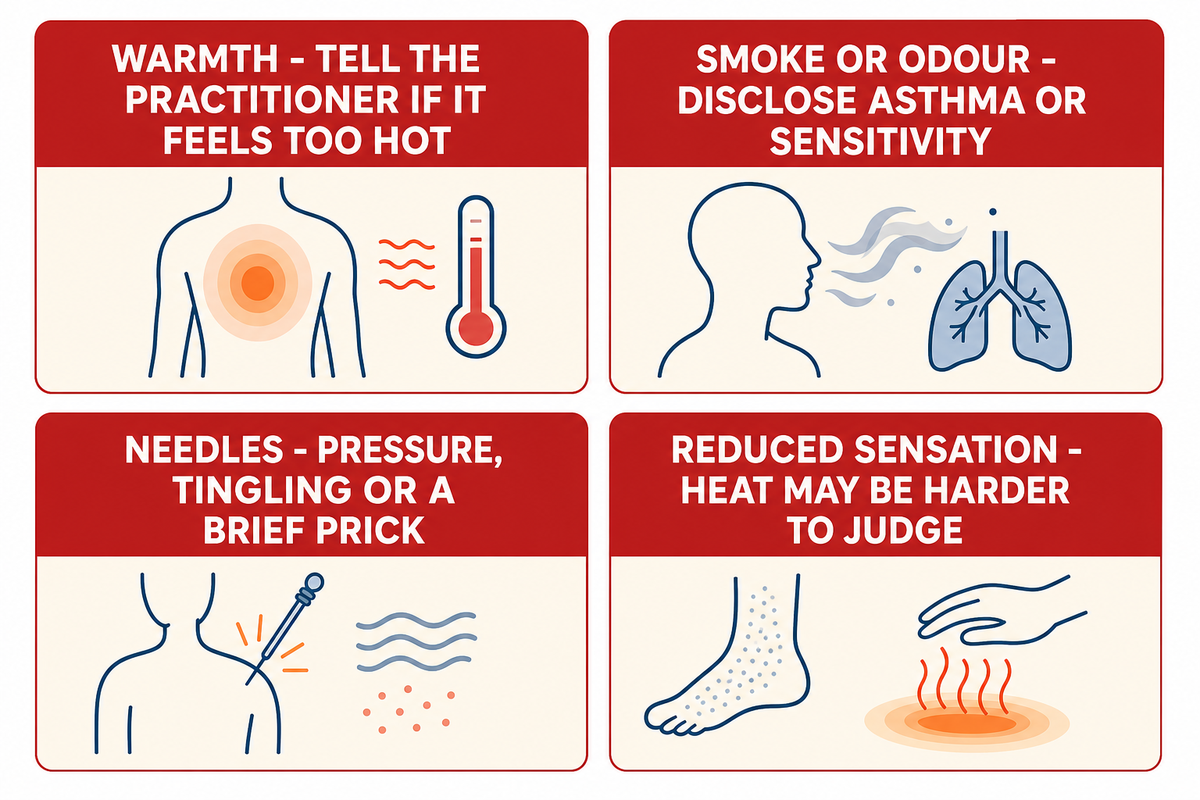
Different treatment exposures are important to take into account when constructing an effective plan. Avoiding one treatment doesn’t mean the other is safer. There are other elements to consider such as heat and scent sensitivity, and exposure to smoke and other pollutants.
| Experience | Tell the practitioner | Ask about room or treatment control |
|---|---|---|
| Heat near the skin | Reduced sensation, neuropathy, fragile skin, recent injury or previous burns. | Distance, duration, skin checks and how you signal that it feels too hot. |
| Smoke or odour | Asthma, lung disease, scent-triggered symptoms or smoke sensitivity. | Ventilation, product type and exposure affecting everyone in a shared room. |
| Mugwort | Known plant or mugwort allergy and previous reactions. | Which material will be burned and whether a different approach is appropriate. |
| Needles | Needle anxiety, fainting, bleeding concerns, medicines and implanted devices. | Sterility, positioning, consent, stopping signals and whether electrical stimulation is planned. |
A systematic review of reported moxibustion adverse events identified event types including burns, allergy, infection, cough, nausea and vomiting. Case reports can’t establish how often these events occur, and the authors found that safety depends on factors such as treatment position, duration, distance, practitioner skill, patient condition, smoke and environment. The useful lesson is to improve screening and controls, not to calculate a personal risk percentage from those reports.
The 4-Lens Heat-or-Needle Comparison Check
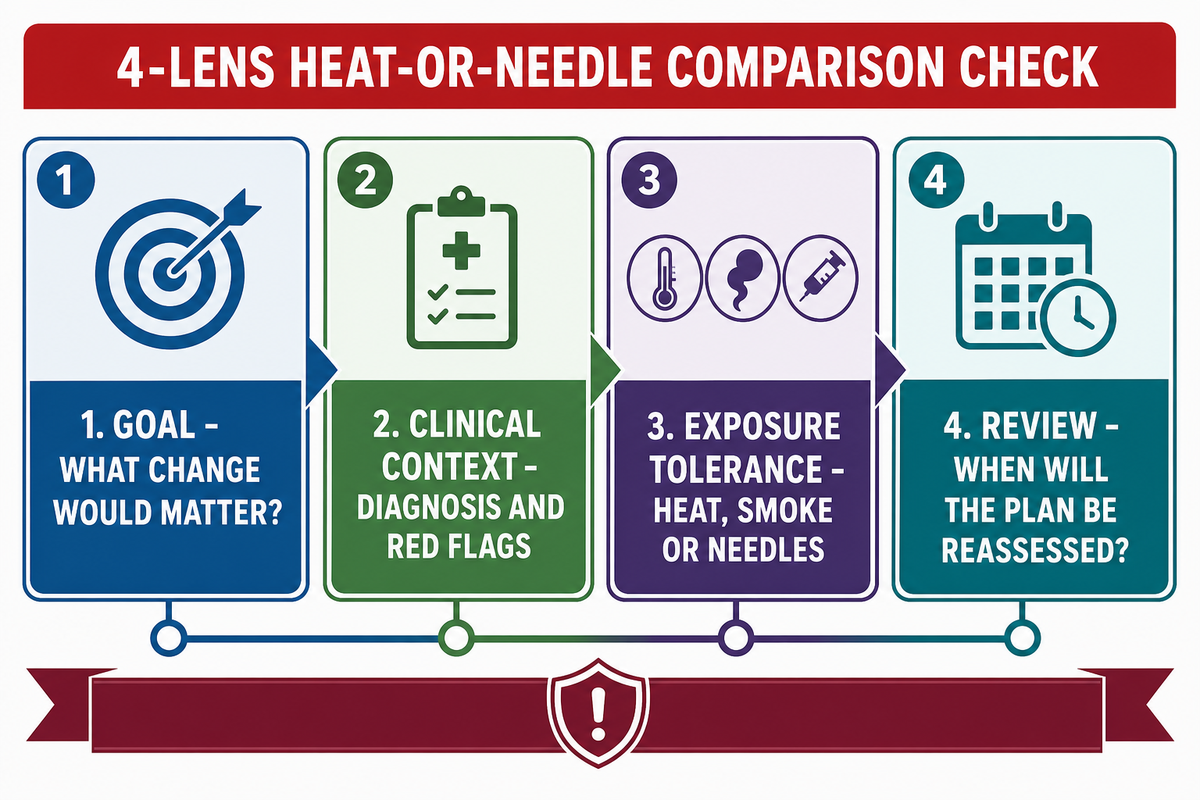
Use this after necessary medical evaluation. This framework helps you organize details to be discussed during the consultation. This framework shouldn’t be used to make a diagnosis or identify a TCM pattern to be addressed. Heat preference is to be discussed and not to be diagnosed.
| Lens | What to bring | Question to ask | Why this does not diagnose you |
|---|---|---|---|
| 1. Goal | One specific concern and what change would matter. | What is the realistic aim of this modality? | A goal describes what you want, not the cause of a symptom. |
| 2. Clinical context | Diagnosis, main symptom, duration, tests and any red flags. | Is medical assessment needed before complementary care? | The same sensation may arise from different conditions. |
| 3. Exposure tolerance | Response to needles, warmth, smoke, scent and lying still. | Which exact method and sensations are expected? | Preference affects feasibility, not clinical effectiveness. |
| 4. Safety disclosure | Medicines, pregnancy possibility, allergies, skin and lung conditions. | What changes the plan or means treatment should wait? | A checklist cannot capture every contraindication or interaction. |
Wear all four lenses at the same time. Some may prefer warmth but have reduced sensation in the skin, making them less able to self-report when they’re too hot. Others may dislike needles but also have respiratory symptoms triggered by smoke. Still others may have no adverse outcomes from either of the exposures, but require that a new or worsening medical condition be fully assessed and documented first.
There are two examples of hypothetical consultations. In the first, a patient requests moxibustion because he finds it comforting to apply a warm pack to a painful area. While working with the frame, the practitioner should also assess if the patient has any loss of sensation. In this case, the patient reports numbness around the area. In a separate case, the patient, who also wants to avoid needles and assumes moxa is the obvious alternative, reveals that he has asthma, which is triggered by smoke. As in the other case, the frame helps the practitioner work with the case while bringing up an unrelated conflict. The practitioner has the option to change the technique, suggest an alternate remedy, or seek the help of a medical practitioner.
The output of the check should be a better question, not a self-prescription. That question should be, “What’s your rationale for recommending this method in light of my condition, goal, and tolerance, and when will this method be re-evaluated?”
When Heat Therapy May Be Worth Discussing After Assessment
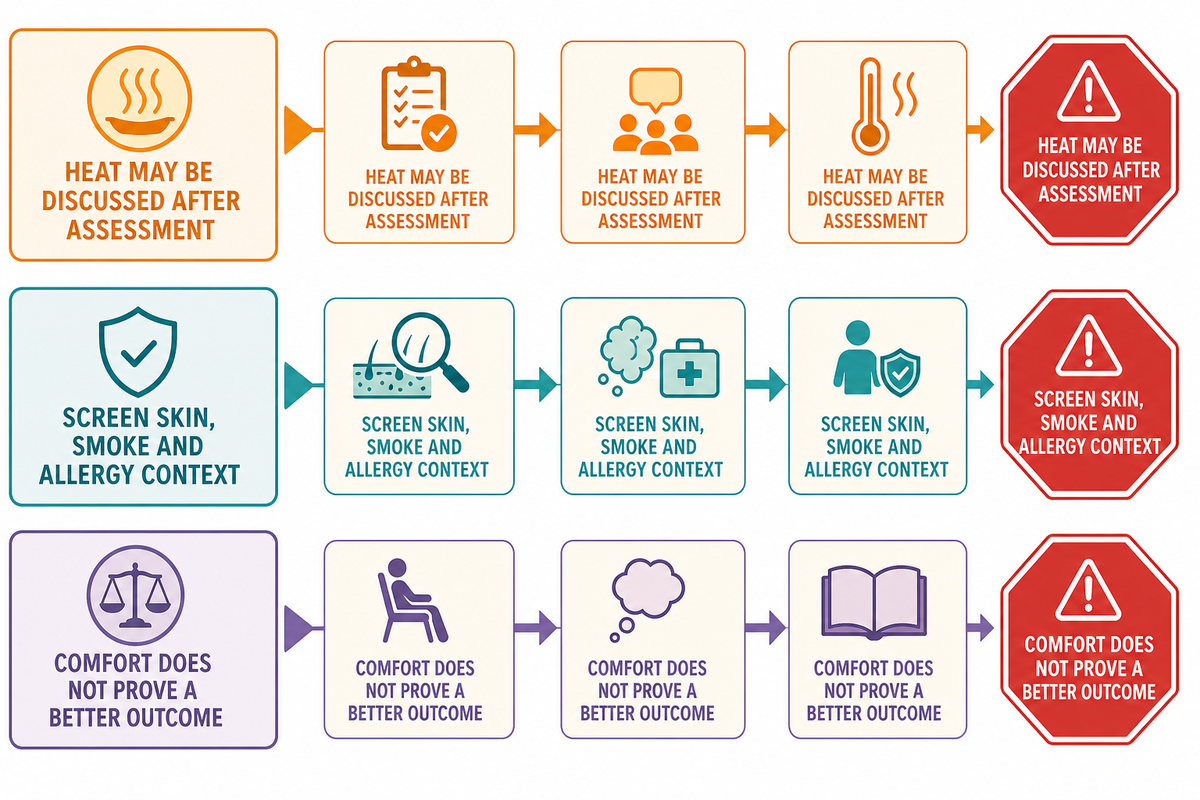
Moxibustion may enter the conversation when controlled warmth is a tolerable exposure, the practitioner can define a condition-specific goal, and screening does not identify a reason to avoid or modify heat and smoke. It may also be discussed when a practitioner plans to use moxa alongside acupuncture rather than as a substitute.
Compared with saying that heat “fits better” based on preference for a warm environment or reading about a cold pattern, it is more cautious to say that those factors are insufficient for a medical diagnosis or evidence that TCM will improve your condition. Be sure to examine the rationale that applies to your situation and assess the details of the treatment plan. Is the plan to use moxibustion alone, acupuncture with moxibustion, or something else?
- May support a discussion: a defined goal and tolerable heat exposure. Safety features are clear. A review point is included.
- Needs more review: More review is needed for altered skin sensation, allergy, respiratory sensitivity, pregnancy, active skin problems, and unclear symptoms.
- Not a selection rule: symptoms are not confirmed merely because a warm sensation feels pleasant, a prickly feeling is unfamiliar, or an online list matches your symptoms.
Reading the 2025 Direct Moxibustion vs Acupuncture Evidence
There’s no general yes-or-no answer to every question. The key question is if there’s evidence to support the conclusion you want to draw for moxibustion. Each clinical trial varies in several elements, including the type of diagnosis evaluated, the technique applied, the comparator used, the schedule of the sessions, and the type and duration of follow-up. One direct 2025 comparison in functional dyspepsia found no significant difference between moxibustion and acupuncture on its primary total symptom-and-quality-of-life score after four weeks, while some prespecified secondary symptoms differed; read the 2025 trial as a supports-versus-does-not-support card that supports a condition-specific comparison but does not support a universal ranking. This doesn’t mean that moxibustion is effective for other pain, inflammation or fertility concerns. Questions about breech are unrelated to the digestive system.
When Acupuncture May Be Worth Discussing After Assessment
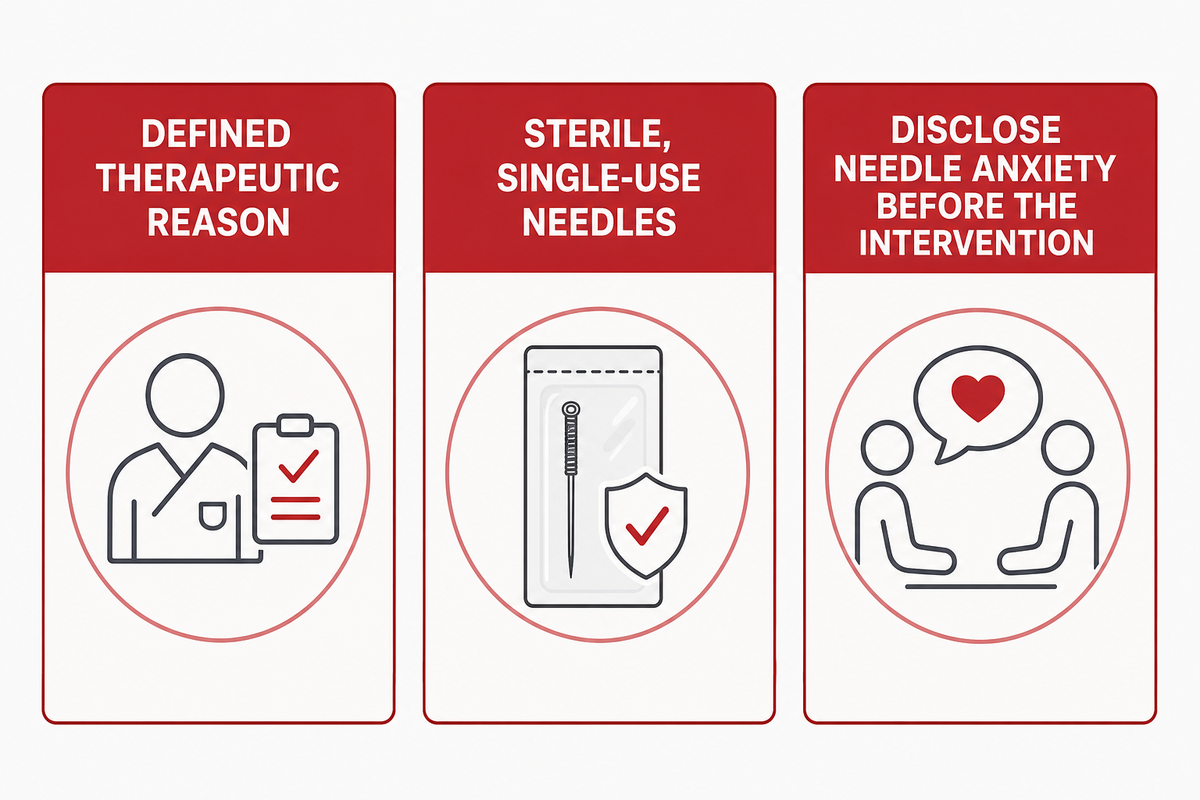
The evidence describes acupuncture as an intervention for which a practitioner should have a defined therapeutic reason to use precise needle stimulation. Needle stimulation may be discussed for relief of some pain conditions, but needle anxiety is worth sharing and is not the only decision factor. Needle phobia is a concern to disclose before discussing an acupuncture intervention; it is not the only decision factor.
Condition-specific language is critical, and the example provided by the evidence summary reflects this. The evidence summary states that some research has found that acupuncture and similar interventions may alleviate symptoms for some pain conditions. However, the effects reported in research studies can differ based on the interventions with which they’re compared. Therefore, those findings do not make acupuncture or a similar intervention appropriate for every pain condition.
Functional-dyspepsia provides a similar example. Improvement in epigastric pain and anxiety at four weeks in the acupuncture group was of interest. However, these results should be interpreted within the context of the trial and don’t establish that needling is generally better for anxiety or epigastric pain. The risk is overgeneralising a condition-specific secondary finding.
An alternative question may be, “In what situation would you consider needle stimulation in this case and what outcome would you look for?” The response, “acupuncture works on the whole body,” isn’t acceptable.
Can Moxibustion and Acupuncture Be Used Together?
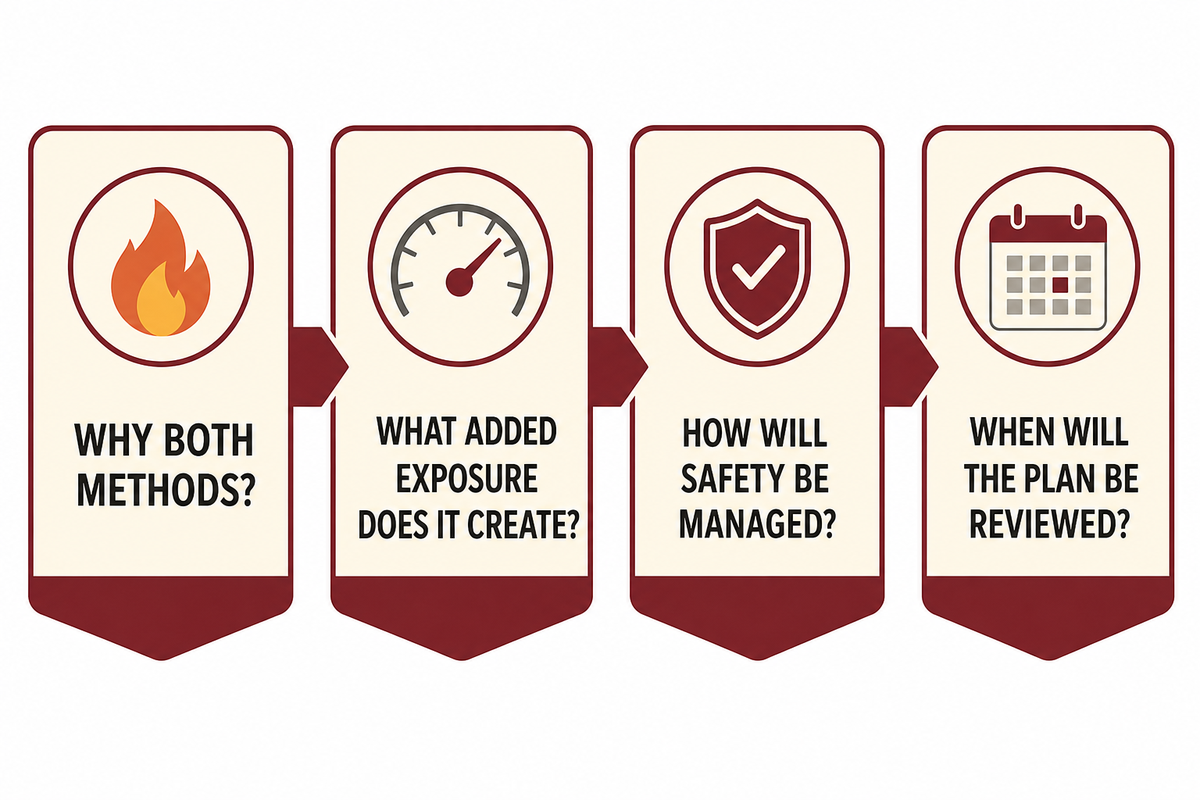
While moxibustion and needle stimulation may be employed in the same visit, they need not be done at the same time or to the same body area. Explain what the practitioner has done and why, then ask what added exposure it creates and when the plan will be reviewed.
| Ask about | What a useful answer should clarify | Limit to remember |
|---|---|---|
| Purpose | Why needles and heat are each included. | Two components do not automatically create more benefit. |
| Evidence | Whether research examined that combination for your condition. | Evidence for one method cannot simply be transferred to both. |
| Safety | Needle, heat, smoke and skin safeguards. | Combined care combines exposures as well as techniques. |
| Review | Which outcome will be reviewed and when. | Without a review point, you cannot tell why the plan continues. |
It should always be kept in mind whether a different, less complex approach to therapy may answer the question and address the clinical situation.
What the Research Can and Cannot Tell You
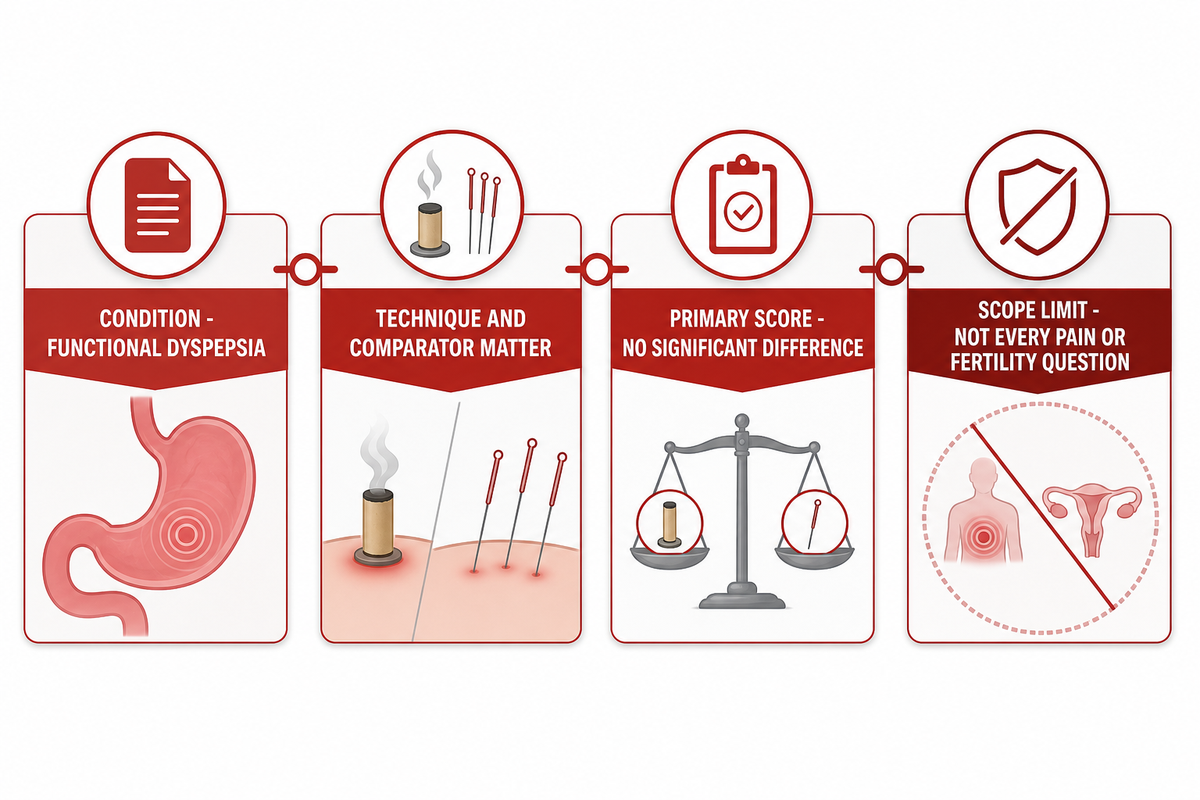
A 2025 randomized trial may be cited because it evaluated the same group of patients with functional dyspepsia, and the effects of moxibustion and acupuncture were compared and contrasted. It enrolled 144 adults aged 18 to 40 for 20 sessions over four weeks and did not include a sham, no-treatment or usual-care arm.
144adults randomized
20sessions in four weeks
0.08primary between-group difference
5mild treatment-related events
The age of participants was between 18 and 40 years with a mean age of 22. Participants underwent 20 treatments within a period of four weeks to CV-12 and ST-36. The primary outcome at the end of week four, based on the Short-Form Leeds Dyspepsia Questionnaire, showed a difference of 0.08 with a 95% confidence interval of -0.634 to 0.794 and a p value of 0.826. The primary outcome of the study showed that there was no difference between the two groups.
Some of the secondary outcomes of the study were in favor of acupuncture while others were in favor of moxibustion. The researchers stated that the study findings from the secondary outcomes had modest effect sizes.
There were a total of five adverse events, of which three occurred in the acupuncture group and two in moxibustion group. All events were mild, and the difference between groups was not statistically significant. The researchers performed the study without sham, no-treatment or usual-care interventions for comparison. The participants and treating practitioners weren’t blinded to the treatment being offered. The assessors, data manager and statistician remained blinded to the treatment offered.
The limitations are the short follow-up and specific study protocol, the relative lack of males, narrow age range and the presence of both of the functional-dyspepsia subtypes. The defensible conclusion is: in one 144-person functional-dyspepsia trial, the primary total score didn’t differ significantly between modalities; it doesn’t establish a universal winner.
Safety Screening Before Either Treatment
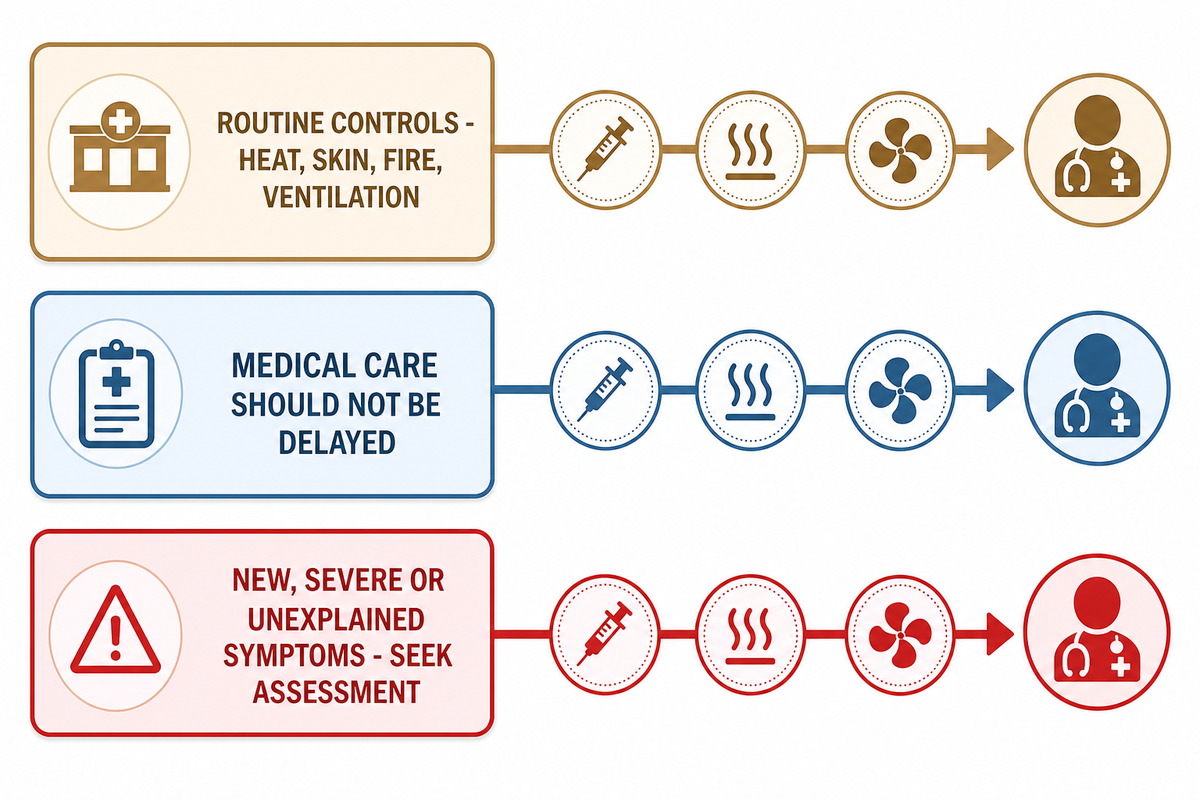
Complementary therapy shouldn’t delay diagnosis or necessary medical care, including assessment of dyspepsia symptoms. New, severe, rapidly worsening or unexplained symptoms need appropriate medical assessment. Continue prescribed treatment unless the responsible clinician advises otherwise. Do not use a treatment appointment as a substitute for urgent care.
“Don’t use acupuncture to postpone seeing a health care provider about a health problem.” Source: National Center for Complementary and Integrative Health
side effects of acupuncture have been reported to include: infection, organ perforation and central nervous system damage. Reports of these complications explain the importance of aseptic technique and appropriate anatomical knowledge.
For moxibustion, various techniques are practiced. These techniques require screening that accounts for the exact technique and environment. Once screening is complete, safety measures such as heat control, skin checks, fire safety, ventilation and first aid become necessary. A 2025 patent for a warm-acupuncture anti-scalding device shows engineers addressing a safety concern. However, that doesn’t imply that the device improves clinical outcomes or that clinics employ it.
Do
- Bring a current medicine and supplement list.
- Disclose pregnancy possibility, allergies and skin or lung conditions.
- Ask how heat, smoke, needles and stopping signals are controlled.
- Report unexpected pain, excessive heat, dizziness or breathing symptoms promptly.
Don’t
- Assume needle-free means risk-free.
- Hide reduced skin sensation or a fainting history.
- Accept a guaranteed result or a universal “best” modality.
- Delay medical review while trying complementary care.
Who Should Consider Moxibustion vs Acupuncture Safety?
A blog can’t give an absolute exclusion list for either modality. For moxibustion, disclose reduced skin sensitivity, neuropathy, skin infection, mugwort allergy and smoke-triggered symptoms; for acupuncture, disclose bleeding risk, fainting history, skin issues and infection-control questions. Pregnancy, serious conditions, new medicines or new symptoms belong in the consultation. Sudden or unusual symptoms need medical evaluation first. The internet shouldn’t replace medical evaluation; do not perform moxibustion or acupuncture on yourself from an online checklist.
Nine Questions to Ask at a Dubai Consultation
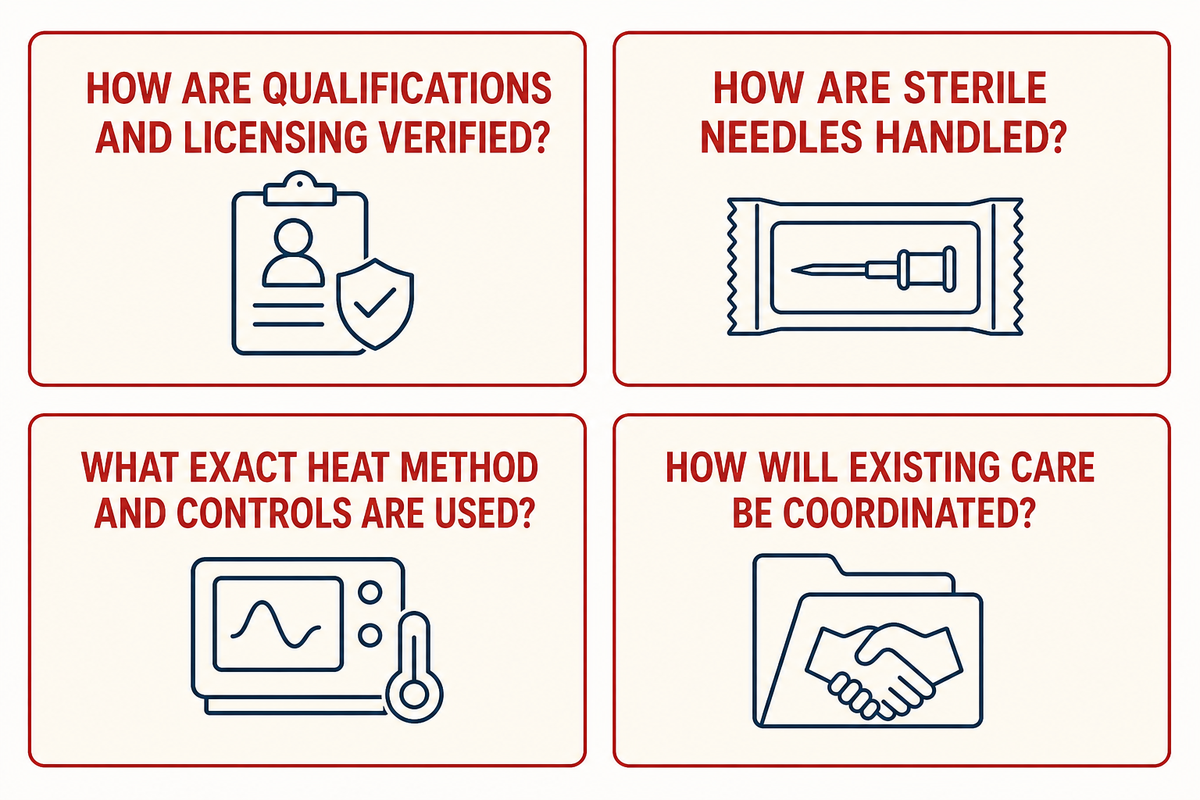
You need not determine the modality before reviewing the cold-pattern terminology and heat-exposure safety guide or attending your appointment. Generally, a good starting point for a safe and satisfactory consultation is discussing your health status and concerns. Based on this, the practitioner determines if treatment is warranted. While various frameworks specify general requirements for the practice of health care professions in the UAE, this doesn’t determine your individual case.
| Question category | What to ask | What the answer should clarify |
|---|---|---|
| Goal | What is the treatment goal? | One observable, realistic outcome rather than a cure-all promise. |
| Rationale | Why this modality? | Why heat, needles, both or neither is being proposed after assessment. |
| Method | What exact technique will you use? | Whether it is needle-only, direct or indirect moxibustion, or a warm-needle method. |
| Experience | What will I feel or notice? | Expected warmth, needle sensation, smoke, scent and positioning. |
| Safety | What must I disclose? | Relevant medicines, pregnancy possibility, allergies, skin, lungs, bleeding and fainting. |
| Qualification | What training and licence support this care? | The role and qualification of the acupuncturist or other treating professional. |
| Evidence | What evidence applies here? | Whether it concerns your condition, the proposed protocol and the outcome that matters. |
| Coordination | When should another clinician be involved? | Referral triggers, medical decision ownership and information to share. |
| Review and cost | When will we review the plan, and what will it cost? | Continuation, modification or stopping criteria, plus the proposed schedule and total commitment. |
This article stays within educational comparison and consultation questions. For local service details, compare the moxibustion service with the acupuncture-side service and our treatments hub; practitioner assessment, pricing, programme design and booking belong on those service pages.
To review health-related issues and verify booked appointments, go to the Dubai clinic’s web page. Individual web pages describe the service and process. These pages describe the services offered and the process; they don’t indicate the effectiveness of any service for your health condition.
Frequently Asked Questions
Does Moxibustion Hurt Compared With Acupuncture Sensations?
Short answer
Moxibustion is intended to produce controlled warmth, not an uncontrolled burn, while acupuncture may feel like pressure, heaviness, tingling or a brief prick; sensation varies between people and techniques. Tell the practitioner immediately if heat or needling becomes sharp, painful or excessive rather than waiting for the session to end. Reduced skin sensation can make heat harder to judge, which is why screening, controlled distance, communication and repeated skin checks matter throughout treatment.
Can moxibustion replace acupuncture?
Short answer
Not as a general rule. They create different exposures, and the evidence depends on the condition, technique, comparator and outcome. A practitioner may recommend moxibustion, acupuncture, a combination or neither after assessment. Preference for heat can guide the discussion but doesn’t prove equivalence or superiority. If a replacement is proposed, ask which treatment goal and evidence make the change reasonable.
Can both be used in one session?
Short answer
Yes. They may be used sequentially, on different areas, or through warm-needle moxibustion. Ask why each component is included, what evidence supports the exact combination, which sensations and risks each part adds, how those exposures will be controlled and when the plan will be reviewed. A longer or more complex session isn’t automatically more effective, so the practitioner should be able to explain what each element contributes.
Is moxibustion better for pain?
Short answer
Not for pain as one broad category. Evidence must match the pain condition, technique and comparator. Heat may feel soothing, but a pleasant sensation isn’t proof of better pain relief. Persistent, severe or unexplained pain needs appropriate assessment.
If moxibustion at home is my priority, does it decide this comparison?
Short answer
This comparison doesn’t recommend or teach home moxibustion, and a preference for home use doesn’t decide moxibustion vs acupuncture. Burning material near skin creates burn, fire, smoke and allergy risks, while reduced sensation can delay recognition of excessive heat. A video can’t assess your skin, lung sensitivity, pregnancy status, medicines or the reason for your symptoms. It also can’t monitor distance and temperature or respond if you become dizzy or unwell. Self-treatment can postpone assessment of the underlying problem. Discuss the condition and proposed technique with a qualified practitioner instead of following an online point, timing or burning instruction.
How Many Sessions Will I Need to Compare a Proposed Plan?
Short answer
There’s no universal course length for either modality. Compare the goal, evidence, added exposure, review point and total cost of the proposed plan. A trial’s session count describes that study protocol; it doesn’t become a prescription for every patient.
References and Sources
- Clinical Trial of moxibustion and acupuncture
- NCCIH: Acupuncture effectiveness and safety
- moxibustion: Adverse Events
- moxibustion: Development and Methodology
- moxibustion: Cleveland Clinic
- UNESCO: Acupuncture and moxibustion
- UAE: Unified Healthcare Professional Qualification
Key takeaway
Moxibustion may fit a discussion when controlled heat suits the assessed goal and safety screen; acupuncture may fit when precise needle stimulation is justified. Neither preference nor one narrow trial establishes a universal winner.
Medical note: This guide is for educational purposes only. It isn’t all-inclusive, nor does it replace a licensed medical professional’s diagnosis; it does not diagnose a condition or provide a complete contraindication list. It doesn’t replace a medical professional’s advice. Should your health situation require urgent attention, seek timely medical care for new, severe, worsening or unexplained symptoms.
Bring the four lenses to your consultation
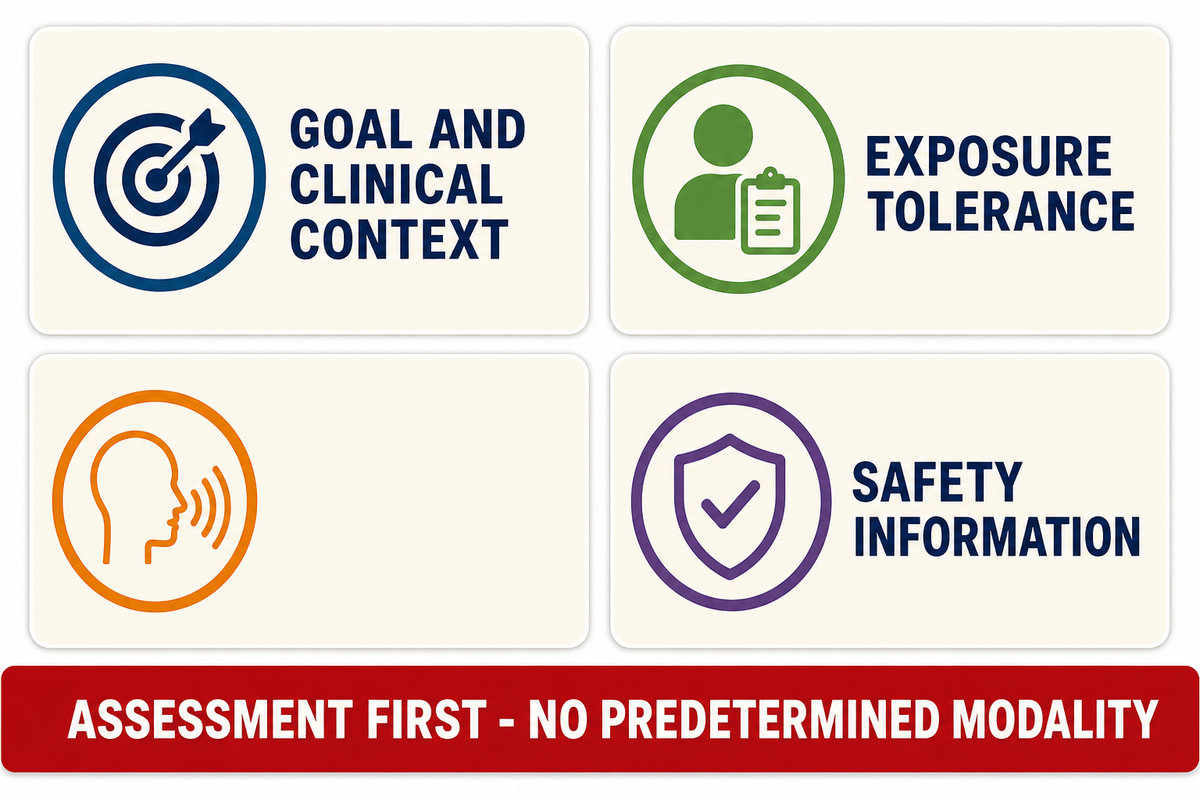
Share your goal, clinical context, exposure tolerance and safety information so the conversation starts with assessment rather than a predetermined modality.
![Postpartum TCM Care: Safety Questions for Dubai [Guide]](https://tongrentang.ae/wp-content/uploads/2026/09/postpartum-tcm-care-blog-featured-768x512.png)