Get in Touch with Tongren Tang Gulf


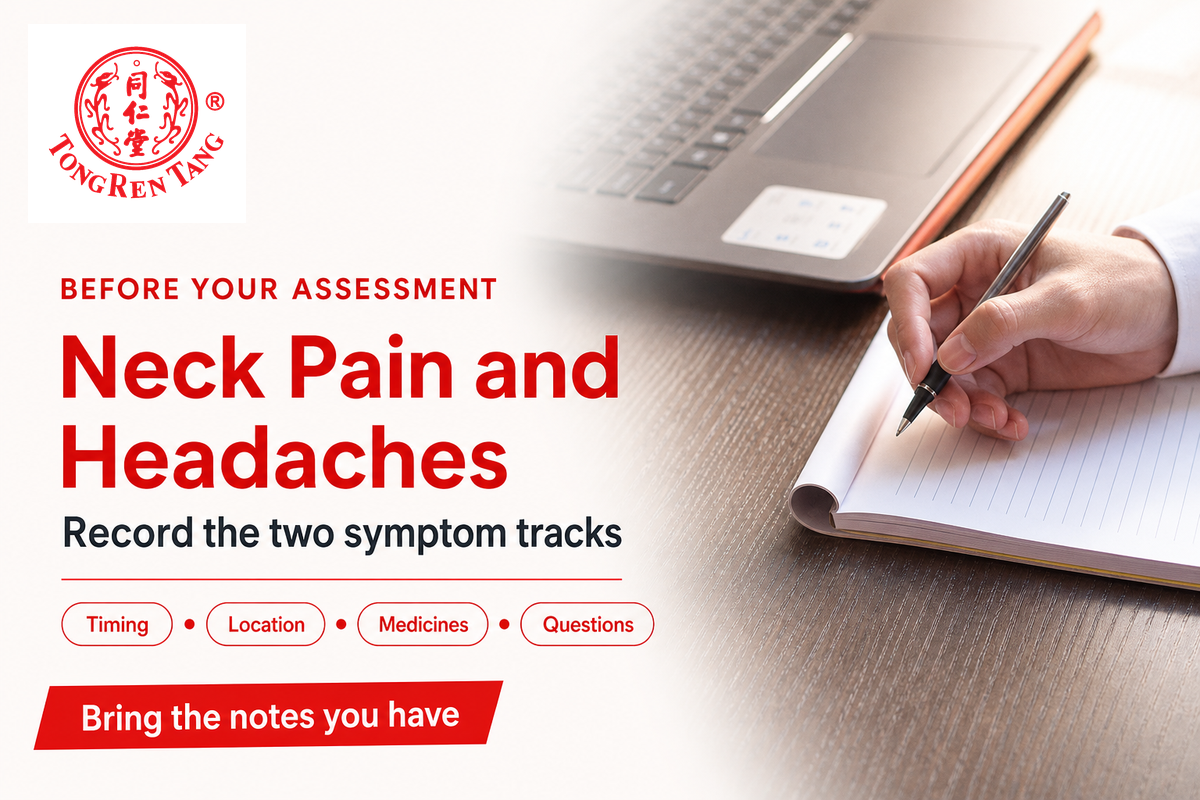
For neck and head pain, keep track of when each symptom started, where they’re located, what other symptoms are present, and what, if any, medications are taken. You’ll want to bring this information with you to your assessment, regardless of whether your notes are complete. A sore neck may occur with different types of headaches, so having a description of the events may help.
Neck and head pain should be recorded as two symptom tracks. Note their timing, location, severity, associated symptoms and medication use. Seek help for warning symptoms before spending time on a diary.
This guide is for adults preparing for a clinical assessment. The examples shown are for illustration purposes and the worksheets are editorial aids rather than diagnostic aids.
Before you start
- Neck tenderness or a scan finding alone doesn’t establish the cause of a headache.
- Separate the timing of head pain from neck pain, including times when only one is present.
- Bring the names and dates of medicines used, rather than relying on a tablet count.
- Don’t wait for a completed diary before seeking medical advice.
When should you seek help before keeping a diary?
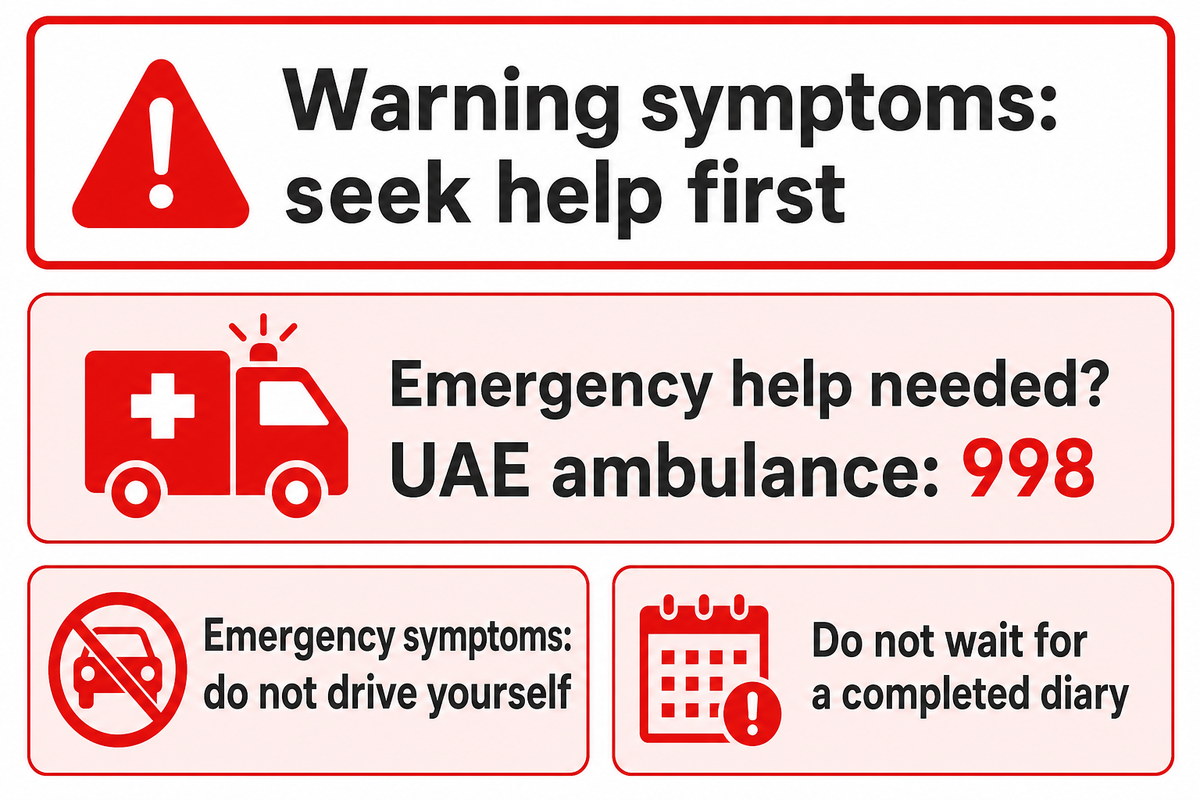
When a headache has warning features, you should see a doctor before adding further detail to your record. The same is true for a new, changing, or worsening pattern or if you experience a stiff neck and headache with warning symptoms. Neither a sore neck, nor an incomplete record should delay seeking treatment.
Emergency symptoms: get help now
A headache that starts suddenly and is extremely painful, or occurs with new weakness or numbness, difficulty speaking or walking, confusion, a seizure or loss of vision, needs emergency assessment. A headache with a very high temperature, neck stiffness, a rash that doesn’t fade under pressure, or light sensitivity also needs emergency assessment now. A headache after a head injury within the past three months also needs emergency assessment. Don’t wait for every sign or a rash to appear.
In the UAE, call 998 for an ambulance when emergency help is needed. For sudden neurological symptoms or other emergency features, call 998 for an ambulance. Don’t drive yourself. The official UAE emergency information confirms the ambulance number.
The NHS headache guidance highlights other concerning features such as a headache triggered by coughing or exercise, vomiting, eye problems, jaw pain when eating or a tender scalp. Prompt medical attention should be sought for these symptoms. Sudden loss of vision or other emergency features take precedence over routine appointments. The list isn’t exhaustive.
Just because a major injury hasn’t occurred, it doesn’t mean that the pain is muscular. The summary of the statement from the American Heart Association about cervical artery dissection states that this condition can occur without any significant neck trauma and can present with head or neck symptoms. When you feel new or unusual symptoms, it’s better to explain them to a clinician, rather than attempt to self-diagnose.
During pregnancy and in the year after delivery, a headache that persists or gets worse is an urgent maternal warning sign. Seek medical care immediately and mention the pregnancy or recent birth. The Centers for Disease Control and Prevention’s maternal warning guidance explains this context; it doesn’t mean that every pregnancy-related condition lasts a year.
What can neck pain and headaches tell you?
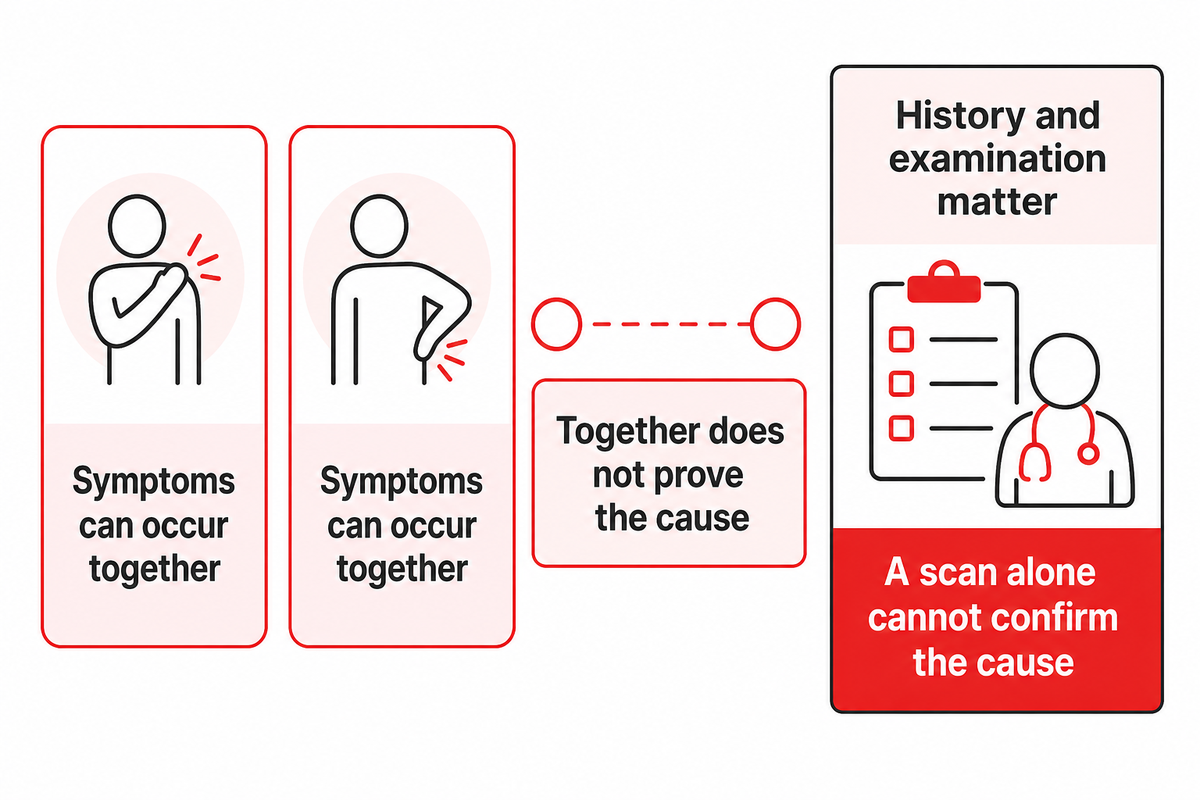
Headache and neck pain can be related in more than one way. A secondary headache can be caused by a neck condition, while neck discomfort can occur with a primary headache, like migraine. Tension-type headache can involve the head, scalp or neck. Depending on your history, a clinical examination may help a clinician interpret the symptoms.
A cervicogenic headache is a headache attributed to a disorder of the neck. Clinicians can make a diagnosis of this if the patient meets the established criteria. A tender area, poor posture or abnormal cervical spine imaging alone cannot confirm the cause of a headache.
“they are suggestive but not firm evidence of causation.”
How do clinicians distinguish overlapping headache patterns?
Clinicians take into account the entire pattern. This includes symptoms throughout the episode, how ordinary activities affect symptoms, other diseases or conditions, and physical exam findings. Headache features may overlap. Describe a pulsating pain or a feeling of pressure to your clinician without assigning yourself a type of headache.
The description of tension headache on MedlinePlus explains why head and neck symptoms may occur together. It’s an explanation of a condition and isn’t to be used to identify your headache from a symptom.
Record when each symptom starts
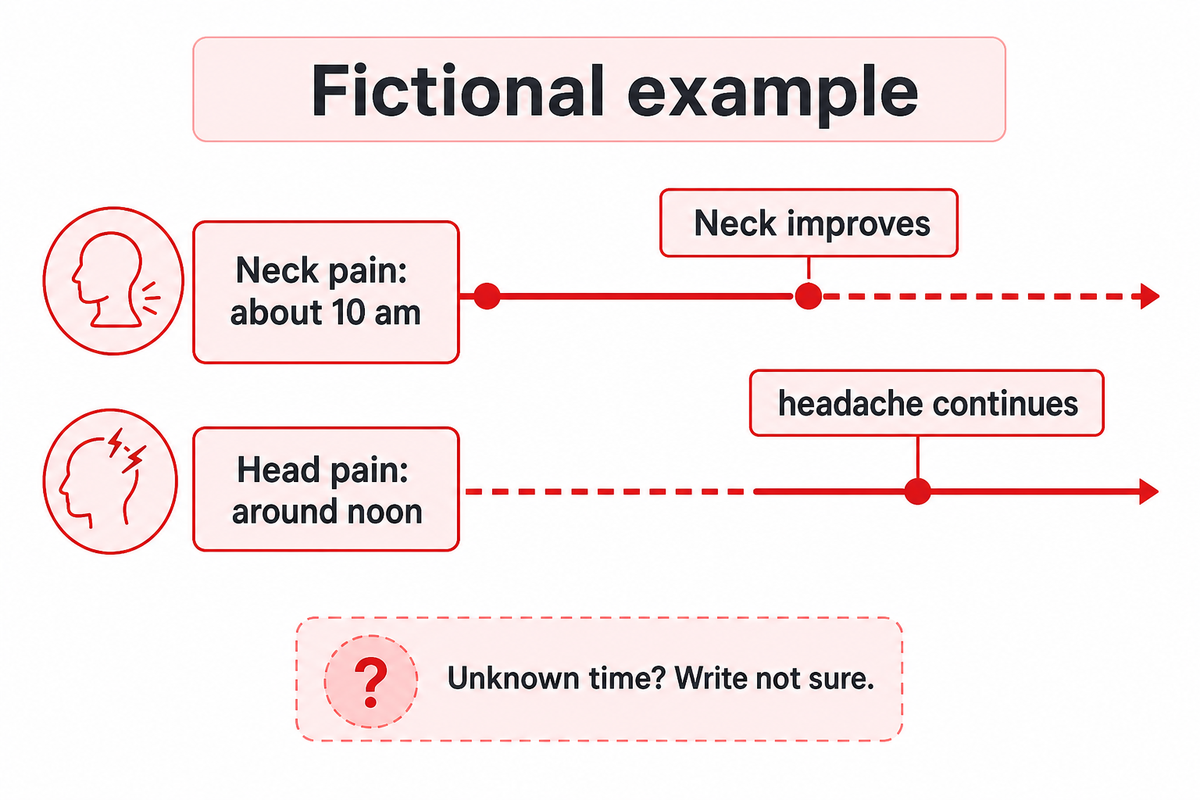
Whenever possible, write the start and end times for each symptom. Describe if one symptom was present before the other. Both may have been present at the same time, and one or the other may have persisted after the other settled or resolved. Give the time to the best of your ability. List how long symptom-free periods were and the times that symptoms interrupted your normal schedule.
An employee in a fictional office setting notices neck pain at about 10 am and head pain around noon. Later in the day her neck pain improved, but she still had a headache. These are the kind of symptoms that should be reported.
A study comparing diary entries with later recall in people with migraine found that the methods could give different estimates of headache days. Make sure to note which details you recorded in real time vs. remembered later. The study didn’t test the worksheet in this article.
If you can’t remember an end time, write “not sure” or “still present at bedtime”. Distinguish the number of episodes from the number of days affected. Two episodes on one day are different from symptoms on two separate days.
Map the pain without testing your neck
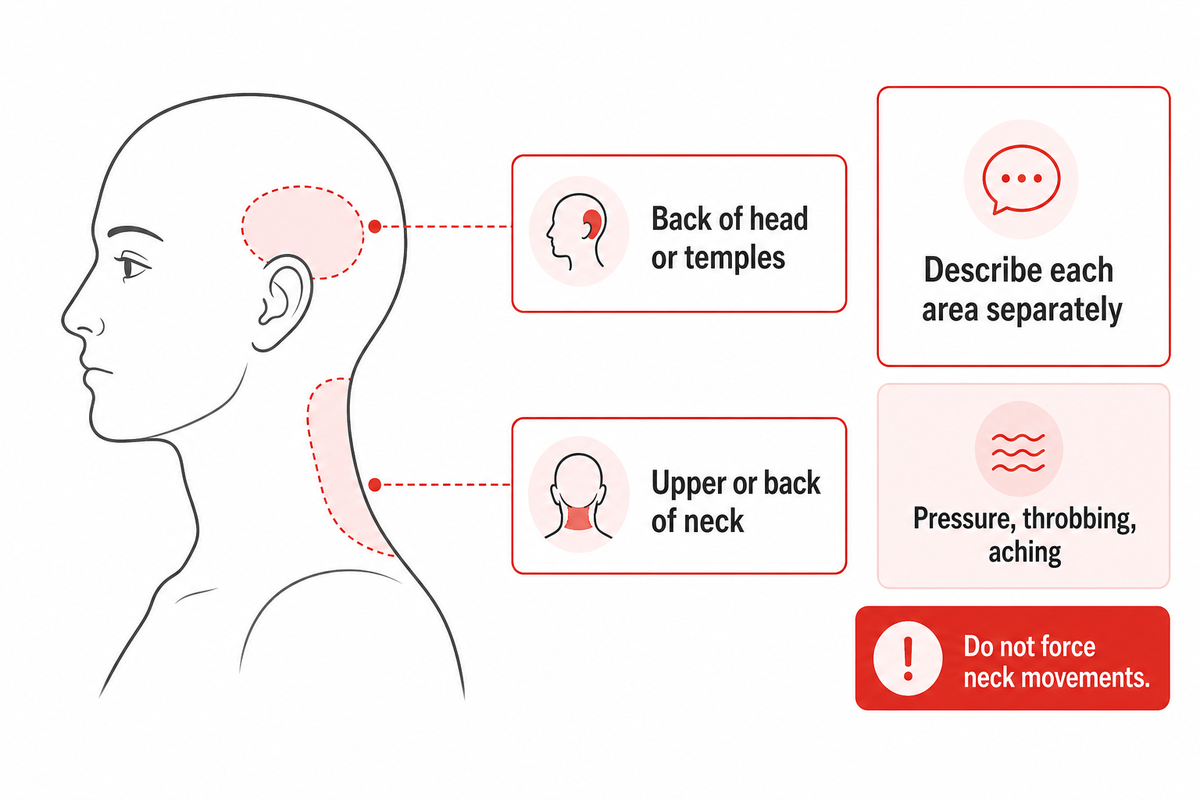
Describe the character and location of each symptom using your own words. Mark the upper neck or back of the neck, and back of the head and base of the skull, temples, forehead and/or one or both sides of the head, separately. Indicate whether pain seems to radiate, but don’t specify the source of the pain or its clinical meaning, as these will be assessed.
Use words like pressure, throbbing, sharp, aching or burning to describe your pain. If you naturally notice that changing position during an ordinary activity changes your headache pain, record the activity and the timing. Don’t repeatedly provoke symptoms by changing your position to check for a diagnosis. Don’t press tight neck muscles or force your neck through a range of motion.
Describe perceived muscle tension in neck and scalp muscles, pain and stiffness, rather than draw a conclusion about referred pain. A clinician can examine the neck, using clinical criteria, rather than a home test. Avoid labeling the record “headache caused by a pinched nerve” unless that connection has been established clinically.
Record associated symptoms and daily impact
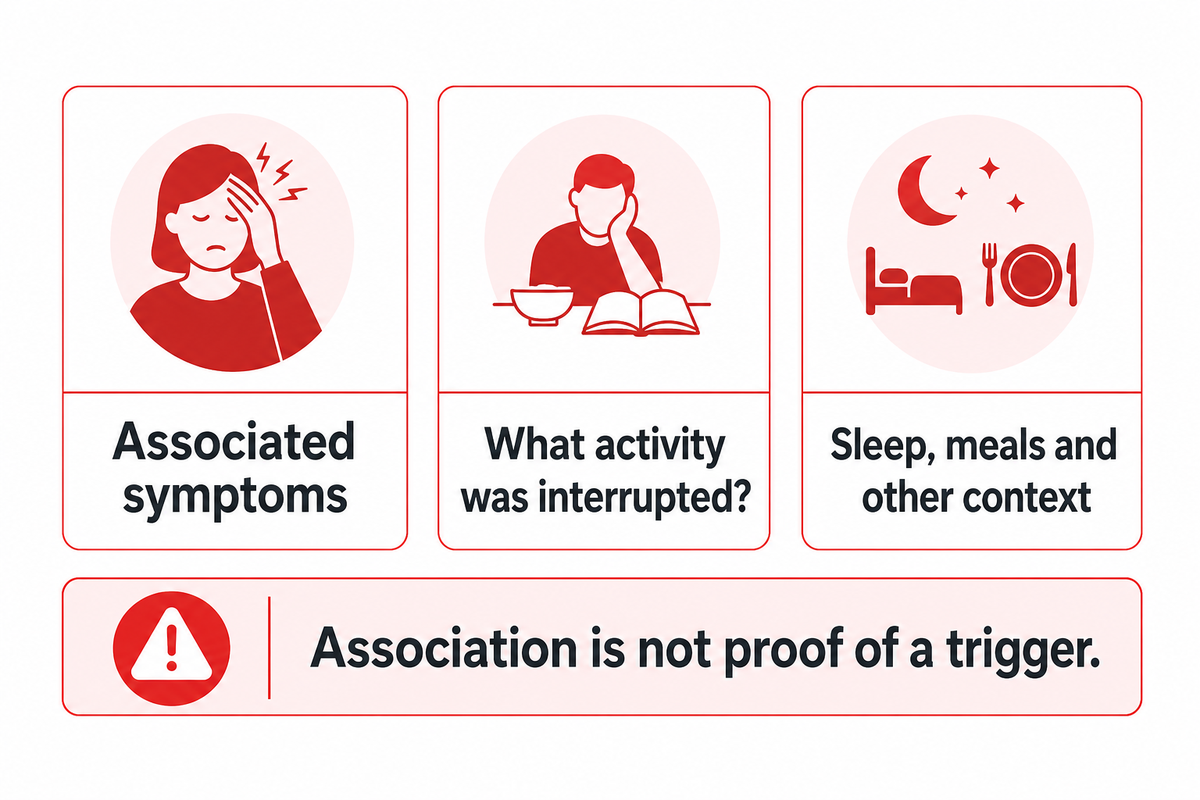
Record additional symptoms and how they affect ordinary activity. The record may include nausea, sensitivity to light or sound, and visual symptoms. It may be useful to indicate when pain is preventing the completion of a task. New warning symptoms call for medical attention first, rather than a lengthy record.
The National Institute for Health and Care Excellence headache recommendations include various symptoms, possible precipitants and the relationship to the menstrual cycle when using a diary. Other things that can be included are sleep, meals and caffeine, screen work, and stressful events. A repeated association is worthwhile to bring to the attention of a clinician, but isn’t proof of a trigger.
A fictional shift worker might write “slept less than usual; headache made me leave a bright room; neck discomfort was already present”. This provides more context than a pain number would without declaring the cause. Carers can record directly observed changes and make a clear separation of what the person has reported.
List medication and recent care accurately
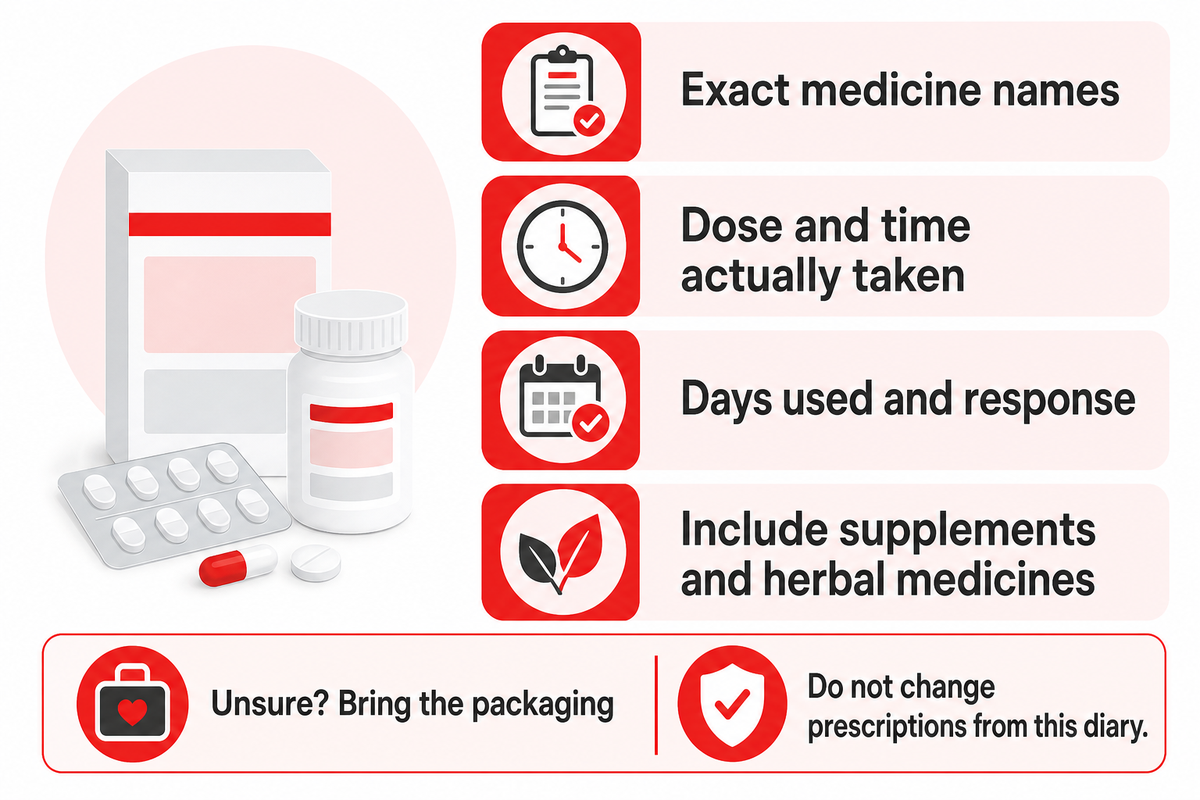
You should list the exact names of the medicines taken, the dosage used, the time taken, and what happened thereafter. List prescribed medicines, pain relievers (over-the-counter medicines), supplements and herbal medicines. If you don’t know the ingredients, include a photo or image of the packaging. Record uncertainty and potential side effects, rather than filling in the blanks with your own assumptions.
For headache medicines, note how many days and how many doses were used. Medication-overuse assessment considers the medicine involved and the pattern over time; a tablet total alone isn’t enough. Don’t stop, increase or replace what’s prescribed based on this article or diary patterns. Discuss your diary and questions with your clinician or pharmacist.
You should also include recent injuries and illnesses, and any care already tried to relieve pain. Relevant prior physical therapy plans, physical therapist reports, cervical spine and other spinal Imaging Reports may also be relevant. Bring reports you already have; this checklist isn’t a reason to obtain a new scan.
If previous advice involved maintaining good posture, stress management, relaxation techniques or therapeutic exercises, note briefly what you tried and whether symptoms changed. A response is part of your history; it does not establish which diagnosis or treatment plan is correct on its own.
Use a paired neck-and-head record
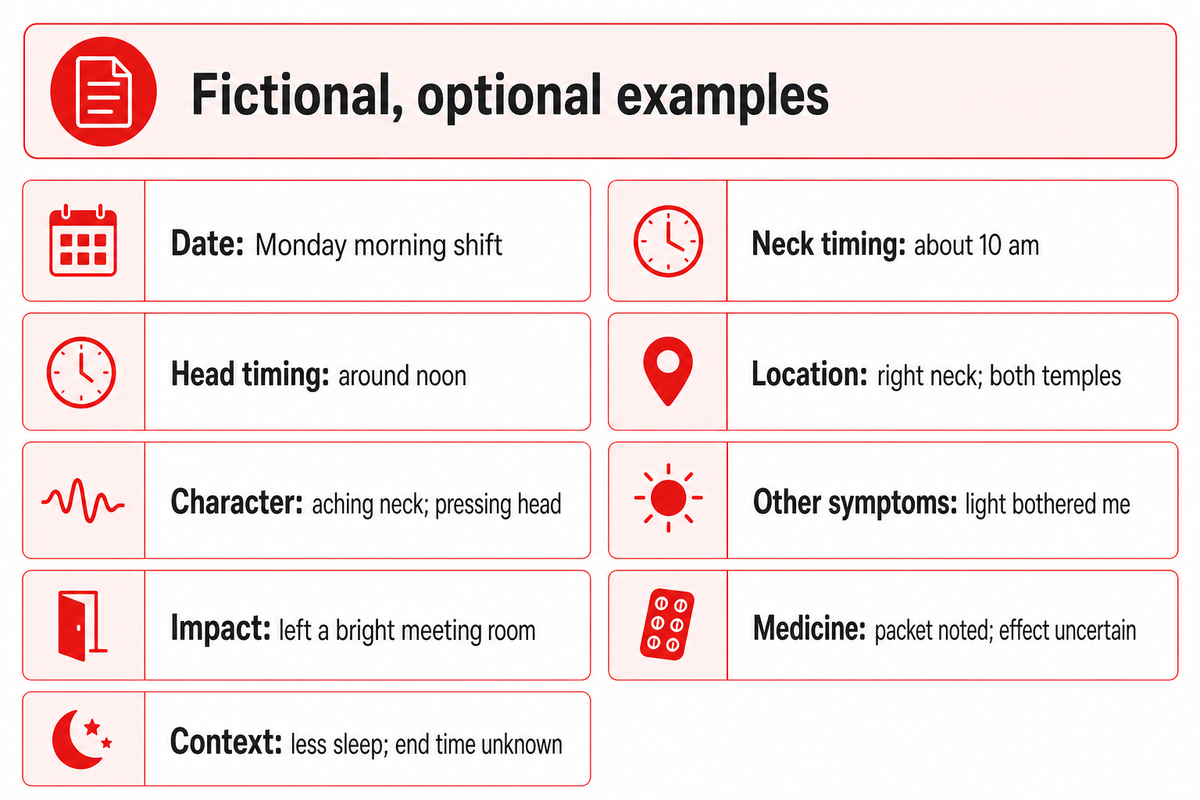
Start with a short diary note you can manage: include the date, separate timing of each episode of head and neck pain, key other symptoms and any medication. Include detail only when it’s relevant. You can use whatever paper or regular phone notepad you have. No app, completed form or perfect pain score is required before contacting the clinician. This format hasn’t been independently tested for usability or diagnosis.
Paired Neck-and-Head Record
Fill in the fields you need from the table. You aren’t required to complete every field. This combines recommendations from the cited guidance. Follow the diary format your clinician requested.
| Field | Example wording | Keep it clear |
|---|---|---|
| Date | Monday, during my morning shift | Use an approximate date if necessary. |
| Neck timing | Ache noticed at about 10 am | Keep separate from head-pain onset. |
| Head timing | Pressure began around noon | Record whether it ended or continued. |
| Location | Right neck; both temples | Describe each area separately. |
| Character and severity | Neck aching; head pressing; stopped work briefly | Use your words and a consistent scale if requested. |
| Associated symptoms | Light bothered me; no nausea noticed | Record observations, not a headache label. |
| Activity impact | Left a bright meeting room | Describe the task interrupted. |
| Medicine and response | Name/time recorded from the packet; effect uncertain | Include days used and avoid guessing ingredients. |
| Context and unknowns | Less sleep than usual; end time not remembered | Keep possible context separate from a proven cause. |
A fictional minimal entry may read “Monday: neck pain about 10 am; feeling head pressure about noon; sensitivity to light; name of medicine is on the packet; other symptoms may have been present but I can’t say for certain”. This is a made up example. Don’t use this combination of symptoms for self-diagnosis. Bring the most relevant diary entry you can manage.
Do
- Record what you noticed.
- Mark approximate times honestly.
- Keep existing reports and medicine details together.
Do not
- Test pain by forcing neck movements.
- Invent missing details to complete a form.
- Delay help to collect more entries.
Bring a short summary to assessment
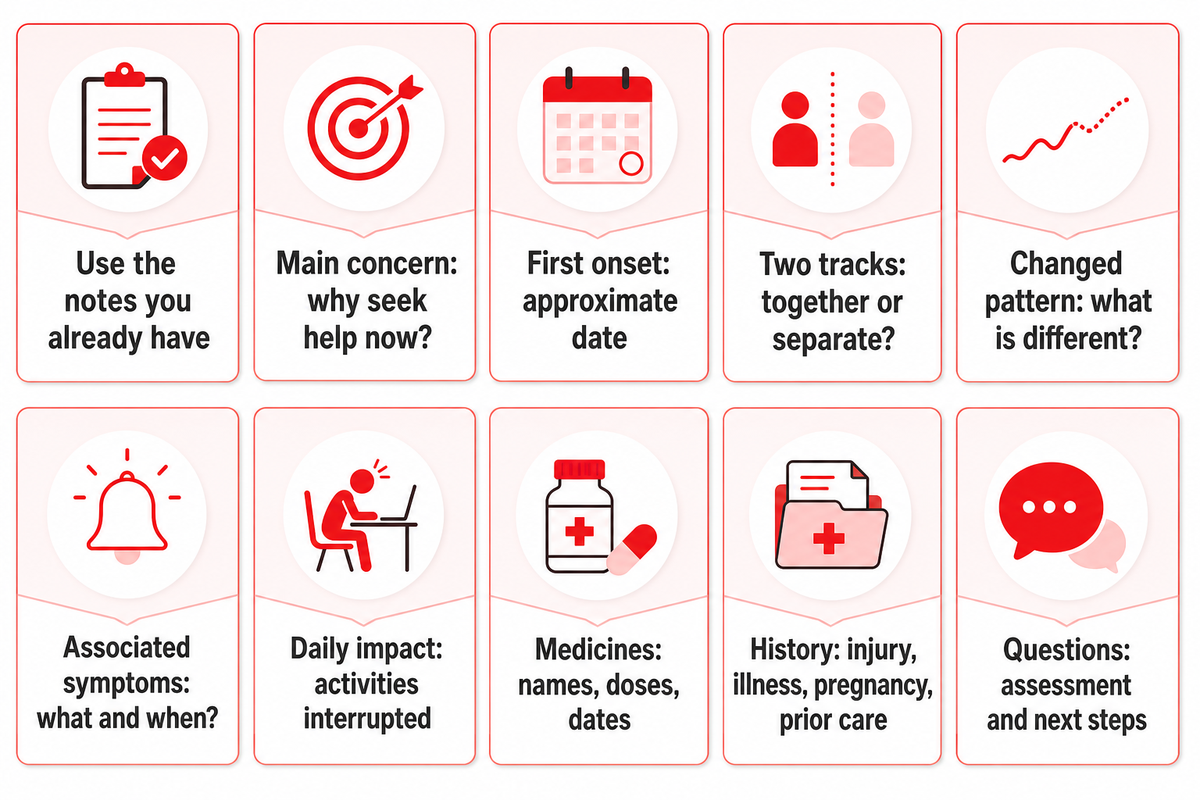
Bring your notes, medicine list and any previous reports. A summary can be helpful to highlight your major concerns. Who will do the assessment? Is further medical input required? What symptoms should change the plan? A diary shouldn’t dictate treatment options.
One-Page Assessment Handoff
Use the following as a packing and conversation guide, not another form you need to complete. If it’s simple to keep existing information as it is, then do that.
| Bring or mention | Useful detail |
|---|---|
| Main concern | What made you seek assessment now? |
| First onset | Approximate date and any sudden change. |
| Two symptom tracks | Whether neck and head symptoms occur together or separately. |
| Changed pattern | What differs from previous episodes. |
| Associated symptoms | What else occurred, and when. |
| Daily impact | Activities you stopped, avoided or could not complete. |
| Medicine information | Names, doses actually taken, dates and possible side effects. |
| Relevant history | Injuries, illnesses, pregnancy/recent birth, prior care and existing reports. |
| Your questions | What needs assessment, what referral might help, and when should you seek help sooner? |
For example, if someone only has an incomplete week of notes, they can bring what they have and say which days are missing. They don’t need to reconstruct details they can’t remember. If you’re wanting to know about treatment for cervicogenic headaches, first ask your clinician whether that’s the correct diagnosis.
For an enquiry at Tong Ren Tang Dubai, see the clinic’s neck pain assessment and treatment information and ask about suitability and referral. This link doesn’t establish the cause of your headache, and doesn’t imply the availability of a particular specialist service.
For appointment logistics, read the clinic's first-visit information and check its practitioner profiles. Use the clinic contact page to ask who’s available and what to bring. These pages concern routine clinic visits; emergency symptoms need urgent medical care.
What does current headache guidance say?
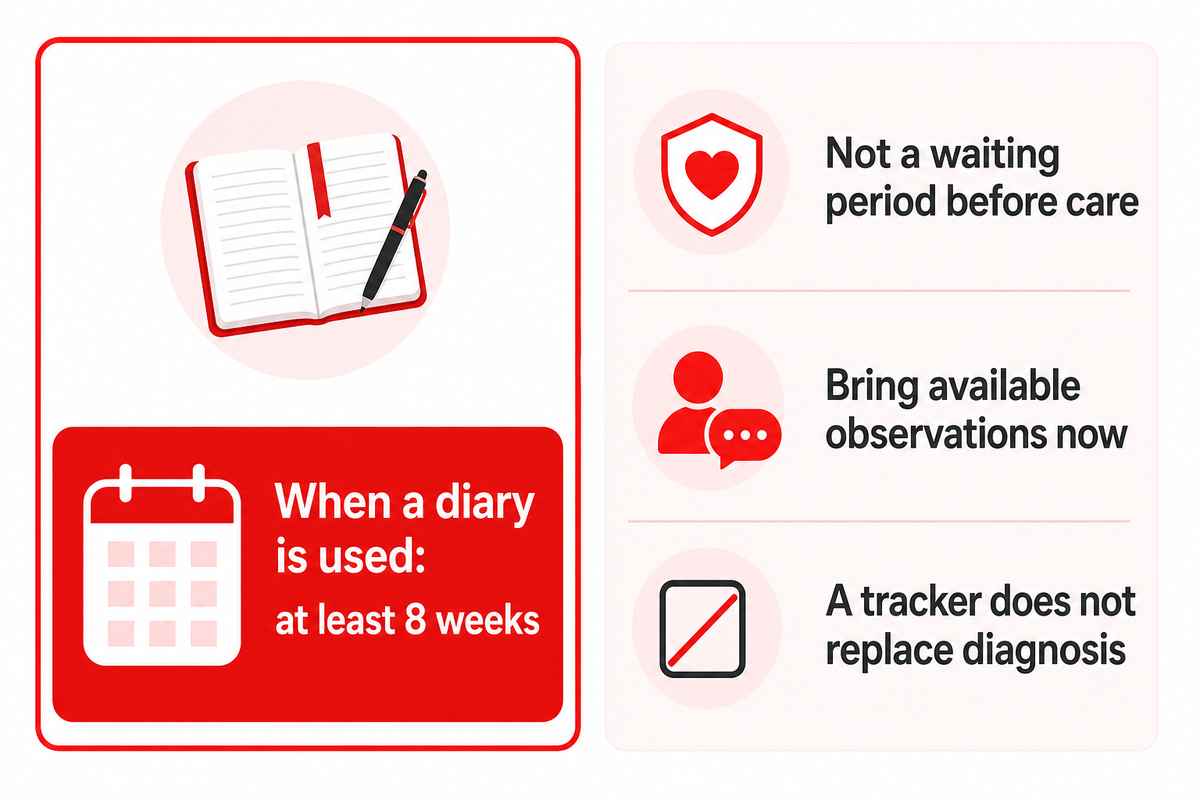
Current guidelines suggest the use of a headache diary to help with clinical assessment. In the use of a diary, NICE suggest that at least 8 weeks of data should include frequency, duration, severity, associated symptoms and headache medication. The 8 weeks shouldn’t be taken to mean that you should disregard symptoms and wait for an appointment. The aim is to provide available data for assessment. This will vary depending on the individual and the clinician’s clinical judgment.
NICE updated their website in June 2025, but the recommendations for the use of the headache diary are still dated 2012. It doesn’t matter whether you have a chronic headache pattern, suspected tension headaches or migraines, or a first time assessment case. A tracker isn’t a substitute for an accurate diagnosis, based on clinical judgement.
Key takeaway
Bring observations, medicines and questions. Keep neck pain and headache timing separate, be honest about missing details, and seek appropriate care before completing a diary.
Frequently asked questions
Can a knot in my neck cause headaches?
A tender spot may occur alongside head pain, but it doesn’t identify the cause on its own. Neck symptoms can accompany different headache conditions. Record where the tenderness is and when you first noticed it, without pressing hard to reproduce pain. A clinician can interpret those observations alongside your history and examination.
Can headaches be related to neck pain?
Yes, the symptoms can be related, but the relationship varies. A headache may arise from a cervical disorder, or neck discomfort may accompany a primary headache such as migraine. Write down whether the symptoms start together, which appears first, and whether either occurs separately. Those observations help an assessment; they don’t establish a diagnosis by themselves.
What does neck and head pain mean?
It describes symptoms rather than one specific condition. Location, timing, associated symptoms, medical history and examination all matter when a clinician considers possible causes. New or changing symptoms deserve medical advice, and warning symptoms need urgent help. Use a diary to describe what happened, rather than deciding from the location alone that you have a pinched nerve or cervicogenic headache.
What can I do to relieve headaches?
The appropriate approach depends on the cause and your health history. Consult a doctor for recurrent, changing or worsening symptoms. Record anything already tried and its effect, and ask your clinician or pharmacist about suitable treatment rather than starting a neck exercise or medication plan from this article.
What should I record if my neck and head hurt when moving?
Note which ordinary movement or activity you were doing, where the symptoms were felt and whether the head pain changed at the same time as the neck discomfort. Use an approximate time if necessary. Don’t repeat a painful movement, force your neck through a range of motion or press a tender spot to test a diagnosis.
Tell the clinician about any recent injury and any accompanying arm symptoms, dizziness or other changes. If new weakness, trouble speaking, confusion, loss of vision or other emergency features occur, seek help immediately instead of recording further detail. The diary provides observations, while your clinician decides which examination or investigation is appropriate.
Should I wait eight weeks before an appointment?
No. Bring whatever observations you have now. NICE recommends at least eight weeks of information when a headache diary is used, but that isn’t a waiting period before seeking care. Contact a clinician sooner for new, changing or concerning symptoms.
For a routine consultation enquiry, bring your existing notes and ask what assessment is appropriate. The team can explain the clinic’s services and suitability. Urgent symptoms should go through the appropriate medical or emergency service, rather than waiting for a website enquiry to be answered.
The examples given are fictional. This article provides general tips for appointment preparations. This article hasn’t been independently reviewed by a medical professional. Sources have been checked in October 2026.
References & Sources
- National Health Service: Headaches and when to get medical help.
- Official Portal of the UAE Government: Handling emergencies.
- American Heart Association: Cervical artery dissection statement summary.
- Centers for Disease Control and Prevention: Urgent maternal warning signs.
- International Headache Society: ICHD-3 cervicogenic headache criteria.
- MedlinePlus: Tension headache.
- National Institute for Health and Care Excellence: CG150 recommendations.
- The Migraine Trust: Keeping a headache diary.
- Miller and colleagues: Comparing prospective headache diary and retrospective four-week headache questionnaire.