Get in Touch with Tongren Tang Gulf

Jet Lag and Insomnia: A Practical Guide to Sleep After Travel

Jet lag can make you tired at lunchtime and leave you wide awake at the local bedtime. If you have insomnia, jet lag may be part of the problem. Starting with your route and sleep timing is a good place to look. This means thinking about where you flew from, when you typically go to sleep, and what time you arrived at your destination. A dark hotel room may help you rest, but your internal clock can still be running on home time. This guide is about the effects of jet lag, and gives you a fill-in-the-blank to take to a clinician. This information separates everyday sleep habits from prescription medicines that need individual advice.
For sleep issues that impact your day to day activities, a clinical assessment can be arranged. The information here is for adult travel planning and symptom tracking; a clinician can assess the cause and advise on treatment.
What causes insomnia and jet lag after a flight?
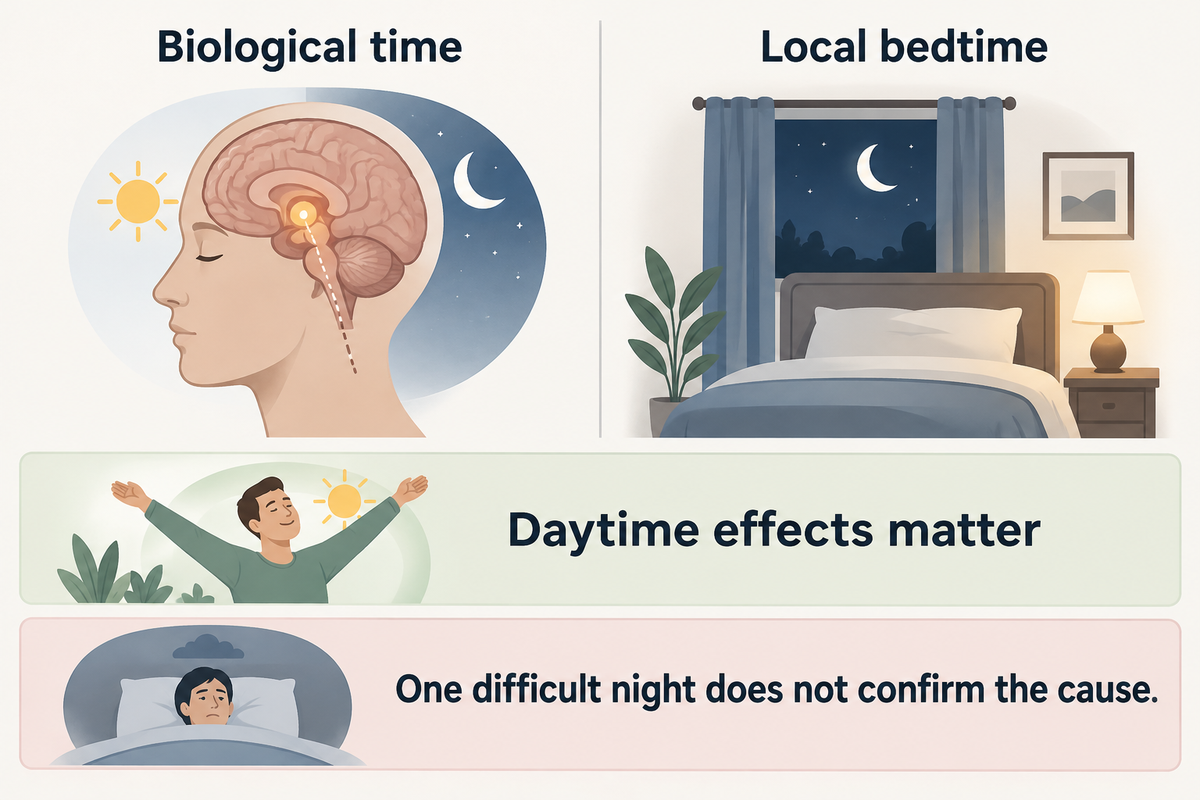
Jet lag is a circadian rhythm sleep disorder that can occur following rapid travel, across multiple time zones. Symptoms of jet lag can include daytime sleepiness and insomnia.
The Centers for Disease Control and Prevention’s 2026 Yellow Book describes jet lag as temporary desynchronization. Its listed diagnostic criteria include travel across at least two time zones, reduced sleep with insomnia or excessive daytime sleepiness, daytime impairment or related symptoms within 1–2 days, and no better explanation from another condition or substance. Crossing two zones alone doesn’t establish a diagnosis.
Your circadian rhythm helps organize alertness, melatonin levels and body temperature during the day. Sleep pressure also builds while you stay awake. After a flight, you may feel fatigued and worn out due to high sleep pressure, while the body clock continues to promote wakefulness. People can struggle to sleep despite fatigue; trying harder does not necessarily resolve that conflict.
Can a long flight cause tiredness without jet lag?
Yes. Travel stress, an unfamiliar room, and interrupted sleep on the plane can all build up fatigue even with a small time zone difference. A noisy room may make it harder to stay asleep; a badly timed flight may leave little opportunity to catch up with sleep. A disturbed sleep pattern can result from many causes. Record both the journey and the clock change rather than assuming every difficult night has the same cause.
The East-West Timing Check: choose the direction first
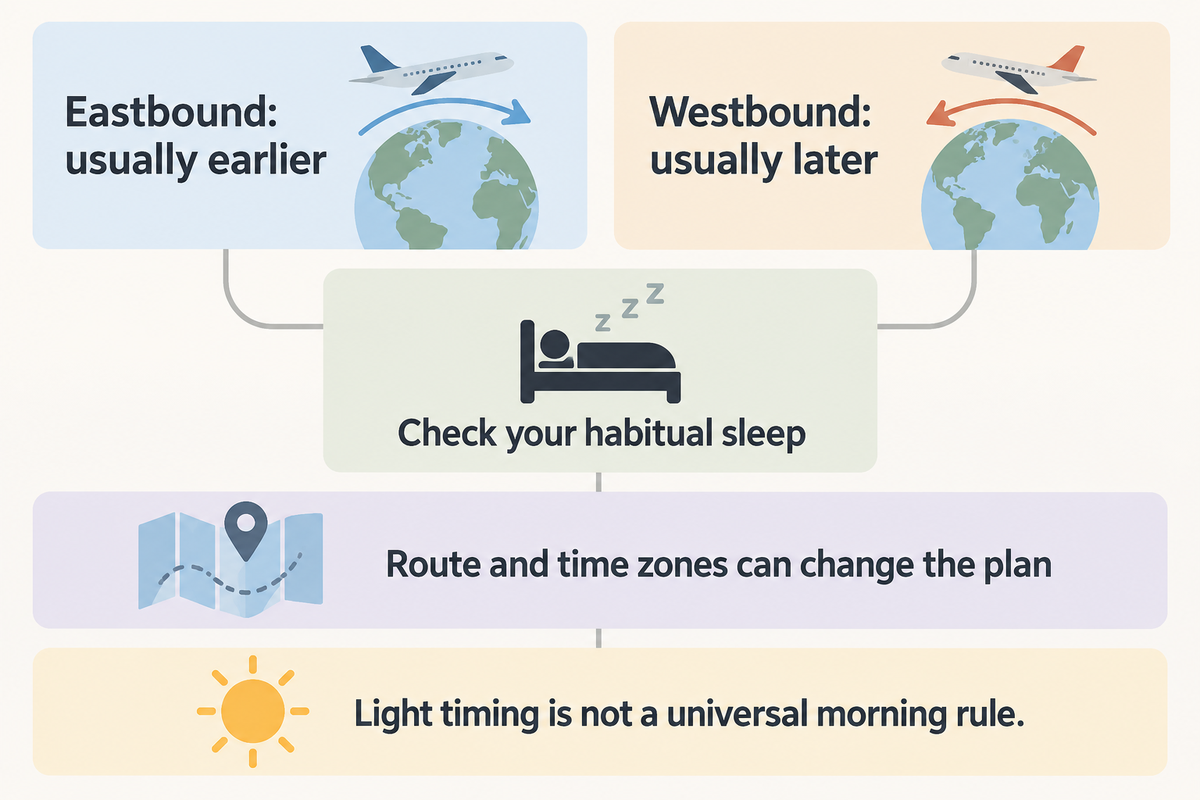
East and west flights usually require different shifts of the body clock. Traveling east generally calls for sleep and waking to move earlier; traveling west generally calls for them to move later. The East-West Timing Check combines direction, the number of time zones and your usual sleep window before you decide on a plan for light exposure in the destination time zone.
| Travel situation | Clock adjustment to consider | Useful next step |
|---|---|---|
| Eastbound journey | Usually an advance: sleep earlier and wake earlier | Check light timing against your habitual sleep, not just the destination clock |
| Westbound journey | Usually a delay: sleep later and wake later | Plan the later sleep window and review evening light in route context |
| Several time zones or an unusual itinerary | The simple direction rule may be insufficient | Use complete flight and sleep details with a route calculator or clinician |
| A very short stay | Full adaptation may have little practical value | Compare meeting times and sleep opportunities with a home-time approach |
The CDC gives average adaptation rates of about 1 hour per day eastward and 1.5 hours per day westward. Those averages generally explain the challenge of going to bed earlier; they don’t say when you’ll fully recover. A traveler’s sleep history, light exposure and itinerary may also be factors.
Why does the same local morning mean different things after different flights?
Your internal clock may read a different biological time than what’s shown on the hotel clock. Exposure to bright light can shift the body clock both ways based on its timing relative to that internal rhythm. CDC guidance ties optimal timing to direction and the time zones crossed. “Bright light in the morning” or “light in the evening” is therefore a starting explanation, not a timetable for every flight.
In their 2009 review targeted to clinicians, Eastman and Burgess discuss how each individual’s personal constraints (e.g. predisposition to early/late sleeping, scheduling constraints, etc.) can mean general advance/delay rules do not fit that person. It is an older mechanistic explanation, consistent with the need for route context in current guidance.
Evidence about real journeys also deserves care. A 2019 systematic review of non-drug interventions found no significant changes to outcomes in 9 of 13 studies, mixed results in 3, and a positive result in 1. The interventions were different, and as such, these results can’t all be attributed to light. They can explain why a plausible routine shouldn’t be packaged and sold as a guaranteed way to beat jet lag.
Build an arrival-day routine that leaves room for sleep
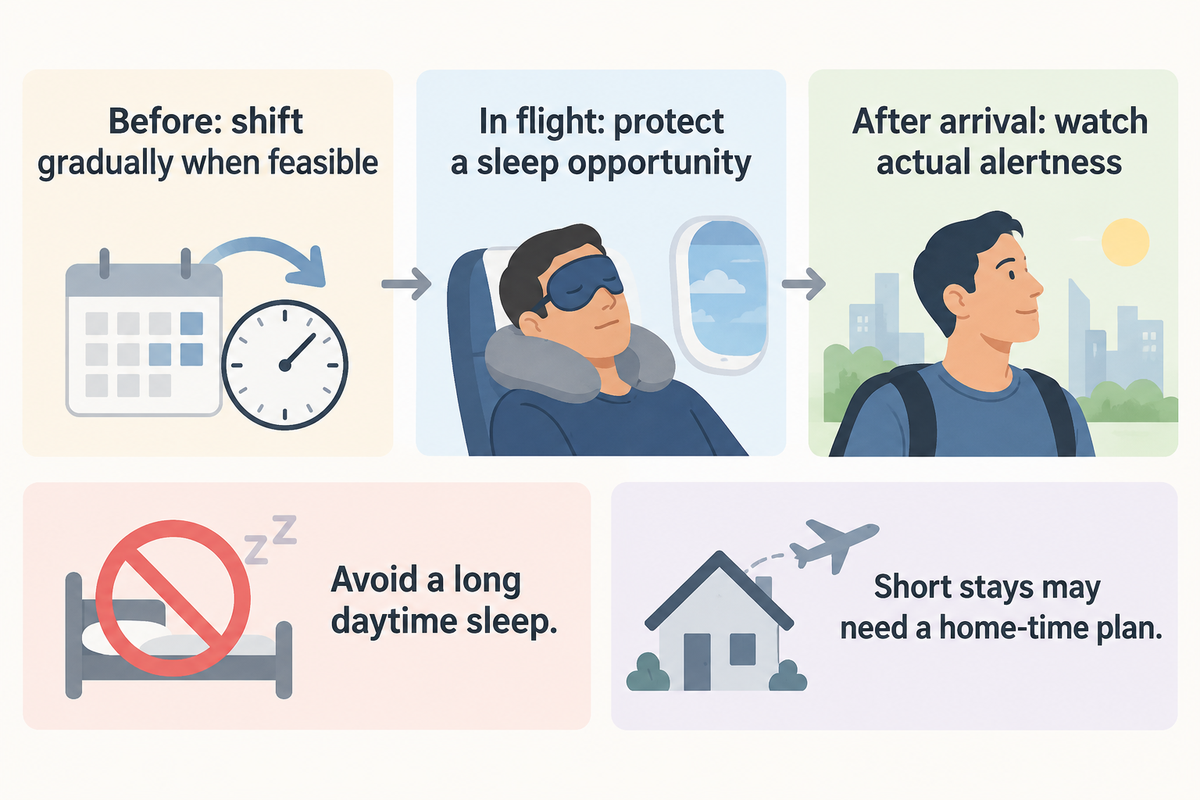
An arrival-day routine should protect a realistic sleep opportunity while helping you adjust to the new time zone. Prepare before departure when possible, sleep during the destination’s night on the plane, and avoid replacing the next local night with a long daytime sleep. When you arrive at your destination, pay attention to how alert you actually feel.
Before travel, the CDC suggests gradually shifting sleep toward destination time for a few days when feasible. That means earlier sleep for many eastbound trips and later sleep for many westbound trips. When you try to adjust the schedule, protect the previous night’s sleep rather than deliberately building a large sleep debt to force sleep later.
| Situation | Action to consider | What to watch |
|---|---|---|
| Several days before departure | Move the sleep schedule gradually toward the destination when practical | A schedule you can follow without losing needed rest |
| Destination nighttime during the flight | Try to sleep on the plane; use an eye mask and earplugs if helpful | The actual sleep obtained, not just hours in the seat |
| Meals and activity in transit | Use destination time as a planning reference | Flight service and personal needs may limit the plan |
| Thirst or excess alcohol in transit | Stay hydrated and avoid excess alcohol | Alcohol may fragment later sleep despite initial drowsiness |
| Strong daytime sleepiness after arrival | Consider a brief nap; CDC gives 20–30 minutes as an example | Longer naps can make the next night harder |
| A late coffee to push through dinner | Review caffeine timing against the intended bedtime | Alertness now may come with difficulty sleeping later |
| A bright or noisy hotel room | Reduce unwanted nighttime light and noise | Comfort measures do not by themselves set the body clock |
| A stay shorter than two days | Compare home-time sleep with the demands of the trip | A full destination-time change may be impractical |
| Sleepiness affecting driving or work | Change the safety-critical plan and seek help when needed | Feeling obliged to stay awake does not make the task safe |
Keep the nighttime environment quiet and dark, with a familiar wind-down routine. An eye mask or an earplug may help you sleep by reducing a specific disturbance, but neither can guarantee a good night’s sleep. Sleep quality includes how often rest is interrupted, not simply time in bed. Daytime light should be included in your timing plan. Seeking out and exposing yourself to strong light at a guessed time can send the wrong signal to your body.
Should a two-day trip use home time or destination time?
A short trip requires a different plan than a long stay. The CDC includes maintaining home-base sleep hours among options for short trips and gives less than 2 days as an example. Check if the plan will leave you awake for things you need to do. Keeping your regular home time won’t help you if a meeting falls in your regular bedtime.
For a longer stay, adapting to the new time zone may be more useful. You can plan out your sleep window and share this plan with a friend. You should be flexible and plan for the body to adjust. The goal of this plan is quality sleep and daytime function, rather than one rigid routine for the first week.
Melatonin, sleeping medicines and alcohol need separate decisions
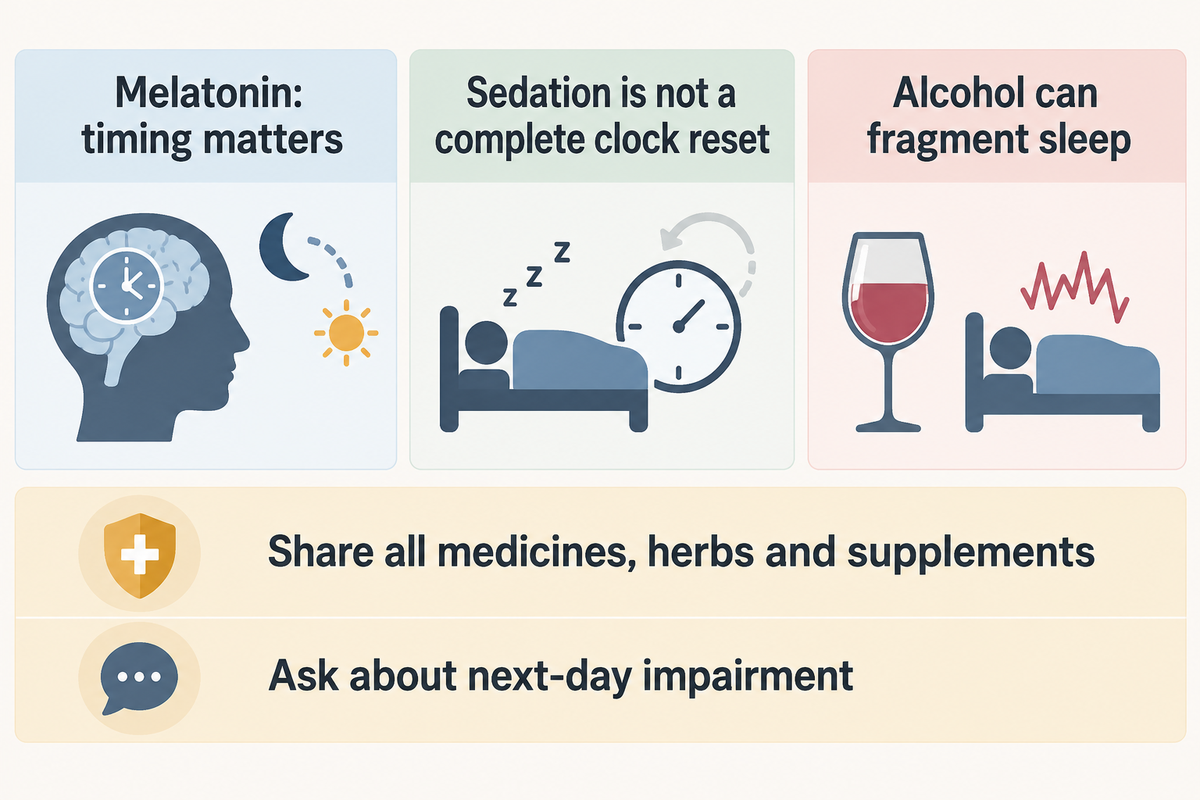
Melatonin, sleeping pills, and alcohol are different, and therefore shouldn’t be treated the same. Each should be considered individually for suitability, timing, interactions and the impact it may have on your trip the following day.
Melatonin is a hormone involved in the nighttime signal. The CDC states using it at the incorrect biological time can cause misalignment. A stronger product doesn’t necessarily shift the body clock more effectively. This guide doesn’t provide a dose: determining whether to take melatonin depends on your route, other medications, and your health history.
Mayo Clinic’s treatment guidance distinguishes sleep-promoting effects from the daytime symptoms that can remain. Better sleep after a dose doesn’t ensure that the underlying clock has completely adjusted. Feeling able to fall into a deep sleep is also different from measuring a sleep stage. Ask about the duration of action and any effect on balance, memory or alertness on waking.
What should you tell a pharmacist before taking a sleep aid?
Bring a list of all the prescription and over-the-counter meds, herbs and supplements you take and your itinerary. NHS medicine guidance warns that sedating herbal remedies can increase melatonin’s sedating effects. Safety info regarding combos of melatonin with other herbs and supplements is scarce. Avoid using several products, as each label may sound innocent or natural. Take the same product list with you if you’re going for a Chinese herbal medicine consultation.
According to the National Center for Complementary and Integrative Health, additional advice is warranted for pregnancy and breastfeeding, epilepsy, blood thinners, and older age. Safety data are limited for pregnancy and breastfeeding; epileptics and those on blood thinners need to be medically supervised. Melatonin can be longer-lasting and cause daytime drowsiness, especially in the elderly. Children require individualized advice depending on their age and situation.
Alcohol is said to decrease the time to fall asleep, but increase sleep fragmentation. Caffeine can help you feel more alert during the day while making it harder to sleep at night when taken too close to bedtime. Review caffeine and alcohol intake together, as opposed to using one to counter the other, to help maintain your sleep schedule. The CDC has similar cautions regarding sedating antihistamines and long-acting sedatives. They can increase impairment and falls.
Know when travel-related sleep problems need assessment
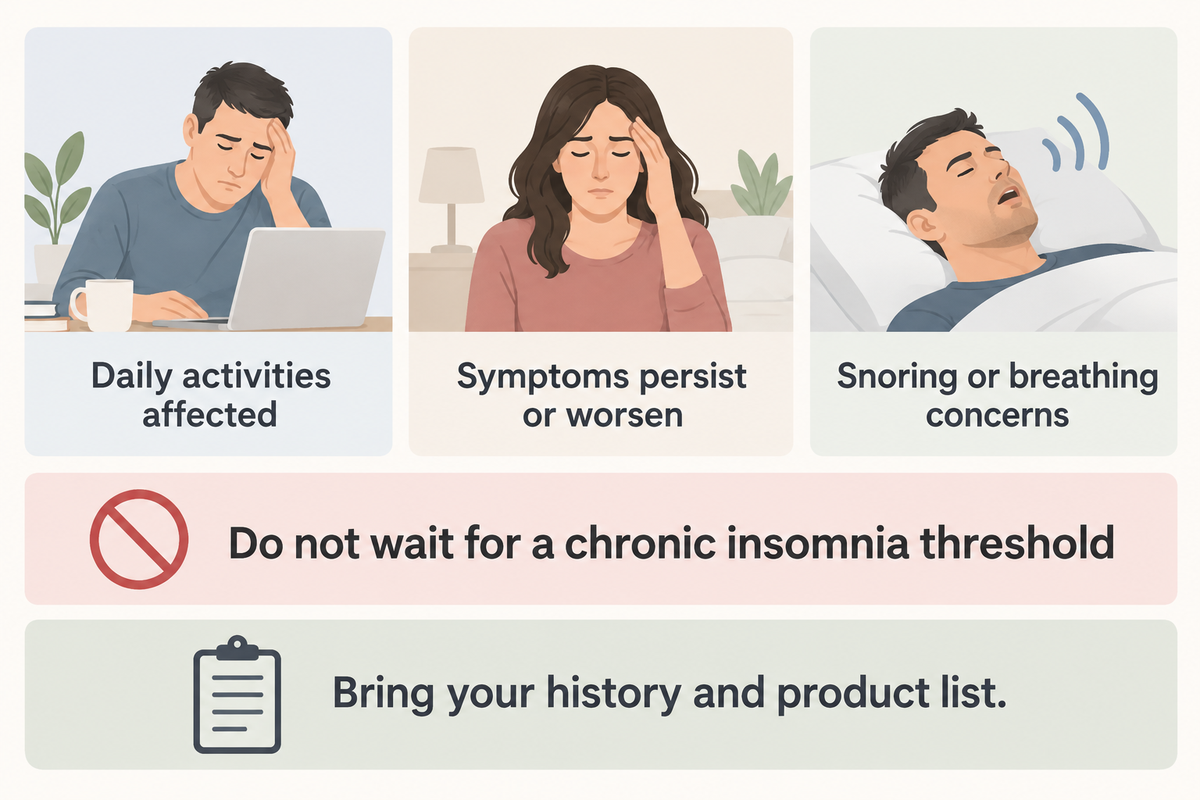
Travel-related sleep problems need assessment when insufficient sleep affects everyday activities, symptoms persist or worsen, or the pattern suggests another sleep or medical problem. Don’t wait for a chronic insomnia threshold to ask for help. A clinical history can distinguish temporary time-zone disruption from a problem that travel has exposed or aggravated.
The National Heart, Lung, and Blood Institute’s (NHLBI’s) guidance describes chronic insomnia as occurring at least 3 nights a week for 3 months or longer. This describes a persistent pattern and isn’t a waiting rule. The inability to function normally after sub-optimal sleep is also cause for contacting a healthcare professional.
Which details help a clinician distinguish jet lag from another problem?
Explain whether you had sleep problems before traveling, whether they occur between trips, and how they affect concentration or daily tasks. Report if you’ve loud snoring or observed breathing disturbances, if you’ve taken or are taking any medication or substance, if there have been changes in your health and/or mood. NHLBI notes that a clinician may investigate other sleep disorders or medical causes when indicated. A smartwatch score alone can’t give the reason for your symptoms.
A deeper sleep assessment may be needed for those who frequently suffer from insomnia, even if the latest episode happens after a flight. Brief jet lag recovery advice and longer-term insomnia care answer different questions. Tong Ren Tang’s traditional Chinese medicine sleep support guide addresses a broader topic, and the route-specific timing problem still remains. The clinic also has separate insomnia consultation information for patients with persistent sleep concerns.
If you want to discuss complementary care in Dubai, the clinic’s acupuncture service information explains that consultation option. Review the Tong Ren Tang clinic background and ask about practitioner suitability, risks and coordination with existing care. General acupuncture research about insomnia cannot establish that acupuncture treats jet lag, and the sources used here do not justify a jet lag cure claim.
Use the Destination-Time Sleep Log before changing the plan
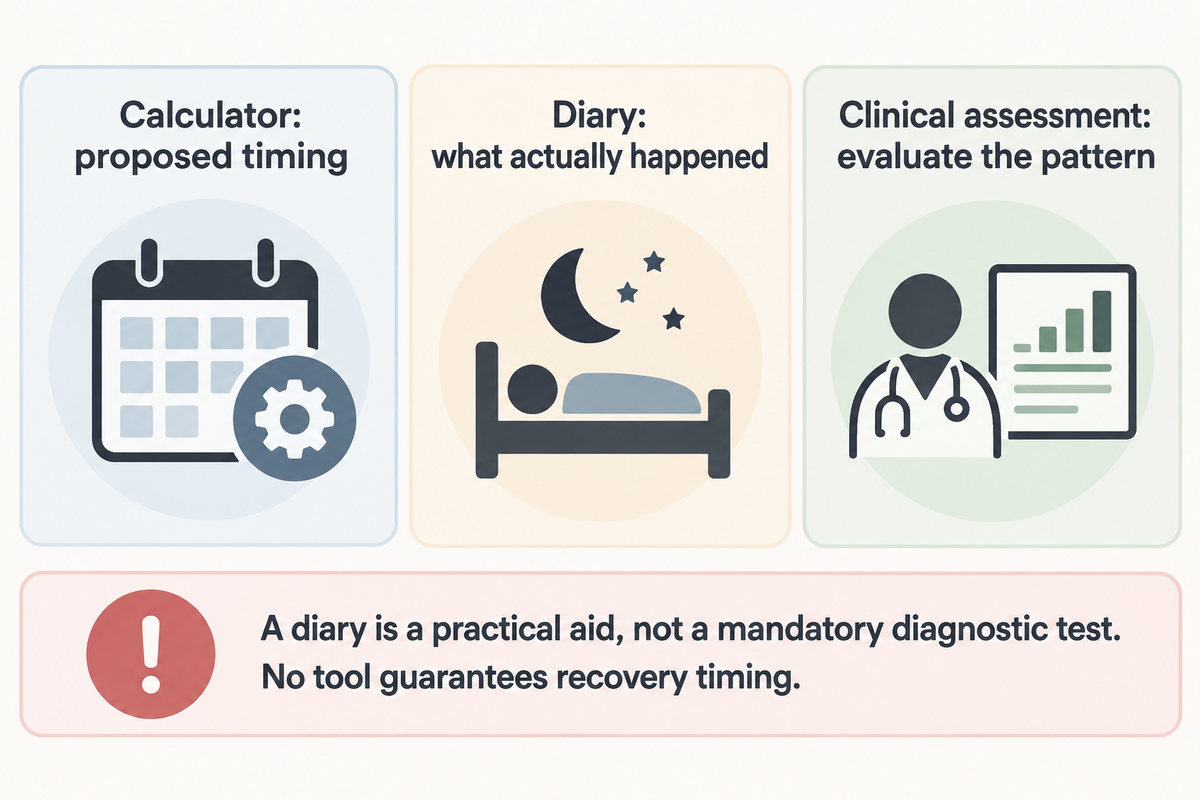
A sleep log can document the pattern of “I can’t sleep”. In your log, document local times for sleep and waking, the original window of sleep, flights, naps, daytime function and anything that may have altered your normal sleep and wake pattern. A route calculator can plan timing, and a diary can be used to document what happened. Both can be useful without proving which treatment you need or how quickly you will recover.
NHLBI suggests keeping a sleep diary for 1-2 weeks before an appointment. If you feel you can handle it, starting with the next 7 days may be useful and you can continue from there if helpful. Enter every time in the destination’s local time and mark the original time zone separately. The example below is a fictional entry format and isn’t patient specific. It’s neither a goal nor a recommendation of the sleep schedule.
| Field | Fictional format example | Why record it? |
|---|---|---|
| Route and arrival | Departure city → Dubai; arrived 18:00 local | Connect symptoms with the itinerary and first rest opportunity |
| Usual sleep at home | 23:00–07:00 in the departure time zone | Show where sleep sat before the flight |
| Sleep during travel | About 2 hours, interrupted | Separate sleep loss from time-zone change |
| Local bedtime and estimated sleep onset | In bed 23:30; asleep around 01:00 | Distinguish going to bed from actually falling asleep |
| Night waking and final wake | Awake around 04:00; up at 07:30 | Describe how sleep was interrupted |
| Naps | 14:00–14:25 local | Relate daytime sleep to the next night |
| Caffeine, alcohol, medicines and herbs | Coffee 09:00; record other products by name and time | Make timing and possible interactions visible |
| Light and activity | Outdoor walk 16:00; bright screen late evening | Record actual exposure rather than assuming adherence |
| Daytime function | Sleepy at lunch; concentration poor during a meeting | Show effects that matter beyond hours slept |
Look for changes across entries rather than judging recovery from one night’s sleep. Include the quality of sleep and the impact of jet lag on the tasks you actually need to do. An aide may wish to note instances of unplanned dozing or concerns regarding your breathing that you’re unaware of. Bring the record and product list to an appointment; the clinician can decide whether anything further is needed.
| Your task | Tool | What you get |
|---|---|---|
| Plan around an upcoming flight | Route-specific jet lag calculator | A proposed timing plan using itinerary and sleep inputs; check its assumptions |
| Understand the sleep you actually obtained | Free paper or digital diary | A record of timing, habits and symptoms that can support a discussion |
| Assess persistent or unusual symptoms | Clinical assessment with your record | Evaluation of the pattern and other possible causes |
The American Academy of Sleep Medicine’s text-revision summary specifically excludes jet lag from a change concerning required sleep logs for other circadian disorders. A diary here is a practical aid, not a mandatory diagnostic test. Before purchasing an app, review the inputs, privacy policies, and determine if the advice aligns with your own health and wellness needs. A scheduled, or planned, day in an app does not necessarily mean the app is clinically more effective.
Frequently asked questions
Can jet lag stop you from sleeping?
Jet lag can make sleep difficult even when you feel exhausted because biological time and local bedtime are misaligned.
A long journey can also reduce the sleep you obtained, leaving fatigue alongside wakefulness at the wrong local hour. Note whether the problem is falling asleep, waking repeatedly or waking early. The CDC’s diagnostic description includes daytime effects and other criteria, so a difficult night by itself can’t confirm the cause. Seek advice when the sleep loss affects daily activities.
How to beat jet lag going east?
Eastbound travel usually requires an earlier body-clock schedule, with light timing matched to the route and your usual sleep window.
Start with the departure and arrival times, time zones crossed and your normal bedtime and wake time. Gradually moving sleep earlier before departure may help when practical. Avoid treating all destination mornings as biologically equivalent: the useful light window can differ. A route calculator or clinician can help organize timing, while your diary shows whether the plan leaves adequate sleep and daytime alertness.
What is the hardest day of jet lag?
Jet lag has no single hardest day that reliably applies to every traveler.
Symptoms reflect the itinerary, sleep obtained during the journey, the direction of clock adjustment and individual rhythms. Feeling worse on a return trip doesn’t contradict the general finding that westward adjustment is often easier. Follow the pattern of sleep and daytime function across several days instead of using a fixed day as a deadline for recovery or a reason to ignore worsening symptoms.
What is jet lag and how to cure it?
Jet lag is temporary disruption after time-zone travel; no single routine guarantees an immediate reset or complete symptom relief.
The practical approach is to protect sleep opportunities, organize activity around the chosen time zone and use light deliberately rather than at random. Staying hydrated, limiting excess alcohol and considering brief naps are measures intended to help combat jet lag. They don’t promise to cure jet lag or mean you’ll avoid jet lag entirely. Sleep aids address different parts of the problem and may bring interactions or next-day impairment. If you want to use one, review the itinerary and all medicines or supplements with a professional. Persistent sleep disturbance, breathing concerns or difficulty functioning deserves assessment rather than another product or a more forceful attempt to stay awake.
Why is jet lag worse coming home?
Worse jet lag on the return journey can reflect differences in route, sleep loss and demands after arrival.
Work, driving or family duties may leave less space to rest than a holiday does. Record the return flight and sleep opportunities as a separate episode. Your experience need not follow the average east-versus-west pattern.
Can acupuncture treat jet lag insomnia?
The evidence reviewed here does not establish acupuncture as a treatment for jet lag insomnia.
Research about general insomnia can’t automatically answer a travel-related circadian question. A consultation can discuss your symptoms and care preferences, but ask for evidence relevant to jet lag and coordinate any complementary care with existing treatment.
What is the best sleep aid for flying?
The suitable sleep aid depends on health, other medicines, the flight and the sleep opportunity; there is no best option for everyone.
A dark, quiet sleep environment may be enough for one traveler, while another needs medical advice about a recurring problem. Sedation can affect balance, alertness and the ability to respond during travel. Tell a pharmacist or clinician about all medicines, herbs and supplements before using melatonin or another product. Don’t combine several sedating remedies or use alcohol to intensify them. For a child, pregnancy, breastfeeding, epilepsy or blood-thinning treatment, get advice specific to that situation. Plan the sleep opportunity first, then discuss whether a medicine is appropriate.
References & Sources
- Jet Lag Disorder, CDC Yellow Book, 2026 edition Centers for Disease Control and Prevention.
- How To Travel the World Without Jet lag Charmane I. Eastman and Helen J. Burgess, Sleep Medicine Clinics, 2009.
- What works for jetlag? A systematic review of non-pharmacological interventions Sleep Medicine Reviews, 2019; PubMed abstract.
- Jet lag disorder: Diagnosis and treatment Mayo Clinic, May 21, 2026.
- Taking melatonin with other medicines and herbal supplements National Health Service.
- Melatonin: What You Need To Know National Center for Complementary and Integrative Health.
- Insomnia: Diagnosis National Heart, Lung, and Blood Institute.
- ICSD-3-TR: Summary of Diagnostic Criteria Changes American Academy of Sleep Medicine, 2023.