Get in Touch with Tongren Tang Gulf
Acupuncture for Fertility Support: Timing, Expectations and Safety

September 2026 · Updated Medical Evidence for Scope, Uncertainty and Safety
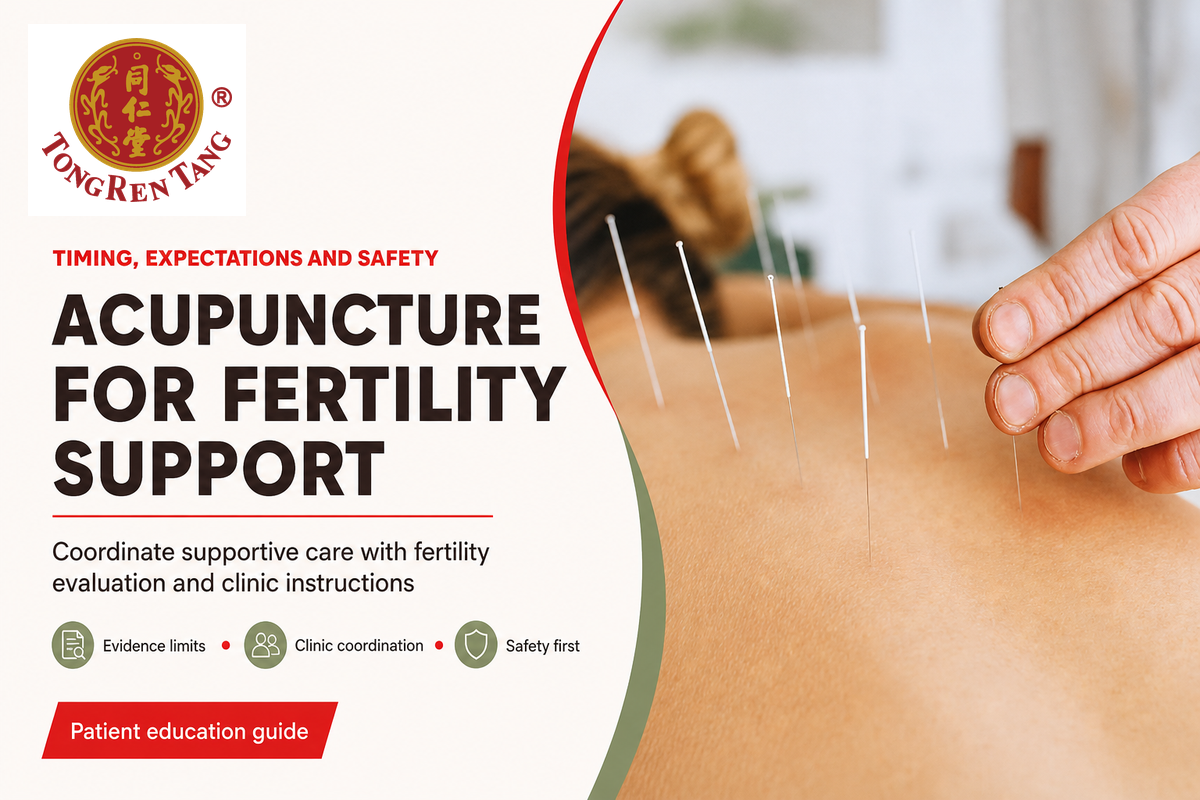
Acupuncture for fertility support refers to acupuncture considered as supportive care alongside a fertility treatment plan. Determining a starting date or session schedule with acupuncture hasn’t been shown to improve live births. A more conservative approach would be to initiate care with the fertility evaluation and determine your care status. Once a supportive care goal is agreed upon, your fertility care provider should be notified of this goal and care plan.
This makes a big difference. Feeling better or finding an appointment helpful doesn’t mean implantation, pregnancy or live birth has improved. If you are taking fertility medicines, preparing for a procedure or could be pregnant, the clinic’s instructions come first.
The short answer
- Don’t delay a fertility assessment to complete an acupuncture programme.
- Medical issues can arise at any time; review medicines, procedure dates, pregnancy status and bleeding concerns before each appointment. If we’re discussing an ongoing medical concern, plan around the next appointment, not a general countdown.
- Consider embryo-transfer claims with skepticism. Treat embryo-transfer claims cautiously: The existing sham-controlled, higher-level evidence doesn’t demonstrate a live-birth advantage.
- Review all medications, procedure dates, pregnancy status and bleeding concerns before each appointment.
- Use acupuncture as adjunctive support, never as a substitute for diagnosis or fertility treatment.
The two tools in this guide, the Fertility Support Timing Map and the Fertility Support Handover, are editorial planning checklists for organising questions rather than clinical instruments. They don’t guide or recommend clinical practice. Rather, they assist in the grouping of questions.
What Acupuncture Can and Cannot Promise for Fertility
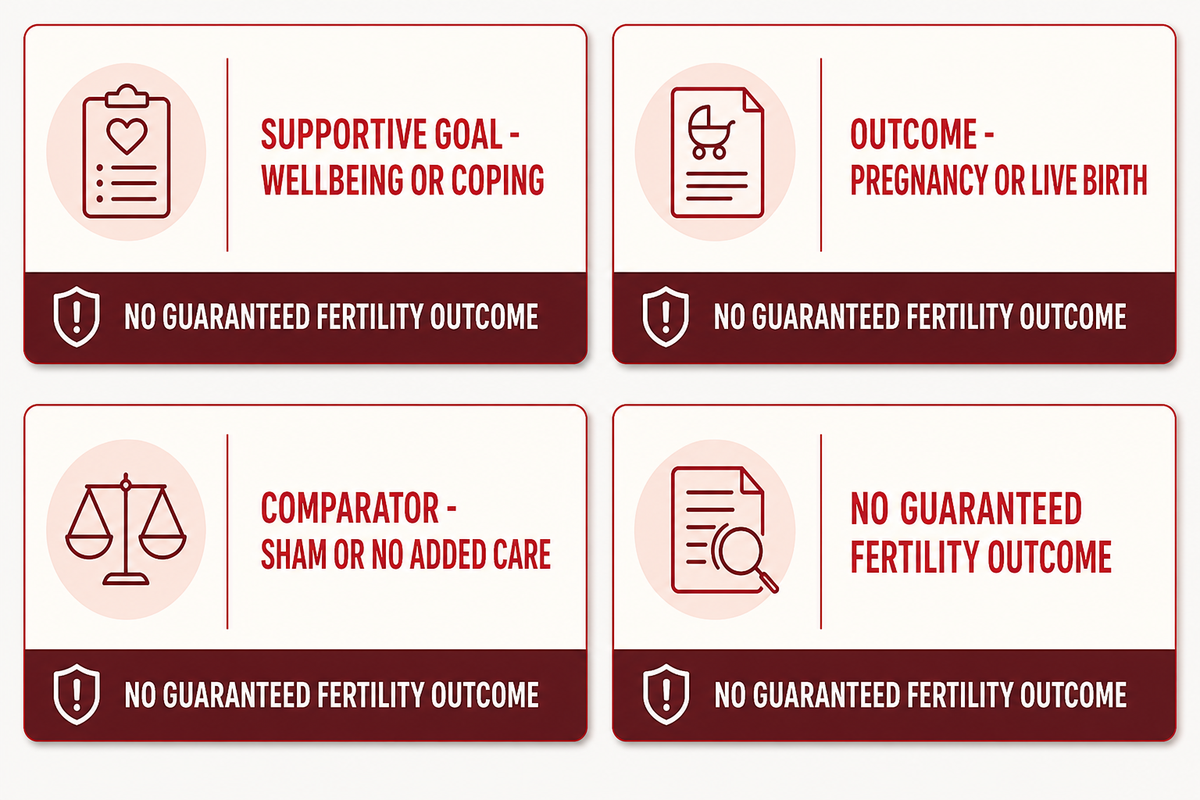
There are multiple meanings to “fertility support.” It may refer to break time or time off from treatment. It could also mean an additional support service is included in the plan to meet the service user’s needs. “fertility support” shouldn’t be associated with assisting affected individuals to have a baby or treating the cause of infertility.
The UK Human Fertilisation and Embryology Authority explains that complementary therapies may be used to support relaxation and wellbeing, while proposed effects on fertility remain unclear. It also advises patients to discuss complementary care with their clinician. That’s a useful boundary: a wellbeing aim can be discussed honestly without turning it into a reproductive-outcome claim.
Research doesn’t provide definitive recommendations for every condition and treatment. There are differences among the people enrolled, whether acupuncture was compared with sham treatment or no added treatment, the points and timing used, and whether a study measured clinical pregnancy or live birth. Therefore, the answers provided herein are limited to the study population and the primary and comparison outcomes of the study.
Key takeaway
Choose acupuncture for a defined supportive goal, not because a fixed timing formula or session package promises pregnancy or live birth.
Start With Fertility Evaluation, Not a Countdown
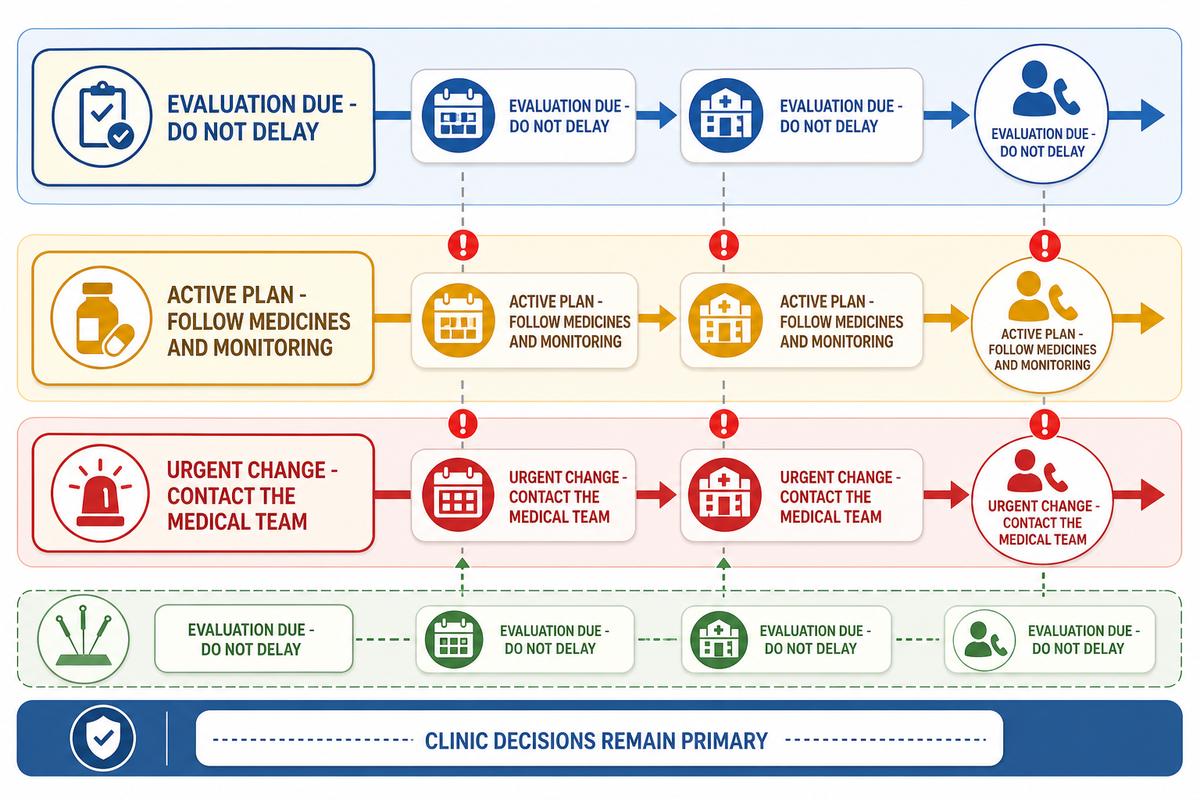
It’s common for people to say that fertility acupuncture should be completed a certain number of months before a person starts trying to conceive or begins treatment. While there’s some structure and timing to medical care, this shouldn’t prevent a person from obtaining an evaluation.
In its 2021 committee opinion, the American Society for Reproductive Medicine advises evaluation after 12 months of trying for women under 35 and after 6 months at age 35 or older when there’s no reason to act sooner. More immediate evaluation may be warranted over 40, and known risk factors should prompt evaluation without delay. The official guidance listing was checked in September 2026; these thresholds guide when to seek specialist input, not a diagnosis for an individual reader.
When a sperm-contributing partner is involved, the 2021 guidance calls for both partners to begin evaluation concurrently. This ordinarily includes the partner’s reproductive and medical history and at least one semen analysis at the outset. Framing fertility care only around the individual receiving acupuncture can miss half of the evaluation. In doing so, the caregiver may overlook relevant information.
When your medical plan changes, a fertility clinic will take priority. Follow its guidelines for changes including symptoms, medication, monitoring, retrieval, insemination, embryo transfer and pregnancy tests. If the clinic directs that you need an urgent review of a symptom or you develop a new severe or rapidly worsening symptom, don’t wait for your acupuncture appointment; seek an urgent medical assessment.
Use the Fertility Support Timing Map
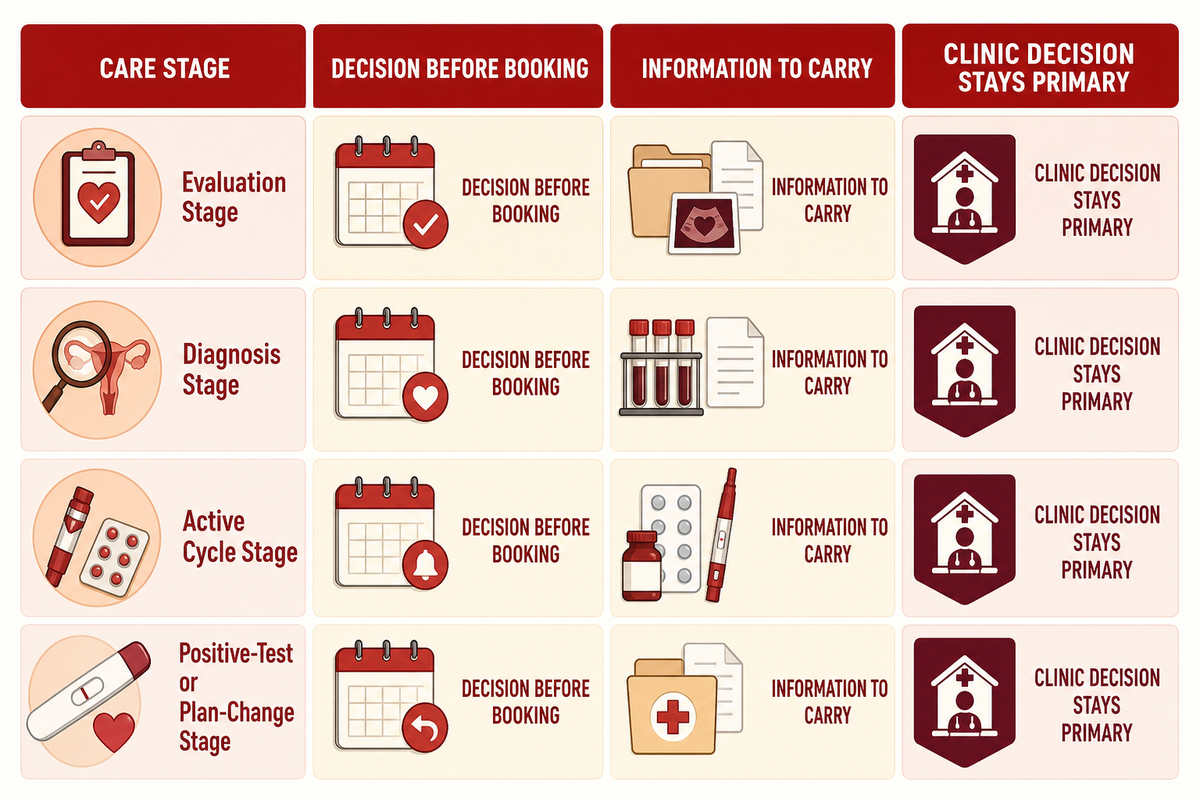
There isn’t a single ideal week to start for all clients. For age-based evaluation timing, review the ASRM fertility-evaluation guidance with your medical clinic. When determining if and what to disclose during an appointment consider your care stage and the next medical decision to be made.
To interpret the map, start from the left. Find the situation that’s current, and write down the medical decision that must remain with the fertility clinic. The final column is a handover list for the acupuncture practitioner. If there are two situations that are applicable and current, the more restrictive one should be followed and the plan should be confirmed by the clinic.
| Timing category and care stage | Decision before booking | Information to carry |
|---|---|---|
| Before evaluation | Check whether evaluation is already due. Do not wait out a fixed acupuncture course. | How long you have been trying, age, cycle history and known risk factors. |
| During diagnosis or planning | Define a supportive goal and a review date. | Tests, diagnoses, medicines, supplements and the next clinic decision. |
| Before a first acupuncture visit | Check practitioner qualifications, consent and needle-safety procedures before committing to a schedule. | Supportive goal, complete health history and questions about fees and review points. |
| During stimulation or insemination | Confirm that timing does not conflict with monitoring or clinic instructions. | Current doses, monitoring changes, procedure date and clinic restrictions. |
| Around embryo transfer | Ask the clinic about timing and activity restrictions. Do not infer a live-birth benefit. | Transfer plan, medicines, test date and the clinic contact route. |
| After a positive test or plan change | Coordinate before the next session. | Pregnancy status, symptoms, medicine changes and clinician instructions. |
| Between treatment cycles | Review whether the supportive goal remains useful rather than carrying the previous schedule forward automatically. | Outcome of the last cycle, upcoming clinical review and any revised diagnosis. |
| When new symptoms appear | Obtain the medical assessment the fertility clinic recommends before treating the symptom as an acupuncture issue. | Onset, severity, changes over time and the clinic’s urgent-contact instructions. |
The map deliberately doesn’t include specific prescriptions, frequencies or time frames. These will be determined by your individual situation, and may change during the course of your treatment.
It also avoids calendar thinking. An open appointment time doesn’t by itself identify a medically useful care window. Likewise, a missed appointment doesn’t mean the cycle was disrupted. The correct question to ask is whether supportive care is flexible enough to fit around the clinical plan without adding delay, pressure or conflicting instructions.
What IVF Evidence Says About Timing and Live Birth
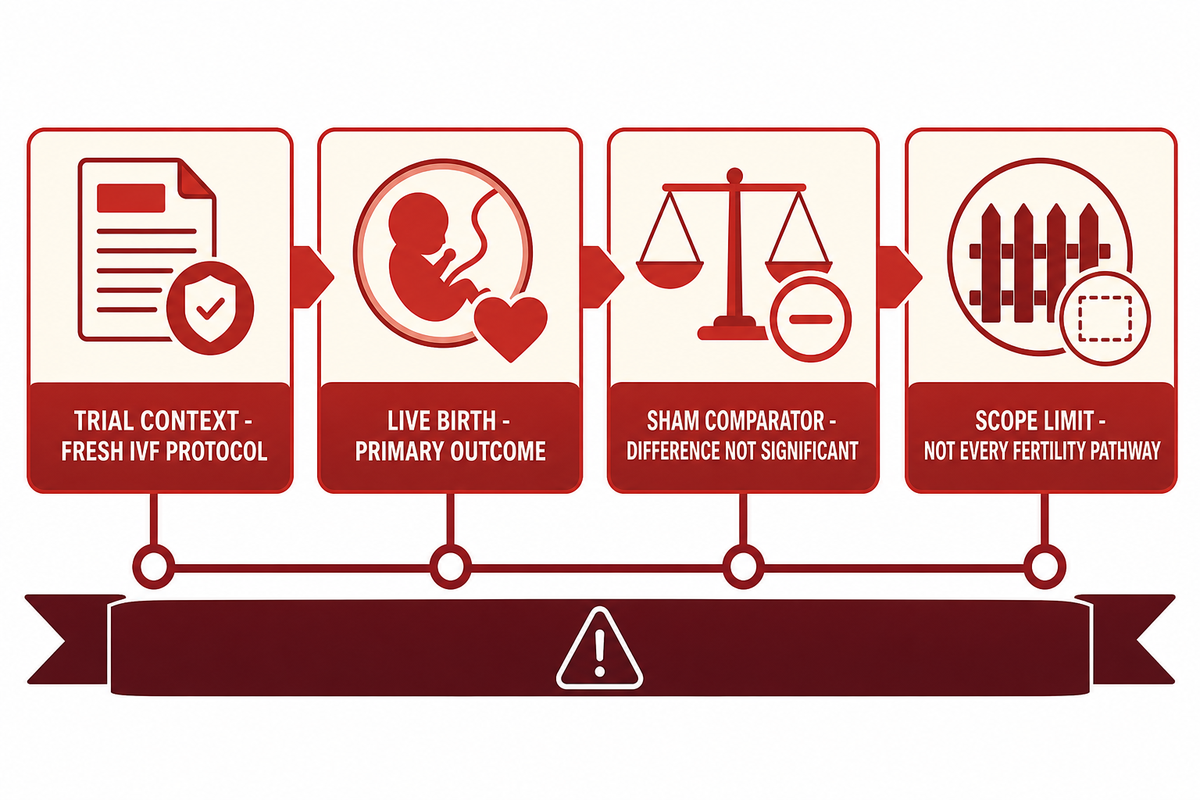
In vitro fertilisation (IVF) studies are often used to support claims about acupuncture timing. The outcome of most relevance is the occurrence of a live birth. Intermediate outcomes have limited value if they don’t result in a live birth; live birth is the most useful outcome. Also, the choice of comparator plays an important role. A difference between an active acupuncture treatment and no additional treatment can look favourable, but if the difference disappears in a credible sham-controlled comparison, it does not demonstrate a specific acupuncture treatment effect. A difference between an active acupuncture treatment and no additional treatment doesn’t by itself demonstrate a specific acupuncture treatment effect.
824women in the fresh-IVF trial
18.3%live birth with acupuncture
17.8%live birth with sham treatment
In that multicentre randomized trial, the difference wasn’t statistically significant. The 2017 ASRM embryo-transfer guideline concludes that there’s fair evidence that acupuncture around embryo transfer doesn’t improve live-birth rates in IVF. The dated guideline remained on ASRM’s official guidance site when checked in September 2026; a fertility clinic’s current protocol still takes priority.
The review reported a favourable pooled live-birth association, with a risk ratio of 1.34 and a 95% confidence interval from 1.07 to 1.67. The review included 27 studies with 7,676 participants, evaluating women with infertility undergoing IVF or other treatment; controls received no acupuncture or sham acupuncture. A favourable pooled result cannot be read alone because reporting quality, comparator choice and study heterogeneity affect confidence. The review cautioned that poor reporting and methodological flaws limited confidence in the pooled estimate. An umbrella review of 16 systematic reviews also rated the methodological quality of its included reviews as critically low; that review was authored by Chinese medicine institutions, so it should be read as one perspective within the wider evidence base. Read the umbrella review.
The correct synthesis isn’t “acupuncture never helps” or “the meta-analysis supports it.” Evidence is often conflicting and sensitive to study design. The context of the research deserves consideration. For example, some studies will use a sham control, while others will compare the therapy in question to a no treatment control. A study is more likely to find acupuncture useful in a no treatment control comparison. Differences in study setting and the placebo effect may account for some differences in study outcomes.
Study scope, not sample size alone, also plays a role. The 824-person trial studied women having a fresh IVF cycle. It can’t speak to outcomes for women with unexplained infertility or those seeking other methods of conception, including frozen transfer, intrauterine insemination, ovulation induction, spontaneous conception or care for diminished ovarian reserve.
What to Expect at a Fertility Acupuncture Appointment
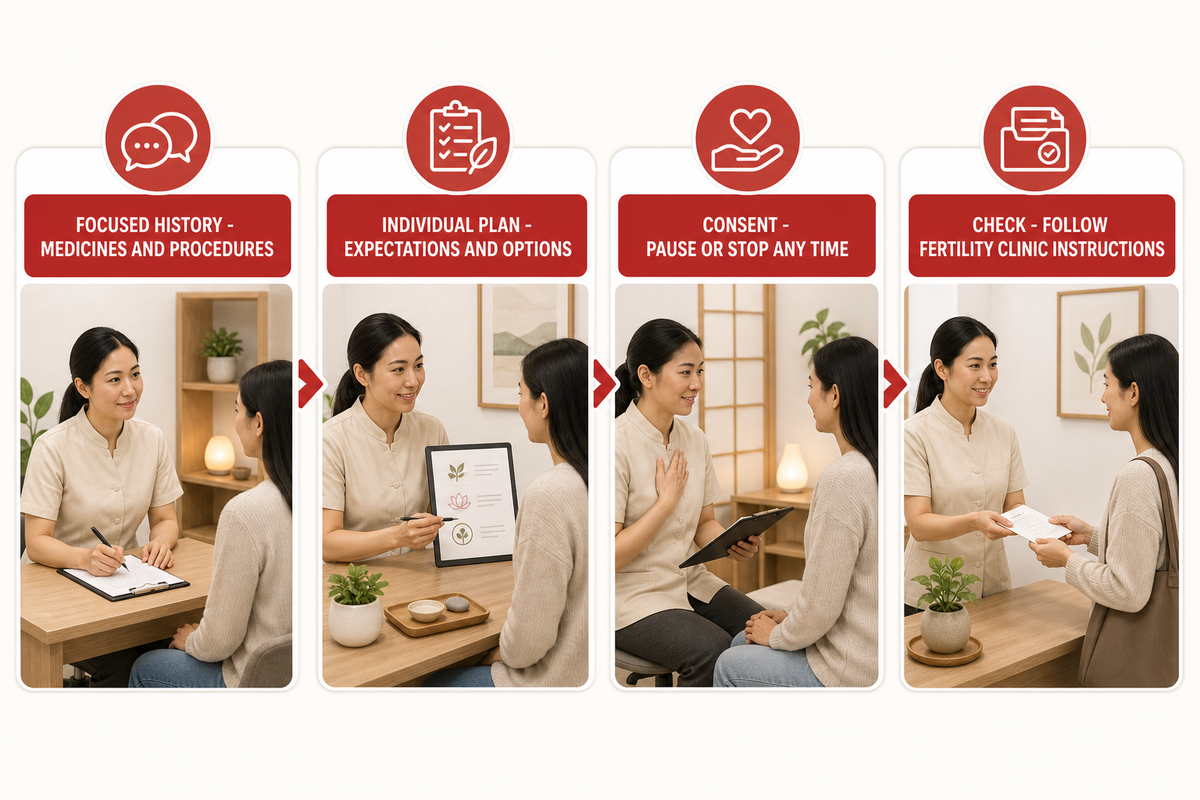
There are also several factors that influence the first consultation. While there are some standard questions that will be asked, many will be dependent on the reason for seeking care and the patients’ diagnoses. In addition to this, patients may be instructed to refrain from certain activities, and/or may be pregnant.
A health care practitioner may ask about psychological and physical wellbeing, including appetite, stress and menstruation. An acupuncture treatment may involve positioning and the insertion of fine needles into selected acupuncture points. The treatment should be individualised to the patient’s presenting condition, but that doesn’t prove it can change fertility outcomes.
While researching methods to get pregnant, some individuals may see posts claiming that acupuncture may help regulate hormones and/or increase blood flow to the uterus. Again, these are only proposed mechanisms, not established fertility outcomes. This doesn’t establish that an individual will conceive or have a live birth. The care plan may include acupuncture for a supportive goal, but the practitioner must keep that goal separate from claims about implantation or pregnancy success.
The practitioner must explain the procedure, position and obtain consent prior to needle insertion. You’ve the right to refuse and/or stop the procedure at any time. Pain is subjective, therefore promise of no pain isn’t appropriate. Pain and/or discomfort must be reported; assumption of necessity must not be made.
Follow the fertility clinic’s medicine, monitoring, activity and testing instructions after the acupuncture session. The appointment may allow individuals time to relax, but acupuncture won’t change who owns medical decisions. Ask whether anything in the medical plan has changed; don’t change the medical decision-maker. If the clinical plan changes, communicate this to the acupuncture practitioner before another appointment.
Plan Review Points, Not a Fixed Number of Sessions
Research doesn’t establish one session number or weekly frequency that improves fertility outcomes for everyone. For embryo transfer specifically, the ASRM guideline reports fair evidence that acupuncture around transfer doesn’t improve live-birth rates. Therefore, a scheduled plan should remain reviewable rather than be required for long-term support or presented as necessary for success.
A plan may support an individual through time for relaxation, but define that supportive goal in plain terms instead of treating it as a long-term requirement. Identify the burden that would negate the need to retain the plan.
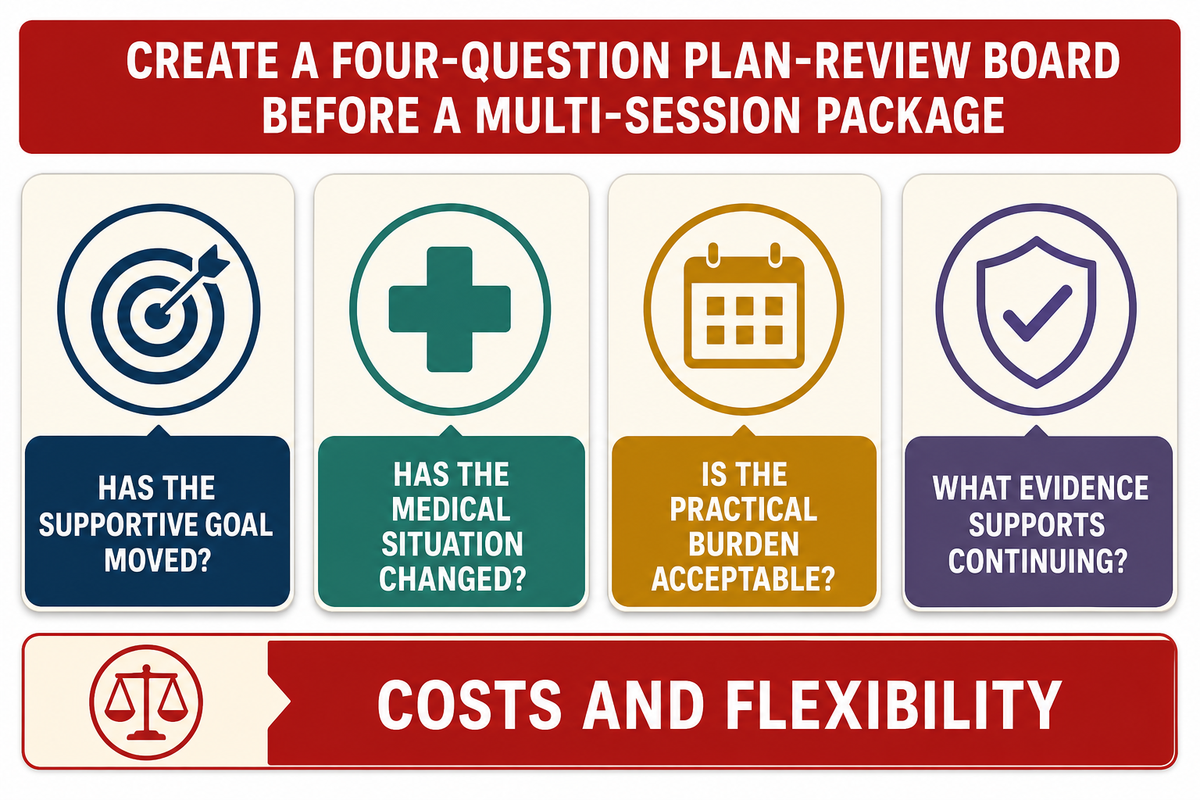
During the review, you must ask the following: Has progress been made toward the goal selected for support? Has the medical situation changed? Is the practical burden still acceptable? Don’t replace those review questions with a pregnancy-test result. Treatment decisions shouldn’t assume that a pregnancy-test result shows acupuncture caused the outcome.
Before buying a multi-session package, ask:
- With which supportive goal is the proposed frequency associated?
- How and when will the situation be reevaluated to consider a change or stop the intervention?
- How will flexibility and teamwork be applied in dealing with short notice changes in test and procedural dates?
- What types of claims about symptoms concern mental or physical wellbeing, pregnancy or live birth?
- What are the estimated total costs? What’s the situation regarding the flexibility of the commitment? How many hours per week are estimated?
The arrangement becomes easier to assess when clear answers are used instead of treating a package length as a clinical requirement. The practitioner should explain the rationale for decisions, recognise uncertainty and support coordination. The practitioner is expected to provide rationale for their decisions, recognize and address ambiguity in the model, and assist the client with support coordination. Pressuring clients to prepay for a guaranteed number of sessions isn’t in the client’s best interest, and the rationale behind this requirement should be further investigated.
The arrangement should be revisited when medicines, the fertility diagnosis, symptoms, the procedure date or pregnancy status changes. Similarly, if the reason for continuing care is “stopping might reduce my chance,” ask what evidence supports that fear.
Complete the Safety Screen Before Every Appointment
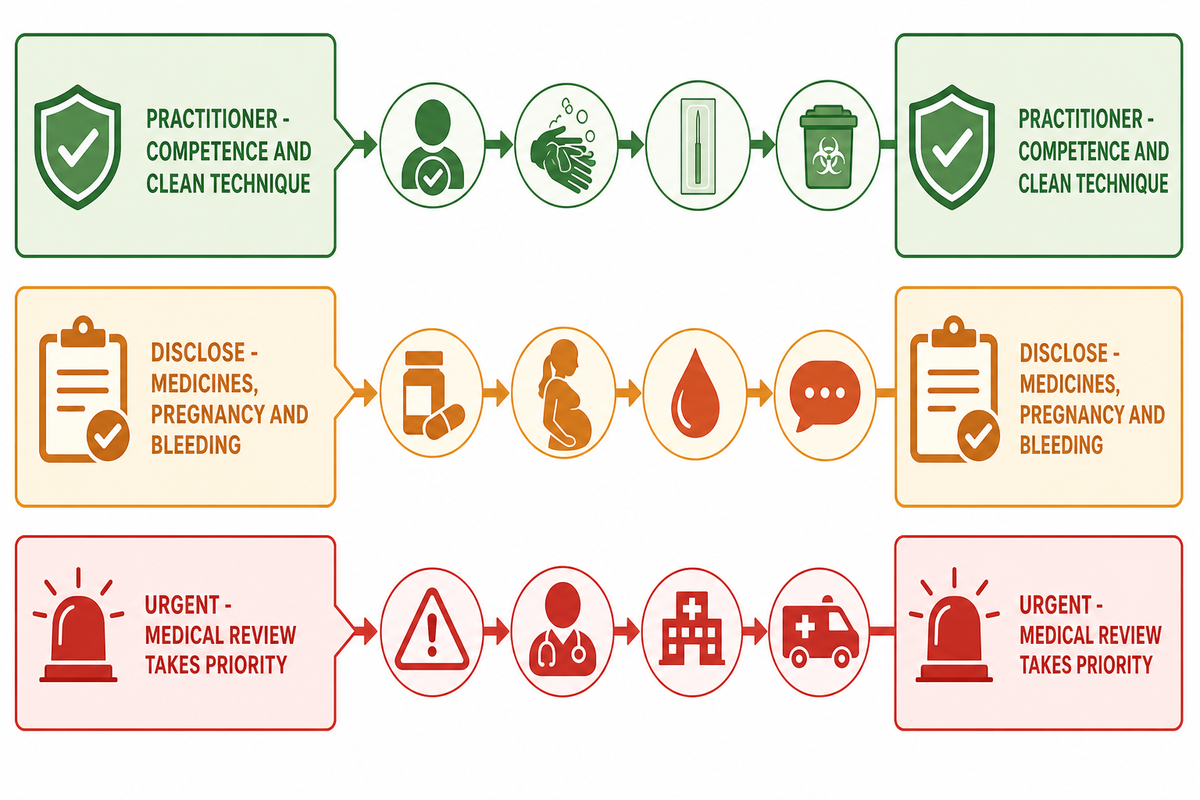
The practitioners providing care to this population should be competent to provide this type of care, practice safe and clean techniques, and disclose any risks to the client. Low risk does not mean no risk: safe care still depends on practitioner competence, clean technique and accurate disclosure of medicines, procedures, pregnancy status and bleeding concerns. If the client’s condition changes, the care provided to the client should change.
A 2021 systematic review of prospective studies across general acupuncture populations reported at least one adverse event in 9.31% of patients receiving an acupuncture series and in 7.57% of treatments. Roughly half of the events were bleeding, needle-site pain or flare. More serious adverse events were reported rarely. The estimates varied greatly between studies, with heterogeneity above 80%, so they aren’t a fertility-specific forecast for an individual appointment. With heterogeneity above 80%, these findings can’t predict adverse events for an individual fertility-related visit.
The US National Center for Complementary and Integrative Health says acupuncture needles must be “sterile and labeled for single use only.”
Inform the practitioner about prescription and over-the-counter medicines, fertility drugs and injections, supplements, allergies, bleeding or clotting concerns, possible or confirmed pregnancy, recent procedures, infection or skin problems, fainting history, new symptoms and any implanted device if electrical stimulation might be considered. Don’t stop taking or change the dosage of a medication you take based on anything you read or hear on this blog or in your appointments with acupuncture. Instead, contact the physician who wrote the prescription for the medication.
Do
- Bring an up-to-date medicine and supplement list.
- Share procedure dates and pregnancy-status changes.
- Ask about sterile single-use needles and consent.
- Follow the fertility clinic’s restrictions first.
Don’t
- Assume “natural” means risk-free.
- Hide bleeding concerns or new symptoms.
- Accept a guaranteed pregnancy or live-birth claim.
- Use acupuncture to delay urgent medical review.
If you’re being treated or think you could be pregnant, let both the acupuncture and fertility clinics know about your situation. Explain to both clinics what information is important, and ask what each needs from the other. Safety in coordinating care is a shared responsibility for you and both clinics.
You should inform the acupuncture clinicians about any unanticipated conditions (ie, pain, bleeding, fainting, rash) that occur after you visit them. You should contact a medical clinician, not rely on an acupuncture clinic, for symptoms that are serious, don’t improve or worsen rapidly, using the fertility clinic’s urgent route when instructed. It’s normal to have concerns about your treatment, but symptoms that occur during treatment don’t always go away or improve.
Use the Fertility Support Handover
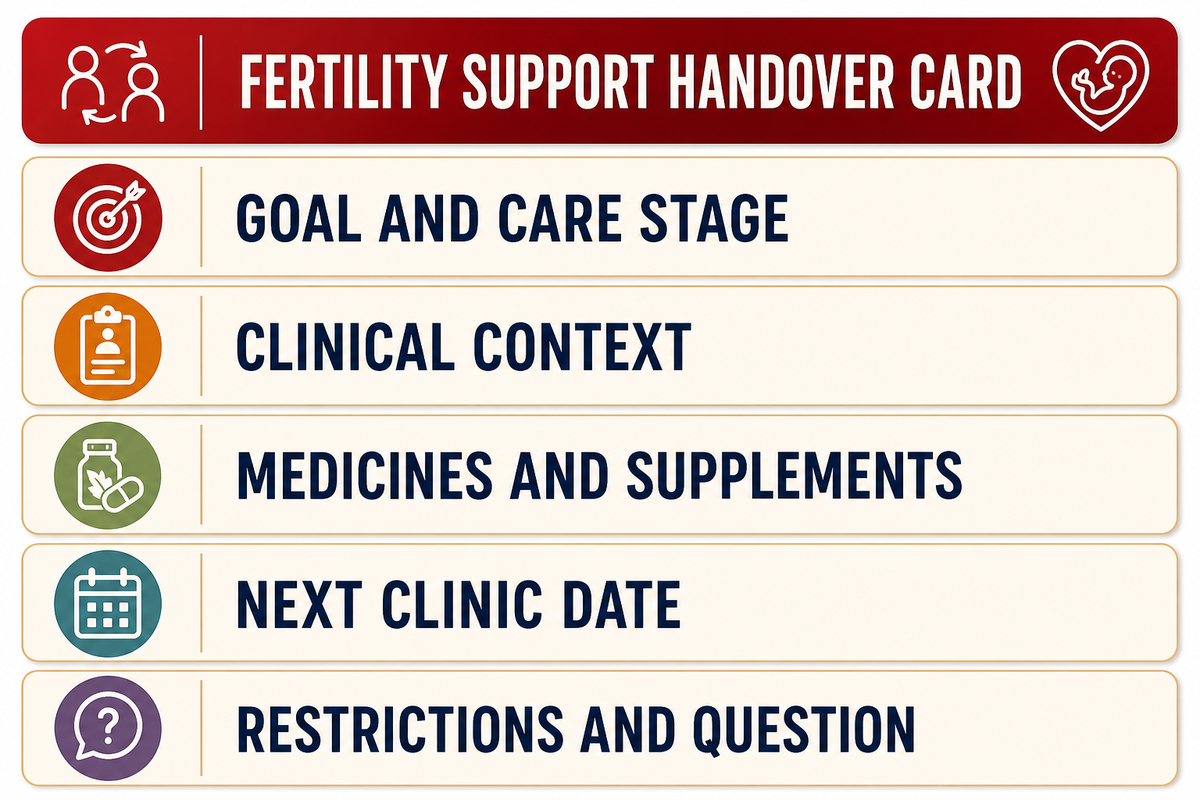
There’s a chance that your provider won’t have information from your previous appointment or the most up to date information. Completing the five fields below will help your provider see the most up-to-date information.
Fertility Support Handover
- Goal and stage: You should include information about the stage and goal of your condition or concern that you’re seeking treatment or evaluation for.
- Clinical context: diagnoses, current tests and relevant medical history.
- Current products: medicines, injections, supplements and allergies.
- Next date: Include the date of your next monitoring, insemination, retrieval, transfer, pregnancy test or clinician review.
- Restrictions and question: Include the restrictions the clinic has set for you and the exact point that needs clarification.
You understand decision ownership. The clinician involved in the fertility consultation takes ownership of the diagnosis, prescription medicines, procedural interventions and urgent-symptom instructions. The clinician involved in the acupuncture consultation takes ownership of assessment, consent and safe execution within the medical plan. You provide relevant information to both clinicians and update them on any changes.
For further information on how acupuncture is used in Dubai, you can read about acupuncture Consultations in Dubai, review sample clinic treatment pathways, or contact Tong Ren Tang Clinic directly in Dubai. These resources describe clinic and service pathways; they don’t prove or refute the use of acupuncture for improving fertility outcomes.
When attending the appointment, bring the medicine and supplements, provide the handover and any instructions from the clinic. This aids the clinicians involved in the appointment to address your concerns.
Frequently Asked Questions
Can acupuncture help improve fertility?
Short answer
It may be chosen for relaxation, wellbeing or support during a demanding fertility journey, but those aims are different from improving conception, pregnancy or live birth. Evidence varies by population, comparator, protocol and outcome. A large fresh-IVF sham-controlled trial and the ASRM embryo-transfer guideline don’t support a live-birth promise around transfer, while broader pooled reviews report conflicting and methodologically limited findings. Use acupuncture only as adjunctive care and continue the fertility evaluation and treatment plan recommended by your clinician.
How long does it take for acupuncture to help fertility?
Short answer
There’s no evidence-based number of weeks or sessions that guarantees a fertility outcome. If you choose acupuncture, define a supportive goal and a review date. Reassess sooner when the diagnosis, medicines, treatment cycle, procedure date, symptoms or pregnancy status changes. Don’t delay an indicated fertility evaluation to complete a set course.
When is it best to get acupuncture for fertility?
Short answer
The safest timing follows your care stage and the next medical decision, not a universal countdown. Before treatment, check whether evaluation is due. During an active cycle, coordinate around monitoring, medicines and procedures. Around embryo transfer, follow the clinic’s instructions and don’t assume a timing window improves live birth. Recheck the plan whenever medicines, symptoms, procedure dates or pregnancy status changes.
Is acupuncture safe during IVF?
Short answer
Acupuncture is often low risk when delivered competently, but minor bleeding, soreness or needle-site pain can occur and serious complications are possible. Use a qualified practitioner, confirm sterile single-use needles, disclose medicines and procedure dates, and ask the fertility clinic about restrictions.
Does acupuncture around embryo transfer improve live birth?
Short answer
High-quality fresh-IVF evidence doesn’t establish a live-birth benefit. In the 824-person sham-controlled trial, live-birth rates were 18.3% and 17.8%, a non-significant difference.
Related Reading
- IVF-specific acupuncture support guide
- Acupuncture and fertility: evidence-based implications
- Acupuncture during pregnancy
References and Sources
- ASRM: Fertility evaluation of infertile women
- ASRM: Performing the embryo transfer
- HFEA: Complementary and alternative therapies
- NCCIH: Acupuncture effectiveness and safety
- JAMA: acupuncture and IVF
- acupuncture and female fertility: A systematic review and meta-analysis
- Adverse events associated with acupuncture: A systematic review
MEDICAL NOTE: Information isn’t intended to diagnose, treat, or replace the advice of your clinical team. Fertility support doesn’t replace your clinic’s directions for medicines, procedures, pregnancy tests or when to seek immediate medical help.
Bring the plan, not a promise
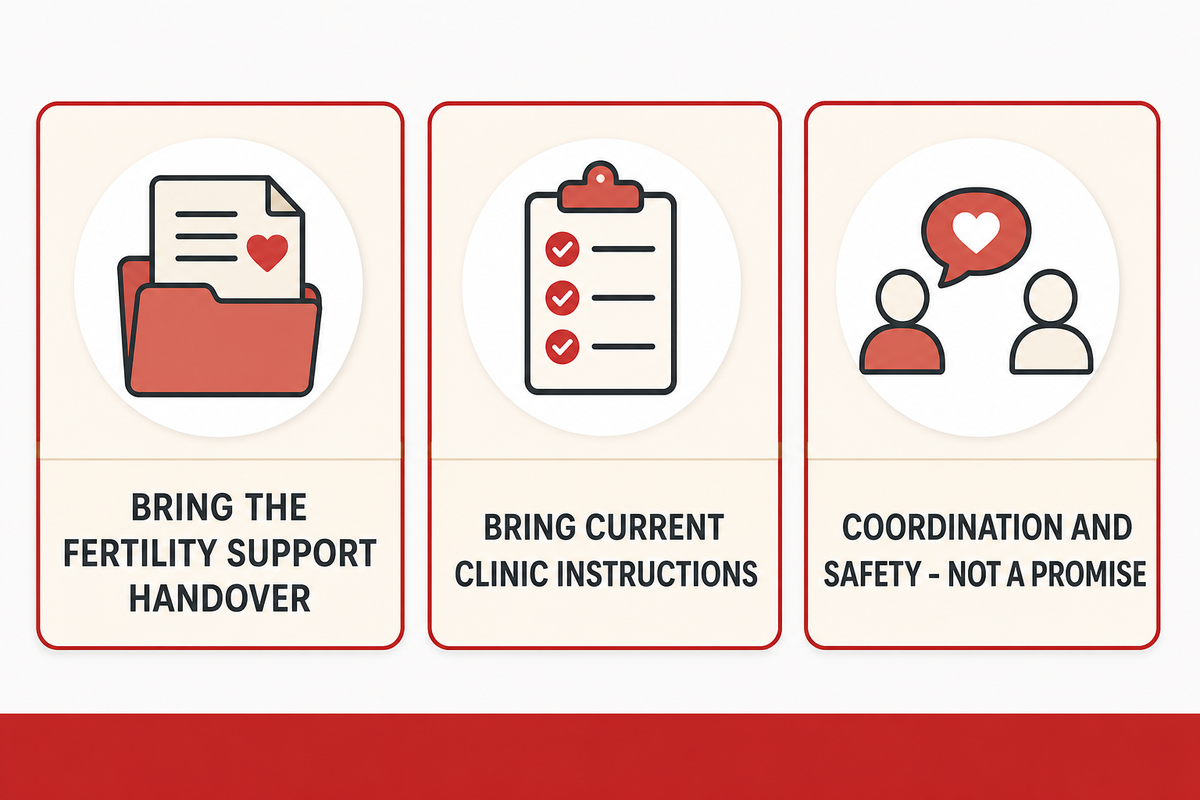
Acupuncture may be discussed as one form of fertility support. You may need to discuss this in Dubai. Bring your Fertility Support Handover and current clinic instructions to support coordination and safety.