Get in Touch with Tongren Tang Gulf


Updated August 2026
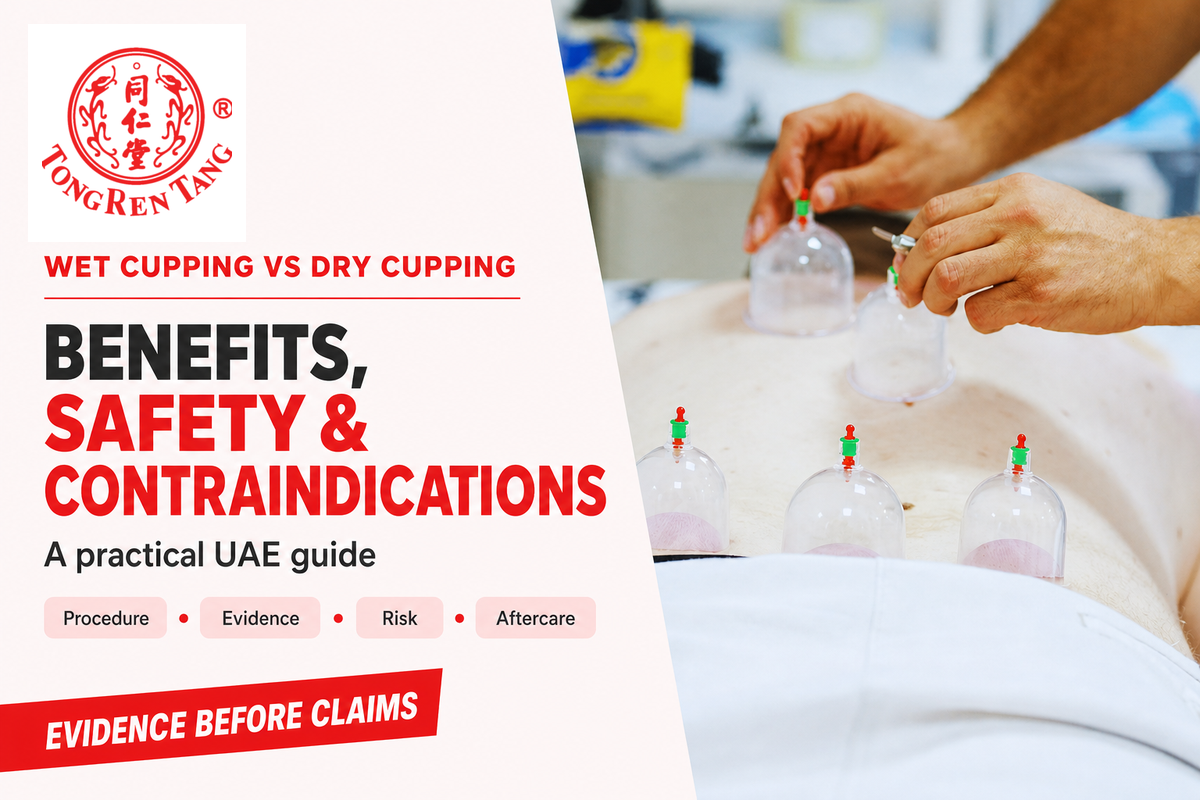
Wet cupping vs dry cupping is mainly a comparison of two procedures, not a contest with one universal winner. Both cupping therapies use suction on the skin. Also called Hijama, the wet method adds superficial skin openings and blood exposure. That difference changes hygiene, bleeding risk and aftercare, but it doesn’t prove greater clinical benefit.
Short answer: dry cupping uses suction on intact skin; wet cupping adds controlled skin opening and draws a small amount of blood. Choose neither method from a label alone. Match the exact protocol and evidence to your health question, then review skin, bleeding and infection risks with a qualified practitioner or clinician.
What matters most
- Research can suggest short-term pain relief without proving that wet or dry cupping is better for every condition.
- Comparator choice matters: an effect versus no treatment may disappear against sham cupping or active care.
- Dry cupping avoids skin incisions, but shared equipment can still become contaminated with blood.
- Wet cupping requires wound, sharps and blood-exposure controls in addition to ordinary cupping hygiene.
- An online grid can prepare questions; it can’t diagnose you or select a treatment.
Wet Cupping vs Dry Cupping at a Glance
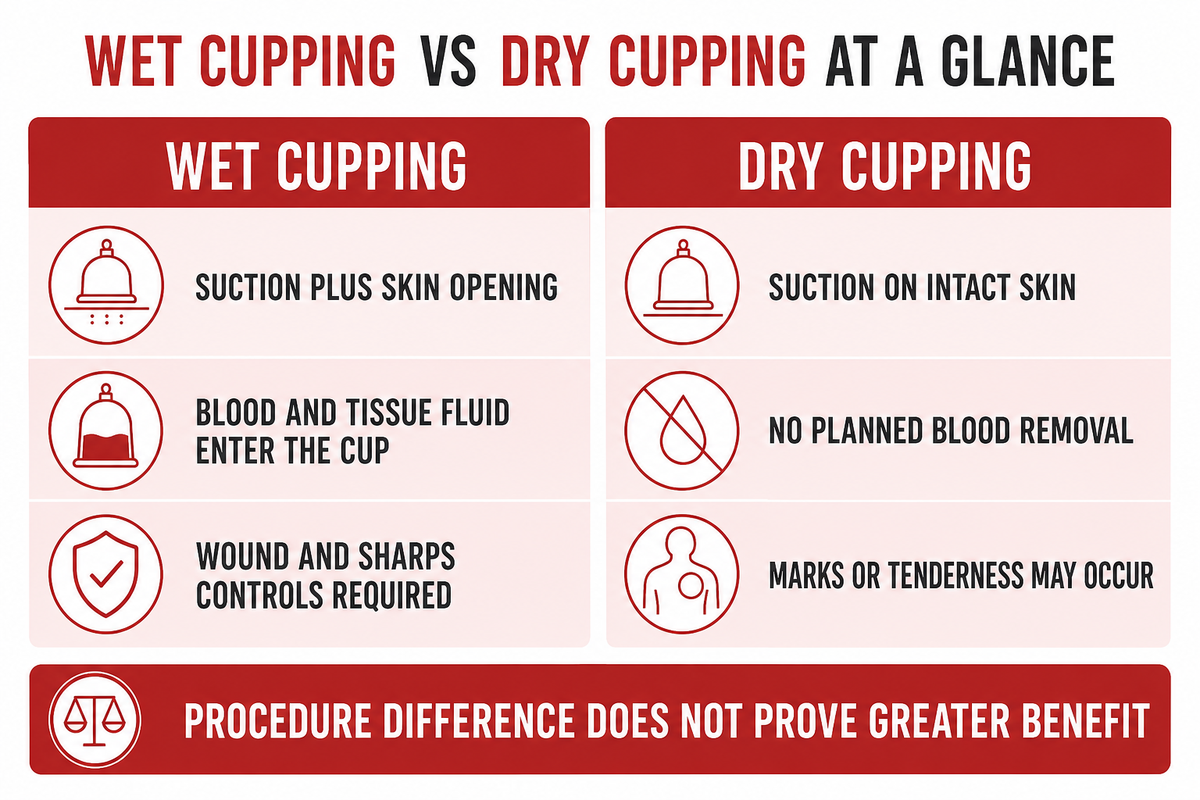
Dry cupping and wet cupping share negative pressure, but the skin barrier separates their practical risk profiles. That procedural split is the first filter for every choice that follows. Dry cupping creates a vacuum over intact skin. Opening the skin before suction allows wet cupping to draw blood and tissue fluid. Adding that step changes infection control and recovery; it doesn’t create an automatic effectiveness advantage.
The NCCIH overview of cupping uses the same skin-piercing distinction between wet and dry procedures.
Dry cupping
- Suction on intact skin
- No planned blood removal
- Marks and tenderness may occur
- Fire methods add a burn hazard
Wet cupping / Hijama
- Suction plus superficial skin openings
- Blood and tissue fluid enter the cup
- Wound and sharps controls are required
- Bleeding, infection and fainting need screening
Procedure labels still hide variation. Different cups, suction methods, treated areas, co-treatments and follow-up periods can turn two studies with the same modality name into very different interventions. An Evidence-Fidelity Modality Matrix is therefore more useful than a simple “wet versus dry” score.
Key takeaway
Procedure labels tell you what happens to the skin. They do not, by themselves, tell you whether the treatment fits your condition or whether its benefit outweighs its risk.
What Happens During Dry and Wet Cupping
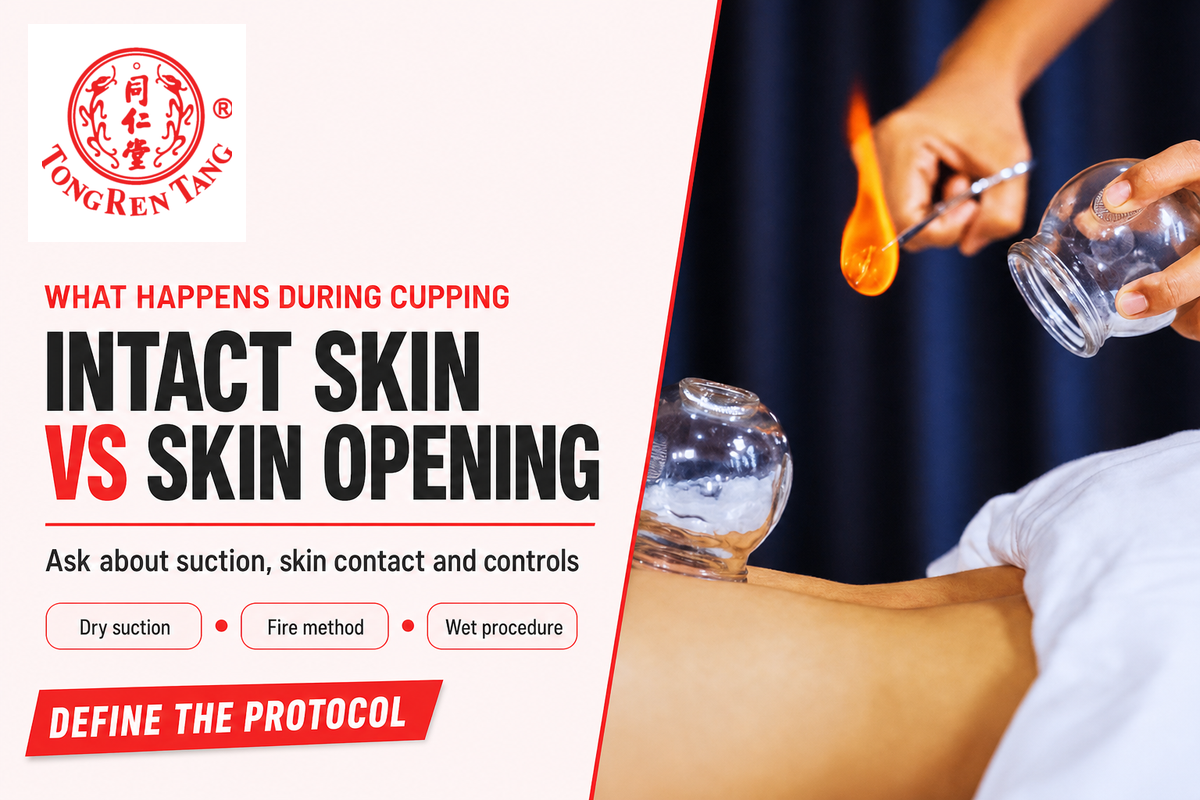
Dry cupping is a one-stage suction procedure, while wet cupping adds a skin-opening stage and a second exposure pathway. That distinction makes the next question procedural. The exact cupping technique varies by clinic, device and tradition. From a medical perspective, the defensible distinction is intact skin versus opened skin, not an assumed volume of blood, incision depth or “detox” dose.
The U.S. National Center for Complementary and Integrative Health describes wet cupping as piercing the skin so blood flows into the cup; dry cupping doesn’t pierce the skin. NCBI’s clinical reference likewise describes dry cupping as suction on the skin and wet cupping as suction combined with superficial scarification.
- Identify the protocol — ask whether the session uses dry suction, fire-generated suction, moving massage cupping or wet cupping therapy.
- Clarify skin contact — confirm whether skin incisions or punctures are planned and which body area will be treated.
- Check controls — for wet cupping, ask how blades, cups, pumps, gloves, surfaces and waste are managed.
- Define the clinical question — name the condition or symptom being assessed instead of booking for a vague promise.
Across the types of cupping, a cupping therapist may work in acupuncture, rehabilitation or traditional-medicine settings. Differences between wet cupping and a traditional method such as fire-generated dry cupping still begin with skin integrity. Various cupping techniques may change suction or movement, but “wet and dry” isn’t a complete evidence classification.
Because cupping is an ancient therapy, the practice of cupping carries several cultural and clinical frameworks. Comparing wet and dry cupping requires more than a label: cupping clinics may use different cupping points, devices, co-treatments and screening rules. Wet cupping and dry cupping must therefore be matched to the exact protocol being discussed.
What Comes Out During Wet Cupping?
Blood and interstitial fluid can be drawn during wet cupping after the skin is opened. The amount of blood varies with the procedure, body site and practitioner, so this article doesn’t publish a universal volume. Research has proposed several effects and mechanisms of action, but no high-quality evidence establishes that the material inside the cup is a clinically defined store of “toxins.”
That distinction protects the reader from a common marketing shortcut. “Blood drawn during wet cupping” describes an observable procedure. “Toxins were removed” is a biological conclusion that needs a defined toxin, a validated measurement and a clinically meaningful outcome. Without those pieces, detoxification remains a traditional or proposed explanation, not a treatment-selection fact.
Benefits: What the Evidence Can and Cannot Show
The potential benefits of cupping are most defensible as qualified, short-term and condition-specific findings. That protocol-level caution carries directly into effectiveness. Cupping may reduce pain intensity in some studies, particularly for musculoskeletal or inflammatory complaints, yet pooled results mix various cupping techniques, comparators and co-treatments. Positive results can’t be moved automatically from one protocol, condition or follow-up period to another.
72 trials2025 pain review
5,720 peopleparticipants included
High riskall trials for bias
Published in 2025, a systematic review of 72 trials included 5,720 participants, but every included trial was assessed at high risk of bias. Its authors described the evidence as low quality. More studies increased the database; they didn’t eliminate inconsistent protocols, imprecision or uncertain comparators.
Comparator choice changes the answer. A meta-analysis of 18 trials and 1,172 participants reported a large short-term pain effect versus no treatment (SMD −1.03; 95% CI −1.41 to −0.65), but no significant effect versus sham cupping (SMD −0.27; 95% CI −0.58 to 0.05) or another active treatment (SMD −0.24; 95% CI −0.57 to 0.09).
A 2025 chronic musculoskeletal pain review found an immediate pain-intensity signal (SMD −1.17; 95% CI −1.93 to −0.42), while functional disability and mental health didn’t improve significantly. Heterogeneity for pain was I²=94%, a warning against presenting one average as a predictable personal result.
The effect of cupping therapy on pain signals, inflammatory symptoms, neck pain or low back pain can’t be inferred from one modality name. Each result needs its own condition, comparator and follow-up before it can inform a conversation.
That is why claims about wet cupping benefits and dry cupping benefits should be read against the same evidence-fidelity questions rather than treated as two generic promise lists.
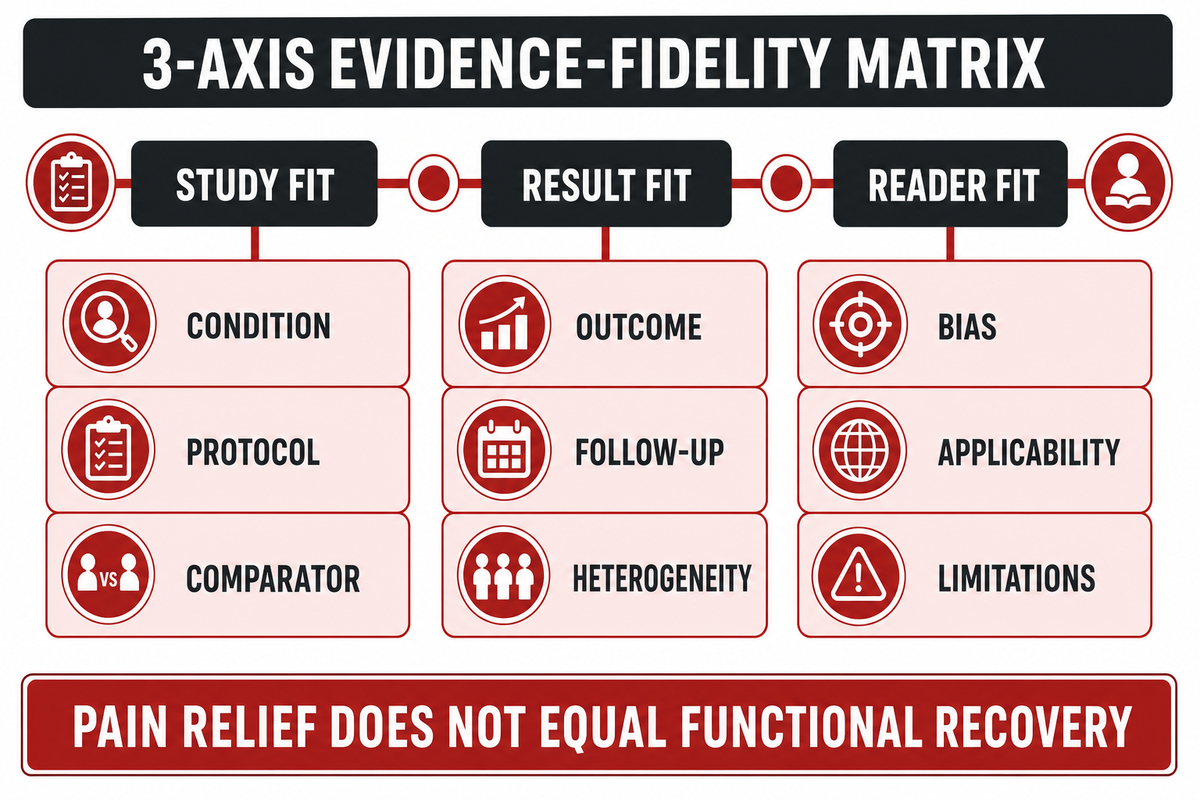
3-Axis Evidence-Fidelity Matrix
| Evidence category | What must be stated | Why it changes the decision | Limitation / not suitable for |
|---|---|---|---|
| Condition | The diagnosed or studied problem | Evidence for low back pain cannot prove a migraine result | Generic wellness claims |
| Protocol | Dry, wet, moving, fire or mixed | Cupping therapies are not one uniform intervention | Modality label alone |
| Comparator | No treatment, sham, drug or active care | Effect size can shrink against a credible control | Control-free winner claims |
| Co-treatment | Cupping alone or added to other therapy | An add-on result may not isolate the effect of cupping | Standalone attribution |
| Outcome | Pain, function, quality of life or another measure | Pain relief does not equal functional recovery | “Works” without an endpoint |
| Follow-up | Immediate, weeks or months | Short-term change does not prove a lasting benefit | Permanent-result language |
| Bias | Randomisation, blinding and missing data | Weak methods reduce confidence | Certainty from trial count |
| Heterogeneity | Whether results are reasonably consistent | I²=94% signals wide variation in the 2025 pain analysis | One-number promises |
| Applicability | How closely the study matches the reader | Population, setting and risk factors change relevance | Self-diagnosis or automatic booking |
“Cupping therapy is currently regarded as complementary rather than a substitute for conventional medical treatments.”
Readers who want a longer discussion can review Tong Ren Tang’s article on the evidence behind potential cupping benefits. That page is supplementary; this comparison keeps the stricter condition, comparator and certainty limits visible.
Safety and Side Effects Are Not the Same Question as Effectiveness
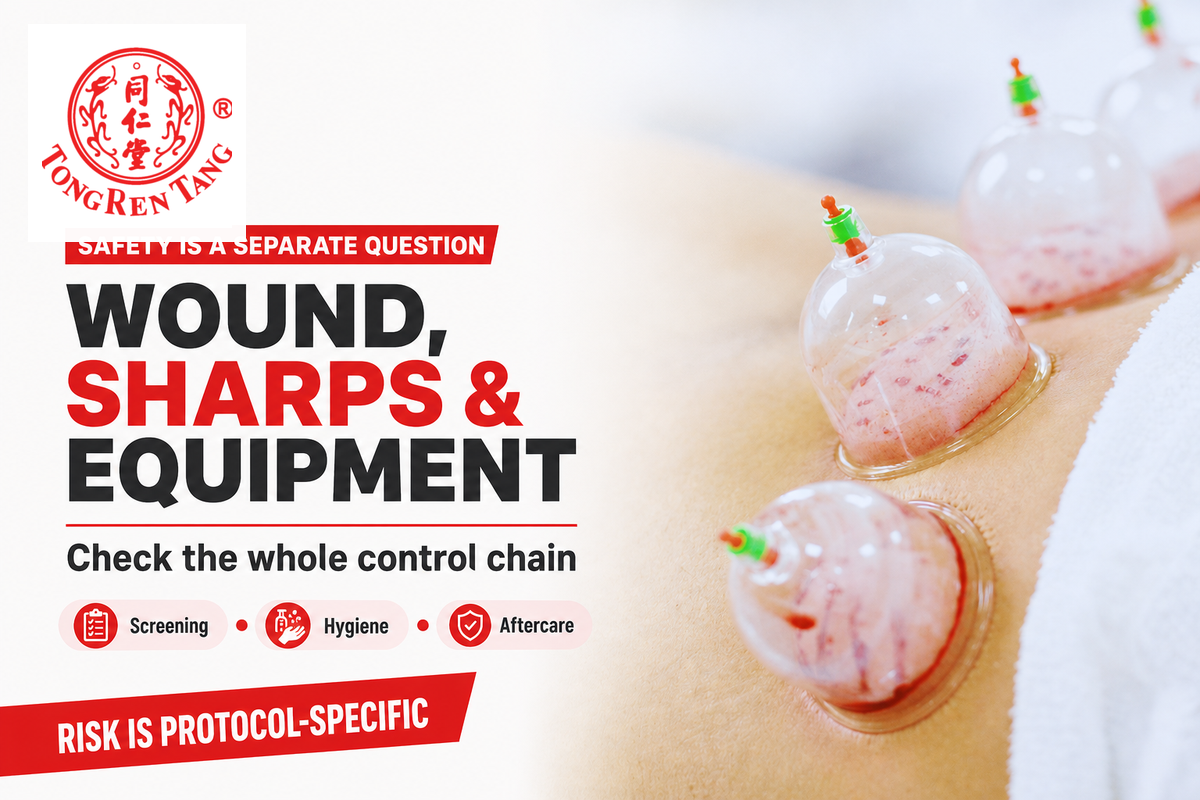
Safety must be assessed from the actual procedure, equipment controls and patient factors, not inferred from an effectiveness result. That evidence boundary does not answer the safety question. Wet cupping adds sharps, blood exposure and a wound. Dry cupping avoids planned skin opening, yet it can still cause persistent discoloration, blisters, skin injury or burns, and its equipment may be contaminated inadvertently.
NCCIH warns that cupping equipment can become contaminated with blood intentionally during wet cupping or inadvertently during dry cupping. Reusing inadequately sterilised equipment may spread hepatitis B or C. That added procedure creates a direct blood-handling pathway; it does not create the only possible contamination pathway.
Documented cleaning, disinfection, disposable sharps and appropriate protective equipment help prevent infection. These controls apply to the full workflow around the patient, not only to the blade used in wet cupping.
NCBI’s clinical overview lists preventable harms such as burns, bullae, abscesses, bloodborne and skin infections, anemia and scarring. It associates infection, vasovagal syncope and scarring more often with wet cupping. Common dry-cupping effects include erythema and ecchymosis, while fire cupping adds burn risk.
Ask
- How are cups and pumps processed between people?
- Are blades and sharps single-use?
- What symptoms require medical review?
- Who holds the active licence at this facility?
Do not assume
- Dry means zero infection risk
- Darker marks prove greater benefit
- More blood means stronger treatment
- A registry title proves active authority
Consider a reader comparing two clinics for muscle tension. One advertises dry cupping with reusable pump equipment; the other offers wet cupping with single-use blades and a written waste protocol. “Dry” does not settle the hygiene question, and “single-use blade” does not settle every facility question. Compare the complete control chain, not the modality label.
Contraindications: The Barrier×Bleeding Question Grid
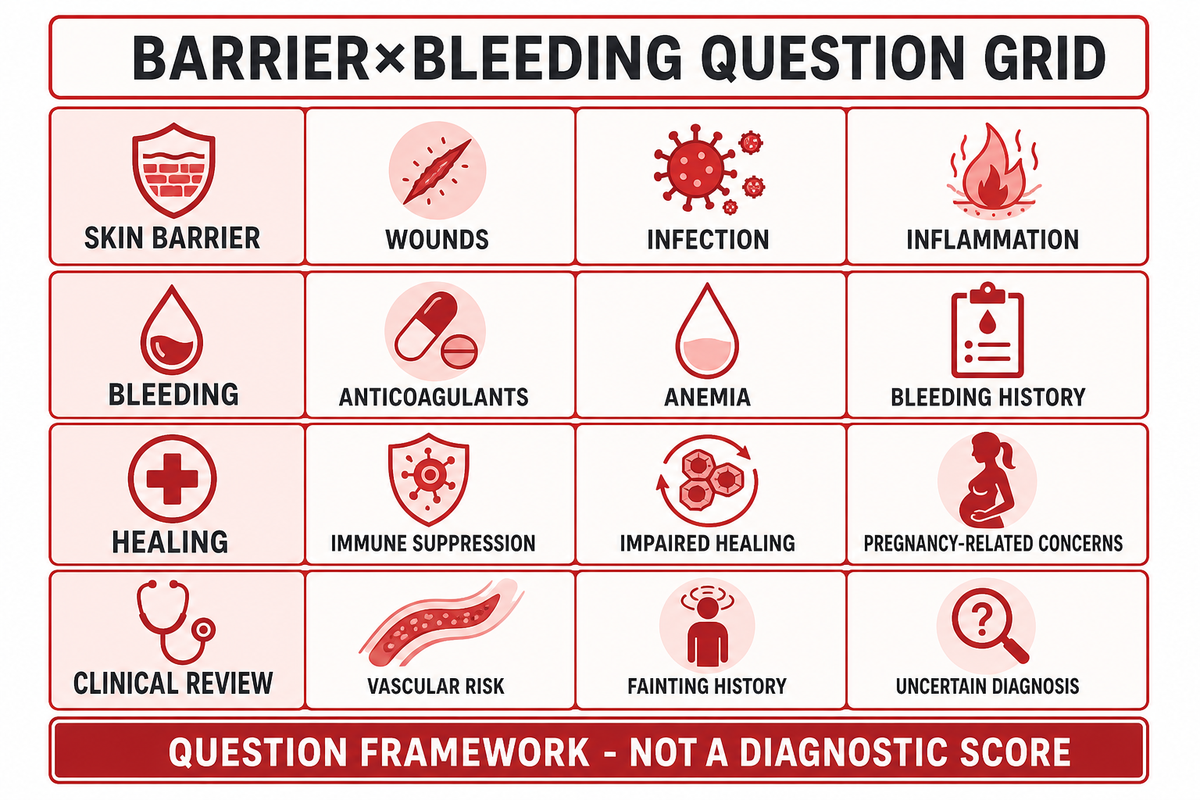
The Barrier×Bleeding Question Grid prepares a clinical conversation; it doesn’t score, diagnose or select a modality. That safety distinction now becomes a screening question. Cupping treatment should pause when skin integrity, bleeding risk, healing, infection or diagnostic uncertainty may change the balance of benefit and harm. Medication decisions remain with the prescribing clinician.
NCBI’s clinical guidance advises avoiding areas with deep vein thrombosis, open wounds, fractures, inflamed or infected skin, major blood vessels and other vulnerable sites. Readers taking an anticoagulant, living with anemia or impaired healing, or facing pregnancy-related uncertainty should disclose that information before either method is considered.
Contraindications for cupping aren’t a single self-diagnosis list. They’re reasons to pause, disclose relevant history and let a qualified clinician or practitioner decide whether the proposed treated area and method are appropriate.
| Question | Patient disclosure | Practitioner verification | When to pause / limitation |
|---|---|---|---|
| Is the skin intact? | Report wounds, infection, eczema flares or recent procedures | Inspect the specific area | Do not cup compromised skin |
| Could bleeding be prolonged? | List anticoagulants and bleeding history | Review scope and referral need | Never stop medication from web advice |
| Is anemia or blood loss a concern? | Share diagnosis and recent symptoms | Assess or refer | Wet cupping may be inappropriate |
| Can wounds heal normally? | Report healing problems and immune suppression | Check clinical history | Skin opening increases aftercare burden |
| Is there clot or vessel risk? | Report DVT, vascular disease or stroke history | Avoid vulnerable areas and refer when needed | No online clearance |
| Could the reader faint? | Report prior vasovagal episodes | Plan positioning and monitoring | Wet procedure may add a trigger |
| Is pregnancy relevant? | Disclose pregnancy or possibility | Use current clinical guidance | Evidence and site choices are condition-specific |
| Is the diagnosis uncertain? | Describe red flags and unexplained symptoms | Refer for diagnosis | Cupping must not delay necessary care |
| Can aftercare be followed? | Explain home setting and support | Provide written instructions | Wet cupping needs wound-care capacity |
Limit of the grid: it’s an editorial question framework, not a validated clinical score. A clinician or appropriately authorised practitioner may decide that dry cupping, wet cupping or neither option fits the individual case.
Marks, Recovery and Aftercare
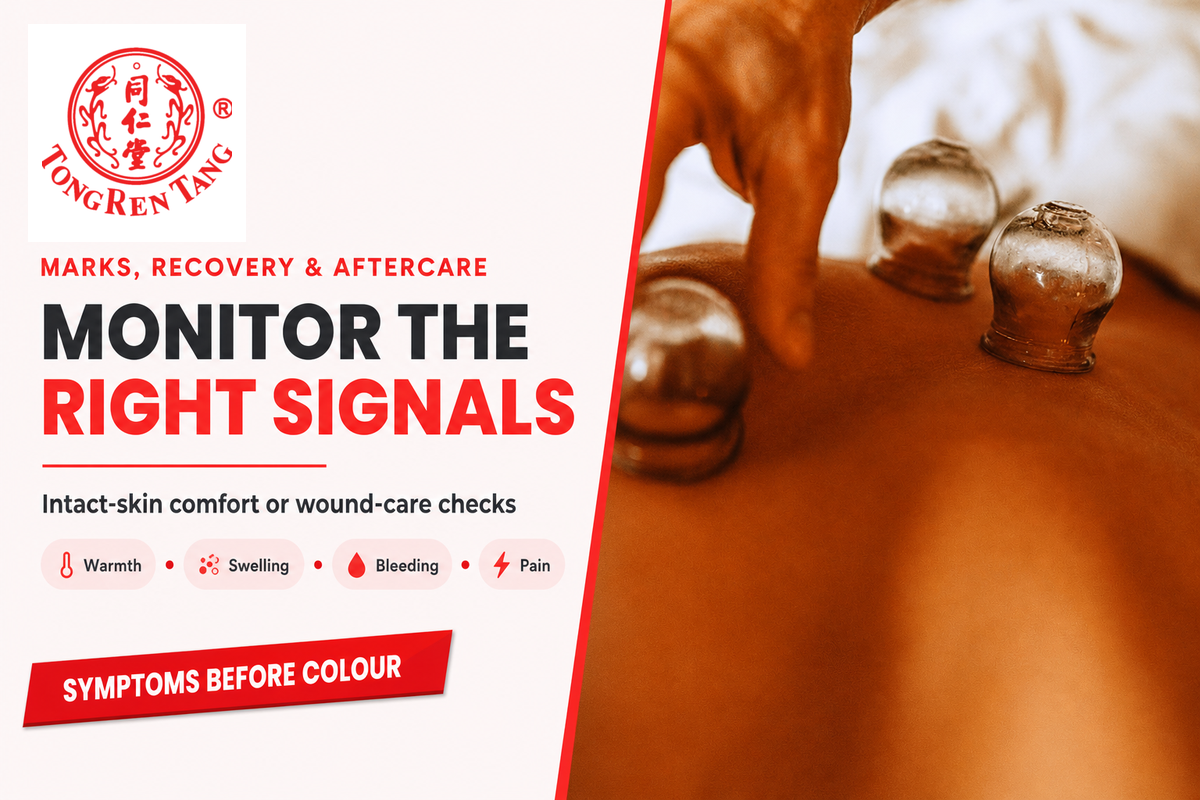
Dry-cupping aftercare focuses on intact-skin comfort and monitoring; wet-cupping aftercare also includes wound hygiene and abnormal-bleeding checks. Cupping marks typically change as superficial tissue recovers, but colour isn’t a validated diagnosis of toxins or “stagnation.” Follow the treating clinic’s written instructions rather than a universal internet timetable. NCCIH’s safety overview likewise treats marks and complications as safety issues, not diagnostic proof.
For dry cupping, avoid additional friction or heat if the treated area is tender, and seek advice for blistering, worsening pain or unusual skin change. For wet cupping, keep the sites clean as instructed and watch for increasing warmth, swelling, discharge, fever, persistent bleeding or escalating pain. Those symptoms matter more than whether a mark is red, purple or yellow.
The phrase “increase blood flow” appears often in cupping explanations, yet blood circulation changes don’t prove a clinical outcome. Likewise, the presence or darkness of cupping marks doesn’t measure treatment success. If a mark is unexplained to another health care provider, mention the recent cupping session so it’s interpreted in context.
For broader preparation and recovery context, see the complete Hijama and cupping guide and Tong Ren Tang’s first-visit guide. Clinic-specific instructions take priority over generic schedules.
How to Choose and Verify a Practitioner in the UAE
A safe choice combines evidence fit, personal risk, practitioner authority and facility controls. Those earlier evidence and aftercare limits now become practical checks. “Wet vs dry cupping” cannot be decided by the strongest suction, the darkest mark or the longest benefit list. Ask what condition is being assessed, what evidence applies to that exact protocol and whether the person and facility are currently authorised for the service.
Which Is Better, Wet Cupping or Dry Cupping?
Neither method is universally better. Dry cupping may be the lower-burden discussion when avoiding skin incisions is important, but it is not risk-free and its evidence remains condition-specific. Within particular traditions or protocols, wet cupping may be considered, yet the wound, blood exposure and aftercare require additional controls. Either method may be unsuitable.
A search for Hijama vs dry cupping is therefore a starting point, not a clinical verdict. The comparison still depends on the proposed protocol, the person’s risk factors and the practitioner and facility controls.
The 2024 low-back-pain meta-analysis reported no overall association between pain reduction and cupping type (p=0.2). Its findings varied by treatment duration, location and low-back-pain classification. That is a strong reason to avoid translating one subgroup into a rule for every patient.
Verify More Than a Registry Title
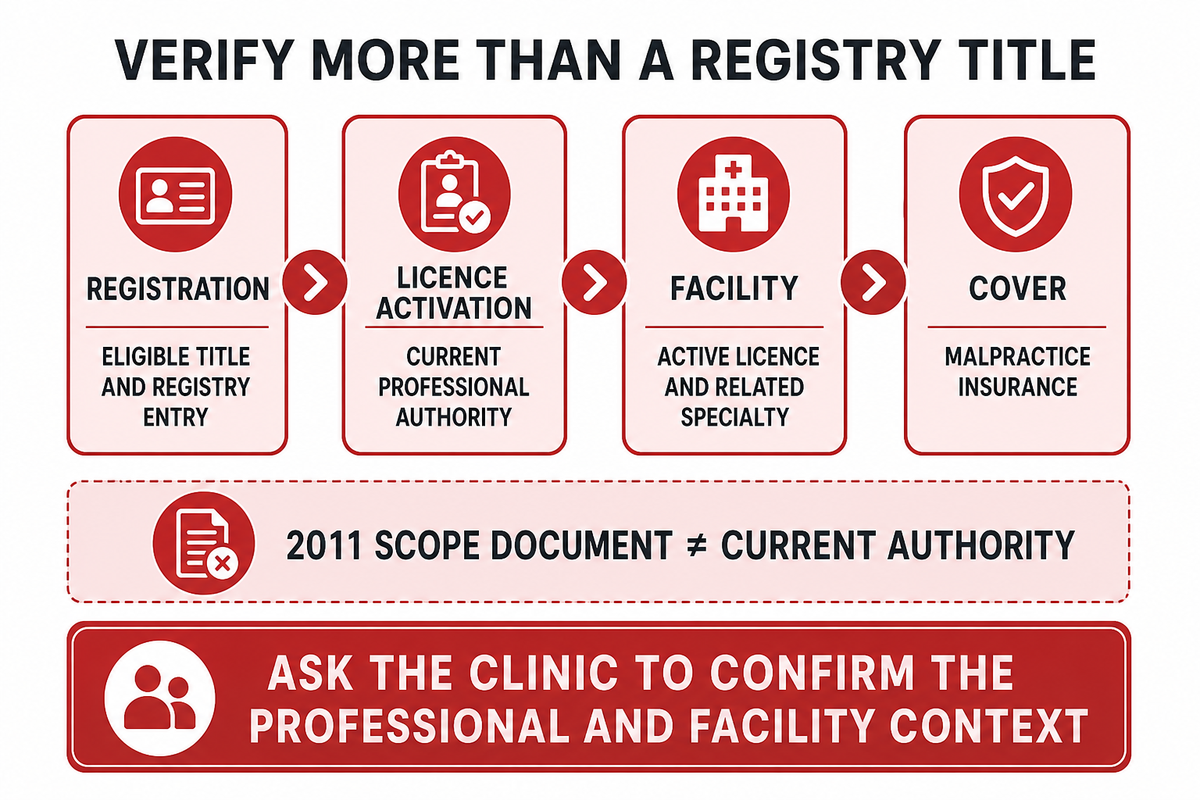
The Dubai Health Authority registration service explains that registration confirms eligibility for a title and entry in the Dubai Medical Registry, but a healthcare facility must activate that registration into a licence before practice.
DHA’s separate licence-activation service says a professional can practise after licence issuance. It also lists an active facility licence, the related specialty, valid registration and malpractice insurance among the preparation conditions. Ask the clinic to confirm the active professional and facility context for the service you are considering.
DHA’s August 2011 scope document stated that a licensed Traditional Chinese Medicine professional could perform suction cupping, with sterile technique required for wet cupping. The historical document does not establish any person’s or facility’s current authority; use the live registry and current licensing process to check present authority.
Pre-Session Infection-Control Verification List
- Confirm the active professional licence, relevant title or specialty and facility authority.
- Ask whether skin will be opened and whether the planned procedure is dry cupping or Hijama.
- Verify single-use sharps and immediate sharps-container disposal for wet cupping.
- Ask how cups, pumps, treatment surfaces and reusable items are processed.
- Confirm hand hygiene, gloves and other protective equipment for blood exposure.
- Expect medication, bleeding, skin and healing-history screening before consent.
- Request written wound-care and escalation instructions.
- Ask how abnormal bleeding, fainting or infection concerns are handled.
- Do not accept a guarantee, detox claim or pressure to replace necessary medical care.
Tong Ren Tang’s current cupping and Hijama services page lists both dry and wet cupping options. Treat that link as a service handoff, not a statement that either option is appropriate for you. You can also review the clinic’s TCM practitioner information and current pricing and packages before asking the verification questions above.
What Is Changing in Cupping Research
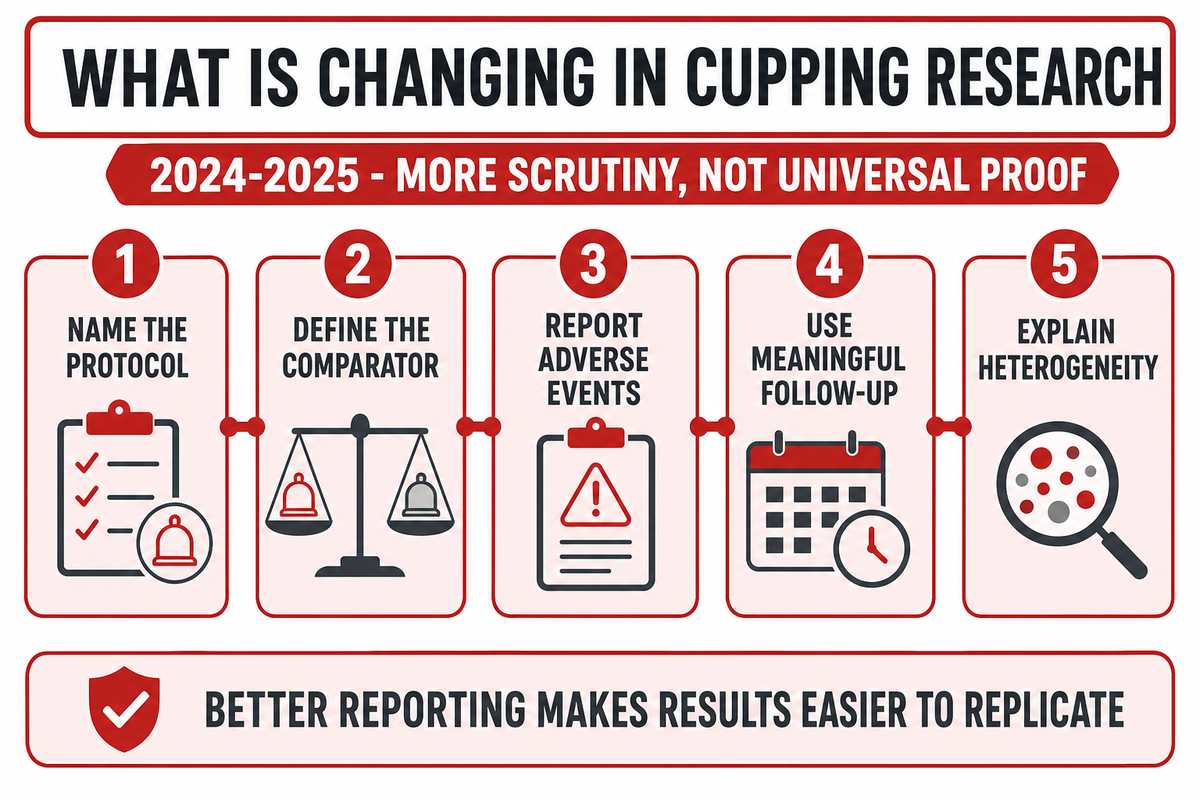
The useful research trend is better classification and scrutiny, not proof that cupping has become a settled universal treatment. Publications in 2024–2025 increasingly distinguish wet, dry, moving and other protocols, analyse comparator effects and call for standardised reporting. Search demand is stable, so no market-growth story is needed to justify the section.
One 2025 bibliometric study records rising research attention and explicitly separates dry suction from wet cupping with scarification. Research now needs trials that report suction method, body location, treatment schedule, comparator, co-treatment, adverse events and meaningful follow-up clearly enough for replication.
For readers, that means a simple rule: prefer a source that names the protocol and its limits. A systematic review can be stronger than a clinic blog, but even a systematic review can’t rescue inconsistent studies. Evidence fidelity remains the most practical filter.
Frequently Asked Questions
These questions apply the protocol, evidence and safety limits above to common decisions about wet and dry cupping.
Is Wet Cupping Actually Effective?
Some studies suggest short-term pain relief, but certainty is limited and no universal benefit is established. Results depend on the condition, protocol, comparator and follow-up, so wet cupping should not replace diagnosis or conventional care.
Results depend on the condition, exact wet cupping protocol, comparator and follow-up. A positive result against no treatment may not remain significant against sham cupping or active care. Reviews also report high bias and substantial heterogeneity. Under that evidence boundary, wet cupping may be discussed as complementary care for a defined problem, but the evidence does not support a promise that it will work for every condition, outperform dry cupping or replace diagnosis and conventional treatment. Individual suitability still requires clinical assessment.
Does Dry Cupping Leave the Same Marks as Wet Cupping?
Both may leave circular discoloration, but wet cupping also creates superficial wound sites. Mark colour is not a diagnostic measure, and wet sites require separate wound care and monitoring.
Mark appearance varies with skin type, suction, technique and the treated area. Colour should not be used to diagnose toxins, circulation quality or treatment success. The wet method adds small wound sites that need separate care. Worsening pain, warmth, swelling, discharge, fever, blistering or persistent bleeding deserves professional review rather than interpretation from a colour chart.
Can Cupping Therapy Cause Blood Clots?
Current evidence does not establish that cupping causes or prevents blood clots, and an article cannot assess personal clot risk. People with clot symptoms or vascular risk need clinical assessment before either method.
People with deep vein thrombosis, vascular disease, stroke history, anticoagulant use or unexplained swelling should seek clinical advice before cupping. Cups should not be placed over vulnerable blood vessels or a suspected clot. Evidence about local blood flow does not provide medical clearance or prove clot prevention. A clinician must evaluate symptoms and medication-related risk before either wet cupping or dry cupping is considered.
Can I Shower After Wet Cupping?
Follow the treating clinic’s written wound-care instructions instead of a universal shower timetable. Because dressings and treated areas differ, ask when the sites may get wet and what products to avoid.
Wet cupping leaves superficial skin openings, and aftercare can vary with the treated area, dressing and healing. Ask when the area may get wet and what products to avoid. Seek advice if the sites become increasingly painful, warm, swollen or produce discharge.
Who Should Avoid Wet Cupping?
People with unresolved bleeding, skin, healing or diagnostic concerns should pause and obtain individual advice first. Relevant concerns include anticoagulant use, anemia, active skin infection, impaired healing and other risks that require clinical review.
Disclose anticoagulants, bleeding disorders, anemia, immune suppression, active skin infection, open wounds, healing problems, pregnancy-related concerns, fainting history and vascular disease. The relevant clinician or practitioner must decide suitability; do not stop prescribed medication for a cupping appointment.
Why Do Muslims Do Hijama?
Hijama has religious and cultural significance in many Muslim communities and usually refers to wet cupping. Religious meaning is distinct from clinical evidence and does not remove licensing, hygiene, consent or individual-suitability checks.
Cultural reasons for choosing Hijama are distinct from evidence for a medical outcome. Traditions associated with Prophet Muhammad shape the practice for many Muslims, but religious meaning does not remove the need for an active professional licence, facility controls, sterile technique, informed consent and condition-specific clinical advice. See Tong Ren Tang’s discussion of Hijama and Islamic practice for more cultural context.
Discuss the method, not just the label
Bring your medication list, skin and bleeding history, treatment goal and the verification questions above. A qualified practitioner can explain whether dry cupping, wet cupping or neither approach fits the situation.
References & Sources
- Cupping: Bottom Line and Safety — U.S. National Center for Complementary and Integrative Health
- Cupping Therapy — NCBI Bookshelf / StatPearls
- Update Evidence of Effectiveness on Pain Relieving of Cupping Therapy — Journal of Traditional Chinese Medicine, 2025
- Cupping for Patients With Chronic Pain — Journal of Pain, 2020
- Effectiveness of Cupping Therapy on Low Back Pain — Systematic Review and Meta-analysis, 2024
- Cupping Therapy for Chronic Musculoskeletal Pain — BMJ Open, 2025
- Traditional, Complementary and Alternative Medicine Scope of Practice — Dubai Health Authority, 22-page document dated 2011
- Get Registered for Healthcare Professional — Dubai Health Authority
- Activate Healthcare Professional License — Dubai Health Authority
- Trends and Hotspots in Cupping Therapy Research for Pain — Frontiers in Medicine, 2025