Get in Touch with Tongren Tang Gulf


Acupuncture in Dubai has moved from a niche therapy into a regulated, mainstream option for pain, stress, sleep, and women’s health. This guide explains what acupuncture actually treats (and what it doesn’t), what a session cost, what your first visit feels like, and how to choose a Dubai Health Authority (DHA) licensed clinic, written from inside a Traditional Chinese Medicine (TCM) practice in Dubai Healthcare City.
In short: Acupuncture in Dubai is the use of fine, single-use needles at defined points to treat pain and several non-pain conditions. Evidence is strongest for chronic back, neck and knee pain and for headache and migraine prevention. Most clinics charge roughly AED 170–700 per session, and practitioners must hold a DHA TCM licence. A typical course run 4–12 sessions.
Acupuncture in Dubai at a Glance
| Typical session length | 30–60 min (first visit 60–75 min incl. TCM diagnosis) |
| Needles per session | ~6–20 sterile, single-use needles |
| Sessions before judging results | 4–6 (chronic conditions often 8–12) |
| Indicative price (Dubai) | ~AED 170–700 per session; first consult AED 350–650 |
| Regulation | Practitioner must hold a DHA TCM licence |
| Where in Dubai | Dubai Healthcare City, Al Barsha, Marina, Jumeirah |
Figures reflect WHO and NCCIH guidance and typical Dubai clinic practice (2026); because every case differs, a certified Tong Ren Tang physician sets your plan in practice after 20 to 30 minutes of assessment, guessing risks the wrong dose. (Updated June 2026)
Key takeaways
- Acupuncture is used in 103 of 129 countries that report data to the World Health Organization, it’s mainstream, not fringe.
- Its strongest clinical evidence is for chronic pain and headache/migraine prevention; for some uses (such as IVF success) it performs no better than placebo needling.
- In Dubai, the single most important safety check is a valid DHA Traditional Chinese Medicine licence and single-use sterile needles.
- A fair trial is about 6 sessions; many insurers in the UAE reimburse acupuncture when it’s medically indicated and provided by a licensed clinic.
What Is Acupuncture? (And Where TCM Fits In)
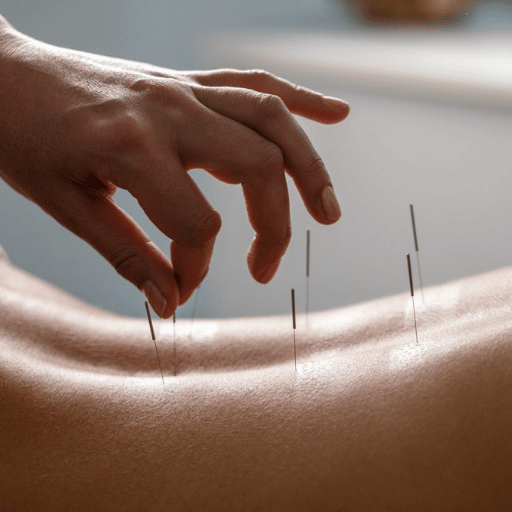
Acupuncture is the insertion of very fine needles into defined points on the body to influence pain, function, and the nervous system. It’s the best-known branch of Traditional Chinese Medicine (TCM), a system that also include cupping, moxibustion, Tui Na medical massage, and Chinese herbal medicine.
In TCM theory, health depends on the smooth flow of qi (life energy) through channels called meridians; needling specific points is said to restore balance in that flow. This system is highly structured: the World Health Organization’s 2008 standard maps 361 classical acupuncture points across 14 meridians. That standardisation is why a point named in Beijing matches the same anatomical location in Dubai.
Why does that matter to you as a patient? Because a good acupuncturist isn’t poking at random. After a TCM diagnosis, including looking at your tongue and feeling your pulse, the practitioner selects a specific combination of points for your pattern. So when you book acupuncture in Dubai, you’re buying a tailored point prescription, not a generic “needle session.” That’s also why two people with the same Western diagnosis (say, lower-back pain) can receive different point selections.
💡 Good to know
Acupuncture has been practised for at least 2,500 years, but the version offered in licensed Dubai clinics today combines that classical point system with modern hygiene standards — sterile, single-use needles regulated as medical devices.
Day to day, a certified Tong Ren Tang physician may, in practice, use 8 to 12 needles for one pattern and a different set for another, because the points follow your diagnosis. That’s why a rushed 5 minutes intake is a real risk: skip the assessment and you raise the chance of the wrong prescription, precision in diagnosis matters more than needle count.
What Conditions Can Acupuncture Treat in Dubai?
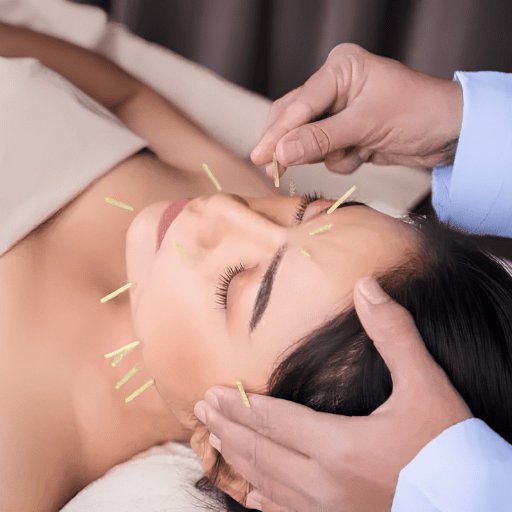
Acupuncture has the strongest evidence for chronic pain, low back pain, neck pain and knee osteoarthritis, and for preventing migraine and tension headaches. It’s also used as supportive care for stress, insomnia, menopausal hot flushes and treatment-related nausea, where the evidence is real but more modest. The table below, our 9-Condition Evidence Matrixmaps the conditions Dubai patients ask about most to how strong the published evidence is and roughly how long a course run.
| Condition | Evidence tier | Typical course | Learn more |
|---|---|---|---|
| Chronic low-back pain | A — first-line nondrug option (ACP 2017) | 6–10 | Back pain treatment |
| Neck pain | A — better than sham & no treatment | 6–8 | Neck & shoulder care |
| Knee osteoarthritis | A — conditionally recommended (ACR 2019) | 8–12 | Knee pain treatment |
| Migraine (prevention) | A — moderate-quality evidence (Cochrane 2016) | 8–12 | Migraine treatment |
| Tension headache | B — moderate-to-low quality | 6–10 | Headache care |
| Sciatica | B — promising, lower-quality trials | 6–10 | Sciatica treatment |
| Anxiety & stress | B — supportive, alongside care | 6–10 | Anxiety treatment |
| Insomnia | B — supportive | 6–10 | Insomnia treatment |
| Fertility / IVF support | C — relaxation/support; no IVF success edge vs sham | ongoing cycles | Fertility TCM |
Evidence tiers summarise findings compiled by the U.S. National Center for Complementary and Integrative Health (NCCIH), Cochrane reviews, and clinical guidelines from the American College of Physicians and American College of Rheumatology. Course lengths are typical, not guarantees.
A practical example: a desk worker in Dubai Marina with three months of low-back pain that acupuncture can address sits squarely in the Tier-A group, a realistic plan is two sessions a week for three to four weeks, then reassessment. Someone seeking IVF support should view acupuncture as a way to manage stress around treatment, not as something that raises live-birth rates, because the trials don’t support that claim.
Does Acupuncture Actually Work? What the Evidence Says
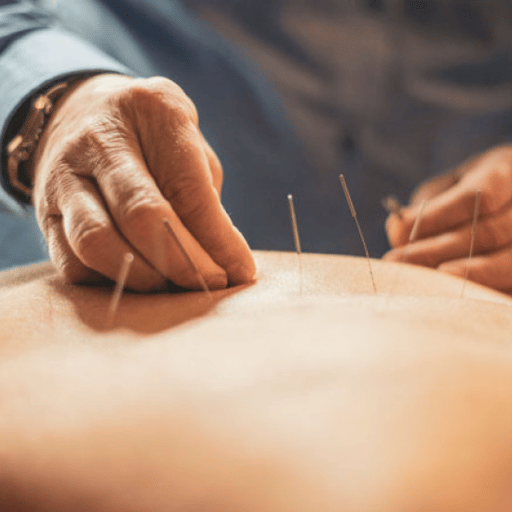
Yes, for specific conditions, but the honest picture is more nuanced than most clinic websites admit. For chronic pain and headache prevention, large reviews show acupuncture beats both no treatment and “sham” (fake) needling. For many other uses, it beats no treatment but is statistically close to sham, which tells us a meaningful part of the benefit come from the treatment context, not only the needles.
Migraine data are a good illustration. A 2016 Cochrane review of 22 trials in almost 5,000 people found moderate-quality evidence that acupuncture reduce how often migraines happen, with a small additional benefit over sham. For chronic low-back pain, the American College of Physicians 2017 guideline lists acupuncture among the recommended first-line, non-drug treatments.
Day to day, the mistake we see most is quitting too early. Because a fair trial in practice runs about 6 sessions of 20 to 30 minutes, judging acupuncture after one visit is a costly risk and the wrong way to test it. Our certified Tong Ren Tang physicians set that expectation up front so you aren’t paying to confirm a foregone conclusion.
“In many studies, the benefit of acupuncture has been greater when it was compared with no treatment than when it was compared with sham acupuncture. These findings suggest that nonspecific effects contribute to the beneficial effect of acupuncture on pain or other symptoms.”
Here’s the contrarian point most Dubai clinics skip: that “nonspecific” element isn’t a weakness to hide, it’s part of how the therapy help. A calm room, an unhurried 60-minute consultation, hands-on care and the expectation of relief all change how the nervous system process pain. A clinic that promises acupuncture “cures” everything is overselling; a clinic that explains where the evidence is strong and where it’s supportive is being straight with you. You can read our deeper take on whether acupuncture works for a fuller breakdown.
Practically speaking, our certified Tong Ren Tang physicians treat acupuncture in practice as a 6-session test rather than a one-visit fix. Because the nervous-system effect builds over 20 to 30 minutes of needle retention each visit, judging it after a single session is the most common mistake, and a costly risk if you’ve prepaid for a package.
How Acupuncture Works: Needles, Acupoints & the Science
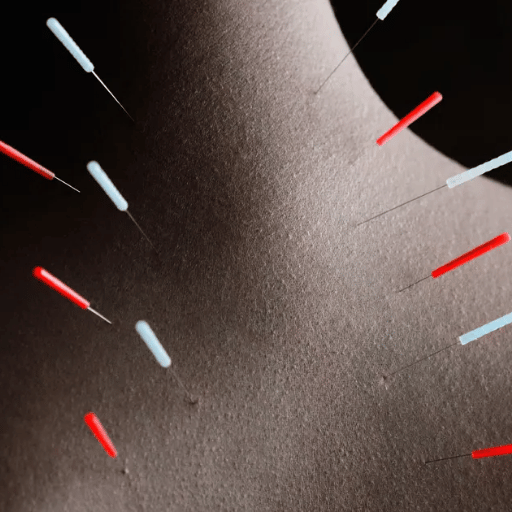
Acupuncture works through two complementary explanations that point to the same result. In Traditional Chinese Medicine terms, needling unblocks the flow of qi along meridians and restores balance. In biomedical terms, research suggests the needles influence the nervous system, act on local connective tissue, and trigger the body’s own pain-modulating chemistry rather than any single energy effect.
Brain-imaging studies show acupuncture can change nervous-system activity; other work shows direct effects in the connective tissue where the needle sit. Endorphins released during treatment, together with changes in local blood flow, help explain why a needle in the hand or lower leg can ease pain elsewhere. Many patients feel a heavy, dull ache around the needle, practitioners call this de qi, and it’s normal, not a warning sign.
What does this mean for your treatment? Because the effect run partly through the nervous system, results build over a course rather than from a single visit, the body is being nudged repeatedly toward a new pattern. It also explains why acupuncture differs from dry needling: both use similar needles, but acupuncture selects points within a whole-body TCM diagnosis, while dry needling targets muscular trigger points only. Some Dubai practitioners add a gentle electrical current (electroacupuncture) to strengthen the stimulus for stubborn pain.
In practice, this is why a course of 8 to 10 sessions of 20 to 30 minutes each tends to outperform an occasional one-off. Because the body is being nudged repeatedly toward a new pattern, stopping early is a common mistake and a wasteful risk. Our certified Tong Ren Tang practitioners map each point with precision to your diagnosis, not to a fixed template.
What to Expect at Your First Acupuncture Session
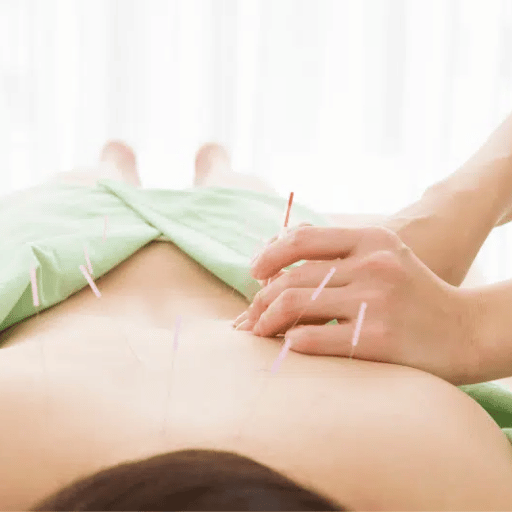
Your first acupuncture session in Dubai lasts about 60 to 75 minutes, and most of that time is conversation and assessment rather than needles. The practitioner reviews your health history, examines your tongue and pulse to identify your pattern, then places the needles for a short rest. Here’s the First-Session 60-Minute Roadmap we use, so you know exactly what happens before you arrive.
The First-Session 60-Minute Roadmap
- 0–15 min, Intake & TCM diagnosis: health history, your main complaint, plus tongue and pulse examination to identify your pattern.
- 15–25 min, Point selection & insertion: 6–20 sterile, single-use needles placed at the chosen points; most insertions feel like a tiny tap, then a dull de qi ache.
- 25–50 min, Retention & rest: needles stay in for 20–30 minutes while you lie still; many patients relax or fall asleep.
- 50–60 min, Removal & aftercare: needles removed, brief advice on hydration, activity and what to expect over the next 24–48 hours.
Does it hurt? For most people, no, acupuncture needles are far finer than the hollow needles used for injections, and the sensation is a dull ache rather than a sharp sting. You can read more on whether acupuncture is painful if needles make you nervous.
Is it safe? When delivered by a trained, licensed practitioner with sterile, single-use needles, serious complications are rare. The most common side effects of acupuncture are minor, slight bruising, brief light-headedness, or temporary tenderness. Britain’s National Health Service notes that acupuncture may not be suitable if you take blood-thinning medication, have a bleeding disorder, or have a skin infection at the needle site, so always disclose your medications and conditions first.
⚠️ Important
Acupuncture supports conventional care — it does not replace it. Never stop a prescribed medication or delay seeing a doctor about a serious symptom in order to try acupuncture. Tell your physician about any complementary treatment you use.
How Much Does Acupuncture Cost in Dubai?
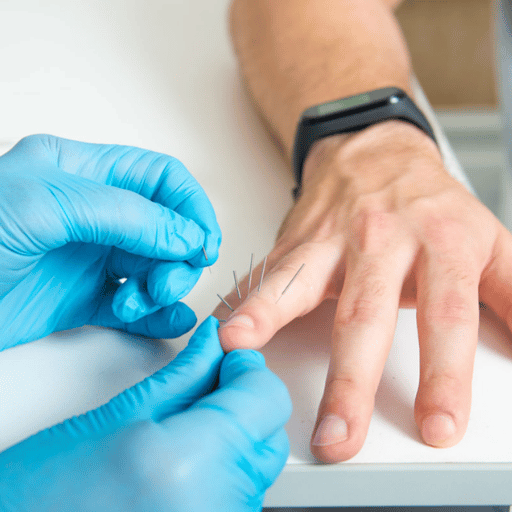
Acupuncture in Dubai typically costs around AED 170–700 for a single session, with a first consultation (which includes a full TCM assessment) usually priced higher at AED 350–650, and multi-session packages reducing the per-visit cost. Your exact fee depends on the clinic, the practitioner’s seniority, the location, and whether herbs or cupping are added. Our Dubai Acupuncture Cost Ladder below sets realistic expectations.
| Booking type | Indicative price (AED) | Notes |
|---|---|---|
| Single session (follow-up) | 170–500 | Standard 30–45 min treatment |
| First consultation + session | 350–650 | Includes full TCM diagnosis |
| Package of 5 sessions | ~1,500 | Lower per-session cost |
| Premium / senior physician | up to ~800 | Often with herbs or cupping added |
Indicative market ranges observed across Dubai clinics in 2026; prices vary and change. Confirm fees and inclusions directly with the clinic. See our acupuncture pricing and packages for current figures.
Is acupuncture covered by insurance in the UAE? Often, yes, when it’s medically indicated and delivered by a DHA-licensed provider, many UAE insurers reimburse acupuncture, though coverage is usually capped and may need pre-approval. Because policies differ, ask the clinic to check your plan before your first visit; our team can verify coverage and, where needed, request prior authorisation.
From experience, the biggest cost mistake we see in practice is paying per session for a chronic problem that needs 8 to 10 visits. Because a course is cheaper than single visits, a package of 5 at around AED 1,500 often works out 20% to 30% lower per session. Our certified Tong Ren Tang team, with years of clinical practice, confirms insurance coverage before you start, so there are no hidden charges.
Beyond Needles: Cupping, Moxibustion, Tui Na & Herbs
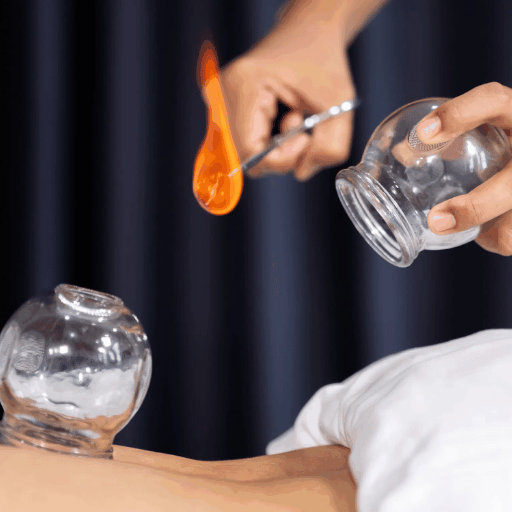
Acupuncture is rarely used in isolation. A TCM treatment plan in Dubai often combines needling with other modalities chosen for your pattern, which is why a “session” may include more than needles.
- For muscle tension, cupping therapy uses suction cups to lift the skin, easing tightness and improving local circulation, popular for back and shoulders. See cupping therapy benefits.
- With moxibustion, warming dried mugwort is held over points to dispel cold patterns and support circulation, read what moxibustion is.
- For musculoskeletal pain and stiffness, Tui Na medical massage applies targeted pressure along meridians.
- Chinese herbal medicine: prescribed formulas that address the internal pattern behind a symptom.
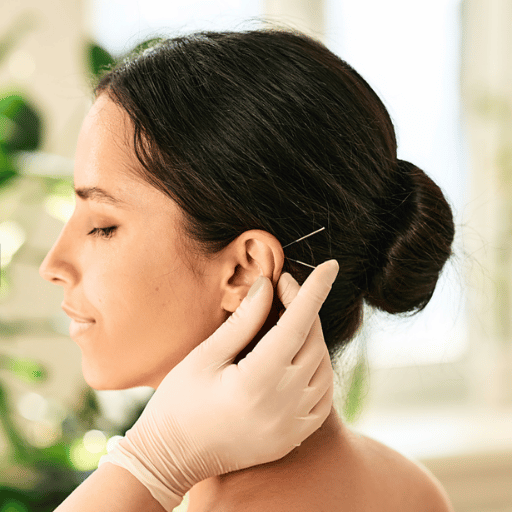
- Ear (auricular) & facial acupuncture: ear-point protocols are used for stress and pain support; facial (cosmetic) acupuncture is a separate, aesthetic application.
For example, a patient with cold-aggravated knee pain might receive needling plus moxibustion over the joint, while a Marina office worker with stress-driven neck tension might have acupuncture combined with Tui Na and cupping. That combination is decided after diagnosis, not booked off a menu.
At the clinic, the mistake we correct most in practice is treating these as a fixed menu. Because a Marina office worker with stress-driven neck tension and a patient with cold knee pain need different combinations, our certified Tong Ren Tang physicians set the plan after 20 to 30 minutes of assessment, not before, which avoids the risk of paying for add-ons you don’t need.
How to Choose a Licensed Acupuncture Clinic in Dubai
Choosing an acupuncture clinic in Dubai comes down to one rule: verify the licence and the hygiene before you compare price. Use this 5-Check DHA Clinic Test before you book anywhere, it filters out the riskiest providers in under five minutes.
- ✔DHA TCM licence. The practitioner must hold a Dubai Health Authority Traditional Chinese Medicine licence. Ask to see it, a reputable clinic will show you.
- ✔Single-use sterile needles. Needles are regulated as single-use medical devices; they should be opened from a sealed package in front of you.
- ✔A real TCM diagnosis. Expect tongue and pulse assessment and questions about your pattern, not a template applied to every patient.
- ✔Realistic claims. Be wary of any clinic promising to “cure” serious disease. Honest practitioners explain where evidence is strong and where it’s supportive.
- ✔Location, language & insurance fit. Confirm the clinic is convenient (Dubai Healthcare City, Al Barsha, Marina or Jumeirah), speaks your language, and can bill your insurer.
This is where heritage and accreditation matter. Our Dubai clinic sits in Dubai Healthcare City, the emirate’s medical free zone, with DHA-licensed physicians, multilingual service in English, Arabic and Chinese, and acceptance of major insurance. You can review the credentials of our TCM doctors and what to bring to your first visit before booking.
In practice, the costliest mistake patients make is comparing price before licence. Because an unlicensed provider is a genuine safety risk, non-sterile needles can cause infection, our certified Tong Ren Tang physicians, drawing on over 350 years of TCM heritage, work only with single-use needles and verifiable DHA credentials.
Acupuncture in Dubai in 2026: What’s Changing
For patients, the most important shift is regulatory, not commercial: Traditional Chinese Medicine in the UAE is moving from “alternative” toward regulated, insurable care. Health authorities, including Dubai’s DHAlicense Traditional, Complementary and Alternative Medicine (TCAM) practitioners under a defined scope of practice that explicitly cover acupuncture, herbal medicine and Tui Na. At a national level the UAE has also signalled an integrative-medicine direction, and Dubai Healthcare City positions itself as a hub where conventional and complementary care sit side by side.
What does that mean if you’re planning treatment in 2026? Two things. First, it’s now easier to find a vetted, licensed acupuncturist whose qualifications are checkable, so there’s little reason to settle for an unlicensed provider. Second, because more UAE insurers are folding acupuncture into complementary-care benefits, it’s worth confirming both the DHA licence and your insurance pre-approval before you start a course, rather than after.
Market-research firms also project steady growth in the UAE’s complementary-therapy and related insurance market over the coming years, but treat those figures as background colour. What actually affects your visit is the regulation and coverage maturing around it, and that’s the part worth acting on now.
Looking ahead, the change that matter for your wallet, what we see in practice, is this: because the DHA now licenses TCM practitioners and more insurers reimburse acupuncture, the risk of paying out of pocket is falling. Our certified Tong Ren Tang team checks your coverage and DHA credentials before your first session, which runs about 30 minutes of assessment, so you avoid the common mistake of starting an 8-week course you can’t claim back.
Frequently Asked Questions
How much does acupuncture cost in Dubai?
View Answer
A single acupuncture session in Dubai typically costs around AED 170–700, while a first consultation that includes a full Traditional Chinese Medicine assessment usually runs AED 350–650. Packages of five sessions are commonly priced near AED 1,500, lowering the cost per visit. The final figure depends on the clinic, the practitioner’s seniority, and whether cupping or herbs are added, so confirm fees and inclusions directly before booking.
Does acupuncture hurt?
View Answer
For most people acupuncture is not painful. The needles are much finer than the hollow needles used for injections or blood tests, so insertion usually feels like a small tap. Once a needle is in place you may feel a dull, heavy ache called de qi, which practitioners regard as a sign the point is active. Sharp or lasting pain is not normal — tell your practitioner if you feel it so they can adjust the needle.
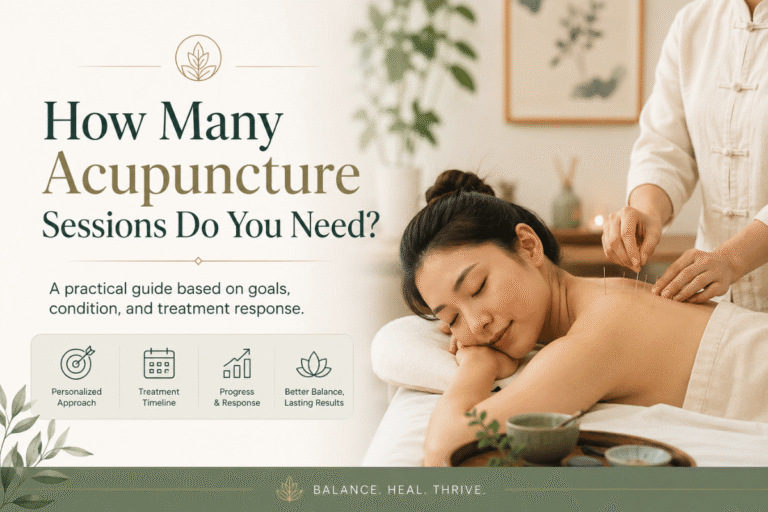
How many acupuncture sessions will I need?
View Answer
A fair trial of acupuncture is about six sessions, usually one or two per week, before deciding whether it is helping. Acute problems may settle in a handful of visits, while chronic conditions such as long-standing back pain, knee osteoarthritis or migraine often need 8–12 sessions, sometimes with occasional maintenance afterwards. Your practitioner should set a clear review point so you can judge progress against your own symptoms rather than committing open-endedly.
Is acupuncture safe, and what are the side effects?
View Answer
Acupuncture is generally safe when performed by a trained, licensed practitioner using sterile, single-use needles. Common side effects are minor and short-lived — slight bruising, brief light-headedness, or mild tenderness. It may not be suitable if you take blood-thinning medication, have a bleeding disorder, or have a skin infection where needles would be placed, so disclose your medications and conditions beforehand. A DHA-licensed clinic that opens fresh needles in front of you keeps the risk low.
Is acupuncture covered by insurance in the UAE?
View Answer
Often, yes. Many UAE insurers reimburse acupuncture when it is medically indicated and provided by a DHA-licensed clinic, though coverage is usually capped and may need pre-approval. Ask the clinic to check your specific policy in detail before your first visit.
Can acupuncture help with nerve pain or fertility?
View Answer
Acupuncture may help some nerve-related pain such as sciatica, though the trial quality is mixed. For fertility, it can support relaxation during treatment, but high-quality reviews have not shown it improves IVF pregnancy or live-birth rates versus sham needling, so we treat it as supportive care.
Do I need a doctor’s referral for acupuncture in Dubai?
View Answer
No referral is required to book acupuncture at a licensed Dubai clinic — you can contact a DHA-licensed practitioner directly. Your insurer, though, may ask for a referral before it reimburses treatment, so check your policy if you plan to claim.
Book an Acupuncture Consultation in Dubai
Meet our DHA-licensed TCM physicians in Dubai Healthcare City. We’ll assess your condition, explain realistic expectations, and check your insurance coverage first.
About This Guide
This guide to acupuncture in Dubai was written by the clinical team at Tong Ren Tang’s Dubai Healthcare City practice, drawing on heritage that dates to 1669 and on current evidence from the WHO, NCCIH and Cochrane. Where the science is strong, chronic pain, headache prevention, we say so; where acupuncture is supportive rather than curative, such as IVF, we say that too. Reviewed by the Tong Ren Tang TCM clinic team (DHA-licensed physicians), Dubai Healthcare City.
References & Sources
- Acupuncture: Effectiveness and SafetyU.S. National Center for Complementary and Integrative Health (NCCIH), NIH
- WHO Standard Acupuncture Point Locations in the Western Pacific Region (2008)World Health Organization
- Acupuncture for the prevention of episodic migraine (Cochrane Review, 2016)Cochrane Database of Systematic Reviews
- Noninvasive treatments for low back pain: ACP clinical practice guideline (2017)American College of Physicians, Annals of Internal Medicine
- Acupuncture & complementary therapiesUK National Health Service (NHS)
- WHO Traditional Medicine Strategy 2014–2023World Health Organization
- Health regulation & professional licensingDubai Health Authority (DHA)