Get in Touch with Tongren Tang Gulf



If you’re weighing up treatment, the honest answer to how many acupuncture sessions do you need is that almost no one needs just one. Acupuncture works as a course of visits, not a single appointment, so most people book a series spread over several weeks. The exact number comes down to your condition, how long you’ve had it, and how your body responds to the needles.
Of course, most require a course of 6—12 acupuncture sessions rather than just 1. Acute troubles tend to resolve within 1—4 treatments, whereas chronic ones sometimes take 8— 12 or more treatments over 6— 12 weeks, usually 1—2 per week initially. Many recommend at least 5 treatments of acupuncture before determining benefit.
Quick Specs: A Typical Acupuncture Course
| Initial course | 6–12 sessions (most conditions) |
| Starting frequency | 1–2 per week (2–3 for acute pain) |
| Session length | 20–60 minutes |
| First reassessment | Around session 5–6 |
| Maintenance | Roughly once a month, optional |
Key takeaways
- More sessions don’t always help; adequate spacing and a consistent schedule beat many sessions crammed together.
- A 2025 trial of 800 older adults used 8 to 15 sessions over 12 weeks for chronic low back pain.
- You should have a general feel whether acupuncture is helping you out within approximately 4 to 6 sessions.
- Your acupuncturist sets your number after an intake; the figures here are typical guide ranges, not a prescription.
How Many Acupuncture Sessions Do You Need? The Short Answer

Most people need a course of 6 to 12 acupuncture sessions, not a single visit. An acute problem may settle in 1 to 4 sessions, while a chronic condition often needs 8 to 12 or more over 6 to 12 weeks. If you are considering acupuncture as a treatment option, the right number depends on the condition being treated and how it responds.
Most individuals receive care for most conditions from an established protocol which entails an initial run of 6-12 sessions, not simply a singular visit. Short-term or acute problems, such as a pulled muscle or a sprained neck, often respond within 1-4 sessions. Chronic conditions that have built up over months or years usually take 8-12 or more visits spread over 6-12 weeks, with the first sessions closer together. A single session can take up to an hour, and Mayo Clinic notes that a typical treatment plan is a series of sessions, not a single needle.
The not-so-helpful answer: Because there isn’t really one magic number, and the NCCIH frames acupuncture as supportive care used alongside conventional treatment, not a fix-all. While some clients notice a change after just 1-2 sessions, other clients respond more gradually over several weeks. A more helpful framing to consider our initial package is an “intro package with a review point”- not an endless series of appointments. To get a sense for what a first appointment is actually like, read our guide on whether acupuncture hurts.
In practice, the number matters less than the plan. One patient came in with a 2-week shoulder strain and worried about the risk of committing to months of visits; because the problem was acute, it eased in 3 sessions of about 30 minutes each. Another, carrying low back pain for years, needed a 12-session course — same clinic, very different answer.
Why Acupuncture Works as a Course, Not a One-Off
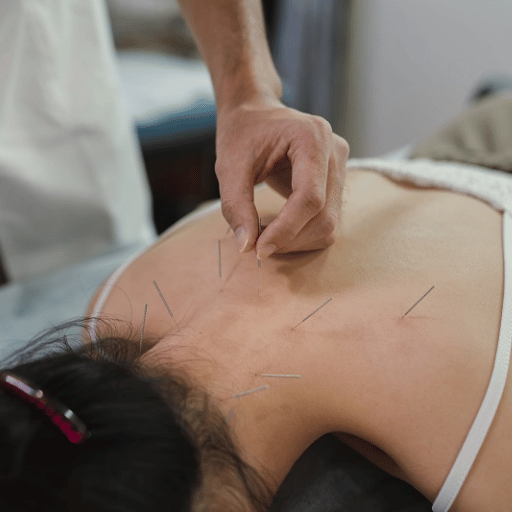
Acupuncture works as a course because its effects build up over time. An acupuncturist places acupuncture needles into specific points on the body, and these thin needles act as natural painkillers by stimulating the nervous system. One treatment helps, but the benefits of acupuncture accumulate, so a series holds the response far better than a single visit.
Acupuncture usually doesn’t give its full benefit after the first visit, because the benefits accumulate. When an acupuncturist inserts thin needles at the acupuncture points, they stimulate your central nervous system to release the body’s own endorphins — natural built-in pain relievers — and to adjust how pain signals travel to the brain. Traditional Chinese medicine points to similar points along the pathways (meridians) where qi (energy) is thought to flow, but both models and scientific explanations point toward the same outcome: One nudge might wear off, but a series of nudges is far more effective for building resilience. Whatever type of acupuncture you choose — traditional acupuncture guided by meridians, or modern acupuncture techniques that target specific points along a nerve — the effects of acupuncture still depend on a consistent run of treatments.
This is WHAT and WHY; HOW will serve as your personal reminder log. Since the benefits of one session don’t last, far- apart sessions fail to yield optimal results, but excessively frequent appointments tend to do little to accelerate progress. The ideal frequency — frequent sessions initially, usually once or twice per week for the first few visits — is essential for turning isolated appointments into sustained pain relief. Some people need several treatments, spread as sessions over several weeks, and the exact need can vary from person to person. This also explains why acupuncture’s recommended sessions often look different from dry needling’s treatment schedule in terms of overall quantity.
We see this pattern in practice. A patient who books a single 45 minutes session and then waits a month often reports the benefit faded; the problem is timing, not the needles. Because each session’s effect tapers, the risk with widely spaced visits is that progress never compounds — which is exactly why the early phase is kept close together.
How long does acupuncture take to work?
Some people report significant relief after just one session, but a fair trial is longer. Most observe that the treatment is working — less pain, easier sleep, or longer relief between visits — around the third to sixth session. If nothing has budged by the sixth, it is time to reassess rather than keep booking. Often, early gains are already underway before you notice them.
The Dose-Response Session Map: How Many Sessions by Condition

Session counts vary by what is being treated, and the most solid research centers on pain. The table below, the Dose-Response Session Map, consolidates what we’ve learned from multiple clinical studies, and will help us decide on a realistic number of sessions for you. A 2025 trial in JAMA Network Open, involving 800 older adults with chronic low back pain (back pain), was strong and conclusive: they showed that a standard acupuncture course of 8 to 15 sessions over 12 weeks reduced back-pain disability at 6 and 12 months more than a group receiving conventional care alone.
| Condition (by pain type) | Typical course | Starting frequency | Evidence anchor |
|---|---|---|---|
| Chronic low back pain | 8–15 sessions / 12 weeks | 1–2 per week, tapering | JAMA Network Open 2025 RCT (n=800) |
| Migraine / tension headache | ~6–12 / 6–8 weeks | 1–2 per week | Cochrane / NCCIH evidence |
| Knee osteoarthritis | ~8–12 sessions | 1–2 per week | NCCIH (may help knee OA pain) |
| Fertility / IVF support | ~10–12 over 2–3 months, plus around transfer | ~1 per week | PMC ART-schedule review |
| Anxiety / stress | ~6–10 sessions | ~1 per week | PMC; practitioner pattern |
| Sciatica / nerve pain | ~8–12 sessions | 1–2 per week | Clinical practice |
| Neck pain | ~6–10 sessions | 1–2 per week | Cleveland Clinic (listed condition) |
| Fibromyalgia | ~8–12 sessions, then maintenance | 1–2 per week | Clinical practice |
| Menstrual cramps (dysmenorrhea) | ~6–12 over 3 cycles | weekly, cycle-timed | Cleveland Clinic / Cochrane |
| Insomnia / sleep | ~6–10 sessions | ~1 per week | Practitioner pattern |
| Acute strain / recent pain | 1–4 sessions | 2–3 per week for 2–3 weeks | Clinical practice |
Data derived from numerous peer-reviewed trials and national health groups (listed in the sources below). The ultimate prescription, once we’ve done an intake session, may vary from the recommended table here.
We would like to call out a couple of the table rows. For fertility and IVF support, we treat those attempting pregnancy by suggesting a set of regular weekly appointments in the weeks before the transfer instead of an established number of sessions. Patients suffering from headaches often feel relief when we target body points combined with ear acupuncture for migraine relief. A course of acupuncture for anxiety normally sits on the lowest end of the table (the fewer sessions). Pain conditions like arthritis and other chronic conditions usually need the most visits, while acute conditions often need the fewest; your own response to acupuncture, and the number of acupuncture sessions you finish, will shift the figures either way.
On the ground, we treat the map as a starting point, not a rule. As a use case, a runner with a knee problem booked 8 sessions of 30 minutes each over six weeks because the risk with osteoarthritis is doing too little, too late; sessions of 45 minutes were not needed once the pattern settled.
How Often Should You Get Acupuncture? The 4-Phase Treatment Course

How often you should get acupuncture changes as you improve, so a flat weekly rate rarely fits the whole journey. We map it as the 4-Phase Treatment Course, which turns scattered “how often” advice into a single, phase-structured cadence you can plan around — moving from frequent early visits to occasional maintenance.
The 4-Phase Treatment Course
- Relief (weeks 1-4): Treat twice to three times a week for an acute pain; or one or two times a week if you aren’t in as much pain, with the objective of reducing your symptoms.
- Consolidation (weeks 4-8):Treat once a week to consolidate your gains as your symptoms persist for longer between visits.
- Taper (weeks 8+):treat every 2-3 weeks as your symptoms are more sustained.
- Maintenance (ongoing/optional):Treat approximately once per month or as symptoms arise.
How often should you have acupuncture sessions?
In the relief phase, one or two sessions a week is usual, rising to twice a week, or even three times, for an acute flare. As you respond, the frequency of acupuncture sessions falls — first fortnightly, then monthly. Chronic problems often require regular acupuncture sessions once a week for several months before tapering.
Often, at the beginning stages (Relief phase), one or two treatments a week will suffice, but the rate could rise to two or three times a week in the case of acute pain. However, as your pain improves, and the time between your treatments increases before the symptoms returned, your visits gradually become more spaced out, perhaps first twice monthly and then monthly. As Cleveland Clinic indicates, treatment frequency is typically about once per week for most issues, and published reviews of acupuncture treatment schedules echo this tapering pattern, and the optimal frequency depends on how long each treatment’s effect lasts for you. Frequency must keep falling as you get better, rather than staying at a flat rate.
⚠️ Important: more is not better
Adding more sessions onto your course of treatments, in addition to a sensible schedule will do little to speed up your recovery. Both scientific research evidence as well as experienced therapists, for instance acupuncturists, suggests that having treatments spaced out over time is better than just booking a huge number of them in quickly, only to then rack up a large bill without seeing improved results.
In the field this plays out clearly. A delivery driver with sciatica for the past 3 months started at three sessions a week of 30 minutes each; the real risk was that he would stop early, because the first week barely shifted his pain. The reason it worked was the taper — by week four he was down to weekly visits, and within 90 days he needed only a monthly top-up.
What Actually Determines Your Personal Session Count

There are two people who have been diagnosed with ‘the exact same problem,’ and yet may be prescribed entirely different numbers of acupuncture treatments. Following a detailed case taking, an acupuncturist will decide on how many treatments you’re likely to need based on five factors that would affect the course, both moving up or down:
- The nature of the problem; an acute injury usually resolves within a few sessions, whereas a long-standing chronic pain pattern typically runs the full course.
- How long it has been present; usually, a condition will need more treatments if it has persisted for an longer period.
- Overall health and Age; The effect your general health, including sleep patterns, stress and other factors will have on your response to treatments.
- Consistency of appointments; Missed, or largely spaced appointments, interfere with the cumulative impact of treatments and prolong the overall course.
- Adopting healthy lifestyle practices, which might include better sleep habits, increased movement, as well as incorporating alternative remedies such as Tui Na remedial massage will speed up the pace of recovery.
“We never quote a single number at the first visit. We agree an initial course, then review at the fifth or sixth session and adjust, the body tells us how many treatments it actually needs, not the textbook.”
As many factors go into an individualised course of treatments, it’s good practice to review the possible risks that come with the therapy before commencing on a treatment plan – please read our overview of common acupuncture side effects for details.
As a use case, an office worker once arrived sure she needed 20 sessions for 6 months of neck pain. In practice, and in the field this is a common use case, the problem was posture, not the dose. Because we addressed her desk set-up alongside a 10-session course of 45 minutes each at two visits a week, she was about 80% better by session eight; sessions of 30 minutes would not have changed that. Reviewing early avoided the risk of over-booking.
Signs Acupuncture Is Working, and When to Stop
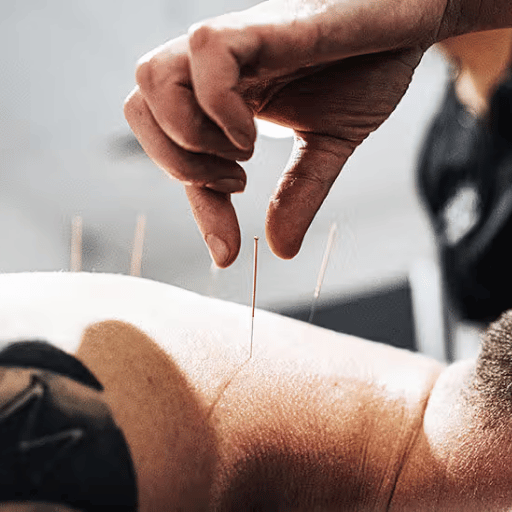
Signs that acupuncture is working: your symptoms improve, the gaps between treatments lengthen, and you use less pain medication. You may experience better sleep and a lift in overall wellness and overall health and well-being before the headline symptom shifts. That is where the 6-session checkpoint rule helps. The 6-session Check-up Rule provides you with a built in review at roughly your 6th session to gauge if you’re noticing improvement and/or what decision should be made next.
The 6-Session Checkpoint Rule
By around session six, weigh up the evidence:
- If there’s an significant improvement, continue with a continued treatments, and later you can start using the tapered approach.
- If progress is incremental, continue but tweak your points or frequency.
- If nothing has changed at all, change tactic or seriously question if acupuncture is the appropriate solution.
This fits nicely with the Cleveland Clinic’s recommendation of treating the complaint for at least five sessions before judging its effectiveness.
Signs of improvement aren’t always dramatic: most people report improved sleep, more consistent energy levels or a more settled mood before their major symptoms start improving — and NCCIH evidence summaries stress that benefit builds gradually, so even a more manageable approach to pain is progress. Monitor the length and severity of flare-ups. At the clinic, the clearest signal is timing: if relief that once lasted a day starts holding for 30 days, the course is working, because the problem is easing between visits. The risk is stopping too soon, so we judge progress against that 6-session checkpoint, not a single 30 minutes session.
⚠️ When to see a doctor
acupuncture is a complementary therapy rather than a cure and it should not be used as a replacement for your doctor or health practitioner. Seek medical advice if the symptoms you are experiencing are severe, worsening, appear suddenly, or if a standard course provides no relief. Continue any prescribed medication unless directed otherwise by your medical doctor.
Maintenance Acupuncture: How Often After You Feel Better

Once you achieve your desired result, continuing the course for ongoing maintenance and long-term prevention of future episodes is optional, and completely at your discretion. You can elect to discontinue treatment altogether, only seeking assistance if symptoms return. However, others choose to maintain benefits of the therapy by under going regular periodic sessions at prescribed intervals.
There’s no obligation to undergo this maintenance plan, nor is there any scientific evidence that a lengthy schedule provide additional protection or significantly reduced risk of flare-ups. Generally, if no flare-up occurs during an interval of 4 to 6 weeks after the sessions cease, the likelihood is that your maintenance frequency is optimum, or no longer required. In cases of long-term or severe chronic conditions that present in a recurring cyclical manner, regular sessions in the intervals between episodes at 2-6 week frequencies provide ongoing symptom control and stability. Combine an occasional visit to the clinic with movement activities and other natural therapies such as Tui Na or deep-tissue massage for a more beneficial outcome than repeated treatment with acupuncture alone.
In practice, maintenance is personal. One patient with recurring tension headaches found that, because her flare-ups returned roughly every 6 weeks, a single 30 minutes session on a 5-week cycle kept the problem in check; stretching the gap to 10 weeks brought the headaches back within days. Over-treating out of habit is the real risk, so we set the interval by results, not routine.
Planning and Budgeting Your Acupuncture Course in Dubai
As the treatment course consists of multiple sessions over several days, weeks or months, it’s sensible to anticipate an entire course when calculating the cost, rather than an individual consultation fee. The most practical starting point would be to expect a course to comprise 6 to 10 sessions, with potential subsequent maintenance plan factored in for separate assessment and calculation. You’ll gain clarity of cost by asking your acupuncture practitioner to map out your planned course duration, and frequency of treatment sessions for your concern, including a designated review milestone in the therapy process to allow for reassessment.
At Tong Ren Tang, our DHA licensed clinical centre located within Dubai Healthcare City tailors the acupuncture course following a preliminary consultation and reassesses the same as you progress through the course. This explains why we issue the course plan with clear checkpoints, and not simply a clinic running a tab or open-ended appointments. Most health insurance for acupuncture in the UAE covering complementary or physiotherapy benefits will often include acupuncture treatment, although this may be limited by a cap on sessions – clarify the required pre-approval for your insurance plan with your benefits provider.
From what we see at the clinic, budgeting is easiest as a use case in numbers. One patient planned for 6 sessions of 45 minutes each but, because her chronic problem needed longer, the course ran to 10 visits — still predictable, because we flagged the risk at the first review. Costing the whole course up front, in the field, rather than paying for each 30 minutes visit in isolation, is what keeps the total under control.
Looking for a detailed and costed plan for your individual health concerns?
Book an acupuncture consultation in Dubai →
Feel Free To Send us a WA consultation, just text your symptom and question for an immediate guide to the likely number of treatments.
What’s Changing: Acupuncture’s Move to a “Minimum Effective Dose”
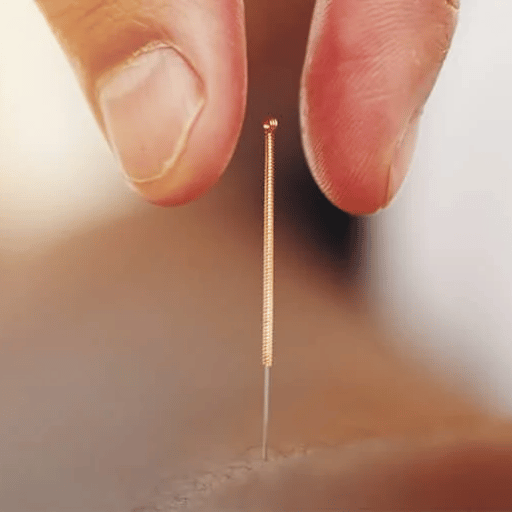
What Matters Most for Sessions: Defined, Reviewed Courses Anyone who asks about sessions has an eye on value and outcomes: and that has pushed clinics away from open-ended, on-again-on-again plans toward defined, reviewed courses with a set of sessions. What this means for you is clear expectations, no wasted expenditure, and a strong basis to seek insurance reimbursement.
Evidence supporting defined courses is growing quickly. As you consider treatments in 2026, work toward this structure. A recent 2025 JAMA Network Open trial designed its treatment around sessions of 8 to 15 over 12 weeks, and newer dose-response research analyzes – interactions between number of sessions, their timing, and how frequently visits are held – moving beyond “more” is inherently better. This is a shift driven by research, though there’s also market buzz about the growth of wellness centers that can serve as background noise compared to this key practical change: your goal will move from wondering how long do I keep going? to What’s my defined course, and at what point do we review it? In practice this matters because an open-ended plan carries a real financial risk: the 2025 trial’s defined 12-week structure is the reason patients can budget and seek insurance approval with confidence, rather than paying session by session with no end in sight.
Frequently Asked Questions
What are the 4 golden rules of acupuncture?
View Answer
No formal list exists, but most acupuncturists work to four principles: treat the root cause as well as the symptom; choose points for the condition being treated rather than a fixed recipe; use the lightest effective dose of needling, since more is not better; and reassess regularly so the plan changes as you do. Together these explain why your number of sessions is reviewed at a checkpoint, and why acupuncture therapy supports conventional care rather than replacing it.
How much acupuncture is too much?
View Answer
For most people, more than two or three sessions a week brings no extra benefit and mainly adds cost. Once symptoms are stable, the right treatment is to taper, not to hold the same high frequency. Your acupuncturist will tell you when you have reached the point of diminishing returns.
How long should you wait between acupuncture sessions?
View Answer
Early in a course, most people leave three to four days between visits, which fits one or two sessions a week. As relief starts to last longer, the gap stretches to two or three weeks and then to monthly, based on your acupuncturist’s read of how long each treatment’s effect holds for you.
How many acupuncture sessions can you have per week?
View Answer
For an acute flare, two to three sessions a week for the first couple of weeks is common, and that is the practical ceiling. For most conditions, one or two a week is enough, matching the research-backed courses. More than three a week rarely helps, because the body needs time to respond between treatments. As you get better, the sensible direction is fewer sessions — weekly, then fortnightly, then optional monthly maintenance.
How long do the benefits of an acupuncture session last?
View Answer
At first, relief may last only a day or two, which is why early sessions sit close together. As the course builds, each session’s effect tends to hold for longer — itself a useful sign your treatment plan is working.
Is acupuncture covered by insurance in Dubai?
View Answer
Many UAE health plans cover acupuncture under complementary medicine or physiotherapy benefits, often with a cap on the number of sessions and sometimes needing pre-approval or a referral. Coverage varies by insurer and policy, so confirm the details — including how many sessions are included — before you book.
About This Guide
We wrote this because “how many sessions?” is the question we hear most at our Dubai Healthcare City clinic. The session ranges come from peer-reviewed trials and bodies such as the National Center for Complementary and Integrative Health and journals in physical medicine and rehabilitation, framed the way we plan care — an initial course with a review point, matched to your health goals, not a fixed promise. Reviewed by the Tong Ren Tang TCM clinic team (DHA-licensed physicians), Dubai Healthcare City. (Updated June 2026.)
References & Sources
- Acupuncture for Chronic Low Back Pain in Older Adults (2025 RCT)JAMA Network Open
- Acupuncture: What To KnowCleveland Clinic
- Acupuncture, OverviewMayo Clinic
- Chronic Pain and Complementary Health ApproachesNCCIH (NIH)
- Appropriate Acupuncture Treatment Schedule for Chronic PainNCBI PMC
- Session-Dose Adequacy of Acupuncture for Low Back PainScienceDirect
- Acupuncture for Pain Relief (Fact Sheet) — International Association for the Study of Pain
- Acupuncture: Effectiveness and Safety — NCCIH (NIH)
- Dose-Response Relationship Between Acupuncture Time Parameters — NCBI PMC