Get in Touch with Tongren Tang Gulf


Updated June 2026 · Reviewed by the Tong Ren Tang technical team
Short answer: is acupuncture halal? For most Muslims, yes. Most Islamic scholars and major fatwa bodies treat acupuncture as permissible (halal), as long as it’s genuinely beneficial, performed by a qualified acupuncturist, and free of any beliefs or rituals that conflict with Islam. A smaller group of scholars urges caution, not over the needles themselves, but over the Chinese philosophy that sometimes travels with them. This guide walks through what the rulings actually say, where the disagreement come from, and how to keep your treatment clearly within the permissible lane.
At a Glance: Acupuncture and Islam
| Is acupuncture halal? | Yes for the majority view — permissible if beneficial and free of un-Islamic beliefs |
| Majority position | IslamQA, IslamWeb, AboutIslam, IslamOnline — permissible |
| Minority concern | Adopting qi / Five Elements as a belief system, not the needles |
| Key condition | Benefit + qualified practitioner + no occult or pagan practice |
| Breaks the fast? | No, on the dominant view (needles carry no nourishment) |
| Breaks wudu? | Only if there is flowing blood, and only by some schools |
The Short Answer: Is Acupuncture Halal or Haram?
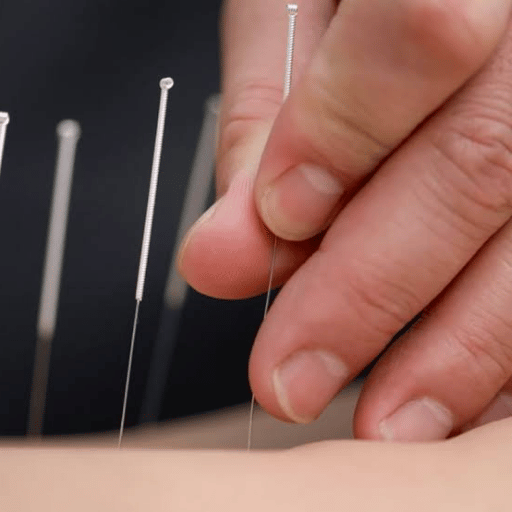
Across the best-known English fatwa platforms, the verdict is consistent: acupuncture is permissible. Saudi-based IslamQA states that “if it’s proven that acupuncture is beneficial, or if its benefit outweighs its harm, then there’s nothing wrong with seeking treatment using acupuncture.” The Toronto scholar Sheikh Ahmad Kutty, answering on AboutIslam, reaches the same conclusion: there’s nothing in Islam that forbids alternative therapies “so long as they don’t involve beliefs or practices inimical to Islam.”
So why do many Muslims still ask the question? Because a visible minority of speakers, most prominently Sheikh Assim Al-Hakeem in a widely shared lecture, describe acupuncture as haram. People often phrase it as whether acupuncture is lawful (halal) or unlawful (haram), and the Islamic position on this subject is settled enough across the Ummah that the gap between a confident majority and a worried minority is exactly what the rest of this article unpacks. The disagreement is narrower than it first appears, and once you see where the line actually falls, the ruling become easy to apply to your own situation.
| Source / Scholar | Ruling | Condition attached |
|---|---|---|
| IslamQA (Sh. Al-Munajjid / Ibn Jibrin) | Permissible | Proven beneficial or benefit outweighs harm |
| AboutIslam (Sheikh Ahmad Kutty) | Permissible | No beliefs or practices inimical to Islam; qualified supervision |
| IslamWeb | Permissible | Avoid the Five Elements philosophy and any pagan ritual |
| IslamOnline Fiqh | Permissible | Treatment recommended and under proper guidance |
| European Council for Fatwa & Research (benefit-based fiqh) | Permissible | Recognised medical benefit, no haram element |
| Sheikh Assim Al-Hakeem (minority) | Cautions haram | Objects to adopting qi / energy belief as part of the treatment |
Source attribution: rulings summarised from each body’s own published fatwa pages, June 2026.
The Default-Permissibility Principle: Why Medicine Starts as Halal
To understand the rulings, it helps to know the fiqh logic underneath them. We call it The Default-Permissibility Principlein classical Islamic legal language, al-asl al-ibaha, meaning the default state of worldly matters is permissibility. Unless a clear text or sound reasoning forbids something, it’s allowed. Medical treatment isn’t just tolerated under this principle; in Islam it’s actively encouraged. Islamic teachings celebrate health and wellness and tell believers to seek medical treatment rather than avoid it, which is why the default ruling leans toward “lawful,” not “unlawful.”
Most fatwa bodies cite a hadith narrated by Abu Dawud: the Prophet (peace and blessings be upon him) said, “O servants of Allah, take medications and receive proper treatments, for Allah has appointed a cure for every disease.” Sheikh Ahmad Kutty reads this as encouragement to seek any beneficial treatment “so long as this treatment doesn’t involve beliefs or practices inimical to Islam.” That single sentence carries the whole ruling: the burden isn’t on you to prove acupuncture is halal, it’s presumed permissible. Only one thing can pull it out of that lane: a haram belief or practice attached to it.
There’s a second condition hiding in the word “beneficial,” and this is where modern evidence matters. Acupuncture isn’t folk guesswork. The U.S. National Center for Complementary and Integrative Health reports that acupuncture may help with back and neck pain, knee pain from osteoarthritis, and headache. A 2020 Cochrane review found low back pain improved after acupuncture for at least six months, and a more recent NIH-funded randomised trial published in JAMA Network Open found acupuncture reduced disability from chronic low back pain in older adults. In other words, the “benefit” the fiqh require isn’t hypothetical, for several conditions, it’s measurable. That closes the loop the short fatwa answers leave open.
💡 Why this matters
Because Islam treats seeking treatment as encouraged — even recommended — the question is never “is healing allowed?” It is only “does this particular method carry anything forbidden?” That reframes acupuncture from suspicious to permissible-by-default.
Treatment vs Theology: Where the Split Really Lies

Here’s the heart of the matter, and the single idea that resolves most of the confusionThe Treatment-vs-Theology Distinction. Acupuncture is two things wearing one name. One is a physical procedure: thin needles are inserted into specific points on the body to influence the nervous system and ease pain. The other is a traditional explanation: an ancient Chinese philosophy of qi (life energy) said to move as a flow of energy along meridians, balanced through yin and yang and the Five Elements.
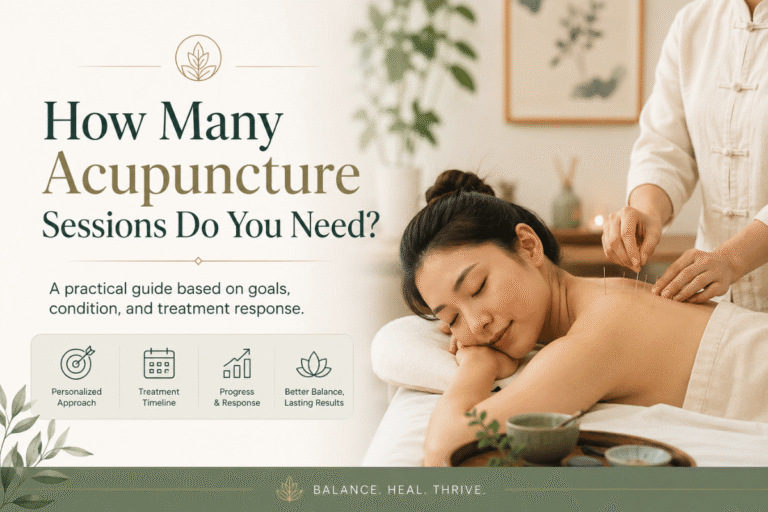
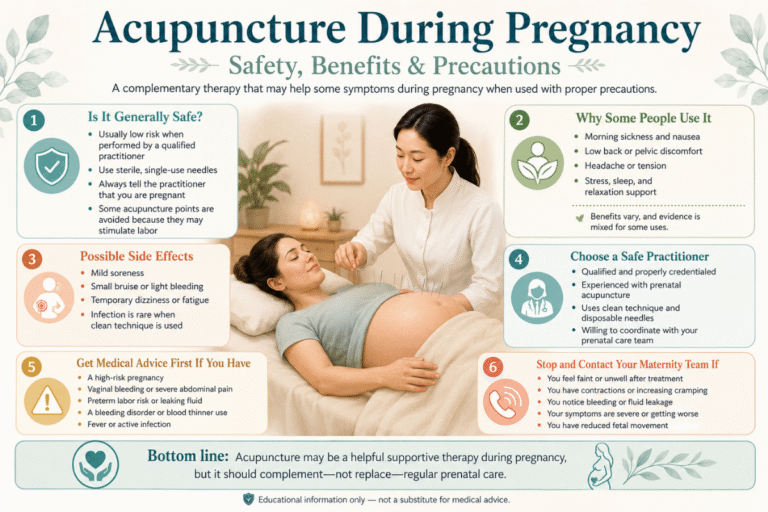
In plain clinical terms, the practitioner places very thin needles into specific points, the acupuncture points, to prompt the body’s natural responses and an easier energy flow. Most patients feel relaxed rather than hurt; the risks of acupuncture are usually limited to a small bruise or brief soreness, and a course often run to a number of treatments rather than a single visit. The benefits of acupuncture centre on pain relief, and Western medicine increasingly studies it as one form of alternative medicine that, for several conditions, works, which is why people who practice acupuncture today frame it as evidence-based care, not magic. Where the evidence hold, acupuncture is effective, and that’s the part Islam treats as praiseworthy.
Read the rulings carefully and you’ll notice that no scholar objects to the first thing. Even the cautionary voices don’t claim that putting a needle in your lower back is forbidden. What the minority view, voiced by Sheikh Assim Al-Hakeem and some others, warns against is the second thing: adopting the metaphysical belief system, treating qi as a real spiritual force or accepting a Taoist cosmology that sits uneasily with the Islamic belief in Allah as the sole giver of life and healing. Their concern isn’t the insertion of the needles; their worry is the worldview that can come attached to them.
IslamWeb makes the same split from the permissible side: acupuncture is allowed, but a Muslim should steer clear of the Five Elements theory as a creed and of any practitioner who blends the treatment with astrology or pagan ritual. Once you separate the technique from the theology, the apparent contradiction between scholars mostly dissolves. A needle is just a tool, and a tool take the ruling of how it’s used, not the culture it came from.
In practice, this is a medical distinction a patient can hold onto: because the needle work through the nervous system rather than a spirit, you can accept the treatment while rejecting the theology. That’s the same line Tong Ren Tang delivers in clinic, a tradition refined over 355 years of practice, with needles chosen for a physiological reason by certified physicians and no ritual attached. For most Muslim patients the real problem is rarely the procedure itself and almost always a worry about belief, a gap this one distinction close.
“There is nothing in Islam to forbid Muslims from resorting to alternative therapies or treatments so long as they do not involve beliefs or practices inimical to Islam. Acupuncture is one of such practices… it has been found to be effective and beneficial in some cases… but it is important to receive this treatment only under the guidance and supervision of professionals who are properly qualified.”
Sheikh Ahmad Kutty, Islamic Institute of Toronto
Does believing in qi count as shirk?
No, not on its own. Treating qi as a clinical map, a useful way to describe where to place needles and how the body responds, is no more shirk than a doctor talking about “energy levels.” It becomes a problem only if a person attributes divine power to qi, worships it, or accepts a rival theology about who controls life and death. Keep qi as physiology, not faith, and the spiritual objection fall away.
The 3-Question Halal Acupuncture Test

Most fatwa pages tell you acupuncture is permissible “if there’s no un-Islamic belief involved” — but they rarely tell you how to check. So here’s a simple screen you can run in any clinic. We call it The 3-Question Halal Acupuncture Test. If you can answer “yes” to all three, your treatment sits comfortably within the majority ruling.
The 3-Question Halal Acupuncture Test
- Is it beneficial? Are you seeking it for a recognised condition where acupuncture has real evidence, pain, headache, nausea, rather than a vague spiritual promise?
- Is the practitioner clean of forbidden practices? No astrology, no talismans, no spirit invocation, no haram substances. Just needles and clinical reasoning.
- Is your own intention sound? Do you approach qi and meridians as a treatment map, not as an object of belief or worship, knowing that healing come from Allah alone?
Three yeses mean you’re on solid ground. A “no” on any one isn’t a verdict of haram, it’s a flag to fix. If the practitioner mix in occult claims, change practitioners. If your worry is the belief in qi, reframe it as physiology. Either way, you turn an abstract ruling into something you can act on at the reception desk.
⚠️ Important
We are a Traditional Chinese Medicine clinic, not a body of religious scholars. This article reports published fatwas so you can make an informed choice — it does not issue a ruling. For your personal situation, ask a qualified scholar you trust. Allah knows best.
Does Acupuncture Break the Fast or Wudu?

No, on the dominant scholarly view, acupuncture doesn’t break the fast. IslamQA addresses it directly: the thin needles carry no nourishment and introduce no liquid into the body, so they fail the test (food, drink, or nourishment reaching the inside of the body) that would invalidate a fast. For most people in the Gulf, that means a Ramadan session is fine.
In the fatwa’s own words, the needles “are a kind of pricking administered to specific places on the body,” delivering nothing nutritional, so “they don’t affect the fast,” provided the treatment is genuinely of benefit. This is the most practical question many patients ask before booking during Ramadan, and the answer is reassuring.
Classical reasoning backs this up. Ibn Rushd, the Andalusian jurist, noted that scholars differed over substances that reach the body cavity (al-jawf) without nourishing, and the stronger, majority position is that a non-nutritive injection or pricking doesn’t invalidate the fast, in the same way an anaesthetic or medicinal injection doesn’t. Acupuncture is, if anything, an easier case than an injection, because nothing at all is delivered through the needle.
In practice, this comes up every Ramadan at our Dubai clinic. A patient with chronic back pain will often worry that a 30 minute acupuncture session across 30 days of fasting breaks the fast, the common mistake is treating a dry needle like food or a nutritional drip, which is the real risk only with the latter. Because the needle delivers no nutrition and reaches no body cavity, the fast stand. Tong Ren Tang delivers these sessions to fasting patients routinely, and our DHA-certified team, drawing on 355 years of practice, will still offer an after-iftar slot when reassurance matters more than timing.
Wudu is a separate question with a smaller debate. Acupuncture rarely draws more than a pinprick, but if a point bleeds, schools differ: the Hanafi school treats flowing blood as breaking wudu, while the Shafi’i and Maliki schools generally don’t. A safe-default practice if you’re unsure is simply to renew your wudu after a session that caused visible bleeding. None of this makes acupuncture impermissible, it only affects whether you repeat your ablution.
Cupping, Herbs and Other TCM Therapies: Halal Status Compared

Acupuncture rarely arrives alone. Most Traditional Chinese Medicine clinics also offer cupping, herbal medicine and moxibustion, and the halal status isn’t identical across them. Our table below rank the common therapies by how clear-cut the ruling is.
| Therapy type | Ruling | What to check |
|---|---|---|
| Cupping (Hijama) | Clearly permissible — Sunnah | Practised by the Prophet himself; hygiene and a trained therapist |
| Acupuncture | Permissible | Benefit + no qi-as-belief + clean practice |
| Dry needling | Permissible | Western muscle model, so the qi question never even arises |
| Acupressure | Permissible | Finger pressure, no needles; a physical method like massage |
| Electroacupuncture | Permissible | Needles plus a mild current; still a physical treatment |
| Auricular (ear) acupuncture | Permissible | Same ruling as body acupuncture; points on the ear |
| Moxibustion | Permissible | Heat therapy with mugwort; treat as a physical method |
| Gua sha (scraping) | Permissible | Surface scraping, like cupping; hygiene and consent |
| Chinese herbal medicine | Permissible with a check | Confirm no alcohol carrier or haram animal ingredients |
| Qigong / Tai chi as exercise | Permissible as movement | Fine as physical exercise; avoid any meditative worship framing |
| Energy-only or spiritual healing | More disputed — avoid | Steer clear of anything framed as spiritual healing or ritual |
Cupping is the standout: it isn’t merely permitted but is part of the Sunnah, which is why cupping and hijama are so widely accepted among Muslims. Chinese herbal medicine is the one therapy that need an ingredient check, the formula itself is fine, but the carrier or a specific component might not be, so ask. Moxibustion and dry needling follow the same logic as acupuncture: judged as physical methods, they’re permissible.
Choosing among these is a low risk decision, but one common mistake is assuming every herbal formula is automatically fine. Because some Chinese herbal preparations use an alcohol carrier or animal-derived ingredients, a 5 minute ingredient check matters before you take anything. Tong Ren Tang provides this screening in clinic and in practice, with certified physicians drawing on 355 years of practice checking each formula before it’s dispensed.
How to Choose a Faith-Respecting Acupuncture Clinic in Dubai

Notice how the rulings keep returning to one practical safeguard: the practitioner. A treatment that’s permissible in principle can be spoiled by a clinic that mix in fortune-telling or spiritual claims. In a city like Dubai, where Muslim patients regularly ask us whether a therapy is permissible before they ask about price, this is the part of the decision that actually matter.
At our DHA-licensed clinic in Dubai Healthcare City, acupuncture treatment is delivered as a regulated clinical procedure, not a spiritual ceremony. Needles are single-use, points are chosen for a physiological reason, and there’s no astrology, no talismans and no ritual attached, which is precisely the kind of “clean practice” the cautionary scholars ask for. Our physicians work in English, Arabic and Chinese, so patients can discuss their concerns, including religious ones, in their own language. Regulation does a lot of the vetting work for you: a licensed medical setting removes most of the occult risk the minority view worries about.
📐 Practitioner Checklist
- DHA (or equivalent) licence and verifiable training and credentials
- No astrology, fortune-telling or “spiritual healing” language
- Single-use, sterile needles and clear hygiene practice
- A female practitioner available for women patients who prefer one
- Treatment explained in physical, clinical terms you can question
If you’re weighing it up, it helps to read about acupuncture side effects before booking, then meet the team on our TCM doctors page. Many of our patients first come for fertility support, a use the fatwa questions themselves raise, which you can read about under fertility treatment and the wider acupuncture in Dubai overview.
Islamic Medical Ethics and the Shift to Regulated Integrative Care

For a Muslim patient, the most useful trend isn’t a market figure, it’s a shift in who’s doing the vetting. Across the Gulf, regulators are formally bringing traditional and complementary therapies inside the licensed medical system, which quietly changes the religious question too. When a therapy is delivered by a licensed practitioner in a regulated clinic, the “occult practitioner” risk that worried the cautionary scholars largely disappears, and the practical question move from “is the modality halal?” to “is this clinic compliant and competent?”
Two recent developments make this concrete. In June 2025 the World Health Assembly adopted the WHO Global Traditional Medicine Strategy 2025–2034, pushing member states toward evidence-based, regulated traditional and integrative medicine. Closer to home, in September 2025 the UAE established a national Integrative Medicine Council to oversee how traditional and modern care are combined. For patients, the action that follows is simple: vet the clinic, not the therapy. Choose a licensed setting that treats acupuncture as medicine, and the halal question take care of itself. Any headline about the size of the integrative-medicine market is background only, the signal that matter is regulation.
Because regulation now does much of the vetting, the practical risk for a patient drop sharply. Tong Ren Tang delivers acupuncture inside that licensed system, DHA-certified, drawing on 355 years of practice across 28 countries, so in practice the medical question and the religious one collapse into one. The mistake is to keep asking whether the modality is haram when the real answer is simpler: pick a compliant clinic and the ruling follows.
Frequently Asked Questions
Q: Is acupuncture haram?
View Answer
For the majority of scholars, no — acupuncture is not haram. It is permissible as long as it is beneficial and free of un-Islamic beliefs or rituals. A minority caution against it, but their objection is aimed at adopting the qi and Five Elements philosophy as a belief, not at the needles. Major fatwa bodies such as IslamQA, IslamWeb and AboutIslam reach the same verdict, so keeping it a medical treatment keeps it permissible.
Q: What does the Quran say about acupuncture?
View Answer
Acupuncture is never mentioned in the Quran by name — it did not exist in seventh-century Arabia. The ruling is derived instead from general principles: that seeking treatment is encouraged, that the default for worldly matters is permissibility, and that healing comes from Allah. Scholars also lean on the hadith of the Prophet urging believers to “take medications,” narrated by Abu Dawud, to permit beneficial therapies like acupuncture.
Q: Is acupuncture permissible during Ramadan?
View Answer
Yes. On the dominant view, acupuncture does not break the fast: the thin needles carry no food, drink or nourishment into the body, and IslamQA states plainly they “do not affect the fast.” If you are still unsure, just book your session after iftar.
Q: Is dry needling halal?
View Answer
Yes. Dry needling uses the same thin needles but is built on a purely Western muscle-and-trigger-point model, so the qi and Five Elements question never even comes up. It is judged as a straightforward physical pain treatment — permissible by default.
Q: Can a Muslim woman see a male acupuncturist?
View Answer
It is allowed when needed, but many women prefer a female practitioner for modesty, and most Dubai clinics can arrange one on request. Where treatment exposes part of the body, asking for a same-gender practitioner or a chaperone is a reasonable and common choice — just mention it when you book.
Q: Does acupuncture break wudu?
View Answer
Only possibly, and only by some schools. If a point bleeds, the Hanafi school treats flowing blood as breaking wudu while the Shafi’i and Maliki schools generally do not. If you are unsure, simply renew your wudu after a session that bled.
Q: Is believing in qi a form of shirk?
View Answer
Treating qi as a physiological model — a way to describe where needles go and how the body responds — is not shirk. It would only become shirk if a person worshipped qi or believed it, rather than Allah, controls life and healing. The distinction between using a concept as a treatment map and adopting it as a creed is exactly what keeps acupuncture permissible. In practice, most patients come simply for pain relief, not theory.
Talk to a DHA-Licensed TCM Doctor in Dubai
Have a question about whether acupuncture, cupping or herbal medicine fits your beliefs and your health needs? Our multilingual team will explain the treatment in plain clinical terms, no rituals, no pressure.
Related Articles
References & Sources
- Is Acupuncture Allowed in Islam?IslamQA (Sheikh Muhammed Salih Al-Munajjid)
- Does Acupuncture Affect the Fast?IslamQA
- Is Acupuncture Halal?AboutIslam (Sheikh Ahmad Kutty)
- Islam’s Stance on AcupunctureIslamOnline Fiqh
- Acupuncture: Effectiveness and SafetyU.S. National Center for Complementary and Integrative Health (NIH)
- Acupuncture Improves Disabling Effects of Chronic Low Back Pain in Older AdultsNational Institutes of Health (NIH)
- Chronic Pain and Complementary Health ApproachesU.S. National Center for Complementary and Integrative Health (NIH)
- Acupuncture for chronic nonspecific low back painCochrane Database of Systematic Reviews (Mu et al., 2020)
- Acupuncture for Chronic Low Back Pain in Older AdultsJAMA Network Open
- WHO Global Traditional Medicine Strategy 2025–2034World Health Organization
Why We Wrote This
As a DHA-licensed Traditional Chinese Medicine clinic in Dubai, we’re asked “is acupuncture halal?” almost every week by Muslim patients deciding whether to try it. We wrote this guide to gather the actual scholarly rulings in one place and to be honest about the minority view, so the choice is informed, not guessed. We report fiqh; we don’t issue it. Reviewed by the Tong Ren Tang technical team.