Get in Touch with Tongren Tang Gulf


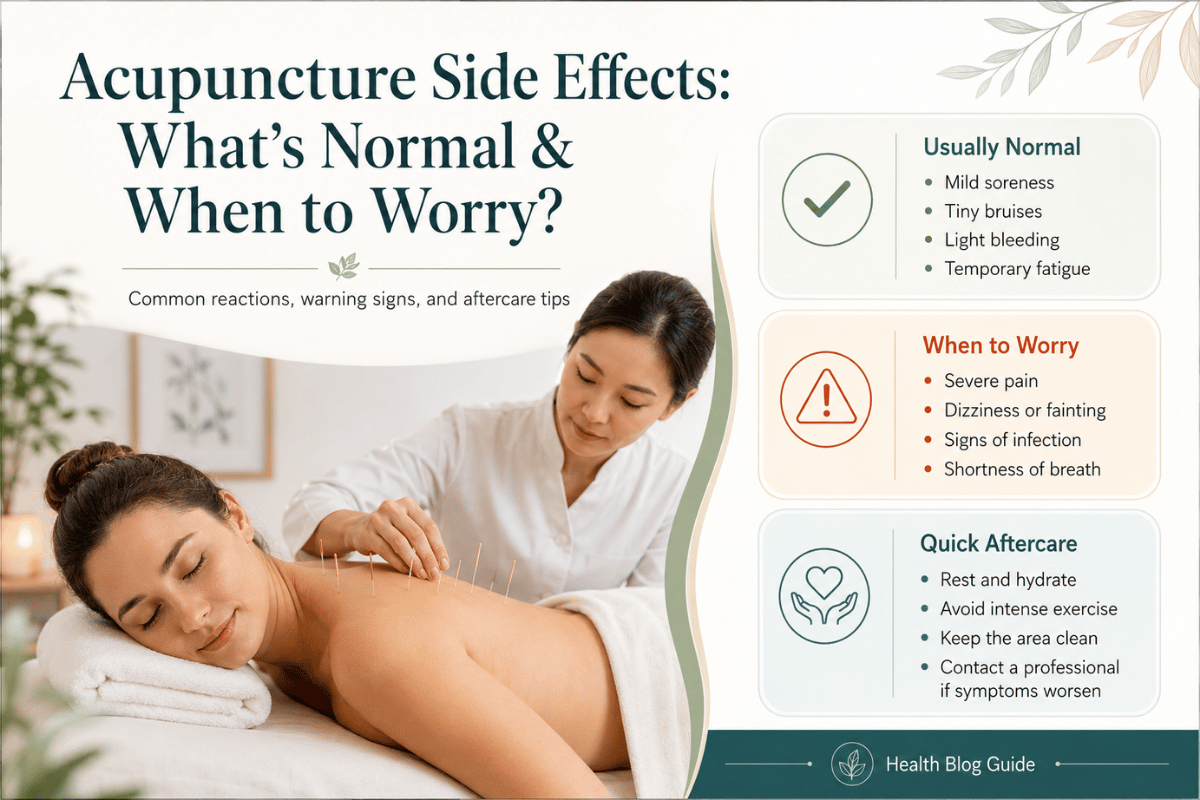
Acupuncture Safety at a Glance

For most people, yes. Acupuncture works by placing fine needles at specific acupuncture points along the body’s meridians, the channels traditional Chinese medicine links to the flow of qi, or energy. When a trained, licensed acupuncturist uses single-use sterile needles, acupuncture is one of the lower-risk treatments in modern healthcare. Large reviews, and bodies such as the U.S. National Center for Complementary and Integrative Healthdescribe serious complications as rare, and the common side effects as minor and temporary. An honest caveat belongs here, though: safety depends almost entirely on who performs it, training and clean-needle technique are what keep the risk low. In practice, most first-time patients at our Dubai clinic are surprised by how little they feel, a faint prick at a few of the points, then 15 to 20 minutes of stillness.
At a Glance
| Overall risk | Low — serious events ~1–2 per million treatments |
| Most common effects | Soreness, minor bruising/bleeding, brief tiredness |
| How long they last | Usually under 24 hours |
| Who needs caution | Pregnancy, blood thinners, pacemakers, weakened immunity |
| See a doctor if | Chest pain or breathlessness, spreading redness with fever, or numbness that won’t fade |
Does acupuncture have any negative effects?
Acupuncture can cause side effects, but they’re mostly minor. Even a fine needle can leave a tender spot, a small bruise, or a drop of blood, and some people feel light-headed or sleepy for a few hours. In one large national survey, roughly one patient in ten reported any reaction at all, and the overwhelming majority were trivial and self-resolving.
Genuinely serious events, a punctured lung, an infection, a nerve injury, are documented in the literature but are rare, and are nearly always linked to poor technique rather than to acupuncture itself. We unpack the real numbers further down.
The Most Common Acupuncture Side Effects
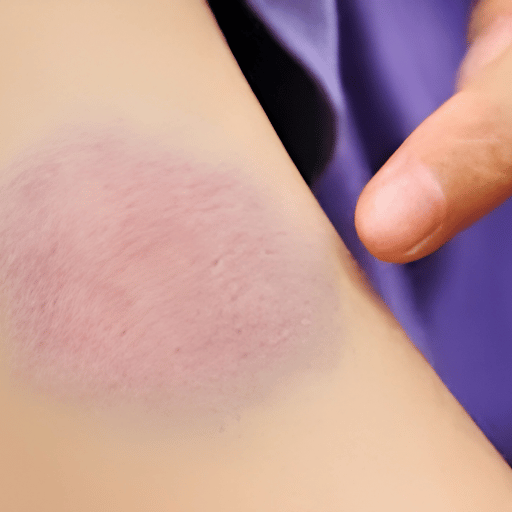
Reactions you’re most likely to notice are local and short-lived. A systematic review of acupuncture adverse effects found that the symptoms reported most often across studies were needling pain, bleeding and bruising, dizziness, and small collections of blood under the skin (haematoma). Here’s what each one feel like and how long it typically sticks around.
| Side effect | Category | What it feels like | How long it lasts |
|---|---|---|---|
| Soreness | Local | A dull muscle ache or tenderness at the needle points | Usually gone within 24 hours |
| Bruising | Local | A small purple mark where a tiny vessel was nicked | A few days to a week |
| Minor bleeding | Local | A pinprick drop of blood on needle removal | Seconds |
| Needle-site itching | Local | A mild, passing itch around an insertion point | Minutes to a few hours |
| Light-headedness | Systemic | Feeling faint or dizzy, usually if anxious or hungry | Minutes; lying down helps |
| Tiredness | Systemic | A heavy, relaxed, sleepy feeling afterwards | A few hours, sometimes to next day |
| Deep relaxation | Systemic | A calm, slightly spaced-out feeling after needling | Up to a few hours |
| Mild emotional release | Systemic | An unexpected teary or emotional moment during or after | Minutes to hours |
| Brief symptom flare | Systemic | Original complaint feels louder for a day before easing | 1–2 days |
None of these mean something has gone wrong. Soreness and bruising are simply the body’s response to a fine needle passing through skin and tissue. To put the bruising risk in context, single-use stainless-steel acupuncture needles are roughly 0.25 mm across, far thinner than the hollow needles used for injections or blood draws, which is why most insertions cause little more than a faint prick. Each session uses 5 to 20 needles, left in place for about 10 to 20 minutes. You can read more about how the treatment itself work in our guide on whether acupuncture actually works.
Tiredness After Acupuncture, Explained

Is it normal to feel tired after acupuncture?
Yes, post-treatment tiredness is one of the most commonly reported reactions, and on its own it isn’t a warning sign. Many people leave a session feeling deeply relaxed, a little foggy, or ready for a nap. It reflects a shift in your nervous system out of “fight-or-flight” and into a calm “rest-and-digest” state, helped along by a release of endorphins.
That combination can feel like a wave of fatigue or drowsiness, and your energy may dip for a few hours. Health authorities including MedlinePlus note that acupuncture is generally well tolerated, with reactions like this being mild and short-lived.
⚠️ One myth worth clearing up
You will often hear that the tiredness is “toxins leaving your body.” That is not what is happening. Acupuncture does not flush toxins, and there is no detox mechanism behind the heavy feeling — it is a relaxation and endorphin response. That distinction matters, because chasing a “detox” can lead people to over-treat or to ignore tiredness that is actually just dehydration or low blood sugar.
This brief, self-limiting tiredness is sometimes called a healing reaction. If the fatigue is strong, it’s often a sign the session was simply too much for that day, practitioners link heavy post-session exhaustion to too many needles, overly strong stimulation, or needles left in too long. Fixing it’s easy: tell your acupuncturist, who can use fewer points and a gentler technique next time. Drink water, eat something, and avoid scheduling anything demanding straight afterwards. For most people the tiredness eases after the first 1 or 2 sessions as the body adjusts, and a typical course runs 6 to 8 sessions.
Picture a first-timer who come in for neck pain on a Thursday lunch break, feels wonderfully calm on the treatment table, then can barely keep their eyes open at a 3 p.m. meeting. That’s the relaxation response doing its job, not a sign something went wrong, though it’s also a hint to book the next session for a quieter afternoon. We see this most often in patients arriving stressed and sleep-deprived, whose bodies seize the chance to switch off the moment the needles go in.
Side Effect Frequency: The Safety Data
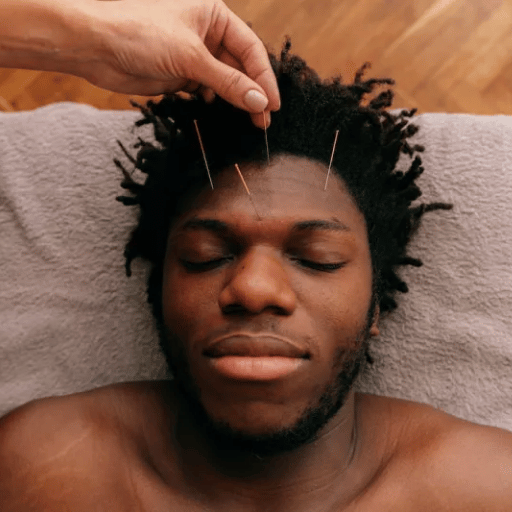
This is where acupuncture’s reputation is earned. It helps to separate two very different numbers: how often any mild reaction happens, and how often a significant event happens.
Acupuncture’s 1-in-1,000 Rule
📐 The 1-in-1,000 Rule
In a prospective survey of around 34,000 acupuncture consultations with professional acupuncturists, researchers recorded just 43 significant minor adverse events, a rate of about 1.3 per 1,000 treatments (95% confidence interval 0.9–1.7), with no serious adverse events at all.
That’s the number worth remembering: roughly one significant-but-still-minor event (such as severe nausea or a brief fainting episode) per thousand sessions.
Counting every small reaction gives a higher figure, because it includes things like mild soreness and tiredness. Large studies that count any minor effect land at roughly 7% to 13% of patients, about one in ten to one in eight, depending on how broadly they define a “reaction.” A German programme that tracked more than four million treatments across 454,920 patients found 7.9% reported a minor effect, while only 0.003% (13 patients) had a severe one. So “common” side effects are common in the way a small bruise is common, frequent but trivial. In practice, the pattern we see in our own clinic mirrors that split: most patients report nothing at all, a minority mention a bruise or a sleepy afternoon, and the genuinely worrying events are the ones our screening and technique are built to prevent rather than expect.
At the serious end, one widely cited review pooled 13 studies covering 4,441,103 treatments and found just 11 serious adverse events in total. Most frequent was a punctured lung (pneumothorax), at 7 cases across all 4.4 million treatments. Separately, a PubMed analysis put iatrogenic pneumothorax at under 1 case per million treatments. In other words, the headline-grabbing risks are real but land in the range of roughly one to two events per million treatments.
“The risks associated with acupuncture can be classified as negligible, and acupuncture is a very safe treatment in the hands of competent practitioners.”
Dr Adrian White, reviewing UK acupuncture safety data, Acupuncture in Medicine (2006)
Rare but Serious Risks (and How They Happen)

It’s fair to want the full picture, not just reassurance. A systematic review and meta-analysis concluded that acupuncture sit among the safer treatments in medicine, with serious adverse events rare. Most reported cases trace back to a single cause: a needle placed too deeply or in the wrong spot, or a needle that wasn’t sterile. Sorted by severity, the map below show where the genuine concerns sit.
Reading the 3-Tier Side Effect Map
| Tier | Examples | Roughly how often | Usual cause / avoidance |
|---|---|---|---|
| Mild | Soreness, bruising, minor bleeding, tiredness | ~1 in 10 sessions | Normal needle response; no action needed |
| Moderate | Strong dizziness or fainting, severe nausea, sizeable haematoma | ~1.3 per 1,000 | Over-stimulation; managed by lying down, fewer needles |
| Serious | Pneumothorax, infection, nerve or organ injury, retained needle | ~1–2 per million | Poor technique or non-sterile needles; avoided by trained, licensed practitioners |
Pneumothorax, the single most reported serious event, happens when a needle near the chest or upper back goes too deep and nicks the lung lining. It’s preventable with proper training in anatomy and needle depth, which is exactly why the qualification of your practitioner matters so much. Infections, the other classic concern, are largely designed out of modern practice by single-use sterile needles; historic cases of transmitted infection involved reused needles, which reputable clinics no longer use.
📐 Practitioner Note
In traditional Chinese medicine, points over the lungs, ribs, and major vessels are needled shallowly and at an angle for exactly this reason. At our Dubai clinic, points on the upper back and chest are treated with shallow, oblique insertion and single-use sterile needles, the same precautions that keep the serious-event rate in the one-per-million range. If you ever feel sharp chest pain or breathlessness during or after needling near the torso, say so immediately. In practice the safe-depth rule is simple: over the lungs and ribs, needles go in shallowly and at an angle, never straight down.
Who Should Be Extra Careful

Acupuncture is suitable for most people, but a few situations call for the practitioner to adjust the points, the depth, or the technique. None of these is necessarily a reason to avoid acupuncture, they’re reasons to make sure your practitioner knows your history first.
| If you… | Why it matters | The precaution |
|---|---|---|
| Are pregnant | A few points are thought to stimulate contractions | Trained practitioners avoid contraindicated points; reviews find it safe otherwise |
| Take blood thinners / have a bleeding disorder | Higher chance of bruising or bleeding | Gentler technique, fewer points, firm pressure after removal |
| Have a pacemaker | Electroacupuncture pulses can interfere with the device | No electrical stimulation; manual needling only |
| Have weakened immunity or lymphedema | Slightly higher infection risk; avoid swollen limbs | Strict sterile technique; affected areas avoided |
| Faint easily with needles | Risk of a vasovagal (fainting) episode | Treatment lying down, fewer needles, eat beforehand |
Take a patient on warfarin for a heart condition: they aren’t barred from acupuncture, but a careful practitioner switches to fewer points, needles more shallowly, and presses each spot for a few extra seconds on removal to keep bruising in check. That small adjustment is the difference between a comfortable session and a crop of bruises, and it only happens if the practitioner know about the medication first.
Pregnancy is the question we’re asked most. Systematic reviews conclude acupuncture is generally safe during pregnancy when a qualified practitioner avoids the points traditionally contraindicated, which is why a detailed intake matter. For anyone using acupuncture as part of fertility or pregnancy care, our fertility acupuncture guide and our look at acupuncture and IVF success rates go into more depth. At our clinic, every patient is screened for these factors before the first needle go in.
Acupuncture Aftercare Tips

What should you not do after acupuncture?
Afterwards, the goal is simple: let the calming effect settle rather than override it. Acupuncture has a sedating effect for many people, so the things to skip for a few hours are the ones that work against rest, heavy exercise, alcohol, very hot baths or saunas, and anything stressful you can postpone. There’s no need to “flush out toxins,” because there are none to flush.
In practice, the patients who feel best the next day are the ones who treat the hour or two afterwards as recovery time rather than a window to rush through errands.
- ✔ Rest for 5 to 10 minutes before you drive, especially after a first session
- ✔ Drink water and eat something light if you feel faint
- ✔ Keep the next few hours easy, skip intense workouts and alcohol
- ✔ Press gently on any spot that bleeds, and expect a small bruise to fade in days
- ✔ Note how you feel, so you can tell your practitioner what to adjust next time
Should you tend to feel wiped out, treat that as useful feedback rather than a problem, it usually means the next session can be lighter. A similar calm-down apply after related therapies such as cupping or moxibustion, which are often used alongside acupuncture.
Minimizing Side Effects: Choosing a Safe Practitioner

Almost every serious acupuncture risk in the literature come back to one variable: the skill and hygiene of the person holding the needle. Choosing well is the most effective thing you can do to keep side effects mild. This checklist separates safe practice from the cases that make headlines. In our day-to-day medical practice, the first question new patients ask is whether the needles are truly single-use, and the answer should always be yes, with the sealed pack opened in front of you.
- ✔ Single-use, sterile, disposable needlesopened in front of you and discarded after one use
- ✔ A licensed, regulated practitionerin Dubai, look for a Dubai Health Authority (DHA) licence
- ✔ A proper intakethey ask about pregnancy, medications, pacemakers and bleeding disorders before treating
- ✔ Clean-needle techniquehand hygiene, skin cleaned, sharps isolated immediately after use
- ✔ Willingness to adjustthey listen if you felt faint or wiped out and dial the next session down
This isn’t a high bar, but it’s the line that matter. Needles themselves are tightly regulated, in the United States, for example, acupuncture needles are classified as Class II medical devices that must be solid, sterile, and single-use. What remains is the human variable. If you want to understand the difference between acupuncture and the superficially similar technique performed by physiotherapists, our comparison of acupuncture versus dry needling explains who’s trained to do what.
Red-Flag Symptoms That Need a Doctor

Most after-effects need nothing more than a glass of water and a rest. Only a small number deserve attention. Use this simple traffic-light triage to know the difference.
Using the 3-Zone Red-Flag Triage
| Level | Symptoms | What to do |
|---|---|---|
| 🟢 Green (expected) | Mild soreness, a small bruise, brief tiredness or lightheadedness | Rest, hydrate — no action needed |
| 🟡 Amber (monitor / call clinic) | Dizziness that lingers for hours, a bruise that keeps spreading, redness or warmth building at a needle site | Contact your practitioner or doctor for advice the same day |
| 🔴 Red (urgent care) | Chest pain or shortness of breath after upper-body needling, spreading redness with fever, fainting that doesn’t recover, numbness or weakness that persists | Seek urgent medical care now |
One rule sit above the triage: acupuncture is a complement to medical care, not a replacement for it. Keep taking prescribed medication, keep your other appointments, and never use acupuncture to delay getting a worrying symptom checked. If you’re managing a specific condition such as sciatica or a lumbar disc problem, acupuncture works best as one part of a wider plan.
The Future of Acupuncture Safety

Acupuncture’s safety profile isn’t changing because the needle changed, single-use disposable needles and practitioner licensing are already the default. What’s shifting is where the residual risk sit: away from the technique and onto the choice of provider. For patients, the practical takeaway is that vetting the practitioner now matter more than worrying about the procedure.
Two developments in 2025 reinforce that. A Joint Commission clean-needle-technique white paper formalised single-use needles and immediate sharps isolation for acupuncture delivered in hospital settings, pushing the same standards used in good private clinics into mainstream healthcare. In clinical practice this is already visible: more hospitals now run acupuncture alongside conventional medical care, under the same sterile-needle protocols a licensed clinic uses every day. And researchers published a dedicated reporting guideline (RECASE) for acupuncture-related adverse events, which should make future safety data cleaner and more comparable. Neither is dramatic, but both move in the same direction: clearer standards, better data, and a safety record that already compares favourably with many routine treatments. For a patient choosing a clinic in 2026, that shift is refreshingly practical, instead of worrying about the needles, ask two questions at booking: are the needles single-use, and is the practitioner licensed? Get a yes to both, and the rare risks stay rare. You can explore the wider tradition these standards sit within in our Chinese herbal medicine guide, and see how acupuncture is used for anxiety and stress.
Frequently Asked Questions
Q: Does acupuncture have any negative effects?
View Answer
Yes, but they are usually minor and short-lived. Common ones are soreness, a small bruise, a drop of bleeding, light-headedness, or tiredness at the needle sites, and these usually pass within a day. Serious effects such as a punctured lung or infection are documented but rare — on the order of one to two per million treatments — and are almost always linked to untrained practitioners or non-sterile needles rather than to acupuncture itself.
Q: How long do acupuncture side effects last?
View Answer
Most fade quickly. Soreness and light-headedness usually settle within a few hours to 24 hours, a drop of bleeding stops in seconds, and tiredness commonly lasts a few hours, occasionally into the next day. Bruises are the slowest to clear, taking anywhere from a few days to about a week as the small mark reabsorbs. If any reaction is getting worse rather than better after a day or two, contact your practitioner or doctor.
Q: Is acupuncture safe during pregnancy?
View Answer
Systematic reviews conclude acupuncture is generally safe in pregnancy when it is performed by a qualified practitioner who avoids the points traditionally thought to stimulate contractions. Disclosure is the key step: tell your practitioner you are pregnant and how many weeks along, so they can choose appropriate points and a gentle technique. Always coordinate with your obstetric care team, and treat acupuncture as a complement to — not a substitute for — your routine pregnancy care.
Q: Can acupuncture make you feel worse before you feel better?
View Answer
Some people notice their original symptom feels a little louder for a day or so after a session before it eases. This brief flare is usually temporary and self-resolving. If a symptom genuinely worsens and stays worse, that is not something to push through — let your practitioner know so they can reassess the approach.
Q: How do toxins leave your body after acupuncture?
View Answer
They don’t — acupuncture does not release or flush toxins from the body at all. The tired, relaxed feeling that people attribute to “detox” is really a nervous-system relaxation and endorphin response, not toxin clearance. Hydrating and resting afterwards simply helps you feel more comfortable, not cleaner.
Q: What are the signs acupuncture is working?
View Answer
Common early signs are better sleep, a calmer mood, and gradual easing of the symptom you came in for, often over several sessions rather than one. Feeling deeply relaxed during or after treatment is also a good sign.
Considering Acupuncture in Dubai
Our DHA-licensed physicians use single-use sterile needles and screen every patient before treatment. If you’ve questions about whether acupuncture is right for your situation, talk to our team.
About This Guide
This article on acupuncture side effects was prepared by the clinical team at Tong Ren Tang’s Dubai Healthcare City clinic, drawing on peer-reviewed safety reviews and our own practice of screening patients and using single-use sterile needles. Frequency figures cited here come from published research, not from our own patient records; we’ve flagged where a number reflects a specific study so you can weigh it yourself.
Medical disclaimer
This article is for general information and doesn’t replace personalised medical advice. Acupuncture is a complementary therapy; it isn’t a cure for any disease. Always consult a qualified healthcare professional about your specific condition, and continue any prescribed treatment.
References & Sources
- AcupunctureMayo Clinic (2024)
- Acupuncture: What You Need To KnowNational Center for Complementary and Integrative Health (NIH)
- Acupuncture: What To KnowCleveland Clinic (2023)
- AcupunctureMedlinePlus, U.S. National Library of Medicine
- Adverse effects associated with acupuncture therapies (Xu et al., 2023)PMC / NIH
- Acupuncture-related adverse events: systematic review and meta-analysisPMC / NIH
- Incidence of iatrogenic pneumothorax following acupuncturePubMed
- 21 CFR 880.5580, Acupuncture needleU.S. FDA / eCFR
![Postpartum TCM Care: Safety Questions for Dubai [Guide]](https://tongrentang.ae/wp-content/uploads/2026/09/postpartum-tcm-care-blog-featured-768x512.png)