Get in Touch with Tongren Tang Gulf

Tong Ren Tang technical team. Updated June 2026 DHA-licensed TCM clinic, Dubai Healthcare City.
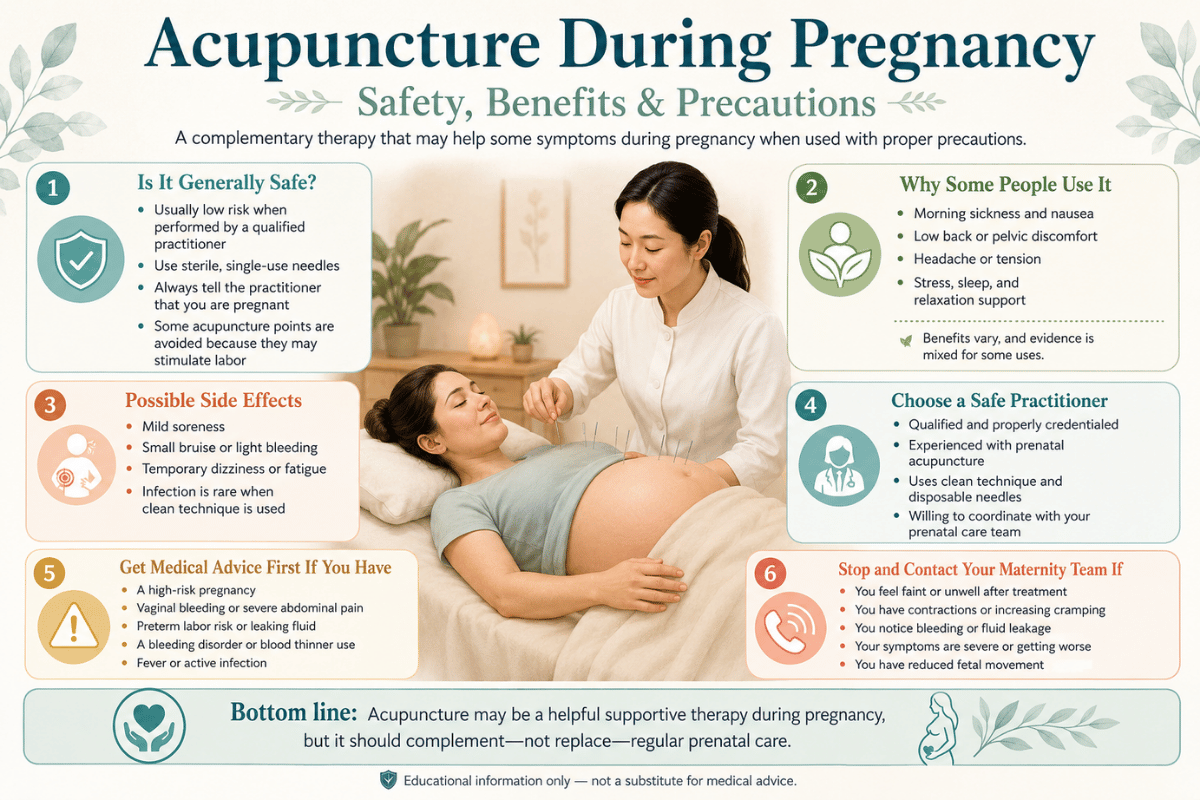
Thinking about acupuncture during pregnancy? In short, acupuncture during pregnancy is the careful use of fine needles at points chosen for each stage to ease symptoms such as nausea, stress and back pain. If you’re considering it, you’ll likely want a very simple answer to the question ‘Is it safe?’ That answer for most would be a simple ‘yes’, provided the treatment is carried out by a trained and licensed TCM specialist who adapts their choice of acupuncture points for pregnancy, and is evidence-based, for many genuinely effective, drug-free relief for morning sickness, stress and back pain. However, not all acupuncture points are suitable for early or late stages of pregnancy, and some of the claims made online are much more far-fetched than the science support. We set out the truth as backed by the research.
How to answer. The brief answer… It’s generally safe when performed by a trained professional, trained to practice obstetric acupuncture. According to a 2014 systematic review of 105 studies, it’s had an incidence of adverse effects of just 1.9%. The side effects that have occurred have been moderate and mild; usually small amounts of needling pain. Used alongside antenatal care, and not in its place, acupuncture is a safe alternative for many women.
Prenatal Acupuncture at a Glance
| Generally considered | Safe with a trained, licensed practitioner |
| Best-evidenced uses | Nausea/vomiting, low-back & pelvic girdle pain |
| Typical course | About 1 session/week, 20–40 min, single-use sterile needles |
| Earliest start | Any trimester (points adjusted by stage) |
| Always | Tell your acupuncturist you are pregnant; keep your OB/midwife informed |
| Evidence level | Complementary/adjunctive — not a replacement for antenatal care |
⚠️ Important
Note; the information provided here is for general guidance purposes only and is not a substitute for personal medical advice. Any acupuncture in pregnancy should only ever be performed by a suitably qualified professional and not attempted by any patient at home. Please always inform your midwife or obstetrician if you use any complementary therapy.
Is Acupuncture Safe During Pregnancy?
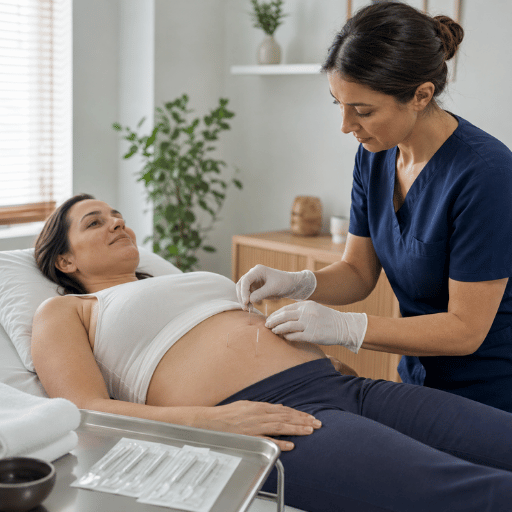
Yes- in healthy pregnancies acupuncture can generally be used, if applied by a qualified, trained practitioners who select points to complement each trimester. Research evidence suggests that acupuncture is largely safe for many women during pregnancy when prescribed and performed by trained and qualified acupuncturists. By far the largest body of scientific literature assessing acupuncture in pregnancy includes a 2014 systematic review examining 105 studies for any adverse events.
It reported a 1.9% total rate of adverse events (1.3% of those attributed directly to acupuncture), noting that “no event rated as certainly, probably, or possible… was severe and that few such events as certainly probably, or possibly occurred.” Simply put, many studies on using acupuncture to manage problems with pregnancy have found it’s safe and has low numbers of unwanted effects when it’s applied correctly during the proper weeks of gestation.
That figure above can seem worrying, but what that number really tell you is where the safety lies: it’s with the individual doing the work, rather than with the needle itself. What may be perfectly safe to do during the second trimester might be one of the very first points to deliberately avoid; to know that difference is the skill. It’s the number one safety lever at your disposal – choosing someone trained in pregnancy acupuncture, and telling them you’re pregnant even if you’re really early on, before anyone else knows. As per the US National Center for Complementary and Integrative Health “The relatively few serious adverse events associated with acupuncture are usually a result of either inexperience on the part of the acupuncturist or use of unsterile needles,” all of which are ruled out of a licensed practice. With so many pregnant women seeking to avoid medications, the use of acupuncture during pregnancy has grown markedly and research over many years hasn’t turned up concerning results in relation to pregnancy outcomes.
“Acupuncture is considered safe to treat certain conditions that may arise during pregnancy, including nausea and vomiting and stress, and it may help reduce pain in labour.”
Can pregnant women have acupuncture?
Yes, for many women it can. Acupuncture is safe for most women in healthy pregnancies, for low-risk pregnancies at all stages of the three trimesters, especially for a practitioner experienced in treating pregnant patients. The exception to the rule would be if you had a high-risk pregnancy, a bleeding disorder, or were on anticoagulant medication, if you’ve an infection or certain immune system conditions (although these aren’t always absolute prohibitions, a conversation with your obstetrician would be a good idea).
You’re generally to think of acupuncture as part of your routine, as one possible supporting option for any unwanted symptoms you may experience during pregnancy (rather than treating the pregnancy itself, if that’s what you mean).
In practice, at the Tong Ren Tang DHA-licensed clinic in Dubai Healthcare City, we screen every pregnant woman before her first session, because the main risk varies with her history; even so, fewer than 2% of patients report anything beyond minor needling pain, and serious problems are rare.
Evidence-Based Benefits of Acupuncture in Pregnancy

Honestly, the best evidence for the benefits of acupuncture for pregnancy so far points towards nausea, as well as lower back pain and pelvis related problems; there’s more of a mixed picture with sleep issues or for mood. If you approach making the decision on the basis of the actual evidence of efficacy for the particular symptom you would like some relief from (and not simply a list of “benefits”), the choice is much easier. Here, acupuncture research often compares real treatment (with physical acupuncture being done) against a “sham treatment”, and when the studies have done so the results have shown clear benefits. Because it is a really old therapy, quite a lot of work has been carried out over many decades to investigate the impact on conditions commonly faced by pregnant women, and to be completely blunt, not much of it’s scary. I’ve produced this matrix below, showing just where things stand for all of these problems.
| Symptom | Evidence tier | How it may help (TCM + biomedical) | Common approach |
|---|---|---|---|
| Nausea & vomiting (morning sickness) | Moderate–strong | Settles “rebellious Stomach qi”; modulates nausea-signalling pathways | P6 (Neiguan) at the inner wrist; acupressure bands |
| Low-back & pelvic girdle pain | Moderate | Eases muscular/ligament strain; stimulates endorphin release | Local back/pelvic points + distal points, side-lying |
| Anxiety & low mood | Limited–emerging | Calms the “shen”; promotes relaxation response | Gentle calming points; often as an adjunct |
| Insomnia & poor sleep | Limited | Supports sleep regulation; reduces discomfort that disrupts sleep | Calming protocol; comfort positioning |
| Headaches | Limited | May reduce tension; drug-free option when medication is restricted | Individualised, gentle treatment |
| Heartburn & reflux | Limited | May calm digestive “Stomach qi”; eases reflux discomfort | Stomach 44 and related points |
| Constipation | Limited | May support bowel motility; drug-free adjunct | Gentle abdominal-sparing protocol |
| Swelling & fluid retention | Limited | May aid fluid balance; supports comfort in legs/ankles | Distal limb points, side-lying |
| Breech presentation | Mixed (moxibustion) | BL67 stimulation may encourage the baby to turn | Moxibustion at BL67 from ~34 weeks |
Sources: Park 2014 safety review; pregnancy-related low-back pain meta-analysis (PMC10427988); 2023 meta-analysis of acupuncture for pregnancy symptoms (PMC10774725).
How does acupuncture help during pregnancy?
Across studies on acupuncture for nausea, women who receive acupuncture often report that the treatment helped within a few sessions. In these trials the acupuncture group generally did better than controls: one review study showed that acupuncture helped many participants, and a separate analysis found that acupuncture eased pain during pregnancy as well as nausea.
Vomiting in early pregnancy is common during pregnancy, affecting 50–80% of pregnant women, and certain acupuncture points — chiefly P6 — are used to settle it. In clinics, acupuncture treatment is widely used to treat both nausea and pain, and being treated with acupuncture is associated with pregnancy that feels more manageable. Some pregnant people also use acupuncture for insomnia and for depression during pregnancy, where the practice of acupuncture is best viewed as an adjunct treatment in pregnant women. In short, acupuncture can help relieve mild to moderate symptoms, and acupuncture may also increase the body’s own pain-dampening signals.
The evidence that acupuncture works for pain is reasonably consistent. One double-blinded controlled trial comparing acupuncture with non-penetrating sham found a benefit, and several studies have shown that acupuncture relieves pelvic and low-back pain; reviewers have concluded that acupuncture helps to alleviate back pain in pregnancy and pelvic girdle pain in pregnant women. Widely used, acupuncture is a traditional therapy, and many clinics recommend acupuncture as a treatment or acupuncture as an adjunct alongside usual care, since acupuncture is a key part of traditional Chinese medicine. Women who used acupuncture for low back pain often describe it as worth trying. Heartburn is a common gut issue in pregnant women too, and pressure applied on the acupuncture point Stomach 44 may help; stimulating acupuncture points like P6 also settles nausea. There is even evidence that acupuncture eases symptoms during pregnancy that are otherwise hard to treat — and the side effects, when they occur, during pregnancy are generally mild.
Acupuncture provides excellent support for pregnant women experiencing low back or pelvic pain, evidenced in a meta-analysis involving 12 randomized trials and more than 1,300 participants-offering one of the more strongly supported reasons for choosing acupuncture therapy for back pain.
Besides pain and nausea, some women use acupuncture to help treat insomnia and depression during their pregnancy, though these tend to be more complementary than core treatments and require further study and larger trials. Heartburn is another gastrointestinal inconvenience common in pregnancy and some practitioners advise patients on using acupuncture as a complementary therapy for the condition. Acupuncture is also sometimes used in efforts prior to conception, a crossover territory with acupuncture for fertility and pregnancy, although this represents a distinct form of acupuncture usage compared to prenatal treatment.One study indicated that acupuncture may be more effective for the management of low-back and pelvic pain among pregnant women than the standard treatment; in 2023, an evaluation suggested acupuncture therapy can relieve multiple conditions during pregnancy although quality of evidence may vary.The takeaways: low-back and nausea conditions present the most consistent evidence for the use of acupuncture, with symptoms related to sleep and mood being viable second objectives.
It works best not as a cure-all but as a low-risk way to take the edge off symptoms when medication options are limited. With that frame — strong evidence for nausea and pain, thinner for sleep and mood — you can have an open conversation with a licensed acupuncturist and your obstetrician about whether it is worth trying.
Acupuncture Points to Avoid During Pregnancy
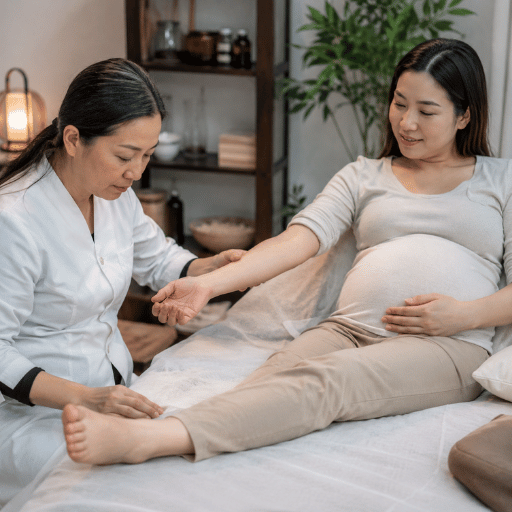
You may hear the terms “forbidden points” bandied about on the internet – points to avoid because they “cause miscarriage”. Here’s the context of this claim; a published review of safety for the obstetric use of acupuncture concluded there was no objective evidence that needling these points causes harm, and that there was no increased risk of miscarriage or fetal loss. And why are these points so often avoided then? Because Classical Chinese Medicine texts advise that the stimulation of particular points, such as sp6 (Sanyinjiao – three yin crossing), may have uterine stimulating effect at certain stages of the menstrual cycle and in pregnancy; and a well-trained acupuncture practitioner will respect that caution and apply it as a professional guideline rather than a prohibition. It’s not a menu for the pregnant person to try and monitor! It’s why you want an acupuncturist familiar with these fine distinctions.
| Point | Classical caution | Otherwise used for | When caution applies |
|---|---|---|---|
| LI4 (Hegu) | May promote uterine activity | Headache, pain relief | Throughout, until term |
| SP6 (Sanyinjiao) | May affect cervix/contractions | Pelvic, digestive, sleep | Before ~37 weeks |
| BL60 (Kunlun) | Traditionally linked to labour | Back & ankle pain | Before term |
| BL67 (Zhiyin) | Stimulating; used to turn breech | Breech presentation (with moxa) | Deliberate use ~34 wk+ only |
| GB21 (Jianjing) | Strong downward action | Shoulder/neck tension | Before term |
| Lower abdomen (CV3–CV7) | Proximity to the uterus | Various | Whole pregnancy |
| Lumbosacral points | Deep needling avoided | Lower-back pain | Shallow technique only |
Warning: for information purposes only, and only to build awareness and safety literacy. Acupuncture practitioners will adjust or avoid these points as necessary – never attempt these points yourself by pressing or needling.
What acupuncture points are not allowed during pregnancy?
While there’s no legal or formally sanctioned list of “banned” points in the West, practitioners learn that points such as LI4, SP6, BL60, BL67, GB21, the abdomen as a whole and the lower back (lumbosacral region) need to be used with caution before term pregnancy.
And crucially, let’s highlight the words “before term”; the very same points are needled intentionally around 37 to 40 weeks of gestation to stimulate labour or, in the case of a breech presentation with BL67, to help facilitate turning of the baby. It’s precisely the difference in use dependent upon the specific stage of pregnancy that highlights why it’s the discretion of a well-trained professional – not self-care.
⚠️ Important
The cautions regarding the use of certain acupuncture points during early or mid-pregnancy give way to therapeutic indications near term for labor support. This is always a medical and clinical decision and depends entirely on the knowledge of your individual progress and stage of the pregnancy – not an attempt on your own.
Trimester-by-Trimester: When to Start and What to Treat

Pregnancy stages come with different symptoms and that broadly matches acupuncture benefits; the earliest trimester often focuses on the very real, nauseating challenges; the middle stages the growing aches and pains and the final weeks, on preparation for delivery and discomfort relief. It’s perfectly safe to start acupuncture in any trimester of pregnancy but treatment is tailored; it’sgentleand addresses concerns such as nausea or fatigue in the early months and becomes more directly focused on pain or physical comfort through midpregnancy. From week 30 onward, points and techniques shift toward preparing you body for the immense effort of birth and helping it work in coordination and power.
In practice, Tong Ren Tang tailors the schedule to the stage, because each trimester carries different risks and goals: weekly sessions of around 20–40 minutes from week 12 for nausea, easing to fortnightly by week 24 as symptoms settle. Guidance from the US National Center for Complementary and Integrative Health supports acupuncture’s safety when stage-appropriate points are chosen.
| Trimester | Commonly addressed | Typical frequency | Positioning & cautions |
|---|---|---|---|
| First (wk 1–13) | Nausea, fatigue, anxiety | Weekly if symptomatic | Gentle; cautious point choice; reassurance-focused |
| Second (wk 14–27) | Back & pelvic pain, sleep | Weekly or fortnightly | Most comfortable window; side-lying as bump grows |
| Third (wk 28–40) | Pelvic/back pain, birth prep, breech referral | Weekly; pre-birth from ~36 wk | Side-lying; avoid lying flat on the back; moxa for breech ~34 wk+ |
When is the best time to start acupuncture in pregnancy?
Timing depends on what you’re treating. For nausea, first trimester is usually appropriate as that’s when you most often experience nausea at its height. For back or pelvic pain, second trimester is usually the practical time. For pre-birth treatments or breech babies, schedules become stage-specific: Acupuncture points to encourage labour usually begin once a week from 36 weeks, while moxibustion is prescribed from around 34 weeks.
There’s no universal ‘right’ time to try it, just one specific to your pregnancy stage and symptoms.
What to Expect at a Prenatal Acupuncture Session
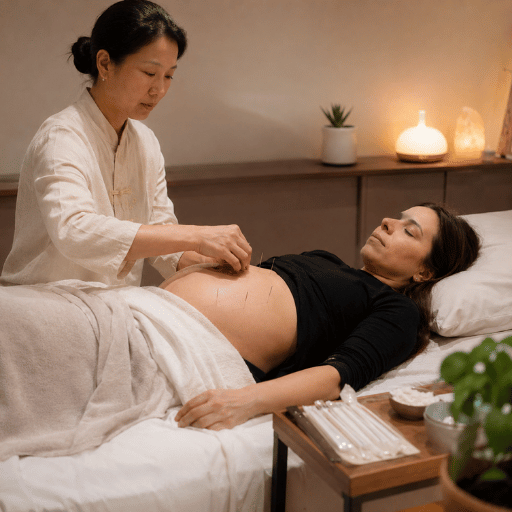
Opening up a session: A session always begins with a conversation, not needles. After asking about your pregnancy, symptoms and antenatal care, your therapist will select acupuncture points for you. These acupuncture needles – fine, single-use, sterile and typically no wider than 0.16-0.25mm (vs ~0.8mm for a blood-draw needle) – are placed at these points and many patients experience a slight prick, followed by a deep, heavy or tingling sensation at the point: This is called ‘de qi’.
During a manual session, the practitioner may manually rotate a needle for a second or two until the sensation is achieved. A standard treatment takes about 20 to 40 minutes with six to 12 needles left in for up to 20 minutes usually on a weekly basis throughout active treatment. By the time you’re further on in your pregnancy, you’ll be treated on your side with cushioning rather than on your back, both to ensure comfort and avoid pressing on major blood vessels.
Going the acupressure route: acupuncture isn’t always needles. Whether you choose acupuncture or acupressure the points are the same – and the latter involve gentle but firm finger pressure on points, with the popular P6 wristband a convenient way to self-test the anti-nausea point without visiting a practitioner. Some therapists may also use the Stomach 44 acupuncture point in the feet for heartburn, and most patients find that any appointment is generally deeply relaxing during the pressures of pregnancy. Improved sleep quality is another positive reported by some women, and as acupuncture is part of the mainstay of TCM therapies, treatments are commonly able to be tailored specifically to the concern you most want to alleviate. If the idea of acupuncture with needles causes any anxiety our guide on does acupuncture hurt? explains more about the sensation while an initial acupuncture session guide reveals what to bring and how to prepare.
In practice, our Tong Ren Tang practitioners use 0.20 mm single-use needles and a 20-minute side-lying protocol, because comfort and safety drive better outcomes; most pregnant women feel only a brief prick, and 6–12 points are treated per session.
💡 Pro Tip
Just Wear Something Loose: Wear loose and comfortable clothing, avoid an empty stomach during treatment, and provide your therapist with an accurate record of your gestation: this determines the right points every time.
Acupuncture for Labour Preparation, Breech and Induction
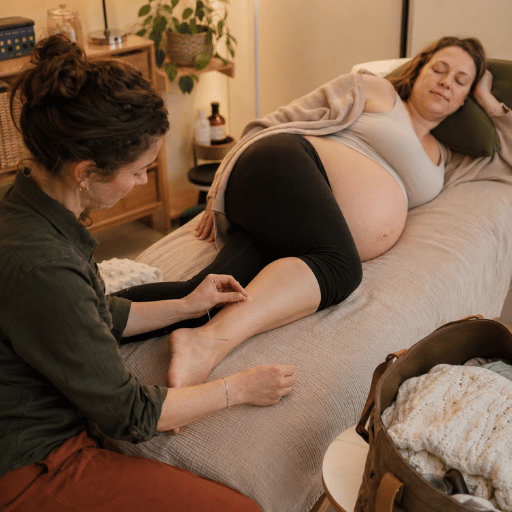
This is where expectations are most likely to outstrip evidence, so be precise. Pre-birth acupuncture is offered regularly to prepare the body for birth in a short series of sessions from around 36 weeks, although the evidence for reducing or easing labour duration or pain is moderate. breech presentation is the best supported of the birth uses: research suggests that a combination of acupuncture and moxibustion (using heat from the herb moxa near acupoint BL67 on the little toe) started in the third trimester (from about 34 weeks gestation) can be effective in helping the baby to turn, though evidence is mixed and it’s offered on the basis that it’s low risk rather than a guarantee. You’ll stop this in late pregnancy as soon as it’s no longer helpful. you can read more about how we use moxibustion to treat breech presentations.
There’s honesty in what you can expect if you’re induced: evidence for acupuncture’s reliable effects in initiating labour is weak. A Cochrane review confirmed it could help alleviate labour pain, but reviews of acupuncture for induction conclude trials are too few and varied to recommend it as a go-to method. If you’re post-dates and looking to stimulate labour, anything you do under these circumstances needs the supervision of your maternity care providers – not self-treatment.
In practice, Tong Ren Tang offers pre-birth acupuncture from 36 weeks and moxibustion from 34 weeks, because timing changes everything near term — but we are honest that the evidence for induction is limited, so every plan stays under your obstetrician’s supervision.
⚠️ Important
Evidence for acupuncture-assisted induction of labour is weak. Please do not attempt to ‘bring on your labour’ at home and always consult your obstetrician or midwife for any support you need in pre-birth care or labour induction.
Risks, Precautions and Who Should Avoid It
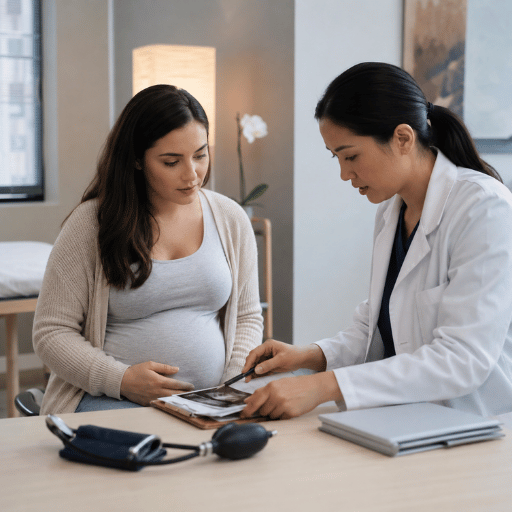
Generally, for healthy pregnancies, the risks associated with acupuncture treatment are small and temporary. Common adverse reactions to acupuncture during pregnancy are mild and a little temporary discomfort, bruising or light-headedness are the worst typically experienced by expectant mothers. serious adverse reactions are incredibly rare and the adverse event rate of 1.9% found by our safety review relates predominantly to these milder issues. some health conditions warrant prior approval from your obstetrician however; if you’ve bleeding problems, are on anticoagulant medication, have a compromised immune system or current infection, or if you’ve a high-risk or unstable pregnancy; extra precautions are used in treatment with the technique electro-acupuncture, when your treatment involves using a mild electrical current.
Nor can acupuncture replace emergency healthcare – some of your concerns will require a midwife or trip to hospital rather than a trip to the treatment table. Want to know the difference? take a look at our in-depth acupuncture side-effects piece which sets a realistic scene.
Pregnancy Red Flags: The 4 Signs to Stop and Call Your Team
Consider a basic guideline to remember: four signs and symptoms suggest stopping treatment and calling your maternity team instead of seeking acupuncture: you’ve vaginal bleeding; experienced cramping prior to 37 weeks; your baby’s movements have noticeably reduced; you’re experiencing a severe headache or sudden swelling. None of these issues are the purview of a treatment room.
⚠️ Seek medical care, not acupuncture, if you have:
- Vaginal bleeding or fluid leaking
- Strong or regular cramping/contractions before term
- A noticeable drop in your baby’s movements
- Severe headache, vision changes or sudden swelling
These will need your maternity team or emergency care immediately.
Choosing a Qualified Pregnancy Acupuncturist in Dubai

Since the safety of acupuncture during pregnancy is practitioner dependent, selection is even more critical here than for almost any other therapy. In Dubai the floor for selecting the right one is the Dubai Health Authority (DHA); they licence Traditional Chinese Medicine practitioners and specify the qualifications they must have, so a DHA licence is the minimum, mandatory check you should make. After that, seek practitioner experience of pregnant patients, single-use sterile needles and the willingness to liaise with your maternity care provider. Below is the checklist to take before you call one.
Questions to ask before booking
- ✔ Are you a DHA-licensed TCM practitioner?
- Do you’ve specific training and experience in pregnancy (obstetric) acupuncture?
- ✔ Do you use single-use, sterile, disposable needles?
- Will you adjust point selection for my trimester and avoid cautioned points before term?
- Are you happy to coordinate with my obstetrician or midwife?
This is the standard we apply. Tong Ren Tang, a company whose history traces back to 1669 and a practice with a well-established DHA-licensed clinic in Dubai Healthcare City, with multi-lingual (English/Arabic/Chinese) doctors and a practice structured around TCM, will show you their list of TCM doctors, rates and service packages, or how the pregnancy aspect relates to their wider acupuncture in Dubai services. Their related work on anxiety and insomnia during pregnancy can be useful too.
Planning acupuncture for nausea, back pain or to prepare you for childbirth? We’re able to help; book a session with one of the DHA-licensed providers of pregnancy acupuncture treatments who treat pregnant women every week.
Need something a bit less committed? Send us a message via WhatsApp with a brief query, or visit this information-rich new-patient guide, or see our service and price rates.
Industry Outlook: Integrative Prenatal Care
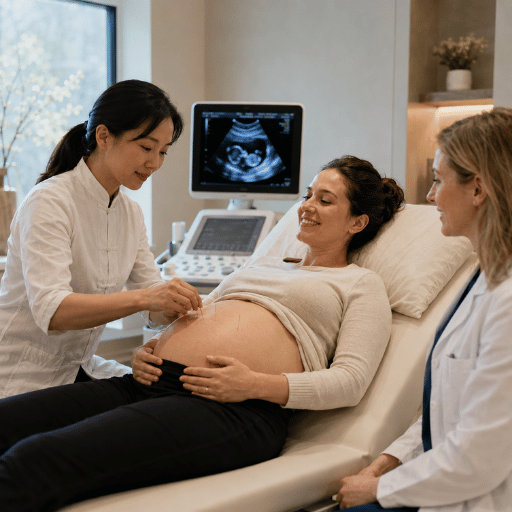
What’s really driving increased interest in prenatal acupuncture isn’t lifestyle trends, it’s the medication crisis; many conventional first-choice medicines used to treat morning sickness, back pain and insomnia are either discouraged or only cautiously permitted for pregnancy use. As the medical community increasingly responds by integrating compatible treatments, the formalisation of TCM practitioner regulation by Dubai Health Authority’s 2025 professional qualification framework means prenatal acupuncture is becoming a regulated, verified alternative option within UAE healthcare pro vision.
For expecting mothers in Dubai, the takeaway is pragmatic. Acupuncture is among those complementary approaches now routinely delivered alongside standard antenatal care, and for women expecting a baby many find acupuncture while pregnant perfectly normal rather than an alternative approach to pregnancy. Increasingly, clinics are offering antenatal acupuncture to women expecting to deliver at full term; availability is less of a differentiator, but qualification is – search out a DHA-licensed, obstetric-focused professional over a convenient option. FWIW the overall complementary-medicine market size is widely reported in the hundreds of billions of dollars, with annual growth in the double digits; use those figures as a rough guide of scale rather than a rationale in themselves. The actually relevant reason is narrower and far more practical: effective, evidence-aware integrated health is now a normal element of expectant maternal choice, and selection focuses more on who wields the needle.
In the UAE specifically, the DHA’s 2025 professional qualification framework formalised TCM-practitioner licensing, and acupuncture during pregnancy is now offered within DHA-licensed clinics such as Tong Ren Tang in Dubai Healthcare City. Registered studies such as one on ClinicalTrials.gov continue to evaluate acupuncture in pregnancy. In practical terms for an expectant mother, the differentiator is no longer availability but credentials. If you are planning antenatal care in 2026, the concrete step is to confirm your practitioner holds a current DHA licence and has obstetric-acupuncture training before your first session — a 5-minute check that protects both you and your baby.
Tong Ren Tang’s DHA-licensed Dubai clinic has seen prenatal demand rise because first-line anti-nausea drugs are restricted in pregnancy, and we expect this to continue through 2026; in practice, the safest choice is a DHA-licensed, obstetric-trained practitioner.
Pregnancy can come with broken sleep, and many women find that acupuncture while pregnant can improve sleep quality; once pain settles, being pregnant can improve in comfort, and acupuncture also helps with everyday tension. During manual acupuncture the practitioner stimulates points by hand, and in research the effect of acupuncture is measured against sham acupuncture to confirm it is real. As the pregnancy journey moves into the third trimester of pregnancy, treatment shifts toward birth preparation, yet the weeks of pregnancy before term still call for cautious points during pregnancy. The benefits of acupuncture during pregnancy, and the risks of acupuncture during pregnancy, both depend on the practitioner; therapies like acupuncture are safest for a pregnant woman carrying a pregnancy to term when delivered by a DHA-licensed clinician. Used during pregnancy as a gentle adjunct, acupuncture for mild to moderate symptoms can genuinely help with pregnancy, and studies have found acupuncture useful where medication is restricted.
Frequently Asked Questions
Is acupuncture safe in the first trimester?
View Answer
For the vast majority of healthy, low-risk pregnancies, the answer is yes. Acupuncture is usually safely performed in the first trimester and many expectant mothers choose to undergo sessions then, often for the relief of nausea. Treatment would be gentle and focus on specific, carefully chosen acupoints. If you have a high-risk pregnancy or have experienced early miscarriage previously, first confirm with your obstetric provider and ensure your acupuncture practitioner has specific experience treating early-stage pregnancies.
Can acupuncture cause a miscarriage?
View Answer
When it is correctly administered, acupuncture has not been linked with causing miscarriage. Studies of its safety profile during pregnancy show that needling the traditionally advised ‘forbidden points’ does not raise the incidence of miscarriage or fetal death. Those points are still treated with caution before full term, but that caution is a professional guideline applied by a trained practitioner — not a reason to avoid treatment. Your key safeguard is choosing a licensed acupuncturist with obstetric experience.
How many acupuncture sessions will I need during pregnancy?
View Answer
It varies with your symptoms and how you respond. Weekly sessions suit active symptoms, easing off as they settle, with a pre-birth course often running weekly from about 36 weeks. Expect a tailored plan after your first appointment — and avoid clinics that demand many sessions up front before any evaluation.
Does insurance cover prenatal acupuncture in Dubai?
View Answer
Coverage varies by plan. Some Dubai insurance policies reimburse treatment at licensed TCM and acupuncture clinics, while many others do not cover it at all. Check your policy documents carefully and ask the clinic about its insurer partnerships before you book your first session.
Can I use acupressure at home for morning sickness?
View Answer
A popular self-treatment involves applying gentle pressure to a point on your inner wrist – known as P6 or Neiguan. Located about two fingers-width above the wrist creases (the same point targeted by acupressure bracelets for nausea), this method is generally considered safe, though it’s best to discuss it with your provider, especially if you are experiencing hyperemesis or have any complications. Avoid placing any pressure on your abdominal area or the aforementioned points.
Should I tell my obstetrician I’m having acupuncture?
View Answer
Yes, unquestionably. It supplements standard antenatal care, and your providers will appreciate knowing about any complementary therapy you receive throughout your pregnancy, so they can keep a full overview of your health. Any competent acupuncturist will welcome that collaborative approach.
About This Guide
Prepared by the clinic and editorial team at Tong Ren Tang, a DHA-licensed TCM clinic in Dubai Healthcare City. We anchored safety and benefit claims in system reviews and meta-analyses, not marketing buzz. And yes, we noted limitations in the research-especially induction and sleep-because honesty matters for prenatal health. Reviewed by the Tong Ren Tang technical team.
References & Sources
- The Safety of Acupuncture During Pregnancy: A Systematic Review (Park et al., 2014) — Acupuncture in Medicine / National Library of Medicine
- The Safety of Obstetric Acupuncture: Forbidden Points Revisited (Carr, 2015) — National Library of Medicine (PMC)
- Efficacy and Safety of Acupuncture for Pregnancy-Related Low Back Pain: A Meta-Analysis — National Library of Medicine (PMC)
- Effectiveness and Safety of Acupuncture in Treatment of Pregnancy Symptoms (2023)National Library of Medicine (PMC)
- Acupuncture: Effectiveness and SafetyNational Center for Complementary and Integrative Health (NIH)
- Acupuncture or Acupressure for Relieving Pain During LabourCochrane Pregnancy and Childbirth
- Complementary and Integrative Approaches in Obstetrics and Gynecology (2021)American College of Obstetricians and Gynecologists