Get in Touch with Tongren Tang Gulf


Constipation relief starts with the right liquids, fiber, and time to use the toilet. Telltale signs of trouble require different approaches, so your first step is to check for symptoms requiring urgent medical care. Even if you continue to go, keep an eye out for signs of hard stool and straining. The lifestyle changes you make to find relief should address your symptoms, the type of fast you’re following, and your overall health.
Fasting constipation relief combines suitable fluids, gradual dietary changes and a regular toilet routine. Ramadan and water-permitted fasting need different drinking plans. Persistent symptoms need assessment; pain, vomiting or inability to pass gas can need urgent care.
- Constipation isn’t just about the frequency of visits to the toilet. It’s about the consistency of the stool and how difficult it is to pass it.
- Don’t put off going to the toilet when a bowel urge strikes, particularly if your eating window is still a few hours away.
- Check the instructions for your medicine against the timing of drinking windows, other medicines, and bedtime.
- Seek help for symptoms requiring urgent medical care rather than try home remedies first.
The information given here is for adults, and is prepared by DD. This article doesn’t diagnose symptoms or prescribe a fasting or medication plan.
Recognising constipation while fasting
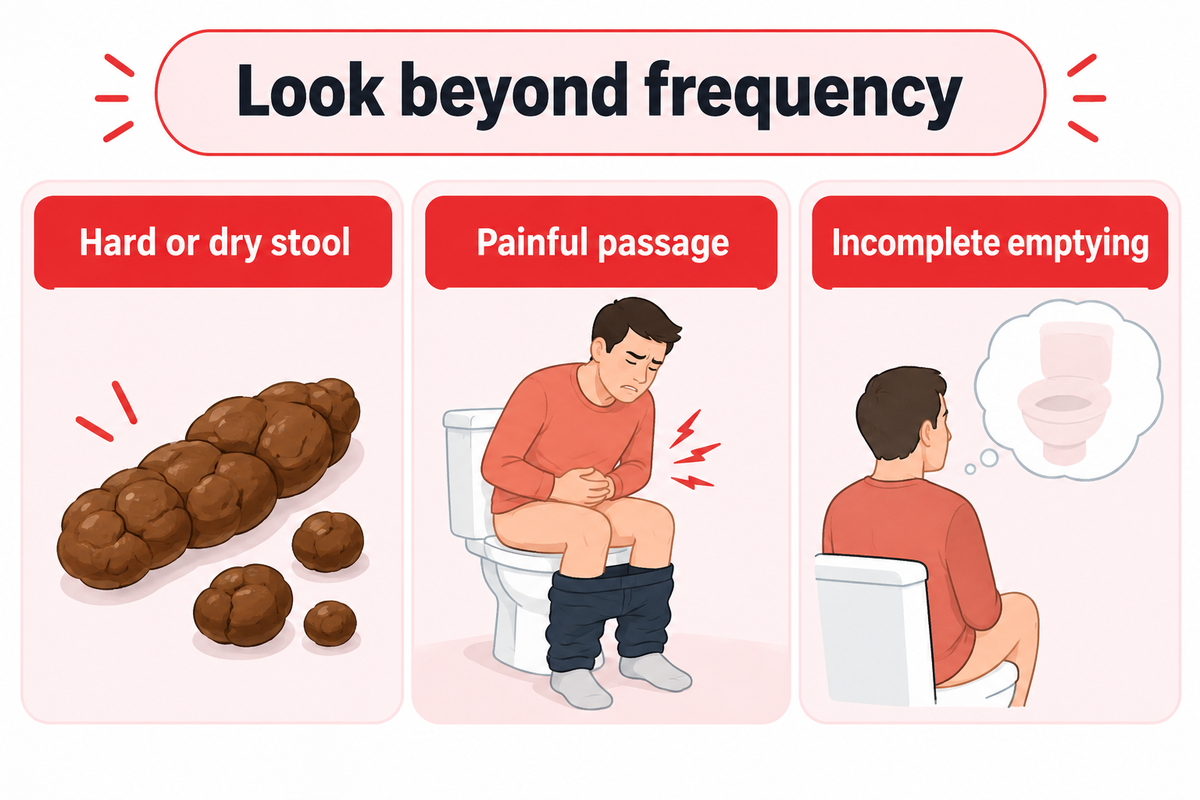
When experiencing constipation while fasting, pay attention to the kind of stool you’re passing, if it’s painful to pass it, and if you feel like your bowel didn’t fully empty. Note if there are changes to your usual habits or pattern and if you’re passing stool less often. Describe any changes to the stool, for example if it’s hard or dry, lumpy, or soft.
The NIDDK symptom guide lists several possible contributors, including insufficient fiber or liquids, changes in routine, and medicines. Iron supplements and opioids can cause constipation and difficult passage. A muscle problem with the bowel can also cause constipation, as can irritable bowel syndrome. If you’ve recently changed your diet or started a new medication, discuss any new symptoms with a clinician. To assess persistent constipation, see a health professional.
Can intermittent fasting cause constipation?
Persistent symptoms during intermittent fasting aren’t necessarily due to an adjustment period. Consuming less food can mean you are no longer getting enough fiber, while a busy eating window leaves fewer opportunities for drinks and bathroom visits than your previous daily routine allowed. Persistent digestive problems shouldn’t always be associated with an adjustment period.
A study of 900 Iranian adults found an association between Ramadan fasting and constipation. Participants reported their symptoms in a cross-sectional survey, so an association doesn’t necessarily mean fasting caused symptoms. The study can’t predict what will happen with a different eating pattern.
When symptoms need medical care
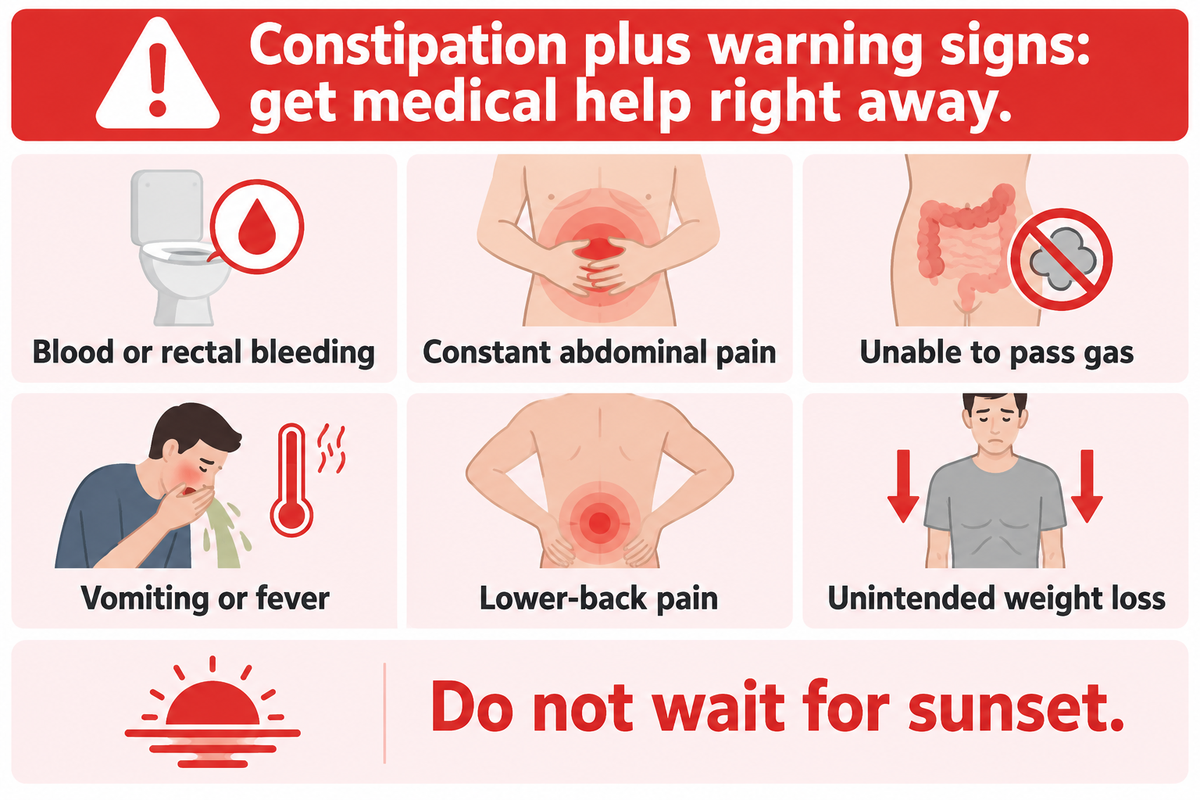
Vomiting, persistent abdominal pain and inability to pass gas require immediate medical attention, as do rectal bleeding and blood in the stool. An evaluation shouldn’t be postponed because of a meal plan, the use of fiber, or a routine appointment.
Get medical help right away
NIDDK advises immediate medical help for constipation accompanied by blood, constant abdominal pain, inability to pass gas, vomiting, fever, lower-back pain or unintended weight loss. Don’t wait for sunset or a set number of days when these warning signs occur.
Arrange a medical review if symptoms keep returning, do not improve with treatment, or accompany a sudden change in bowel habits. Persistent tiredness and recurring bloating are also included in the NHS constipation guidance. If you suspect a medicine is causing your constipation, talk with your doctor before changing it; your current condition, dose and other treatments all matter when deciding whether a different medicine would be suitable.
For instance, a person who has a hard stool but feels well in other ways requires a different next step than a person who has a swollen, painful abdomen, is vomiting, and is unable to pass gas. The person who has a swollen, painful abdomen, is vomiting, and is unable to pass gas, needs urgent assessment, even if both persons describe the problem as “constipation.”
Ramadan and intermittent fasting: different drinking windows

During Ramadan, people fast from water throughout the day and then drink water at night. Identify which pattern applies before changing your water intake: advice to drink throughout the day cannot simply be transferred to a dry daytime fast.
| Fasting pattern | Practical approach |
|---|---|
| Ramadan daytime fast | Plan drinks between iftar and suhoor; discuss health conditions and medicine needs before fasting. |
| Water-permitted intermittent fasting | Keep drinking during permitted fasting hours instead of treating the eating window as the only drinking window. |
| Prolonged water-only fast | Do not extend the fast to treat constipation. Seek clinical advice about symptoms and whether continuing is appropriate. |
Johns Hopkins Medicine describes water-permitted intermittent fasting and warns that longer fasts may be dangerous. Its guidance advises against intermittent fasting for children, people who are pregnant or breastfeeding, people with type 1 diabetes using insulin, and those with an eating-disorder history.
Questions about religious observance are for a religious adviser. Other health-related issues can be explained by clinicians or pharmacists regarding the proposed plan.
Meal timing and the toilet routine
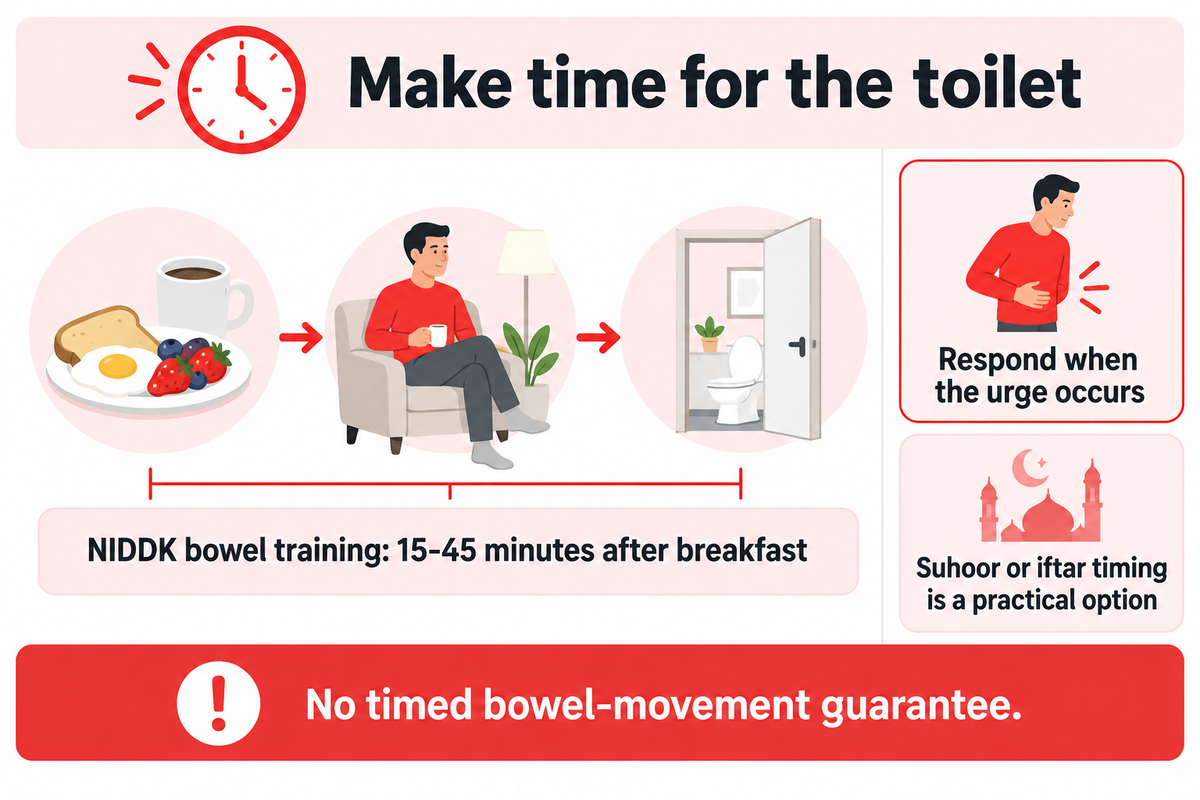
Eating a regular meal can provide an opportunity for an unhurried toilet visit because eating can stimulate bowel motility, the movement that carries stool along the digestive tract. NIDDK suggests attempting bowel training 15-45 minutes after breakfast. During Ramadan, using an allowed meal to create an opportunity to relieve yourself and responding to the urge to relieve yourself, rather than delaying it, is recommended.
“use the bathroom as soon as you feel the need to go.”
A footstool can also help with comfort when sitting. Ignoring the urge because the bus is due, or straining because you have only a few minutes before leaving, can make an unhurried routine difficult to maintain. Adapting the timing to suhoor or iftar is a practical option, not a promise of a bowel movement within a particular number of minutes.
Consider an adult who eats suhoor quickly and leaves for work without time for the bathroom. Also consider someone who repeatedly ignores the urge to go on their commute. A useful first change is to prepare the meal beforehand and leave time for the bathroom. Prolonged straining isn’t the next step. If a bowel movement hasn’t occurred after multiple attempts, respond to bowel urges later in the day rather than straining. Someone working the night shift may find more opportunity after iftar. The goal is to fit toilet visits into your daily routine while responding promptly to a genuine urge and not treating the clock as a test that must be passed.
Hydration between iftar and suhoor
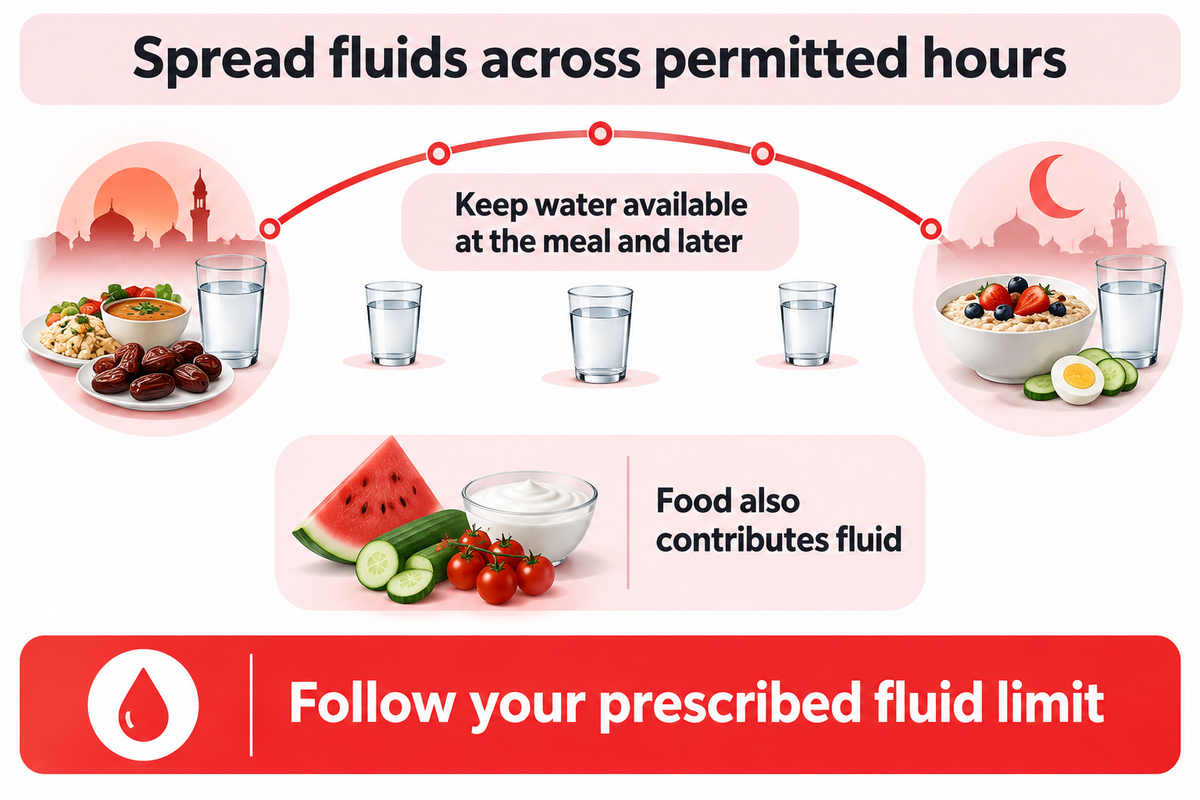
Spread fluids across the hours when drinking is permitted. Think of foods that contain fluids as well. The water content of soups, fruits and veggies provides fluid in addition to your drinks, and a broth can be part of a meal and not replace a fiber containing food. Because of differences in needs and restrictions, there’s no single litre target in this article. Any person who has a prescribed fluid limit should use the plan agreed on with their clinician.
Hamad Medical Corporation mentions heat and outdoor activity during Ramadan as concerns for dehydration in addition to chronic illnesses. The Johns Hopkins Aramco Healthcare nutrition guide says to distribute drinks between iftar and suhoor. If you have been drinking less water because evenings are busy, keep it available at the meal and later on rather than relying on one large drink immediately before dawn.
Hydration matters alongside diet. A randomized trial in chronic constipation found greater improvement when mineral-water intake increased alongside a fixed high-fiber diet. It didn’t test water in already sufficiently hydrated fasting adults. Adding salt and water as a homemade constipation remedy is not a substitute for an individual care plan.
An office worker may remember to drink at iftar but then travel and socialize, leaving most fluid intake until suhoor. Keeping a drink with the evening meal and another available later offers more opportunities. Another individual may have a fluid restriction for cardiac or renal disease, and copying the first individual’s drinking pattern may be inappropriate. Their next step is to consider how the permitted drinking hours correspond with the prescribed fluid restriction. A record of fluid intake and the symptoms may help address any concerns with prescribed fluid restrictions; it isn’t to be used to assign a hydration score for the day.
Fiber-rich foods without a sudden overload
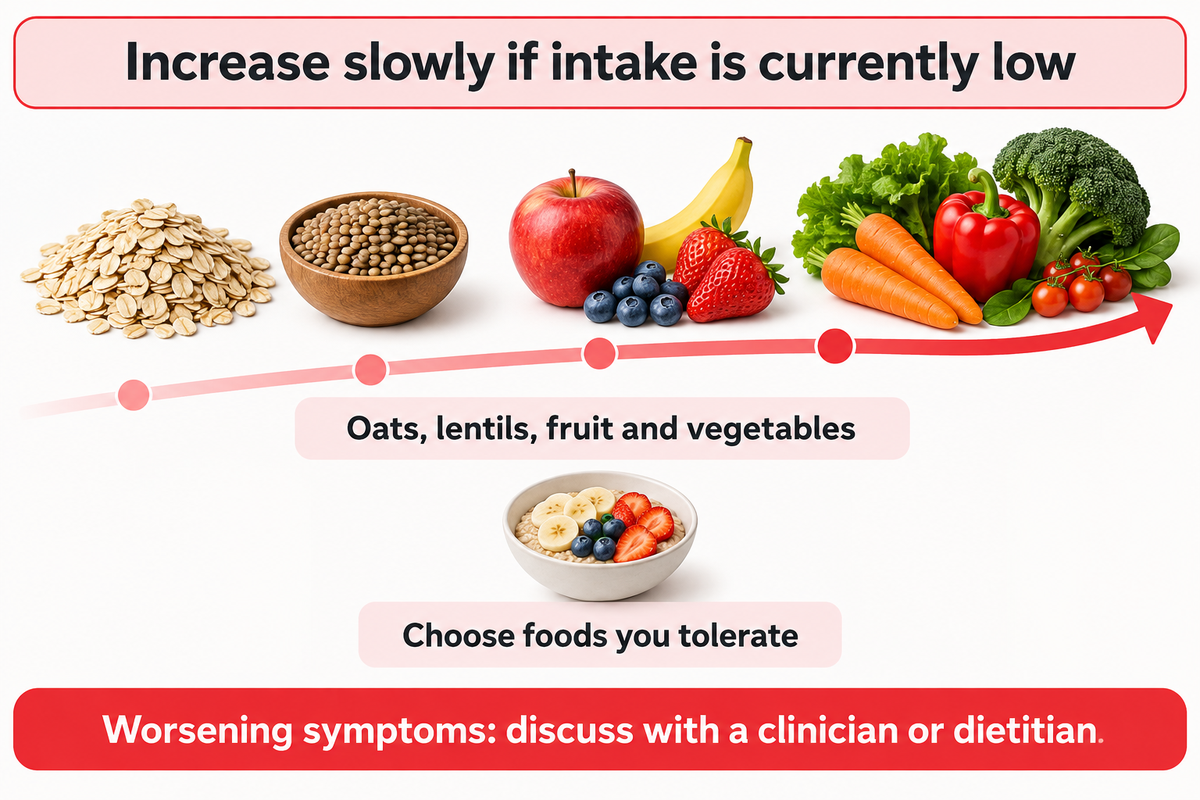
Eat fiber-rich foods at iftar and suhoor, and increase fiber intake slowly if it is currently low. Including foods like whole grains, oats, lentils and fruit and vegetables may be useful. Pay attention to discomfort rather than attempting to reach a certain goal.
General adult guidance from NIDDK is 22-34 grams of fiber a day, based on age and sex. This is a dietary reference range, not a prescribed fasting treatment. Foods vary in the amount of soluble and insoluble fiber they contain. Fiber adds bulk to stool, while adequate fluid helps to soften it; the aim is stool that is softer and easier to pass. While advice about a supplement shouldn’t be viewed as evidence that all high-fiber menu options will have the same effect, choosing fiber-containing foods can provide soluble and insoluble fiber.
The British Dietetic Association guideline distinguishes evidence for supplements, individual foods and whole diets, and addresses gradual increases in fiber supplements for people with tolerance problems as expert-opinion advice. A probiotic and fiber supplements aren’t interchangeable: effects depend on the product and outcome studied.
A 2019 UAE Ramadan trial compared high-fiber cereal at suhoor with participants’ habitual diets over 20 days. The abstract reports improved bowel habits and reduced bloating in the cereal group. The trial received Kellogg EMEA funding; the authors reported no funder role in the study or publication. This food-specific research does not define a treatment for constipation for all.
To add fiber to your diet, you could replace part of a refined-grain breakfast with oats, or include a lentil dish you already enjoy at iftar. Choose foods high in fiber that you like. Add a food you tolerate before including bran, a supplement and a few other foods into the same meal. If changing what you eat worsens symptoms, discuss the pattern with a clinician or dietitian. Needing help with bowel function doesn’t mean you should keep increasing fiber in spite of worsening symptoms.
Laxatives, medicines and herbal products
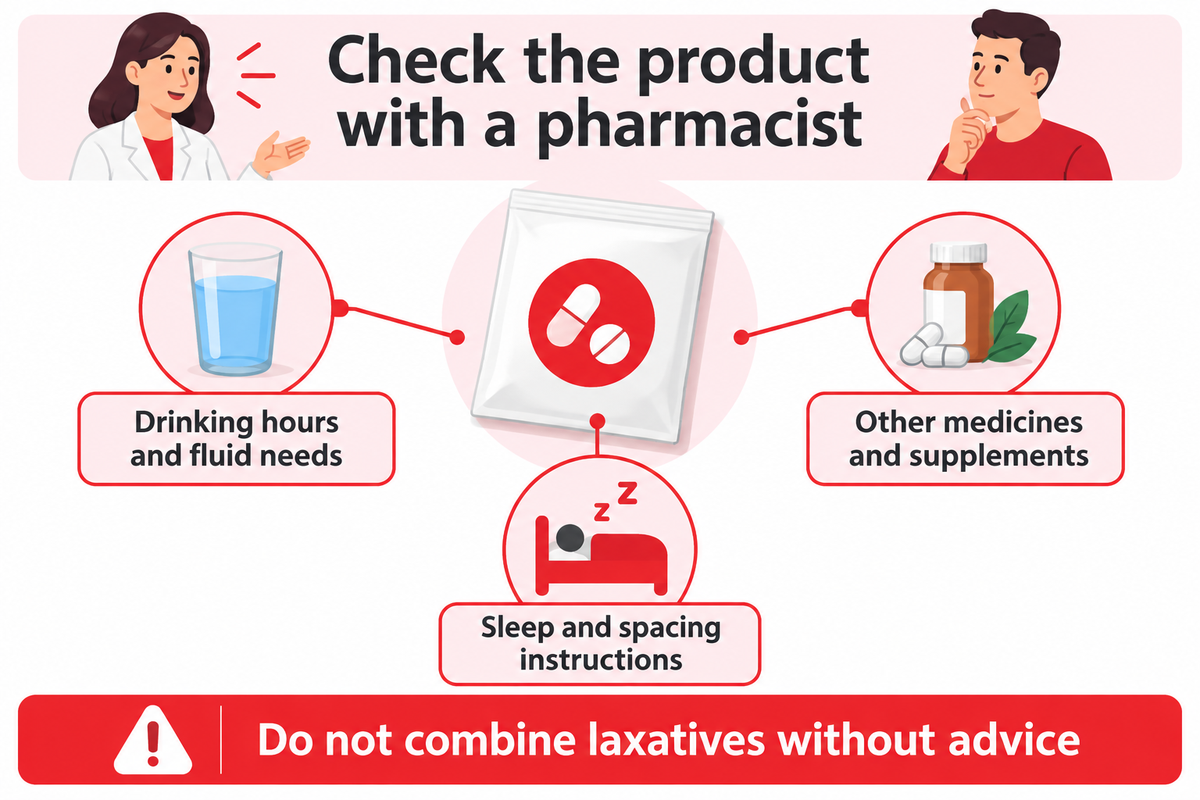
A pharmacist can help you with choosing the right laxative and check the instructions to make sure they fit your drinking hours and other medicines you may be taking. Some products should be taken with a lot of fluid, and some affect the absorption of other medicines. Some laxatives have restrictions on when to take them, making an already restrictive eating window even more challenging. You shouldn’t assume that a plan to take all the laxatives during suhoor or to take them all together is the best option.
The NHS laxative guide describes the differences in the way that bulk-forming agents, osmotic agents, stool softeners and stimulant laxatives work, and the different times it takes for them to start working. Common side effects include bloating, cramps and diarrhea. The patient information leaflet tells you about the side effects, but you should seek advice about unexpected side effects rather than adding other products to help you. NHS says not to use laxatives bought without a prescription for more than a week, and to seek advice if they haven’t helped after three days. A long-term prescribed laxative regimen has different instructions.
In the 2023 AGA/ACG guideline, polyethylene glycol is an evidence-based option for adults with chronic idiopathic constipation. For renal insufficiency, magnesium oxide isn’t recommended. These recommendations aren’t a personal prescription or a Ramadan dosing schedule.
If you plan to take medicines in the evening and take a fiber laxative before returning to sleep after suhoor (pre-dawn meal), bring your medicine packet and pill list to the pharmacist. The NHS instructions for Fybogel, for example, advise against taking it immediately before sleep and emphasise fluid intake. The interaction guidance also covers effects on the absorption of other medicines and supplements. The pharmacist can check the product you were sold, ensure spacing, and see if it’s right for you. Do not copy a timing interval from a different product or double a missed dose to fit the eating window.
Include herbal remedies, vitamins and teas sold as laxatives in that discussion. Tell your clinician about anything you take, even if it’s labeled as “natural.” Avoid taking laxatives together or repeating the use of an enema or suppository without consulting a clinician.
How do doctors treat constipation?
Doctors assess the symptom pattern, medicines and possible medical causes before choosing treatment. A doctor may prescribe medicine or investigate persistent difficulty emptying the bowel. If the pelvic floor muscles don’t work together, biofeedback therapy may help to re-coordinate them. Different problems require different approaches: the colon muscles move stool through the large intestine, while coordination at the outlet is another part of intestinal function, so difficulty at one point is not automatically corrected by taking more medicine.
The 2026 AGA update on refractory constipation discusses anorectal manometry and balloon-expulsion testing when evaluating persistent symptoms. These are specialist assessments, not routine requirements for a brief change during fasting.
A fasting-day routine you can adapt
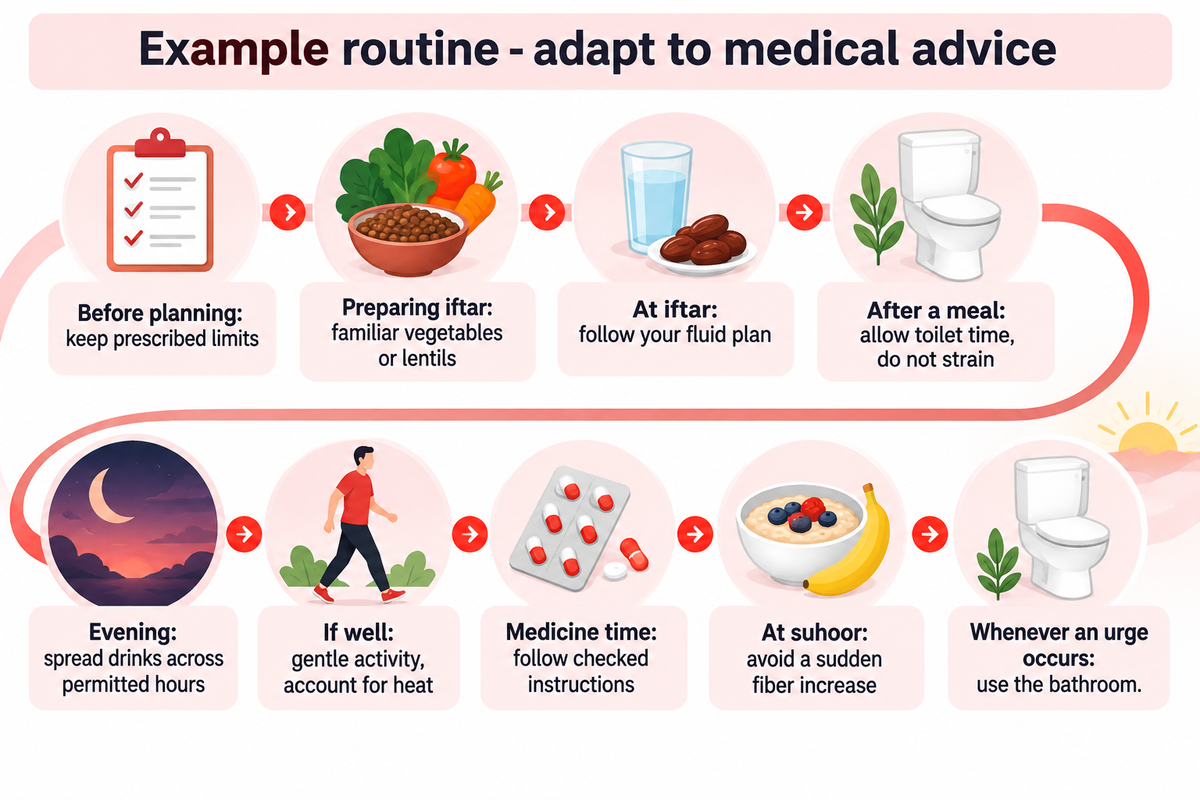
Use a routine to plan times for meals and toilet breaks. Adapt your daily schedule to the medical advice you’ve been given. The example of an Iftar-to-Suhoor Planner below is intended for discussion and to illustrate planning. It doesn’t provide medical opinion on relief or fasting. The toilet-routine suggestions draw on NIDDK bowel-training guidance.
| Opportunity | Example action | Adaptation to consider |
|---|---|---|
| Before planning | Review existing instructions. | Keep prescribed fluid and medicine limits. |
| Preparing iftar | Include a familiar vegetable or lentil dish. | Choose foods you already tolerate. |
| At iftar | Have a drink with the meal. | Use your individual fluid plan. |
| After a meal | Leave time for the toilet. | Do not strain to produce a result. |
| During the evening | Keep water accessible. | Spread drinks across permitted hours. |
| Comfortable activity | Consider a gentle walk if well. | Account for heat and your health. |
| Medicine time | Follow the checked product schedule. | Include fluid, interaction and sleep instructions. |
| At suhoor | Choose a familiar whole-grain option. | Avoid a sudden large fiber increase. |
| Whenever an urge occurs | Use the bathroom. | Do not wait for eating hours. |
To prepare for a consultation, copy the Bowel and Drinking Record into your notebook. The examples below are for illustration and aren’t based on patient details or recommended intakes. Record any warning signs and don’t delay in seeking medical attention. Drink entries describe habits, and aren’t measures of hydration levels.
| What to record | Example entry |
|---|---|
| Fasting pattern | Ramadan daytime fast. |
| When symptoms began | Hard stools began after my work schedule changed. |
| Usual bowel habit | Usually comfortable; now more straining. |
| Stool and passage | Hard pieces; felt incompletely emptied. |
| Other symptoms | Bloating after the evening meal; note any pain or bleeding separately. |
| Food changes | Stopped my usual oat breakfast. |
| Drinks and timing | Water at iftar; forgot drinks later in the evening. |
| Medicines and supplements | Bring packets and the current prescribed schedule. |
| Changes tried and response | Made time after a meal; still had difficulty passing stool. |
Getting help for recurring constipation in Dubai
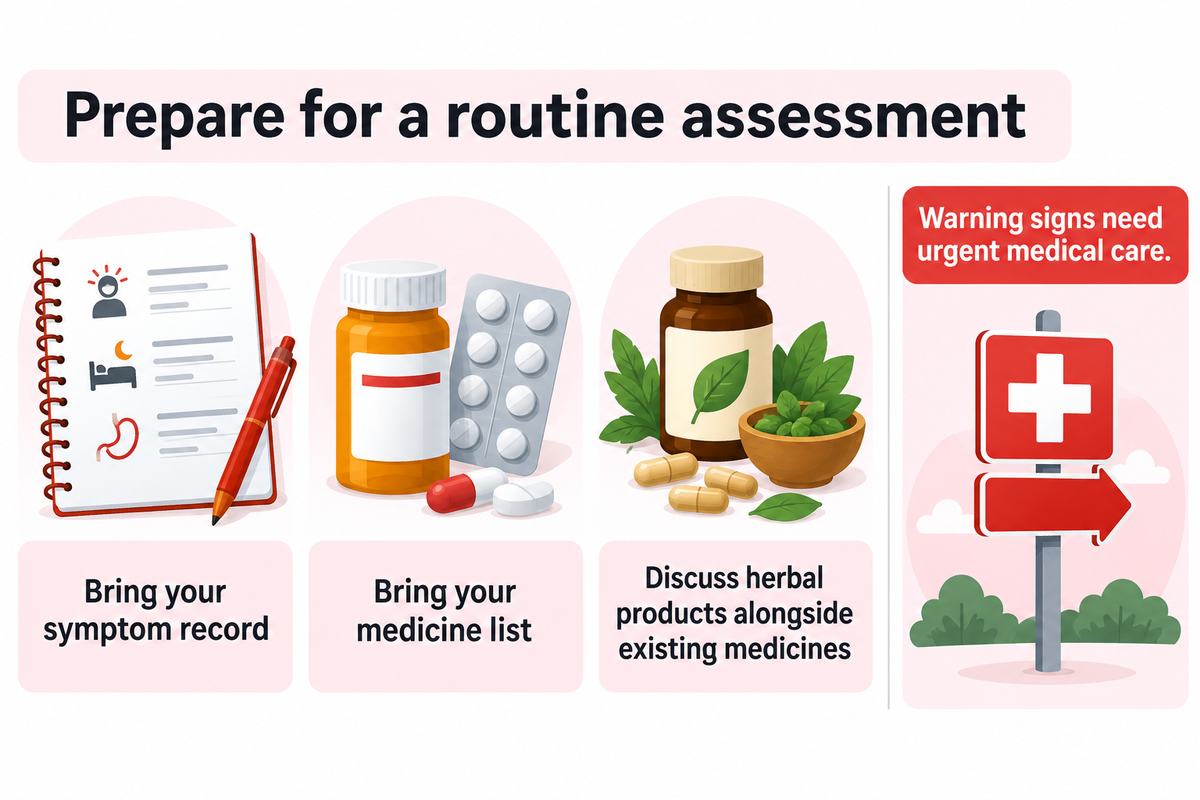
Recurring constipation deserves an assessment of the cause and an individualized plan aligned with your fasting pattern and health. Bring your symptom record and your medicine list. Describe whether your main issue is incomplete emptying, pain, hard stool or infrequent bowel movements. These details are more pertinent than asking about the strongest laxative used.
Tong Ren Tang’s clinic information identifies its TCM clinic in Dubai Healthcare City. If digestive issues keep recurring, see your doctor for assessment rather than changing products repeatedly. For a routine enquiry, review the constipation treatment options and ask what assessment is appropriate for your symptoms. Discuss any herbal therapy that’s being considered with the clinician alongside your existing medicines.
You can review the first-visit guide for more information before your visit. Warning signs should be assessed urgently by the appropriate medical service rather than waiting for a clinic enquiry.
Ask about a routine consultation
Frequently asked questions
How can I relieve constipation in 30 minutes?
No home remedy reliably guarantees relief within 30 minutes.
Laxatives have different onset times and suitability requirements, so ask a pharmacist about the product and your symptoms rather than combining treatments to chase an immediate result. Severe pain, vomiting or inability to pass gas needs urgent assessment. Even a product described as fast acting may be unsuitable when a bowel obstruction is suspected.
How do you clear an impacted bowel?
Suspected fecal impaction needs medical assessment.
Don’t try to remove stool yourself. Liquid stool can leak around retained hard stool, which helps explain why constipation and diarrhea may appear together rather than one simply replacing the other. A clinician can assess the problem and select treatment. Pain, vomiting or inability to pass gas warrants urgent care instead of further self-treatment.
Is fasting good for your bowels?
Fasting is not a dependable treatment for constipation.
Effects differ by food intake, drinking opportunities and individual health. Don’t extend a fast to force your digestive system to reset, particularly if symptoms are getting worse. When a new schedule seems to make you constipated, review what changed and speak with a clinician about persistent symptoms rather than assuming the body must eventually adapt.
How can I prevent constipation during fasting?
Keep food, fluids and toilet access in your plan.
Fiber-containing foods, appropriate drinks and responding to bowel urges may help prevent constipation. Recurrent symptoms need assessment, even if those habits are already in place.
Can I use enemas or suppositories every day while fasting?
Daily unsupervised use is not a general fasting routine.
An enema or suppository should be used according to its instructions and professional advice. If you repeatedly need help to pass stool, explain that pattern to a clinician rather than treating every day as a separate problem. Bring the product name and describe how often you use it, together with any cramps, diarrhea or other symptoms. Don’t combine laxatives or increase their frequency simply because the eating window is short. A prescribed treatment plan may differ from general over-the-counter advice, so follow the instructions given for your circumstances.
How long does constipation while fasting last?
There is no fixed duration that is normal for everyone.
Seek advice when self-care isn’t helping or symptoms recur. Warning signs need prompt assessment, regardless of how recently the problem began.
What should I do about constipation after a water fast?
Seek advice about persistent symptoms; do not extend the fast to treat them.
A prolonged water fast can require individual advice about eating and drinking as well as the bowel symptoms themselves. Tell the clinician how long you fasted, what you consumed and whether you’ve resumed meals. Hard, painful stool or incomplete emptying deserves attention even when you’ve eaten little. Avoid a salt-water flush or repeated laxatives to force a result. Vomiting, constant abdominal pain or inability to pass gas needs urgent assessment. A comfortable change in frequency and a painful difficulty passing stool shouldn’t be treated as the same experience.
The routine and record are editorial aids drawn from public health guidance. They aren’t diagnostic tools, tested treatment programmes or evidence of clinic outcomes. Clinical sources were checked in October 2026. No individual medical review or patient case is claimed.
References & Sources
- NIDDK: Symptoms and causes of constipation.
- NIDDK: Treatment for constipation.
- NHS: Constipation.
- NHS: Laxatives, reviewed April 2026.
- Johns Hopkins Medicine: Intermittent fasting.
- Hamad Medical Corporation: Ramadan and dehydration.
- Johns Hopkins Aramco Healthcare: Ramadan nutrition and hydration.
- Ramadan fasting and gastrointestinal symptoms: observational study.
- Water supplementation with a high-fiber diet: randomized trial.
- High-fiber cereal at suhoor: UAE Ramadan randomized trial, 2019.
- British Dietetic Association: Dietary management of chronic constipation in adults.
- AGA/ACG: Pharmacological management of chronic idiopathic constipation, 2023.
- AGA: Evaluation and management of refractory constipation (January 2026).
- NHS: How and when to take Fybogel.
- NHS: Fybogel interactions.