Get in Touch with Tongren Tang Gulf


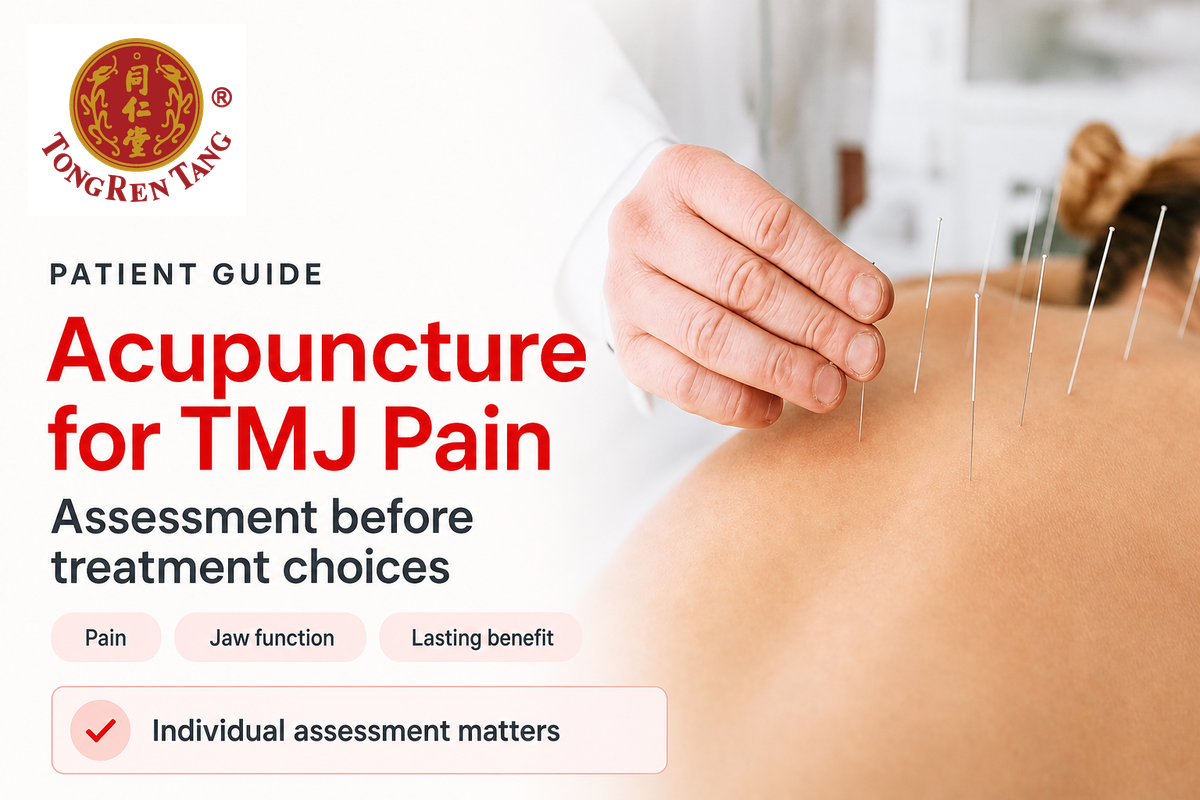
Treating TMJ requires understanding pain and discomfort, selecting care for the diagnosis, and assessing if the improvement lasts beyond the visit. A personalized treatment should address eating and daily jaw movement as well as pain relief.
Updated October 2026
Acupuncture for TMJ treatment is a possible option for chronic TMD pain. A 2023 guideline gives acupuncture a conditional recommendation for pain lasting at least three months. Assessment and conservative care remain central to choosing treatment.
Key points
- TMJ names the jaw joint. TMD describes disorders affecting the joints, chewing muscles and related structures.
- Pain, jaw function and lasting benefit are separate treatment outcomes.
- A tooth-protection appliance and a pain treatment can have different purposes.
- Agree on an individual review point before committing to repeated appointments.
Start with assessment of jaw pain
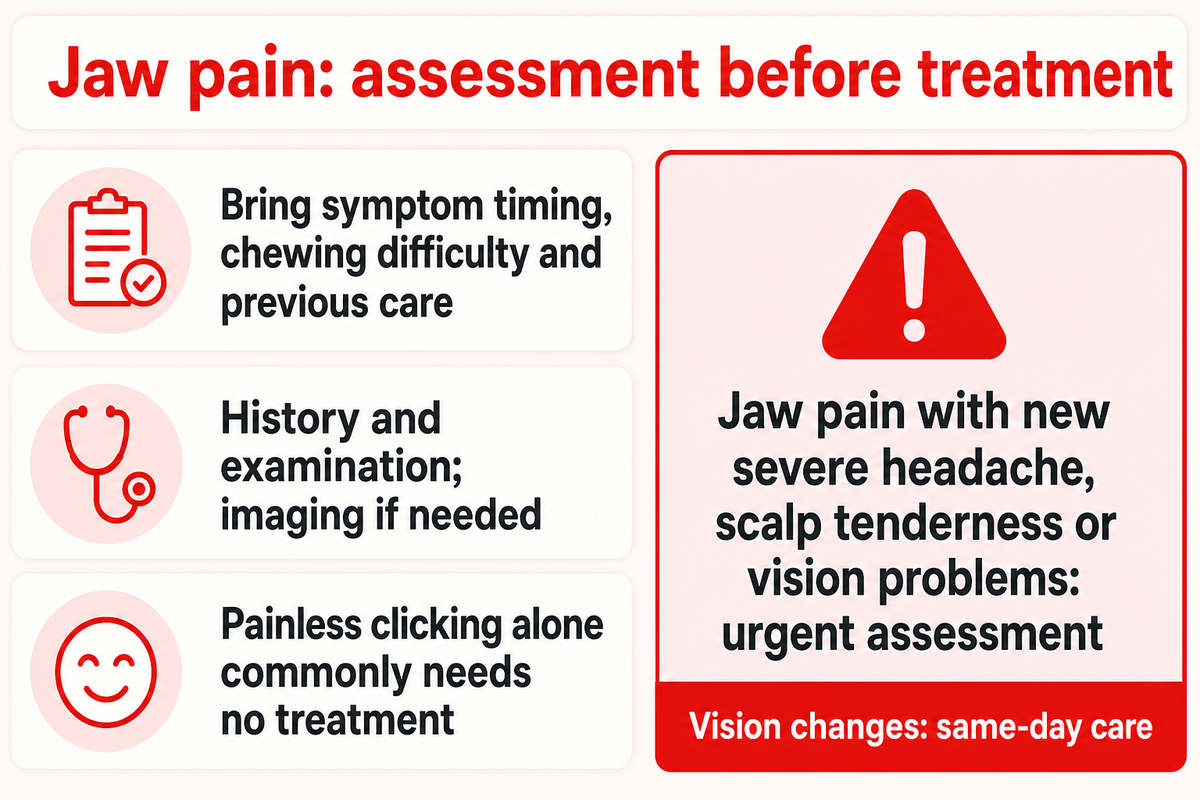
Jaw pain requires a diagnosis in order to move on to the next step, which is selecting a treatment alternative. Temporomandibular disorders can involve the joint, the jaw muscles, or headache associated with jaw function, and several issues can occur together. A doctor or dentist can assess the symptoms and movement, and tenderness, and consider other causes of mouth or facial pain, including jaw and neck pain.
Understanding TMJ terminology can be helpful for the conversation. The temporomandibular joint connects the lower jaw to the skull on each side. Knowing the broader clinical term TMD, or “TMJ dysfunction” as another term, can be of help prior to choosing the means to treat TMJ disorder symptoms. The masseter is one of the muscles used for chewing, and tight jaw muscles and myofascial pain need assessment.
The National Institute of Dental and Craniofacial Research guidance on TMD describes assessment as history and physical, with imaging if needed. Assessing dysfunction of the temporomandibular joint is done in the clinical context, and a scan isn’t required for every painful jaw.
“Pain in the mouth, jaw, or face may or may not be related to TMDs.”
Example: someone whose jaw makes a clicking sound but isn’t painful will likely ask a different question than someone who has jaw clicking as well as limited and painful chewing. Painless clicking alone commonly needs no treatment. For the person with pain and dysfunction, providing when the pain and dysfunction began and what makes eating difficult as well as what has already been tried will provide the clinician with a starting point. Neither of these individuals will need to follow an acupuncture schedule as another patient is doing.
When assessment is urgent
Jaw pain while eating or talking together with a new severe headache, scalp tenderness or vision problems needs urgent medical assessment. Temporal arteritis is one possible cause and can threaten sight. Vision changes need same-day care; don’t wait for an acupuncture appointment. This warning follows NHS guidance on temporal arteritis.
A diagnosis guides treatment of temporomandibular joint symptoms but doesn’t predict how much relief a person will obtain.
What the evidence says about acupuncture for TMJ
Compared to the other choices available for treatment of chronic TMD pain, acupuncture has a conditional recommendation in the 2023 BMJ guideline. This recommendation applies to pain of 3 months’ duration or longer. The use of acupuncture still requires reflection of the diagnosis, other care tried, patient preferences and the practical burden of appointments.
Does acupuncture work for TMJ pain?
Acupuncture can help some people with chronic TMD symptoms, but the expected benefit is uncertain and differs by outcome. The BMJ review of randomized trials reported moderate-certainty evidence for physical function with acupuncture, and for pain relief, the evidence was low or very low certainty. Different outcomes should be considered separately, and a change in one outcome shouldn’t be generalized for a change in the other outcome.
A 2024 QJM randomized trial assigned 60 patients to either acupuncture or to sham acupuncture, which is a non-penetrating device. Patients treated with acupuncture were given three treatments weekly for four weeks and were followed for four more weeks. Pain outcomes favoured acupuncture, but the study was small, conducted at one centre in China, and the practitioners were not blinded. The small number of participants makes generalizability difficult, and treating the schedule as a prescription for relief from TMJ for every patient would muddy interpretation.
A newer trial published online in 2025 and in a 2026 journal issue compared acupuncture plus manual therapy with manual therapy alone in 65 people with TMD myalgia. Its abstract reports better post-treatment outcomes for the combination after a two-week course. An add-on comparison answers a different question from a sham-controlled trial or a comparison of two standalone treatments.
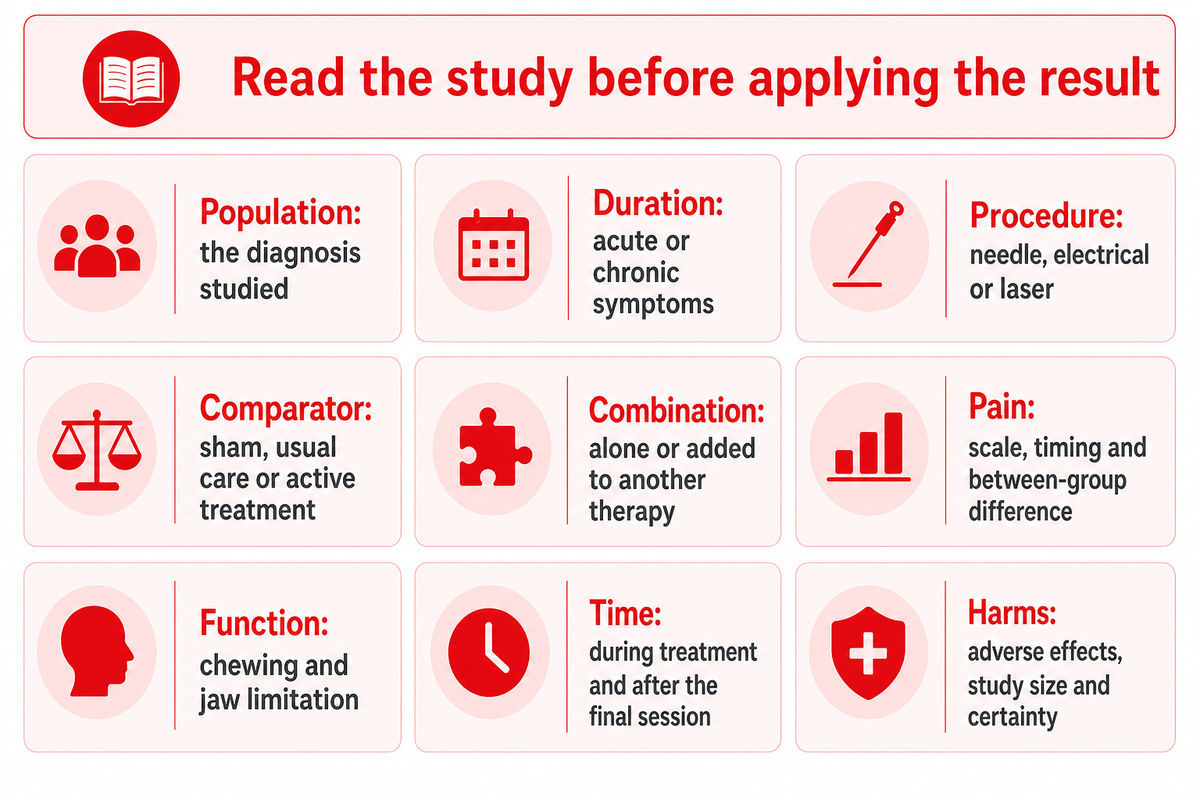
TMD Evidence Reading Card
A TMD Evidence Reading Card will help us separate who was treated, what was compared and which outcome changed over what period.
| Reading field | What to look for | Why the distinction matters |
|---|---|---|
| Population | Adults with the diagnosis studied | “Jaw pain” alone describes many presentations. |
| Symptom duration | Acute symptoms or chronic pain of at least three months | The BMJ recommendation concerns chronic pain. |
| Treatment | Needle acupuncture, electroacupuncture or laser | These procedures should not be treated as identical. |
| Comparator | Sham, usual care or an active treatment | Each comparison asks a different treatment question. |
| Combination | Acupuncture alone or added to another therapy | A combination result does not isolate a standalone effect. |
| Pain outcome | Pain scale, assessment time and between-group difference | A change within one group is not the same as an advantage over its comparator. |
| Function outcome | Chewing, jaw limitation or a specified physical-function measure | Less pain and easier function need separate measurement. |
| Time horizon | During treatment and after the final session | Reduced jaw pain during treatment and later recurrence need separate follow-up. |
| Harms and certainty | Reported adverse effects, study size and evidence certainty | A small trial cannot describe every uncommon complication. |
For a person considering the value of appointments, the most important change is probably feeling comfortable finishing a meal. Average results of the study should probably begin this discussion rather than replace a case-by-case assessment of eating, pain and treatment burden.
Compare treatment choices for persistent TMD pain
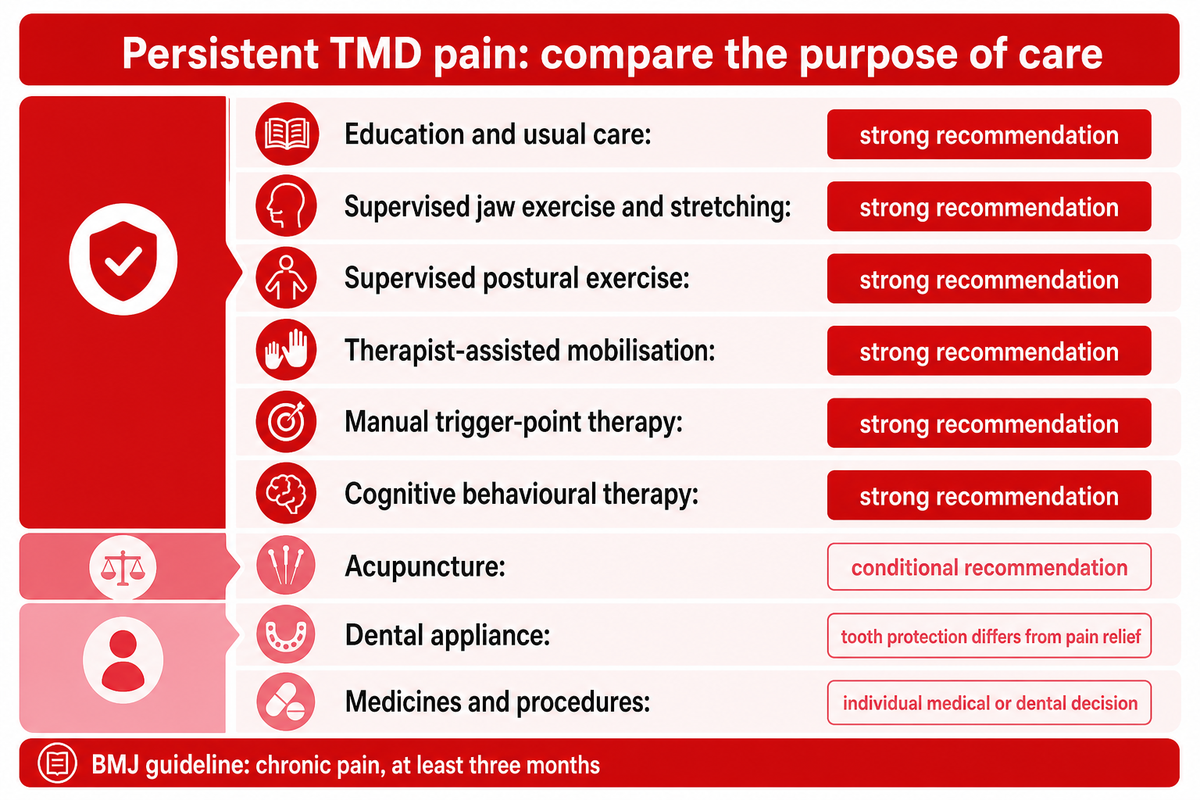
For many people with TMD, conservative care is the starting point. The BMJ chronic-pain guideline supports several supervised movement, manual and coping-based therapies more than acupuncture. So care should address the person’s main difficulty and previous responses, while recognizing that the options of conventional treatment may have different goals.
| Choice | Role in the discussion | Practical consideration |
|---|---|---|
| Education and usual care | Strongly recommended in the BMJ chronic-pain guideline | A workable home plan needs clear instructions. |
| Supervised jaw exercise and stretching | Strongly recommended | The clinician selects and teaches movements. |
| Supervised postural exercise | Strongly recommended | Supervision and participation take time. |
| Therapist-assisted mobilisation | Strongly recommended | Delivered by an appropriately trained professional. |
| Manual trigger-point therapy | Strongly recommended | Targets assessed muscle-related symptoms. |
| Cognitive behavioural therapy | Strongly recommended, with or without selected additions | Supports coping with pain; the pain remains real. |
| Acupuncture | Conditionally recommended | Balance possible benefit, needling risks, cost and visits. |
| Reversible dental appliance | Tooth protection and chronic pain relief are separate aims | The guideline conditionally recommends against splints for chronic TMD pain; a dentist assesses other indications. |
| Medication or procedural care | Requires an individual medical or dental decision | Discuss the specific diagnosis, medicine or procedure rather than treating this as one category. |
Example: a person may have worn a nightguard for tooth wear and still have pain on eating. The plan to alleviate pain should be assessed separately from the nightguard. Not reviewing the case for a change from a guard to acupuncture (or the other way around) would neglect important distinctions. A dentist may be best placed to assess the appliance, while other health professionals on the team should address the rest of the pain and care concerns (jaw movement).
The NIDCR treatment guidance advises starting with simple treatments and avoiding unnecessary, irreversible changes to the bite or joint. A device that causes pain needs review. For more information, please see our comparison of acupuncture and physiotherapy.
What an acupuncture appointment may involve
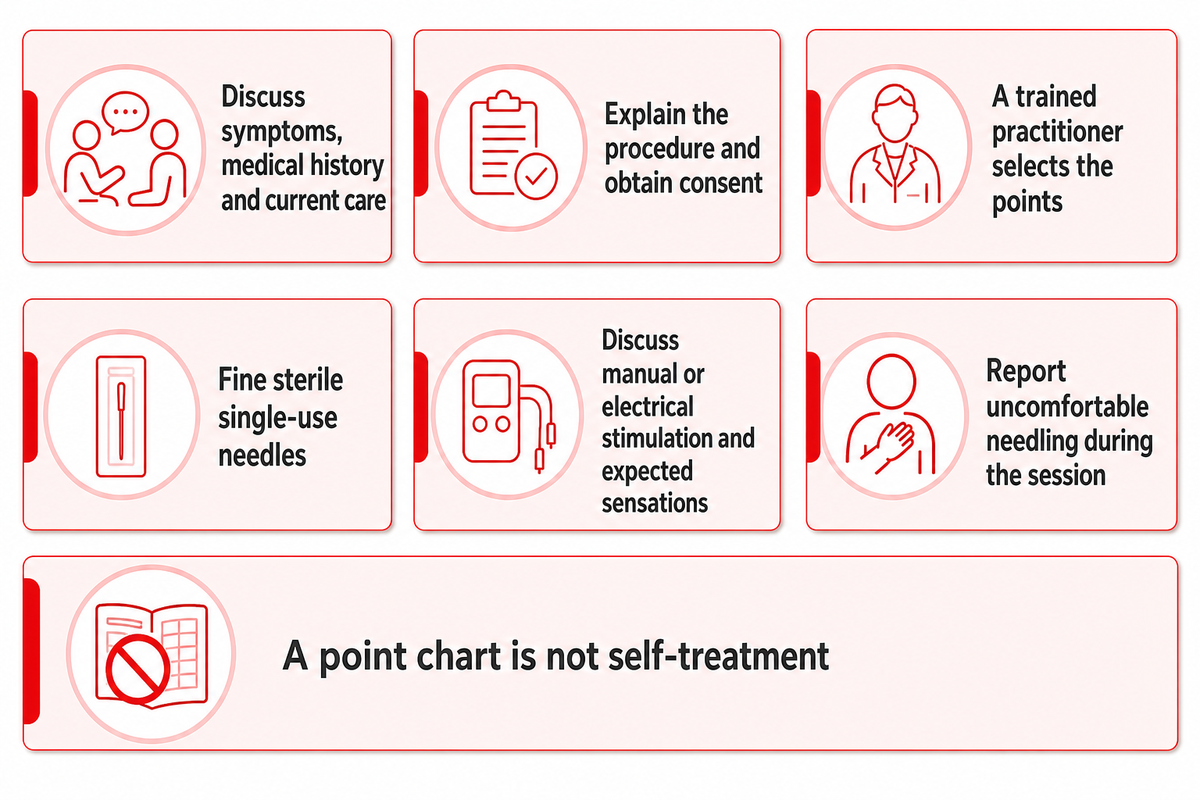
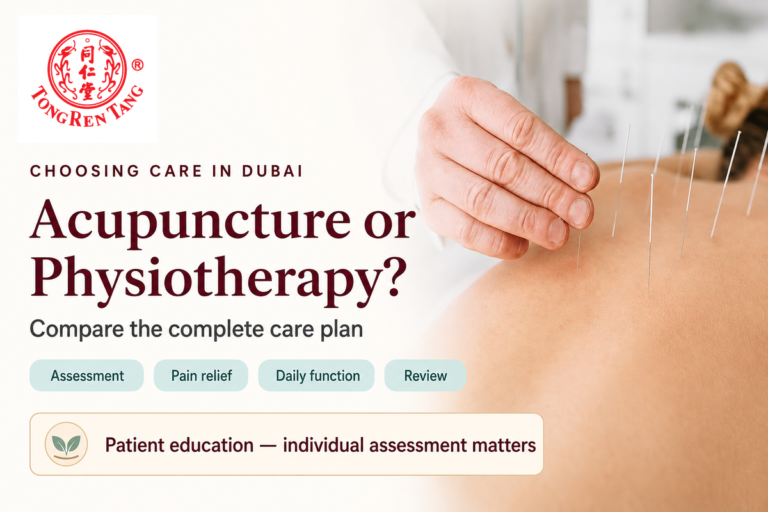
At an acupuncture appointment, one discusses symptoms, medical history, current care and consent. A trained practitioner selects specific points on the body and uses fine sterile single-use acupuncture needles, after explaining the proposed procedure and obtaining consent. Local points near symptoms, or distal points elsewhere may be used; point selection is a professional decision.
Traditional acupuncture is a component of traditional Chinese medicine; practitioners also use needling within various clinical approaches. Traditional explanations and suggested nervous system effects describe various ways to understand the procedure. According to NCCIH’s acupuncture information, mechanisms remain incompletely understood. Explanation of a mechanism is distinct from the clinical question on how much a treatment improves jaw function or pain.
According to the East Kent Hospitals acupuncture leaflet, local and distal points, manual needling and electrical stimulation are described as parts of the treatment approach. Discuss the proposed stimulation, expected sensations and the patient’s comfort with electroacupuncture before obtaining consent. Report uncomfortable needling during the session. Acupuncture stimulates specific points in the body; targeting specific points remains a practitioner’s task, and a point chart isn’t self-treatment.
Can acupuncture stop jaw clenching and teeth grinding?
Acupuncture shouldn’t be promoted as a definitive treatment for bruxism. Bruxism, muscle tension and pain, and temporomandibular disorders require separate assessment. Relief of jaw tension after treatment does not tell a dentist whether tooth wear or sleep-related grinding has stopped. Keep the dental protection plan under review as part of longer term jaw health.
People interested in comparing needling methods can also see our acupuncture versus dry needling guide. Different methods can use the same or similar equipment while asking different clinical questions.
Safety questions before treatment
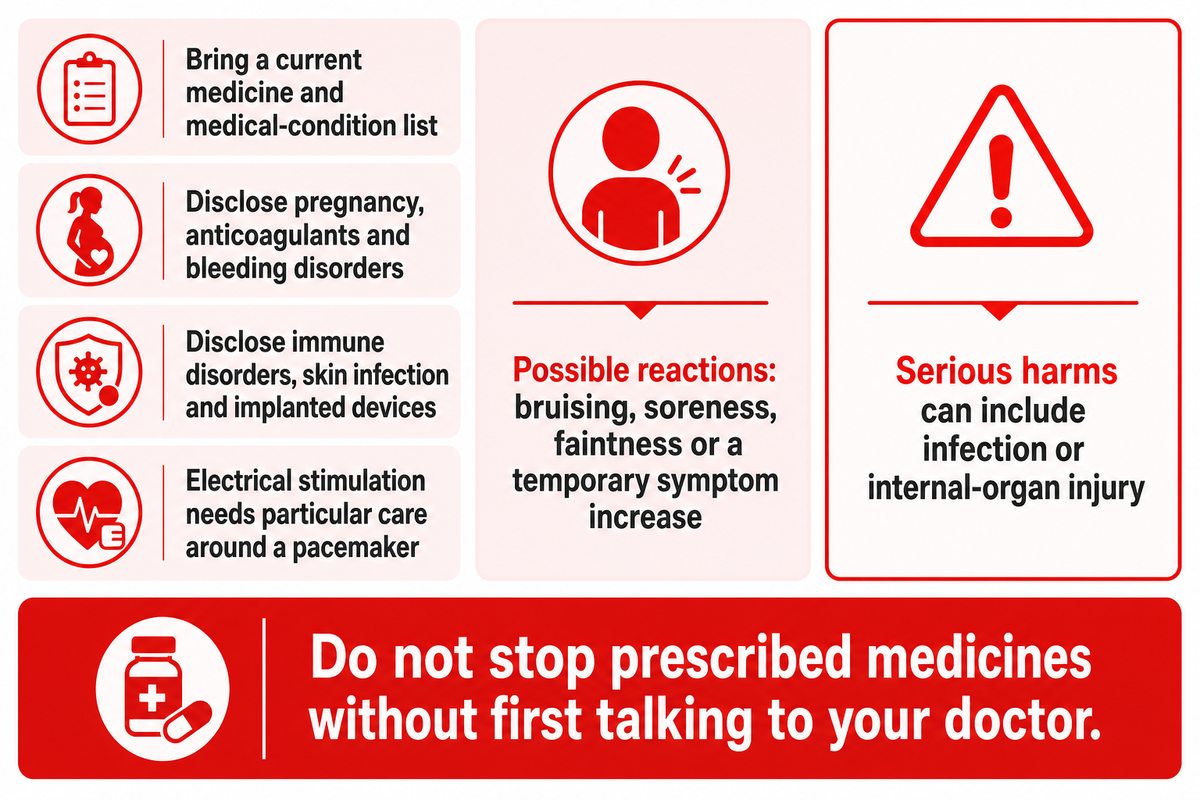
While the needles may be small, safety screening is important before acupuncture treatment. Provide the practitioner your most recent medicine list and relevant medical conditions. A number of things can affect treatment, including pregnancy, anticoagulants, bleeding and immune disorders, a local skin infection and implanted medical devices. These conditions can’t be addressed by a generalization that acupuncture is safe for everyone.
Bruising, soreness, faintness and a temporary increase in symptoms are possible. Complications of treatment may include an infection or injury to an internal organ, especially if the technique is performed incorrectly. The NHS leaflet and NCCIH safety information support discussing both the expected minor reactions and less common serious harms.
Electrical stimulation is of particular concern around a pacemaker. Do not stop taking prescribed medications to attend the appointment without first talking to your doctor. The treating practitioners can answer questions regarding your medications and the procedure. Our acupuncture and pregnancy guide may also help.
Example: a patient who takes an anticoagulant arrives for a first treatment after reading that needles cause little bleeding. The best next step is to find out what medicine and dose he/she is on and the reason for taking it. A practitioner can then assess the proposed care and coordinate with the prescriber when needed. It’s best not to miss a dose of medicine to make care possible.
New or worsening symptoms are reasons to reevaluate the care plan. Persistent pain calls for reviewing regular acupuncture with a dentist or doctor, seeking the reason for the pain and addressing it.
Agree on goals and a review point
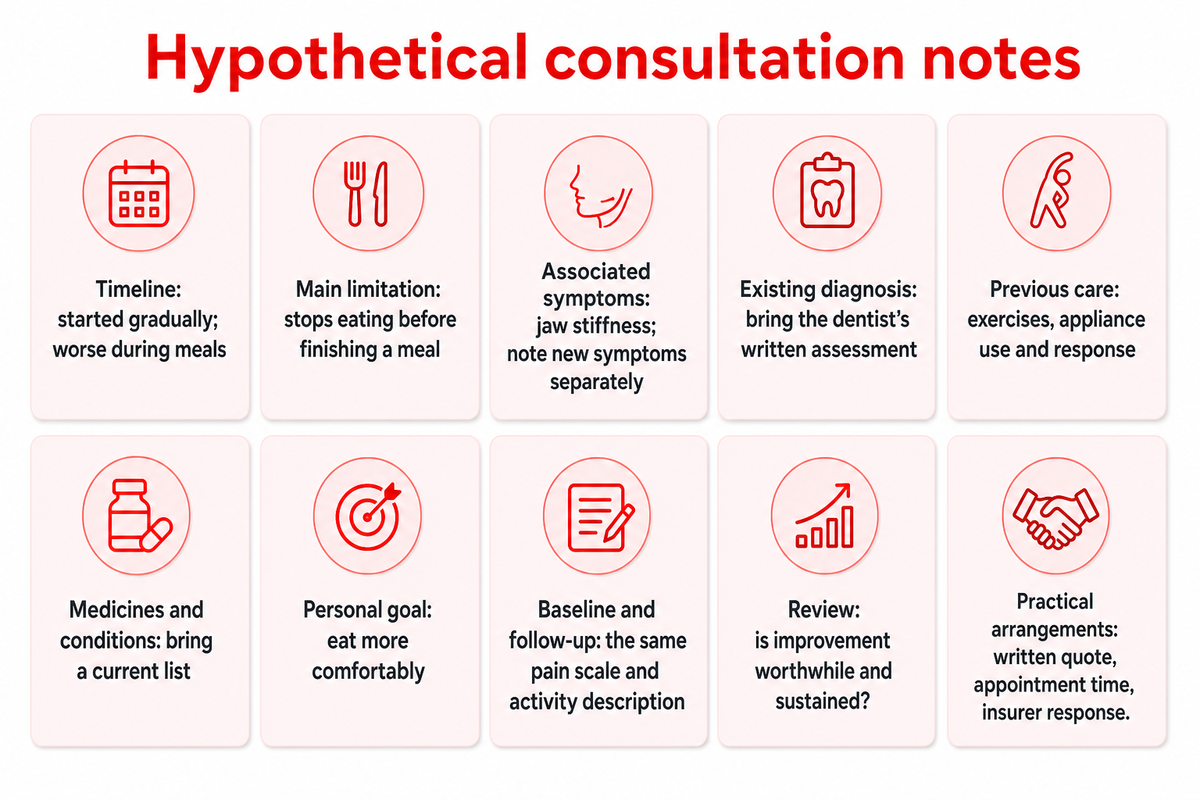
A treatment plan is easier to review if the patient and the clinician mutually agree to a goal before treatment commences. Baseline pain and function (i.e. the ability to eat a regular meal) should be determined. Benefit and harm of the treatment should be continually reassessed. Choose a review point together and compare any benefit with adverse effects, time, cost and other changes in care.
How many sessions for TMJ relief?
There isn’t a single best session count for every individual with TMD. Research on acupuncture in the treatment of TMD uses varied protocols: the 2024 trial used three acupuncture sessions weekly over four weeks, while the newer combination trial used a two-week schedule. When considering acupuncture to treat persistent symptoms, the clinician should consider the diagnosis, the patient’s response and agreed goals when planning treatment sessions. An offer of several sessions of acupuncture should include a plan for review, rather than let a general package define the course of treatment automatically.
Jaw Pain Consultation Brief
A Jaw Pain Consultation Brief captures a patient’s symptoms and previously received treatment. It also outlines the patient’s goals for the forthcoming appointment.
| Record | Example entry | Purpose |
|---|---|---|
| Timeline | Started gradually; worse during meals | Describe the course in your own words. |
| Main limitation | Stops eating before finishing a meal | Name the activity that matters. |
| Associated symptoms | Jaw stiffness; note any new symptoms separately | Help the clinician understand the presentation. |
| Existing diagnosis | Bring the dentist’s written assessment | Separate a diagnosis from an internet label. |
| Previous care | Record exercises, appliance use and response | Avoid losing the history of what was tried. |
| Medicines and conditions | Bring a current list | Support screening and coordination. |
| Personal goal | Eat more comfortably | Keep the goal specific to daily life. |
| Baseline and follow-up | Use the same pain scale and activity description | Compare like with like. |
| Review question | Is the improvement worthwhile and sustained? | Consider benefit alongside treatment burden. |
| Practical arrangements | Written quote, appointment time, insurer response | Keep care decisions and payment arrangements clear. |
Feeling relaxation for a brief period of time and improvement in pain for a prolonged period of time are two different things, and both should be documented. Changing several treatments concurrently makes it harder to decipher the cause of an improvement; therefore the professionals involved should be kept apprised of the entire plan.
Planning a consultation in Dubai
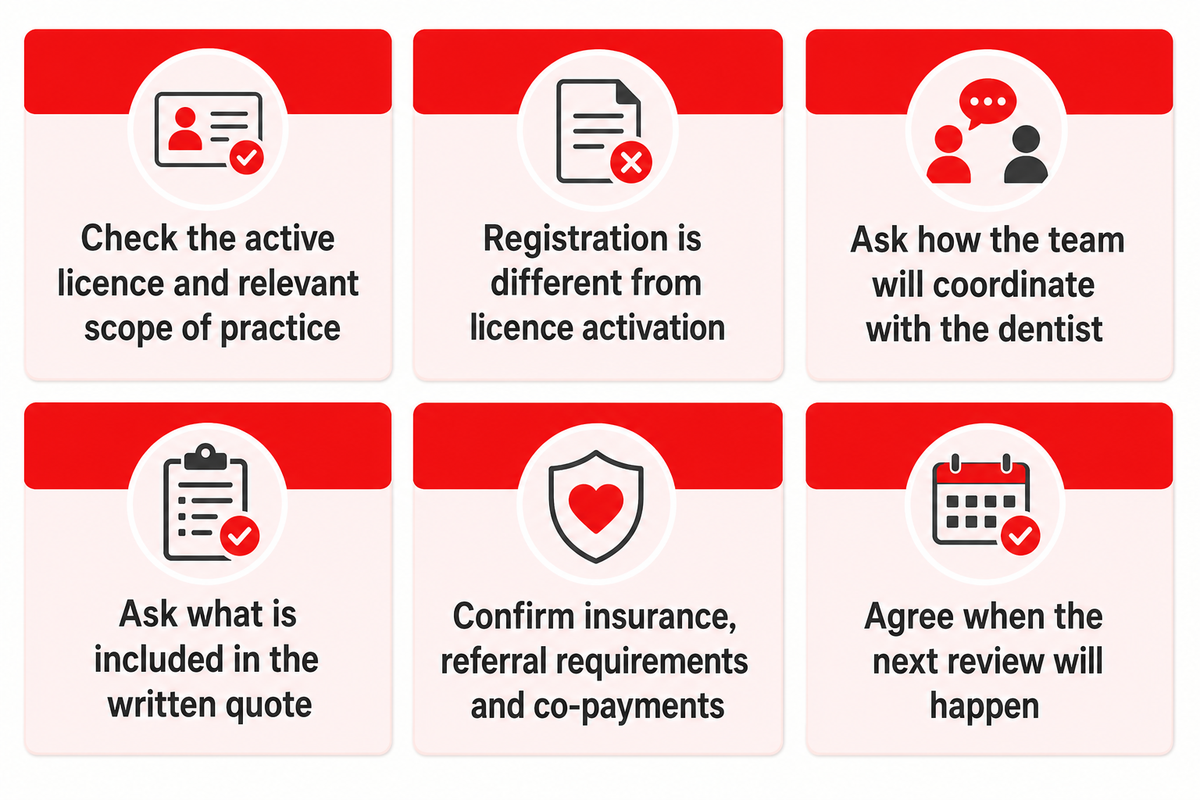
When arranging acupuncture care in Dubai, the practitioner must consider clinical fit and practical arrangements. The practitioner should have an active professional license relevant to the treatment at the practicing facility. A written quote and an insurer’s decision clarify payment, while a shared record of dental or medical care helps keep the consultation focused on the same problem.
The Dubai Health Authority registration service distinguishes registration from activation into a professional licence. The current Dubai Healthcare City professional-licence page also directs healthcare professional licensing to the Dubai Health Authority.
What diagnosis are you covering? Under which professional license and scope of practice will treatment be rendered? How will the team communicate with the dentist? What’s included in the quote? When will the next update/evaluation be done? What’s your insurance status? Are there any referral requirements? Are there co-payments?
Tong Ren Tang gives information about its combining acupuncture with existing care in Dubai and the Tong Ren Tang clinic. Before opting for a treatment option for TMJ symptoms, a consultation should decide if another assessment or referral takes precedence.
What current research still needs to establish
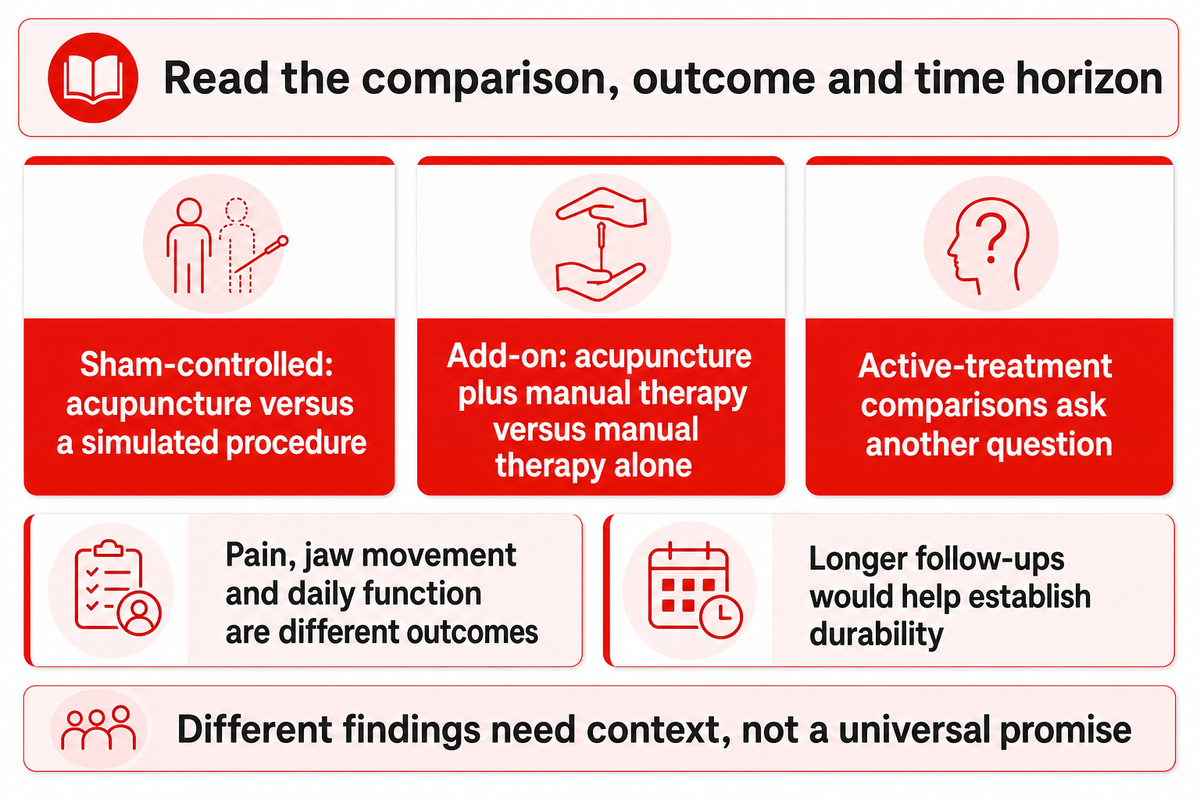
Longer follow-ups and clearer comparison would help describe effects of acupuncture across different TMD presentations. The sham-controlled, add-on and active treatment studies provide different types of information. Different scales (pain, jaw movement and daily function) were measured in the studies. New articles should be read in conjunction with previously published articles before effecting a change in the care plan of an individual.
A review focused on masticatory muscle pain found no pain advantage over its placebo comparators, whereas the later 2024 trial reported benefit over nonpenetrating sham. Their populations, interventions and time periods differ. Acupuncture’s efficacy should therefore be discussed for the particular treatment and outcome, rather than as a universal result.
For your next appointment, write down details about your chewing difficulty, pain and adverse effects over the last few weeks. This information is much more useful than an impression like, “Treatment was helpful today.”
Frequently Asked Questions
Can TMJ cause clogged ears?
Ear symptoms can accompany TMD, but a blocked-ear feeling needs assessment rather than an assumed jaw-joint cause.
NIDCR lists ear-related symptoms among possible TMD symptoms, and also advises ruling out other causes of facial pain. Describe hearing changes, the blocked sensation and when it occurs to a dentist or doctor, without assuming every ear symptom is associated with TMJ problems. An ear or dental problem may need its own care. Treatment should address the assessment findings, rather than assume that jaw needling will clear the ear.
How to immediately relieve jaw pain?
For an assessed TMD flare, simple measures such as easier-to-chew foods and an agreed self-management plan may help.
NIDCR describes conservative measures such as changing difficult chewing habits and clinician-guided jaw care. New severe pain, or jaw pain with a severe headache, scalp tenderness or vision problems, needs medical assessment rather than a home routine. Medication choices should account for your health and other medicines. Avoid using a general article to select a medicine or postpone care for changing symptoms.
What kind of massage can I do for TMJ relief?
Use a technique taught for your diagnosis by an appropriately trained clinician.
The BMJ chronic-TMD guideline supports therapist-delivered manual trigger-point therapy, but that recommendation doesn’t identify a suitable self-massage routine for everyone. Painful or restricted movement should be assessed before attempting forceful techniques. Tell the clinician what happens during chewing and whether prior manual treatment made symptoms better or worse. Request a demonstration and clear instructions tailored to comfortable movement.
Does TMJ ever fully go away?
Many TMD symptoms improve or resolve, while some become persistent.
NIDCR describes both short-lived and chronic courses. Acupuncture offers no guarantee of permanent resolution. Follow-up should reflect the diagnosis and whether daily function and pain are improving.
Is there a pressure point to relieve TMJ?
There is no universal pressure point that can replace assessment of jaw pain.
Acupressure uses pressure on the skin; needle acupuncture is a different procedure. Discomfort associated with TMJ disorders deserves assessment before self-care is selected; acupressure points shown online aren’t a diagnosis or a needling guide. Specific acupuncture points, including local and distal sites, are chosen by the practitioner in relation to the proposed treatment. Avoid trying to reproduce a professional needling protocol at home.
If you’re struggling with TMJ symptoms and have found a point map, take it to the appointment. The clinician can discuss whether an appropriate self-care technique fits your condition, demonstrate it if suitable, and explain when to stop. The useful question is how to make a particular activity more comfortable while following the assessed care plan, rather than how hard to press a spot.
Is acupuncture safe to use alongside dental TMJ treatment?
Coordinate acupuncture and dental care before adding another treatment.
Share the dental diagnosis, medicines, appliance use and current exercises with the acupuncturist, and tell the dentist about the proposed needling. Individual screening still applies. Using acupuncture as a complementary treatment shouldn’t delay necessary dental assessment or lead you to stop prescribed care.
Can acupuncture help with the headaches caused by TMJ?
Jaw-related headaches need assessment before choosing a headache treatment.
TMD-related headache is one possible presentation, while migraine and other causes require their own assessment. A change in jaw pain doesn’t automatically explain a headache. New severe headache with scalp tenderness, jaw pain on chewing or vision problems needs urgent medical attention.
Is acupuncture for TMJ covered by insurance?
Your insurer must confirm coverage for the proposed care under your policy.
Check the provider, indication, referral and approval requirements, visit limits and co-payment. Obtain the clinic’s written quote before committing. A clinic accepting an insurer doesn’t mean every service or appointment is covered.
Discuss your jaw symptoms
Bring your symptom timeline, dental assessment and current medicine list to a consultation. The first decision is which assessment and care plan fit your situation.
The information included in this article is for general health education and appointment preparation. No diagnoses of jaw pain are made, nor individualized acupuncture courses prescribed. The results of the cited research belong to the respective study teams. No clinic-specific treatment results or medical review by the author are claimed.
References & Sources
- TMD (Temporomandibular Disorders), National Institute of Dental and Craniofacial Research, reviewed September 2026.
- Temporal arteritis, National Health Service.
- Management of chronic pain associated with temporomandibular disorders: a clinical practice guideline, Busse and colleagues, BMJ, 2023.
- Management of chronic pain secondary to temporomandibular disorders: a systematic review and network meta-analysis of randomised trials, Yao and colleagues, BMJ, 2023.
- Effect of acupuncture for temporomandibular disorders: a randomized clinical trial, Liu and colleagues, QJM, 2024.
- Clinical Efficacy of Acupuncture Combined With Manual Therapy in the Treatment of Temporomandibular Disorders Myalgia and Observation of the Changes in the Lateral Pterygoid Muscle: A Randomised Clinical Trial, Yu and colleagues, Journal of Oral Rehabilitation, online 2025; issue 2026.
- Acupuncture: Effectiveness and Safety, National Center for Complementary and Integrative Health.
- Acupuncture, East Kent Hospitals University NHS Foundation Trust.
- Get Registered, Dubai Health Authority.
- Professional Licence Services, Dubai Healthcare City.
- Are acupuncture and dry needling effective in the management of masticatory muscle pain: A network meta-analysis of randomised clinical trials, Al-Moraissi and colleagues, Journal of Oral Rehabilitation, 2023.