Get in Touch with Tongren Tang Gulf

Male Fertility Supplements: What the Evidence Means for You

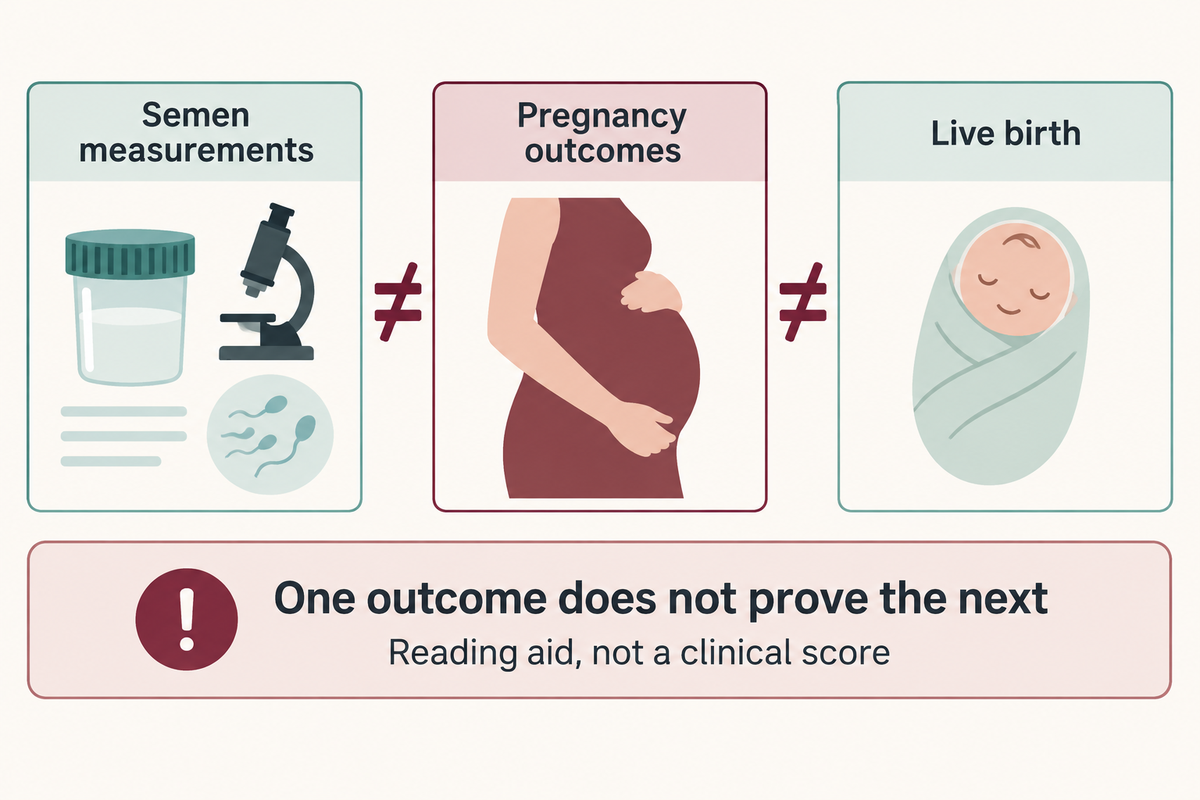
Male fertility supplements may change some sperm measurements, but they aren’t a proven pathway to achieving a pregnancy. A starting point is a fertility assessment, looking at the person’s dietary needs and the evidence for the product. A better motility result won’t necessarily increase the pregnancy or live birth rate.
For couples in Dubai, the purchase decision also involves local product checks, the daily serving on the label and the cost of continuing treatment. For fertility supplements for men, check how many days the pack lasts. For complementary treatment, discuss your current plan for a male fertility consultation.
Before you buy: ask what outcome the product improved, whether the study tested that formula, and when your clinician wants to review your progress. Keep your fertility appointment while you consider supplements.
This is educational information from Tong Ren Tang. This article does not provide an individual diagnosis or supplement prescription. The information and UAE prices shown were checked on the 24th of October 2026.
Do male fertility supplements really work?
Some trials report improvements in sperm quality, while evidence for pregnancy and live birth remains uncertain. The answer to the question will depend on the formulation, the men studied and the outcome measured. The 2021 published AUA/ASRM guideline states that evidence for the clinical benefits of supplements is insufficient to recommend any particular agent.
An antioxidant has a plausible biological role, but a plausible mechanism cannot tell a couple their chance of conception. Research on men’s fertility may look at the density, movements or forms in a semen sample. A clinical trial must follow pregnancies or births to answer a different question: did more couples achieve the outcome they wanted?
Do sperm supplements actually work?
There isn’t enough evidence to consider every fertility supplement as effective. The 2022 Cochrane review found a possible live-birth benefit from antioxidants, but rated that evidence very low certainty. After studies at high risk of bias were removed, the analysis didn’t show clear evidence of increased live birth. That leaves room for uncertainty rather than a universal yes or no.
3-Outcome Fertility Evidence Ladder
This reading aid separates various types of outcomes. It’s neither a clinical score nor a prediction tool.
- Semen measurement: ask what changed and how it was measured.
- Pregnancy: ask whether the outcome means a positive test, a clinical pregnancy or an ongoing pregnancy at a specified stage.
- Live birth: check whether births were measured and reported, rather than inferred from an earlier result.
Suppose a couple shows a screenshot at their appointment that promises “better sperm motility.” The clinician can ask if the study includes men with the same condition and identify the formula. A change in movement may be relevant to the discussion but may not increase the chances of a baby. The couple may compare isolated percentages, but keeping them together, with other supporting materials, may answer the question ‘do we improve our care plan based on this research?’
What supplement is good for male fertility?
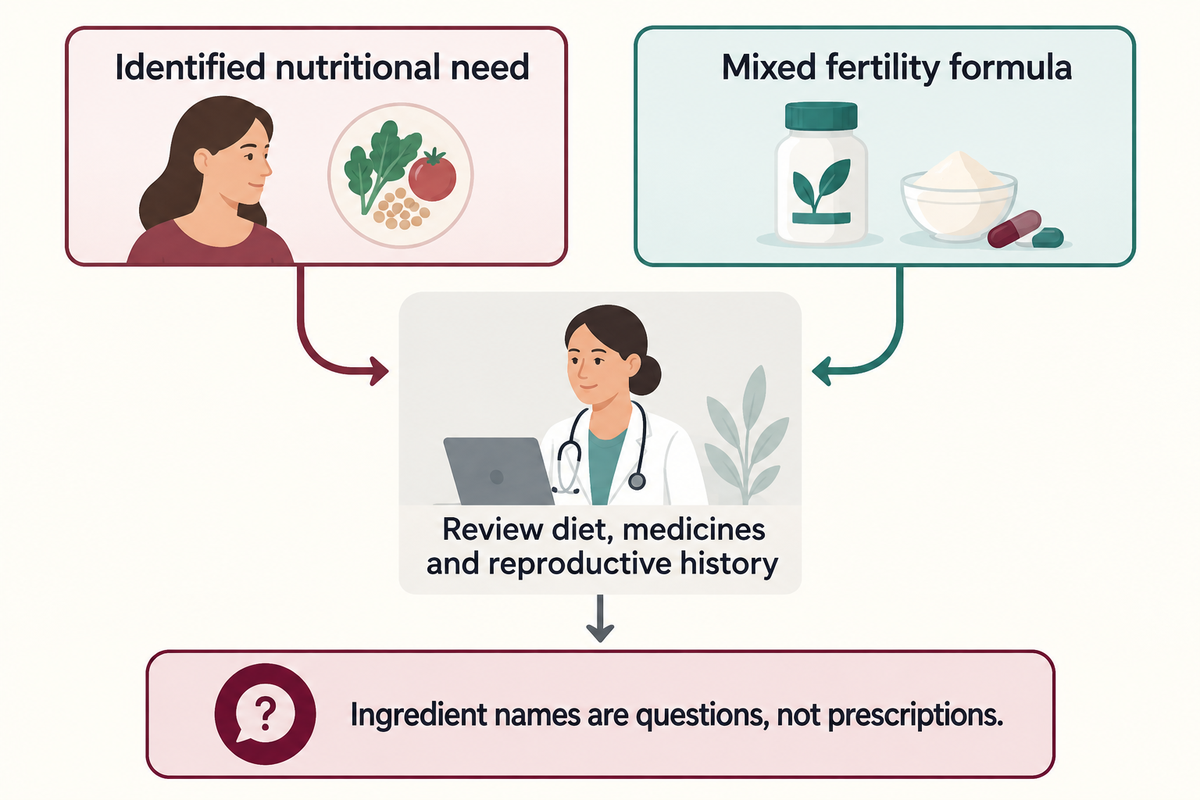
No single supplement is recognized as appropriate for every man trying to conceive. Addressing an identified nutritional need is a different decision from taking a mixed formula for infertility. Prior to considering any supplementation, a clinician may take into account a person’s diet, medicines and their reproductive history.
The ingredient list should lead to questions, not a self-prescribed regimen. CoQ10 and L-carnitine have been studied for semen outcomes. For zinc and folic acid, the large FAZST randomised trial published in 2020 included 2,370 couples and found live birth rates of 34% with the tested combination versus 35% with placebo. It does not rule out treatment for a diagnosed deficiency.
| Ingredient category | What to clarify | What the name alone cannot establish |
|---|---|---|
| CoQ10 | Which semen outcome and preparation were studied? | A live-birth advantage for this bottle |
| L-carnitine | Was it used alone or with acetyl-L-carnitine? | Equivalence between different blends |
| Zinc | Is it already in your multivitamin for men? | A need for an additional product |
| Folate or folic acid | Does the evidence test this formulation? | That changing to methyl folate improves fertility |
| Vitamin C or vitamin E | What is the combined daily amount across products? | That more antioxidant is better |
| Vitamin D | Is there an individual nutritional reason to take it? | A fertility prescription from the product title |
| Selenium | Does another blend already contain it? | Safety from the word “natural” |
| Inositol | Did the study involve men with your condition? | Transfer of evidence from a different patient group |
| Herbal blends | Can the practitioner review every herb and medicine? | Interchangeability of extracts or freedom from interactions |
| D-aspartic acid | What evidence matches the proposed purpose? | A treatment for male infertility from a hormone-related claim |
What vitamins should men take when trying to conceive?
Discuss using vitamins to correct a nutritional deficiency with your clinician before selecting them for fertility health. The NIH Office of Dietary Supplements mentions supplements that help people obtain adequate nutrients when their diet is lacking; however, it warns against self-diagnosing conditions. A product containing vitamin B6, B12 or magnesium still needs assessment for purpose and total intake.
Bring photos of both the front and back labels. An “immune support” product and a fertility support capsule may contain the same ingredients even if their names sound completely different. Back labels show this.
CoQ10 vs L-carnitine: what the comparison can tell you
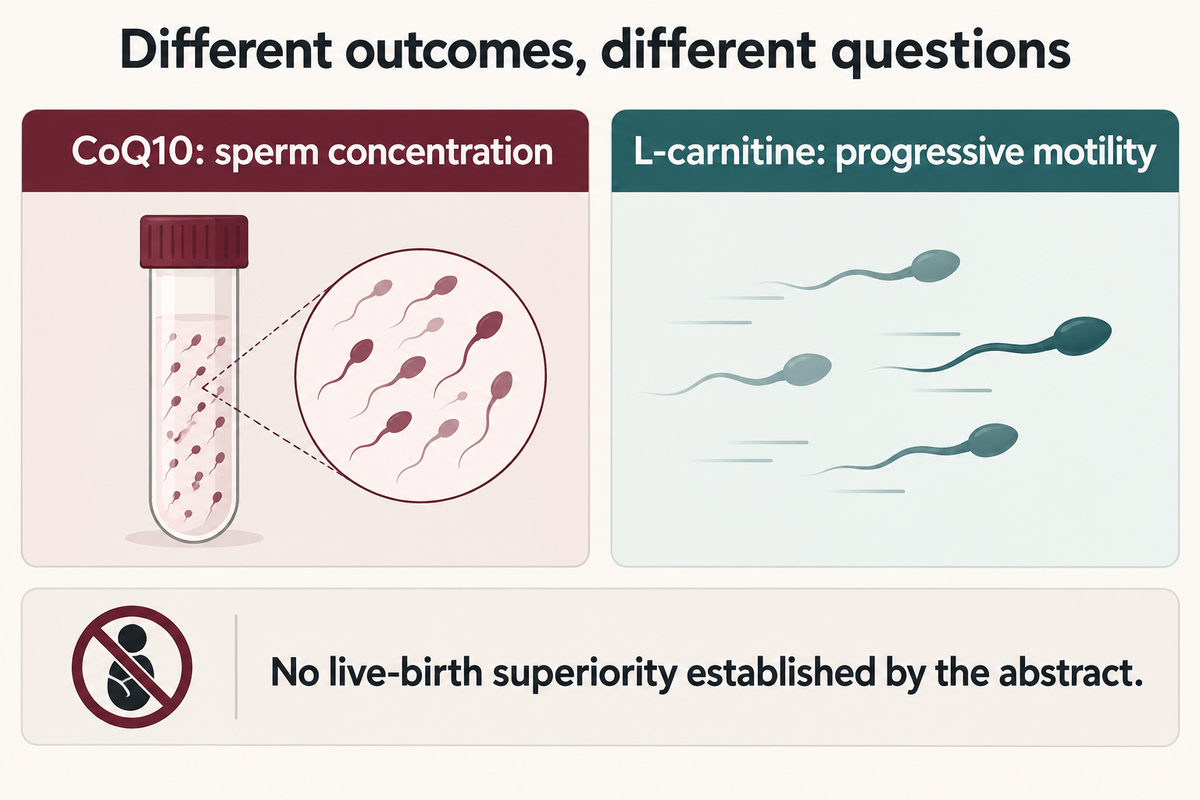
A 2025 systematic review and network meta-analysis of 16 studies ranked CoQ10 highest for sperm concentration and L-carnitine highest for progressive sperm motility. These ingredient rankings concern different semen outcomes, and the available abstract doesn’t establish superiority for live birth.
Network meta-analysis combines evidence for different treatments and may include evidence for indirect comparisons, if those treatments have a common comparator. Ranking of effects may also vary, if different studies or populations have been analyzed. Don’t consider the highest effect a guarantee for your own semen outcome.
If your report mentions low movement, ask whether the study population resembles your situation before deciding to take CoQ10 or carnitine. If the seller claims better absorption for some other preparation, ask for evidence for that preparation. Absorption, conception and a laboratory outcome are different questions.
For a comparison appointment, note the ingredient form, amount per serving and full formula name. A Q10 product with several additional ingredients is not necessarily equivalent to the CoQ10 intervention used in a paper. The same is true for a supplement for men blend.
Reading a fertility supplement label and checking side effects
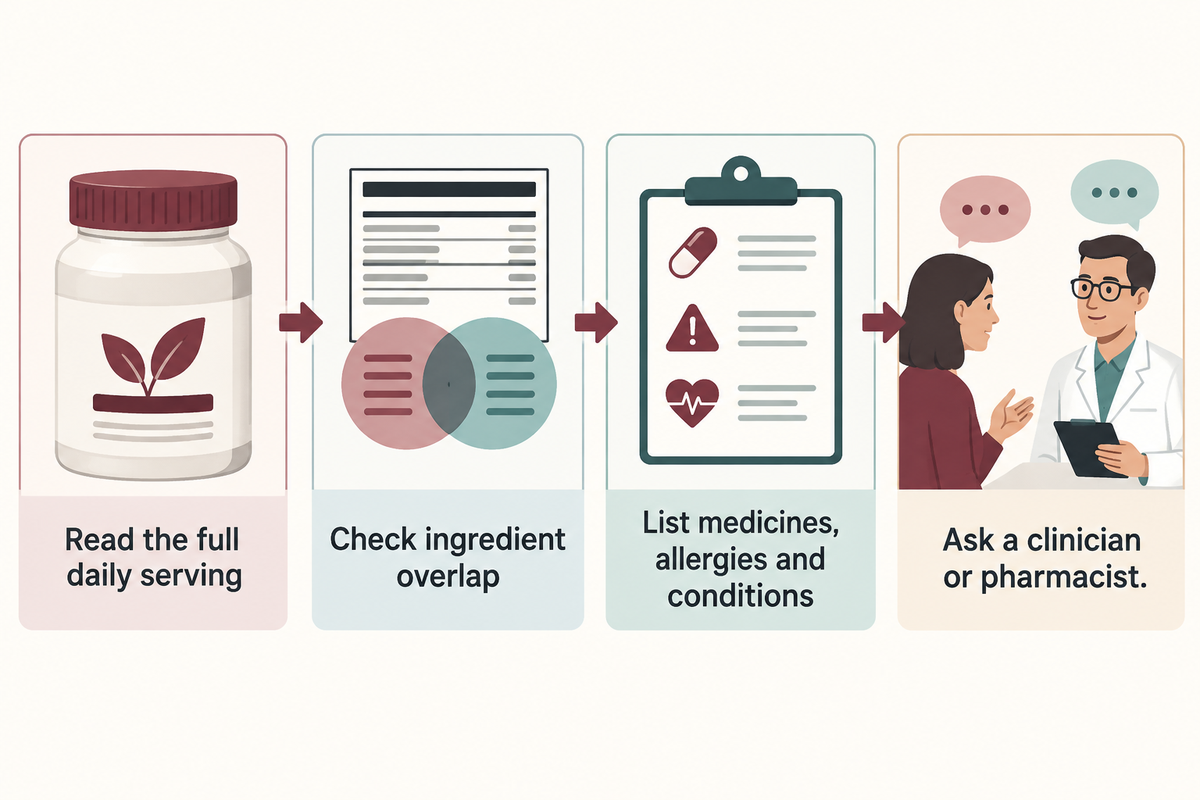
Check the full daily serving and all ingredients before adding a product to your routine. A capsule count on the front does not tell you the daily amount, and combining products can duplicate ingredients. The NCCIH supplement guidance mentions many reasons for individual safety review e.g., medicine interactions, allergies and existing medical conditions, and surgery.
Are male fertility supplements safe?
Male fertility supplements can cause side effects; safety depends on the product and the person taking it. Report new symptoms and tell your clinician about every medicine, supplement and herb you use. Side effects are possible with over-the-counter products.
The NIH’s 2020 trial report describes a studied daily combination of 5 mg folic acid and 30 mg zinc. The supplement group reported abdominal discomfort in 6% versus 3% with placebo, nausea in 4% versus 2%, and vomiting in 3% versus 1%. These are trial findings for that regimen, not recommended doses or estimates for every fertility product.
“These seals do not guarantee that a product is safe or effective.”
| Check | Write down or ask |
|---|---|
| Exact identity | Product name, manufacturer and formulation |
| Daily serving | Sachets or capsules per day on the current label |
| Amount per serving | Whether the stated amount refers to one capsule or several |
| Ingredient overlap | Nutrients repeated in your other products |
| Medical fit | Medicines, allergies and conditions for pharmacist review |
| Package duration | Units in the pack divided by units per day |
| Comparable cost | Price for 30 days, including any delivery charge |
| Traceability | Seller details, batch, expiry and storage instructions |
| Evidence and review | Exact-formula study and the clinician’s follow-up plan |
Let’s say a guy already taking a multivitamin buys an antioxidant blend and a separate herbal product. Packaging shows three purposes, but only the ingredient panels show overlap. He can photograph each daily serving and bring the list to a pharmacist before adding another capsule. Claims such as “gluten free” or “non-GMO” refer to product attributes, but don’t state if the product is safe to take with the man’s other meds. If the herbal product contains ashwagandha or maca root, the extract info also should be on the list. Then a health professional could evaluate the overall routine instead of looking at each product in isolation to see if it’s safe to take with the man’s other meds.
How much do male fertility supplements cost per month in Dubai?
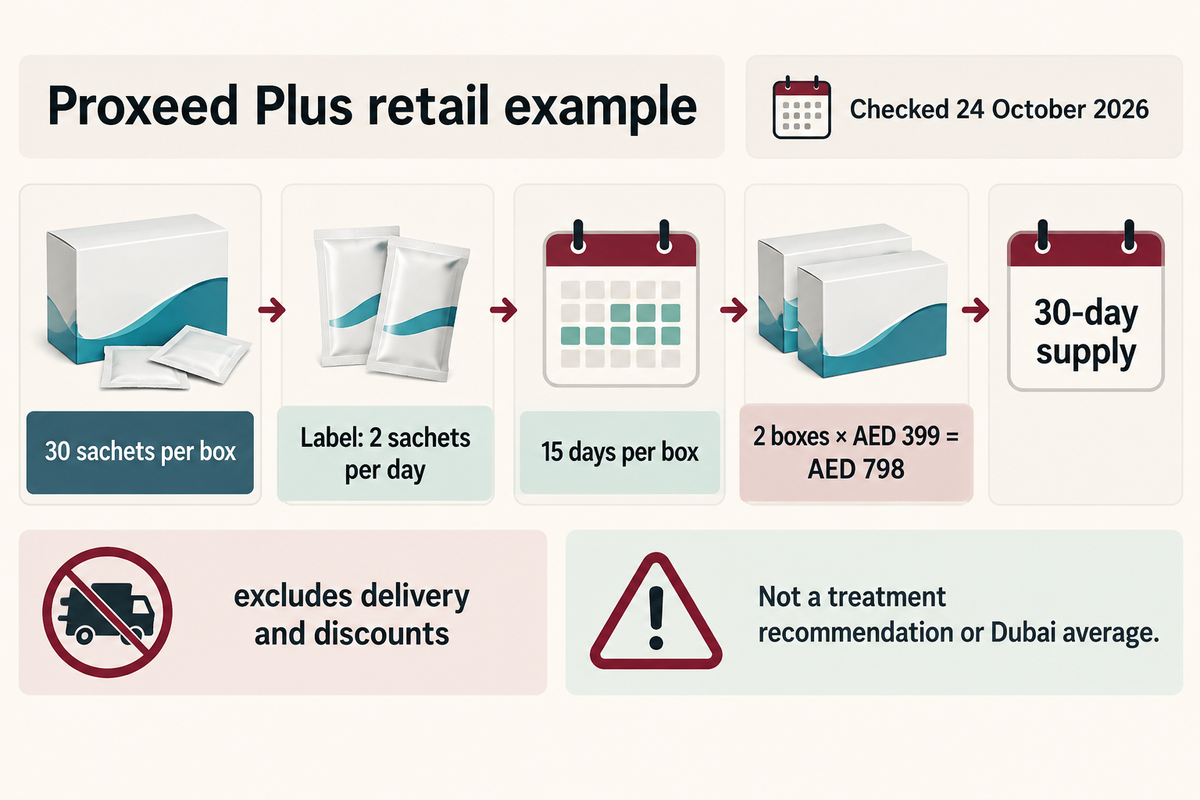
The Proxeed example below costs AED 798 for a 30-day supply; monthly costs vary with pack size, daily serving and the actual purchase price. Variability in pack size, serving size, and purchase cost make monthly cost estimates difficult. On 24 October 2026, Proxeed Plus (30 sachets) showed a list price of AED 399 and directions of one sachet twice daily.
Using the list price on that page, 30 sachets ÷ 2 sachets per day = 15 days per box. A 30-day supply needs 2 boxes, so 2 × AED 399 = AED 798. This is a single-example case from that page from that time, and doesn’t include delivery costs or discounts. It’s not an average price in Dubai, and shouldn’t be taken as a treatment recommendation.
The page displayed a price for membership. Only compare prices you qualify for, and check the total at checkout. A lower pack price may mean a higher daily cost if its serving uses more units. “30 servings” and “30 capsules” denote different quantities when a serving contains multiple capsules.
A couple preparing a monthly budget might initially set aside AED 399, based on the box price. Reading the listed frequency changes that estimate to AED 798 for 30 days at the standard price. They can then discuss whether the proposed supplement is worth that recurring expense within their wider care plan. They also need to agree on a review point before buying a long supply. This comparison prevents a half month’s supply from being mistaken for a month’s supply.
Where to buy in the UAE and how to assess brand evidence
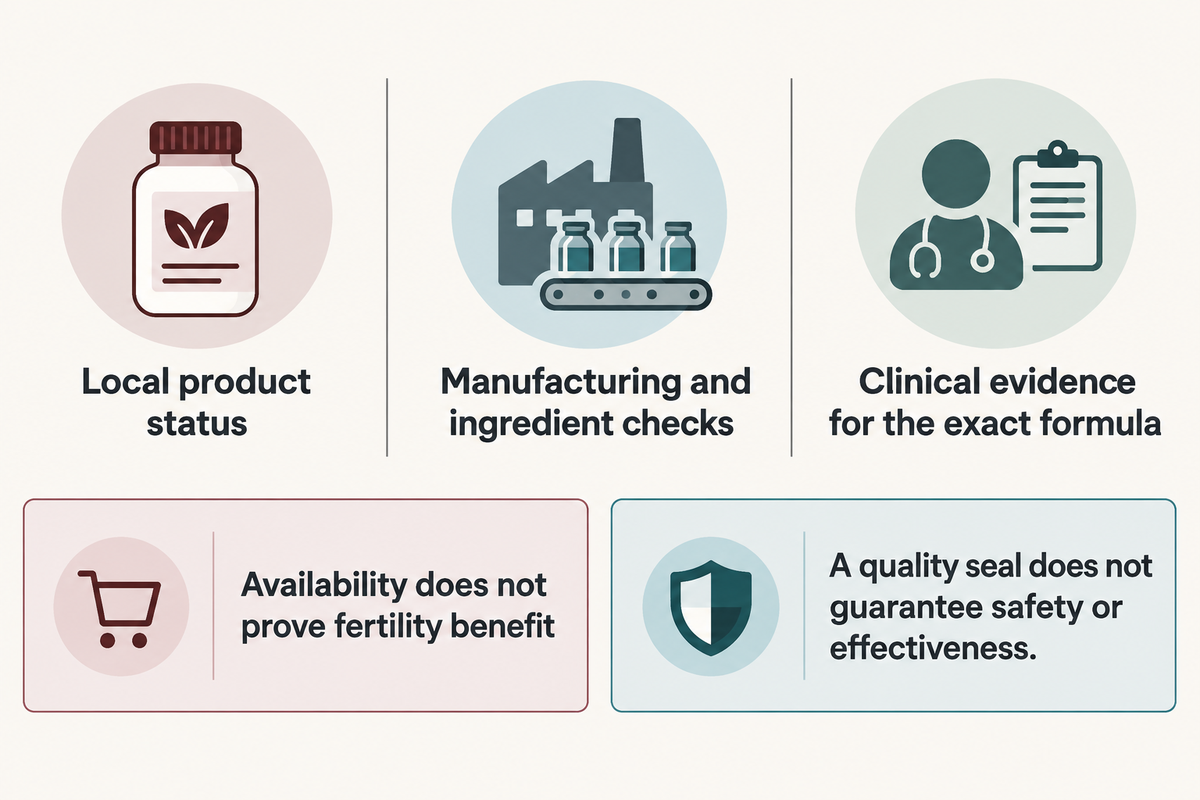
Choose a seller that provides a known product, a complete label and the ability to speak to a pharmacist. UAE availability is not proof that a brand improves fertility. Separate a product’s local status from manufacturing and clinical evidence before bringing it into your care plan.
According to Dubai Municipality’s 2020 Montaji announcement, they check supplements by barcode, number, or name. Use the municipality’s official channels to request more information on the specific product. The announcement doesn’t verify that the product listed here’s currently registered, and we haven’t tested the app’s current functioning status.
The NIH’s explanation on quality assurance separates checks on manufacturing, ingredients and contaminants from proof of safety and/or effectiveness. This distinction is useful when reviewing a seal, not a statement on the UAE’s regulatory requirements.
When comparing brands, seek the actual study rather than accepting “clinically studied” as a proxy. Review the formula, patient group, comparator and reported outcome. A study on one blend can’t generally support a different product, even if it contains some of the same ingredients. A “doctor recommended” badge doesn’t tell you who endorsed it and doesn’t indicate if it’s applicable to you.
A claim to support sperm should name the outcome it refers to. If the proposed aim is to help improve a semen measurement, ask how that result would affect the next step in your care. Clarifying the expected benefit and the plan to review it after gives you a basis for a decision.
When to seek fertility assessment instead of waiting
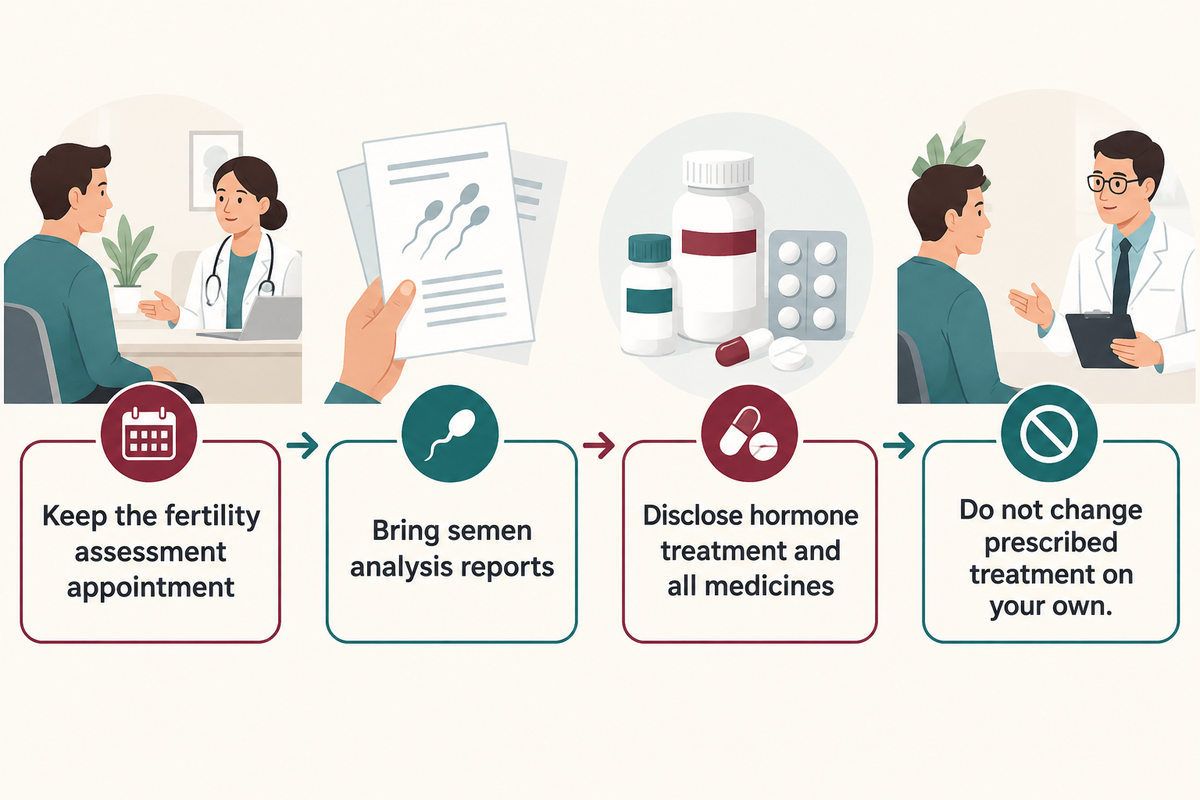
While considering supplements, keep fertility assessment on schedule. For couples having regular, unprotected intercourse without achieving pregnancy, ASRM’s 2021 evaluation guidance recommends assessment after 12 months for female partners under the age of 35, while assessment after 6 months is recommended for partners ages 35 and above. More immediate evaluation may be appropriate above 40 or when a known condition warrants it; both partners should be assessed.
Prepare the previous semen analysis reports, and find out what the results mean. If you have the home sperm analysis result, bring that as well, and find out if further tests and/or a laboratory sample will be required. A comparison of popular male fertility supplements doesn’t replace assessment by a fertility specialist or a clinician experienced with male reproductive health. Older men should bring their full medical and medication history rather than choosing a product by an age label.
How can I boost male fertility?
Start by reviewing factors in your history that include medicines and hormone treatment with a clinician. According to the 2021 AUA/ASRM guideline, testosterone monotherapy shouldn’t be prescribed to men interested in current or future fertility. Its explanation notes that exogenous testosterone can suppress sperm production.
If you’re taking prescribed testosterone, contact your prescriber regarding your wishes to conceive; don’t adjust your treatment on your own. Disclose anabolic steroids and products sold for hormone balance as well. A supplement marketed to support testosterone levels is not automatically the same substance as prescription testosterone, but the clinician needs to know what it contains.
For instance, a man may arrive focused on which antioxidant to buy while leaving his hormone prescription off the intake form. Bringing that prescription changes the clinical conversation much more than comparing the length of two ingredient lists.
Men’s fertility concerns deserve a shared plan with the partner’s care. If you want to boost fertility, identify which next step the clinician recommends and why. Tong Ren Tang’s fertility care information can help frame questions regarding complementary services and the plan.
Preparing for a fertility or TCM consultation

A helpful starting point is your current care plan and a complete list of products. Tong Ren Tang provides male fertility acupuncture consultations in Dubai. Ask how any traditional Chinese medicine care would integrate with your fertility evaluation and treatment, including IVF where applicable.
Bring the actual labels instead of a note that says “fertility vitamins.” Include any herb, powder, or tea that you currently use, the amount used and the rationale for its use. Tell the practitioner which clinician is overseeing your fertility care and what has already been arranged. If you’re considering Chinese herbal medicine, ask the practitioner to review it in the context of the full list.
- What’s the specific aim of the proposed care?
- Does it change any medicine or supplement advice I’ve previously been given?
- Who should review possible interactions?
- What would prompt earlier reassessment?
Read the first-visit guide when you make your appointment. Mention if you’ve multiple products to review, when scheduling your appointment, so you can bring the necessary packaging and records.
What newer fertility trials change about supplement claims
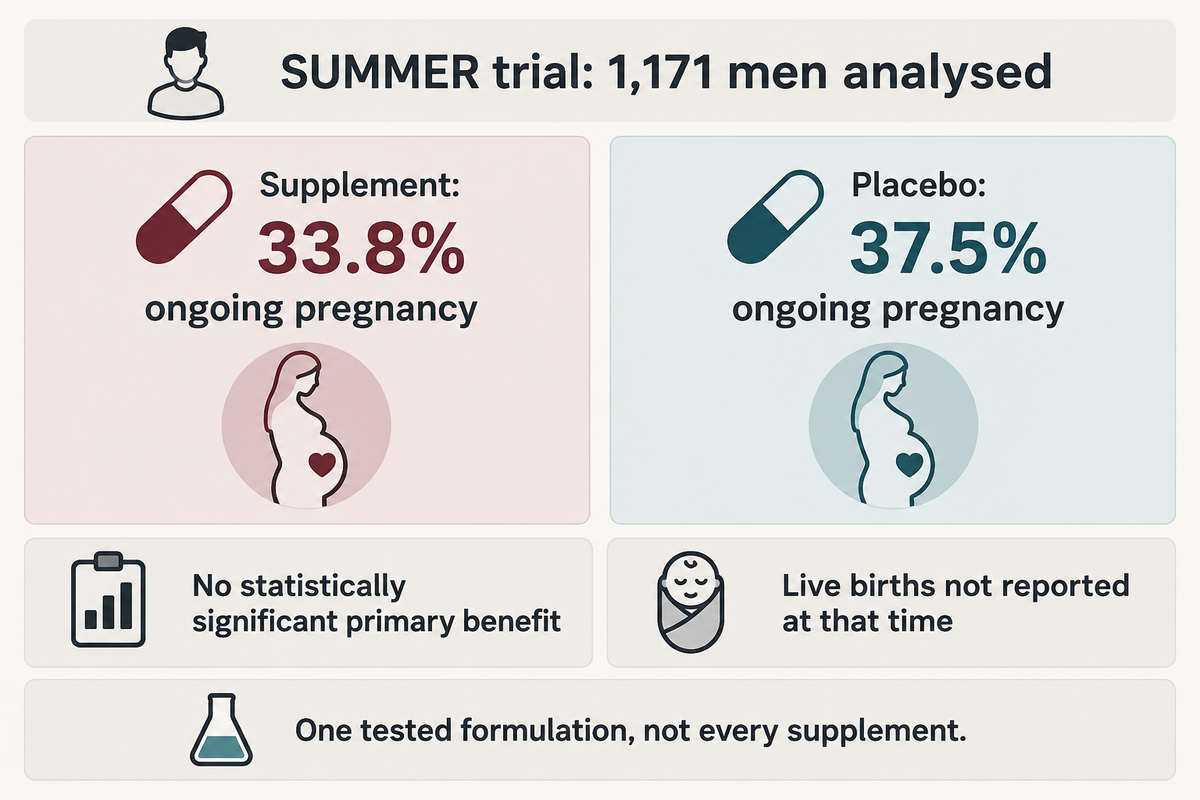
New trials support that reading the exact clinical outcome is key, as assuming an antioxidant is helpful isn’t always the case. The 2025 SUMMER trial analysed 1,171 men seeking fertility care and tested Impryl alongside standard care. The trial didn’t show a statistically significant improvement in their primary outcome of ongoing pregnancy.
According to the authors, ongoing pregnancy was reported in 33.8% of the supplement group and 37.5% of the placebo group. Live births weren’t reported at that time. In a prespecified secondary analysis at months 4 to 6, there were fewer ongoing pregnancies in the supplement group compared to the placebo; this finding must be distinguished from the primary outcome.
The SUMMER authors reported other limitations including a heterogenous patient population and 58% adherence to treatment. Eligible men were 18 to 50 years and their female partners were 18 to 43 years. The treatment duration was 6 months. The findings of the trial are specific to the setting and tested formulation, and not to every ingredient or person with a deficiency. Impryl and Proxeed (price example) are different products. Goodlife Pharma BV, which developed and marketed Impryl, supplied study medication and an unrestricted research grant. The authors reported that the funder had no role in study design, conduct, data analysis, manuscript preparation or the decision to submit the paper.
When a new headline is released, consider the product and endpoint before modifying your routine. Save the study link for your clinician and assess whether this affects your current plan. Older products may not need to be changed to the newest product recommended.
Frequently Asked Questions
How long do male fertility supplements take to work?
Male fertility supplements have no guaranteed time to benefit; a study’s follow-up period isn’t a personal deadline for improvement.
Some trials assess changes over several months, but duration alone doesn’t establish effectiveness. Ask your clinician what outcome you’re monitoring and when to review it. Keep scheduled investigations while you consider a product, particularly if your partner’s age or your medical history makes earlier assessment appropriate. Buying another box shouldn’t become the automatic response to an unchanged result.
Which vitamins are beneficial for sperm morphology?
No vitamin can be selected reliably from an abnormal morphology value alone.
Morphology describes sperm shape, while trials may measure other semen outcomes or pregnancy. Ask the clinician interpreting your report whether a nutritional issue is relevant, whether the result needs reassessment and what evidence supports a proposed product. The fact that a formula contains several vitamins doesn’t demonstrate that it will change your result or improve the chance of conception.
Can supplements affect male fertility?
Yes, supplements may change some sperm measurements, affect health and interact with treatment, so benefits and risks need individual review.
Don’t assume every product will improve sperm health or that an unsuccessful supplement is harmless. Trials have reported different outcomes and adverse effects for particular regimens. Bring all products to your clinician or pharmacist, including those marketed for fitness, energy or hormonal balance. If symptoms start after a new product, report the timing and ingredients rather than adding another supplement to counteract them.
Are there male fertility drugs?
Yes. Clinicians prescribe medicines for selected diagnoses. The choice depends on the underlying cause; a retail fertility blend can’t replace that assessment.
Can I combine a fertility supplement with Chinese herbs?
Don’t add Chinese herbs to a fertility supplement before both your treating clinician and the qualified practitioner have reviewed the complete combination.
Give them the exact products and all prescribed medicines. A shared description such as “supports healthy sperm” doesn’t establish compatibility, and different extracts can have different compositions. Keep the agreed plan in writing so each practitioner knows what you’re taking.
For the appointment, keep the original packaging or take clear photographs of the ingredients, serving instructions and manufacturer details. Include occasional teas and powders as well as daily capsules. Explain which product you started first and whether you noticed any symptoms after a change. If a practitioner proposes a new mixture, ask how the fertility clinician will be informed and who should answer questions about interactions. Don’t stop a prescribed medicine merely to make room for a supplement.
Bring your labels and questions
If you’re considering traditional Chinese medicine alongside fertility care, contact Tong Ren Tang to discuss an appointment. Bring your existing treatment plan and ask what information the practitioner needs before the visit.
References & Sources
- Diagnosis and treatment of infertility in men, part II, AUA/ASRM, 2021.
- Antioxidants for male subfertility, Cochrane, 2022.
- Folic acid and zinc supplementation, semen quality and live birth, JAMA, 2020.
- Effects of carnitine and coenzyme Q10 on sperm quality, Reproductive Sciences, 2025.
- Using Dietary Supplements Wisely, NIH NCCIH.
- Zinc and folic acid trial report, NIH NICHD, 2020.
- Dietary supplement questions and quality assurance, NIH ODS.
- Montaji product-checking announcement, Dubai Municipality, 2020.
- Fertility evaluation committee opinion, ASRM, 2021.
- The SUMMER randomized clinical trial, JAMA Network Open, 2025.