Get in Touch with Tongren Tang Gulf


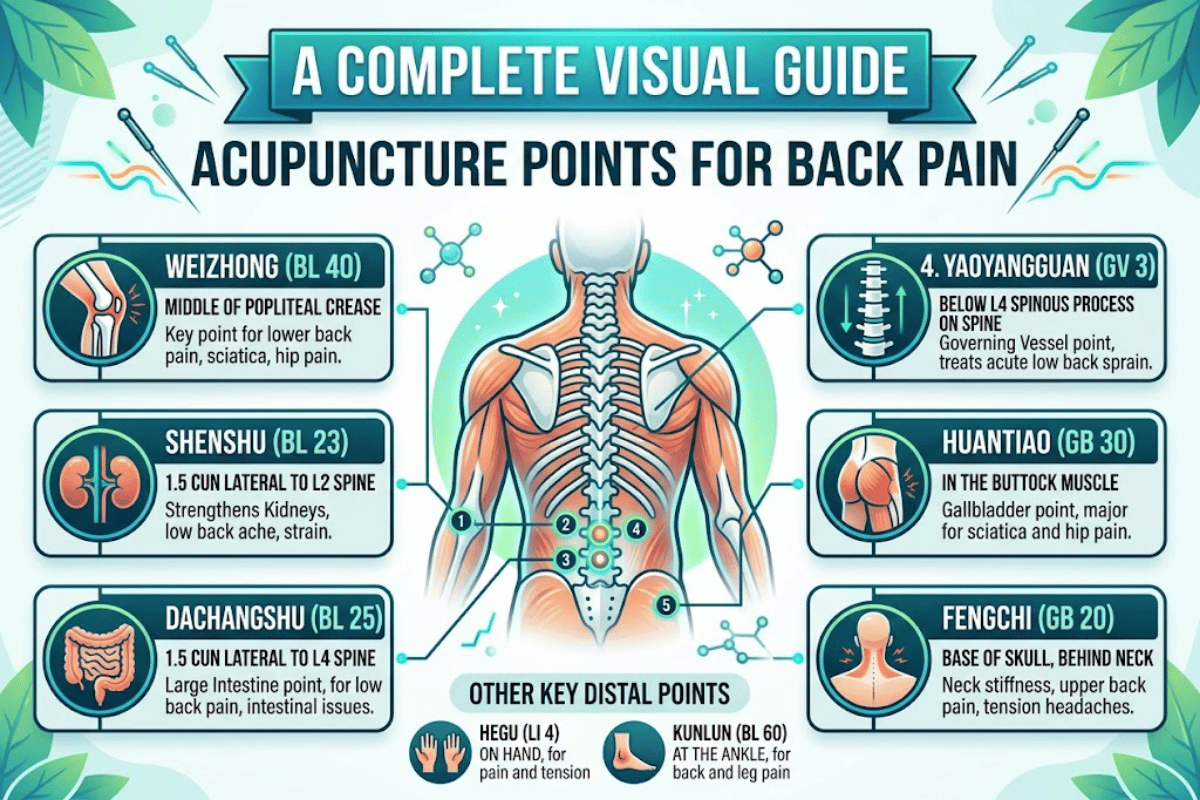
If you are exploring acupuncture points for back pain, the real question is which acupoints have genuine scientific literature behind them — not which ones look the most striking on a chart. This listing covers seven acupoints most referenced in peer-reviewed trials and classical Chinese medical texts, gives you precise locations on the body using the WHO Standard Acupuncture Point Locations (2008), and is candid about where the evidence is strong, moderate, or mixed. Because back pain remains the leading root of disability worldwide, we also flag the three moments where you should see a medical doctor first rather than a licensed acupuncturist.
Quick Specs: The 7 Acupoints at a Glance
| Acupoints covered | BL23, BL25, BL40, BL60, GB30, GB34, GV4 (with GV3 adjacent mention) |
| Strongest evidence for | Chronic low back pain, sciatica, lumbar stiffness |
| Typical pressure duration | 30 seconds per side (VA.gov protocol) |
| Sessions to noticeable effect | 4–6 sessions (acupuncture); daily home practice (acupressure) |
| Key safety flag | BL60 is a historic “forbidden point” in pregnancy before 37 weeks |
| Standards reference | WHO Standard Acupuncture Point Locations 2008 |
Does Acupuncture Actually Work for Back Pain? What the Evidence Shows

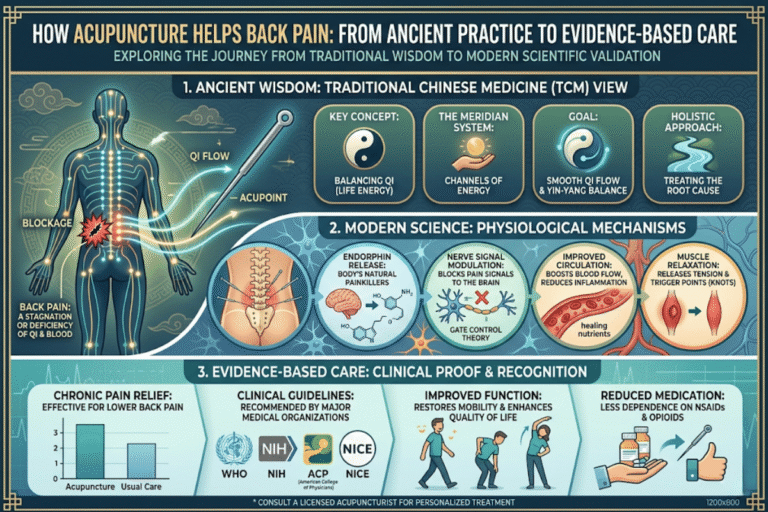
Brief answer: yes, the evidence is moderate and growing — but it is not miraculous, and it depends on each country’s clinical guidelines. Acupuncture has been in use in some form for at least 2,500 years, and since 2020 Medicare has covered up to 20 acupuncture visits for chronic low back pain in the United States. Adult usage in the US more than doubled between 2002 and 2022, from 1.0 percent to 2.2 percent, according to the National Health Interview Survey cited by the National Center for Complementary and Integrative Health (NCCIH).
Three sources carry the strongest weight. A 2018 pooled analysis of 12 studies and 8,003 participants found acupuncture more effective than no treatment for back and neck pain; a separate analysis of 10 studies and 1,963 participants found it more effective than sham acupuncture. NCCIH summarises the pain-relieving effect as “comparable to that of nonsteroidal anti-inflammatory drugs.” On that basis, the American College of Physicians 2017 clinical practice guideline names acupuncture among its recommended first-line non-drug treatments for chronic low back pain, with moderate-quality evidence.
A large-scale US study landed in September 2025. The NIH-funded BackInAction trial, published in JAMA Network Open, randomised 800 adults aged 65 and older to acupuncture or usual medical care. Participants who received up to 15 sessions over three months reported greater reductions in pain-related disability at both six and twelve months, less anxiety, and better physical function. Adverse events were described as minimal.
“Of the different treatments we have for chronic low back pain, most have a somewhat modest effect — they often reduce pain by about a third at best. Our clinical results suggest that acupuncture is working as well as many things that are more familiar to people. The size of this effect, while modest, was positive and sustained.”
International guidance is not unanimous. The UK’s NICE guideline NG59 on low back pain (2016, updated 2020) advises against offering acupuncture for low back pain and sciatica. That position was partly reversed by NICE NG193 on chronic primary pain (2021), which recommends considering a single course of acupuncture. For sciatica specifically, NCCIH notes that 2015 reviews (1,842 and 962 participants) suggest benefit but rate the evidence quality as not yet good enough for firm conclusions. In other words: acupuncture is mainstream in US clinical practice for chronic back pain, cautiously endorsed for chronic pain in the UK, and still developing for sciatica.
The 7 Most Effective Acupoints for Back Pain
Each acupoint below is described using the WHO Standard Acupuncture Point Locations (2008), the reference work most widely adopted by practitioners worldwide. For every point we list its pinyin name, its meridian, a plain-English anatomical location, the back pain presentations it targets, the strongest evidence tier currently available, and a simple self-acupressure technique. Think of this as an acupoint evidence hierarchy — seven points ranked by how often they appear across classical Chinese texts and contemporary systematic reviews.
1. BL23 — Shenshu (Kidney Shu)
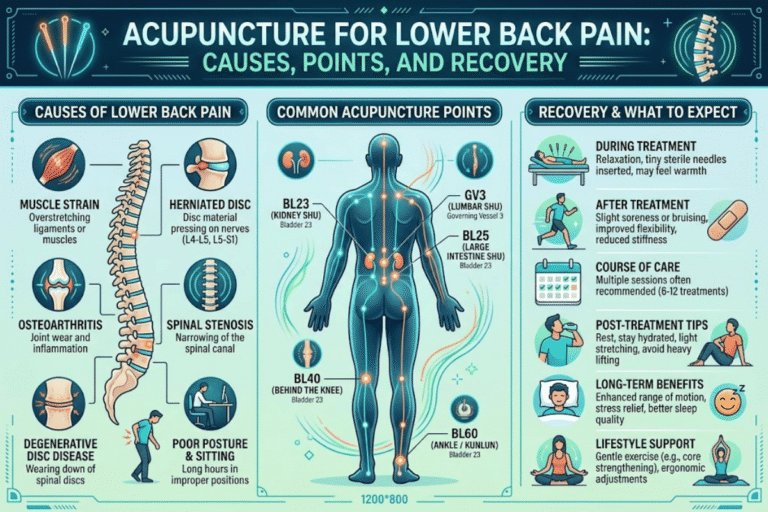
Meridian: Urinary Bladder. Location: on the lower back, 1.5 cun lateral to the lower border of the spinous process of the second lumbar vertebra (roughly at waistline level, two finger-widths either side of the spine). Indicated for: chronic lower back pain, lumbar stiffness, and the diffuse ache associated with long periods of sitting. Evidence tier: high — BL23 is the single most consistently named acupoint across TCM classical literature and modern acupressure guides from VA.gov and Kaiser Permanente. Self-technique: place your thumbs on each point and apply pressure firmly for 30 seconds, matching the VA’s acupressure protocol. Release slowly and repeat two or three times.
2. BL25 — Dachangshu (Large Intestine Shu)
Meridian: Urinary Bladder. Location: 1.5 cun lateral to the lower border of the spinous process of the fourth lumbar vertebra (roughly at the level of the iliac crest, the top of the hip bone). Indicated for: lower back pain radiating toward the sacrum, lumbar-sacral soreness, and pain linked to prolonged desk sitting. Evidence tier: moderate — frequently paired with BL23 in clinical acupuncture protocols. Self-technique: use steady thumb pressure for 30 seconds, working both sides. BL25 sits below the most common “pain belt” — if you cannot find it, follow the midline down from BL23 about one vertebra’s width.
3. BL40 — Weizhong (Middle of the Crease) — the “Master of the Back”
Meridian: Urinary Bladder. Location: at the midpoint of the transverse crease of the popliteal fossa (the crease behind the knee). Indicated for: lower back pain, hamstring tightness, lumbar stiffness, and muscle tension radiating from the back down the leg. Evidence tier: high — the classical Four Command Points text names BL40 as the command point for all disorders of the back. Self-technique: sit with your knee bent; press the midpoint of the crease with two fingers for 30 seconds. Expect a sensation of deep ache rather than sharp pain — this is the characteristic deqi response described in TCM literature.
4. BL60 — Kunlun (Kunlun Mountain)
Meridian: Urinary Bladder. Location: in the depression between the tip of the external malleolus (outer ankle bone) and the Achilles tendon. Indicated for: lower back pain that radiates down the leg, sciatica, and stiff neck. Evidence tier: moderate — classically called the “aspirin point” for its pain-relieving effect across the whole back meridian. Self-technique: use a fingertip to press the depression for 30 seconds on each side.
⚠️ Pregnancy Safety
BL60 is one of the historic “forbidden points” in pregnancy, traditionally avoided before 37 weeks along with SP6, LI4, and BL67. A 2019 PMC review of randomised trials found that acupuncture at forbidden points did not increase adverse pregnancy outcomes, but standard TCM practice remains cautious. If you are pregnant, do not self-stimulate BL60 — consult a licensed acupuncturist who can individualise your treatment.
5. GB30 — Huantiao (Jumping Circle)
Meridian: Gallbladder. Location: on the buttock, at the junction of the lateral and middle thirds of a line drawn from the greater trochanter (the bony prominence on the outside of your hip) to the sacral hiatus. Indicated for: sciatica, hip pain, and lower back pain radiating into the gluteus and down the outer leg. Evidence tier: moderate — GB30 is the flagship acupoint for sciatica across both classical and modern clinical protocols. Self-technique: lie on your side with the affected leg up; press the point with a knuckle or tennis ball for up to 60 seconds. Because the area is muscularly deep, pressure needs to be firm rather than gentle.
6. GB34 — Yanglingquan (Yang Mound Spring)
Meridian: Gallbladder. Location: in the depression anterior and inferior to the head of the fibula, on the outer side of the lower leg just below the knee. Indicated for: muscle tension, tendon tightness, stiffness in the lumbar region, and hip pain. Evidence tier: moderate — GB34 is classically the Hui-Meeting point of the Sinews, meaning it is considered the master acupoint for all muscle and tendon disorders. Self-technique: sit with your leg bent; use your thumb to press the depression for 30 seconds on each side. Useful before exercise for reducing lumbar muscle tension preventively.
7. GV4 — Mingmen (Gate of Life) and its neighbour GV3 Yaoyangguan
Meridian: Governor Vessel. Location: on the posterior midline, in the depression below the spinous process of the second lumbar vertebra. GV3 Yaoyangguan sits about two vertebrae below, at L4–L5, on the same midline. Indicated for: chronic lumbar stiffness, lower back pain associated with fatigue, cold sensation in the lumbar region, and weakness. Evidence tier: moderate — GV4 is one of the most cited Governor Vessel acupoints in TCM back pain protocols; skilled practitioners often stimulate GV4 and GV3 together to cover the full lumbar axis. Self-technique: reach back with your thumb or ask a partner to press the midline dip just below waist level (GV4) and again a few centimetres lower (GV3) for 30 seconds each.
Are These Points Different for Upper vs. Lower Back Pain?
Yes — almost all of the seven acupoints above target lower and middle back pain. Upper back pain (thoracic region, between the shoulder blades) is typically addressed with a different point set: BL11 Dashu, BL12 Fengmen, BL13 Feishu, and GB21 Jianjing. The seven points in this guide follow the urinary bladder and gallbladder meridians that run through the lumbar region and down the posterior leg — anatomy that makes them effective for lower back presentations but limited for thoracic pain. If your pain is primarily between the shoulder blades, this is not the right acupoint list; ask your acupuncturist for an upper-back-specific plan.
💡 Symptom-to-Acupoint Quick Match
- Central lower back ache from sitting: BL23 + GV4
- Lumbar-sacral pain radiating to the buttock: BL25 + GB30
- Sciatica (pain down the leg): GB30 + BL40 + BL60
- Muscle tension and hamstring tightness: BL40 + GB34
- Chronic lumbar stiffness with fatigue: GV4 + BL23
Acupressure vs. Acupuncture: Which Is Right for You?
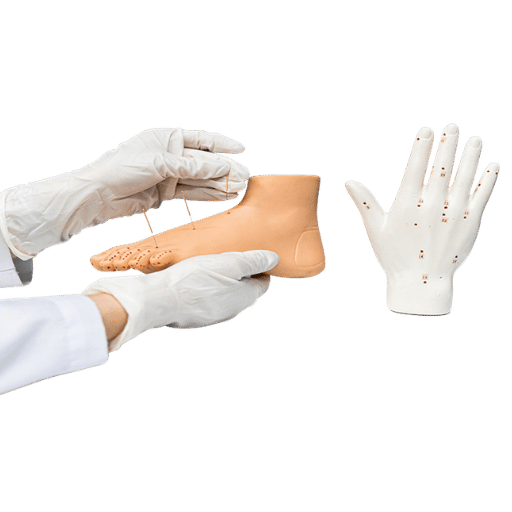
Acupressure and acupuncture share the same meridian system and the same acupressure points — they differ in how the point is stimulated. Acupuncture uses fine sterile needles inserted into the skin by a licensed acupuncturist. Acupressure uses manual pressure applied by a practitioner or by yourself. Both are described by NCCIH as methods for reducing low back pain, and the VA.gov Acupressure for Low Back Pain booklet explicitly teaches patients self-acupressure for back pain management.
| Feature | Acupuncture | Acupressure | When to choose |
|---|---|---|---|
| Stimulation | Fine sterile needles inserted 0.5–2 cm | Manual pressure with thumb or fingertip | Needles = stronger effect; pressure = accessible daily |
| Who delivers | Licensed acupuncturist only | Trained practitioner or self | Acupressure for home practice between clinic visits |
| Evidence strength | Moderate-quality for chronic low back pain (ACP 2017) | Emerging — VA programmes show functional improvement | For persistent chronic back pain, start with acupuncture |
| Typical cost | Per-session; some insurance coverage (US Medicare since 2020) | Free when self-applied | Acupressure if budget is the primary constraint |
| Pregnancy caution | Practitioner-individualised; avoids forbidden points | Safer if forbidden points are known and avoided | Either under practitioner guidance; never self-apply SP6/LI4/BL60/BL67 |
| Best for | Chronic lower back pain; sciatica; post-surgical pain | Daily muscle tension; mild-to-moderate low back pain; prevention | Most people benefit from a combination |
In Traditional Chinese Medicine, the two techniques are considered complementary rather than competitive. A common pattern in clinical practice is to book an acupuncture course for a specific episode, then use daily acupressure on those same acupoints at home to extend the effect between sessions.
How to Apply Acupressure at Home: Step-by-Step Technique
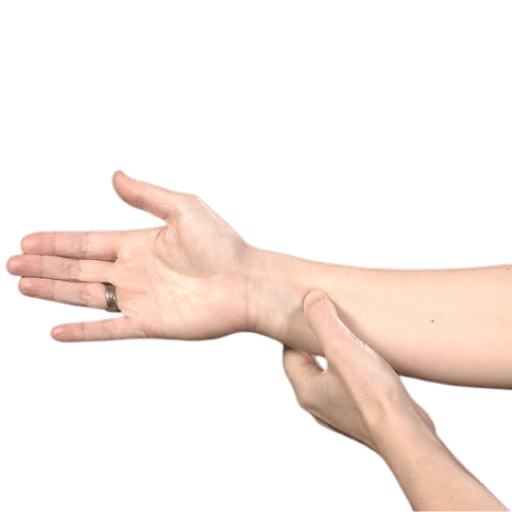
The VA.gov protocol for self-acupressure is deliberately simple so that patients can apply it daily. Follow these six steps for any of the acupoints above:
- Sit or lie comfortably. Some acupoints like BL23 and GV4 are easier to reach when you are lying down or leaning forward on a chair. BL40, GB30, GB34, and BL60 are more accessible when seated.
- Locate the point using the WHO anatomical landmarks above. If you are new to acupressure, spend the first few sessions just finding each point — a slight tenderness or deeper ache usually confirms you are on it.
- Apply firm, steady pressure with the pad of your thumb or a single knuckle. The VA guidance is to use “the amount of pressure that feels good and not painful.” You are aiming for a deep ache, not sharp pain.
- Hold for 30 seconds. Breathe slowly. If the point is bilateral (on both sides of the spine, like BL23 or BL25), repeat on the opposite side for another 30 seconds.
- Release slowly. Don’t jab the point or pulse the pressure — one sustained hold per cycle is the standard protocol.
- Repeat the sequence two or three times per session, once or twice per day. Most people feel the first clear effect within 3–5 days of daily practice.
💡 Pro Tip — Desk-Bound Pain
Long-haul drivers, delivery workers, and office workers sitting for eight or more hours per day frequently report that a short BL23-plus-BL40 sequence applied twice a day produces faster relief than a single longer session. The likely mechanism is that frequent short stimulation keeps the lumbar paraspinal muscles from resetting into a tense baseline between sessions.
⚠️ Common Mistakes to Avoid
- Pressing too hard until you bruise the skin — sustained gentle-to-firm pressure beats short heavy jabs
- Applying pressure over an open wound, a fresh bruise, a skin infection, or a known fracture site
- Self-treating during pregnancy without practitioner guidance, especially BL60
- Continuing self-treatment when new neurological symptoms appear (see next section)
When to See a Licensed Acupuncturist (Safety, Red Flags, and What to Expect)

Back pain is usually musculoskeletal and responds well to acupuncture or acupressure. But a smaller fraction of back pain is a signal of something the needle cannot treat. Before booking any acupuncture clinic, screen yourself against the red-flag list below. If any of them apply, see a medical doctor first — not an acupuncturist.
- ⚠️
Progressive leg weakness, numbness, or foot drop — possible nerve-root compression - ⚠️
Loss of bladder or bowel control with back pain — possible cauda equina syndrome (emergency) - ⚠️
Fever with back pain — possible spinal infection - ⚠️
Unexplained weight loss, history of cancer, or night-time pain that wakes you — possible metastatic disease - ⚠️
Recent significant trauma (fall, car accident) — possible fracture - ⚠️
Known bleeding disorder or anticoagulant medication — needle insertion risks haematoma
Once those are ruled out, a licensed acupuncturist is the right partner for persistent or chronic back pain. In the UAE, acupuncturists must be licensed by the Department of Health (DHA Abu Dhabi) or the Ministry of Health and Prevention (MOHAP), and many practitioners also hold international credentials such as NCCAOM (United States), BAcC (United Kingdom), or AACMA (Australia). Before booking, ask to see the practitioner’s licence number and verify it on the regulator’s register.
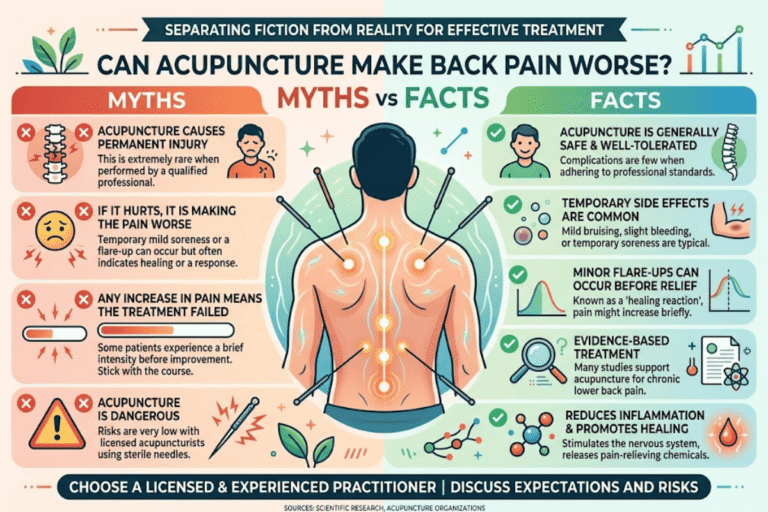
A typical first session runs 60–90 minutes and includes a health history, pulse and tongue diagnosis in TCM-trained clinics, and your first needle insertion. NCCIH notes that the US Food and Drug Administration regulates acupuncture needles as medical devices that must be sterile and labelled for single use only; any practitioner who reuses needles is not meeting acceptable safety standards. Serious complications — infections, organ puncture, nervous system injury — are rare but concentrated in unlicensed or poorly trained practitioners.
For structured chronic back pain treatment in the UAE, Tong Ren Tang UAE licensed acupuncturists follow the same WHO-standard point locations cited throughout this guide and integrate herbal support from a 350-year-old Beijing formulary.
Ready to book a consultation, or unsure which acupoints apply to your pain pattern?
Frequently Asked Questions
Q: Where is the acupuncture point for back pain?
View Answer
There is no single acupuncture point for back pain — practitioners use a coordinated set that typically includes BL23 Shenshu (at the second lumbar vertebra level, two finger-widths either side of the spine), BL40 Weizhong (midpoint of the crease behind the knee), GV4 Mingmen (midline at L2), and GB30 Huantiao (mid-buttock). The specific combination depends on whether the pain is central, radiating, chronic, or posture-related.
Q: Can I use acupuncture points for back pain during pregnancy?
View Answer
Not without professional guidance. Several of the acupoints in this guide, including BL60 Kunlun, are historically classified as “forbidden points” in pregnancy and are conventionally avoided before 37 weeks. SP6, LI4, and BL67 fall in the same category. A 2019 PMC review of randomised controlled trials found acupuncture at forbidden points did not increase adverse pregnancy outcomes, but conservative TCM practice remains cautious. Pregnant patients should see a licensed acupuncturist who will select a pregnancy-specific point protocol rather than self-applying the points listed here. If you are not pregnant, the safety caveats in the practitioner section above apply.
Q: How many acupuncture sessions are needed for back pain relief?
View Answer
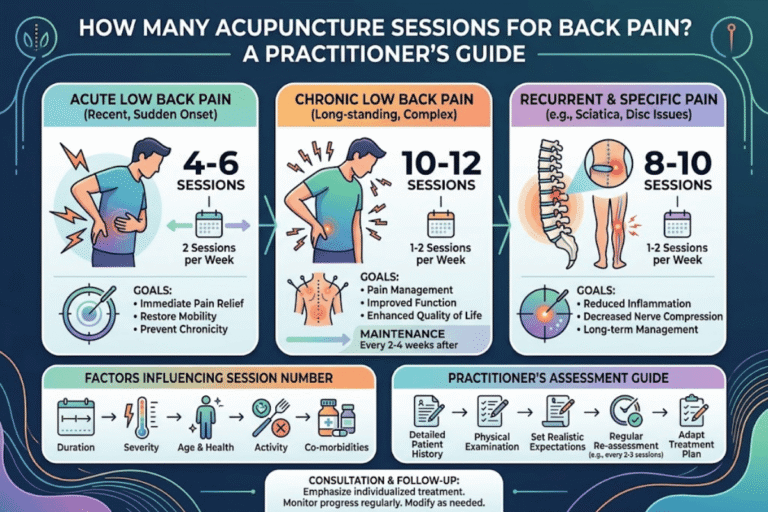
The NIH BackInAction trial used up to 15 acupuncture sessions over three months, with some participants receiving six additional maintenance sessions, and measured improvements at six and twelve months. In routine clinical practice, a first course is typically 6–10 sessions, with the first clear effect often reported around the fourth session. US Medicare covers 12 acupuncture visits for chronic low back pain, plus 8 more if the first 12 show improvement. For acute episodes, a shorter course of 4–6 sessions is common.
Q: Can acupuncture help with sciatica or radiating leg pain?
View Answer
Possibly, though the evidence is weaker than for chronic low back pain. NCCIH summarises two 2015 reviews — one of 12 studies and 1,842 participants, one of 11 studies and 962 participants — as suggesting acupuncture may be helpful for sciatica, while rating the overall research quality as not yet good enough for firm conclusions. Points commonly used for sciatic pain include GB30 Huantiao, BL40 Weizhong, and BL60 Kunlun. If leg weakness, foot drop, or bladder or bowel changes are present, see a medical doctor first — those are red flags for nerve-root compression.
Q: Is acupressure as effective as acupuncture for back pain?
View Answer
They share the same points and the same meridian theory, but needle insertion generally produces a stronger stimulus than manual pressure. Systematic reviews favour acupuncture for chronic low back pain at a moderate-quality evidence level. Acupressure is practical for daily home use and is the technique the US Department of Veterans Affairs teaches patients in its self-care booklet. For most people, acupuncture courses combined with daily acupressure at home is the pattern that works best.
Q: What is the worst thing you can do for back pain?
View Answer
Bed rest beyond 48 hours, first-line opioid use for non-red-flag back pain, and ignoring warning signs. Current guidelines from the American College of Physicians and NICE both discourage prolonged bed rest and recommend staying as active as tolerated, with non-drug treatments including acupuncture preferred before opioid medication. Ignoring true red flags — progressive weakness, loss of bladder control, unexplained weight loss — in the hope that they will “walk off” is the most consequential mistake.
Why We Compiled This Back Pain Acupuncture Guide
Beijing Tong Ren Tang has dispensed classical Chinese medicine formulas since 1669, and our UAE clinic sees back pain consultations weekly in patients whose earlier treatments produced mixed results. This guide cross-references the seven acupoints most consistently cited in contemporary systematic reviews — including the September 2025 NIH-funded BackInAction trial on 800 older adults — with classical acupoint references and the WHO Standard Acupuncture Point Locations (2008). It is intended as education. It is not a substitute for in-person diagnosis by a licensed practitioner.
Related Articles
- Tong Ren Tang back pain treatment in UAE — consultation and pathway
- Acupuncture for sciatica — what the evidence shows and key acupoints
- Tui Na massage vs. acupressure — differences explained for back and shoulder pain
- Cupping therapy for muscle tension — evidence and application in lumbar pain
- Chinese herbal formulas for chronic pain support — a Tong Ren Tang overview
References & Sources
- Acupuncture: Effectiveness and Safety — National Center for Complementary and Integrative Health (NCCIH), National Institutes of Health
- Acupuncture treatment improves disabling effects of chronic low back pain in older adults — BackInAction trial — National Institutes of Health, 12 September 2025
- Noninvasive Treatments for Acute, Subacute, and Chronic Low Back Pain: A Clinical Practice Guideline — American College of Physicians, Annals of Internal Medicine, 2017
- Low back pain and sciatica in over 16s: assessment and management — NICE Guideline NG59 — National Institute for Health and Care Excellence, United Kingdom
- WHO Standard Acupuncture Point Locations in the Western Pacific Region — World Health Organization, 2008
- Acupressure for Low Back Pain — U.S. Department of Veterans Affairs
- Using Forbidden Points in Pregnancy: Adverse Outcomes and Quality of Evidence — PMC, 2019