Get in Touch with Tongren Tang Gulf

Acupuncture for lower back pain was once considered a fringe option, used only when other treatments failed. It is now recommended as a first-line, effective treatment by the American College of Physicians for chronic cases, and a 2025 NIH-funded clinical trial published in JAMA Network Open has confirmed it works safely for adults over age 65. This guide walks through what causes lower back pain in both Western and Traditional Chinese Medicine (TCM) frameworks, the points an acupuncturist will likely use, what to expect during your first session, and how the recovery journey usually unfolds week by week.
Quick Specs — Acupuncture for Lower Back Pain
| Recommended course | 8–15 sessions over 10–12 weeks (NIH BACPAC 2025 standard ) |
| Core points used | BL23 (Shenshu), BL40 (Weizhong), GV3 (Yaoyangguan), GV4 (Mingmen), BL25 (Dachangshu) |
| Typical first-relief timeline | 3–5 sessions for noticeable change; full effect at 8–15 sessions |
| Best evidence | ACP 2017 first-line guideline; NIH BACPAC RCT 2025 (n=800); Tu et al sciatica RCT 2024 (n=216) |
| Insurance coverage | U.S. Medicare since 2020 covers acupuncture for chronic low back pain (Medicare.gov) |
| Reported safety | Mild bruising/soreness only in NIH trial; serious adverse events rare with licensed practitioners |
What Causes Lower Back Pain? A Dual View from Western Medicine and TCM

Lower back pain is the leading cause of disability worldwide, and study estimates suggest that one-third of the older adult population in the U.S. lives with it chronically (NIH, 2025). Most patients turn to acupuncture because their pain does not fit one neat Western label — and a useful first step is to understand what each diagnostic tradition actually examines.
Western medicine: structures and tissues
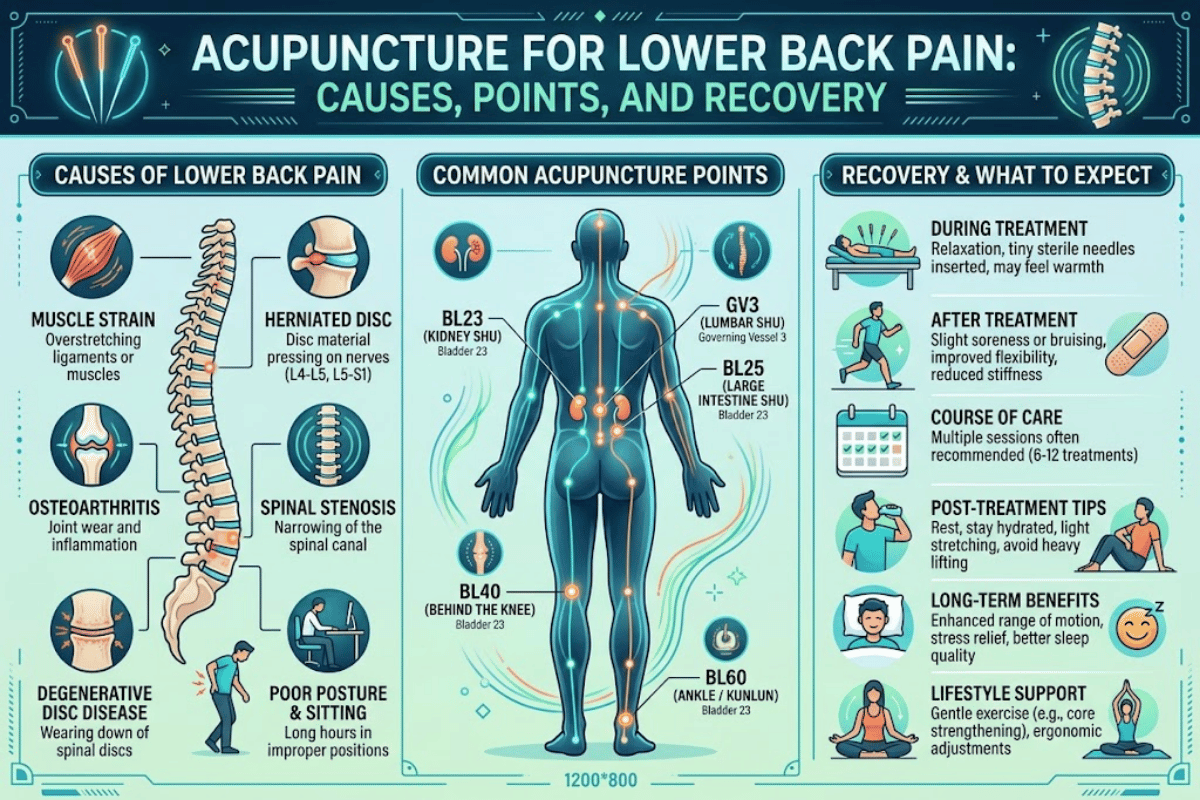
In Western medicine, lower back pain covers any painful pathology of the structures that make up your core — muscles, bursae, intervertebral discs, vertebrae, nerve roots, and facet joints. Frequent offenders include muscle/ligament strain, herniated or bulging disc, sciatica (pain in the distribution of the sciatic nerve, generally from disc herniation or piriformis engorgement), spinal stenosis, degenerative disc disease, and ergonomic and postural injury. The difference between acute (less than 4 weeks) and chronic pain (more than 12 weeks), determines what kinds of treatment options are avaialble – the chronic category where acupuncture has the most evidence.
Traditional Chinese Medicine: patterns and Qi flow
TCM does not start with the structure that hurts. It looks at the pattern of imbalance that allowed the pain to settle in. Four patterns repeatedly appear in chronic lower back cases:
- Kidney-Yang deficiency — a persistent dull ache, worse with cold and fatigue, often accompanied by cold extremities and weak knees. The classic pattern in older adults and the framework Tong Ren Tang practitioners most often see in chronic presentations.
- Cold-damp invasion — heavy, stiff pain that aggravates in cold or rainy weather and after sitting on cold surfaces. UAE patients often present this pattern after prolonged exposure to aggressive air conditioning.
- Qi stagnation — sharp, moving pain linked to emotional stress, often with muscle tightness across the lower back and hips.
- Blood stasis — fixed, stabbing pain at a specific point, often following injury or surgery, that worsens at night and resists massage.
The two views are not in conflict. A herniated disc (Western diagnosis) frequently presents as Kidney-Yang deficiency with Blood stasis (TCM pattern), and the acupuncture treatment plan is shaped by the TCM pattern even when the imaging diagnosis is Western. This pattern-based logic explains why two patients with the same MRI report can receive quite different acupuncture point selections.
💡 Key takeaway
Western diagnosis tells you which tissue is damaged. TCM diagnosis tells you why your body has not healed it. A skilled practitioner uses both.
Does Acupuncture Really Work for Lower Back Pain? What 2025 Research Shows
Yes — for chronic low back pain, the evidence published since 2024 is the strongest it has ever been. Acupuncture is recommended as a first-line nonpharmacologic treatment option by the American College of Physicians, a major National Institutes of Health-funded randomized trial published in September 2025 found that acupuncture provided sustained 12-month benefit in older adults, and a separate 2024 trial in JAMA Internal Medicine showed real acupuncture significantly outperforms sham acupuncture for chronic sciatica from herniated disc.
How Effective Is Acupuncture for Chronic Low Back Pain?
Three pieces of recent evidence anchor the answer.
1. The NIH BackInAction trial (BACPAC, 2025). Funded by the NIH HEAL Initiative through the National Center for Complementary and Integrative Health, the BackInAction study enrolled 800 older adults aged 65 and older with chronic low back pain — focusing on a population for which back pain in older adults remains a leading cause of disability. Participants were randomized into three groups: usual medical care alone, usual care plus up to 15 acupuncture treatments over 3 months, and usual care plus the standard course followed by 6 maintenance sessions. At both the 6-month and 12-month assessments, the researchers found that acupuncture groups showed greater reductions in pain-related disability and pain intensity than the usual-care group, along with fewer anxiety symptoms (DeBar et al., JAMA Network Open, 2025).
“Of the different treatments we have for chronic low back pain, most have a somewhat modest effect. They often reduce pain by about a third at best. Our clinical results suggest that acupuncture is working as well as many things that are more familiar to people. We found that the size of this effect, while modest, was positive and sustained.”
2. The Tu 2024 sciatica trial. A multicenter randomized trial across six tertiary hospitals in China enrolled 216 patients with chronic sciatica from herniated disc. Participants received either 10 sessions of real acupuncture or 10 sessions of sham acupuncture over 4 weeks. At week 4, real acupuncture reduced leg pain by 30.8mm on a 100mm visual analog scale, versus 14.9mm for sham — a difference of 16mm (95% CI -21.3 to -10.6, p<.001). The benefit persisted through week 52 (Tu et al., JAMA Internal Medicine, 2024). Sham-controlled trials are the gold standard for ruling out placebo, and this one rules it out cleanly.
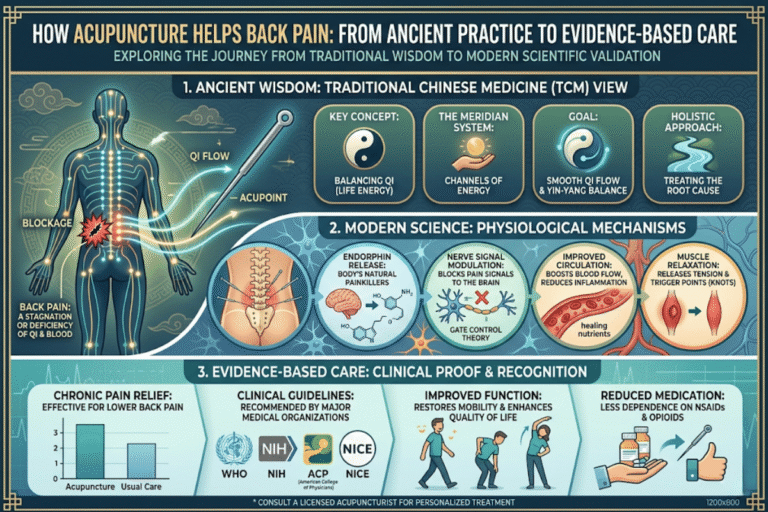
3. The ACP 2017 clinical practice guideline. The American College of Physicians lists acupuncture among first-line nonpharmacologic options for chronic low back pain, alongside exercise, multidisciplinary rehabilitation, mindfulness-based stress reduction, tai chi, and yoga (Qaseem et al., Annals of Internal Medicine, 2017). One honesty note: the ACP rated the underlying evidence quality as “low” and noted that acupuncture “results in moderate improvement in pain for up to three months after it is performed, but it does not appear to improve function.” That nuance matters. The 2025 BACPAC trial — published 8 years after the guideline — addresses both gaps directly by showing 12-month durability and physical function gains.
The 15-Session Rule — A Practical Dosing Heuristic from BACPAC 2025One Reddit user with chronic back pain wrote that “acupuncture didn’t work for me — had 3 sessions with no results.” That experience is common, and it is also a measurement problem. The BackInAction trial protocol was 15 sessions over 12 weeks. Three sessions is not a fair test of acupuncture for chronic pain. If you are evaluating whether acupuncture is helping you, use the 15-session benchmark before drawing conclusions.
Is Acupuncture Right for Your Lower Back Pain? — Decision Framework
Evidence supports acupuncture across most chronic lower back pain presentations, but the right starting point depends on your specific situation.
| Your situation | Best starting approach |
|---|---|
| Acute pain (under 4 weeks), muscle strain | Rest, gentle movement, NSAIDs short-term. Acupuncture as adjunct, not first move. |
| Chronic non-radicular low back pain (12+ weeks) | Acupuncture as first-line per ACP guideline. Plan a 15-session course. |
| Sciatica from herniated disc (no progressive deficit) | Acupuncture supported by Tu 2024 RCT. Combine with imaging review and physiotherapy. |
| Disc herniation with progressive weakness or numbness | Medical evaluation first to rule out surgical indication. Acupuncture as adjunct only. |
| Pregnancy-related lower back pain | Acupuncture by a practitioner trained in obstetric protocols (avoiding LI4, SP6, BL60, GB21, CV3). |
| Adults aged 65+, multiple medications | Acupuncture especially attractive — better safety profile than additional pain medication (BACPAC 2025). |
How Acupuncture Relieves Lower Back Pain — The Mechanism

Two explanations exist for how acupuncture works, and they are not in competition. The TCM explanation is older and shaped how points are selected. The biomedical explanation is newer and describes what happens at the tissue and nervous-system level after the needle is inserted.
How Does Acupuncture Work for Lower Back Pain?
From the TCM perspective, acupuncture involves the insertion of fine needles into the skin at specific points along meridians — channels through which Qi (the body’s animating energy in TCM) flows. When Qi stagnates, pain is the result. Stimulating the right points — particularly the Bladder and Governing Vessel meridians that traverse the lower back — restores the flow and resolves the local stagnation that the pattern diagnosis identified.
From the biomedical perspective, the modern science is less mystical and well documented. Acupuncture is an ancient practice originating in traditional East Asian medicine, and contemporary acupuncture studies have mapped several pathways through which acupuncture could reduce pain. According to the National Center for Complementary and Integrative Health, acupuncture stimulates sensory nerve fibers, the spinal cord, and brain regions involved in pain regulation. The effect is mediated through several mechanisms: needle stimulation triggers the release of endogenous opioids (the body’s own pain-relieving chemicals), serotonin, norepinephrine, and orexin (Lin et al., PMC, 2022); modulates the autonomic nervous system to reduce inflammation (Li et al., Frontiers in Neuroscience, 2022); and engages descending pain inhibition pathways from the brain to the spinal cord. Functional MRI studies show measurable changes in pain-processing regions of the brain during and after acupuncture sessions.
📐 Engineering Note — Why “Fine Needles” Means SomethingAcupuncture needles measure 0.18–0.30mm in diameter — roughly one-tenth the diameter of a hypodermic injection needle (1.27mm for an 18-gauge). Needles are sterile, single-use, and made of stainless steel. Because they are so thin, most patients report only a dull ache or pressure sensation (called De Qi in TCM), not the sharp prick associated with medical injections.
One common misconception is that acupuncture is placebo because the points “are not real anatomical structures.” Sham-controlled trials such as Tu 2024 directly test this hypothesis. When researchers compare real acupuncture (correct points, correct depth) against sham acupuncture (wrong points or shallow non-penetrating needles), the real procedure consistently outperforms sham for chronic pain — the placebo hypothesis does not hold up.
Key Acupuncture Points Used for Lower Back Pain
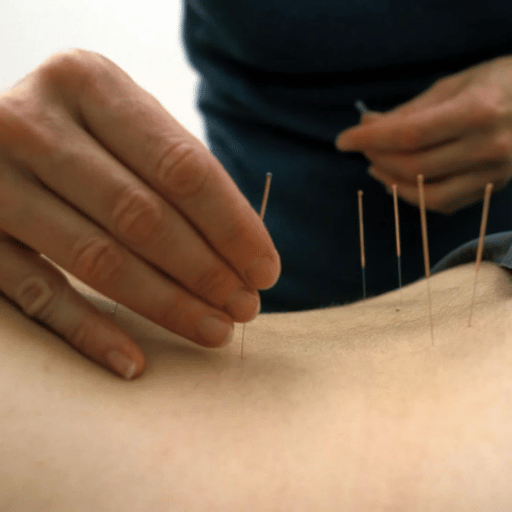
An acupuncturist treating lower back pain combines local points (on the back near the painful area), distal points (on the limbs, connected to the back via meridian theory), and pattern-specific points based on the TCM diagnosis. Five points appear in almost every chronic low back protocol.
- BL23 — Shenshu (肾俞, “Kidney Transporter”) — Located on the lower back at the level of the L2 vertebra, 1.5 cun lateral to the spine. The key point for issues rooted in Kidney-Yang deficiency, which underlies most chronic back pain presentations.
- GV3 — Yaoyangguan (腰阳关, “Lumbar Yang Gate”) — On the midline of the lower back, in the depression below the L4 spinous process. Warms Yang and disperses cold-damp patterns; useful in winter or for cold-sensitive patients.
- GV4 — Mingmen (命门, “Gate of Vitality”) — On the midline below the L2 spinous process. Strengthens Kidney-Yang and relieves chronic lumbar weakness.
- BL25 — Dachangshu (大肠俞, “Large Intestine Transporter”) — Bilateral, 1.5 cun lateral to the spine at L4. Useful for lumbar stiffness and often added when sciatica or hip referral pain is present.
- BL40 — Weizhong (委中, “Bend Middle”) — At the midpoint of the popliteal crease behind the knee. The classical TCM saying is “for low back disorders, seek BL40” — a distal point used for lumbar pain over centuries (Sudhakaran, 2021).
For a visual overview with anatomy illustrations, depth specifications, and combinations for upper-, mid-, and lower-back pain, browse our complete acupuncture points for back pain guide. The points selected in any session will vary based on your individual TCM pattern diagnosis — this list is the common backbone, not a fixed prescription.
What to Expect — Your First Acupuncture Session for Lower Back Pain
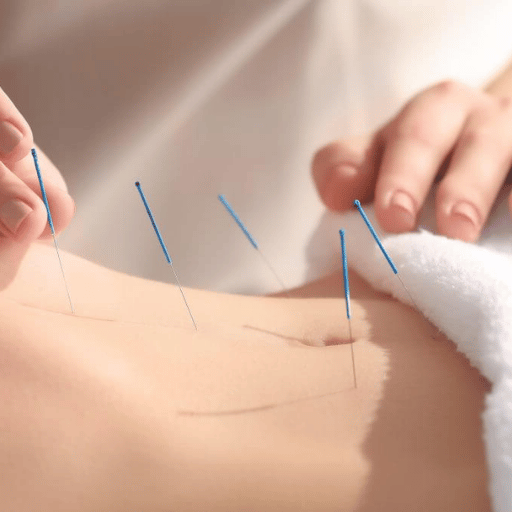
A first session at a properly trained TCM clinic runs longer than follow-ups because of the intake. Tong Ren Tang’s TCM back pain treatment program, for example, follows the diagnostic protocol Beijing Tong Ren Tang has refined over more than three centuries: tongue observation (color, coating, shape), pulse reading at three positions on each wrist, and a detailed intake covering pain history, sleep, digestion, energy levels, cold/heat preferences, and emotional state. This is what produces the TCM pattern diagnosis that drives point selection.
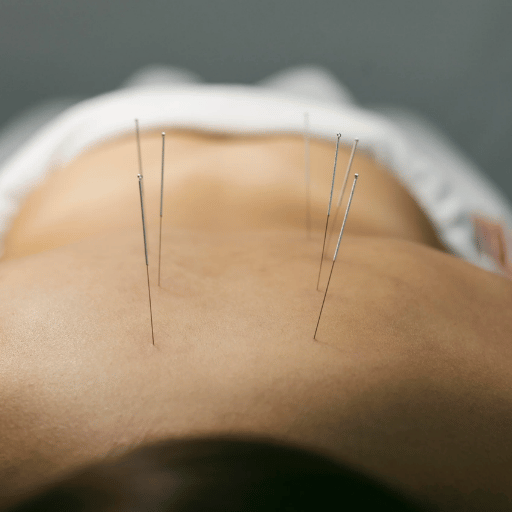
Following the diagnosis, treatment begins. Patients receive acupuncture lying face-down on the treatment table. The acupuncturist palpates the lower back to verify each point location, then inserts 8 to 16 fine, sterile, single-use needles. Most patients report no sensation at insertion, or only a brief dull pressure. The needles are retained for 20 to 30 minutes — many patients drift off to sleep during this period, which is part of why acupuncture is also associated with reduced anxiety in the BACPAC trial. For cold-damp patterns, practitioners may add a mild heat lamp or moxibustion (burning of mugwort herb above the point); for stubborn cases, mild electrical stimulation (electroacupuncture) may be applied.
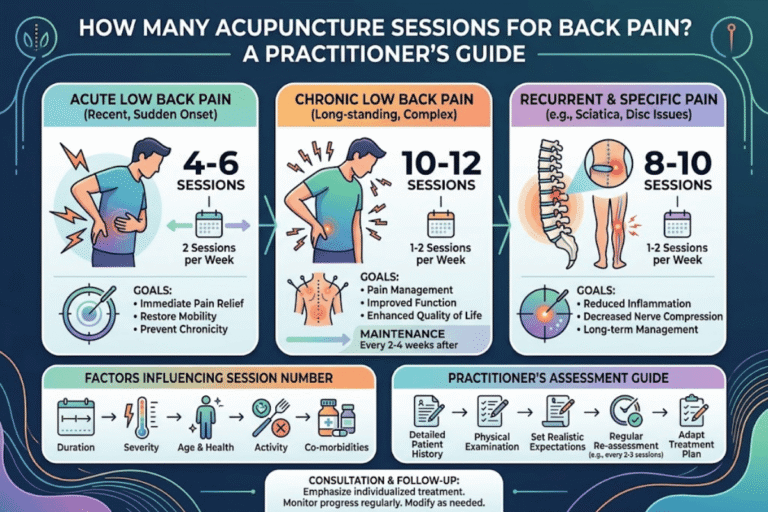
How Many Acupuncture Sessions Are Needed for Lower Back Pain?
The most rigorously studied protocol is the BackInAction (BACPAC) standard: up to 15 acupuncture treatments over 3 months, with optional maintenance sessions afterwards (NIH BACPAC, 2025). In practice, patients usually begin with 1–2 sessions per week for the first 4–6 weeks (when noticeable change tends to appear), then taper to weekly and finally biweekly as symptoms stabilize. Most patients who feel no improvement by session 5–6 benefit from a treatment-plan reassessment rather than abandoning the approach altogether — under-dosing produces the “3 sessions, no result” stories often seen online and is the most common reason for premature failure.
- ✔Wear loose-fitting clothes that expose your lower back, knees, and ankles
- ✔Eat a light meal 1–2 hours beforehand — fasting can cause light-headedness
- ✔Bring imaging reports (MRI, CT, X-ray) and your current medication list
- ✔Set aside 60–75 minutes for the first visit and 45–60 for follow-ups
- ✔Avoid vigorous exercise or alcohol for 24 hours after the session
Recovery Journey — Timeline, Lifestyle Tips, and When to Seek Further Care
Recovery from chronic lower back pain through acupuncture is a gradual process that runs in parallel with the treatment course. It is not a single “before-and-after” moment but a series of small reductions in pain intensity, stiffness, and the disability that comes from avoiding everyday movement.
| Phase | What patients commonly report |
|---|---|
| Sessions 1–3 | Initial relaxation and mild relief lasting 1–2 days post-session. Some patients report transient soreness. |
| Sessions 4–8 | Sustained reduction in baseline pain. Improved sleep and reduced morning stiffness usually appear here. |
| Sessions 9–15 | Consolidation. Pain-related physical limitations measurably decrease (the BACPAC primary outcome). |
| 3–12 months post-course | BACPAC follow-up showed both pain reduction and improved physical function persisting through 12 months in older adults aged 65 and older, with the maintenance-session group holding the gain longer. |
Lifestyle companions to acupuncture
Acupuncture works best as part of a wider recovery plan rather than as a stand-alone therapy. Daily walking — the simplest and most evidence-supported movement intervention — keeps the lumbar muscles activated. Gentle extension and core-stability exercises (the McKenzie protocol is widely prescribed) maintain the gains between sessions. For patients with cold-damp patterns, applying gentle heat to the lower back at home, sleeping on a warm side rather than on cold tile floors, and adding warming foods to the diet (ginger, cinnamon, lamb, slow-cooked stews) echo the same TCM logic the treatment itself is built on. Practitioners sometimes prescribe moxibustion sticks for self-application at BL23 for patients who can do so safely.
⚠️ When to stop self-care and see a doctor (red flags)
Acupuncture is appropriate for most chronic lower back pain. However, the following symptoms require urgent medical evaluation rather than continued conservative care: loss of bowel or bladder control, saddle anesthesia (numbness in the area that would touch a saddle), progressive weakness or numbness in one or both legs, unexplained weight loss alongside back pain, fever with back pain, a history of cancer with new back pain, or night pain that is not relieved by changing position.
Safety, Side Effects, and Who Should Avoid Acupuncture
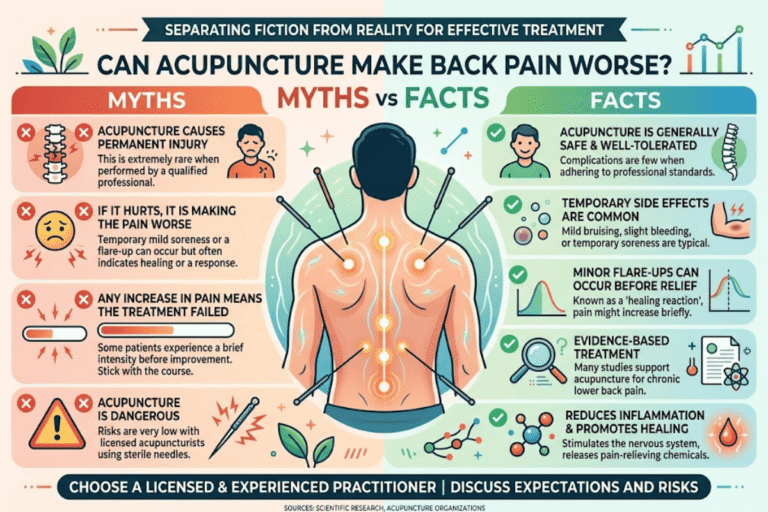
Acupuncture’s safety profile is one of its strongest features. In the BackInAction trial, the research team reported “very little in the way of adverse effects” across 800 older adults receiving up to 21 sessions each. The most common minor effects are localized bruising, brief soreness at needle sites, and mild post-session fatigue, all of which fade within a day or two.
✔ Generally safe for
- Chronic non-specific lower back pain
- Sciatica without progressive neurological deficit
- Older adults preferring fewer medications
- Patients with mild-to-moderate disc issues
- Pregnant patients (with obstetric-trained practitioner)
⚠ Caution or avoid if
- Bleeding disorders or on anticoagulant therapy without physician approval
- Severe needle phobia
- Pacemaker, if electroacupuncture is being considered
- Active local skin infection at planned point sites
- Pregnancy at points often contraindicated (LI4, SP6, BL60, GB21, CV3)
The five “forbidden points” — LI4 (Hegu), SP6 (Sanyinjiao), BL60 (Kunlun), GB21 (Jianjing), and CV3 (Zhongji) — are traditionally contraindicated in pregnancy because of their potential to stimulate uterine contractions. A 2015 review of controlled clinical trials found that needling at these points did not actually increase the risk of adverse pregnancy outcomes when performed by trained obstetric acupuncturists (Carr, PMC, 2015), but the prudent default is still to avoid them during pregnancy unless the practitioner has obstetric training and a specific reason.
Choosing a qualified practitioner matters more than choosing the perfect point selection. In the United States, look for credentials from the National Certification Commission for Acupuncture and Oriental Medicine (NCCAOM) — the national certification commission for acupuncture and oriental medicine or your state’s acupuncture board. In the UAE, verify that the clinic and practitioner are licensed by the Department of Health (DOH) or Ministry of Health and Prevention (MOHAP) for traditional and complementary medicine.
Frequently Asked Questions
Q: Does acupuncture really help lower back pain?
View Answer
The evidence for chronic low back pain is now convincing. The 2025 NIH BackInAction trial (n=800 older adults) and the 2024 Tu et al sciatica trial (n=216) both documented statistically significant effects beyond sham acupuncture or usual care alone. Acupuncture is included as a first-line nonpharmacologic treatment by the American College of Physicians. The effect is characterized as moderate and durable — not disease-eradicating, but a genuine and sustained reduction in pain and disability.
Q: Can acupuncture worsen or cause lower back pain?
View Answer
A tiny proportion of patients may feel short lived post-needling soreness localized to the inserted points, but this disappears after 24-48 hours and is entirely different from exacerbation of the original pain. True flare-ups are extremely rare and tend to resolve spontaneously within short order. If pain is significantly aggravated after treatment and the aggravation persists, contact your practitioner—not only may needle placement need changing, but re-assessment of the original problem might also be called for.
Q: Is acupuncture safe during pregnancy for back pain?
View Answer
Yes, when performed by a practitioner specifically trained in obstetric acupuncture. Pregnancy-related back pain is one of the conditions acupuncture is most commonly used for during the second and third trimesters. Practitioners avoid the traditionally restricted points (LI4, SP6, BL60, GB21, CV3) and adjust positioning for comfort. Always inform your acupuncturist of your pregnancy at the first visit and confirm their obstetric training before booking.
Q: Does Medicare or insurance cover acupuncture for lower back pain?
View Answer
Since 2020, U.S. Medicare has covered acupuncture for chronic low back pain, allowing up to 12 visits in 90 days plus 8 additional visits if improvement is documented. Most private insurers in the U.S. also cover acupuncture for chronic pain, but coverage varies widely. In the UAE and other markets, coverage depends on the specific insurance plan and whether the practitioner is in-network. Call your insurer with the CPT codes (97810, 97811, 97813, 97814) to confirm.
Q: Can I combine acupuncture with physical therapy or chiropractic care?
View Answer
Yes — combining acupuncture with physical therapy is common and often complementary. Acupuncture addresses pain modulation and the TCM pattern; physical therapy addresses strength, mobility, and movement habits. Both targets matter for sustained recovery. Avoid scheduling intense PT or chiropractic adjustments on the same day as acupuncture so the body has time to respond to each input separately. Coordinate with both providers so each knows what the other is doing.
Q: How soon after an acute back injury can I start acupuncture?
View Answer
Acupuncture can be started within the first week of an acute injury once any urgent medical evaluation has ruled out fracture, severe disc herniation with neurological signs, or other red-flag conditions. For acute presentations, sessions are usually shorter and gentler, and practitioners often favor distal points to avoid the inflamed area directly. The strongest evidence base remains for chronic pain, but acupuncture can play a useful role earlier as well.
Ready to address your lower back pain at the root?
Book a TCM diagnostic consultation with a Tong Ren Tang UAE acupuncturist. We will identify your specific pattern, design a session schedule based on the BACPAC 15-session framework, and coordinate with your existing medical team.
About This Analysis
This guide on acupuncture for lower back pain was prepared by the Tong Ren Tang UAE clinical team and compared against the most recent peer-reviewed evidence — including the September 2025 NIH BackInAction trial and the October 2024 Tu et al sciatica trial in JAMA Internal Medicine. Our acupuncturists practice within the lineage Beijing Tong Ren Tang has refined for more than 350 years, while honoring contemporary evidence-quality assessments such as the ACP guideline’s nuance on functional outcomes. Where the research is strong we say so; where it is moderate or limited, we say that too.
References & Sources
- Acupuncture treatment improves disabling effects of chronic low back pain in older adults — National Institutes of Health, September 12, 2025
- Acupuncture for Chronic Low Back Pain in Older Adults: A Randomized Pragmatic Clinical Trial (BackInAction / BACPAC) — DeBar LL et al, JAMA Network Open, 2025
- Acupuncture vs Sham Acupuncture for Chronic Sciatica From Herniated Disk — Tu JF et al, JAMA Internal Medicine, 2024
- Noninvasive Treatments for Acute, Subacute, and Chronic Low Back Pain: A Clinical Practice Guideline From the American College of Physicians — Qaseem A et al, Annals of Internal Medicine, 2017
- Acupuncture: Effectiveness and Safety — National Center for Complementary and Integrative Health (NIH)
- Acupuncture for Low-Back Pain — Sudhakaran P, Medical Acupuncture, 2021
- Understandings of Acupuncture Application and Mechanisms — Lin JG et al, American Journal of Chinese Medicine, 2022
- The autonomic nervous system: A potential link to the efficacy of acupuncture — Li YW et al, Frontiers in Neuroscience, 2022
- The safety of obstetric acupuncture: forbidden points revisited — Carr DJ, Acupuncture in Medicine, 2015
- Acupuncture safe and effective for chronic low back pain in older adults — Kaiser Permanente Washington Health Research Institute, 2025
- Acupuncture for pain relief: How it works and what to expect — Harvard Health Publishing, 2025
Related Articles
- Acupuncture Points for Back Pain — A Complete Visual Guide — point-by-point anatomy, depth specifications, and combinations
- Tong Ren Tang TCM Back Pain Treatment Program — clinical service overview and booking