Get in Touch with Tongren Tang Gulf


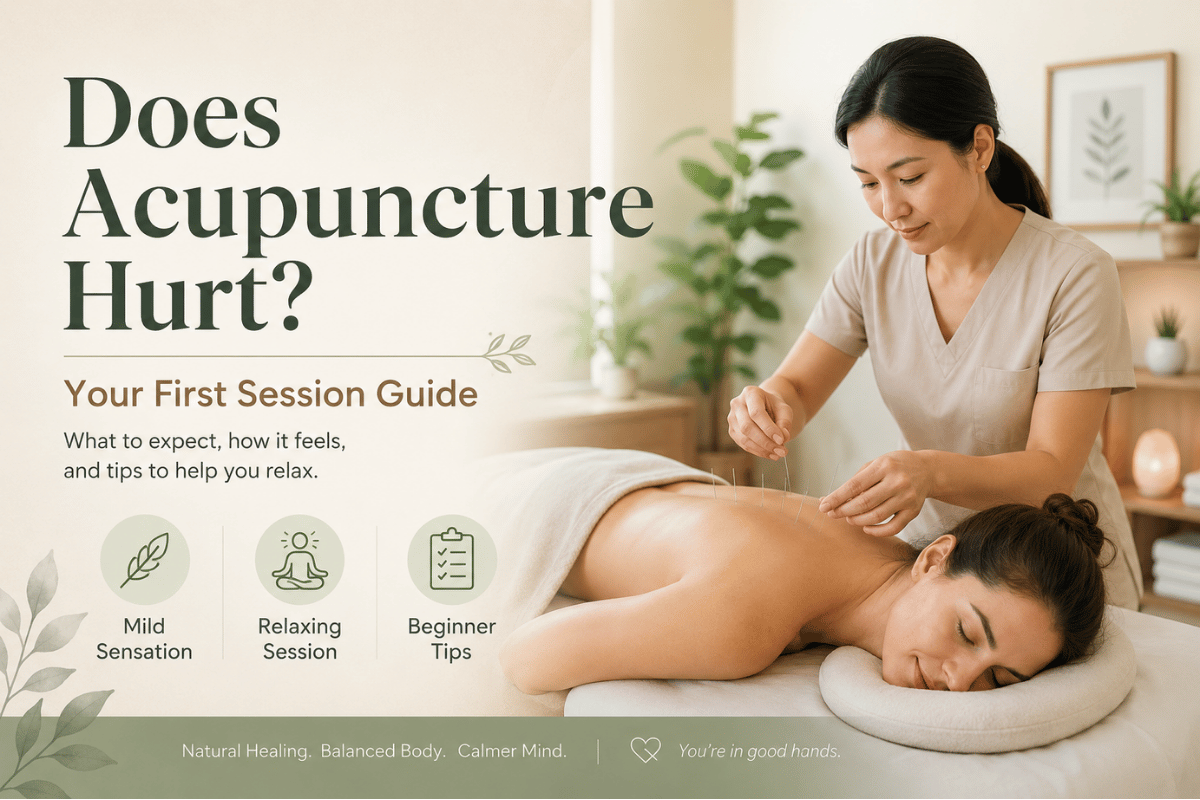
“Does acupuncture hurt?” is the question on almost every first-timer’s mind when booking that very first appointment, and for most people the honest answer is no. Acupuncture needles are far thinner than injection needles, so most often you only feel a mild pricking sensation, perhaps followed by an ache that feel heavy and dull. This article walks needle-curious but needle-hesitant newcomers through exactly how acupuncture feels, what to expect in a first session, how to prepare, and what to do if you really don’t like needles.
The short answer: Acupuncture usually does not hurt the way an injection or blood draw does. You feel a quick prick as each hair-thin needle goes in, then often a dull ache or heaviness called deqi — a sensation acupuncturists actually want. In one pediatric study, patients rated acupuncture pain at just 1.3 out of 10, and 58% reported no pain at all during their first session.
Key points at a glance
- You’ll often experience the following after a point has been stimulated but is only a warning sign if a sharp, burning or stabbing sensation.
- 0.16-0.25mm and as thin as a human hair. A hollow needle used for an injection is 0.4mm and 0.8mm in thickness.
- Typical treatment lasts 30-60 minutes. The amount of needles inserted and remaining for the treatment varies between 5 – 20. They can stay in the body for anything from 10 to 30 minutes.
- 3.75% of recipients will experience needle site pain and bleeding and 4.67% will experience other minor side effects.
- From super fine needles, to a full range of needle-free options, here’s something for everyone.
Quick Specs: A First Acupuncture Session
| Needle thickness | 0.16–0.25 mm (solid filiform) — roughly a human hair |
| Needles per session | Typically 5–20 |
| Needle retention | 10–30 minutes |
| Whole first visit | 30–60 minutes (consultation + treatment) |
| Main sensation | Brief prick → dull/heavy “deqi” ache |
| Needle safety | Single-use, sterile, FDA-regulated (Class II) |
| In Dubai | Performed by DHA-licensed practitioners |
So, Does Acupuncture Hurt? The Honest Answer
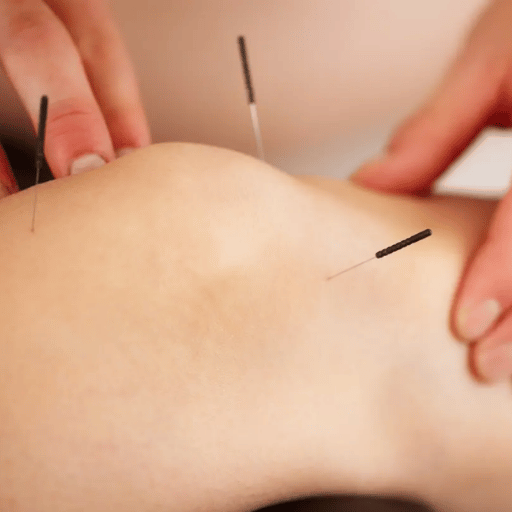
Acupuncture doesn’t necessarily feel painful in the way we associate pain with medical procedures. Each ultra-fine needle inserted by a licensed acupuncturist causes only a light prick or nothing at all, feeling considerably less painful than receiving a vaccination or a blood draw, as the needles are solid and only as thin as a strand of human hair, thus sliding between muscle groups rather than piercing them.
Recent research even found the average pain scores for first time young patients to be 1.3 out of 10. 58% reported zero pain during their first session, alongside feeling very relaxed, reduced anxiety, and even relief from existing pain. What patients do tend to describe instead is a unique sensation from the needles as they settle, and that’s exactly what we unpack next.
💡 Key takeaway
Rather than injection level trauma, you can expect mild pricking only. Should a needle cause sharp pain, always make sure to let your therapist know immediately so they can adjust it!
At our Tong Ren Tang clinic, what we see in practice is that the only real risk for a first-timer is the mistake of expecting injection-style pain; we reassure patients that the 1.3-out-of-10 figure matches what we see in the clinic day to day.
What Acupuncture Actually Feels Like: The 5-Sensation Spectrum
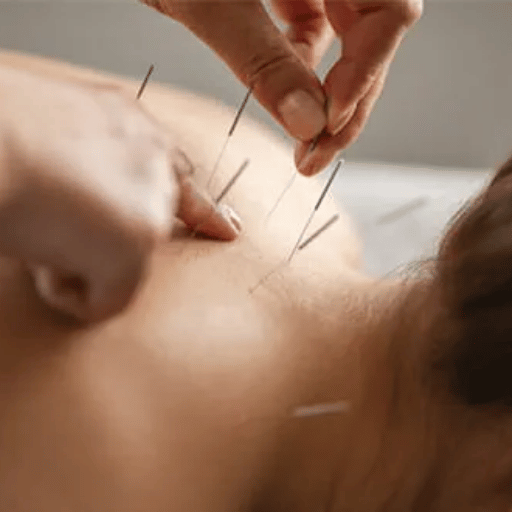
Most first-timers can’t quite name what they’re feeling on the table, so it helps to map it out beforehand. The 5-Sensation Spectrum below sorts the most common feelings into what each one actually is, how often it shows up, and whether it’s something to welcome or to flag for your acupuncturist.
| Sensation | What it is | How common | What it means |
|---|---|---|---|
| Quick prick | Needle passing the skin surface | Common, lasts 1–2 seconds | Normal; fades immediately |
| Dull ache | Deqi — the target sensation | Very common | Therapeutic; the point is “active” |
| Heaviness / pressure | Deqi variant | Common | Normal and desired |
| Tingling / warmth | Nerve and circulation response | Occasional | Usually fine; mention if intense |
| Sharp / burning | Not deqi | Uncommon | Tell your acupuncturist — adjust |
To put it simply, picture our client at the Dubai clinic who was face-down for several lower back points, felt light touches as the needles went in, and then felt a” heavy, warm pulling” where the third needle was inserted, – this ‘deqi’ is NOT damage. This was quickly followed by a drowsy feeling by minute 10 of the treatment. A very distinct and lasting sensation could be a sharp electric pulse; you then should indicate to your practitioner.
That’s often when many patients trip over another common misconception: the idea that any hint of aching means you need the needle pulled out. Actually, it’s quite the opposite. As explained below, the achy stuff is the working part, and it reflects how acupuncture works by prompting the body to release its own painkillers.
From what we see in practice, the patients who struggle most are the ones bracing for a sharp stab that never come; at our Dubai clinic we find that naming each sensation in advance, a prick, then a dull ache within a second or two, settles most of that first-visit tension.
Why It Doesn’t Feel Like a Shot: The Hair-Width Needle Test
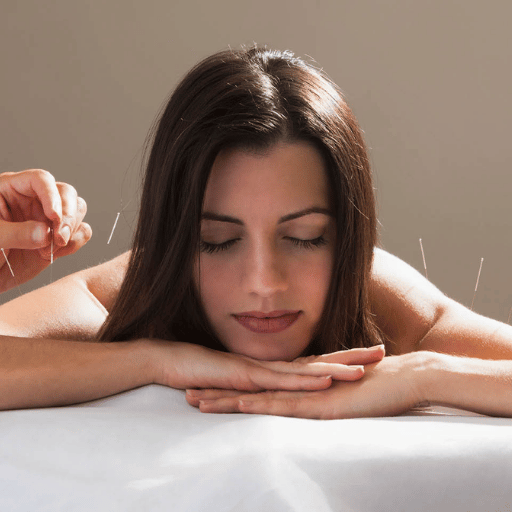
Here’s the quickest way to calm needle nerves, the Hair-Width Needle Test: just picture how thin these needles really are. An acupuncture needle is usually a solid wire about 0.16-0.25 mm wide (roughly 36-40 gauge) and 13-40 mm long, barely wider than a human hair. An injection needle, by comparison, runs 0.4-0.8 mm across, so you could line up two or three acupuncture needles within the width of a single injection needle.
| Feature | Acupuncture needle | Hypodermic (injection) needle |
|---|---|---|
| Diameter | ~0.16–0.25 mm | ~0.4–0.8 mm |
| Build | Solid wire | Hollow tube |
| Tip | Rounded, parts tissue | Beveled, cuts to draw/inject |
| What you feel | Light prick or nothing | Distinct sting / pressure |
Because there’s no fluid, and the needle’s rounded tip nudges skin cells open rather than cutting them, most people feel very little – or nothing – when a needle is inserted. Many acupuncturists will first gently tap a metal “guide tube” against the skin, which pre-taps your system and effectively diverts nerve attention, so the needle often slides in without you fully registering the sensation. Engineers have patented designs of those tubes that further soften the insertion shock. The point? A needle that read to most patients as little more than a tap, not a jab; a tool once associated with the fear of pain now offers sensations many describe as relaxing.
The mistake many first-timers make is picturing an injection-sized needle; because an acupuncture needle is only 0.16-0.25 mm of solid wire, the deep pressured sting you get from a 0.5 mm hollow needle simply isn’t a risk here.
Understanding “Deqi”: The Dull Ache That’s Supposed to Happen

Deqi – what it looks and feels like Deqi (“duh-chee”) is the sensation your acupuncturist is aiming for – a dull, heavy, spreading ache that may appear once a needle reaches the right depth. Deqi is actually a signal that the correct part of the body has engaged, not a symptom of injury or problem. Numerous peer-reviewed studies confirm that the appearance of dull pain, but not sharp pain, is beneficial for effective treatment and marks the presence of deqi.
Does acupuncture feel good?
Yes, for many people. Once the needles are placed, that area releases the body’s own painkillers, endorphins, and many patients drift into a calm, sedated state. The dull deqi ache is often described as “satisfying”, more like the deep pressure of a firm massage than the pain you associate with an injection.
That relaxation is part of why acupuncture can be a valuable part of therapy for stress and anxiety.
It bears noting that there’s a twist on how it registers with your body. You typically feel a sharp stab first and then the deeper ache when you experience regular pain. In contrast, it has been shown that when the body experiences acupuncture, dull pain will come before and then more piercing pain follows, but only if there hasn’t been engagement with the acupoint at a deeper level of body and spirit. So feel assured-you only need be concerned by sharp, electric sensations.
Day to day in practice, the mistake our Tong Ren Tang acupuncturists most often correct is a patient treating this dull ache as a problem; because deqi means the point has engaged, our acupuncturists simply confirm it and leave the FDA-regulated single-use needle in for its 10-30 minutes.
Which Areas Hurt More? Sensitive Points vs Comfortable Ones
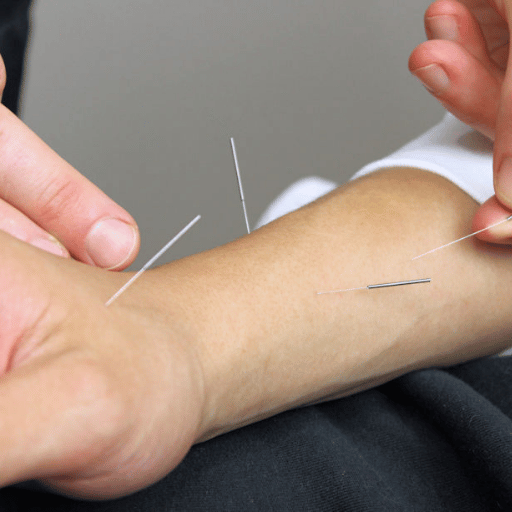
Some areas of the body just don’t have a lot of nerve endings or fleshy layers, and a little foreknowledge may ease some anticipatory anxiety. Back, shoulders, thighs and calves feel about like a gentle pressure to most people, or nothing to some. Areas where skin is thin over nerves or bone were more frequently described as ‘sharp.‘ Below is an illustration of the 10 most-requested spots on a very basic sensitivity spectrum that can help you be mentally prepared.
| Body area | Sensitivity tier | What you’ll likely feel |
|---|---|---|
| Lower back | Low | Dull ache, often nothing at all |
| Shoulders & upper back | Low | Heaviness, mild ache |
| Thighs | Low | Barely noticeable |
| Calves | Low–Moderate | Dull ache, occasional tingle |
| Upper arms | Low | Light prick, then calm |
| Abdomen | Low–Moderate | Pressure or warmth |
| Hands (web of thumb) | Moderate | Brief, stronger ache |
| Feet | Moderate | Quick prick, can tingle |
| Fingertips / near nails | High | Sharper, but very brief (1–2 sec) |
| Face & scalp | Moderate–High | Light but noticeable prick |
| Ears (auricular) | Moderate | Quick sting that settles fast |
At such a sensitive juncture even any sting isn’t too prolonged-an instant or two then goes quiet again. if the needle catches a minute nerve fibre or a vessel on the skin you’ll probably feel one more prick like this which should go once more; a quick solo prick not really worry something! an action which most people use is just that on: should a needle or needles be persistent, mention it to the Acupuncturist and she can move them or not place them. You by no means really have to take discomfort.
From what we see in practice, the spots patients flag as a problem are almost always the hands, feet and fingertips; because the skin there sit close to bone with more nerve endings, a brief 1-2 second sting is normal, and our acupuncturists reposition a point the moment it feel too sharp.
Your First Acupuncture Session, Step by Step
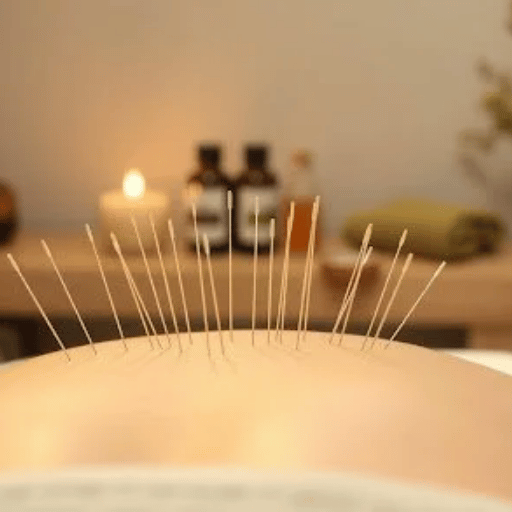
Having an idea about the order of events is half of what makes a first trip so stressful – it goes something like this, from you striding in to you striding out again. Most of the jitters disappear once you can visualise this.
- Consultation (10-20 min). The acupuncturist questions your symptoms, health history and medication taken; examines your tongue and pulse (common in traditional Chinese medicine).
- Positioning. You lay in a relaxed position, generally down or back. Most first-time patients prefer to lay down on their back so they’ve less visual contact with the needles.
- Insert the needle (a few minutes). The practitioner taps in five to twenty-some thin needles. This is the bit you were nervous about-and typically the most forgettable part.
- Retention (10-30 min) Needles are retained and you’re left alone. Most will relax profoundly, some will even nod off to sleep.
- Removal and aftercare advice. The needles come out comfortably and in no time, you receive advice on how to care for yourself for the following days or two.
How long does an acupuncture session take?
An initial acupuncture appointment usually range from 30 minutes to 1 hour long (sometimes as much as 90 minutes) because it includes the intake conversation. For most of that time the needles aren’t even in place; they’re retained only 10-30 minutes on a first session. Follow-up appointments are shorter, since that intake conversation is already done.
We don’t rush a first visit at our Tong Ren Tang clinic in Dubai Healthcare City, so there’s time to answer every “is this normal?” question as it comes up.
Here’s what we see in practice at our Tong Ren Tang clinic: the biggest mistake first-timers make is bracing for pain that never comes; because the only real risk is overthinking the unknown, we walk every patient through all five steps before placing the first of 5-20 needles, which stay in for 10-30 minutes.
How to Prepare So It Hurts Less
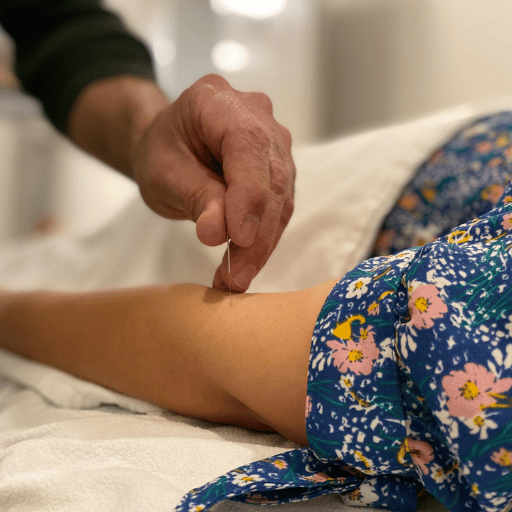
Three small changes before you arrive make a real difference in how much acupuncture hurts, and they head off the most common problem on a first visit, lightheadedness or feeling faint: eat something beforehand, stay hydrated, and go easy on alcohol. The single biggest one is simply not turning up on an empty stomach.
What should you not do before acupuncture?
Turn up at the session full, well hydrated and avoiding alcohol I know that people are on the go all day, but an empty stomach causes people to feel dizzy more than any other cause in a session so, eat 1 to 2 hours before hand.
- Eat a little meal 1-2 hours prior; don’t arrive hungry.
- Guzzling water: Avoid going boozy and keep your caffeine intake low before.
- Wear comfortable, loose-fitting clothes that make points on your lower legs and arms accessible.
- Flag anything in relation; Pregnancy, use of blood thinners, a bleeding disorder, or pacemaker.
- Let your provider know that you’re nervous-it directly affects how gently they work.
“The patients who have the smoothest first session are the ones who ate something, drank water, and told us up front that they were nervous. That single sentence lets us use finer needles and fewer points from the start.”
What You’ll Feel Afterward: Soreness and Side Effects
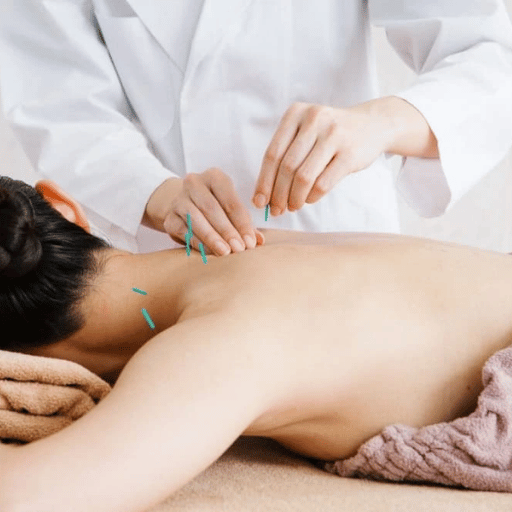
Mild soreness, a little tiredness, or pleasant relaxation for a day or so is typical after an acupuncture treatment, and these side effects are usually mild and short-lived. In a systematic review of prospective studies, only about 3.75 percent of people reported pain at the needle-insertion site, and 4.67 percent reported mild bleeding. A tiny bruise at the insertion spot usually fades within a few days.
✔ Normal (no action needed)
- Mild soreness at needle sites
- A small bruise or pinpoint bleeding
- Drowsiness or deep relaxation
- Brief lightheadedness on standing
⚠️ Call a doctor
- Chest pain or breathlessness
- Spreading redness, swelling or fever
- Numbness or weakness that doesn’t fade
- A bruise that keeps enlarging
To aid recovery, rest for the remainder of the day, continue to drink water, and avoid alcohol and high-intensity workouts. Our in-depth guide to acupuncture side effects breaks down what to expect.
Day to day, the soreness patients report in practice is mild and brief because the needles are so fine; in the systematic review only 3.75% felt needle-site pain, and at our clinic we reassure first-timers that a small bruise fading in a few days is nothing to worry about.
Scared of Needles? The Comfort-First Needle Plan
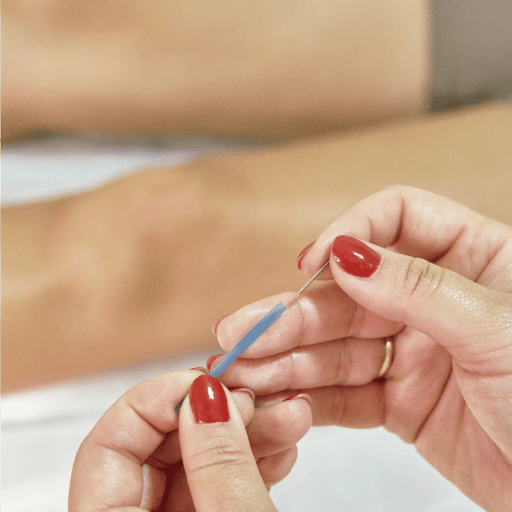
Needles aren’t everyone’s comfort zone, but they don’t have to be. The Comfort-First Needle Plan accommodates where you’re on the spectrum of needle-fear, offering various entry points into acupuncture medicine so you can build gradually and comfortably.
| If you are… | Ask your acupuncturist for… | Why it helps |
|---|---|---|
| Mildly nervous | Finer needles, fewer points, distal points on hands/feet/lower legs, guide tubes | Less to feel, and you stay in control |
| Moderately anxious | To lie face-down, slower insertion, fewer needles, paced breathing | You don’t watch, and your body stays calm |
| Truly needle-phobic | A needle-free start: acupressure, low-intensity electroacupuncture, or moxibustion | Get the benefits while you build trust |
If you’re not quite ready for even a single needle, that’s completely acceptable-we also use needle-free methods to offer you the same benefit of acupuncture medicine. These include moxibustion (warming acupuncture points with heat from herbs) and acupressure (using firm finger pressure on acupuncture points). Many patients new to treatment start here and opt for a single ultra-fine needle a few sessions later. As one client who dreaded needles remarked, the gentle warmth was “not even close to an injection” when their provider used face-down insertion during their first session to keep the process less visually overwhelming. Acupuncture is distinct from therapies that look similar; read our article to learn the differences between acupuncture versus dry needling.
From what we see in practice at our Tong Ren Tang clinic, the mistake is assuming needle fear rules acupuncture out; because the risk of one fine needle is so small, we start genuinely needle-phobic patients on acupressure and build up over 2-3 sessions of 30-60 minutes.
Is Acupuncture Safe? Single-Use Needles, Licensing and Dubai Standards
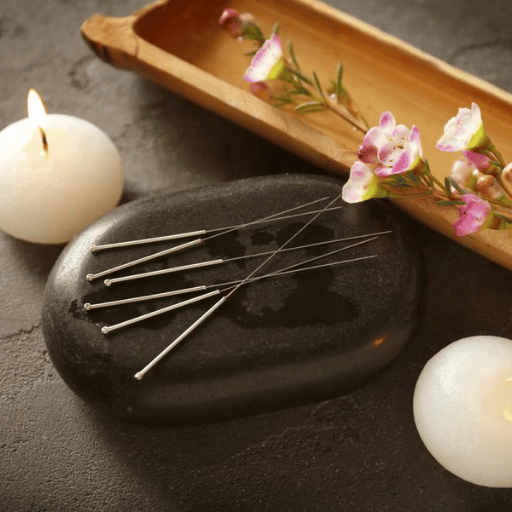
Acupuncture is exceptionally safe when performed by a licensed professional using sterile, disposable, single-use needles. In the U.S., acupuncture needles are classified as a Class II medical device by the Food and Drug Administration (FDA), requiring sterility, single-use application, and proper labeling. Reputable acupuncture providers will unseal a fresh needle for each point, preventing the spread of bacteria and reducing the risk of infection drastically.
Only two things separate a safe acupuncture session from a risky one: sterile single-use needles and a properly trained practitioner. The National Center for Complementary and Integrative Health cites poorly trained practitioners and unsterilized equipment as the usual culprits of the very rare serious adverse effects, with the majority of patients reporting no problems at all.
📍 In Dubai: acupuncturists must hold a licence from the Dubai Health Authority (DHA), which sets the qualifications and scope of practice for traditional and complementary medicine. When you book acupuncture in Dubai, confirming a DHA licence is the single most important check you can make. Our clinic at Tong Ren Tang in Dubai Healthcare City is DHA-licensed and uses single-use sterile needles for every patient.
What’s Changing in Acupuncture Comfort and Acceptance
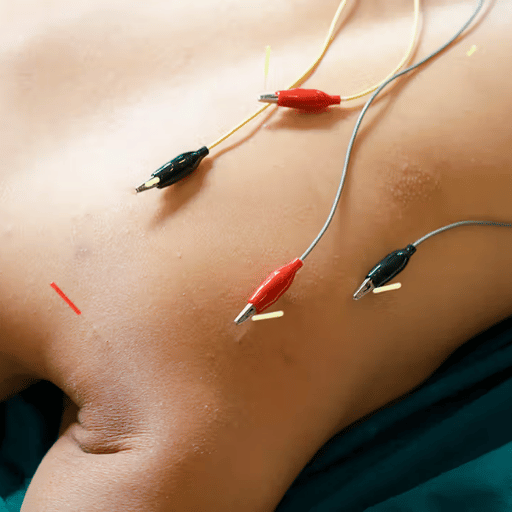
The biggest reason a first acupuncture visit is safer and more comfortable than a generation ago is a quiet standards shift: single-use, pre-sterilized disposable needles are now the industry norm. Before disposables, reusing needles was a major route for spreading serious illnesses like hepatitis.
That advance has all but eliminated systemic risks for a new patient, leaving a small bruise as the most likely “serious” effect.
This alongside the growing acceptance into pain management from mainstream medicine – major university hospitals offer acupuncture alongside standard treatment for back pain, migraine, chemotherapy pain and side effects normalize that first appointment, with greater clarity of expectation of what you’ll feel and whether you’re at risk. As for the market, disposable needles already make up the vast majority of those used worldwide, a directional sign of how completely the single-use standard has taken hold.
What this means for you: if you’re contemplating the first session at some point during 2026, the practical risk profile is much better than its public persona suggests – as long as you see a registered practice where a fresh needle is opened in front of you.
For first-timers this matters in practice at our Tong Ren Tang clinic: because reused needles once drove the main infection risk, the shift to single-use FDA-regulated needles is why a 2026 first visit at a licensed clinic carries little risk beyond a small 1-2 day bruise.
Frequently Asked Questions
Does acupuncture hurt more than getting a tattoo or an injection?
View Answer
No. The difference is stark: a tattoo needle repeatedly punctures the skin to deposit ink, and an injection needle is a thick hollow tube that forces fluid in, whereas an acupuncture needle is two to three times thinner and is a single solid wire placed once. Most patients feel far less than with either: a quick sting that fades in a second or two, then a mild dull ache, never ongoing pain.
What are the “4 golden rules” of acupuncture for a first-timer?
View Answer
In short: choose a certified practitioner using single-use needles, eat and hydrate beforehand so you do not feel faint, flag any sharp pain or fear so they can adjust, and rest the day after. Most first visits then feel comfortable.
What should you not do before acupuncture?
View Answer
Do not eat a heavy meal or drink alcoholic beverages on the day, since this will increase the likelihood of becoming lightheaded. Make sure not to engage in intense workouts prior to your appointment and be sure to wear loose clothing.
Does acupuncture actually feel good?
View Answer
For many people, it can. Once the needles are in, the body releases endorphins, so many patients feel deeply relaxed, some even falling asleep. The dull, heavy deqi sensation is usually comforting, more like a firm deep-tissue massage than pain.
Can I get acupuncture if I’m afraid of needles?
View Answer
Yes. Tell your acupuncturist you are afraid of needles so they can start with the finest needles, fewer points, and spots you cannot see. If that still feels like too much, you can begin needle-free with acupressure or moxibustion and build confidence first.
How many sessions before it stops feeling strange?
View Answer
Most people feel noticeably more at ease by the second or third session. The first visit carries the most novelty and nerves, which is part of why it can feel slightly more intense than the ones that follow. With each visit the prick and the deqi ache become more familiar, and many patients end up looking forward to the deep relaxation; practitioners usually suggest giving any course of treatment at least five sessions to judge the benefit fairly.
Curious but a little nervous? Let’s make your first session easy.
We aim to ensure all patients feel at ease through out our services with our DHA certified team, utilizing tiny, sterile hair-fine needles which allow tailoring sessions to each patients’ individual needs.
About This Guide
Our DHA-licensed acupuncturists here at the Tong Ren Tang clinic in Dubai Healthcare City share the advice they give needle-shy clients each week, informed by these modern, evidence-based clinical references on sensation and safety: The practice of acupuncture is a form of adjunctive (complementary) medicine; it isn’t intended to be a substitute for or replacement of medical advice/treatment of diagnosed conditions. Reviewed by the Tong Ren Tang TCM clinic team.
References & Sources
- Acupuncture: What To Know— Cleveland Clinic
- AcupunctureMayo Clinic
- Acupuncture: Effectiveness and SafetyNational Center for Complementary and Integrative Health (NIH)
- Does Acupuncture Hurt? A Retrospective Study on Pain and SatisfactionPMC / National Library of Medicine
- Acupuncture-Related Adverse Events: Systematic Review and Meta-Analyses— PMC / National Library of Medicine
- Characterization of Deqi Sensation and Acupuncture Effect— PMC / National Library of Medicine
- 21 CFR 880.5580, Acupuncture Needle— U.S. FDA / Electronic Code of Federal Regulations