Get in Touch with Tongren Tang Gulf


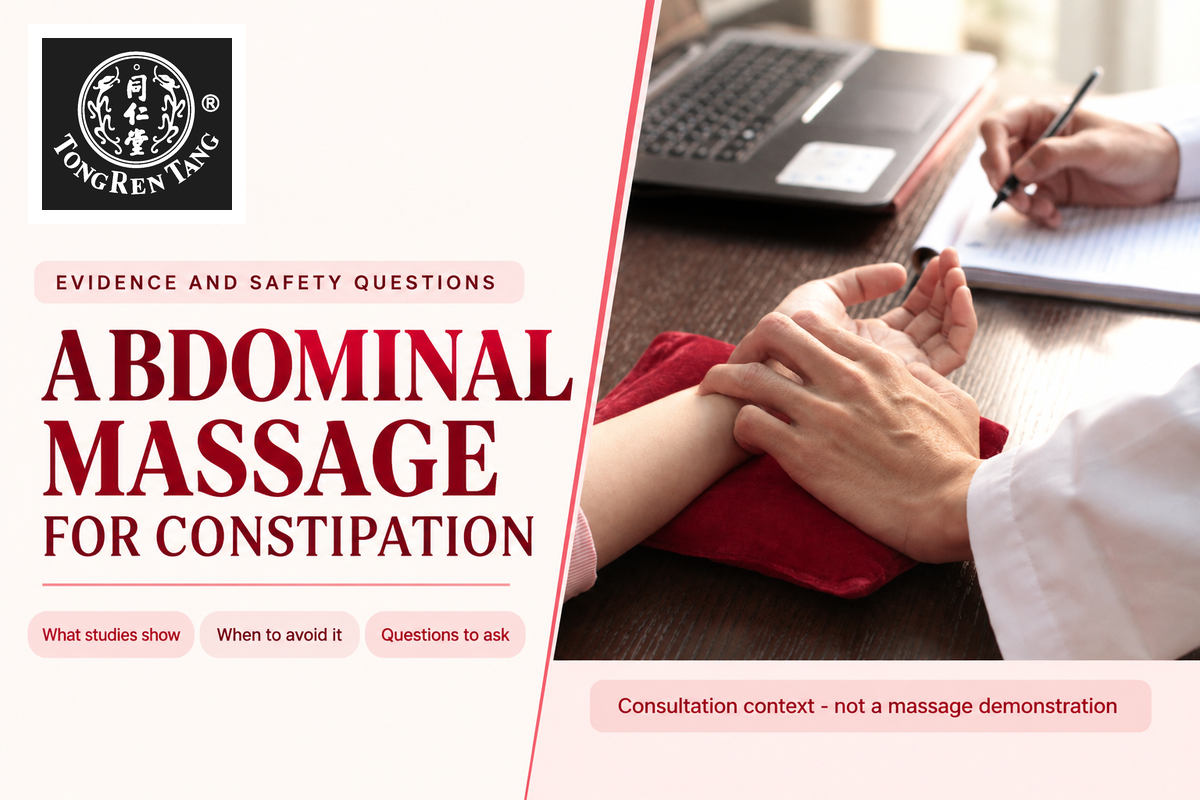
Abdominal massage for constipation is a manual bowel-care technique that may help some adults feel less constipated or have more frequent bowel movements. The important question is whether massage works for your symptoms, whether massage helps with the outcome that matters to you, and whether it is appropriate given your health background. Massage therapy delivered in a supervised programme differs from a comfortable belly rub or treatment with a vibrating device. Check which type of massage the claim describes.
Abdominal massage for constipation may improve symptoms in some adults. Research doesn’t establish a guaranteed response or a replacement for laxatives. Check suitability first, and seek medical care for warning symptoms.
This article provides general information about adult constipation that may help you discuss your concerns with a healthcare professional. It doesn’t provide an individual diagnosis or treatment.
What is abdominal massage for constipation?
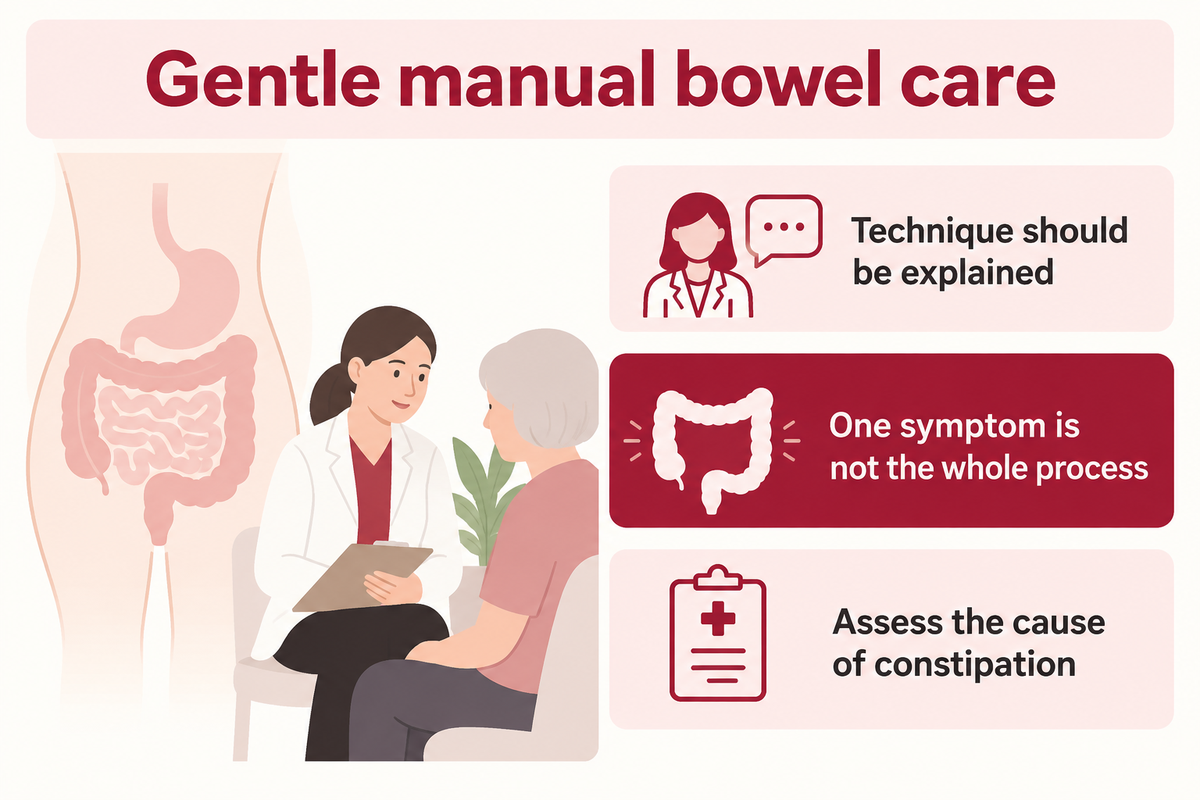
Abdominal massage is a manual technique applied to the abdomen as part of bowel care. The NHS patient guidance describes gentle strokes and kneading intended to help stimulate bowel movement. Gentle massage should be explained to you in sufficient detail for you to understand what will happen. The abdominal muscles are beneath the area that’s being touched. Pressing on the outside of the abdomen doesn’t tell you what’s occurring inside the bowel.
The large intestine, like the small intestine, is part of the digestive tract. Massage techniques, for example, often refer to the path of the colon. Massage has been used within bowel-care programs; however, its place in digestive health care depends on the nature of the concern. Symptoms of constipation can reflect hard stool, slow movement through the bowel, effects of medicines or difficulty coordinating the muscles used to empty the rectum. Gut motility refers to movement through the digestive tract; therefore, improvement in one symptom doesn’t mean improvement in the entire process. “belly massage for digestion”, or a promise to “improve your digestion”, doesn’t indicate which condition is being addressed.
Cambridge University Hospitals’ constipation guidance places massage with other bowel-care measures. It doesn’t make a belly rub a substitute for a thorough assessment of the cause of the change in bowel behavior.
Can abdominal massage relieve constipation?
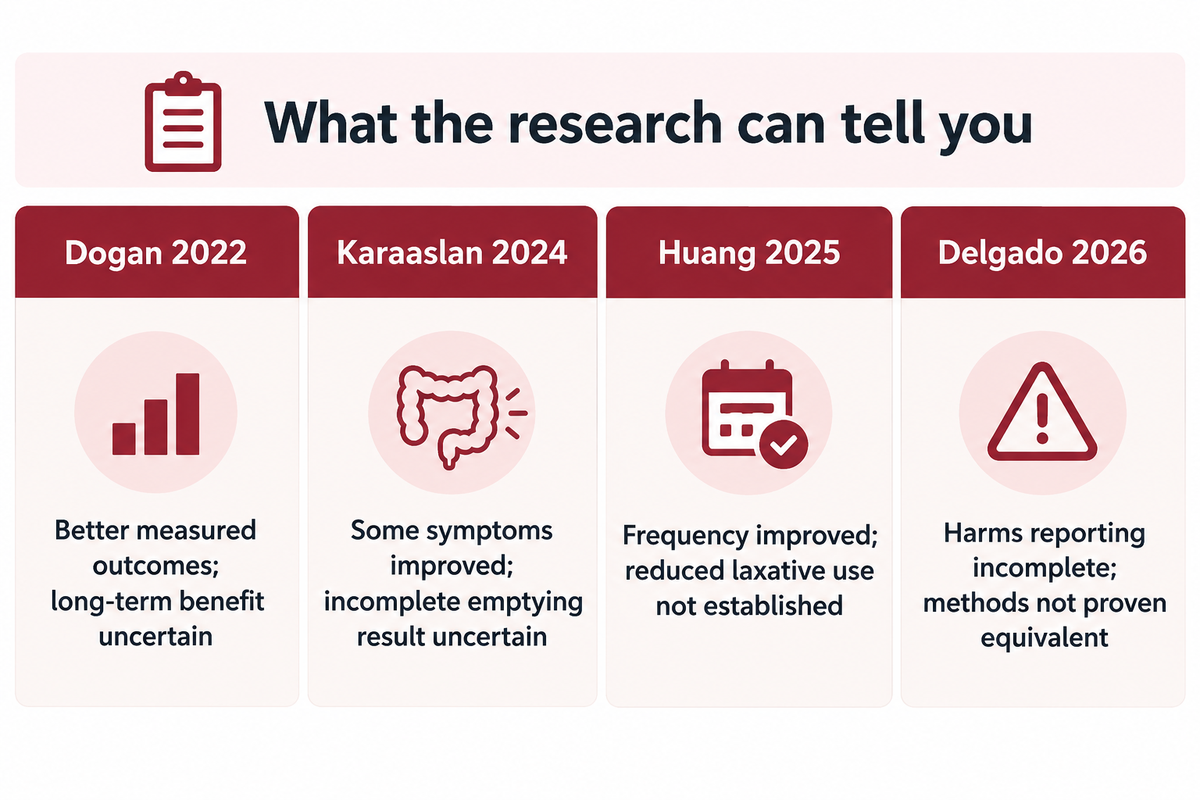
Yes, abdominal massage may help some adults with constipation; however, the size and certainty of the benefit vary. Different studies measured bowel frequency, symptoms and quality of life. Treatment may increase frequency without making it easier to pass stool or improving the feeling of complete emptying.
Is there any research on massage for constipation?
Yes. Randomized controlled trials and systematic reviews have assessed the abdominal massage for constipation, including adults with functional constipation. Some results suggest that massage is more effective than control treatment; however, small studies, short duration of follow-up and variation in treatment approaches make it hard to predict the benefit for an individual. The most meaningful comparison relates to the treatment group and control group, and which symptom actually improved.
In a 2022 randomized trial by Doğan and coworkers, 74 adults received either abdominal massage with lifestyle advice or placebo therapeutic ultrasound with the same advice over a period of four weeks. The group who received abdominal massage improved more on the assessed constipation outcomes. This was planned care, not a test of whether a single self-massage would lead to an immediate bowel movement.
| Research | Useful finding | Limit when choosing care |
|---|---|---|
| Doğan et al., 2022 trial | Massage plus lifestyle advice outperformed the placebo comparison on measured outcomes. | A short course in selected adults does not establish long-term benefit for every cause of constipation. |
| Karaaslan et al., 2024 trial | Several symptom and quality-of-life measures improved in a trial involving 66 women. | The group-by-time result for incomplete evacuation was not statistically significant. This does not prove no effect. |
| Huang et al., 2025 review | Across the relevant pooled studies, bowel frequency improved on average. | Results varied substantially. Reduced laxative use was not statistically established. |
| Delgado et al., 2026 review | Manual and automated approaches were examined across different study designs. | Harms reporting was incomplete; indirect comparisons do not prove that devices and hands-on massage are equivalent. |
Huang and coworkers’ review included 23 studies and 1,431 participants. The pooled frequency result was 1.6 more bowel movements per week compared to control care, with a 95% confidence interval of 1.06 to 2.11. The authors noted substantial variability between studies. That number isn’t a forecast of the number of additional bowel movements you may expect.
The trial of 66 women is a reminder to follow the symptom that matters to you. Feeling less bloated or going more often may still leave a troublesome sensation of incomplete emptying. A bowel diary should keep these experiences separate.
The 2026 review mentions that many of the included studies didn’t address adverse events. One of the review authors works for the manufacturer of an automated device included in the review. That relationship doesn’t invalidate the results, but is relevant for comparison of the devices. Neither the review nor the available evidence about gentle manual massage establishes that a massage gun is appropriate for the abdomen.
When should you avoid abdominal massage?
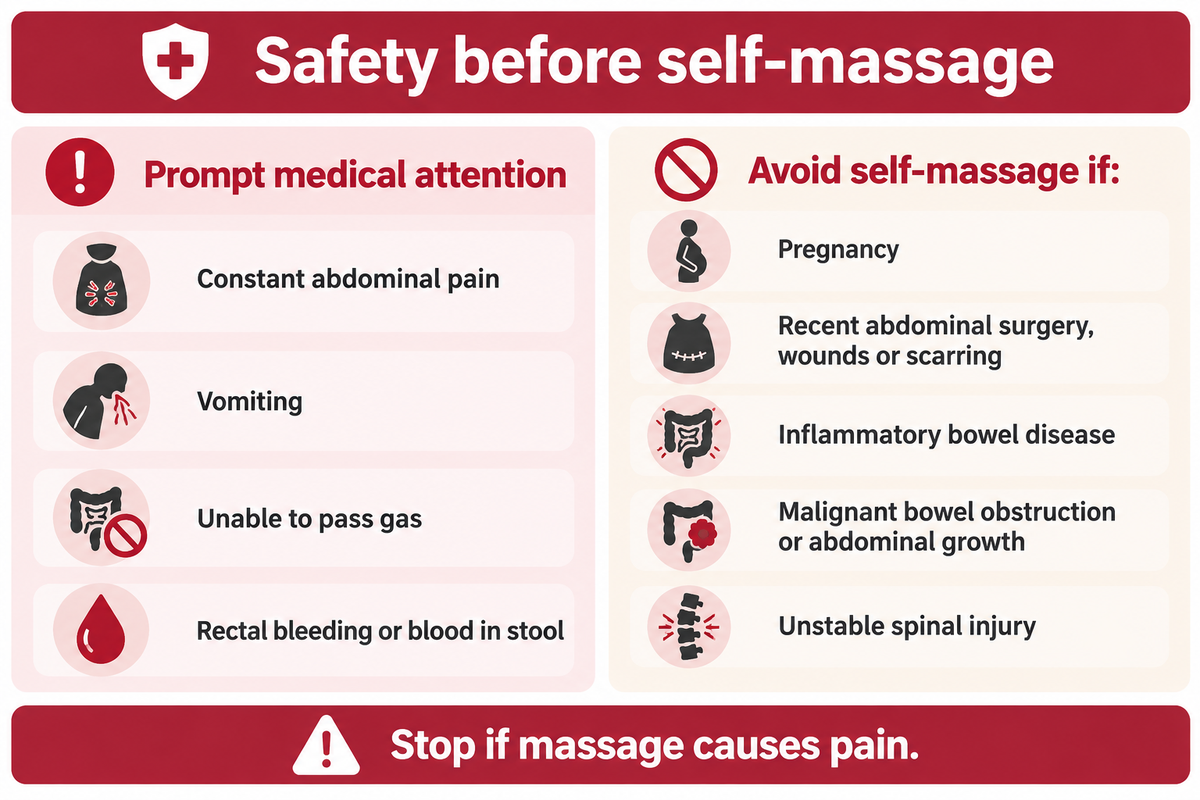
Avoid self-massage if constipation is present with warning symptoms, or if conditions exist where pressure on the abdomen is contraindicated. Prompt medical attention is required for constipation with constant abdominal pain, vomiting, inability to pass gas, rectal bleeding or blood in the stool. Use of massage to postpone medical assessment while attempting to “get things moving” isn’t justified.
NIDDK’s guidance on constipation symptoms also identifies fever and unintentional weight loss as reasons to see a doctor promptly. A suspected bowel obstruction requires assessment, not a home remedy. New or persistent symptoms deserve medical attention even if they don’t align with an online description of severe constipation.
The NHS’s massage guidance states that abdominal massage isn’t recommended in the presence of:
- Pregnancy.
- Recent abdominal surgery, wounds or scarring.
- Inflammatory bowel disease, including Crohn’s disease or ulcerative colitis.
- A history of malignant bowel obstruction or an abdominal growth.
- An unstable spinal injury.
Hernias require special consideration and care. Leeds Community Healthcare also states skin lesions are among its exclusions. A practice that previously suited you may not be appropriate after surgery or a new diagnosis.
Pain is a reason to stop. Don’t use firm pressure to keep pushing on a tender area, or push through discomfort because you think it means the treatment is working. “Listen to your body” is too vague. Pain during massage means stop. If it makes your symptoms worse, stop and see a doctor.
For example, someone with longstanding hard stools who feels well is in a different situation compared to someone with new, constant pain and vomiting. The second person requires immediate medical care. A massage technique video won’t provide the answer to the case described above. Also, the advice given to adults shouldn’t be applied to children and/or babies.
What should you know about self-massage technique?
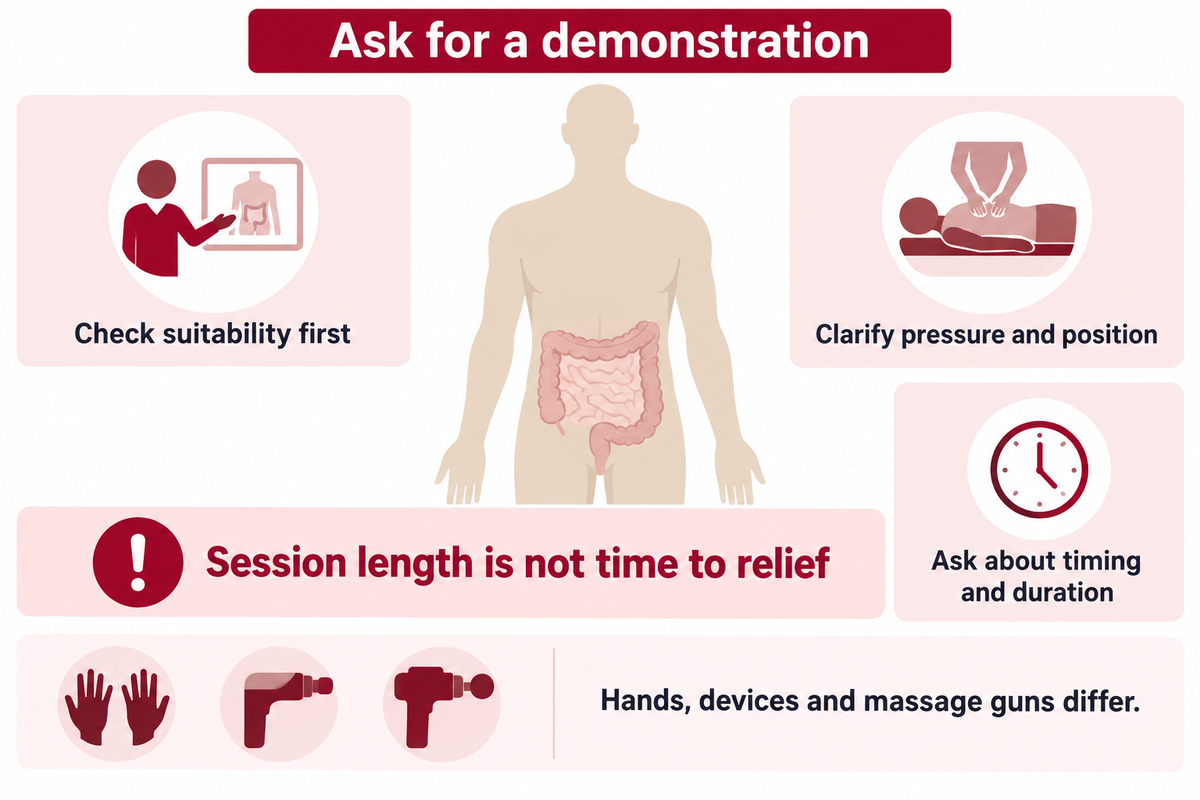
Learn a gentle technique from a healthcare professional who has checked whether it’s right for you. Pressure, position and duration should be right for you. Before choosing massage for constipation relief to try at home, check that the instructions are for you. Online phrases such as ILU massage or “move things along” describe an approach or an intention; they don’t establish a safe dose or mean constipation relief.
Which direction should you massage your belly for constipation?
NHS patient guidance contains a description of clockwise motion. Ask the person teaching you to demonstrate how to gently massage your abdomen, as left and right can be confusing when viewing another person. Suitable techniques aren’t defined by direction alone. Pain, pregnancy, recent surgery and bowel conditions still need attention before you try self-massage for constipation.
Some colon massage instructions describe moving up from the lower right side of the abdomen towards the right rib cage, across towards the left rib cage, then down the left side of your abdomen toward the left hip. Other instructions include the use of a circular motion around the belly button. These landmarks aren’t instructions to press on a tender spot. A clinician can illustrate the desired path and pressure without requiring you to find an internal organ by touch. If instructions mention the edge of a hip bone, ask the person teaching you to demonstrate where to press rather than guessing.
The NHS leaflets say that sessions are typically 10-20 minutes long. The leaflet from Cambridge was approved in March 2024; the one from Leeds doesn’t have a publication date. A session isn’t guaranteed to provide relief or produce a bowel movement within 10-20 minutes. Don’t increase the pressure or do the same routine more often simply because nothing happened within the allotted time.
Consider these choices separately: stomach massage performed by hand, use of a purpose-designed abdominal device, and use of a percussion massage gun.
Can belly massage replace laxatives?
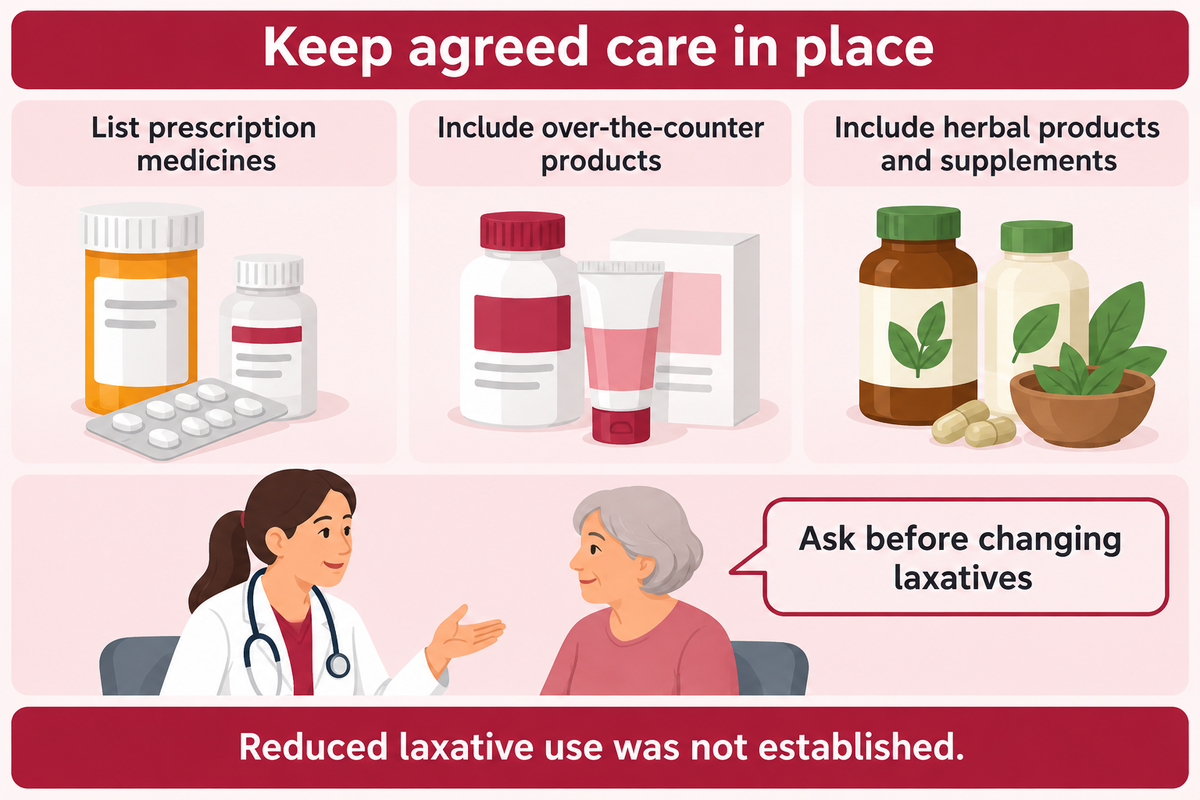
Don’t discontinue a laxative or other prescribed treatment because you’ve started using belly massage. Improving symptoms doesn’t always mean the medicine is no longer needed. Please consult the health professional managing your constipation if you would like to make a change, particularly if medicine or another health issue could also be causing the problem.
No reduction in laxative use was statistically significant for the studies pooled for this outcome by Huang and colleagues. Nevertheless, massage can help with constipation while it’s used in conjunction with usual care. It’s incorrect to assume that all laxatives cause dependence: the American College of Gastroenterology states that many laxatives are appropriate for longer-term use, and their choice is based on individual circumstances.
“Don’t change or stop any medicine or supplement without talking with a health care professional.”
Bring a list of all prescription medicines, over-the-counter products and supplements to an appointment. Include herbal products. They’ll review anything you take, instead of making assumptions about relevance based on descriptions (i.e. “natural” products).
How can you track whether massage is helping?
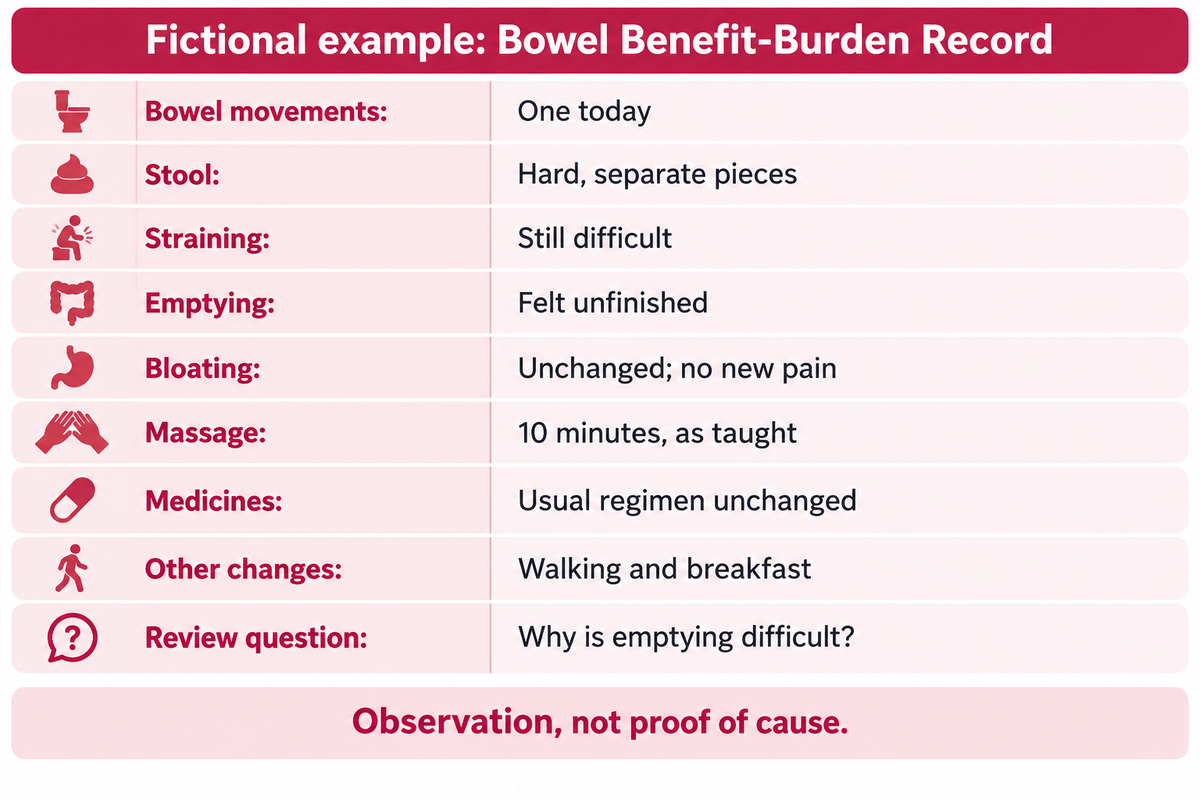
Record bowel frequency, stool consistency, straining, and the feeling of complete emptying separately. The Bowel Benefit-Burden Record adds time spent and other changes in care. It’s more of an observation sheet. You should discuss it with your clinician, not use it to diagnose or treat or prove that massage improved your symptoms.
The NIDDK suggests tracking bowel movements and the appearance of stools when preparing for assessment. Decide on a review period with your treating professional. Also, record days when you don’t massage. Otherwise the record will hide your less successful days.
| What to record | Example entry | What it helps discuss |
|---|---|---|
| Bowel movements | One today | Frequency alongside the usual pattern |
| Stool appearance | Hard, separate pieces | Consistency rather than frequency alone |
| Straining | Still difficult to pass | Effort during emptying |
| Emptying sensation | Felt unfinished afterwards | Symptoms that a bowel count misses |
| Bloating or discomfort | Bloating unchanged; no new pain | Whether comfort changed separately |
| Massage time | 10 minutes, as previously taught | Time and practical burden |
| Medicines and supplements | Usual prescribed regimen unchanged | Other treatments used at the same time |
| Other changes | More walking and a different breakfast | Possible alternative explanations for change |
| Question for review | Why is emptying still difficult? | The next assessment question |
In this case, one bowel movement doesn’t mean all symptoms improved. Other factors such as more walking or a different food could also be important. Record the help received and whether the routine was manageable, if any help was given. This may help encourage an honest record of discomfort with the caregiver, rather than pressure to keep pushing through discomfort. A good outcome should be judged alongside discomfort and effort, not just by the number of days a routine was accomplished.
Don’t wait until the end of the diary period to act on warning signs. The record should be used to prompt a discussion to support care.
Who can assess constipation in Dubai?
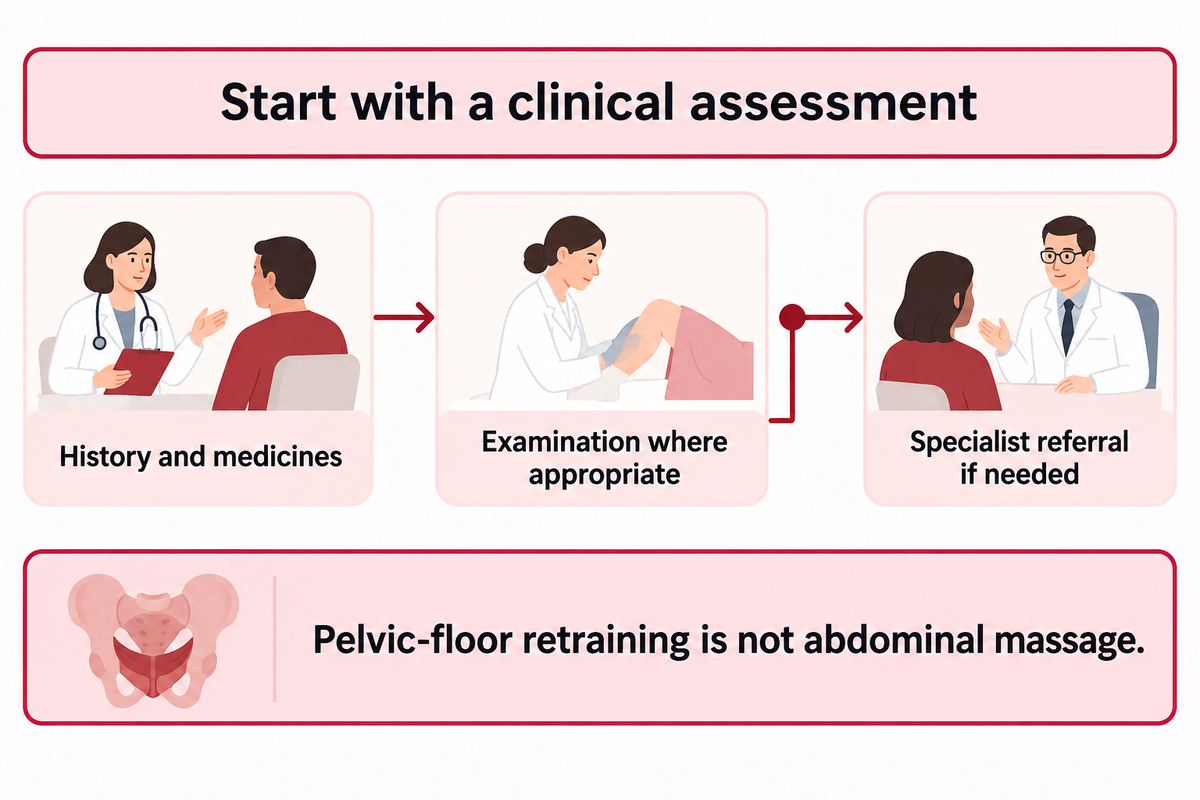
A medically licensed clinician may assess and refer if needed regarding your constipation. Assessment may start with your history, medications and an examination. Referral to a gastroenterologist or appropriately trained pelvic-floor service may be considered if symptoms raise concern for a problem requiring a more specialized assessment. It’s important to clarify with your clinician what the assessment or appointment includes before attending.
One distinction is whether the major problem is slow movement of stool through the colon or difficulty with coordination of the pelvic floor and anorectal muscles. The ACG’s patient guidance describes biofeedback and muscle retraining exercises to help with the latter problem. Abdominal massage isn’t the same treatment.
In its 2026 guidance, the American Gastroenterological Association (AGA) calls for appropriate evaluation and treatment of defecatory disorders before using the label of “refractory constipation.” This doesn’t mean everyone needs every test; the history, examination, response to care and any warning signs guide the next step.
For a discussion of options at Tong Ren Tang, see their web page on
Make sure to tell the clinic that you’re interested in abdominal massage, and explain any existing diagnosis or prescribed treatment at your appointment. You may also wish to read about Tong Ren Tang in Dubai and its care setting before contacting the clinic.
What should a constipation consultation quote include?
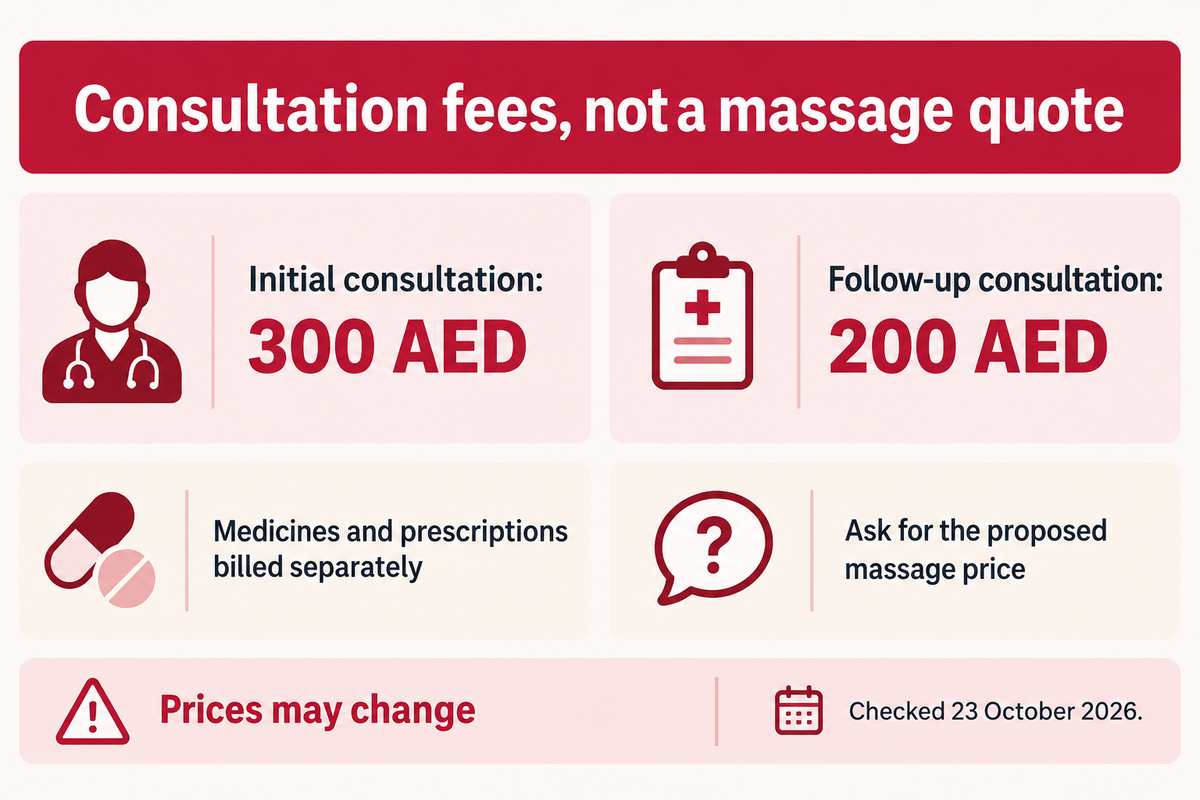
Separate the assessment cost from the treatment, tests, medicine and follow up. Tong Ren Tang’s published price page lists an initial consultation for 300 AED and a follow up consultation for 200 AED (checked on 23 October 2026). These are for consultations. Ask for a price quote for a proposed abdominal massage.
The consultation fees and treatment packages page states that herbal medicines and supplementary prescriptions are billed separately and that prices may change. A Tui Na package isn’t always a quote for the specific intervention that has been studied in a constipation trial.
Ask who will assess you, whether a licensed massage therapist or another practitioner would provide any proposed massage, whether treatment will occur at the same visit and what’s billed separately. Clarify your review point and the terms of the package. If you’re planning to use insurance, check your coverage with the clinic and your insurance company first, before assuming a session is covered.
Frequently asked questions
Does abdominal massage reduce bloating?
Abdominal massage may help some people, but relief is not guaranteed.
Feeling bloated and passing stool more often are different outcomes. NHS patient guidance describes massage as something that may help discomfort and bloating, alongside other bowel-care measures. Keep track of each symptom separately. If bloating comes with constant pain, vomiting or inability to pass gas, seek medical attention rather than trying to massage the problem away.
When should you do abdominal massage for constipation?
Follow a schedule agreed with the professional teaching you.
The research doesn’t establish one best time for every adult. A routine should fit your symptoms, comfort and other care, rather than a promise that a particular hour will work. Don’t assume that instructions to massage right after eating apply to you. Ask about timing and duration, and stop if the technique is painful or makes you feel worse.
Can you do abdominal massage for constipation while pregnant?
Do not start abdominal self-massage for constipation during pregnancy.
The NHS guidance cited here lists pregnancy among the circumstances in which abdominal massage isn’t recommended. Ask your maternity team about suitable ways to manage constipation instead. A gentle label or a positive online account doesn’t remove that exclusion. Explain any pain, bleeding, vomiting or other new symptom when seeking advice, rather than treating it as ordinary constipation.
How to clear constipation in 30 minutes?
Abdominal massage cannot promise relief within 30 minutes.
Trials assess outcomes over treatment courses. A session length isn’t a time-to-relief guarantee. Avoid stronger pressure or repeated attempts to force a bowel movement.
What foods help relieve constipation?
Fibre-containing foods and adequate fluids are common parts of constipation care.
Examples include vegetables, fruit, whole grains and beans. The appropriate amount and pace of change depend on what you already eat and how you respond. Adding a large amount suddenly can be uncomfortable, so discuss a gradual approach if fibre makes you bloat.
Food is only one part of managing constipation. Medicines, other health conditions and problems with emptying can also contribute. Someone struggling with constipation despite dietary changes may need assessment to consider other options for relief. Adding more remedies for constipation without reviewing the cause can make it harder to explain what has changed. Bring a brief food and medicine record to the appointment. If a clinician has advised a fluid restriction or a specific diet for another condition, ask how constipation advice fits that plan. General advice to drink more isn’t a reason to disregard it.
Bring your questions and bowel record to an assessment.
Contact Tong Ren Tang to determine what appointment options are available and to see if abdominal massage is offered. Mention existing medicines, recent surgery and other relevant health conditions when making the appointment.
Research evidence and public fees were checked in October 2026. The example observation sheet is fictitious. Published research describes the study participants, not outcomes achieved by this clinic. No individual medical review or clinician credentials are attributed to the author.
References & Sources
- Doğan et al. Abdominal massage in functional chronic constipation: randomized placebo-controlled trial (2022).
- Karaaslan et al. Abdominal massage versus Kinesio taping in women with chronic constipation (2024).
- Huang et al. Effectiveness of abdominal massage on chronic constipation in adults: systematic review and meta-analysis (2025).
- Delgado et al. Manual and automated abdominal colonic massage: systematic review and meta-analysis (2026).
- American Family Physician. Abdominal massage for functional constipation in adults (2026).
- Cambridge University Hospitals. Improving bowel function in constipation.
- Leeds Community Healthcare. Abdominal massage.
- NIDDK. Symptoms and causes of constipation.
- NIDDK. Diagnosis of constipation.
- NIDDK. Treatment for constipation.
- American College of Gastroenterology. Constipation and defecation problems (updated June 2026).
- American Gastroenterological Association. Evaluation and management of refractory constipation (2026).