Get in Touch with Tongren Tang Gulf


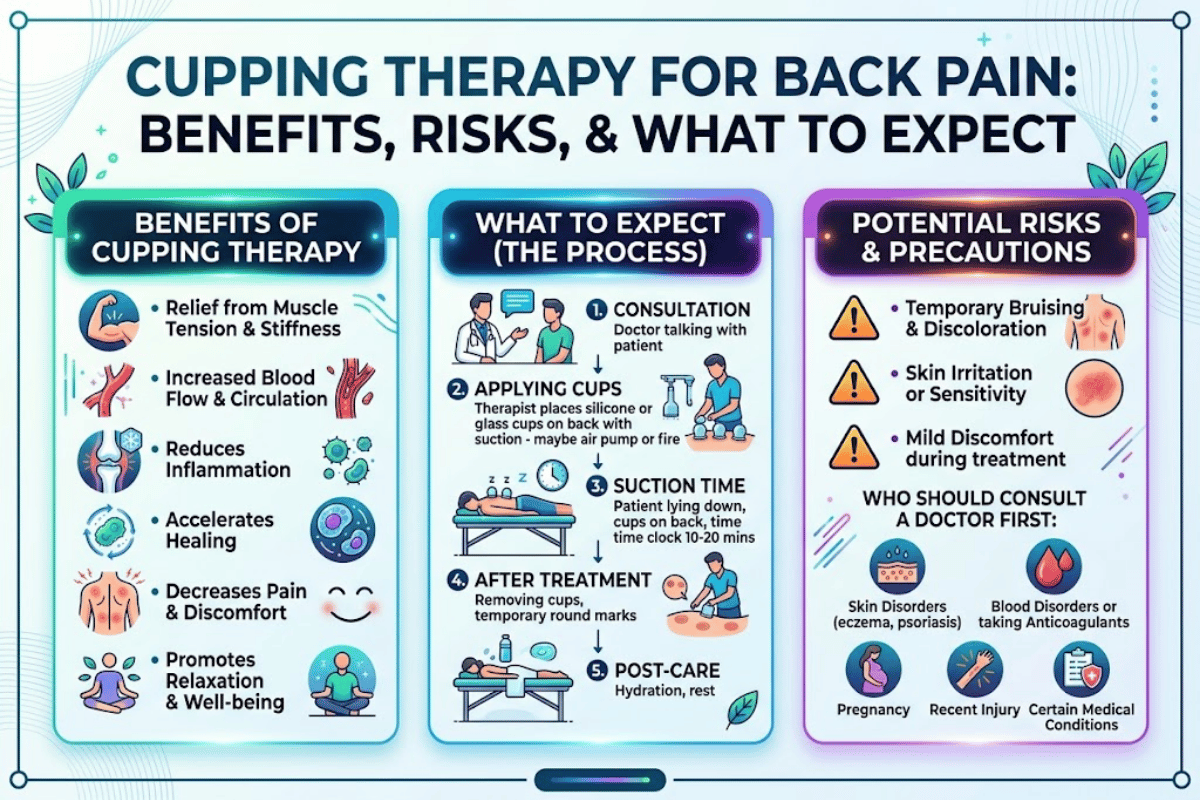
Quick Specs — Cupping for Back Pain at a Glance
| Session duration | 20 to 40 minutes |
| Cups per session (typical) | 3 to 5, up to 7 maximum |
| Initial course of treatment | 4 to 8 weeks, 1 to 2 sessions per week |
| Cupping mark duration | Fading red or purple circles, 7 to 14 days |
| Best-fit back pain profile | Chronic mechanical or myofascial pain lasting over 12 weeks |
| Evidence certainty (2024 to 2025) | Low to very low, per NCCIH and JOSPT 2025 |
| Typical cost (UAE) | AED 150 to 400 per session |
| Safety rating with trained practitioner | Low risk, rare serious adverse events |
What Is Cupping Therapy, and Why It’s Used for Back Pain
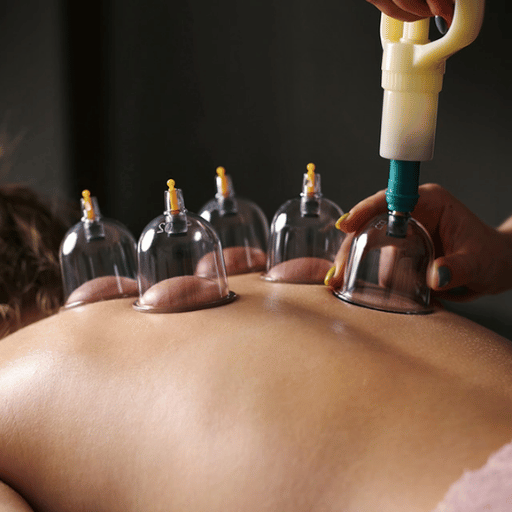 Cupping is an ancient healing art that involves suction cups applied topically to pull blood to the surface, encourage circulation and release tension in the layers of muscle and fascia below. Cleveland Clinic attributes the origins of the practice to the populations of China and West Asia, who a millennium ago blended cupping with acupuncture, herbal medicine and manual therapy.
The underlying mechanism by which traditional Chinese cupping purportedly works is based on the energetic flow of the Chinese concept of qi, that life-force energy flowing through the body along specific pathways called meridians. In TCM, pain and inflammation result from the imbalance or stagnation of qi and blood, and treatment aims to restore the smooth flow of qi and circulate blood through the irritated tissues. Other practitioners think along the lines of increased local blood flow, the mechanical forgiveness of adhesions and, it is hoped, stimulation of the parasympathetic nervous system.
Back pain is the most common condition for which cupping is administered, though Cleveland Clinic also notes that cupping is used for neck pain, headaches, and other musculoskeletal complaints. Thoughthe traditional Chinese practice is historically tied to spiritual practices in West Asia and Islamic tradition—known more generally in the Gulf Cooperation Council (GCC) as hijama—modern states such as Saudi Arabia have accordingly developed trade licenses for its practice, played a role in the subsequent training of clinicians, and created the regulatory framework in which modern UAE clinical practices are now situated. A 2018 review of hijama provides highlights of the traditional spiritual uses for cupping in Islamic populations, and the tradition’s move toward legalization through special trade licenses.
At Tong Ren Tang’s UAE back pain clinic, cupping sits inside a broader TCM framework that has been refined since 1669, when the brand was founded in Beijing and later became the imperial pharmacy under the Qing dynasty. The questions modern patients bring are the same ones treated for 350 years: will it reduce my pain, is it safe, and how long until I feel the effect?
Cupping is an ancient healing art that involves suction cups applied topically to pull blood to the surface, encourage circulation and release tension in the layers of muscle and fascia below. Cleveland Clinic attributes the origins of the practice to the populations of China and West Asia, who a millennium ago blended cupping with acupuncture, herbal medicine and manual therapy.
The underlying mechanism by which traditional Chinese cupping purportedly works is based on the energetic flow of the Chinese concept of qi, that life-force energy flowing through the body along specific pathways called meridians. In TCM, pain and inflammation result from the imbalance or stagnation of qi and blood, and treatment aims to restore the smooth flow of qi and circulate blood through the irritated tissues. Other practitioners think along the lines of increased local blood flow, the mechanical forgiveness of adhesions and, it is hoped, stimulation of the parasympathetic nervous system.
Back pain is the most common condition for which cupping is administered, though Cleveland Clinic also notes that cupping is used for neck pain, headaches, and other musculoskeletal complaints. Thoughthe traditional Chinese practice is historically tied to spiritual practices in West Asia and Islamic tradition—known more generally in the Gulf Cooperation Council (GCC) as hijama—modern states such as Saudi Arabia have accordingly developed trade licenses for its practice, played a role in the subsequent training of clinicians, and created the regulatory framework in which modern UAE clinical practices are now situated. A 2018 review of hijama provides highlights of the traditional spiritual uses for cupping in Islamic populations, and the tradition’s move toward legalization through special trade licenses.
At Tong Ren Tang’s UAE back pain clinic, cupping sits inside a broader TCM framework that has been refined since 1669, when the brand was founded in Beijing and later became the imperial pharmacy under the Qing dynasty. The questions modern patients bring are the same ones treated for 350 years: will it reduce my pain, is it safe, and how long until I feel the effect?
How Cupping Relieves Back Pain — The Mechanism
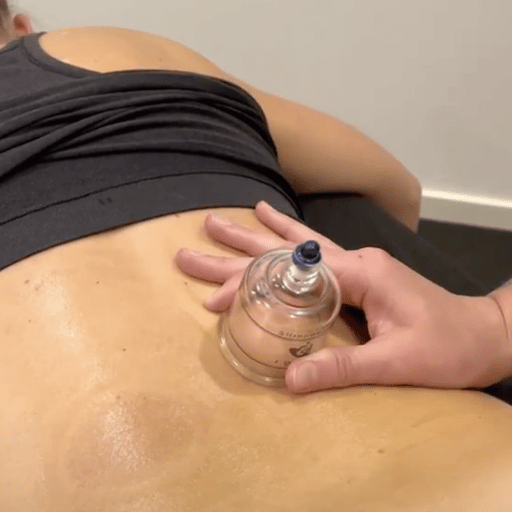 Cupping relies on suction—created by heat, or by a modern pump rather than manual massage techniques. To create a vacuum, the practitioner uses a flame to heat the cups’ air, or a vacuum pump, momentarily increasing the space inside. The pressure differential pulls the skin and superficial fascia upward into the cup—a step of the treatment, and not a side-effect.
There are three suggested mechanisms of action. Firstly, the suction ‘ruptures’ small capillaries just below the skin, creating the characteristic round red pin-prick petechiae. This controlled micro-trauma causes a local inflammatory response bringing oxygenated blood, immune cells, and metabolic waste removal to the affected area.
Secondly, the physical lift separates fascia from muscle, allowing release of adhesions and trigger points that have restricted movement and that may be causing pain. Thirdly, the gentle feel of the suction stimulates the parasympathetic nervous system, which then slows heart rate, minimizes the perception of pain, and relaxes the whole body in the way many patients describe.
The Cleveland Clinic acknowledges the lack of solid evidence: “Researchers are still trying to determine how cupping relieves pain and other symptoms of illness.” Cupping for pain relief—a January 2024 update listed by PMC 11955767—allows that on a theoretical level, mechanisms suggested are altered transport of oxyhemoglobin, increased localized temperature, and alpha pain-gate neurology—although it admits “no definitive mechanism has been identified to explain clinical effects.”
For those considering cupping as one of several specific interventions for LBP, there is an important practical point: cupping leaves a visible trace, not of muscle trauma, but of change in local blood flow. Pain relief is thought to arise from the interaction between possible effects on circulation, fascia and nervous-system input, not from them in isolation.
Cupping relies on suction—created by heat, or by a modern pump rather than manual massage techniques. To create a vacuum, the practitioner uses a flame to heat the cups’ air, or a vacuum pump, momentarily increasing the space inside. The pressure differential pulls the skin and superficial fascia upward into the cup—a step of the treatment, and not a side-effect.
There are three suggested mechanisms of action. Firstly, the suction ‘ruptures’ small capillaries just below the skin, creating the characteristic round red pin-prick petechiae. This controlled micro-trauma causes a local inflammatory response bringing oxygenated blood, immune cells, and metabolic waste removal to the affected area.
Secondly, the physical lift separates fascia from muscle, allowing release of adhesions and trigger points that have restricted movement and that may be causing pain. Thirdly, the gentle feel of the suction stimulates the parasympathetic nervous system, which then slows heart rate, minimizes the perception of pain, and relaxes the whole body in the way many patients describe.
The Cleveland Clinic acknowledges the lack of solid evidence: “Researchers are still trying to determine how cupping relieves pain and other symptoms of illness.” Cupping for pain relief—a January 2024 update listed by PMC 11955767—allows that on a theoretical level, mechanisms suggested are altered transport of oxyhemoglobin, increased localized temperature, and alpha pain-gate neurology—although it admits “no definitive mechanism has been identified to explain clinical effects.”
For those considering cupping as one of several specific interventions for LBP, there is an important practical point: cupping leaves a visible trace, not of muscle trauma, but of change in local blood flow. Pain relief is thought to arise from the interaction between possible effects on circulation, fascia and nervous-system input, not from them in isolation.
Types of Cupping for Back Pain — Dry, Wet, Fire, and Hijama
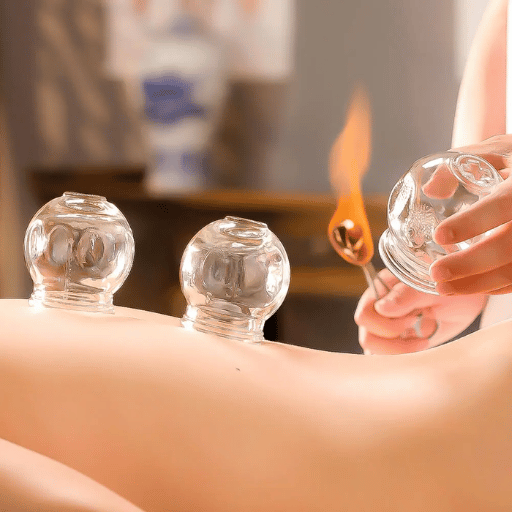 Not all cupping types are equal. The four cupping types most commonly used to treat back pain (see table below) vary widely in how suction is created, whether the skin is broken, and what cultural tradition they come from. For patients comparing different types of cupping, selecting the right type matters more than most realize:
| Feature | Dry Cupping | Wet Cupping (Hijama) | Fire Cupping |
|---|---|---|---|
| Skin broken? | No | Yes, small punctures | No (a form of dry) |
| Suction source | Pump or silicone | Pump plus bloodletting | Brief flame inside glass cup |
| Best suited for back pain | Chronic mechanical or myofascial pain | Chronic pain with stagnation signs in TCM; culturally familiar in UAE | Myofascial tightness plus cold-natured TCM patterns |
| Typical mark intensity | Light red to dark purple circles | Circles with visible small puncture sites | Deep red, can be intense |
| Serious risk concerns | Lowest among the three | Bloodborne disease transmission if tools not sterilized, infection risk | Skin burns if the cup is too hot or placed too long |
| Commonly offered in the UAE | Yes, at TCM and physiotherapy clinics | Yes, widely, often as hijama | Yes, at established TCM clinics |
What’s the Difference Between Dry and Wet Cupping for Back Pain?
Dry cupping involves placing cups on the skin with suction alone — the cup is applied, the vacuum is created, and the skin is pulled into the cup for several minutes; no blood is released. Wet cupping involves an additional step of controlled bleeding — known regionally as hijama in the Middle East: after the dry cupping passes, the practitioner creates multiple light superficial cuts on the skin with a clean lancet, and applies the cups again to draw a small quantity of blood into each cup. Islamic science also mentions this bleeding step as expelling the ‘stagnant blood’ surrounding problem areas (a notion akin to TCM’s definition of stagnation), and hijama is not exclusively performed for pain in the back, as it is specified for that condition in Islamic practice. Practically, the difference for the patient between dry and wet cupping: wet cupping requires sterile disposable equipment, takes longer, leaves puncture marks visible for several days, and the increased bleeding presents a serial infection risk to the patient if the practitioner does not follow aseptic protocols. Therefore, dry cupping would be a safer initial option for most new patients experiencing back pain. A tip that is often not included in English-language guides is that in the clinics in the UAE, wet cupping and hijama are the same procedure under two names. So if a patient seeking the hijama framing cannot find the procedure, they should confirm the clinic they are going to uses single-use sterile blades and cups, as this is the most safety-critical variable for hijama.
📐 Engineering Note — Cup Count and Placement Intensity
Practitioners generally allow 3 to 5 cups in a back session, more than 7 being an uncommon usage and a suitable target for patient questioning. Each cup’s suction is indirectly defined by the degree of lift of the skin into the cup, generally 1 to 3 cm body lift. Any cup that produces painful sharpness instead of tight pleasantness should be promptly released.
Benefits of Cupping for Back Pain — What the Research Actually Shows
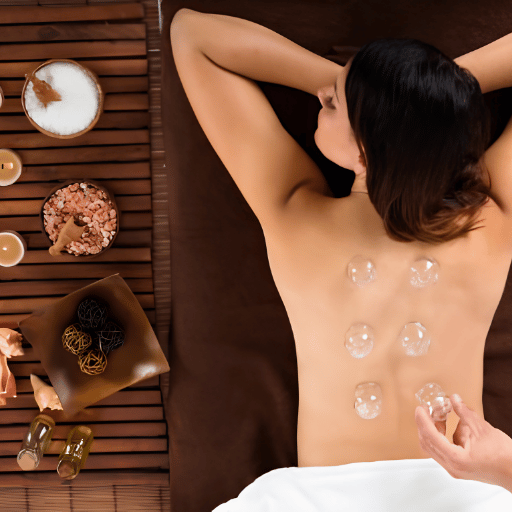 This may be the section that patients are most eager to jump ahead to, and the section that online guides most often get wrong. The truthful statement about the therapeutic properties of cupping hinges on which year’s clinical research you consult and whether those trials address medium-term or immediate effects of cupping on pain and disability.
Earlier systematic reviews were favorable. A widely cited 2018 systematic review by de Castro Moura and colleagues concluded that cupping is a promising method for chronic back pain in adults, reporting significant pain reduction across pooled RCTs for non-specific chronic low back pain. Likewise, a linked 2018 randomized controlled trial from PMC 5879872, by Teut et al., involved 110 chronically back pain-afflicted adults assigned to pulsatile dry cupping or paracetamol. The cupping participants fared equally on pain scores and actually fared higher on the SF-36 physical component scale on 4 and 12 week follow-ups.
More recent evidence is cooler. A 2024 systematic review and meta-analysis on PubMed re-pooled the chronic low back pain RCTs and reported moderate- to low-quality evidence that cupping did not reduce chronic low back pain, with a non-significant effect size of d equal to 0.74 and a 95 percent confidence interval of negative 0.67 to 2.15, p equal to 0.30. A 2025 review in JOSPT Open that restricted the analysis to placebo-controlled trials concluded there was very-low-certainty evidence that dry cupping was effective compared to placebo cupping in the medium term.
This may be the section that patients are most eager to jump ahead to, and the section that online guides most often get wrong. The truthful statement about the therapeutic properties of cupping hinges on which year’s clinical research you consult and whether those trials address medium-term or immediate effects of cupping on pain and disability.
Earlier systematic reviews were favorable. A widely cited 2018 systematic review by de Castro Moura and colleagues concluded that cupping is a promising method for chronic back pain in adults, reporting significant pain reduction across pooled RCTs for non-specific chronic low back pain. Likewise, a linked 2018 randomized controlled trial from PMC 5879872, by Teut et al., involved 110 chronically back pain-afflicted adults assigned to pulsatile dry cupping or paracetamol. The cupping participants fared equally on pain scores and actually fared higher on the SF-36 physical component scale on 4 and 12 week follow-ups.
More recent evidence is cooler. A 2024 systematic review and meta-analysis on PubMed re-pooled the chronic low back pain RCTs and reported moderate- to low-quality evidence that cupping did not reduce chronic low back pain, with a non-significant effect size of d equal to 0.74 and a 95 percent confidence interval of negative 0.67 to 2.15, p equal to 0.30. A 2025 review in JOSPT Open that restricted the analysis to placebo-controlled trials concluded there was very-low-certainty evidence that dry cupping was effective compared to placebo cupping in the medium term.
“Well-performed placebo-controlled trials can differentiate the placebo effect from a true treatment effect. Such trials can be hard to perform for cupping, and this is why our certainty remains low. The effect we observed may be due to the placebo response.” — JOSPT Open 2025 review authors, on dry cupping for musculoskeletal pain
d=0.74
Chen 2024 effect size on chronic LBP, not statistically significant, p=0.30
n=110
Teut 2018 RCT: dry cupping matched paracetamol at 4 and 12 weeks
Very Low
JOSPT 2025 GRADE certainty rating for dry cupping vs placebo
What to Expect During a Cupping Session
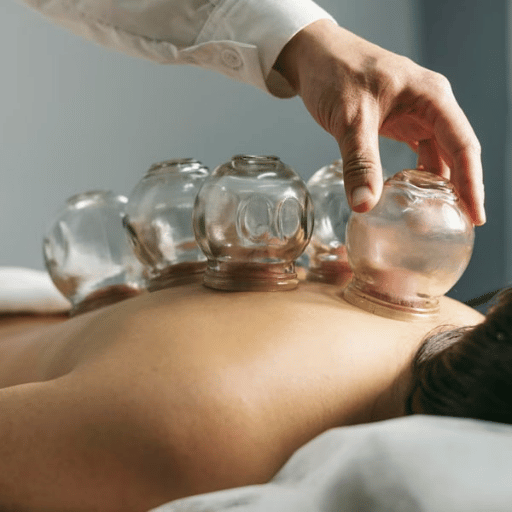 Dry cupping on a chronic back pain patient’s first visit at a UAE TCM clinic typically proceeds through the following steps. If you know the sequence going in, your subjective experience is less of a shock than many first time patients report.
- ✔Assessment, 10 to 15 minutes — The practitioner reviews your pain history, current medications, prior surgeries, and pregnancy status. This is where you should disclose any blood thinner, anticoagulant, or skin condition.
- ✔Positioning — You lie face down on a treatment table with your back exposed. The skin is wiped with an antiseptic.
- ✔Cup placement, 3 to 5 cups — The practitioner applies the cups to specific back points, generates suction, and leaves them in place. You feel tightness and a pulling sensation, not sharp pain.
- ✔Retention, 5 to 15 minutes — The cups stay in place while you relax. Some practitioners glide the cups along oiled skin for a massage-cupping hybrid.
- ✔Removal and aftercare — The cups are released. You will see circular red or purple marks. The practitioner advises hydration, avoiding cold air and intense sun on the treated area for 24 hours, and skipping swimming pools for 48 hours.
Where Should Cupping Cups Be Placed for Lower Back Pain?
Placement should be precise, not haphazard. For lower back pain, four main areas in the lower back area are targeted. The first is where the sacrum articulates with the pelvis at the sacroiliac joint, a common site of chronic low back pain in adults. The second targets the erector spinae — back muscles that flank each side of the spine and often hold chronic tension from poor posture or prolonged sitting. The third access point is the quadratus lumborum, a deep muscle extending from the lower ribs to the upper pelvis, another site of back pain relief work for patients with side-of-back pain. The fourth and final target is the glutes. Tense glutes are a classic cause of referred back pain and cupping here even apparently where the pain is felt further up the back will often provide relief. A competent practitioner will palpate these zones before applying cups, and will not place cups directly over the spine itself or over any irritated or broken skin. Cupping marks are not bruises. One thing the Cleveland Clinic emphasizes is that the red and purple circles that cupping leaves are “not true bruises that injure muscle fibers.” Cupping marks are broken surface capillaries and extravasated fluid trapped under the skin. They tend to turn from red to purple to yellow over about 7-14 days. They are not normally tender. Typical tenderness lasting 1-2 days is expected; any tenderness that persists > 3-4 days should be reported to your practitioner.Risks, Side Effects, and Who Should Avoid Cupping
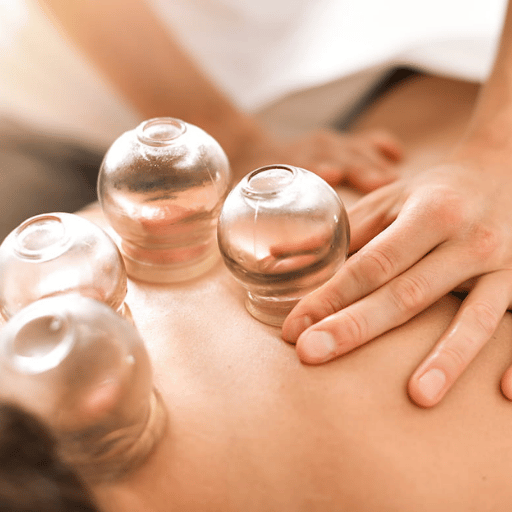 Cupping is generally a safe therapy when performed by a licensed, trained provider. It is not without risk, however, and the risk profile is highly dependent on the style of cupping, whether equipment was sterilized and maintained, and if contraindications screening was performed.
Common side effects, usually mild and resolving within days, include localized skin marks, temporary soreness, and mild fatigue. Cleveland Clinic lists additional possible side effects: bruising, burns from heated cups, headaches, muscle tension or soreness, nausea, and skin infections or scarring. Vasovagal syncope — fainting from a brief drop in blood pressure — happens occasionally with wet cupping, especially in people who faint at the sight of needles.
Serious adverse events are rare but documented. A 2021 case report describes a 35-year-old man who developed Pseudomonas-positive necrotizing fasciitis after wet cupping — an aggressive soft tissue infection that required hospital care. NCCIH separately warns that non-sterilized equipment used across patients can transmit bloodborne diseases including hepatitis B and hepatitis C. These outcomes are not typical, but they are why the sterility question is not negotiable, particularly for wet cupping and hijama.
Cupping is generally a safe therapy when performed by a licensed, trained provider. It is not without risk, however, and the risk profile is highly dependent on the style of cupping, whether equipment was sterilized and maintained, and if contraindications screening was performed.
Common side effects, usually mild and resolving within days, include localized skin marks, temporary soreness, and mild fatigue. Cleveland Clinic lists additional possible side effects: bruising, burns from heated cups, headaches, muscle tension or soreness, nausea, and skin infections or scarring. Vasovagal syncope — fainting from a brief drop in blood pressure — happens occasionally with wet cupping, especially in people who faint at the sight of needles.
Serious adverse events are rare but documented. A 2021 case report describes a 35-year-old man who developed Pseudomonas-positive necrotizing fasciitis after wet cupping — an aggressive soft tissue infection that required hospital care. NCCIH separately warns that non-sterilized equipment used across patients can transmit bloodborne diseases including hepatitis B and hepatitis C. These outcomes are not typical, but they are why the sterility question is not negotiable, particularly for wet cupping and hijama.
⚠️ Who Should Avoid Cupping
Cleveland Clinic and NCCIH guidance converges on the following exclusions. Talk to your physician before cupping if you:
- Are pregnant, at any stage
- Have a bleeding disorder such as hemophilia, or take anticoagulants
- Have a history of deep vein thrombosis, stroke, or clotting problems
- Wear a cardiac pacemaker or have significant cardiovascular disease
- Have anemia or a recent significant blood loss
- Have active skin conditions on the treatment area — eczema, psoriasis, open wounds
- Have seizures or epilepsy
- Are on immunosuppressive therapy or have poorly controlled diabetes
How Often and Where — Frequency and Placement Protocol
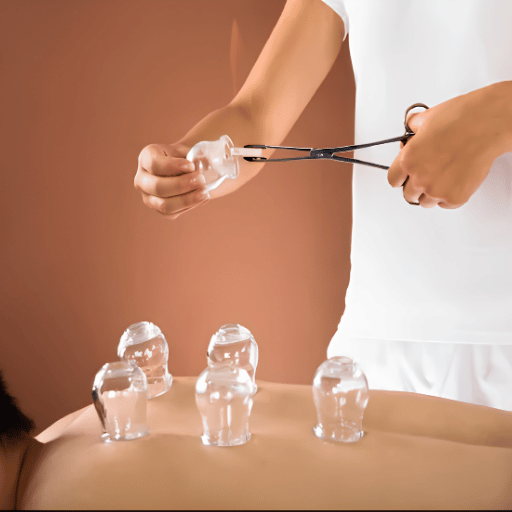 Currently, there is no universally-accepted dose-response schedule validated by the randomized controlled trial (RCT). Though the existing literature has not provided the research community with the single best session number, clinical consensus for the number of sessions exists, and it is consistent from Traditional Chinese Medicine, to physiotherapy, to chiropractic practice:
How Often Should You Do Cupping for Back Pain?
For chronic back pain lasting 12 weeks or more, most clinic protocols begin with 1 to 2 regular cupping sessions per week for 4 to 8 weeks. After that, patients who experience benefit tend to taper to a maintenance schedule of one session every 2 to 4 weeks. For acute low back pain (less than 4 weeks old), primarily muscular rather than nerve-related, weekly or biweekly cupping sessions are standard, usually for no more than 3 to 4 total. For athletic recovery, ease of muscle tension and stress, every 2 weeks is typical. None of these typical frequency levels are supported by a placebo-controlled dose-response trial. They are what seasoned practitioners would say work – a different question than what we have evidence for from randomized trials. If you have not recorded a significant improvement or relief within 4 sessions, it is time to reappraise, not stand by indefinitely.
Frequency Protocol at a Glance
- Chronic mechanical back pain: 1 to 2 sessions per week for 4 to 8 weeks, then taper
- Acute muscle strain: Weekly or biweekly, maximum 3 to 4 sessions
- Maintenance after pain relief: One session every 2 to 4 weeks
- No noticeable benefit after 4 sessions: Reassess — do not continue indefinitely
Cupping vs Other Back Pain Treatments — Choosing What to Try First
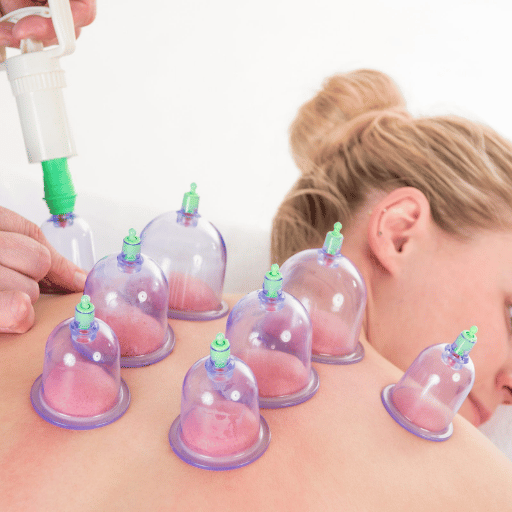 Cupping is a reasonable, evidence-supported adjunct — not a standalone cure. For most patients, the right first question is not “cupping or not” but “cupping in what sequence alongside what else for pain management?” Physical therapy, manual therapy, massage, acupuncture, and medication therapy each have their own evidence base for chronic pain, and the honest picture is that no single modality alone shows strong effect sizes for non-specific chronic low back pain. NCCIH’s overview on low-back pain notes low-quality evidence for acupuncture, massage therapy, and spinal manipulation for acute low back pain — a reminder that the entire manual therapy landscape for back pain sits in the low-certainty zone.
| Option | Best For | Typical Cost (UAE) | Evidence Strength |
|---|---|---|---|
| Cupping therapy | Chronic myofascial back pain as adjunct | AED 150 to 400 per session | Low to very low |
| Physical therapy | Acute strain, post-injury rehab, mechanical chronic pain | AED 250 to 600 per session | Low for acute, stronger for specific exercise protocols |
| Therapeutic massage | Muscle tension, stress-related pain | AED 200 to 500 per session | Low |
| Acupuncture | Chronic pain, integrative care plans | AED 250 to 500 per session | Low for chronic LBP |
| Medical evaluation plus imaging | Radicular symptoms, red flags (numbness, weakness, bowel/bladder) | Varies by insurance | Essential first step if red flags present |
Decision Tree — Which Path Should You Try First?
- If your back pain is less than 4 weeks old and purely mechanical (felt after lifting or posture, no leg symptoms): start with rest, targeted stretching, and a physiotherapy assessment. Add cupping as an adjunct from week 2 if pain persists.
- If your back pain has lasted more than 12 weeks and is myofascial (tight muscles, trigger points, stiffness): cupping is evidence-supported as an adjunct, best paired with physical therapy and an exercise program.
- If your back pain comes with leg pain, numbness, or weakness (radicular or nerve symptoms): get a physician evaluation and imaging first. Do not start cupping until disc, nerve, or structural pathology has been ruled out.
- If you are on blood thinners, pregnant, or have a skin condition on the treatment area: avoid wet cupping entirely. Dry cupping is only considered after explicit physician clearance.
Finding a Qualified Cupping Practitioner in the UAE
 Of the possible cupping styles, none are demonstrably superior in outcome, and the overall quality of your result depends more on practitioner training and clinic hygiene than it does on which style of cupping is actually performed. In the UAE, both hijama cupping and other style cupping were found to be classified as a complementary and alternative medicine by the Dubai Health Authority under the auspices of the Department of Health Abu Dhabi. A legitimate practitioner should be able to show a local license and, for TCM practitioners, a verifiable training background.
- ✔Licensed by UAE health authority — Confirm the clinic and the individual practitioner both hold current CAM or TCM licenses.
- ✔Single-use sterile equipment for wet cupping — Blades, lancets, and cups should be either disposable or autoclave-sterilized. Ask to see the packaging.
- ✔Screening intake for contraindications — A brief paper or verbal screening on medications, pregnancy, clotting, and skin conditions is the sign of a careful practitioner.
- ✔Transparent aftercare instructions — Written or printed, not just verbal.
- ✔Realistic expectation setting — A practitioner who promises a cure after one session is a red flag. Look for one who references the 2024 to 2025 evidence landscape honestly.
- ✔Integration with other care — Does the clinic coordinate with your physician or physiotherapist, or does it operate as a standalone silo?
- ✔Clear pricing and session plan — A single session price and a proposed 4 to 8 week plan should be given in writing before treatment begins.
💡 The 3R Rule for Safe Cupping Therapy
Tong Ren Tang has served patients in traditional Chinese medicine since 1669. The UAE clinic applies the same standard that guided the brand through eight Qing emperors — no compromise on the quality of treatment or the training of the practitioner, regardless of how complex the case. Patients with persistent back pain who want to see whether cupping belongs in their care plan can book a TCM back pain consultation at Tong Ren Tang UAE for a full assessment before any treatment begins.
If you take nothing away from this, make sure you know the three R’s:
- Right Practitioner — Licensed, trained, willing to screen contraindications honestly.
- Right Type — Dry for muscular pain in most patients; wet or hijama only with strict sterility and medical clearance.
- Right Placement — On muscle zones (erector spinae, quadratus lumborum, gluteals, sacroiliac joint), never directly over the spine or broken skin.
Book a Consultation at Tong Ren Tang UAE →
Frequently Asked Questions
Q: Is cupping therapy good for back pain?
View Answer
Cupping may help some patients alleviate pain, especially those with chronic myofascial or mechanical pain, but the evidence per NCCIH and the 2025 JOSPT Open review is rated as low to very-low certainty. For patients struggling with back pain that has not improved with first-line physical therapy, adding cupping as an adjunct to help ease back pain is a reasonable trial. It should not be marketed as a cure, and practitioners who suggest cupping can significantly resolve back pain alone are overselling.
Q: Is there a downside to cupping?
View Answer
The most frequent of the downsides are a series of cosmetic side effects—visible round spots lasting 7–14 days and mild soreness. The more serious though not common adverse effects include skin burns associated with heated cups, the transmission of infectious agents especially with wet cupping if sterility isn’t maintained, and vasovagal fainting. Given that mechanism and efficacy are still being debated, the other negative side effect is opportunity cost: that the money and time spent on cupping might better be spent on therapies with more substantial efficacy evidence, for example a structured exercise program.
Q: Can hijama cure back pain?
View Answer
Hijama, the wet cupping modality practiced throughout the United Arab Emirates (UAE) and in the surrounding GCC, involves the same technique as wet cupping practiced in TCM. For whatever reason, practitioners and users in Saudi Arabia, the United Arab Emirates and Egypt commonly cite hijama as resulting in meaningful relief for their chronic back pain, and the practice has been codified and incorporated into the CAM system across these countries. Clinically, the hijama modality converges with the wet cupping system of evidence, which is nothing special to hijama and remains limited and low-certainty. Hijama ought to be considered an adjuvant modality with some promising assistance, not a cure, and must be performed with sterile single-use blades and cups.
Q: How long does cupping pain relief last?
View Answer
The duration of relief is one of the least studied characteristics of cupping, and varies considerably. Patient reports for immediate pain relief range from half a day to several weeks. Patients with chronic myofascial pain often report their best relief between sessions 2 and 4 of an 8-week course. As there aren’t any RCT-level data on the duration of a single session’s benefit, clinic protocols tend to recommend a first course of 4–8 weekly sessions rather than hope for interventions with long-lasting benefit from single sessions.
Q: Who should avoid cupping therapy?
View Answer
Ongoing NCCIH and Cleveland Clinic guidance converges on the contraindications listed below: pregnancy, bleeding disorders (hemophilia), use of anticoagulants, recent DVT or stroke, cardiovascular disease or pacemaker, anemia, active skin conditions (eczema, psoriasis, open wounds) in the area to be treated, seizure disorders. Patients taking immunosuppressants or with poorly-controlled diabetes should seek the advice of their physician prior to any cupping.
Q: Does cupping help chronic back pain specifically?
View Answer
Chronic back pain (12 weeks or longer) is the most studied cupping application. The 2018 Moura review found positive effects; the 2024 Chen review and the 2025 JOSPT placebo-controlled review were more skeptical. The honest summary is that cupping sometimes helps chronic myofascial back pain when combined with active physical therapy, but the effect size over placebo is uncertain. Using cupping as an adjunct to an exercise program is more defensible than using it as a replacement for movement-based rehabilitation.
Q: How much does a cupping session cost in Dubai?
View Answer
A single session of cupping in Dubai and greater UAE generally costs between AED 150 and 400, depending on the clinic, the practitioner’s experience and the extent to which the session is set within a broader traditional Chinese medicine consult. Consult and treatment visits that combine assessment and intervention sometimes cost in the AED 300–500 range. An 8-use course is a significant financial undertaking; this is why the 4-session reassessment point matters—if the intervention isn’t clearly helpful by session 4 then continuing the course is a poor choice.
References & Sources
- Cupping — NCCIH Fact Sheet — U.S. National Center for Complementary and Integrative Health (NIH)
- Low-Back Pain and Complementary Health Approaches — U.S. National Center for Complementary and Integrative Health (NIH)
- Cupping Therapy: Definition, Types & Benefits — Cleveland Clinic, 2023
- Cupping therapy and chronic back pain: systematic review and meta-analysis — de Castro Moura et al., 2018, via PubMed Central (NIH)
- The effectiveness of cupping therapy on low back pain: a systematic review and meta-analysis of randomized control trials — Chen et al., 2024, via PubMed (NIH)
- The Efficacy of Dry Cupping Compared to Placebo Cupping in People with Musculoskeletal Pain — Journal of Orthopaedic & Sports Physical Therapy Open, 2025
- Pulsatile dry cupping in chronic low back pain — a randomized three-armed controlled clinical trial — Teut et al., 2018, via PubMed Central (NIH)
- Update evidence of effectiveness on pain relieving of cupping therapy — 2024 review, via PubMed Central (NIH)
- Cupping therapy for chronic non-specific low back pain (Cochrane Review Protocol) — Cochrane Collaboration, 2024
- Cupping Therapy in Chronic Nonspecific Low Back Pain (NCT06193603) — ClinicalTrials.gov, U.S. National Library of Medicine
- Necrotizing Fasciitis Following Wet Cupping: A Case Report — via PubMed Central (NIH)
- Cupping therapy in Saudi Arabia: from control to integration — via PubMed Central (NIH)
About This Guide
Prepared by the editors at Tong Ren Tang UAE using peer-reviewed systematic reviews spanning 2018-2025, evidence summaries from the NCCIH and 350+ years of continuous traditional Chinese medicine practice originating in Beijing in 1669. Where research evidence is inconclusive – as it is for cupping treatment effectiveness over placebo – we state this honestly rather than gloss it over into p.r. hype. Last medically reviewed by the Tong Ren Tang UAE clinical team: April 2026.