Get in Touch with Tongren Tang Gulf


Updated September 2026.
Tuina massage vs deep tissue massage is a comparison of two variable service labels, not a contest between two rigid medical protocols. While both may involve firm manual pressure, their massage techniques vary, and neither name describes a fixed technique, depth, comfort, or outcome. When deciding on what’s most useful, it’s better to consider your goal in addition to your health history and the practitioner’s planned course of action. The spellings “tui na massage vs deep tissue,” “tui na vs deep tissue,” and “tuina vs deep tissue” point to the same practical comparison; the key differences come from the actual plan, not the wording of the search.
Direct answer: Tuina is commonly described within a traditional Chinese medicine framework and may combine rolling, kneading, pressing, acupressure and joint movement. Deep tissue massage usually means slower, focused soft-tissue work, but research has no single accepted definition. Neither label identifies a universal winner; assessment and live feedback matter more.
Key points before you book
- “Deep” isn’t a medical grade; more pain doesn’t prove better treatment.
- Tuina techniques vary by practitioner and reason for care.
- Severe, radiating or unexplained symptoms need assessment first.
- Ask how pressure will change and agree on a stop signal.
Health note: General education; not personal medical advice. Massage should not delay assessment. Seek urgent care for sudden weakness, loss of bladder or bowel control, chest pain, breathing difficulty or major trauma.
Tuina Massage vs Deep Tissue Massage at a Glance
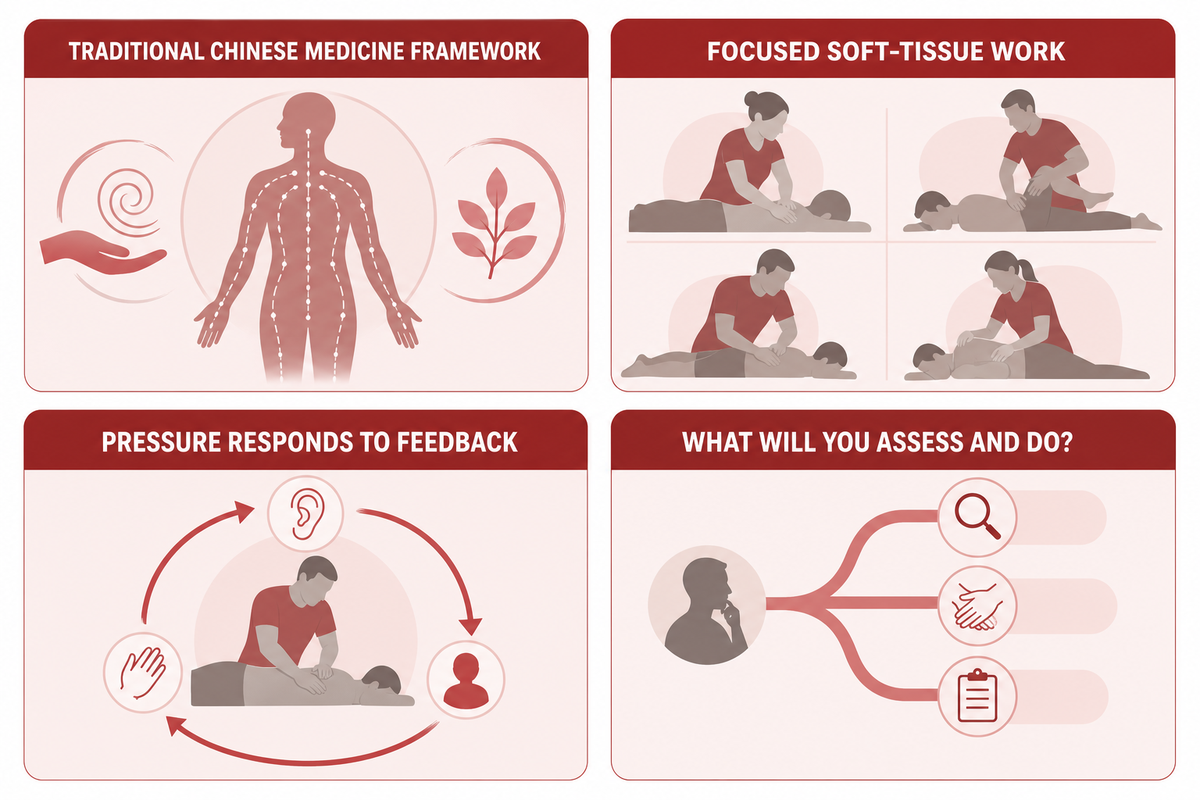
Tuina and deep tissue massage differ most clearly in the frameworks practitioners use to describe them. Neither label guarantees a predetermined pressure level or outcome. Technique names overlap across manual-therapy professions, and a 2018 review found no commonly accepted definition of deep tissue massage. When deciding what to think about a service, it’s better to consider the planned session rather than the label.
| Decision category | Tuina, commonly described | Deep tissue, commonly described | Limitation / not suitable for |
|---|---|---|---|
| Framework | Traditional Chinese medicine assessment and manual therapy | Focused soft-tissue bodywork | Neither label replaces a medical diagnosis |
| Common actions | Rolling, kneading, pressing, grasping and joint movement | Slow or focused strokes, compression and stretching | Actions vary and may overlap |
| Pressure | Light to firm, adjusted during treatment | Often marketed as firm, but no universal grade | Pain tolerance is not a dosing scale |
| Clothing | Often performed through loose clothing or a drape | Often uses direct skin contact and lubricant | Confirm the clinic’s actual setup |
| Body focus | May include acupressure points, meridian concepts and movement | Often focuses on a local muscle or connective-tissue area | A label cannot identify the pain source |
| Session goal | A goal discussed within a TCM treatment plan | A goal discussed through local soft-tissue work | Outcome depends on condition and provider |
| Feedback | Pressure and movement should respond to feedback | Pressure and pace should respond to feedback | Silence is not consent to increasing pain |
| Evidence | Condition-specific studies with important limitations | Heterogeneous massage studies and terminology | No direct Tuina-versus-deep-tissue trial found in reviewed sources |
| Best next question | What will you assess and do? | What does “deep” mean in this session? | Avoid any provider who dismisses red flags |
For more service details refer to the Chinese medical Tuina massage in Dubai. The page provides service context, not efficacy evidence.
Evidence capsule: The terminology review assessed deep tissue massage as a research label and found no commonly accepted definition. The nomenclature review estimated that roughly one-third to one-half of the manual-therapy techniques were similar across different disciplines, so named services can encompass significant practical overlap. Evidence scale check: The cited sources cover 15 Tuina trials with 1,390 participants, 25 massage trials with 3,096 participants, a 26-person pilot, and a 204-person pragmatic trial measured at 2 months and 5 months. Another review tracked recovery across 48 hours. These figures describe study size and timing, not treatment equivalence or a personal dose.
What Tuina Massage Usually Means
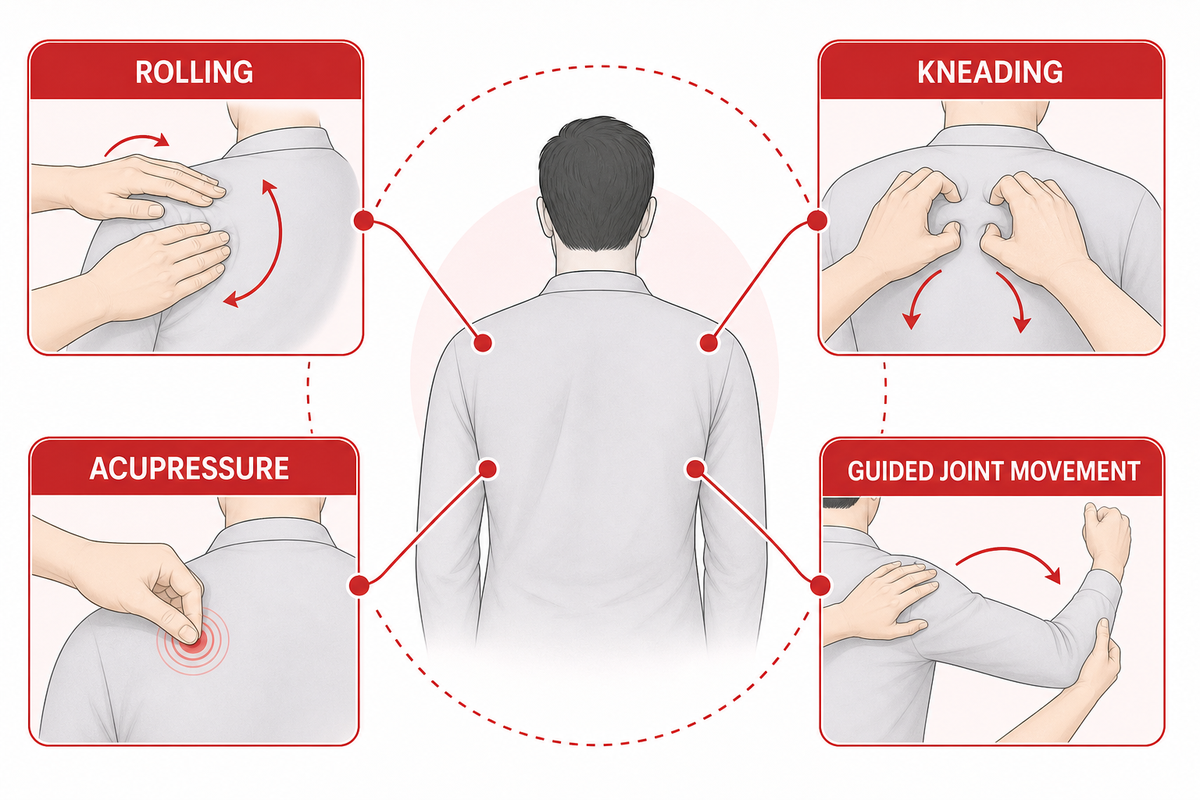
Tuina, also known as Tui Na, is a form of massage therapy rooted in traditional Chinese medicine. A practitioner may apply Tuina using rolling, acupressure techniques, grasping movements, or guided joint movement. References to qi, meridian pathways, or energy flow don’t take the place of biomedical screening.
Traditional descriptions may call Tui Na therapy a Chinese massage therapy, Chinese medical massage, a traditional approach, or a form of traditional Chinese medicine. TCM practitioners may discuss imbalance, acupuncture points, specific points on the body, or ancient Chinese descriptions of qi and energy. Tuina itself is manual therapy, not acupuncture; practitioners may use several techniques such as acupressure, and these terms don’t replace diagnosis.
A tuina session may focus on a local complaint within a broader pattern. “Restore balance” and “manipulating the body’s energy” are concepts within traditional Chinese medicine (TCM) and not laboratory measurements. Claims about pain relief, range of motion, overall health, or the benefits of Tuina still require condition-specific evidence and personal assessment.
Imagine a worker with gradual-onset workplace neck pain due to prolonged hours sitting at a desk. A Tui Na practitioner may assess the person’s movement and use several techniques around the neck, shoulder, and upper back. A new sensation of arm weakness and/or numbness will necessitate applying clinical assessment before applying more intense forms of manual work.
Numerous variations exist in Tuina research and treatment protocols. A 2023 review consolidated 15 randomized studies that included 1,390 patients with chronic nonspecific low back pain and back pain. However, the authors noted the evidence as low-certainty and heterogeneous. Important limitations restrict what the pooled data can tell a single patient.
The review’s variation is clear: participants were 18 to 78 years old, treatment durations ran from 10 days to 3 months, and reported follow-up covered 1 to 22 months. Examples included 20 min and 30 min sessions, a 3-week comparator, and a 4-week completion window. Chronic pain was defined at 12 weeks. These figures describe the studies and not a personal prescription.
What “Deep Tissue Massage” Usually Means
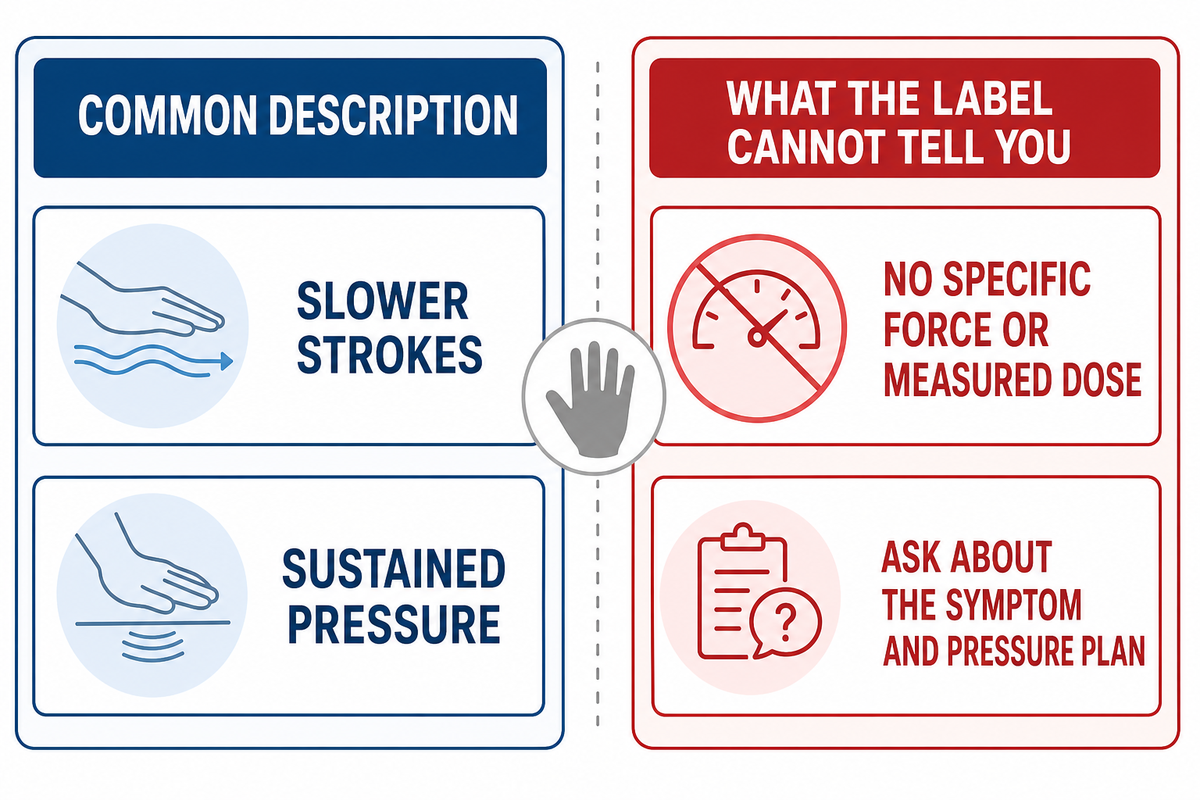
Deep tissue massage describes focused work to alleviate muscle tension or soft tissue complaints with slower strokes or sustained pressure. The phrase doesn’t describe a specific force, distinct tissue layer or measured dose. Practitioners may use the same name for different sessions, while techniques and terminology can overlap across services.
Labels such as therapeutic massage, medical massage, relaxing massage, or deep pressure do not identify a standardized protocol for scar tissue, pain and tension. Claims that massage therapies relieve pain, reduce pain, alleviate pain, improve circulation, improve range of motion, reduce stress, or support health and well-being remain outcome claims, not promises established by a service label.
One controlled pilot studied oblique pressure, cross-fiber movement, and anchor-and-stretch work. This study only had 26 adults aged 60 to 75 years. Because of its small sample, the study doesn’t describe all types of massage or settle effectiveness. Swedish massage and other types of massage may include focused work.
An example is a runner with a tight calf who thinks maximum pressure will release tension faster. The correct answer is more specific, not broader: ask about the symptom and pressure plan. The important questions are: When did the symptom start, was there an injury, is there swelling, what movement worsens it, and could a strain or clot require medical review rather than harder treatment?
“The risk of harmful effects from massage therapy appears to be low.”
This same public health source states rare severe side effects and reports on intense massage on participants who may be at increased risk of injury. Low average risk isn’t zero personal risk.
Pressure Is Adjustable, Not a Medical Grade
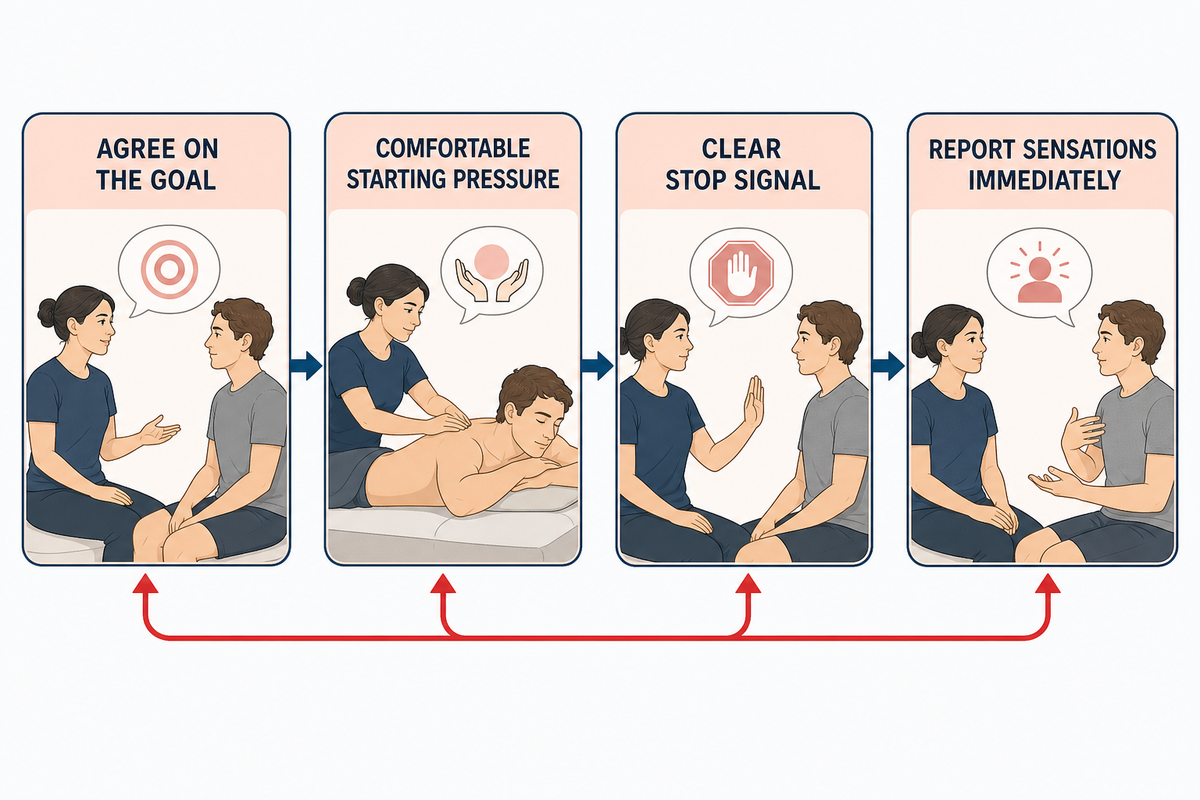
Adding pain isn’t better treatment. Pressure is a live communication variable. There’s no universal measurement of “right” depth in the reviewed sources. Agree on the goal, a comfortable starting pressure, a clear stop signal, and which sensations should be reported immediately.
Do
- Describe location, onset and movement limits
- Set a starting pressure and stop signal
- Report sharp, burning, electric or radiating sensations
- Ask why a technique is being used
Don’t
- Use pain as proof of effectiveness
- Hide medications or recent procedures
- Assume “deep” has one clinical meaning
- Continue when new neurological symptoms appear
Practitioners who apply pressure should respond to feedback by reducing pressure, moving away, or stopping. Consent to massage isn’t consent to all pressure levels or to all body areas.
Evidence Capsule: A 2017 qualitative study of massage practitioners identified the problem of assuming that the force a client has requested is appropriate. The choice of technique and the provision of feedback remain the professional discretion of the therapist; no definitive medical dose pressure threshold was recorded in the study.
Use Your Goal to Start the Assessment, Not to Pick a Winner
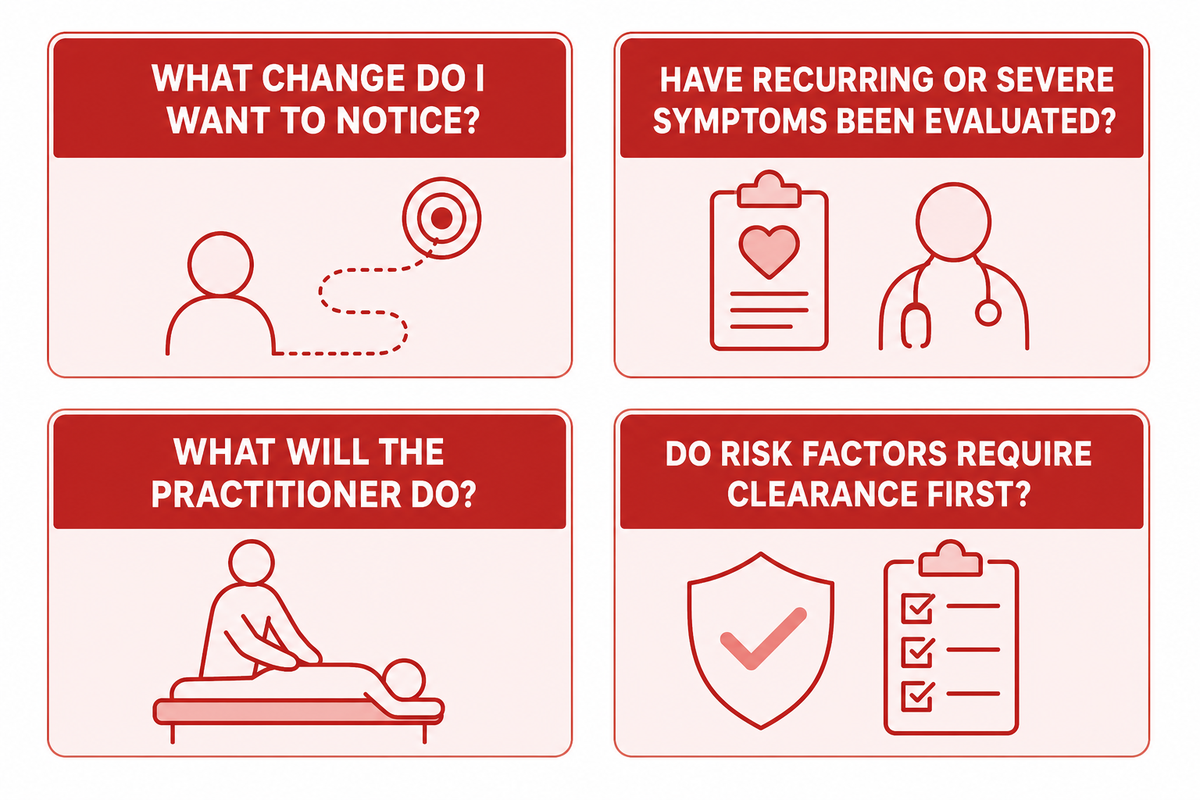
The idea is to use your goal to stimulate clinical dialogue, not generate a modality score. Please specify the onset, changes, and function to be restored. Chronic pain, severe symptoms, or unexplained musculoskeletal problems deserve medical review before either label guides a treatment plan.
| What you notice | What to disclose | What to ask about the plan | When medical review comes first |
|---|---|---|---|
| Local muscle discomfort | Onset, trigger and tender area | How will pressure be adjusted? | After major trauma or sudden severe pain |
| Stiffness | Which movement is limited | Will movement be reassessed? | If a joint is hot, swollen or unstable |
| Recurring back pain | Previous diagnosis and imaging | What result would change the plan? | With weakness, numbness or bladder changes |
| Sports recovery | Training load and recent injury | What is recovery work versus injury care? | Suspected fracture, tear or clot |
| Widespread pain | Duration, fatigue and diagnoses | How will sensitivity guide pressure? | Before starting unassessed treatment |
| Radiating pain | Path, numbness and weakness | Will treatment pause for referral? | Promptly, especially if progressive |
| Unexplained swelling | Timing, redness and medications | Will the area be avoided? | Before manual pressure |
| Post-procedure soreness | Procedure, date and instructions | Is written clearance needed? | Until the treating team approves |
| General relaxation goal | Preferences and relevant history | Can the session remain comfortable? | If concerning symptoms are present |
4-Question Assessment-First Check
The 4-Question Assessment-First Check establishes a safer context for the practitioner conversation; it doesn’t assign a massage type.
- What specific change do I want to notice in function, comfort or movement?
- Has a clinician evaluated recurring, severe or unexplained symptoms?
- What will the practitioner actually do, and how will pressure be adjusted?
- Do medicines, pregnancy, recent procedures or red flags require clearance first?
Individuals with lower back pain may want to make movements easier after sitting. Recent trauma, new leg weakness, and fever require a change of plan; a medical evaluation should come first. The next steps are dictated by the pattern of the symptom, not the name on a menu.
To see what treatment options are available, visit the clinic’s treatment services page. Even the availability of treatment doesn’t determine personal suitability; the same boundary applies to “Tui Na massage Dubai” and “Deep tissue massage near me” searches.
Session Setup, Clothing and Communication
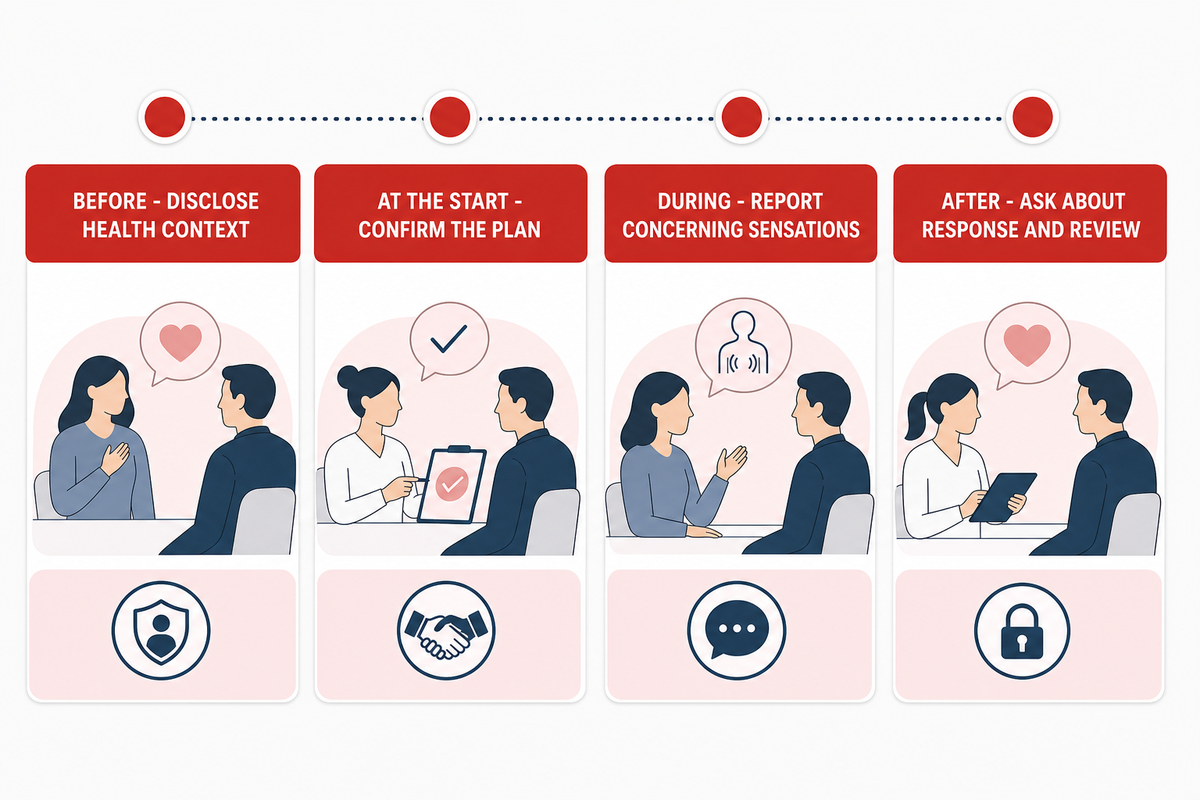
Session details vary by provider and therapeutic goal. Tuina is often described as clothed and oil-free, while deep-tissue sessions often use draping, skin contact, and lubricant; neither setup is guaranteed by the label. Confirm clothing, privacy, treated areas, consent, feedback, and aftercare before the first technique.
- Before: disclose diagnoses, medications, anticoagulants, pregnancy, recent surgery, injections, injuries and skin problems.
- At the start: ask what the practitioner plans to assess, which areas may be treated and whether clothing or oil is used.
- During: report sharp, burning, electrical, radiating or rapidly increasing pain. Use the agreed stop signal.
- After: ask what response is expected, what activity guidance applies and which symptoms require review.
Privacy and consent are part of treatment quality. You’re able to request an explanation before a body area is touched, decline a treatment, and leave at any time. Please contact Tong Ren Tang for details on clinic preparation if there are questions you need answered prior to your visit. You can also review the Tuina first-visit checklist before discussing personal suitability with a qualified professional.
Evidence capsule: The controlled deep-tissue pilot included 26 adults in the 60–75 age range. It outlined a specific technique set for their study. In this case, because of the limited sample size, clothing, lubricant, and technique details should be confirmed with the provider, not estimated from one study protocol.
Recovery: What to Expect and When to Pause
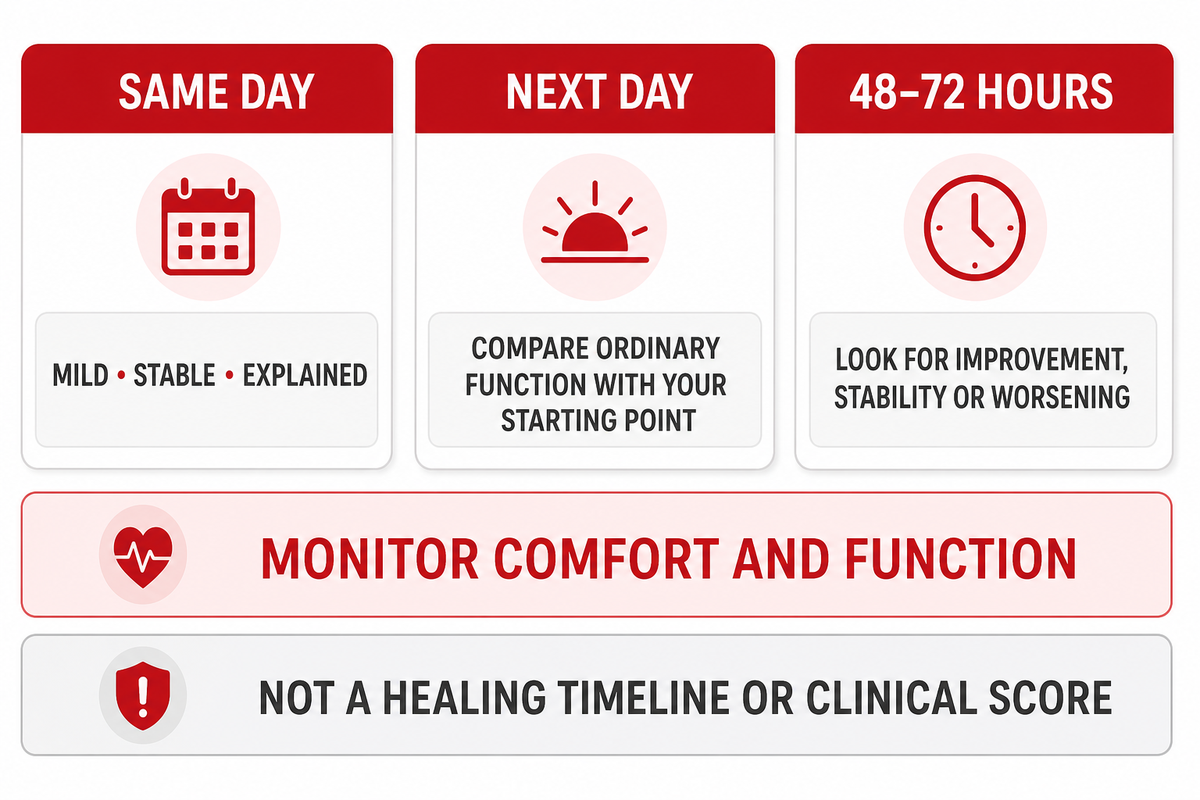
After massage, there can be mild tenderness, but no soreness timetable will prove the condition will improve or predict pain reduction. Monitor comfort and function. Increasing pain, weakness, numbness, swelling, fever, or difficulty breathing during or after treatment means the session should stop and medical advice should be sought.
3-Window Recovery Signal
The 3-Window Recovery Signal is an original, non-validated prompt for monitoring progress; it doesn’t provide a healing timeline or a clinical triage rule.
- Same day: note whether the expected response is mild, stable and explained by the practitioner.
- Next day: compare ordinary function, such as walking, turning or reaching, with your starting point.
- 48–72 hours: look for improvement, stability or worsening, and follow the clinic’s escalation advice.
The Cochrane review of general massage for low back pain included 25 studies with 3,096 participants. Increased pain was reported in 1.5% to 25% of participants in studies that reported adverse events. The range can’t be used to predict the pain relief of individual participants or of general massage pain relief.
Another 2018 systematic review investigated post-exercise recovery outcomes during the 48 hours following exercise. Its 48-hour observation window describes the review and doesn’t prescribe a universal recovery deadline.
25 trialsCochrane low-back-pain review
3,096 peoplecombined participants
1.5%–25%reported increased-pain range
Safety Screening and Red Flags
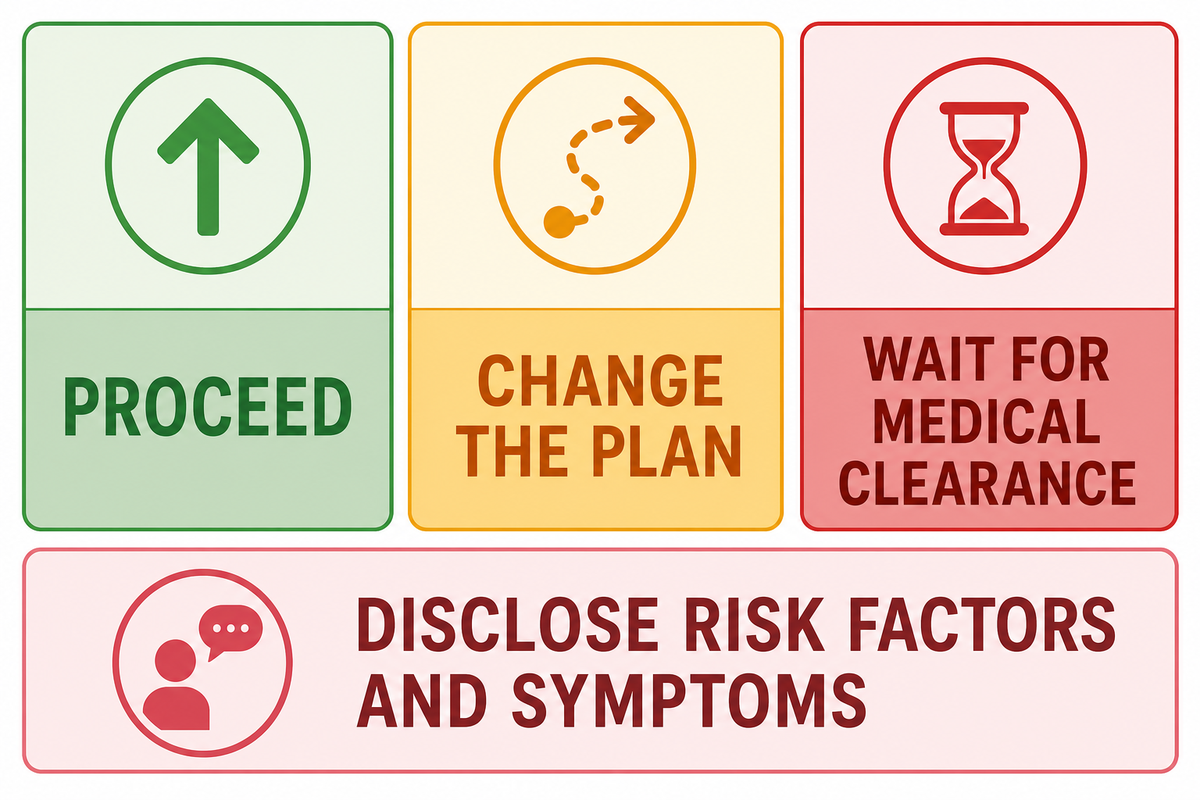
Safety screening asks if massage needs to proceed, change, or wait for medical clearance. Disclose acute injury, open wounds, infection, unexplained swelling, recent surgery, anticoagulants, pregnancy, severe osteoporosis, cancer treatment, and neurological symptoms. Your next step depends on your specific condition, the practitioner’s scope, and the guidance of your treating team.
| Situation | Patient action | Reason for caution |
|---|---|---|
| Acute trauma or suspected fracture | Stop and seek medical assessment | Manual pressure could aggravate injury |
| Open wound, rash or infection | Disclose and avoid the affected area | Skin integrity and infection risk matter |
| Unexplained swelling or redness | Obtain medical review first | The cause must be understood |
| Recent surgery or injection | Ask the treating team for guidance | Healing restrictions vary |
| Anticoagulants or bleeding disorder | Disclose before treatment | Bruising or bleeding risk may change pressure |
| Pregnancy | Confirm suitability with qualified care | Positioning and health context differ |
| Severe osteoporosis | Seek clearance and disclose diagnosis | Force may need substantial modification |
| Active cancer treatment | Coordinate with the oncology team | Treatment, devices and blood counts matter |
| New weakness, numbness or severe pain | Stop and obtain prompt medical assessment | Neurological or other urgent causes need review |
Adverse event reporting shows incomplete data. In a Tuina review from 2023, only 6 of the 15 trials reported adverse events. Some reviewed studies included bruising, local pain, and aggravation of symptoms. We can’t consider the other trials as having no adverse events just because they were silent. This list is a set of general disclosure and discussion prompts, not a complete contraindication list or a substitute for clinical assessment.
Evidence capsule: The Tuina review covered 15 randomized trials and 1,390 participants, but only 6 trials reported adverse events. However, the remaining studies did not report adverse events, and silence is not evidence that none occurred. The evidence available was heterogeneous and of low certainty. Therefore, blanket ‘safe’ or ‘unsafe’ labels shouldn’t be used; the evidence should be disclosed with careful follow-up.
What 2025–2026 Evidence Trends Mean for Patients
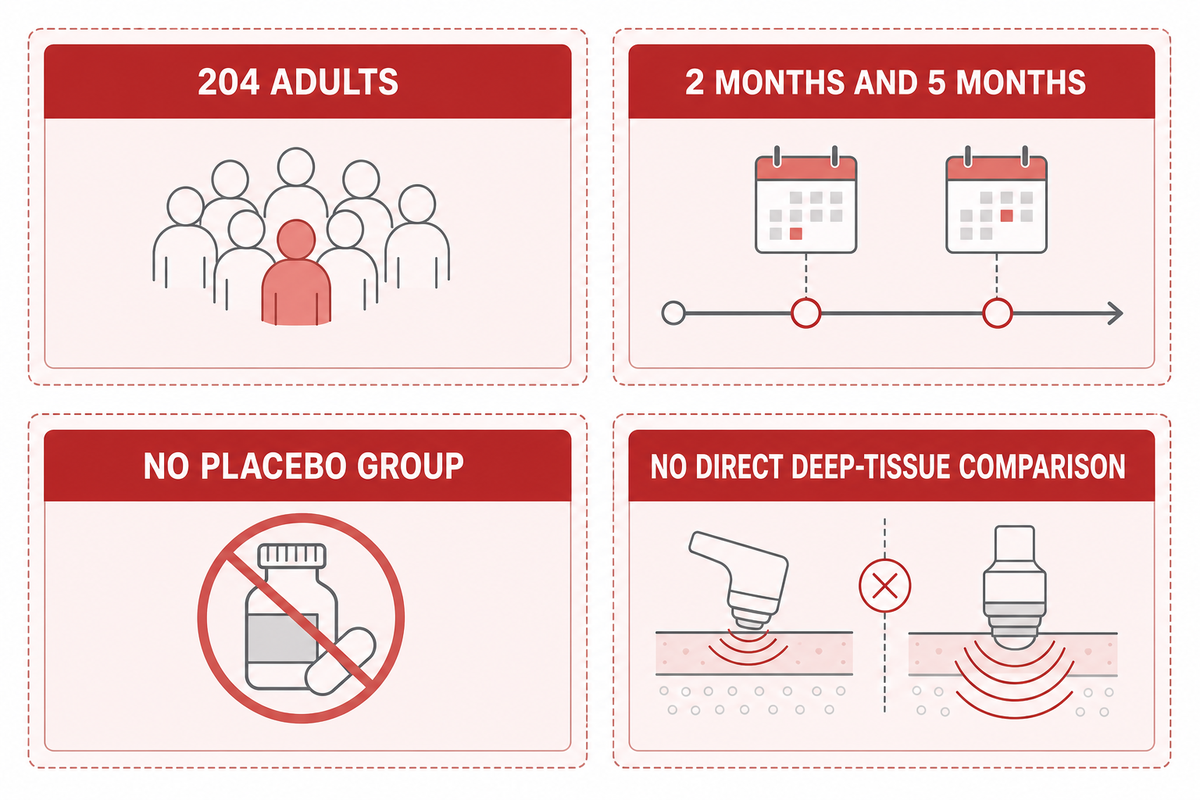
Recent Tuina studies have become more pragmatic and condition-specific, but they still do not identify a winner against deep tissue massage. One 2026 study examined Tuina, physiotherapy, and combined care in adults with chronic nonspecific low back pain; its time-dependent results must be read with the study’s limitations.
The pragmatic randomized trial enrolled 204 adults and reported outcomes at 2 months and 5 months. It had no placebo group, and treatment wasn’t fully standardized. The study didn’t compare Tuina directly with deep-tissue massage.
A different 2025 randomized controlled trial examined results at 4 weeks. The date should identify newer evidence, but newer research shouldn’t be expected to address all issues or inflate certainty. Does the evidence apply to your situation? Are the suggested outcomes relevant and comparable? Search interest can’t verify the efficacy or the need for the service in the United Arab Emirates.
Evidence capsule: The pragmatic 2026 trial recruitment of 204 adults with chronic nonspecific low back pain found differences across the three care groups at 2 months and 5 months. The absence of a placebo and non-standardized treatment limit causal interpretation; no head-to-head comparison of Tuina versus deep tissue massage was made.
FAQ: Real Questions About Tuina and Deep Tissue Massage
Patient questions about massage need a clear boundary: a service label can describe a tradition or technique, but it can’t diagnose a symptom or guarantee an outcome. The answers provided should help a practitioner know when assessment belongs in the consultation and when medical review should come first.
What is the difference between Tuina and deep tissue massage?
Tuina uses a traditional Chinese medicine framework, while deep tissue is a variable massage label; actual techniques, pressure planning, feedback, and referral thresholds matter more than either name.
Tuina may combine pressing, rolling, kneading, acupressure and movement within a TCM assessment. Deep tissue commonly describes focused soft-tissue work, yet it has no accepted research definition. The labels aren’t standardized clinical protocols, their plans may overlap, and neither name diagnoses pain. Ask about the actual techniques, feedback process and referral threshold.
Is Tuina massage painful?
Tuina should not require uncontrolled pain.
Pressure can range from gentle to firm and should change with your feedback. Sharp, burning, electrical, radiating or rapidly increasing pain is a reason to speak up and stop. Pain intensity alone doesn’t show whether treatment is working or will release tight muscles. Agree on a stop signal before treatment.
What should I wear for a Tuina massage?
Ask the clinic, because clothing practice varies.
Loose clothing is often used for Tui Na massage, and some sessions work through a drape. Setup varies with provider and technique. Confirm clothing, changing, draping and oil before attending so the session matches your privacy preferences, informed consent, comfort needs and planned body areas. Ask how to prepare comfortably.
What is a red flag in massage?
A red flag may require medical review first.
Major trauma, suspected fracture, unexplained swelling, fever, infection, new weakness or numbness and rapidly worsening pain are examples. Sudden neurological symptoms, chest pain or breathing difficulty require urgent assessment.
Who should ask for medical clearance before deep tissue massage?
Higher-risk health factors need clinician advice.
Recent surgery, acute injury, anticoagulants, bleeding disorders, severe osteoporosis, cancer treatment, pregnancy complications or unexplained neurological symptoms may alter suitability. This is a disclosure prompt, not an automatic prohibition.
How long should soreness last after massage?
No universal soreness duration proves success.
Track whether comfort and function improve, remain stable or worsen across the same day, next day and 48–72-hour period. New neurological symptoms, swelling, fever or increasing pain need medical advice.
Key takeaway
The safest comparison asks what the practitioner will do, how pressure will be adjusted and whether your symptoms need medical assessment before either massage label guides care.
Prepare for an assessment-led conversation
Bring your symptom timeline, medicines, recent procedures and pressure questions. Contact Tong Ren Tang about service scope and preparation. A qualified professional decides personal suitability.
References & Sources
Sources support evidence boundaries, not personal medical advice.
- The Case for Establishing a Common Definition of Deep Tissue Massage PubMed-indexed narrative review.
- Manual therapy nomenclature across professions PubMed Central.
- Tuina for chronic nonspecific low back pain systematic review and meta-analysis.
- Deep-tissue massage controlled pilot PubMed.
- Massage Therapy: What You Need To Know National Center for Complementary and Integrative Health.
- Massage therapists’ experiences of practice PubMed Central.
- Massage for low-back pain Cochrane review indexed by PubMed.
- Tuina, physiotherapy and combined care for chronic low back pain 2026 pragmatic randomized trial.