Get in Touch with Tongren Tang Gulf


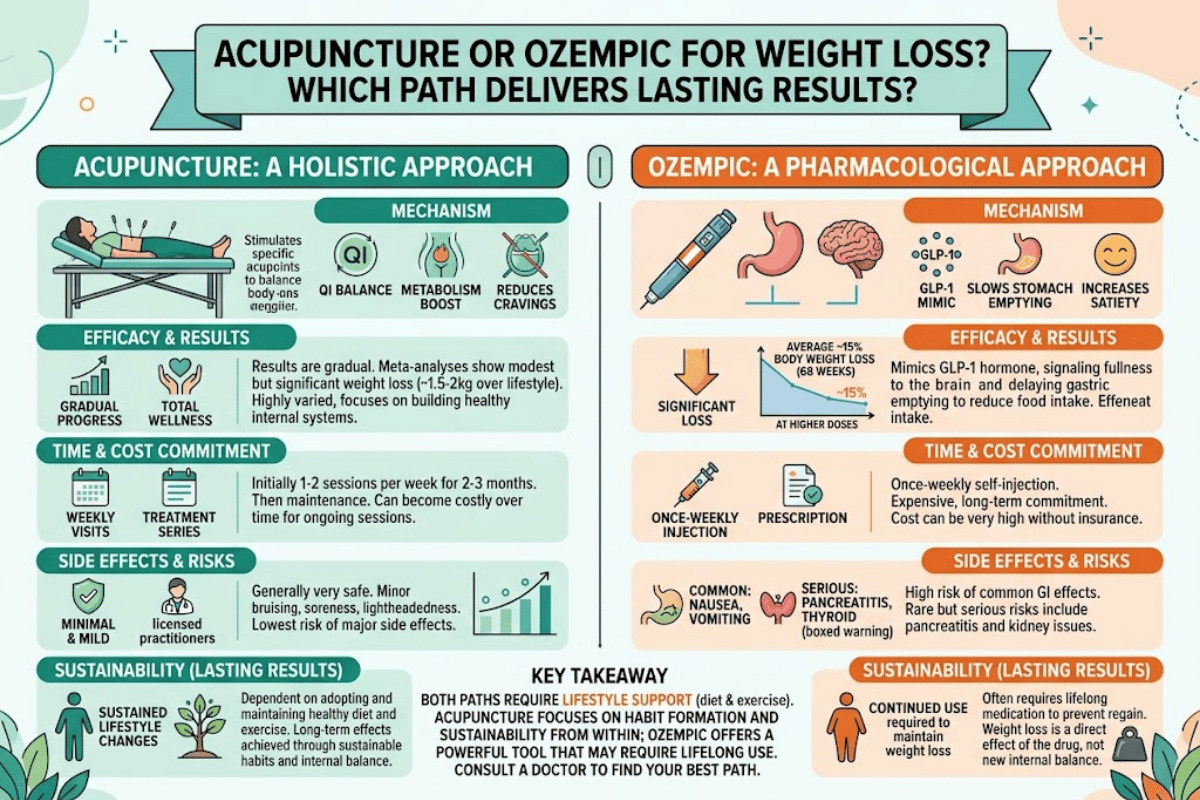
Acupuncture vs Ozempic at a Glance

Before we start reviewing, here is a side-by-side comparison of the key factors of these two weight loss options.
| Feature | Acupuncture | Ozempic (Semaglutide) |
|---|---|---|
| Treatment type | Non-invasive, needle-based therapy | Weekly injectable medication |
| How it works | Regulates appetite hormones, activates vagal-GLP-1 pathway | GLP-1 receptor agonist, suppresses appetite, slows gastric emptying |
| Avg weight loss | Moderate — improved BMI and body weight across 64 studies | 15–20% body weight reduction at 68 weeks |
| Timeline to results | 8–10 sessions (about 8 weeks) | Noticeable within 4–8 weeks |
| Common side effects | Mild bruising, occasional soreness | Nausea, vomiting, diarrhea, constipation |
| Monthly cost in Dubai (AED) | AED 2,400–4,800 | AED 1,200–2,500 (medication only) |
| FDA approved for weight loss | Not applicable (non-pharmaceutical) | Yes (as Wegovy, 2021) |
| Requires prescription | No — practitioner referral recommended | Yes — physician prescription required |
Data shows interesting trends. According to the FDA, 67% of Ozempic patients lost at least 5% of body weight in clinical trials—that level of reduction brings significant health benefits. Meanwhile, a 2025 umbrella review covering 64 trials concluded that acupuncture produced significant decreases in BMI, total body weight, and waist circumference.
What isn’t shown in the table— and what will be discussed throughout the rest of this guide—is what happens after the treatment ends, which is where the approach falls apart.
How Acupuncture and Ozempic Actually Work

Examining the mechanisms behind each approach reveals an unanticipated scientific link many comparisons fail to explore.
How Acupuncture Targets Weight Loss
Biomedically, acupuncture may work for weight loss through mechanisms that include hormonal shifts from point stimulation. Specific acupoints stimulation leads to decreased levels of Ghrelin and increased levels of Leptin, reducing hunger and helping overweight patients rediscover a lasting sense of fullness.
Acupuncture may even aid digestion and combat hormonal imbalances that standard weight loss methods neglect, particularly for individuals with sedentary lifestyles. Stimulation along stomach and spleen meridians optimizes lipid processing.
In Chinese medicine, chronic weight problems tend to be explained by Spleen Qi deficiency and Dampness. When the Spleen weakens, excess fluid accumulates as “phlegm-dampness,” causing stubborn weight gain and distention. Treatment aims to restore balance in the Spleen system while yin and yang harmony are reestablished.
What makes the recent research exciting is that a study in PMC uncovered that acupuncture utilizes the vagal-GLP-1 pathway—identical to what Ozempic targets. Practitioners could potentially activate the same biological pathway that pharmaceutical companies invested billions in developing a drug to synthesize, with either needles stimulating the vagus nerve or semaglutide attached to a GLP-1 receptor.
Is Ear Acupuncture a Natural Alternative to Ozempic?
Ear Acupuncture – stimulation of certain pressure points on the ear, is one of the best researched forms of acupuncture to promote weight loss. The ears have a high number of nerve endings connected to the hypothalamus,.
In 2024, Hua et al conducted a meta-analysis of ear acupuncture and found that for patients with a higher BMI score, ear acupuncture was most effective—perhaps only effective for those who need it most. Well-known auricular points for weight reduction include Shenmen (relaxation), Stomach (appetite), and Endocrine (hormonal regulation). Some acupuncturists place small seeds or magnetic pellets in specific points and instruct patients to press on the seeds/pellets throughout the week between acupuncture appointments—thereby prolonging the treatment effect.
How Ozempic (Semaglutide) Works
Ozempic has semaglutide which is a pill form of a GLP-1 receptor agonist, which is similar to a natural gut hormone that the body already makes. When you consume food, your intestines empty the hormone GLP-1 which sends a message from your colon to your brain saying you are full. Semaglutide stimulates the G-LP 1 receptor that delivers superhuman messages.
Another effect of the drug is that it reduces gastric emptying – your stomach takes more time to process food, so you get the sensation of being “full” for a longer period. Semaglutide is also involved in regulating blood sugar levels, therefore it was initially marketed as a treatment for type 2 diabetes.
In 2021, the US Food and Drug Administration (FDA) approved a higher dose marketed as Wegovy for weight management in adults with obesity or overweight with one or more weight-related comorbidities. This weight reduction therapy has since become one of the most common prescriptions manufactured and has been moving a shortage supply within various countries including the UAE.
Acupuncture doesn’t merely blunt an appetite – it recalibrates the body’s metabolism messaging along the very same GLP-1 lines used by medicinal drugs, but without halting motility of the gut.
— Dr. Li Wei, TCM Research Fellow, Beijing University of Chinese Medicine
Here are some other considerations for a more “T.C.M. “approach. The administration of Chinese herbal medicine formulas aims to support the digestive functions and metabolic balance from the inside.
Weight Loss Results — What Clinical Research Shows

Claims are easy. Evidence is what gets tough. Here is what the research from randomized controlled trials and systematic reviews shows for each type of treatment:
Acupuncture Weight Loss Evidence
Perhaps the most thorough up-to-date evidence comes from a 2025 systematic review by Li et al. Authors included 64 acupuncture studies for obesity testing their efficacy. Results showed:
A 2024 network meta analysis by Kim et al. directly compared various types of acupuncture. They found effective body weight reduction with 6-12 week treatments of electroacupuncture and laser acupuncture. Electroacupuncture, the application of low level electrical stimulation directly to the inserted needle, was especially promising for metabolic outcomes.
Effects are usually not seen before 8 or 10 sessions (about 8 weeks for twice weekly program). Another study, published in pmc, showed better weight loss results when Acupuncture was combined with a low carbohydrate diet than with either alone and implying the effect of acupuncture was magnified when paired with diet and exercise adjustments.
Has Anyone Lost Weight with Acupuncture?
Yes – just as the clinical research demonstrates moderate weight loss is entirely feasible with acupuncture. Results, again, totally depend on your individual circumstances, what you’ve started at, how committed you are to regular sessions, and whether you’re making adjustments to your diet as well. Based on patient reports from clinical practice, those who attend the most sessions tend to notice the greatest differences, but the reality is: acupuncture cannot promise the dramatic, rapid results of a pharmaceutical, but the weight loss achieved is more likely to be maintained, as it is based on reversing metabolic issues rather than apetite suppression alone.
Ozempic Clinical Trial Results
Data supporting medication use is much more compelling. So far, the study that has tested the latest, higher 7.2mg dosage of semaglutide was published in the Lancet (2025). Results from the STEP UP trial identified an average weight reduction of 20.7% in its participants, which was the highest percentage seen in any semaglutide trial to date.
Most trials use the original 2.4mg dose, yet users typically lose around 15% of their body weight over a period of 68 weeks. Data from Food and Drug Administration studies detail that around 67% of patients manage to lose at least 5% of their initial weight, whilst almost half of consumers surpass this and lose 10%.
Looking at real world data (which is often not quite as impressive as other results), one 2025 observational trial noted a loss of 14.6kg (14.1% of body weight) over 12 months of semaglutide use.
64
Studies in latest acupuncture meta-analysis
20.7%
Max avg weight loss with semaglutide 7.2mg
67%
Ozempic users achieving ≥5% weight loss
Side Effects and Safety — The Full Picture

It’s not just about how effective the treatment is, it’s about how it treats your body as you continue to take it – and what happens when you stop taking the medication.
Acupuncture Side Effects
Acupuncture has an incredibly low risk profile. Most common side effects are simply small bruises where the needles are inserted, occasional session-related soreness, and sometimes dizziness (especially during first-time appointments). According to the UK’s National Health Service, acupuncture is considered to be “…generally extremely safe…”, when administered by a professional acupuncturist.
Rigorous investigations forming the basis of recent meta-analyses have demonstrated that acupuncture treatments for obesity were not associated with any systemic adverse effects. There are no signs of withdrawal symptoms, no reports of dependency, and no issues interacting with other medications; the only thing to consider is whether you are attending fully qualified practitioners, and having your needles disposed of in a sealed container after each appointment.
Ozempic Side Effects
Semaglutide is not without it’s downsides either. it can trigger nausea in 90% of new patients and this can sometimes last as long as 2-3 months whilst the dose is increased. Other gastrointestinal complaints are common (during and post treatment) including vomiting, diarrhea and constipation.
Other noteworthy disadvantages include an increased likelihood of pancreatitis, inducinggallbladder issues (e.g. gall stones), and even a potential for thyroid concerns. In the case of human progress, an increased risk of rare thyroid C cell tumors is registered with a black box warning issued as a protective measure in the majority of trial results, however the potential danger to humans is still being determined. Not only that, rapid weight loss through one popular medication can cause a sudden reduction in facial volume (coined “Ozempic face”) and a significant decline in muscle mass along with fat tissue.
Patient anecdotes raise other questions. One contributor posted: “The weight loss from Ozempic triggered what I thought was POTS.” – documenting autonomic symptoms that came on after significant weight loss. Individual reports cannot be considered evidence but they do highlight a point: A quick-acting medication that significantly reduces weight may have unforeseen side effects.
Weight Regain After Stopping Ozempic
This may very well be the most critical section in this entire comparison. A 2026 study published in The Lancet’s eClinicalMedicine followed up with semaglutide users after they discontinued the drug, finding that 60% of weight was restored within 12 months of achieving glycemic control.
Prior research by Wilding and other investigators noted similar findings: subjects regained 11.6 percentage points of body weight after discontinuing semaglutide therapy. Put plainly: an overwhelming proportion of patients will choose between medication side effects or “rebound” in the absence of other options; no middle ground exists.
| Safety Factor | Acupuncture | Ozempic |
|---|---|---|
| Common side effects | Mild bruising, soreness | Nausea, vomiting, diarrhea |
| Serious risks | None reported in clinical trials | Pancreatitis, gallbladder issues, thyroid concerns |
| Muscle mass impact | No impact | Significant muscle loss reported |
| Withdrawal effects | None | 60% weight regain within 1 year |
| Drug interactions | None | May affect absorption of oral medications |
| Long-term safety data | Thousands of years of clinical use | Approved since 2021; long-term data still emerging |
⚠️ Important: Stopping Ozempic without a transition plan often leads to rapid weight regain. If you’re currently taking semaglutide and considering discontinuation, discuss tapering strategies and metabolic support options with your physician before making changes.
What Does Each Treatment Cost in Dubai?

Financial investment is not just defined by monthly payments – how much is spent over a period of time, and how much is retained at the end of it, are also relevant.
Acupuncture Session Costs in Dubai
In Dubai, the average costs for acupuncture range from AED 300-600/session depending on the clinic and treating practitioner. Various specialists in Dubai also offer more advanced procedures such as electroacupuncture that may augment the effects.
On average, a weight loss focused acupuncture regimen consists of 2 treatments/week for 8-12 weeks (16-24 treatments). Practically speaking, that translates into AED 2,400-4,800/month of expenditure. Once the course is finished, frequency drops to one or even two visits/month for ongoing maintenance.
A 6-month investment – consisting of the weight loss course itself, and subsequent follow-up sessions – could easily range between AED 7,200-14,400. (A weight loss course tends to be more affordable than a weight maintenance program, since fewer treatments can often be scheduled during the latter). The upside: you pay for a treatment plan up front, and what you receive that doesn’t require payment later on.
Ozempic Monthly Cost in the UAE
Ozempic’s costs in Dubai differ based on dosages, and individual clinics’ rates. On average, 1 pen costs between AED 800-2,500, with each dose requiring a new pen (or same ordered again). For maintenance doses of Ozempic, expect to be paying around AED 1,200-2,500 each month.
However, the cost of a single pen should not be viewed in isolation. Semaglutide’s use is more complex than merely filling an order. It involves a doctor visit, long term consultation, blood tests to avoid adverse effects. Those costs can add up quickly.
The 12-Month Total Investment Comparison
If you project expenses over a year and consider the reality of post-treatment weight fluctuation, the financial outlook has some unexpected twists.
| Cost Factor | Acupuncture | Ozempic |
|---|---|---|
| Monthly (active phase) | AED 2,400–4,800 | AED 1,500–3,000 (incl. monitoring) |
| 6-month total | AED 7,200–14,400 | AED 9,000–18,000 |
| 12-month total | AED 10,800–19,200 (tapers to maintenance) | AED 18,000–36,000 (consistent monthly) |
| After stopping | Results tend to persist; occasional maintenance visits | 60% of lost weight regained within 1 year |
| Hidden costs | Minimal — possible herbal supplements | Doctor visits, lab work, side effect treatment, potential indefinite use |
Pro tip: Before beginning an acupuncture program, search for clinics that will apply a package price for a treatment series of ten or more. The cost per session for a serious course can often be discounted by 15%-25%.
Note: prices are for reference use only. They are subject to change and vary from clinic to clinic, practitioner to practitioner.
Which Treatment Is Right for You?

Ultimately there isn’t a ‘correct’ answer – whichever route you take should be determined by your health profile, your target weight loss, the time scale, and your own values regarding diet and exercise versus pharmaceutical intervention. The decision tree can help frame your thoughts.
| Your Situation | Consider | Why |
|---|---|---|
| Prefer non-invasive, medication-free treatment | Acupuncture | Stimulates natural healing pathways without pharmaceutical drugs |
| Need rapid >15% weight loss for health reasons | Ozempic | Clinical trials demonstrate 15–20% body weight reduction |
| Concerned about long-term medication dependency | Acupuncture | No withdrawal effects; metabolic changes tend to persist after treatment |
| Have type 2 diabetes | Discuss both with your doctor | Ozempic is FDA-approved for T2D; acupuncture may improve insulin sensitivity |
| Budget-conscious with a long-term view | Acupuncture | Lower 12-month total cost; no indefinite medication expense |
| Want to combine approaches for maximum results | Both | Emerging evidence supports combined benefit through the shared GLP-1 pathway |
Is It Better to Lose Weight Naturally Than Use Ozempic?
There is not a definitive answer to this question, and I can’t believe any practitioner who would tell you that it was! Natural methods to weight loss, including acupuncture, dietary therapy and exercise are effective means of weight management when a modest loss of weight is desired, and there is not the potential for the formation of addiction, binge eating or any adverse effect while employing this option. In the face of a comorbidity of obesity – cardiovascular risk, non-existing glucose control in a Type 2 diabetic, for example – the dramatic, rapid weight loss experienced with Ozempic may be appropriate.
Recent evidence seems to hint that the ideal way to lose weight may involve a balanced approach—employing acupuncture to stimulate the body’s natural metabolic processes , while simultaneously addressing the underlying factors contributing to weight gain (which may have the added benefit of reducing the user’s reliance on medication)—with a doctor’s guidance.
At Tong Ren Tang-355 years as the royal pharmacy-Master practitioners select the most appropriate acupuncture protocol for weight management based on the ancient clinical experience of traditional Chinese medicine combined with the patient’s particular constitution and hormone balance.
Book Your Weight Loss Consultation →
Frequently Asked Questions
What is the Chinese way of losing weight fast?
Show Answer
Traditional Chinese Medicine includes treatment with acupuncture, Chinese herbal medicine, diet therapy designed specifically to your constitution and exercise treatment including qi gong. Unlike the “weight loss in a week” promise of many western methods, traditional Chinese medicine addresses the root causes of weight gain, especially Spleen Qi deficiency and Dampness accumulation while also working toward substantial results over the course of 8 to 12 weeks of regular treatment. These results are sustainable because the root causes of the excess weight have been identified and addressed.
Can acupuncture help get rid of belly fat?
Show Answer
Evidence suggests acupuncture can help specifically reduce waist circumference. In 2022, a review of 11 clinical trials concluded that acupuncture points ST36 (Zusanli), LI4 (Hegu), and ST44 (Neiting) were the most frequently used for abdominal obesity. Electroacupuncture and ear acupuncture provide the most benefit for reduction in belly fat especially when combined with eating plans geared toward balancing the dysfunctional metabolism.
What types of acupuncture are used for obesity treatment?
Show Answer
The four main modalities are: 1) conventional body acupuncture which acts on the various digestive and metabolic meridians, 2) auricular or ear acupuncture using fine needles or adhesive ‘ear seeds’ for local sites of action, 3) electroacupuncture which uses gravity mild electrical stimulation to intensify effect, and 4) abdominal acupuncture which acts locally on fat metabolism. (Each cater to different needs – ear acupuncture for appetite suppression and craving end points while electroacupuncture demonstrated particularly sound results for the regulation and distribution of lipids and hormones.)
How many acupuncture sessions do you need for weight loss?
Show Answer
Clinical studies suggest clinically significant results are seen after 10 or more treatments, usually scheduled twice a week for 8-12 weeks. A maintenance phase, usually once every 1–2 weeks is often implemented following the conclusion of the treatment. Your practitioner will modify the protocol according to your response, body constitution and weight loss objectives.
Can you take Ozempic and do acupuncture at the same time?
Show Answer
Yes — emerging research suggests the two approaches may actually complement each other. Because acupuncture activates the vagal-GLP-1 pathway naturally, it could potentially amplify semaglutide’s effects while simultaneously addressing common side effects like nausea and digestive discomfort. Some TCM practitioners specifically use acupuncture protocols to help patients manage Ozempic’s gastrointestinal side effects, improving treatment adherence. The combination also opens a potential path toward eventually tapering off medication while maintaining metabolic benefits. Always inform both your physician and your acupuncturist about all treatments you are receiving so they can coordinate your care safely. At Tong Ren Tang, our practitioners regularly work alongside patients who are on GLP-1 medications, tailoring acupuncture protocols accordingly to support the best possible weight management outcomes.
Ready to Explore Your Weight Loss Options?
Our TCM practitioners will assess your constitution, discuss your goals, and recommend a personalized treatment plan — whether that involves acupuncture alone or a combined approach.
Our Perspective on This Comparison
Tong Ren Tang has treated weight management patients in Dubai using TCM protocols refined over three centuries. This comparison reflects our commitment to evidence-based practice. We present Ozempic’s clinical data alongside acupuncture research because informed patients make better health decisions — whether they choose TCM, medication, or both.
References & Sources
- Li et al. (2025). Systematic review and meta-analysis of acupuncture for obesity (64 studies). Complementary Therapies in Medicine. Read study
- Kim et al. (2024). Network meta-analysis of acupuncture modalities for weight reduction. Frontiers in Medicine. Read study
- Hua et al. (2024). Auricular acupuncture meta-analysis for high-BMI patients. Frontiers in Neuroscience. Read study
- PMC (2025). Acupuncture activates weight loss via vagal-GLP-1 pathway. Read article
- STEP UP Trial (2025). Semaglutide 7.2mg weight loss results. The Lancet Diabetes & Endocrinology. Read study
- Lancet eClinicalMedicine (2026). Weight regain trajectory after semaglutide cessation. Read study
- FDA (2021). Semaglutide NDA Summary Review. View document
- Wilding et al. (2022). Weight regain after semaglutide withdrawal. Diabetes, Obesity and Metabolism. Read study
- NHS. Acupuncture — safety and side effects. View page
- PMC (2023). Acupuncture combined with low-carbohydrate diet for obesity. Read study
- PMC (2025). Real-world semaglutide outcomes — 14.6 kg average loss at 1 year. Read study