Get in Touch with Tongren Tang Gulf


Why TCM Views Weight Gain Differently Than Western Dieting
 Western diet planning can be said to have a straightforward ‘calorie deficit’ equation as its starting point: consume less energy than expended. In principle and in theory, this is the way to a thin body. Unfortunately for the fitness fraternity, the equation neglects a fundamental truth that thousands of over weight and obese dieters learn in practice ‘Cutting Calories does not correct the biology that makes you hold body fat in the first place.’
In TCM, the philosophy runs differently. Here the practitioner doesn’t bother with counts but rather observes your digestion, energy levels, emotional state, tongue coating and pulse quality before diagnosing which organ system is involved and which direction the imbalance runs. Interestingly the Spleen – the organ system responsible for turning foods into the appropriate energy for the body – is usually found to be the focus of most weight troubles.
If the Spleen Qi is weak then the food is unsuitable for transformation and stagnates, the fluids are inappropriate and accumulate and the body makes dampness and phlegm.
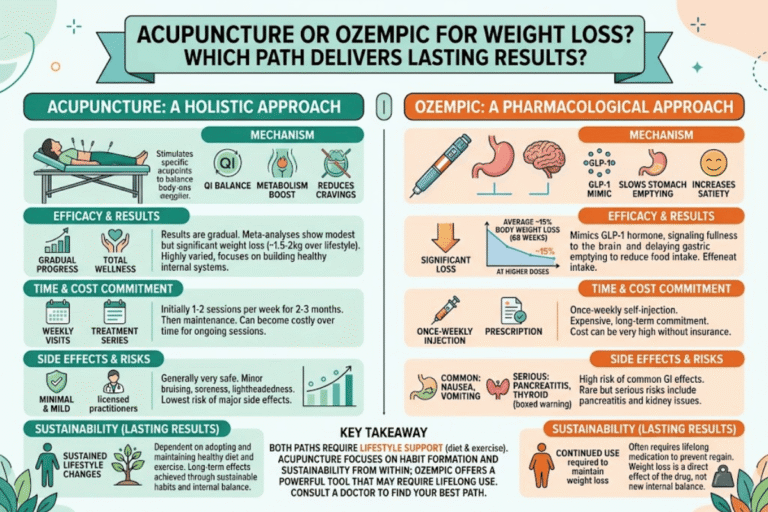
Compare that with our modern pharmaceutical fad. GLP-1 receptor agonists like Ozempic, Wegovy, or Monjaro only target the appetite hormones directly. They make your brain think there are less hungry which causes a precipitous weight drop.
This can be pretty spectacular, but only does one thing: decrease appetite and associated food intake. TCM treats the organ-system imbalance that resulted in the pattern of weight gain. One treats a symptom.
Clinical data also aligns with TCM. According to a 2024 network meta-analysis as seen in Frontiers in Pharmacology 46 random controlled trials (RCTs) involving 4,397 adult patients were reviewed. The results showed that TCM therapies, relative to non-pharmacological treatments, led to a body weight reduction of -2.05 kg over the treatment duration of 6 months or less.3 Acupotomy – a type of TCM procedure – was the top-ranking technique for BMI reduction, with a mean difference of -3.11 kg/m.
Western diet planning can be said to have a straightforward ‘calorie deficit’ equation as its starting point: consume less energy than expended. In principle and in theory, this is the way to a thin body. Unfortunately for the fitness fraternity, the equation neglects a fundamental truth that thousands of over weight and obese dieters learn in practice ‘Cutting Calories does not correct the biology that makes you hold body fat in the first place.’
In TCM, the philosophy runs differently. Here the practitioner doesn’t bother with counts but rather observes your digestion, energy levels, emotional state, tongue coating and pulse quality before diagnosing which organ system is involved and which direction the imbalance runs. Interestingly the Spleen – the organ system responsible for turning foods into the appropriate energy for the body – is usually found to be the focus of most weight troubles.
If the Spleen Qi is weak then the food is unsuitable for transformation and stagnates, the fluids are inappropriate and accumulate and the body makes dampness and phlegm.
Compare that with our modern pharmaceutical fad. GLP-1 receptor agonists like Ozempic, Wegovy, or Monjaro only target the appetite hormones directly. They make your brain think there are less hungry which causes a precipitous weight drop.
This can be pretty spectacular, but only does one thing: decrease appetite and associated food intake. TCM treats the organ-system imbalance that resulted in the pattern of weight gain. One treats a symptom.
Clinical data also aligns with TCM. According to a 2024 network meta-analysis as seen in Frontiers in Pharmacology 46 random controlled trials (RCTs) involving 4,397 adult patients were reviewed. The results showed that TCM therapies, relative to non-pharmacological treatments, led to a body weight reduction of -2.05 kg over the treatment duration of 6 months or less.3 Acupotomy – a type of TCM procedure – was the top-ranking technique for BMI reduction, with a mean difference of -3.11 kg/m.
Actual Patient View: A Reddit user (BMI 26.5, cholesterol 290) recounted an experience with a TCM doctor who “completely changed my entire diet,” “stripping out a calorie target” and building their new diet “around warm, cooked foods for [that person’s] body constitution.
The Three TCM Body Patterns Behind Stubborn Weight
 However, not all weight gains appear the same in TCM. Generally the TCM practitioner will distinguish one (or combination) of the three main patterns to take place. Each of these patterns will have a set of symptoms, a characteristic tongue pattern and a particular nutritional intake strategy.
| Spleen Qi Deficiency | Dampness-Phlegm Accumulation | Liver Qi Stagnation | |
|---|---|---|---|
| Symptoms | Fatigue after meals, bloating, loose stools, low appetite | Heaviness in limbs, puffy face, water retention, brain fog | Stress eating, constipation, rib-side tension, mood swings |
| Tongue Signs | Pale, swollen, tooth marks on edges | Thick, greasy white or yellow coating | Red edges, thin coating, sometimes purple-tinged |
| Weight Pattern | Gradual gain, concentrated around the abdomen | Stubborn, distributed across the whole body | Fluctuating, closely tied to stress cycles |
| Dietary Focus | Warm, cooked, qi-building foods | Bitter, aromatic, damp-draining foods | Green leafy vegetables, citrus, flow-promoting foods |
Many people have more than one imbalance simultaneously. I’ve observed long-term Spleen Qi Deficient patients develop Dampness-Phlegm Accumulation since their Spleen becomes too weak to transform fluids at all. This is precisely why a generic diet doesn’t work in TCM – you need to find the diet that remedies your imbalances, not the other way round.In Traditional Chinese Medicine, obesity is not a disease. Rather, it a condition that indicates “a slowing of the internal transport system in the body relating to the function of the Spleen”.
– Dr. Zhang Wei, Senior TCM Physician, over 20 years of clinical experience
Which TCM Body Pattern Is Causing Your Weight Gain?
Check the symptom column of the diagram above. A patient reporting frequent fatigue and bloating most likely suffers from Spleen Qi Deficiency; someone feeling heavy, waterlogged, and spacey, especially on a hot and humid day, is more likely experiencing Dampness-Phlegm Accumulation; while a fluctuating weight with a tendency to gain during high-stress periods and a rib-cage full of tension should be checked for Liver Qi Stagnation. Most individuals resonate with one pattern more than the others, but every person is different. To be sure, see a qualified TCM practitioner to discover your specific pattern via pulse and tongue diagnosis.Real Patient Perspective: One user in r/ChineseMedicine reported: “I’ve been following a Spleen Qi deficiency diet for a month now and feel a significant decrease in overall bloating and fatigue.” They found no other diet had made such a difference in their health.
Foods That Strengthen Digestion and Drain Dampness
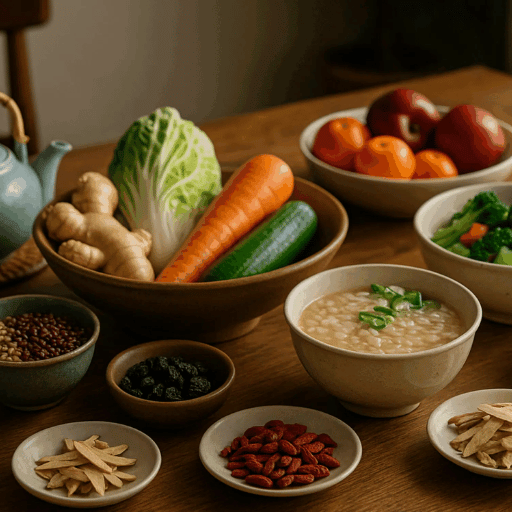 In Traditional Chinese Medicine, the first medicine is what you eat. Nothing else goes in to begin with (not honey, not acupuncture, not herbal medication, not massage). The initial approach is aiming to: rectify the Spleen first. We call this a “The Spleen-First Plate” – a way to order your meals to avoid giving further damp to your Spleen.
Here are the three rules of The Spleen-First Plate: First, eat warm and cooked. Cold raw foods directly weaken the Spleen. Second, eat at set hours every day. Irregular meals put a strain on the Spleen; irregularly timed meals make the digestive process a guessing game. Third, keep your diet simple. Prepare meals with five or six ingredients each; only pick recipes that involve one straightforward method of cooking; eat until comfortably full, over and over again.
In Traditional Chinese Medicine, the first medicine is what you eat. Nothing else goes in to begin with (not honey, not acupuncture, not herbal medication, not massage). The initial approach is aiming to: rectify the Spleen first. We call this a “The Spleen-First Plate” – a way to order your meals to avoid giving further damp to your Spleen.
Here are the three rules of The Spleen-First Plate: First, eat warm and cooked. Cold raw foods directly weaken the Spleen. Second, eat at set hours every day. Irregular meals put a strain on the Spleen; irregularly timed meals make the digestive process a guessing game. Third, keep your diet simple. Prepare meals with five or six ingredients each; only pick recipes that involve one straightforward method of cooking; eat until comfortably full, over and over again.
✔ Eat More — Warming and Nourishing Foods
| Category | Recommended Foods | Why They Help |
|---|---|---|
| Grains | Rice congee, millet porridge, oats (cooked), barley | Gentle on the Spleen, easy to digest, builds Qi |
| Proteins | Chicken, fish, lentils, tofu (cooked) | Supports Qi and Blood without creating dampness |
| Vegetables | Sweet potato, squash, cooked leafy greens, carrots | Nourishes the body and strengthens the Spleen |
| Fruits & Extras | Red dates (jujube), goji berries, ginger, cinnamon | Warming nature, tonifies Qi, boosts circulation |
| Soups & Stews | Bone broth, chicken ginger soup, winter melon soup | Warm liquids support digestion and drain dampness |
| Teas | Ginger tea, barley water, lotus leaf tea | Promotes healthy digestion and fluid metabolism |
⚠️ Limit — Cold and Damp-Producing Foods
Ice cream, iced beverages, raw salads, pungent or greasy fried foods, nearly anything sweetened with refined sugar, and dairy products. They all cause dampness to rise in the body and can lead to weight gain over time. You don’t need to cut these entirely out of your diet all at once – though eliminating them altogether is preferable in the long-term – but experience has shown reducing intake lowers dampness levels. Another extremely useful food that is called for all the time in TCM formulas is winter melon. Though it is called a “melon” in English it is actually neutral-to-cool in nature, and the most important food TCM has for draining dampness. As it is cooked in broth, it can draw dampness out of the body without taxing the Spleen; many TCM practitioners include winter melon in recipes with herbal medicine to treat water retention.Real Patient Perspective: Someone in r/BingeEatingDisorder commented: “I started eating seasonally, all cooked, no dairy or processed grains as much as possible and I feel great.”
Chinese Herbs and Teas for Weight Loss and Metabolism
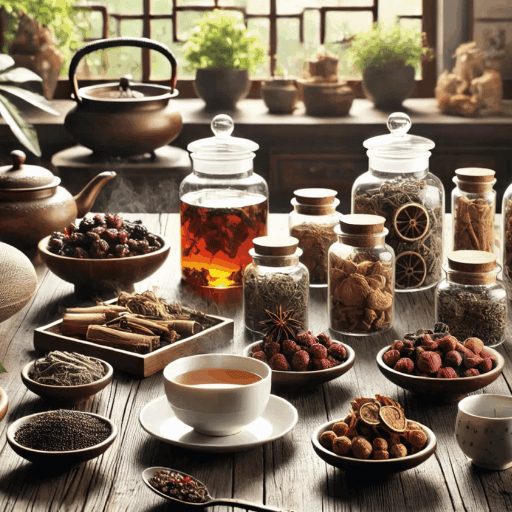 Once your fundamental diet has been established, specific herbs can boost your progress. Every herb is working on different parts of the pattern of weight gain, boosting Spleen Qi, draining dampness, breaking up food stagnation, and so on. Being matched to your constitution is most important—and not rushing to buy a tube of “slimming tea” at your local health shop.
| Herb (Chinese) | English Name | Function | Best for Pattern | Common Form |
|---|---|---|---|---|
| Huang Qi 黄芪 | Astragalus | Tonifies Spleen Qi, boosts metabolism | Spleen Qi Deficiency | Tea, soup base |
| He Ye 荷叶 | Lotus Leaf | Drains dampness, reduces lipid levels | Dampness-Phlegm | Dried leaf tea |
| Shan Zha 山楂 | Hawthorn (Fructus) | Aids digestion, reduces cholesterol | All patterns | Tea, dried slices |
| Chen Pi 陈皮 | Tangerine Peel | Moves Qi, eases bloating | Liver Qi Stagnation | Tea, cooking spice |
| Fu Ling 茯苓 | Poria | Drains dampness, strengthens the Spleen | Dampness + Spleen Def | Soup, powder |
What Does Chinese Medicine Use for Weight Loss?
Chinese medicine for weight loss includes herbal formulas, acupuncture, dietary therapy, and movement practices such as tai chi. Herbal formulas are focused on individual diagnosis and body constitution, so someone with a weak Spleen needs a different approach from another who has excess dampness. Common herbs for weight management include Huang Qi, which tonifies the Spleen; Hu Zhang, which clears dampness and supports metabolic health and well-being; and Chen Pi, which moves stagnant Liver Qi. This combination of herbs powerfully strengthens the digestive system. Treatment duration varies depending on the person but usually extends over 8-12 weeks.How Acupuncture and a TCM Practitioner Support Your Diet
 Acupuncture is used to complement dietary changes, stimulating points that regulate digestion and metabolism. A meta-study of 61 random controlled trails in the Journal of Integrative Medicine supported acupuncture as a means of achieving weight loss.
Key Acupuncture Points for Weight Loss
- ST36 Zusanli – Below the knees. Tonifies the Spleen and soothes a disturbed digestive system.
- SP6 Sanyinjiao – Side of the lower leg. Nourishes the Yin, tonifies the Kidneys and helps to balance water metabolism and hormonal functions
- CV12 Zhongwan – Above the Navel. Works directly on the stomach, reduces wind, and relaxes the bowels.
A professional from the University of Cincinnati counseled: “I tell my patients that acupuncture alone is not going to reduce weight. My feeling is it is most effective when used as part of a combined effort including changes to diet and lifestyle and herbal support as well.” Our experience with TCM-schooled practitioners working in clinical practice agrees–no one approach in isolation.
A Sample TCM Diet Meal Plan to Get Started
 What you know doesn’t matter if you don’t do. Here is a sample 3-day eating plan based on TCM principles. All foods are cooked; seasonings draw from the same warming foods that nourish Spleen Qi. Please tailor to your appetite–eat until satisfied, not stuffed.
| Day | Breakfast | Lunch | Dinner | Evening Tea |
|---|---|---|---|---|
| Day 1 | Rice congee with ginger, red dates, and goji berries | Steamed fish with cooked greens and brown rice | Chicken and winter melon soup with sweet potato | Lotus leaf tea |
| Day 2 | Millet porridge with pumpkin and walnuts | Lentil and carrot stew with steamed rice | Stir-fried tofu with cooked vegetables and barley | Hawthorn and Chen Pi tea |
| Day 3 | Oat porridge with cinnamon, red dates, and cooked pear | Bone broth noodle soup with leafy greens | Grilled chicken with roasted squash and ginger rice | Ginger and Astragalus tea |
Adapt the Plan to Your Pattern
For Spleen Qi Deficiency emphasize cooked grains, warm meat or fish, fresh ginger. Cut back on raw vegetables and cold fruits. Bring Huang Qi or Bie Jia into your vegetables or stews two or three times per week. For Dampness-Phlegm Accumulation lean on grains, bitter greens and winter melon. Brew chrysanthemum or Lotus leaf teas twice daily. Reduce wheat and dairy foods for 2-4 weeks. For Liver Qi Stagnation add bitter greens and citrus peel. Drink Jasmine green or chrysanthemum teas. Take walking after dinner to help reduce residual stagnation.Note: If using herbal teas or supplements, wait at least two full weeks for the Spleen to regain a normal baseline before trying them. This helps establish your new foundations before adding herbal power.
What to Avoid — Habits and Foods That Weaken Spleen Qi
 Traditional diet recommendations focus on balance. These dietary adhes are highly targeted because they directly address key patterns that impact digestive strength. Know what to avoid. Know why.
- Cold and raw foods-have an altogether different energetic quality from foods that are cooked. Consuming too many steaks, teas and ice cream puts too much burden on your digestive fire, over time creating dampness, weight gain and sluggishness.
- Water that is too cold (served with a meal) “dampens” the stomach and delays digestion. Use room temperature water–even with meals–to decrease dampness and tone your digestion.
- Too much late-night eating (after 7PM) causes weight. The midnight hours are when the energy in your organs is at its lowest point, and large quantities of food weigh down and stagnate your already weakening Spleen.
- Substituting the first meal of the day with caffeine withdrawal, fasting or mid-morning snacks causes the food’s digestive time to be shortened–would be like putting lunch on the back burner and expecting your car to run just as smoothly. The body is designed to eat three well-heated warm meals a day.
- Effects of stress on the weight include not only overeating, but stagnation of the Liver Qi. when the Liver “attacks” the Spleen, weight maintains around the middle, fermenting constipation and cravings increase exponentially.
- The fastest way to turn your body into dampness and phlegm is to add fried and processed foods. Even a small decrease in fried foods will impact your energy levels and weight.
Individual real person experience:in the comment section of r/ChineseMedicine, one user offered a good reminder: “Super restrictive diets are not long term sustainable, NOR ARE THEY TCM.” This is a valid point. TCM promotes eating the right foods not starving yourself by eliminating everything.
Frequently Asked Questions
How to lose weight fast in TCM?
View Answer
TCM does not aim for aggressive and speedy weight loss. Rather it targets the specific pattern that causes the body to gain weight such as Spleen Qi Deficiency or dampness retention. On average, most patients see changes in diuretic and air-indulgent symptoms within 2-4 weeks. Visible weight loss follows within 6-12 weeks with herbal remedies and acupuncture alongside a tailored diet plan. The slow pace is what makes the results last.
Are there side effects in TCM weight loss?
View Answer
If applied by a licensed TCM practitioner, herbal treatment and acupuncture are safe and carry little to no side-effects. Some patients may report mild abdominal or emotional changes during the first week; this is a normal adjustment to the formulas and increased water intake. Wrongly sourced herbs and self-medication may cause nausea and abdominal discomfort. Always consult a professional.
Does TCM discourage dairy?
View Answer
Most dairy products are considered dampness-producing in TCM. Ice cream and dairy in general should be avoided as much as possible. Warm, fermented dairy including yogurt can be consumed depending on your unique pattern.
Can a TCM diet help with belly fat?
View Answer
Yes. IBS and belly fat are both associated in TCM with a pattern of Spleen Qi weakness or dampness retention. Gentle eating and drinking practices (warm cooked meals, ginger, Huang Qi, reducing intake of raw and cold foods) combined with acupuncture at CV12 and ST36 will address both of these problems. Many of our patients notice their troubles with abdominal fat diminish prior to the number falling on the scale, because reducing dampness drops the proportion of water held in the abdominal area. To target specifically this type of weight gain, supplementary herbs such as Dang Shen and Bai Zhu, which actively drain dampness and nourish the Spleen together, will cause the weight to fall faster than dieting alone.
How long does TCM weight loss take to show results?
View Answer
Findings show we can expect to experience more energy and less gigramps within 2-3 weeks with approx 8-12 weeks necessary for definitive weight-loss gains depending on length of results. A meta-analysis of 46 clinical investigations published in 2024 revealed an approximate average weight decrement of 2.05 kg at 6 months of TCM intervention. Target JZ2 significantly more than diet alone. Dedication to your unique endopattern in your daily life really pays off.
Should I see a licensed TCM practitioner before starting?
View Answer
Absolutely. Bear in mind that even some herbal sources treat the wrong body pattern and make symptoms worse. Only a TCM practitioner will accurately identify the endopattern needs to treat with herbal remedies and diet, using pulse and tongue diagnosis. This is doubly so if you are on medication, pregnant, or in a chronic health situation.
Ready to Find Your TCM Weight Loss Path?
Our clinicians uniquely offer insight into relationship between endopattern and individual eating plan, together with the benefits of acupuncture and herbal medicine tailored to your body pattern.
Book a Weight Loss Consultation →About This Guide
This diet and weight loss advice based on TCM theory was generated by the clinical team at Tong Ren Tang, an institution of Chinese medicine established 355 years ago. Our practitioners work in the UAE providing Chinese dietary therapy, herbal solutions, acupuncture for weight-loss and digestion improving purposes. While fact-based, this data should never be used as substitute for advice in the context of your individual needs.
References & Sources
- Chen, X. et al (2024). “Effects of traditional Chinese medicines on weight control: A network meta-analysis of 46 randomized controlled trials. Frontiers in Pharmacology, PMC11164975.
- Systematic review of hawthorn (Shan Zha) for lowering cholesterol and triglyceride levels. Phytomedicine. PMC10928487
- Effect of electroacupuncture on food intake and body weight. Evidence-Based Complementary and Alternative Medicine. PMC3646998.
- 61 studies on acupuncture and weight management. Journal of Integrative Medicine. ScienceDirect
- Umbrella review of Chinese Medicine for childhood obesity. PMC12605298.
- The University of Cincinnati / USAToday -expert insight. Integration of Acupuncture and Weight Management.