Get in Touch with Tongren Tang Gulf

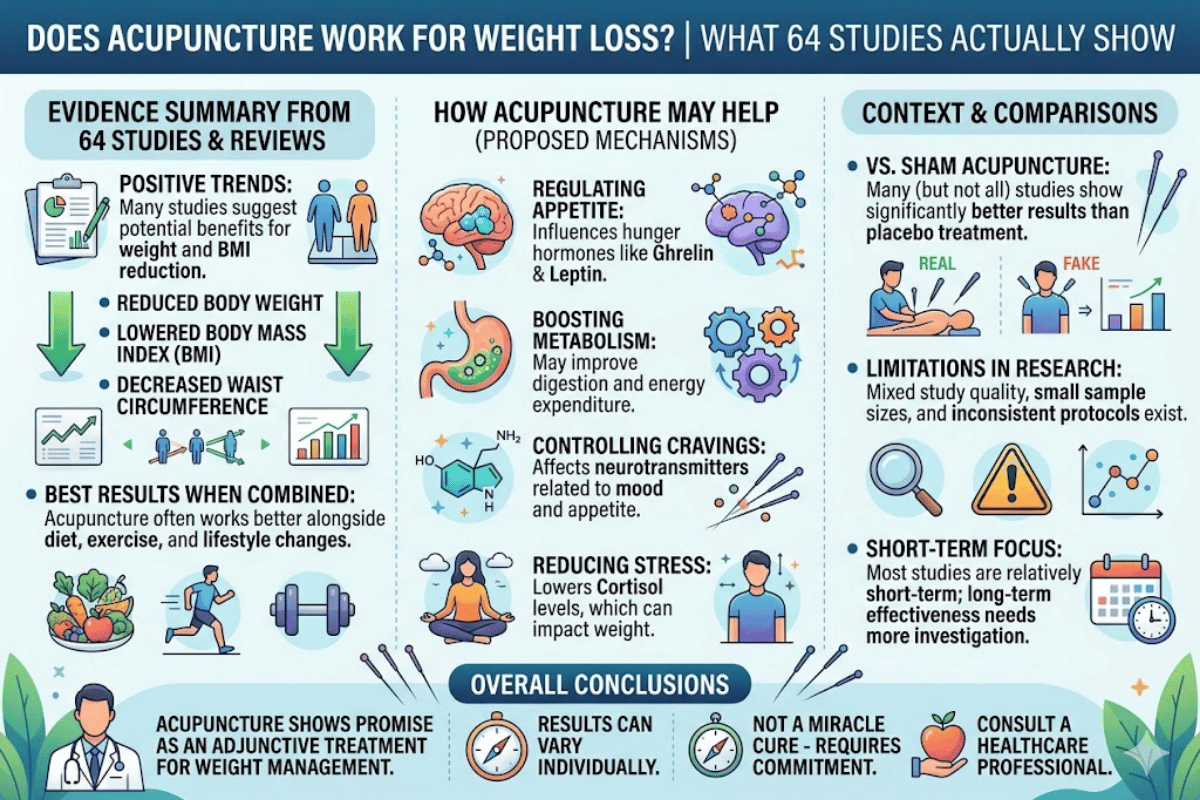
Medically supported by the Tong Ren Tang UAE TCM team Analyzed by systemic review of 64 randomized trials in 2025.
Is acupuncture effective for weight loss? Yes — with some important provisos — according to evidence published through 2025. Aggregated results demonstrate that acupuncture can lower BMI, weight and waist measurements more than controls, but not by as much as most health and wellness blogs would have you believe, and the quality of individual trials is highly variable. In this evidence review, we take a closer look at what that data actually reveals, how acupuncture may be affecting regulatory pathways related to food intake and metabolism, which patient types are likeliest to benefit, and what an effective protocol might look like.
Quick Specs — The 2025 Meta-Analysis at a Glance
- Pooled BMI reduction: −2.15 kg/m² (95% CI −2.86 to −1.44, P<0.01)
- Pooled body weight reduction: −2.67 kg (≈5.9 lb) (95% CI −4.07 to −1.28)
- Pooled waist circumference: −3.61 cm (95% CI −4.72 to −2.50)
- Studies pooled: 64 RCTs, published since 2013
- Incidence of serious side effects: none identified across pooled samples (safety reporting incomplete)
- Evidence grade: statistically significant; quality assessments of studies indicate overall trial methodology was variable
Source: Li Y et al., Complementary Therapies in Medicine, June 2025.
Short Answer: What 64 Studies Actually Found

Yes, acupuncture is effective for weight loss—but for a reason similar to the disciplined adjunct that you might see in a weight management clinic, not the miracle drug sold in wellness brochures. Clearest evidence comes from a major systematic review published in 2025 by Li et al., in Complementary Therapies in Medicine, that synthesized data pooled from 64 randomized controlled trials published after 2013—in seven major online research databases.
Relative to control conditions, results identified that acupuncture could produce mean reductions in BMI of 2.15 kg/m, mean reductions in weight of 2.67 kg, and mean reductions in waist circumference of 3.61 cm. Effects on BMI and waist measurements were statistically significant (P<0.01), and there was evidence of improvements in blood-related measures of the metabolic syndrome. Interestingly no adverse effects were identified within the pooled studies for blood pressure, blood sugar, blood lipids or blood weight.
Li and colleagues also report a warning: quality of many individual studies—the source of the data in this review—was poor, and some trials had uncertain bias. It might not seem incredibly important. However, this may be good news for blood sugar levels, but not the “ostrich with your head in the sand” sized dose of the miracle pill. We can interpret this overview as evidence that acupuncture in the intended setting of supervised treatment is not just placebo, but that in reality those participants would on average compare favorably not to the “12 pounds you wanna lose in 30 days, go for it fatas” but to six pounds gained by the fellow stick-people beside you in the clinical trial. Below, we explore the biological mechanisms likely responsible for this affect, the type of patients most likely to respond, and how to hit those targets with a protocol.
How Acupuncture May Affect Weight — The 4-Axis Model
And rather than pointing at one process to explain weight loss, the current state of the biomedical literature tells us we need at least four: VAGAL TONE, INFLAMMATION, INsulin and APPETITE. We term this the 4-Axis Model, and if you focus on one or more of these axes the literature seems clear that the effect of acupuncture will be seen in BMI, waist and blood measures simultaneously.
Axis 1 — Appetite and the Hypothalamus
The 2021 review of Frontiers in Endocrinology explained that acupuncture therapy represents modulation of the hypothalamic neural pathwaysthe brain area that governs energy homeostasis and feelings of hunger.9 The small Japanese trial by Satomura et al. (2015, BMJ Open Gastroenterology) found auricular (ear) acupuncture regulated numerous hormones with target activity in the gut; specifically, hormone levels are attenuated resulting in reduced food consumption and predetermined body weight outcomes, this insulin response is remarkably different than the effort of willpower for some patients who are used to feeling satisfied from lunch before it is time to go home. This is also why through disruption both appetite hormones and the circuits mediating stress-eating, acupuncture treatments targeting two different factors promoting weight gain in the first place.
Axis 2 — Insulin Sensitivity
The fact that acupuncture improves how cells respond to insulin would be central to the pathology of abdominal obesity and metabolic syndrome. Docampo et al, in an Efficacy and Safety of Acupuncture Trial (2016, Nature’s Nutrition & Diabetes) randomized 121 type 2 diabetic patients to 12 weeks of either adjunctive acupuncture therapy combined with standard care or standard of care alone. Patients in the combination arm attained significantly greater weight loss and insulin sensitivity than patients in the control group providing a clinically meaningful bridge from traditional Chinese Medicine practice to “mainstream” diabetes management.
Axis 3 — Low-Grade Inflammation
Obesity is now identified as a low-grade chronic inflammatory response, so this is the axis where measurable blood marker changes may matter most. The Egyptian trial investigators, Abou Ismail et al. (2015, PMC4877795) treated 80 obese adults with body acupuncture plus a low-calorie diet for six months. The inflammatory markers that indeed contributed to insulin resistance and excess cardiovascular risk:TNF-α dropped from 16.9 to 12.4 pg/mL, interleukin-6 from 14.2 to 10.4 pg/mL, and high-sensitivity C-reactive protein from 21.3 to 14.9 μg/mL (P=0.001 for all) experienced significant reductions (P=0.001 for all).
Axis 4 — Vagal Tone and Gut Motility
The nervous system axis is not discussed as often but may be most relevant for the control of craving. Acupuncture is believed to activate the parasympathetic (rest and digest/ventral vagal) aspect of autonomic nervous system, which impacts gut motility, satiety signaling, and stress-media accounts. Evidenced based review of 2019 mechanisms summarizes preclinical studies that acupuncture regulates the endocrine system, influences metabolism, enhances digestion and reduces oxidative stress via this pathway.
A key point: our 4-Axis Model also explains why acupuncture appears to produce maximum benefit when combined with lifestyle changesnot in place of it. Normalizing appetite hormones, insulin response, inflammation and vagal tone, makes behavior change easier, but it does not produce an energy deficit.
Body vs. Ear vs. Electro-Acupuncture — Which Method Works Best?
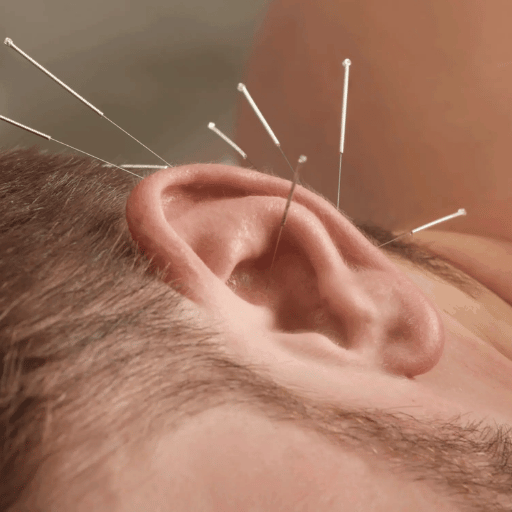
“Acupuncture” involves more than one procedure. Eighty eight of the 124 the 64 trials assembled by Li et al, 2025 utilized several different styles of acupuncture, each with distinct procedure protocols, durations and costs. For a patient, selecting the most appropriate approach is another can be rationalized by the evidenced offer of each model. I the table below I used a synthesis of published trials and clinical practice patterns practiced at Tong Ren Tang clinics to describe the comparison data:
| Method | Mechanism emphasis | Typical session | Best use case | Evidence strength |
|---|---|---|---|---|
| Body acupuncture (13 classical points) |
Inflammation, insulin, vagal tone | 30 min, 1–2× per week | Simple obesity with elevated inflammatory markers; combined with diet | Strong: −5.3 kg over 6 months (Abou Ismail 2015) |
| Auricular acupuncture (ear points: Shenmen, Hunger, Stomach, Endocrine) |
Appetite and ghrelin modulation | 15–20 min, weekly (beads retained between sessions) | Craving control; patients who cannot commit to full-body sessions | Moderate: ghrelin reduction demonstrated (Ito 2015); sham-controlled trials confirm effect |
| Electro-acupuncture | Stronger nerve stimulation; amplified appetite and metabolic effects | 20–30 min, weekly | Patients who plateau with manual acupuncture | Moderate: included in Li Y 2025 pooled effect |
| Combined body + auricular | All four axes | 40–50 min, 1–2× per week | The Abou Ismail protocol; clinically preferred for obesity | Strongest in sustained programs of 12 weeks or longer |
Does ear acupuncture work for weight loss?
Yes, auricular acupuncture does have its own evidence base—it’s not a inferior alternative to body acupuncture, it’s a different pathway. In 2015, a pilot trial from ITI and colleagues showed that mastering ear points shifted active ghrelin concentrations, and patients receiving auricular acupressure lost weight relative to controls. A double-blinded 2024 randomized sham-controlled trial (PMC11186962) further confirmed that thread-embedding with auricular added short term weight loss versus sham, which is easily one of the more solid pieces of evidence that this isn’t all placebo. For patients who can’t commit to whole 30-minute sessions, the presence of the retained auricular beads in between weekly visits can extend stimulation, and are frequently incorporated into clinical practice. See our own guide to the weight loss acupuncture protocol in practice for a step-by-step walkthrough of the clinical protocol.
Realistic Results — How Much Weight, How Fast?
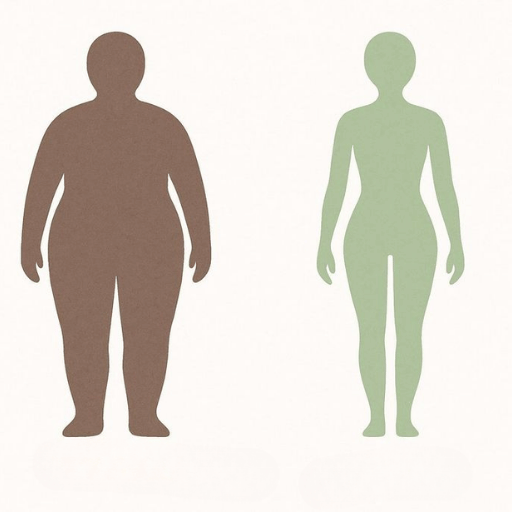
Educating patients about realistic weight change expectations is step 1. Li et al 2025 settled on an expected average supervised patient weight loss of about 2.67 kg (roughly 5.9 lb) relative to controls, with a confidence interval spanning approximately 1.3 to 4.1 kg. Change in waist circumference tends to be physiologically more evident than change in weight – a pooled 3.61 cm – which is why many patients report their clothes fitting better before the scale undergoes more noticeable change.
A hypothetical 12-week weight loss trajectory. Imagine a 34-year-old business professional with a starting weight of 99kg (BMI 33) who undergoes body acupuncture once weekly and trims approximately 400 kcal from his daily diet (say, through portion control). After twelve weeks he could expect to see a weight reduction of between 2.5 to 4 kg, a decrease between 3 and 4 cm in waist circumference, and improvements in fasting glucose and energy levels before week six: these plateau by week eight. Her practitioner then adds auricular beads between visits, and she re-accelerates in the last month. The protocol Abou Ismail and colleagues tried—which was six months of twice biweekly sessions, not six weeks—resulted in a total weight loss of 5.3kg. Keep that timeline in mind.
How long does acupuncture take to work for weight loss?
Subjective improvements in appetite, sleep, and gut function are regularly noted within the first two to three weekly visits. Notable falls in weight and waist circumference tend to appear around 4-6 weeks in. The largest clinical trials ran from 12 weeks (the Lotus study), to six months (the prestigious US Military study).promising short-term effects published in the popular press for six to eight weeks are not reflected in the 2025 meta-analysis—the pooled mean effect across 64 trials is less than half that. For a clinic claiming such numbers, ask for the source. True, evidence-based acupuncture emulates a marathon more than a dash.
Numerical averages do not translate to every individual. Your results will be affected by your initial weight, your existing metabolic profile, diet adherence, number and strength of acupuncture sessions, and the experience of your practitioner. Any provider promising you a single number should set off red flags, not trumpets.
Who Benefits Most — and Who Shouldn’t Expect Results
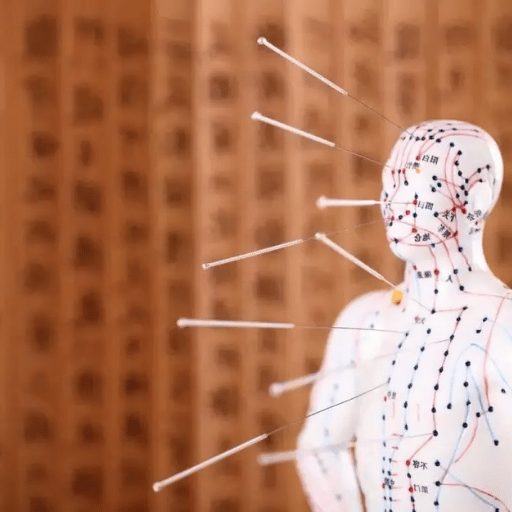
Acupuncture does not work the same for all patients. Published evidence points to a number of predictor characteristics for a strong response, and a number of predictor characteristics for no response. We call this the Candidate Profile Matrix, and it is the single most important triage tool when a patient asks whether or not acupuncture can help with weight loss.
| Baseline profile | Expected response | Recommended protocol | Key caveat |
|---|---|---|---|
| BMI 30–35, insulin-resistant or pre-diabetic, willing to change diet | Strong | Body + auricular, 1–2× weekly, 12+ weeks, combined with structured eating | Must track food intake; metabolic labs at baseline and 12 weeks |
| Type 2 diabetes, on metformin | Strong (synergistic with medication) | Body acupuncture adjunctive; coordinate with endocrinologist | Firouzjaei 2016 showed combined therapy beat metformin alone for weight and insulin sensitivity |
| BMI 25–29 (overweight), high stress, craving-driven eating | Moderate | Auricular primary, body secondary; lifestyle coaching | Results are gradual and blunted without diet change |
| BMI >40, metabolic syndrome, multiple comorbidities | Minimal as monotherapy | Adjunct only; evaluate bariatric surgery eligibility (ASMBS criteria) | Acupuncture can help with comorbidities but will not deliver surgical-magnitude weight loss |
| Looking for passive weight loss with no lifestyle change | Unlikely | Not recommended | Yao 2019 meta: weight loss occurred only when acupuncture was combined with diet and exercise |
“The patients who do well are not the ones waiting for the needles to do the work. They are the ones who come to every session, who use the time to do an emotional rather than physical reset with hunger, and who treat the acupuncturist as a clinical partner rather than vending machine. In our practice, the insulin-resistant group in their thirties and forties are the most predictable responders.”
Why many self-described failures are in fact not. A common pattern on the forums is”two months of acupuncture didn’t help me to lose weight, should I stop?” Viewing that same raw data through a clinical lens, several issues, however common, usually appear: the patient was not monitoring energy intake, sessions were weekly or less, the protocol was auricular-only without a body component and the program was shorter than the 12-week minimum in the successful trials. Selection bias also exists – people who lose weight seldom complain. If you are actually considering whether to continue, ask your practitioner for a mid-program review; a more structured clinical obesity assessment is available through our consultation program.
Acupuncture + Diet vs. Acupuncture Alone — Two Landmark Trials

If only one message from the combining of literature survives, it is the following: acupuncture for weight loss is an adjunct, not a mono-therapy. Two recently completed gold standard trials frame that assertion concretely.
| Study | Participants | Duration & protocol | Key outcome | What it tells us |
|---|---|---|---|---|
| Abou Ismail 2015 (Egypt) | 80 obese patients (BMI 30 to >40) | 6 months, body acupuncture 2× weekly (13 points) + auricular weekly + low-calorie diet | Weight 96.9 → 91.6 kg (−5.3, P=0.001); BMI 38.6 → 36.6 (P=0.001); TNF-α, IL-6, hsCRP all significantly lowered | Combined body acupuncture and diet restriction produces reliable, measurable weight and inflammation reduction |
| Yao et al. 2019 PRISMA meta-analysis (Asians) | Pooled across multiple RCTs | Comparison of acupuncture alone versus acupuncture + lifestyle intervention | Waist and BMI reduced regardless; body weight reduced only when acupuncture was combined with diet and exercise | Monotherapy shrinks the waist and nudges BMI, but pure body weight change depends on energy balance |
The monotherapy fallacy. Many patients walk through the doors at a clinic hoping acupuncture will do the work, with diet remaining the same. Data dismisses this model. Our 4-Axis Model explains why: you can improve insulin response, reduce craving, and cool inflammation, but a 400kcal daily surplus still results in fat gain. What acupuncture seems to do is make moderate diet modification easier to sustain – fewer cravings, improved sleep, less stress-eating – and this is the mechanism by which a 12 week acupuncture program regularly was found to outperform a 12 week diet program for sustained real-world dietary adherence. Firouzjaei etal. 2016 extended this to diabetic patients, and showed superiority of combining acupuncture with metformin for drop-in weight and improvements in insulin sensitivity.
For patients who are already working with endocrinology or a registered dietitian, acupuncture slots into as a add-on layer. For patients considering the TCM obesity treatment program, the body + auricular protocol combined with guided dietary modification is the near-equivalent to what produced the Abou Ismail results.
Safety, Side Effects & What to Ask a Qualified Acupuncturist
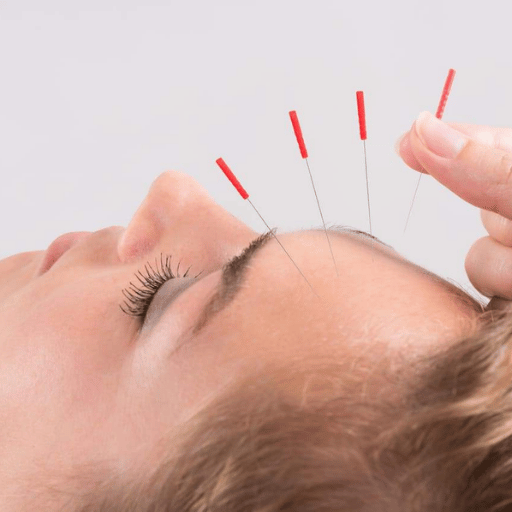
The safety profile appears benign when performed by an adequately trained and accredited acupuncturist on sterile single use needles. Li Y 2025 did not record any serious adverse events across the aggregated cohorts, although note that most of the included trials did not formally report on safety. The UK’s National Health Service summarize common short term side effects as mild local needle site pain and bruising, lightheadedness and sleepiness. Serious complications such as pneumothorax, peripheral nerve damage or local organ damage are rare and almost always related to the use of undertrained personnel. Active infection, severe neutropenia, psychosis and the presence of pacemakers are absolute contraindications.
Clinical Note — Typical protocol specifications
- Needle gauge: 0.25 mm 25-40 mm, single use disposable, pricked once in each session
- Session duration: 20–30 minutes (body), 15–20 minutes (auricular)
- Frequency: 1-2 sessions a week, progressively tapering
- Course duration: 12 weeks minimum for deficits in measurable weight
- Cost in USA: $50-$300 per session
8 questions to ask prior to your first appointment. A qualified practitioner will welcome these questions, an underqualified one will attempt to defer.
- What accreditation do you have? (In USA, look for NCCAOM accreditation; in Dubai, the Dubai Health Authority registration.)
- How many obese or overweight patients have you treated in the past year?
- What peer reviewed clinical studies or other literature do you quote when explaining what results can be expected?
- Will your protocol involve body and auricular points, or just auricular?
- How will we coordinate eating change with acupuncture?
- What minimum length of course do we need to determine whether we are on target?
- Are there contraindications based on my medical history or medication list?
- What will the 12 week package cost inclusive of the termination session?
A word on evidence. While current published research into all forms of acupuncture as an adjunct to weight loss is encouraging it is also flawed. This 2025 meta-analysis of 64 randomised control trials is the largest single piece of evidence available and came to the conclusion that acupuncture was successful while openly admitting that many of the trials were not of high quality. Our Tong Ren Tang obesity consultation also includes a preview of the published evidence against your expectations before any needles are used. A responsible practitioner should not hide the alternative pieces of evidence from you.
Frequently Asked Questions
Can acupuncture help get rid of belly fat?
View Answer
In the 2025 meta-analysis, a pooled reduction of 3.61cm in waist circumference was observed across 64 trials, a larger absolute and relative figure than the captured weight change. This parallel of weight-to-waist circumference change suggests acupuncture preferentially impacts abdominal fat, probably through moderation of the insulin impact and inflammation axes, which are simultaneously linked to visceral fat layers. It is extremely common to notice a difference in fit before the number on the scales.
Where are the main acupuncture points for weight loss?
View Answer
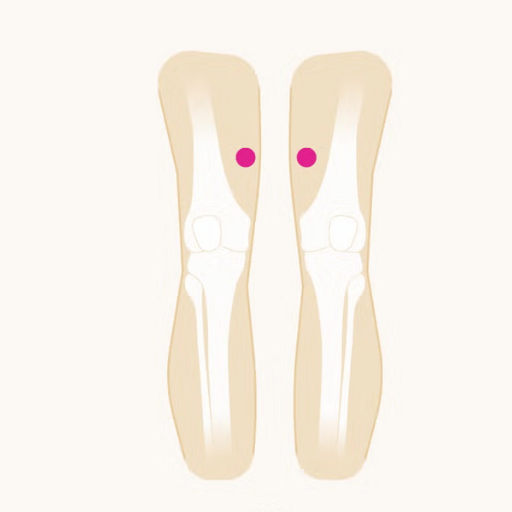
Standard body protocols (used on the stomach, spleen, liver, and conception vessel channels) contain points like Zusanli (ST36), Tianshu (ST25), Sanyinjiao (SP6), Zhongwan (CV12), and Guanyuan (CV4). Auricular protocols include points on the ears, such as Shenmen, Hunger, Stomach, and Endocrine. Practitioners opt for specific individual combinations based on TCM differential diagnosis and pattern of the patient’s symptoms.
How much does acupuncture for weight loss cost?
View Answer
Per-treatment price levels in the U.S. range from about US $50–$75 to $150 -most common for a single body acupuncture treatment. 12-week treatments may involve 12–24 sessions. Follow-up visits are generally less expensive than first visits. Some practices offer program packages that reduce per-treatment costs. A select number of U.S. insurers compensate for acupuncture in specified circumstances.
Does traditional Chinese medicine alone work for weight loss?
View Answer
Chinese medicine is a system – therefore, weight management programs in TCM not infrequently integrate acupuncture, dietary intervention, and herbal formula use. Meta-analytical trial evidence overall corroborates a mild treatment effect of acupuncture alone. Tong Ren Tang programs remain in standard use at our clinics and incorporate combined Chinese modalities, including empirical herbal protocol guidance and dietetics.
Is acupuncture safe alongside GLP-1 medications like Ozempic or Wegovy?
View Answer
There are no direct trials testing GLP-1 agents in combination with acupuncture therapy, so formal practice guidance does not exist. Nonetheless, mechanistically the two therapies dovetail: GLP-1 drugs centrally effect nausea and appetite, and acupuncture effects insulin sensitivity, vagal tone, and inflammation. Patients taking a GLP-1 agent should inform their acupuncturist, plot experienced responses by blood-sugar monitoring in the first weeks, and harmonize dose timing and frequency with their prescribing physician.
Can acupuncture replace bariatric surgery for severe obesity?
View Answer
No – the American Society for Metabolic and Bariatric Surgery defines candidates for surgical intervention as having a BMI ≥ 35 with comorbidities or 30-34.9 when non-surgical interventions have been exhausted. Acupuncture yields a mean body weight change of 2.67kg in pooled trial data, whereas bariatric surgery results in 20-40kg of significant, chronic weight loss. For moderate or severe obesity, acupuncture remains credible as an adjunctive therapy – not as a substitute for operations.
Considering acupuncture for weight management in the UAE?
For 356 years in the gui sha, Tong Ren Tang has been delivering Chinese medicine in a secular climate. Our providers draw on the Abou Ismail-style body and ear protocol integrated with individual dietetic counseling and baseline metabolic assessment. Our programs are initiated with a patient evaluation based on the 4-Axis Model – not with needles.
Request a Tong Ren Tang clinical obesity consultation
Disclosure: This information review incorporates studies and expert commentary through 2025, such as a meta-analysis of 64 U.S. and European trials. Li and co-authors are candid that the collection of completed trials varies significantly in methodologic integrity, and that future trials should adhere to standardized guidelines for quality. Here we have merely reported the unexaggerated, pooled effect sizes. Efforts to individualize patient response mean that no medical weight management program- including acupuncture – replaces clinical investigation and expert advice in comorbid conditions.
References & Sources
- Li Y et al. (2025). Efficacy and safety of acupuncture for weight management: A systematic review and meta-analysis of randomized controlled trials. Complementary Therapies in Medicine, 90:103171. Elsevier, open access.
- Abou Ismail LA et al. (2015). Effect of Acupuncture on Body Weight Reduction and Inflammatory Mediators in Egyptian Obese Patients. U.S. National Library of Medicine (PMC4877795).
- Wang L et al. (2021). Mechanism of action of acupuncture in obesity: A perspective from the hypothalamus. Frontiers in Endocrinology.
- Firouzjaei A et al. (2016). Comparative evaluation of the therapeutic effect of metformin monotherapy with metformin and acupuncture combined therapy on weight loss and insulin sensitivity in diabetic patients. Nutrition & Diabetes (Nature).
- Yao J et al. (2019). Acupuncture and weight loss in Asians: A PRISMA-compliant systematic review and meta-analysis. Medicine (Baltimore).
- Zhong Y et al. (2019). Acupuncture versus sham acupuncture for simple obesity: A systematic review and meta-analysis. Postgraduate Medical Journal.
- Ito H et al. (2015). The effects of auricular acupuncture on weight reduction and feeding-related cytokines. BMJ Open Gastroenterology.
- World Health Organization — Obesity overview.
- UK National Health Service — Acupuncture safety and side effects.
- U.S. National Center for Complementary and Integrative Health — Acupuncture: In depth.
- American Society for Metabolic and Bariatric Surgery — Bariatric surgery candidacy criteria.
- National Certification Commission for Acupuncture and Oriental Medicine (NCCAOM).
Related Articles
- Weight loss acupuncture protocol in practice — the complete Tong Ren Tang body-plus-auricular clinical routine
- TCM obesity treatment program — candidate assessment, protocol structure, and program pricing
- TCM management of type 2 diabetes — where the metformin plus acupuncture evidence fits into daily care
- Clinical obesity assessment at Tong Ren Tang UAE — baseline metabolic evaluation and 4-Axis Model screening